
Harishchandragad Trek: 4 Routes to Konkan Kada and a Real Monsoon Safety Guide
Harishchandragad is a 1,424-metre hill fort in the Malshej Ghat region of the Western Ghats, famous for Konkan Kada – a concave, overhanging cliff where cloud inversions and the rare circular-rainbow “Brocken spectre” appear. Four routes lead up: Pachnai (easiest, ~2–3 hours), Khireshwar via Tolar Khind (most popular and scenic), Sadhale Ghat (offbeat), and Nalichi Vaat (a technical, near-vertical gully climb for experienced trekkers only). In monsoon, stick to Pachnai or Khireshwar with care – Nalichi Vaat is genuinely dangerous in the rains due to rockfall and slippery 80-degree rock. The best all-round season is October to February.
In this Blog
Info Table
| Detail | Information |
| Location | Malshej Ghat region, Ahmednagar (Ahilyanagar) district, Maharashtra — at the junction of Ahmednagar, Pune and Thane districts |
| Fort height | ~1,424 m (4,670 ft); Taramati peak, the summit, is ~1,431 m (4,695 ft) |
| Number of routes | 4 main routes (Pachnai, Khireshwar/Tolar Khind, Sadhale Ghat, Nalichi Vaat) |
| Difficulty range | Easy (Pachnai) to very difficult/technical (Nalichi Vaat) |
| Trek distance | 3 km (Pachnai) to 8–9 km (Nalichi Vaat) one way |
| Best time to visit | October to February; monsoon (June–Sept) for green landscapes and Konkan Kada clouds, with caution |
| Entry fee | Free entry, no permit required (small parking charge at base villages) |
| Nearest airport | Mumbai (~180 km) or Pune (~160 km) |
| Nearest railway station | Kasara (~85 km, common railhead for trek groups) and Kalyan Junction (main ST-bus transfer point) |
| Base villages | Khireshwar, Pachnai, Belpada/Walhivale |
| Ideal duration | 1 day (Pachnai) or 2 days with camping on the plateau |
| Camping | Allowed on the plateau; tents ~₹400–500 for 2–3 people |
What Makes the Harishchandragad Trek So Special?
Harishchandragad isn’t a single climb with one payoff – it’s a whole hill-fort plateau you explore, sitting at roughly 1,424 metres in the Malshej Ghat region of the Sahyadris. Most treks near Mumbai and Pune give you one summit and one view. This one gives you a 6th-century cave temple, an ice-cold underground Shiva shrine, a summit peak, and one of India’s most dramatic cliffs – all on the same flat top.
The headline attraction is Konkan Kada, a concave overhanging cliff shaped like a cobra’s hood that drops several hundred feet into the Konkan plains. Add the Kedareshwar cave, the ancient Harishchandreshwar temple, the Saptatirtha Pushkarni water tank, and Taramati peak, and you understand why this is often called the most complete fort trek in Maharashtra.
Harishchandragad is a hill fort at approximately 1,424 metres in Maharashtra’s Malshej Ghat region, whose summit Taramati peak reaches about 1,431 metres. It is famous for Konkan Kada – a concave overhanging cliff where cloud inversions and the circular-rainbow Brocken spectre appear during partial cloud cover.
The fort has real history behind the scenery. The Harishchandreshwar temple traces to around the 6th century under the Kalachuri dynasty, with cave carvings pointing to 11th-century elaboration. Over centuries it passed through Shaiva, Shakta and Naath religious traditions, which is why you’ll see such a mix of shrines and idols across the plateau. Our team rates it as a trek that rewards curiosity as much as fitness.
What Are the 4 Routes to Harishchandragad?
There are four main routes up Harishchandragad, ranging from a beginner-friendly walk to a near-vertical technical climb. Choosing the right one is the single most important decision you’ll make – it changes your fitness needs, timing, base village, and above all your monsoon safety. Here’s how they compare before we break each one down.
| Route | Base village | Distance (one way) | Ascent time | Difficulty | Best for |
| Pachnai | Pachnai | ~3 km | 2–3 hrs | Easy | Beginners, families, first-timers, night treks |
| Khireshwar (Tolar Khind) | Khireshwar | ~7 km | 3–4 hrs | Moderate–difficult | Scenery, the classic experience |
| Sadhale Ghat | Belpada → Kelewadi | ~8–10 km | 5–6 hrs | Difficult | Offbeat, post-monsoon, quiet trails |
| Nalichi Vaat | Belpada / Walhivale | ~8–9 km | 6–9 hrs | Very difficult (technical) | Experienced trekkers and climbers only |
Harishchandragad has four main routes: Pachnai (the easiest, about 3 km and 2–3 hours), Khireshwar via Tolar Khind (the most popular, about 7 km through dense forest and a fixed-railing rock patch), Sadhale Ghat (a longer, offbeat post-monsoon route), and Nalichi Vaat (a technical near-vertical gully climb of 80 degrees, for experienced trekkers only).
Route 1: Pachnai – the Easiest Way Up
Pachnai is the route to pick if you’re a beginner, bringing kids, or planning a night trek. The trail is well-marked, gradual, and short — roughly 3 km with an ascent of 2 to 2.5 hours.
- Entry fee: Free (nominal parking at Pachnai village)
- Timings: Best started early morning; safe for supervised night treks with a guide
- Best time to visit: October–February; doable in monsoon with care
- How to reach: Pachnai village is approached from the north-east via Rajur/Kotul; reachable by road from Mumbai (via Kasara) and Pune (via Ahmednagar–Rajur)
- Time required: 2–3 hours up, 1.5–2 hours down
- Ideal for: Families, beginners, night treks, anyone short on time
- Pro tip: This is the only route we’d suggest for first-time monsoon trekkers — it has the fewest exposed sections. Reach the plateau before sunrise for the best Konkan Kada light.
Route 2: Khireshwar via Tolar Khind – the Classic
The Khireshwar route is the most popular and, for many, the most beautiful. Starting from Khireshwar village (~7 km from Malshej Ghat), the trail winds through dense forest to Tolar Khind, a saddle between two ridges, then climbs a short rock patch now fitted with iron railings.
- Entry fee: Free (small parking at Khireshwar)
- Timings: Start by 8:00 AM to summit and return comfortably in daylight
- Best time to visit: October–February for clear views; monsoon is lush but the rock patch turns slippery
- How to reach: Khireshwar is off the Kalyan–Ahmednagar road via Khubi Phata, just past Malshej Ghat
- Time required: 3–4 hours ascent; 6–7 hours round trip with plateau exploring
- Ideal for: Fit trekkers wanting the full scenic experience
- Pro tip: The 100-ft rock patch at Tolar Khind has fixed iron railings, but they get greasy in the rain – grip gloves help. This is the route that best shows off the forest-to-plateau transition.
Route 3: Sadhale Ghat – the Offbeat Climb
Want the plateau without the crowds? Sadhale Ghat is your answer. From Belpada, you walk to Kelewadi village instead of heading toward Konkan Kada, then ascend the steep Sadhale Ghat slope from the northern side.
- Entry fee: Free
- Timings: Full-day trek; start at first light
- Best time to visit: Post-monsoon (October onward); pristine forest sections
- How to reach: Belpada base village, on the Konkan-facing side of the fort
- Time required: 5–6 hours ascent
- Ideal for: Repeat trekkers who’ve done the popular routes and want quiet trails
- Pro tip: It’s longer than Pachnai but far less exposed than Nalichi Vaat — a good “step-up” route if you’re building toward harder climbs. Carry your own water; sources are unreliable.
Route 4: Nalichi Vaat – the Technical Test
Nalichi Vaat is the route people write home about — and the one that hurts people who underestimate it. From Belpada/Walhivale, it climbs a narrow gully (a “naal”) that steepens to nearly 80 degrees, involving rock scrambling, exposed ridges, and often rope work.
- Entry fee: Free; a professional guide/organiser is strongly recommended
- Timings: All-day effort; not for night attempts
- Best time to visit: Post-monsoon only (October–February); avoid in monsoon entirely
- How to reach: Belpada base village near Walhivale, Konkan side
- Time required: 6–9 hours one way, with no reliable water en route
- Ideal for: Experienced trekkers with rappelling/climbing exposure and a guide
- Pro tip: Do not attempt this route during or immediately after heavy rain — rockfall and slips make it one of Maharashtra’s more dangerous monsoon climbs. Carry 3+ litres of water; there’s nothing to refill along the way.
What Is Konkan Kada and Why Is It Famous?
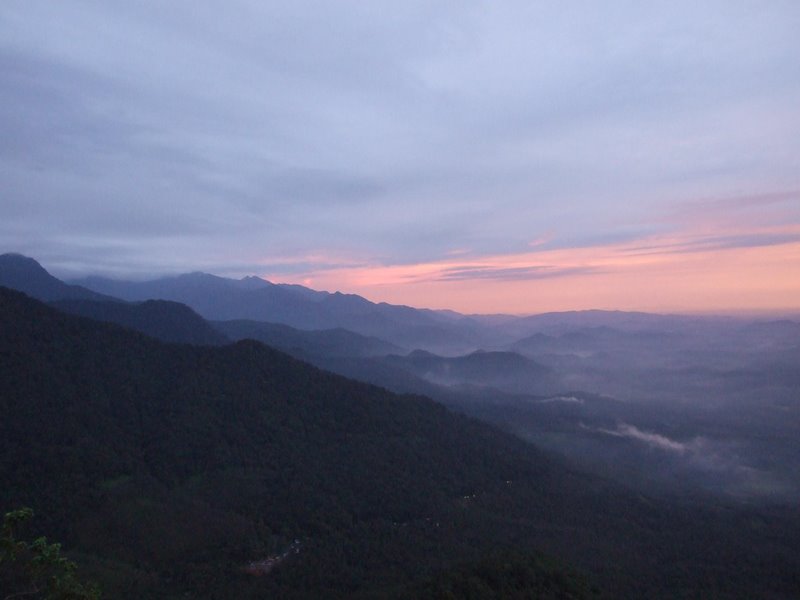
Konkan Kada – “kada” means cliff in Marathi – is a concave, overhanging rock wall that curves inward like a cobra’s hood and falls vertically for several hundred feet toward the Konkan lowlands. It’s the reason many people trek Harishchandragad at all. Stand at the edge (carefully), and on the right morning you’ll watch clouds pour upward over the lip.
That upward rush isn’t your imagination. The cliff’s concave shape forces monsoon and pre-monsoon winds vertically, throwing clouds 50-odd feet into the air — a phenomenon locals call a vertical cloudburst, best seen in April and May. In a partial cloud with the sun behind you, the cliff also produces a Brocken spectre: your own shadow projected onto the mist, ringed by a circular rainbow (a “glory,” sometimes called Indravajra locally).
Konkan Kada at Harishchandragad is a concave overhanging cliff whose curved shape drives winds upward, producing vertical cloudbursts (best seen in April–May) and the Brocken spectre — a circular rainbow halo around the observer’s shadow. The Brocken spectre was first scientifically described in 1780 by Johann Silberschlag and is named after Germany’s Brocken peak.
A serious word of caution: the cliff overhangs, so the ground curves away beneath your feet and you can’t always see what’s below the edge. Every year, people get too close for a photograph. Stay well back from the lip, especially in wind or wet conditions, and never sit with your legs dangling over an overhang you can’t see under. Is one reel worth it? It isn’t.
Is the Harishchandragad Trek Safe in Monsoon?
Short answer: it depends entirely on your route. Monsoon (June–September) turns Harishchandragad green and magical, and the Konkan Kada clouds are at their best – but the same rain that feeds the drama also makes rock treacherous. This is where route choice becomes a safety decision, not a preference.
Here’s our route-by-route monsoon verdict, based on how each trail behaves in the rain:
| Route | Monsoon verdict | Why |
| Pachnai | Safest option, with care | Gradual, well-marked, fewest exposed sections |
| Khireshwar (Tolar Khind) | Doable for fit trekkers | The Tolar Khind rock patch gets slippery even with railings |
| Sadhale Ghat | Better post-monsoon | Long, forested, fewer people around if something goes wrong |
| Nalichi Vaat | Do not attempt | Rockfall, slips, and a near-vertical gully with no water |
In monsoon, Harishchandragad’s Pachnai route is the safest option and Khireshwar is doable for fit trekkers with care, but the technical Nalichi Vaat route should be avoided entirely due to high rockfall risk, slippery near-vertical rock, and no water sources. The all-round safest season for all routes is October to February.
Beyond route choice, monsoon on this plateau brings the usual Sahyadri hazards: leeches on the forest trails, fog that drops visibility to a few metres, and sudden thunderstorms on an exposed top. The Kedareshwar cave often fills to waist-deep water and can become inaccessible in peak rain. Our team’s rule is simple: if the forecast shows heavy rain (over 40 mm on the day), we push the trek to a drier weekend.
Monsoon safety checklist:
- Trek only via Pachnai or Khireshwar in the rains; save Nalichi Vaat and Sadhale Ghat for October onward
- Never trek solo in monsoon — minimum group size of three
- Start early and be off the exposed sections before afternoon storms
- Carry a poncho (umbrellas are useless in cliff-top wind), grip shoes, and a dry-bagged phone
- Stay 10+ feet back from the Konkan Kada edge at all times
- Check the IMD forecast the night before and morning of
- Turn back if fog or rain makes the trail unclear – the plateau is easy to get lost on
How to Reach Harishchandragad
Harishchandragad sits between Mumbai and Pune in the Malshej belt, so it’s an accessible weekend trek from either city. The base village you choose depends on your route. Here’s how to get to the two most popular starting points, Khireshwar and Pachnai.
From Mumbai (~170–220 km, 5–6 hours)
- Route to Khireshwar: Mumbai → Kalyan → Murbad → Malshej Ghat → Khubi Phata → Khireshwar. Khubi Phata is about 5 minutes past the end of Malshej Ghat; from there it’s a roughly 6 km walk along the dam to Khireshwar village.
- Route to Pachnai: Mumbai → Kasara → Ghoti → Rajur → Pachnai (better if you want the easiest climb)
- Best mode: Self-drive or private cab; leave by 4:00–4:30 AM for a day trek
From Pune (~120–166 km, 3.5–5 hours)
- Route to Khireshwar: Pune → Narayangaon → Junnar → Otur → Khireshwar (about 120 km, the shortest option from Pune)
- Route to Pachnai/Belpada: Pune → Ahmednagar → Rajur → base villages
- Best mode: Self-drive is easiest; Pune trekkers often have the shorter approach to Khireshwar
By Train and Public Transport
- Nearest railheads: Kasara (Central line) is the common railhead for camping groups; Kalyan Junction is the main transfer point for state-transport (ST) buses
- Bus option: From Kalyan ST depot, take any bus toward Alephata via Malshej Ghat and ask for a ticket to Khubi Phata. Get down there and walk to Khireshwar.
- Local transport: Shared jeeps run from the nearest towns to base villages, but they’re infrequent — confirm return timings before you commit
When Is the Best Time to Visit Harishchandragad?
The best all-round time to trek Harishchandragad is October to February, when skies are clear, the caves are accessible, and daytime temperatures sit at a comfortable 5–20°C. But the “best” month genuinely depends on what you’re chasing — clear views, green drama, or the Konkan Kada cloud show.
| Season | Months | What to expect | Recommended? |
| Post-monsoon | October – November | Green landscape, drier rock, clear views, accessible caves | Best overall |
| Winter | December – February | Cold nights (3–5°C), superb stargazing, best camping | Excellent |
| Pre-summer | March – early May | Warm days; April–May brings Konkan Kada vertical cloudbursts | Good for the cloud phenomenon |
| Peak summer | mid-May | Hot, dry, little shade | Avoid mid-day |
| Monsoon | June – September | Lush green, Brocken spectre possible, but slippery and risky | Pachnai/Khireshwar only, with care |
The best time to trek Harishchandragad is October to February, offering clear views, accessible caves, and temperatures of 5–20°C. April and May are ideal for Konkan Kada’s vertical cloudbursts, while monsoon (June–September) brings green landscapes and possible Brocken spectre sightings but demands caution and easier routes only.
Timing your day: Whichever route you choose, start early. For a day trek, aim to be on the trail by 8:00 AM so you summit by late morning and descend before the afternoon turns – hot in summer, stormy in monsoon. Camping overnight? Reach the plateau by evening to catch sunset at Konkan Kada, then sunrise from Taramati peak.
What Should You Carry for the Harishchandragad Trek?
Your packing list changes with the season, but a few things are non-negotiable year-round. This is the kit our team packs, adjusted for monsoon versus winter.
Essential (all seasons):
- Trekking shoes with real grip (never sneakers or sandals) — the single most important item
- 2–3 litres of water (3+ for Nalichi Vaat and Sadhale Ghat, which have no reliable sources)
- Headlamp with spare batteries — mandatory for night treks and camping
- Energy bars, dry fruits, ORS, and a small first-aid kit with blister care
- Cash — base villages rarely have working UPI
Monsoon add-ons:
- Poncho or full rain jacket (not an umbrella)
- Grip gloves for the Tolar Khind railings
- Waterproof backpack cover and a dry pouch for your phone
- Salt or anti-leech spray for the forest sections
- A full change of clothes left in the car
Winter add-ons:
- Thermal base layer, fleece, and a windproof shell for 3–5°C nights on the plateau
- A warm sleeping bag if you’re camping
What Can You See at the Top of Harishchandragad?
The plateau is the reward, and it’s big enough to fill a full day. Beyond Konkan Kada, four landmarks deserve your time – here’s what each one is and how long to budget.
Kedareshwar Cave
A cave shrine with a five-foot Shiva linga surrounded by ice-cold water year-round – ankle-to-knee deep in winter, waist-level in monsoon. Around it stand the remains of four carved pillars.
- The legend: The four pillars represent the four Yugas (Satya, Treta, Dvapara, Kali). Three have broken over time; only the Kali-Yuga pillar still stands. Local belief holds that when it finally falls, Kali Yuga – and the world as we know it – will end.
- Time required: 20–30 minutes
- Pro tip: Wading to the linga in monsoon means cold, chest-high water and slippery footing — go only if you’re a confident swimmer, and never alone.
Harishchandreshwar Temple
An ancient stone temple carved in the Hemadpanti style, dating to around the 6th century with 11th-century elaboration. It’s the spiritual heart of the plateau and the origin point of the Mangalganga stream.
- Entry fee: Free
- Time required: 20–30 minutes
- Ideal for: History and architecture lovers
Saptatirtha Pushkarni
A stepped sacred water tank just east of the main temple, once ringed by fourteen shrines. The water stays cold through the year despite the open exposure.
- Time required: 15 minutes
- Pro tip: A good quiet spot to rest and refill your reference photos, away from the Konkan Kada crowds.
Taramati Peak
At about 1,431 metres, this is the summit of Harishchandragad and one of the highest points in the region. It’s the best spot for sunrise, sunset, and — on clear winter nights — some of the finest stargazing near Mumbai and Pune.
- Time required: 1–1.5 hours from the temple area, round trip
- Ideal for: Photographers, campers, sunrise chasers
Can You Camp at Harishchandragad?
Yes – overnight camping on the plateau is one of the best reasons to do this trek, and it’s what turns Harishchandragad from a tiring day out into a proper weekend escape. Tents typically cost ₹400–500 for 2–3 people if you hire locally, and full camping packages from Mumbai run around ₹2,000–2,300 per person including transport from Kasara, meals, and tents.
Camping is permitted on the Harishchandragad plateau, with locally hired tents costing about ₹400–500 for two to three people. Organised camping packages from Mumbai, typically starting and ending at Kasara railway station, cost around ₹2,000–2,300 per person and include transport, meals, and tents.
Campers usually pitch near the temple complex or between Taramati peak and Konkan Kada, so you can catch both sunset and sunrise. A few ground rules: carry out all your waste, avoid open fires near the temple, and don’t camp right on the cliff edge – however good the view looks, wind and sleep don’t mix well with an overhang.
Suggested Harishchandragad Itineraries
Not sure how to structure your trip? Here are the two plans our team recommends most, depending on whether you want a quick hit or the full experience.
1-Day Trek (via Pachnai)
Best for beginners and anyone short on time.
- 4:30 AM: Leave Mumbai (or ~6:00 AM from Pune)
- 9:30 AM: Reach Pachnai base village, start trek
- 12:00 PM: Plateau — visit Kedareshwar cave and the temple
- 1:30 PM: Konkan Kada and lunch
- 3:00 PM: Begin descent
- 5:00 PM: Back at base; drive home
2-Day Weekend with Camping (Recommended)
Best for the complete experience.
- Day 1: Drive from Mumbai/Pune; trek up via Khireshwar or Pachnai in the afternoon; set up camp; sunset at Konkan Kada; dinner and stargazing
- Day 2: Sunrise from Taramati peak; explore Kedareshwar cave, the temple, and Saptatirtha Pushkarni at an unhurried pace; descend by noon; drive home
This is the format we suggest for first-timers who want more than a rushed summit – you’re rested, you catch the plateau at its two most beautiful hours, and there’s no pressure to race the afternoon weather.
Where to Stay Near Harishchandragad
The base villages of Khireshwar, Pachnai and Belpada have only basic homestays and tents – fine for camping-focused trekkers, but not for families who want comfort before or after a hard trek day. For that, the smart move is to base yourself in the wider Malshej Ghat, Bhandardara or Igatpuri belt and drive to the trailhead in the morning.
For a monsoon or winter trek, we recommend the Malshej and Bhandardara side – the ghat drive is one of the most scenic approaches in Maharashtra, and you’ll be within striking distance of the base villages while enjoying a private villa with mountain views. StayVista has handpicked properties across these weekend-getaway belts that suit trekking groups and families alike.
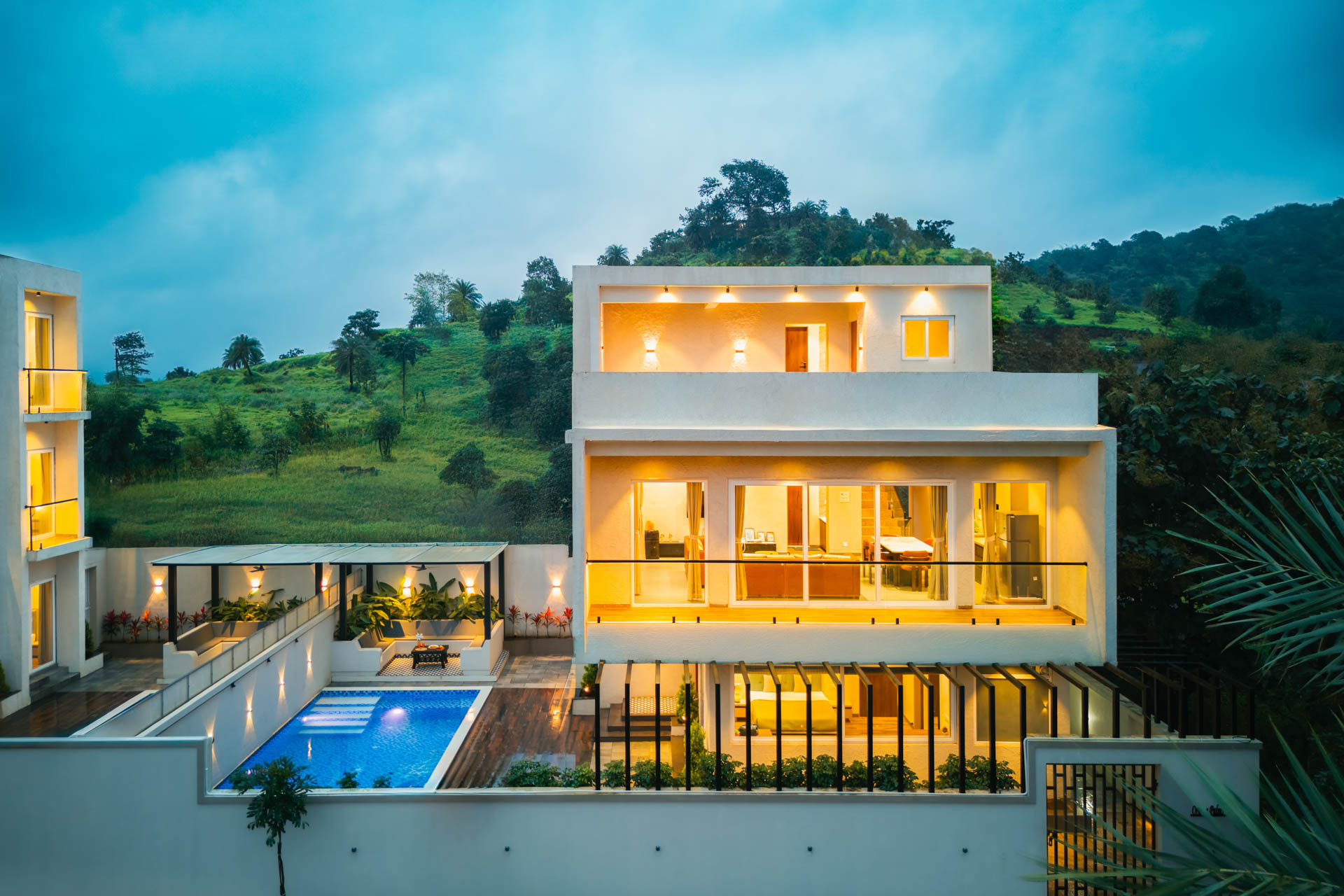
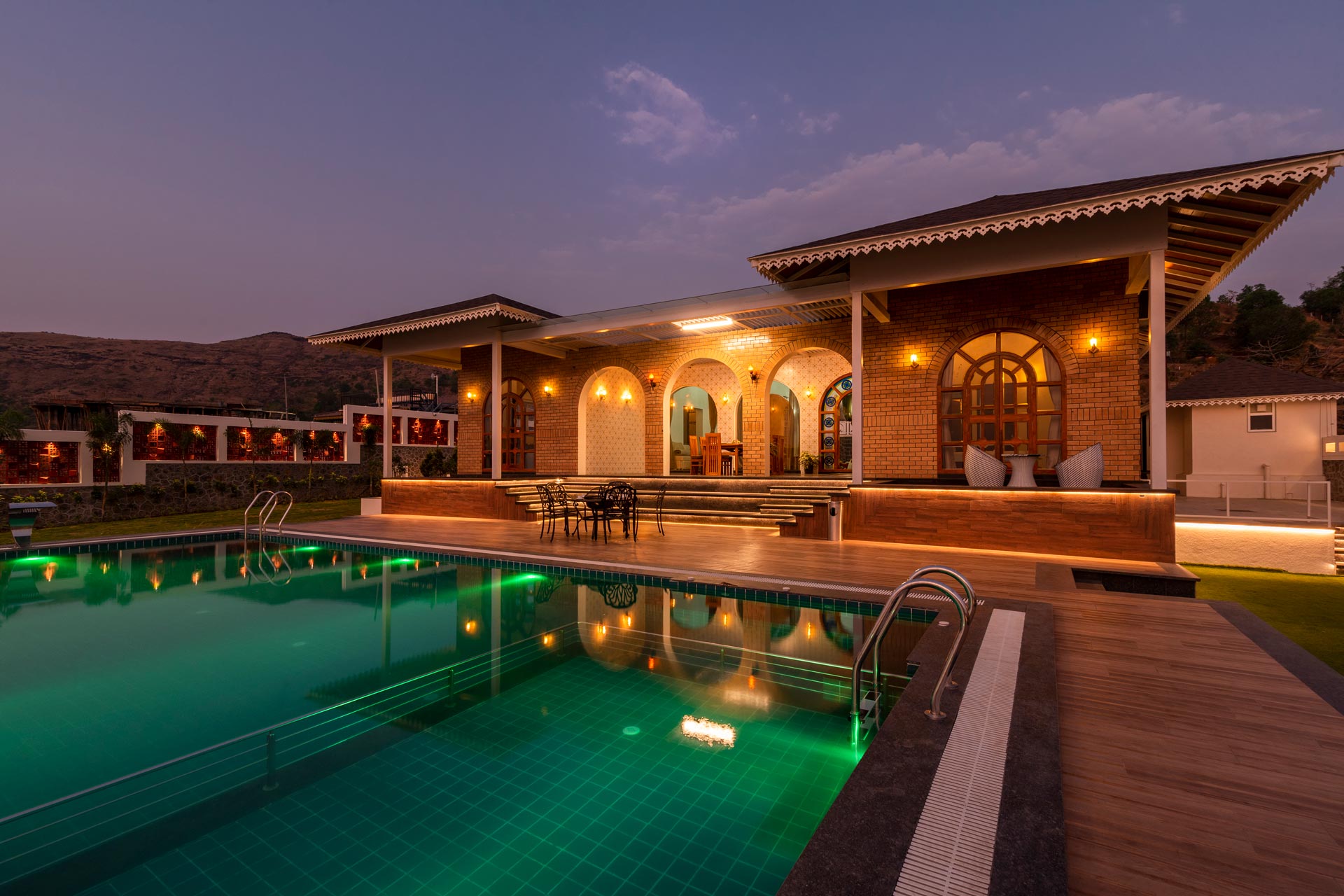

Browse verified private villas with in-house cooks at stayvista.com – a genuine luxury after a wet, tiring day on the plateau.
Frequently Asked Questions
It depends on the route. The Pachnai route is easy – about 3 km and 2–3 hours, suitable for beginners and families. Khireshwar via Tolar Khind is moderate to difficult at ~7 km, while Nalichi Vaat is a very difficult, technical climb of 6–9 hours for experienced trekkers only.
The Pachnai route is the easiest way up Harishchandragad. It’s roughly 3 km one way with a gradual, well-marked trail and an ascent of just 2 to 2.5 hours. It’s the best choice for beginners, families, first-time trekkers, and supervised night treks.
Only on the right route. In monsoon, stick to Pachnai (safest) or Khireshwar with care. Avoid Nalichi Vaat entirely – its near-vertical rock and rockfall risk make it one of Maharashtra’s more dangerous monsoon trails. Expect leeches, fog, and slippery rock even on the easier routes.
Konkan Kada is a concave overhanging cliff at Harishchandragad, famous for cloud inversions, vertical cloudbursts (best in April–May), dramatic sunsets, and the rare Brocken spectre – a circular rainbow halo around your own shadow, visible in partial cloud with the sun behind you.
Harishchandragad is about 170–220 km from Mumbai, a 5–6 hour drive. For the popular Khireshwar route, drive via Kalyan, Murbad and Malshej Ghat to Khubi Phata, then walk to Khireshwar village. For the easier Pachnai route, go via Kasara, Ghoti and Rajur.
October to February is the best all-round time, with clear views, accessible caves, and temperatures of 5–20°C. April–May is ideal for the Konkan Kada cloudbursts, while monsoon offers lush greenery and possible Brocken spectre sightings – but only trek the easier routes then.
Yes, beginners can do Harishchandragad via the Pachnai route, which is short (~3 km), gradual, and well-marked. Beginners should avoid the technical Nalichi Vaat route entirely, and attempt Khireshwar only with reasonable fitness. In monsoon, first-timers should stick to Pachnai.
Yes, camping is allowed on the Harishchandragad plateau. Locally hired tents cost around ₹400–500 for 2–3 people, and organised packages from Mumbai run about ₹2,000–2,300 per person. Most campers pitch near the temple or between Taramati peak and Konkan Kada for sunset and sunrise views.
There is no official entry fee for Harishchandragad and no permit is required. You may pay a small parking charge at the base villages, and guides or tent hire cost extra.