
10 Hidden Maharashtra Villages That Turn Magical in the Monsoon (2026)
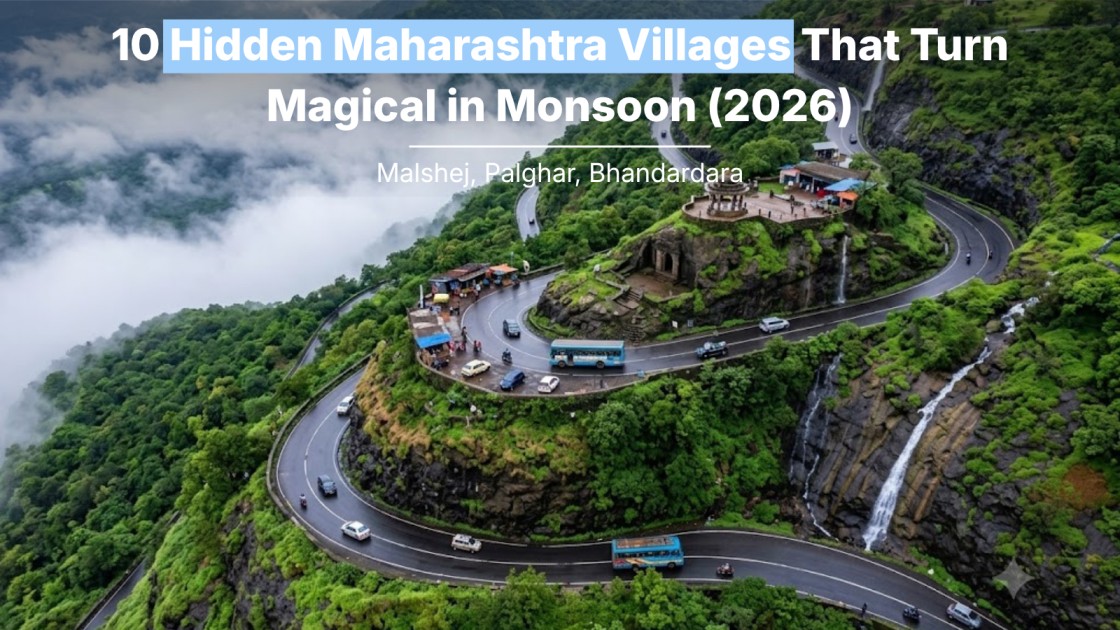
Every monsoon, the same thing happens. Half of Mumbai drives to Lonavala, half of Pune drives to Lavasa, and everyone sits in the same traffic looking at the same waterfall. Meanwhile, an hour past those exits, there are villages where the rain does something genuinely different — where clouds sit inside the valley rather than above it, where the only sound at 6 am is water moving.
We’ve spent a lot of monsoons driving these roads. What follows are ten villages worth the detour, each with the distances, the current road status, and an honest note on what’s actually open this season. Because a lot of Maharashtra is not open right now, and no travel guide should pretend otherwise.
Maharashtra’s best monsoon secret isn’t its hill stations — it’s its villages. From the Warli-art town of Jawhar to the mist-drowned lakeside of Tapola, these ten offbeat villages sit 2–7 hours from Mumbai or Pune and turn emerald in the rain. Each pick below has verified distances, live 2026 road and safety status, and a nearby StayVista stay.
In this Blog
What’s Closed in Maharashtra Right Now? (July 2026)
This is the part most monsoon listicles skip, and it’s the part that actually matters. As of late July 2026, several of Maharashtra’s headline monsoon spots carry active restrictions or closures. Read this before you plan a route.
⚠️ Malshej Ghat (NH-61) is closed. A concrete stretch of the Ahilyanagar–Kalyan highway subsided near Karanjale village in Junnar taluka, between kilometre markers 99/500 and 99/600. The road is shut to all vehicular traffic until further orders, with no reopening date announced (Punekar News, 26 July 2026). Official detours: Alephata–Rajgurunagar–Chakan–Talegaon–Lonavala–Mumbai, or Alephata–Sangamner–Nashik–Kasara–Kalyan–Mumbai.
Alongside that, three sets of restrictions are in force across the Sahyadris:
- Lonavala corridor: a prohibitory order under Section 163 of the Bharatiya Nagarik Suraksha Sanhita, 2023, runs from 6 to 31 July 2026, banning entry to waterfalls, streams, dams, and cliff edges, as well as photography at dangerous points and the use of vehicles near dam banks (Mangalorean).
- Raigad district: Tamhini Ghat, Devkund Waterfall and “Secret Point” are barred from 17 June to 30 September, with a one-kilometre no-swimming radius around the falls (Punekar News).
- Forest sanctuaries: hazardous routes inside the Bhimashankar and Tamhini sanctuaries close roughly from 1 July to 30 September each monsoon (Lokmat Times).
None of this means you should stay home. It means the trip you plan should be about mist, villages, lakes and the drive itself — not about wading into a swollen pool. Every village below is scored on that basis.
Which Hidden Village Should You Drive To? (Quick Comparison)
Here’s the whole guide in one table. Drive times are realistic monsoon estimates, not optimistic aggregator figures — ghat roads run slow in the rain.
| Village | Nearest city (drive) | Best for | Monsoon highlight | Status now |
|---|---|---|---|---|
| Jawhar | Mumbai ~3–3.5 hrs | Culture, families | Dabhosa falls, Warli art | ✅ Open |
| Purushwadi | ~5 hrs from both | Slow travel | Terraced green valleys | ✅ Open |
| Samrad | Mumbai ~5 hrs | Photography | Cloud-ringed peaks | ⚠️ Gorge trek closed |
| Khireshwar | Mumbai ~3.5–4 hrs | Waterfalls, mist | Malshej cascades | 🚫 NH-61 shut |
| Udhewadi (Rajmachi) | Lonavala ~1.5–2.5 hrs | Forts, walkers | Plateau waterfalls | ⚠️ Walk-in only |
| Bhira | Pune ~4 hrs | Adventure | Kolad rafting | ⚠️ Devkund banned |
| Kumbhe | Pune ~3.5–4 hrs | Photography | Rock-tunnel waterfall | ⚠️ View only |
| Bhorgiri | Pune ~3–3.5 hrs | Temple, wildlife | Shekru squirrels, mist | ⚠️ Trek routes shut |
| Tapola | Pune ~4 hrs | Couples | Backwater “Mini Kashmir” | ⚠️ Vasota closed |
| Kaas villages | Pune ~3–3.5 hrs | Photography, families | Wildflower plateau | 📅 Book for Sept–Oct |
1. Jawhar, Palghar: Why Is the Warli Art Town Best in the Rains?
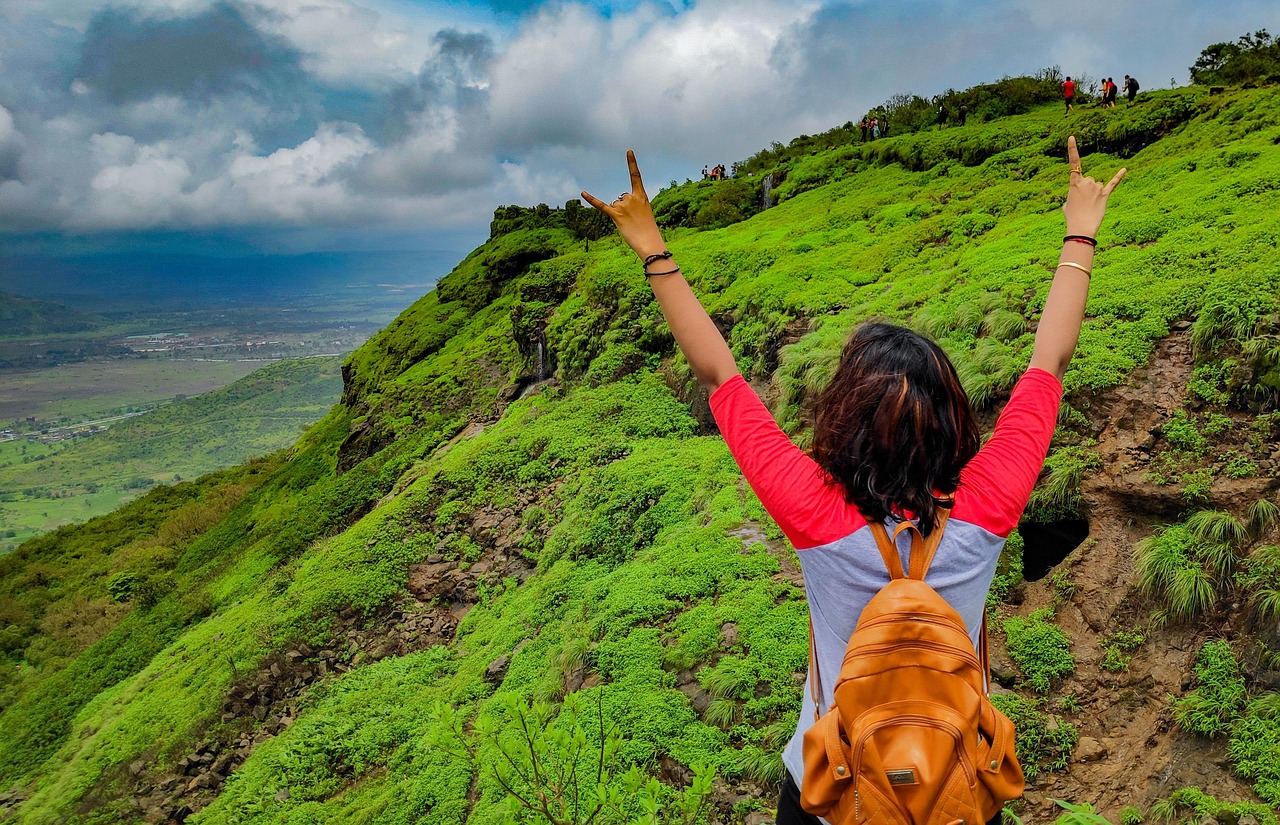
Jawhar is the one village on this list where the culture is as strong as the scenery. Locals call it the “Mahabaleshwar of Palghar,” and in the rains the plateau genuinely earns it — forest patches, wide valley drops, and a 300-foot waterfall running at full volume.
The town is a heartland of Warli painting, the tribal art form built from white rice-paste geometry on earth-red walls. You can buy directly from artisan homes, and several families will show you how the motifs are built. This is a living practice, not a museum exhibit — treat it that way.
Dabhosa Waterfall, 19 km out, drops roughly 300 feet (90 m) on the Lendi River and is among the tallest falls near Mumbai (Wikipedia). Jai Vilas Palace, the old Mukne dynasty residence, charges around ₹50 and lists 10 am–5 pm — but interiors are currently shut for repair, so plan on the architecture and grounds from outside.
- Distance: Mumbai ~120–140 km (3–3.5 hrs). Pune ~233–254 km — budget five hours, not the four that route apps promise.
- Nearest station: Palghar (~42 km) or Igatpuri (~60 km). Airport: Nashik ~80 km, Mumbai ~120 km.
- Best time: mid-June to September. Reach falls and viewpoints before noon.
- Time required: a full day, or an easy overnight.
- Ideal for: culture travellers, families, photographers.
- Status: ✅ No specific ban found. Palghar sits under IMD orange alerts — normal water-body caution applies.
Pro tip: monsoon afternoons at Dabhosa turn the rock approach slippery and the valley invisible. Morning gives you both the view and safe footing. Phone ahead about the palace rather than assuming walk-in access.
Where to stay: there’s no StayVista property in Jawhar town itself, so the Wada belt is the practical base — Shubmann Villa – Wada, a 3-BHK inside a working farmhouse with a private pool and river view (~45 km by road), or the larger Ashbourne Estate – Wada, a 7-BHK with pool, jacuzzi and barbecue for groups.
2. Purushwadi, Akole: Are the Fireflies Worth the Drive in July?
Purushwadi is a Mahadeo Koli tribal hamlet of terraced farms, run as a community tourism project by Grassroutes. You stay in village homes, eat millet meals cooked by the family hosting you, and walk with local guides. The money stays in the village. It’s the most genuinely rural experience on this list.
Now the honest part, because a lot of blogs get this wrong: the famous fireflies are a pre-monsoon event, not a monsoon one. They peak roughly mid-May to mid-June, driven by heat and humidity ahead of the rains, and they’re largely gone once the monsoon settles in. If you drive up in August expecting a million fireflies, you’ll be disappointed.
What July to September actually delivers is better in its own way — paddy terraces at full green, streams running through the hills, and cloud sitting low over the Bhandardara range. Kalsubai, Maharashtra’s highest peak, and the ninth-century Amruteshwar temple at Ratanwadi are both within reach.
- Distance: roughly 200 km and about five hours from both Mumbai and Pune (sources vary between 185 and 220 km).
- Nearest station: Kasara or Igatpuri, ~70 km. Airport: Nashik, or Mumbai for connections.
- Best time: July–September for green; mid-May to mid-June for fireflies.
- Ideal for: responsible travellers, families, couples. Not for luxury-seekers — village lodging is homestay and camp only.
- Status: ✅ Open. Book Grassroutes directly and confirm current rates.
Pro tip: go on a weekday. Weekends book out and cost more, and the whole point of Purushwadi is quiet.
Where to stay: Igatpuri is the comfortable base an hour out — Lake Arches (4-BHK, infinity pool, meals available) or Sunset on the Lake, set on a hilltop above the water.

3. Samrad, Bhandardara: What Makes This Hamlet So Dramatic in the Rain?
Samrad is a small hamlet ringed by Sahyadri peaks, and in the monsoon it sits inside the weather rather than under it. Cloud pours over the ridgelines and drains into the valley all day. For photographers, it’s one of the most dramatic settings in the state.
It’s also the entry village for Sandhan Valley — the “Valley of Shadows” — a canyon roughly two kilometres long with basalt walls up to about 300 feet, narrowing in places to a few feet wide (Outlook Traveller). Sunlight barely reaches the floor, which is where the name comes from.
🚫 Do not enter the gorge in the monsoon. The forest department closes Sandhan Valley through the rains because the canyon is a flash-flood trap — sudden upstream rain surges through a gap with no mid-route exit. The closure followed a real incident in which tourists were trapped inside by a sudden downpour (Pune Pulse). The descent reopens post-monsoon, around November.
- Distance: Mumbai ~185–200 km (4.5–5.5 hrs); Pune ~180–220 km (5–6 hrs). The last stretch is a slow village road.
- Nearest station: Kasara or Igatpuri. Airport: Pune or Mumbai.
- Best time: monsoon for the region and the drive; October to February for the canyon itself.
- Ideal for: photographers and drivers now; experienced trekkers after the rains.
Pro tip: treat any rain upstream as a hard stop, and never walk into the gorge without a registered operator — even in season.
Where to stay: Lake Arches in Igatpuri is the closest comfortable option, or Breezy Whispers, which looks out over the Darna dam and the hills.
4. Khireshwar, Malshej: Can You Still Visit With the Ghat Closed?
Khireshwar is the quiet lakeside village below Harishchandragad, sitting where the Malshej waterfalls come off the rock in sheets. It is, on its day, the most cinematic monsoon landscape within four hours of Mumbai.
🚫 Check before you drive: Malshej Ghat’s NH-61 is currently closed. The road subsided near Karanjale in Junnar taluka and is shut until further orders (Punekar News, July 2026). Malshej is a chronic landslide zone with repeated monsoon closures, so confirm the current status with the highway authority or local police before setting out — and use the Alephata detours if it’s still shut when you travel.
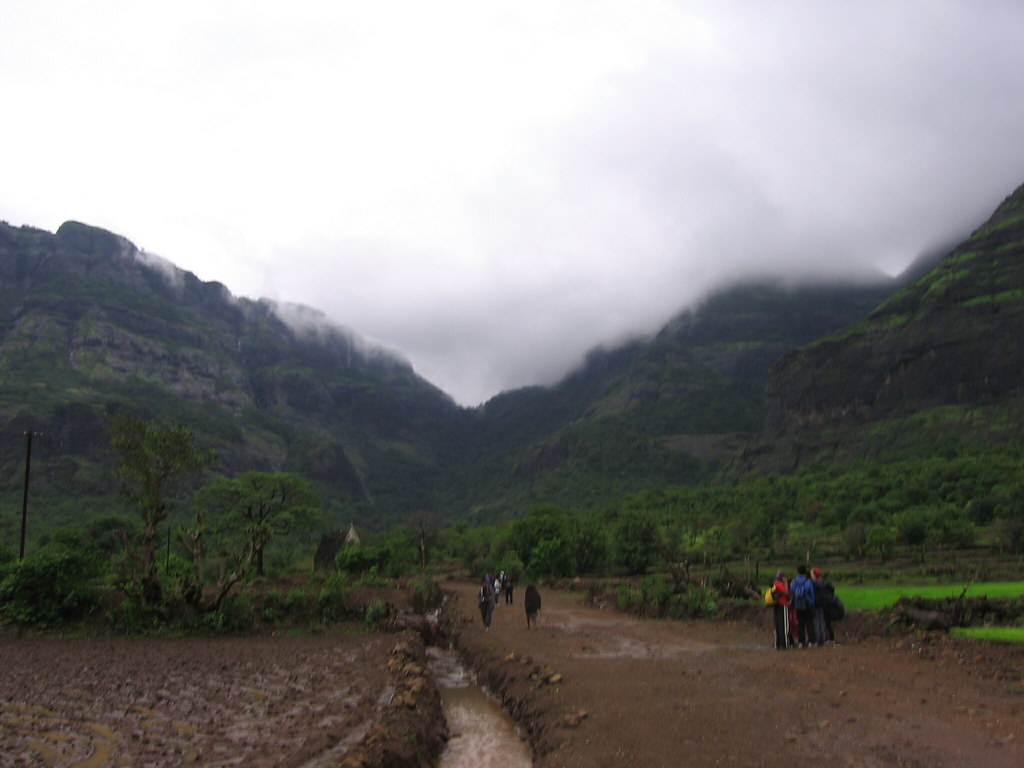
We’ve kept Khireshwar on this list rather than quietly dropping it, because if you’re searching whether Malshej is open, you deserve a straight answer instead of a listicle pretending the road is fine. When it reopens, this is what’s waiting.
Harishchandragad rises to 1,422 m, with Taramati peak at about 1,429 m. The Khireshwar route climbs to the Tolar Khind pass, then up a fixed-railing rock section to the plateau. The prize is Konkan Kada, a concave overhanging cliff where, in the right conditions, cloud hitting the rock face gets pulled into the pit and thrown vertically upward (Wikipedia). Note that the Kedareshwar cave becomes inaccessible in the rains as the stream fills it. Nearby, the Pimpalgaon Joga reservoir draws birdwatchers — flamingos get advertised heavily here, but sightings are anecdotal rather than reliable, so don’t plan around them.
- Distance: Mumbai ~130–140 km (3.5–4 hrs via Kalyan–Murbad); Pune ~120–130 km (3–4 hrs via Junnar) — routes subject to the NH-61 closure.
- Nearest station: Kalyan Junction. Trek: moderate, roughly 3–4 hours up for a fit walker. No ticketed entry is documented.
- Ideal for: trekkers and photographers. Not suited to young children in heavy rain.
Pro tip: cross Tolar Khind before 11 am. The fixed iron poles heat up badly in afternoon sun and turn treacherous when wet.
Where to stay: inventory is sparse here; Lake Arches in Igatpuri is the nearest comfortable base.
5. Udhewadi (Rajmachi): What’s It Like on a Plateau of Waterfalls?
Udhewadi is a hamlet of roughly sixty households sitting on the Rajmachi plateau between two forts, and in the monsoon the whole tableland turns into moving water. Seasonal falls open on every slope. Mist arrives by mid-morning and doesn’t really leave.
The twin forts — Shrivardhan and Manaranjan — are free to walk. On the Karjat approach sit the Kondhane caves, a group of around sixteen rock-cut Buddhist chaityas and viharas dating to roughly the first century BC. Kataldhar, a 350-foot fall with a big overhang, runs only in the monsoon, though the descent is for experienced trekkers only.
⚠️ In the monsoon, you walk in. The jeep track from the Lonavala side closes in the rains, leaving roughly an eight-kilometre walk once vehicles stop. Rajmachi also falls inside the Lonavala Section 163 order, so go with a registered operator on approved trails, and don’t enter waterfalls or streams.
- Distance: anchor to Lonavala — Mumbai ~83 km (~2.5 hrs), Pune ~65 km (~1.5 hrs) — then 12–15 km on the plateau.
- Nearest station: Lonavala, or Karjat for the steeper Kondivade approach.
- Time required: a long day, but far better as an overnight.
- Ideal for: fit walkers, history-minded travellers, photographers.
Pro tip: stay the night in one of Udhewadi’s basic village dorms or homestays instead of rushing a rainy day-hike. Carry cash — there’s no reliable UPI on the plateau — and start early.
Where to stay: La Palm in Lonavala spreads across three acres of organic farmland about 12 km away, or Vista Dazzle in Karjat for larger groups.

6. Bhira, Raigad: Should You Raft or Trek This Monsoon?
Bhira is a forest village at the head of the Kundalika valley, and it comes with the single most useful piece of monsoon planning advice in this guide: raft now, trek later.
The village is the base for Devkund, a waterfall at the confluence of three streams that forms the source of the Kundalika river, reached by a roughly six-kilometre forest trek (Wikipedia).
🚫 Devkund is banned from 17 June to 30 September under a Section 163 order, after repeated drownings — including two men from the Chakan area on 12 July 2026, who reportedly bypassed a police warning during the ban (Punekar News). Outside the ban, a forest permit and a registered Bhira guide are mandatory — around ₹50 per person, with parking at ₹30 for bikes and ₹50 for cars. The plunge pool has unpredictable depth and strong currents, and there’s no reliable phone signal for rescue.
Here’s the good news, and it’s genuinely counterintuitive: Kolad rafting runs right through the monsoon. The Kundalika rapids downstream are fed by a controlled release from the Bhira hydroelectric dam rather than by rainfall, so the water is reliable and scheduled — typically reaching the Kolad stretch around 10 am: same river, opposite rules.
- Distance: Mumbai ~170–175 km (5–6 hrs); Pune ~110–115 km (~4 hrs).
- Nearest station: Mangaon (~30 km). Airport: Pune ~110 km.
- Best time: Kolad rafting June–September; Devkund late September to mid-November.
- Ideal for: adventure travellers and groups. Devkund is not a family trek.
Pro tip: book the morning release for rafting, then save Devkund for October when it’s both legal and safe. You’ll see the same river at both ends of its life.
Where to stay: Kolad has no StayVista inventory, so Mulshi is the base — Kyuka – Kizuna sits by the lake with meals included and sleeps up to 21. Pet owners should look at Lake Mansion in Lonavala, which is pet-friendly.
7. Kumbhe, Mangaon: What’s Behind the Rock-Tunnel Waterfall?
Kumbhe is a remote Raigad hamlet at the end of the Tamhini drive, and its signature shot is unusual: a rock-cut tunnel that opens directly onto a large monsoon waterfall. The viewpoint sits about ten minutes’ walk from the parking area, through the tunnel.
On the waterfall’s height, we’ll be straight with you — nobody has surveyed it. The figure repeated most often is around 178 feet (roughly 45–55 m), while rappelling operators describe a working line of up to 300 feet, which likely includes the approach ledge rather than the visible drop. Treat any precise number you read online with suspicion.
The drive there is half the reason to go. The Pune route runs through Tamhini Ghat, which in July is essentially one continuous waterfall corridor.
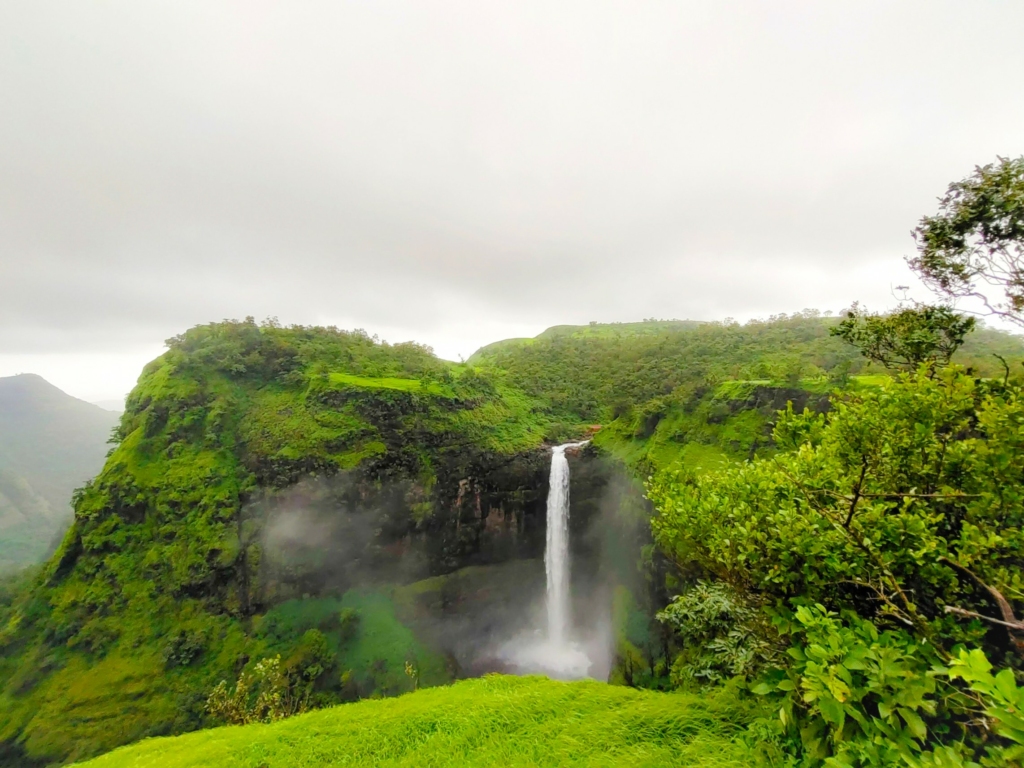
⚠️ Tamhini Ghat, its waterfalls and “Secret Point” are barred from 17 June to 30 September, with a one-kilometre no-swimming radius and a ban on dangerous selfies and photography at the falls. Look, photograph from safe ground, and stay out of the pools.
- Distance: Pune ~110–115 km (3.5–4 hrs via Tamhini); Mumbai ~145–165 km (4–5 hrs).
- Nearest station: Mangaon (~23–25 km).
- Best time: June to September, daylight hours only.
- Ideal for: photographers, couples, confident drivers. Skip the steep ridge viewpoint entirely in rain.
Pro tip: there are no shops or eateries at Kumbhe. Carry all your food and water, fill fuel before Tamhini, and start early so you’re not driving the ghat back through afternoon rain. If you want to make a full day of it, our guide to Tamhini Ghat’s waterfall stops maps the route.
Where to stay: Kyuka – Kizuna in Mulshi is about 14 km from the ghat and the most sensible base for this drive.
8. Bhorgiri, Pune: Where Can You See the Shekru in the Mist?
Bhorgiri is a small village on the Bhimashankar side of the Sahyadri crest, where the Bhima river rises before running southeast to meet the Krishna. It’s forest country, and the monsoon brings mist, running water and — if you’re lucky and early — the Indian Giant Squirrel.
The Shekru, Maharashtra’s state animal, is the reason Bhimashankar Wildlife Sanctuary exists. The sanctuary runs roughly from 7 am to 6 pm, with entry around ₹50 for Indian visitors and ₹500 for foreign nationals. The Bhimashankar temple, one of the twelve Jyotirlingas, is free to enter and open from about 4:30 am to 9:30 pm. A short forested walk beyond it leads to Gupt Bhimashankar, a water-carved linga under a fall that’s at its best in the rains. The ruined Bhorgiri fort, at around 2,000 feet, once watched an old Konkan–Pune trade route.
⚠️ Hazardous sanctuary routes close roughly 1 July to 30 September. The temple and the drive stay open; the Shidi Ghat ladder trek from Khandas is genuinely unsafe in heavy rain. Do check the temple’s current status too, as renovation work has been reported.
- Distance: Pune ~110–125 km (3–3.5 hrs); Mumbai ~210–220 km (5–6 hrs).
- Nearest station: Pune Junction for the temple side; Karjat for the Khandas trek side.
- Ideal for: pilgrims, wildlife watchers, photographers.
Pro tip: arrive by 9 or 10 am. Afternoon mist on the Bhimashankar ghat can cut visibility to a few metres, parking fills on rain-season weekends, and squirrel sightings are far better early.
Where to stay: we’ll be honest — there’s no StayVista villa genuinely close. Bhimashankar sits atop the crest with no direct road from the Karjat lowlands, so anything that looks near on a map is 60–90 km by road. Use Karjat as a base and drive up: Vine & Splash (9-BHK, infinity pool, river view, pet-friendly) or the smaller One Villa, also pet-friendly.
9. Tapola, Satara: Is “Mini Kashmir” Worth the Ghat Drive?
Tapola is a lakeside hamlet where the Koyna and Solshi rivers meet the Shivsagar reservoir — a body of water stretching roughly 90 km behind the Koyna dam. In the monsoon, the hills drop straight into still grey water and the whole basin fills with cloud. The “Mini Kashmir” nickname is marketing, but standing there at 7 am, you understand it.
This is the most straightforwardly romantic pick on the list, and the least demanding. There’s no trek required, no permit to chase — just a slow ghat drive and a lake.
⚠️ Don’t build the trip around Vasota Fort or guaranteed boating. The Vasota trek sits inside Koyna Wildlife Sanctuary and is closed through the monsoon, roughly mid-June to mid-October. It’s also reached by boat from Bamnoli, not from Tapola. Lake boating gets suspended on heavy-rain days, so call your stay a day ahead to check what’s running.
- Distance: Pune ~145 km (~4 hrs); Mumbai ~289 km (6.5–7.5 hrs). Drive to Mahabaleshwar, then ~28 km of slow ghat road.
- Nearest station: Satara. Airport: Pune ~150 km.
- Best time: monsoon for scenery; October to March for water sports.
- Ideal for: couples, photographers, anyone who wants to do very little.
Pro tip: go early and treat the Mahabaleshwar–Tapola stretch as the slow part of the journey. It’s narrow, foggy and worth every minute — but not in the dark.
Where to stay: Status Villa sits at the top of Bhilar in Panchgani with a heated pool, which is a genuine luxury in monsoon. Serenity Hills in Mahabaleshwar puts you closer to the ghat road, with rooms opening onto mist-covered hills and a cook on hand.
10. The Kaas Villages, Satara: When Do the Wildflowers Bloom?
A quick correction first, because it’s repeated widely online: Vinchurni is not the Kaas base village. The documented Vinchurni sits about 62 km east of Satara in Phaltan taluka — the opposite side of the district. The genuine base villages on the plateau’s edge are Kas, Petri and Atali.
These hamlets sit beside the Kaas Plateau, part of the Western Ghats inscribed as a UNESCO World Heritage Site in 2012. At around 1,200 m and roughly 10 km², the plateau supports over 850 species of flowering plants. Right now, in peak monsoon, it’s simply lush and misty.
The famous wildflower carpet is a post-monsoon event, blooming from around mid-September into October, with the peak typically in the last week of September. Which makes this a two-part trip: drive up for the green now, and book your slot for September.
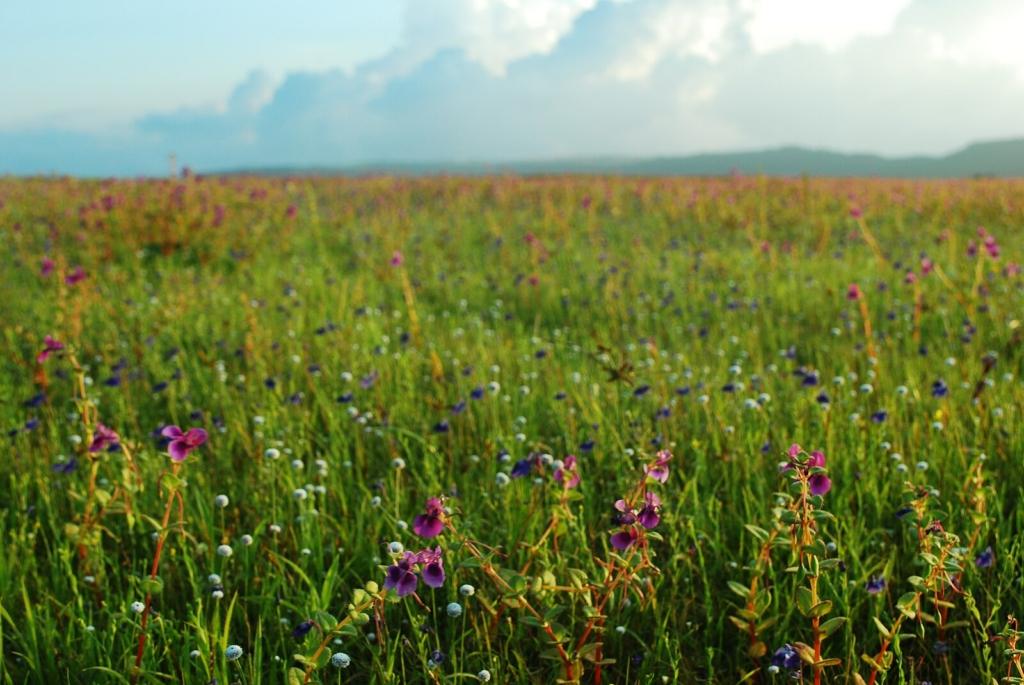
On booking — as of late July 2026, the official 2026 dates haven’t been announced. The portal at kas.ind.in still shows the previous season as closed, and the “18 September” date circulating on travel sites is unofficial. What is fixed: a daily cap of 3,000 visitors split across three slots (7–11 am, 11 am–3 pm, 3–6 pm), with entry around ₹100 on weekends and ₹50 on weekdays. Online booking is mandatory on weekends and holidays.
- Distance: Pune ~125–140 km (3–3.5 hrs); Mumbai ~275–280 km (5.5–6 hrs). Via NH-48 to Satara, then ~25 km of ghat road west.
- Nearest station: Satara (~25 km). Airport: Pune ~140 km.
- Ideal for: photographers, families, gentle walkers — it’s boardwalk terrain, not trekking.
Pro tip: book the earliest weekday slot, carry a printed ticket rather than a screenshot, and stay on the Kaas side the night before instead of driving the ghat on bloom morning.
Where to stay: Panchgani is the nearest cluster, about 23 km out — Grande Prima (5-BHK with pool, jacuzzi and home theatre) or Stars & Boulevards, a smaller 3-BHK with a lawn and bonfire.
How Do You Plan a Safe Monsoon Village Road Trip in Maharashtra?
Cluster your villages by base rather than trying to string them into a loop. Ghat roads are slow in the rain, and the drive between two “nearby” villages can take longer than the drive out from the city.
Three clusters work well:
- Igatpuri base — Samrad and Purushwadi, both in the Bhandardara belt.
- Mulshi base — Kumbhe via Tamhini, plus Kolad rafting near Bhira.
- Panchgani base — Tapola and the Kaas villages, an easy pairing.
For a one-day trip, Jawhar from Mumbai and Bhorgiri from Pune are the two that genuinely work without an overnight. Everything else is better as a weekend.
Monsoon safety: the rules that actually matter
Most monsoon tourist deaths in Maharashtra follow the same pattern — someone enters water that looks calm and isn’t. Every district order in force this season targets exactly that behaviour.
- Never enter water below a dam or inside a gorge. Releases and flash floods arrive without warning. This is the single rule that would prevent most fatalities.
- Check road status the morning you leave, not the week before. Malshej’s closure came with no notice, and ghat roads change fast.
- Respect the Section 163 orders. They’re enforced, and violations are prosecutable. Groups have been booked at Devkund this season.
- Drive ghats before afternoon. Mist regularly cuts visibility to a few metres after 2 pm.
- Expect no signal. Most of these valleys have dead zones. Download offline maps and tell someone your route.
- Carry grip footwear, a dry bag and salt for leeches on any forest trail.
Check IMD district alerts before you set off. Pune’s ghat sections have been under red alerts this July, with orange alerts across Palghar, Thane, Raigad and Ratnagiri.
Where Should You Stay Near These Villages?
Most of these villages have tribal homestays or nothing at all — which is part of their appeal, but not always what you want after a five-hour drive in the rain. The practical approach is a comfortable base you drive out from each morning.
Our monsoon bases, grouped by cluster:
- Igatpuri — for Samrad, Purushwadi and Khireshwar: Lake Arches, Sunset on the Lake, Breezy Whispers
- Lonavala & Karjat — for Rajmachi and Bhorgiri: La Palm, Vista Dazzle, Vine & Splash, One Villa
- Mulshi — for Kumbhe and Bhira: Kyuka – Kizuna
- Panchgani & Mahabaleshwar — for Tapola and the Kaas villages: Status Villa, Serenity Hills, Grande Prima, Stars & Boulevards
- Wada — for Jawhar: Shubmann Villa, Ashbourne Estate
Each of these is linked in its village section above.
If you’d rather stay put and watch the rain from a valley-facing deck, our roundup of monsoon villas in the Western Ghats covers the Lonavala, Karjat and Mahabaleshwar belt in more detail.
Frequently Asked Questions
No. As of late July 2026, NH-61 through Malshej Ghat is closed to all vehicular traffic after a stretch of road subsided near Karanjale village in Junnar taluka. No reopening date has been announced. Use the Alephata–Rajgurunagar–Chakan–Lonavala or Alephata–Sangamner–Nashik–Kasara detours, and confirm status before you travel.
Kumbhe, off Tamhini Ghat, is the most genuinely offbeat option about 3.5–4 hours from Pune — a remote Raigad hamlet with a rock-cut tunnel opening onto a large monsoon waterfall, and no shops or eateries at the site. Bhorgiri, near Bhimashankar, is the easier alternative at roughly three hours.
Yes, with precautions. The risk isn’t the driving — it’s the water. Never enter streams, plunge pools or riverbeds below dams, where flash floods and sudden releases occur without warning. Respect the Section 163 prohibitory orders in Lonavala and Raigad, drive ghats before afternoon mist, and check IMD district alerts each morning.
Jawhar has Dabhosa, roughly 300 feet on the Lendi river. Kumbhe has its tunnel-framed fall near Tamhini. Bhira is the base for Devkund, though it’s banned until 30 September. Khireshwar sits below the Malshej cascades. In every case this season, view from safe ground — swimming is prohibited.
Yes. Jawhar works as a day trip from Mumbai at three to three and a half hours each way, and Bhorgiri works from Pune at around three hours. Everything else on this list — particularly Purushwadi, Samrad and Tapola, all five hours or more — is far better as a weekend.
The wildflower bloom peaks post-monsoon, from around mid-September into October, with the strongest colour usually in the last week of September. As of late July 2026, official 2026 dates hadn’t been announced. Book through kas.ind.in — there’s a 3,000-visitor daily cap across three time slots.
Mostly no. Purushwadi’s synchronous fireflies are a pre-monsoon phenomenon, peaking roughly mid-May to mid-June and fading as the rains arrive. Visit in July to September for lush terraced farmland, streams and green valleys instead — and book weekdays, when the village is quieter and cheaper.
The Short Version
Maharashtra’s monsoon is at its best where nobody’s queuing for it. What that takes this year is a bit of homework:
- Check the road first. Malshej is shut, and ghat closures happen with no notice.
- Pick scenery over stunts. Sandhan, Devkund and Vasota are all closed. The mist, lakes and villages are not.
- Cluster your trip around one base — Igatpuri, Mulshi or Panchgani — instead of chasing a loop.
- Go early, every day. Mornings give you views, safe footing and empty roads.
- Book Kaas for September, and treat this month as the green preview.
Pick a village, check the road, and go before the season turns. If you want a base with a valley view and a working fireplace, our Maharashtra homes are open through the rains.