
Tamhini Ghat in Monsoon: 8 Waterfall Stops on the Greenest Drive From Pune
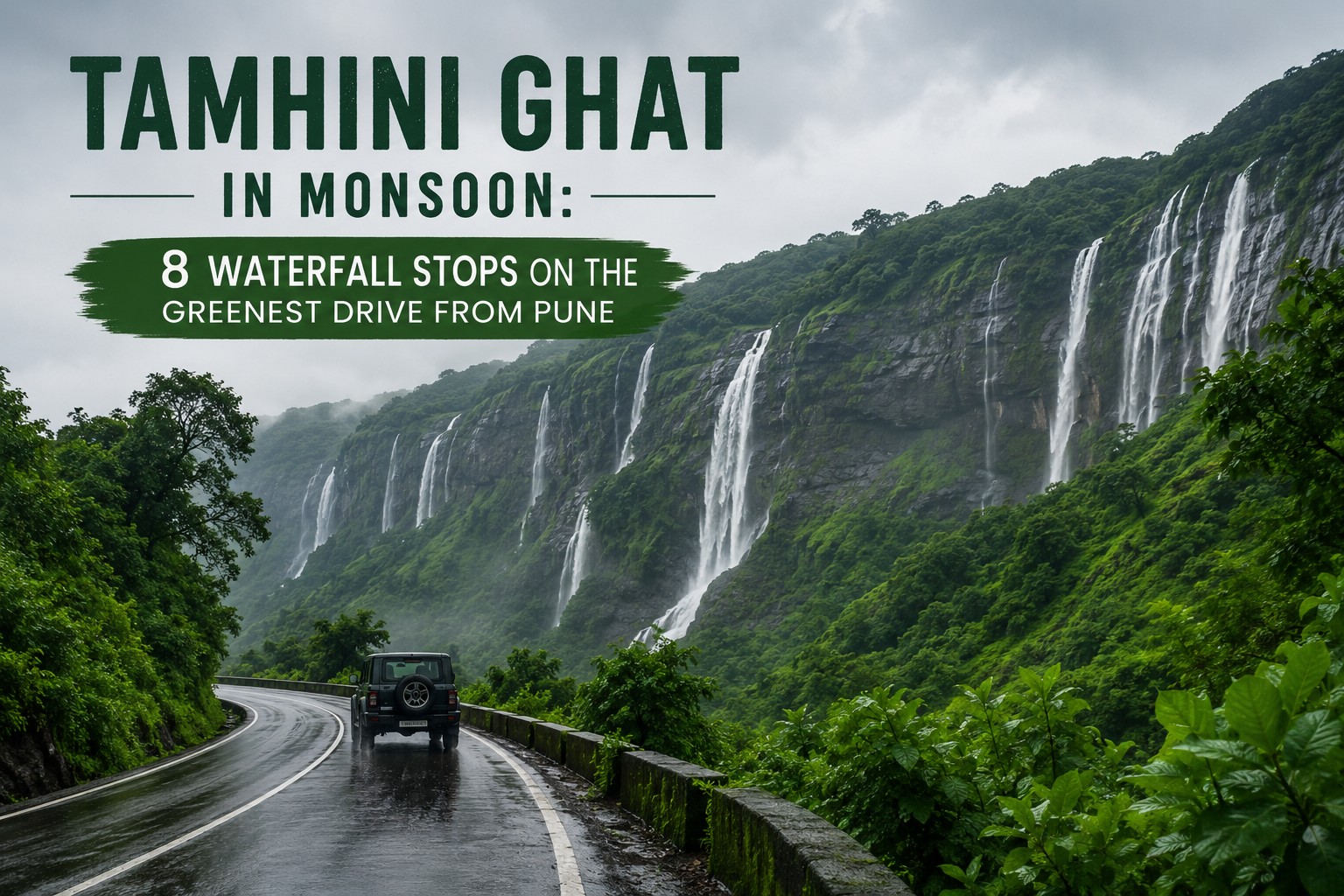
The Western Ghats receive 2,500–5,000 mm of rain annually across their windward slopes, and every drop of it lands on the Tamhini Ghat road between July and September. The 70 km corridor from Pune to Tamhini — winding through a UNESCO World Heritage landscape holding 7,402 plant species — transforms into one of India’s most saturated green drives, with unnamed cascades erupting from every cliff face and waterfalls you can touch from the car window.
Choosing which stops to make is the hard part. The route technically never ends: seasonal falls appear and vanish depending on which week of monsoon you’re driving. We mapped the eight named, accessible waterfall stops in route order from Pune — with distances, difficulty levels, entry fees, and the timing windows you’ll actually need.
Tamhini Ghat’s 8 waterfall stops range from 35 km to 120 km from Pune, covering everything from roadside cascades to the 13 km Andharban trek. Drive the full route in 2–2.5 hours. Note: Devkund Waterfall and certain Tamhini Ghat zones were officially restricted June 17–September 30, 2025 — verify current advisories before you go.
In this Blog
2026 Safety Advisory: Read Before You Drive
Two separate government orders affect this route in 2026:
1. Tamhini Wildlife Sanctuary routes — confirmed closed July 1–September 30, 2026. The Pune Forest Department (Conservator of Forests, Wildlife) closed scenic routes within Tamhini Wildlife Sanctuary and Bhimashankar Wildlife Sanctuary for this window. Affected routes include Kondhwal, Chondi-Khopiwali, Nhani, Subhedar, Ghongal Ghat, and Shidi Ghat.
2. Devkund Waterfall and Secret Point — verify before visiting. The Raigad District Administration banned these specifically from June 17–September 30, 2025. The ban has been renewed every monsoon season since at least 2024. A 2026 Raigad District order for Devkund/Secret Point had not been publicly posted as of this article’s date
Activities prohibited in all restricted zones: swimming near waterfalls, alcohol consumption, risky photography near cliff edges, and vehicle entry near danger sites. Violations attract strict legal action.
The Route at a Glance: Pune → Tamhini → Kolad
Drive route: Chandni Chowk → Pirangut → Mulshi → Tamhini Ghat top → Bhira / Kolad direction One-way distance: ~70 km to Tamhini Ghat; ~120 km to the Kolad end Drive time from Pune: 2 to 2.5 hours to Tamhini Ghat
The stops below are sequenced as a drive, not a ranking — they’re listed in the order you’ll encounter them from Pune, so you can plan one continuous route without backtracking.
Stop 1: Mulshi Backwaters & Paud Road Cascades — Best for Families With No Trek
The first waterfalls hit you before you even know you’re in the ghats. From roughly 35–45 km out of Pune along the Chandni Chowk–Pirangut–Paud road, the Mulshi valley floor opens up and dozens of unnamed roadside cascades tumble off every embankment and cliff face into the Mulshi reservoir below. These aren’t “destination waterfalls” — they’re what the entire drive looks like.
Why it works as Stop 1: You don’t park, you don’t trek. Pull over on the wider shoulder sections, step out, and you’re standing next to rushing water. Mulshi Dam spillover adds a dramatic backdrop when the reservoir is full in July–August. It’s the only stop on this list where small children and grandparents can experience the full monsoon ghat atmosphere without any physical effort.
- Distance from Pune: 35–45 km via Chandni Chowk → Pirangut → Paud
- Difficulty: None — roadside viewing
- Best months: July–August (peak flow)
- Entry fee: Free
- Timings: No restriction; drive during daylight hours only
Stop 2: Palase Waterfall — Best for Your First Waterfall Walk
Palase Waterfall, near Vaduste Village off the Tamhini Road, is the most accessible waterfall on this route at roughly 50–55 km from Pune. A 10–15-minute walk through a short forest track brings you face-to-face with a two-stage cascade — the upper fall is the crowd pleaser, but adventurous visitors push past a short scramble to reach the deeper, quieter lower fall that most people skip.
The lower fall at Palase is significantly more impressive than the upper — and because most visitors turn back early, you’ll often have it to yourself even on a busy weekend. Allow an extra 20 minutes and bring dry-grip footwear.
Why it’s the right second stop: It breaks the drive with a short walk without committing to a full trek. Weekend crowds have grown significantly since 2024, so aim to arrive before 9:00 AM on Saturdays and Sundays.
- Distance from Pune: 50–55 km (alight near Nive Bus Stop, follow signs)
- Difficulty: Easy — flat trail with light mud
- Best months: July–mid-August (peak flow); September remains good
- Entry fee: Free
- Timings: No formal gate; start no later than 3:00 PM to return before dark
Stop 3: Tamhini Falls / Nivhe Waterfall — Best for the “Postcard Shot”
At 55–60 km from Pune, the eponymous waterfall of the ghat is a broad curtain fall visible directly from the road — no parking lot hunt, no trail. The fall drops off the cliff face in a wide white sheet and collects in a shallow pool at the base. This is the shot you’ve seen in every Tamhini Ghat Instagram post — the fall framed by jungle on both sides with mist rising off the pool.
Why it earns its spot: It’s the visual centrepiece of the drive. Even if you skip every other stop, this one is unavoidable — you’ll drive right past it. The pool at the base is shallow enough to stand in near the edges, though swimming in the main fall channel is inadvisable given the force during peak monsoon.
- Distance from Pune: 55–60 km
- Difficulty: Roadside — 2-minute walk to viewpoint
- Best months: July–September
- Entry fee: Free
- Timings: No formal restriction; observe posted safety signs
Stop 4: Reverse Waterfall — Best for a Physics Phenomenon You Won’t See Anywhere Else
The Reverse Waterfall at Tamhini Ghat (~55 km) is the route’s most unpredictable stop, and that’s exactly the point. During heavy continuous rainfall combined with strong westerly winds, the cascade’s water is literally pushed upward — appearing to flow against gravity. It isn’t a trick or a camera angle. The physics: the narrow ghat valley acts as a wind tunnel, and when sustained winds exceed the terminal velocity of the falling droplets, the water reverses.
This phenomenon is genuinely hit-or-miss. You need both heavy rain AND strong winds simultaneously — which narrows the window to peak monsoon (mid-July to mid-August) during active low-pressure systems. Clear days won’t produce it even with water flowing.
The honest caveat: Don’t make a dedicated trip for this. It won’t appear on every visit. Treat it as a bonus if conditions align — it’s 200 metres from the main Tamhini Falls viewpoint.
- Distance from Pune: ~55 km (same zone as Tamhini Falls)
- Difficulty: Roadside viewpoint
- Best months: Mid-July to mid-August during active monsoon systems
- Entry fee: Free
Stop 5: Madhe Ghat / Laxmi Waterfall — Best for Rappelling Into a Waterfall
Madhe Ghat’s Laxmi Waterfall at 62–67 km from Pune (south of Tamhini, in Raigad district) plunges from 850 metres elevation and is the only stop on this route where you can legally rappel into the waterfall itself with a certified operator. That distinction alone makes it worth the detour.
The landscape here shifts from the narrow ghat corridor to a broader Sahyadri valley — open skies, longer sight-lines, and a dramatically different perspective from the enclosed green tunnel of Tamhini.
Best for: Adventure travellers, photographers after a different composition, and anyone who finds the main Tamhini route too crowded on peak weekends.
- Distance from Pune: 62–67 km
- Difficulty: Moderate — 2 to 3-hour round trek; rappelling requires certified guide
- Best months: July–September
- Entry fee: Guide/rappelling packages vary by operator; confirm locally
- Timings: Start by 8:00 AM for rappelling sessions
Stop 6: Andharban Forest Trail — Best for the Most Atmospheric Monsoon Trek Near Pune
Andharban — literally “dark forest” — is a 13–14 km descending trail from Pimpri village (~68 km from Pune) that exits at Bhira Dam backwaters. It isn’t marketed as a waterfall trail, but it should be: the path crosses dozens of unnamed cascades, slick rock faces streaming with water, and sections where the canopy is so dense that midday light barely reaches the forest floor.
The trail begins at 2,160 feet elevation and descends 1,800 feet over 6–7 hours. The forest department enforces a 4:30 PM exit deadline — no competitor article mentions this, but it’s a hard rule. Start no later than 9:00 AM. Expect leeches; ankle-high leech-proof socks are standard equipment.
According to India Hikes, Andharban is consistently rated among Maharashtra’s most atmospheric monsoon treks precisely because the waterfall density increases the deeper you go into the descent.
- Distance from Pune: ~68 km to Pimpri village trailhead
- Difficulty: Moderate — descending trail, no technical climbing; 13–14 km one-way
- Best months: July–September (heaviest waterfall activity)
- Entry fee: No formal fee; arrange transport from Bhira Dam back to your car
- Forest exit deadline: 4:30 PM — non-negotiable
- Timings: Start no later than 9:00 AM
Stop 7: Devkund Waterfall — Best Post-Monsoon; Currently Restricted in Peak Monsoon
Devkund Waterfall (~110–120 km from Pune, near Bhira village via Kolad) forms the origin point of the Kundalika River and drops into a turquoise plunge pool roughly 30 metres across — earning its local name “Devachi Taki” (Bathing Pool of Gods).
The critical note: The Raigad District Administration banned tourist entry from June 17–September 30, 2025. The 10–12 km round-trip trail, while rated easy-to-moderate, passes risky terrain during peak monsoon. Devkund is best as an October–February destination — post-monsoon flow remains strong, the pool’s turquoise colour is more vivid without silt, and the trail is significantly safer.
If you visit during the permitted window:
- Entry fee: Rs 100/person
- Compulsory: Local guide from Bhira village
- Last entry: 2:00 PM (strict)
- Trek: 5–6 km one-way, 2–3 hours to the waterfall
Stop 8: Kolad & the Kundalika River Rapids — Best for River Rafting Alongside Waterfalls
Kolad (~115–120 km from Pune) is the natural endpoint of the extended Tamhini route. The Bhira Dam’s monsoon release powers 12 km of Class 2–3 rapids on the Kundalika River, and the valley walls surrounding the river erupt with seasonal cascades from July to September.
It isn’t a traditional waterfall stop — you’re on the river, not underneath a single fall. But the effect is the same: complete immersion in moving white water with falls visible from the raft on both sides of the valley. Rafting packages typically run Rs 700–1,500 per person and include all equipment.
Kolad pairs naturally with a Devkund attempt when the trail is open: Bhira village (Devkund trailhead) is 5 km from the Kolad rafting launch point.
- Distance from Pune: 115–120 km
- Difficulty: No trek; river rafting is guided
- Best months: June–September (monsoon release powers rapids)
- Entry fee: Rs 700–1,500/person for rafting packages
When Should You Actually Drive to Tamhini Ghat?
The waterfall volume is highest in July–August, but so is the risk. Here’s an honest month-by-month breakdown:
The honest recommendation: September is the sweet spot. Waterfall flow is still 70–80% of peak, road conditions have improved, the Andharban trail is safer, and crowds thin dramatically compared to the July–August frenzy.
How to Plan the Full-Route Drive
This route doesn’t require a dedicated overnight stay if you start early from Pune. A full 8-stop drive covering all stops requires two days if you include Andharban (a long day trek) and Kolad rafting.
One-day express route (Stops 1–5):
- Depart Pune by 6:30 AM
- Stops 1–4 (Mulshi → Reverse Waterfall): roadside; 1.5–2 hours of drive + stops
- Stop 5 (Palase Waterfall): 45 minutes with the lower fall
- Stop 6 (Madhe Ghat): 3–4 hours including trek; turn around by 4:00 PM
- Return to Pune: ~7:00–8:00 PM
Two-day extended route (all 8 stops):
- Day 1: Stops 1–4 at your own pace; overnight at Kolad or Bhira
- Day 2: Andharban (early start, 9 AM latest); Kolad rafting in the afternoon; Devkund when open (October+)
The biggest mistake is attempting Andharban and Kolad rafting on the same day as the main Tamhini drive. Andharban alone takes 6–7 hours door-to-door; adding the 2.5-hour drive from Pune leaves no time for anything else. Treat it as a dedicated day-trip, not an add-on.
Where to Stay
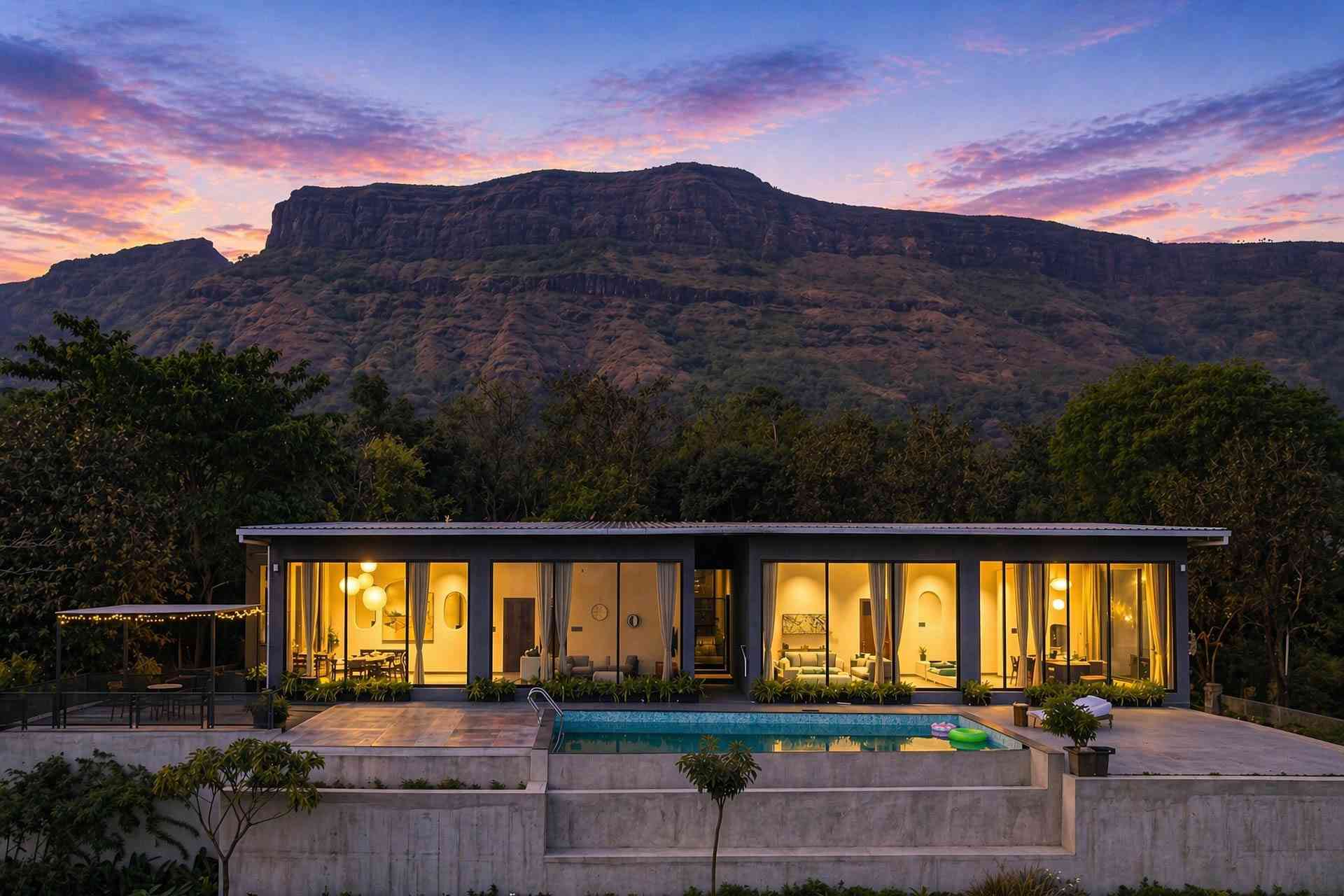
Stays Near Mushi / Paud
Stays Near Karjat
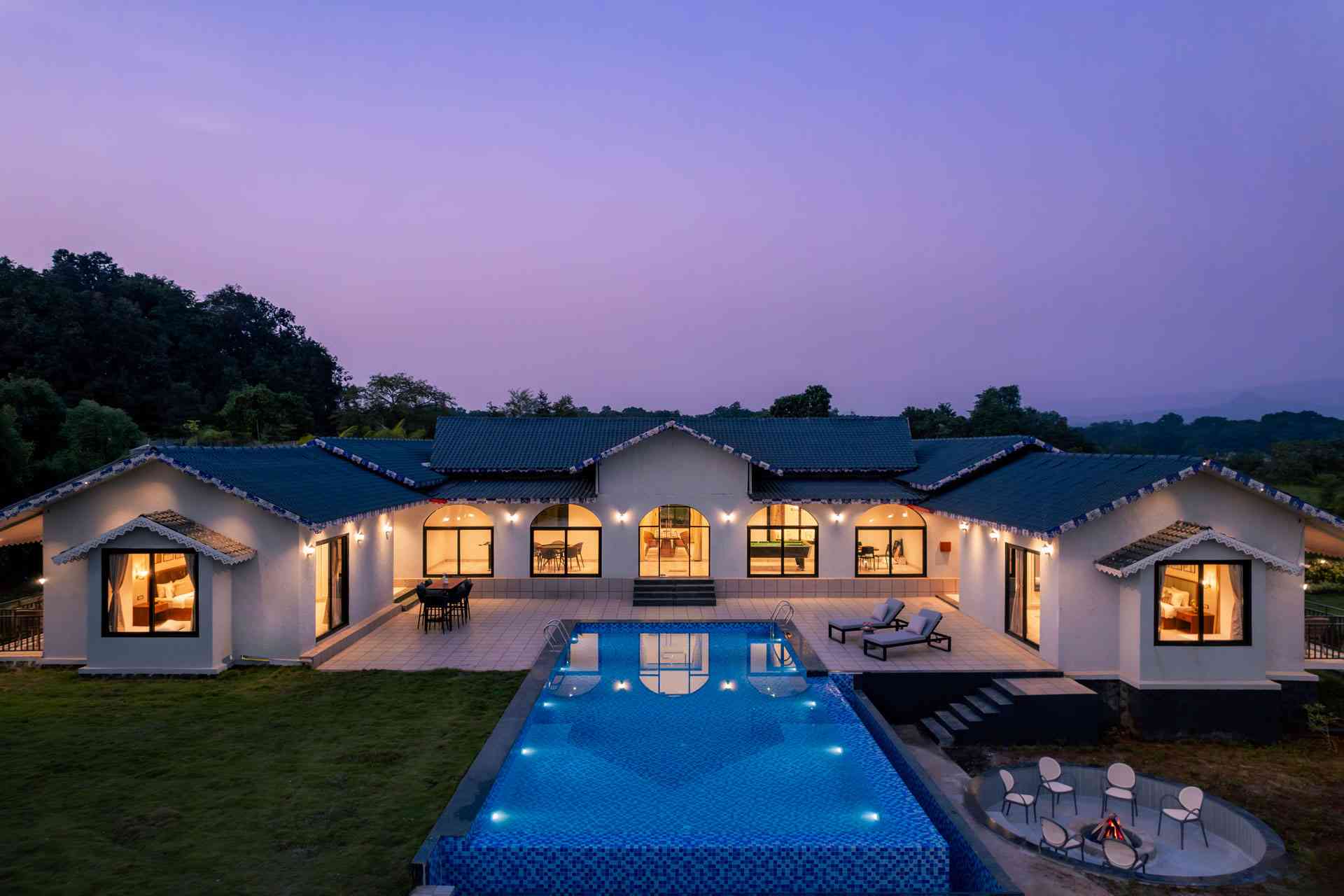

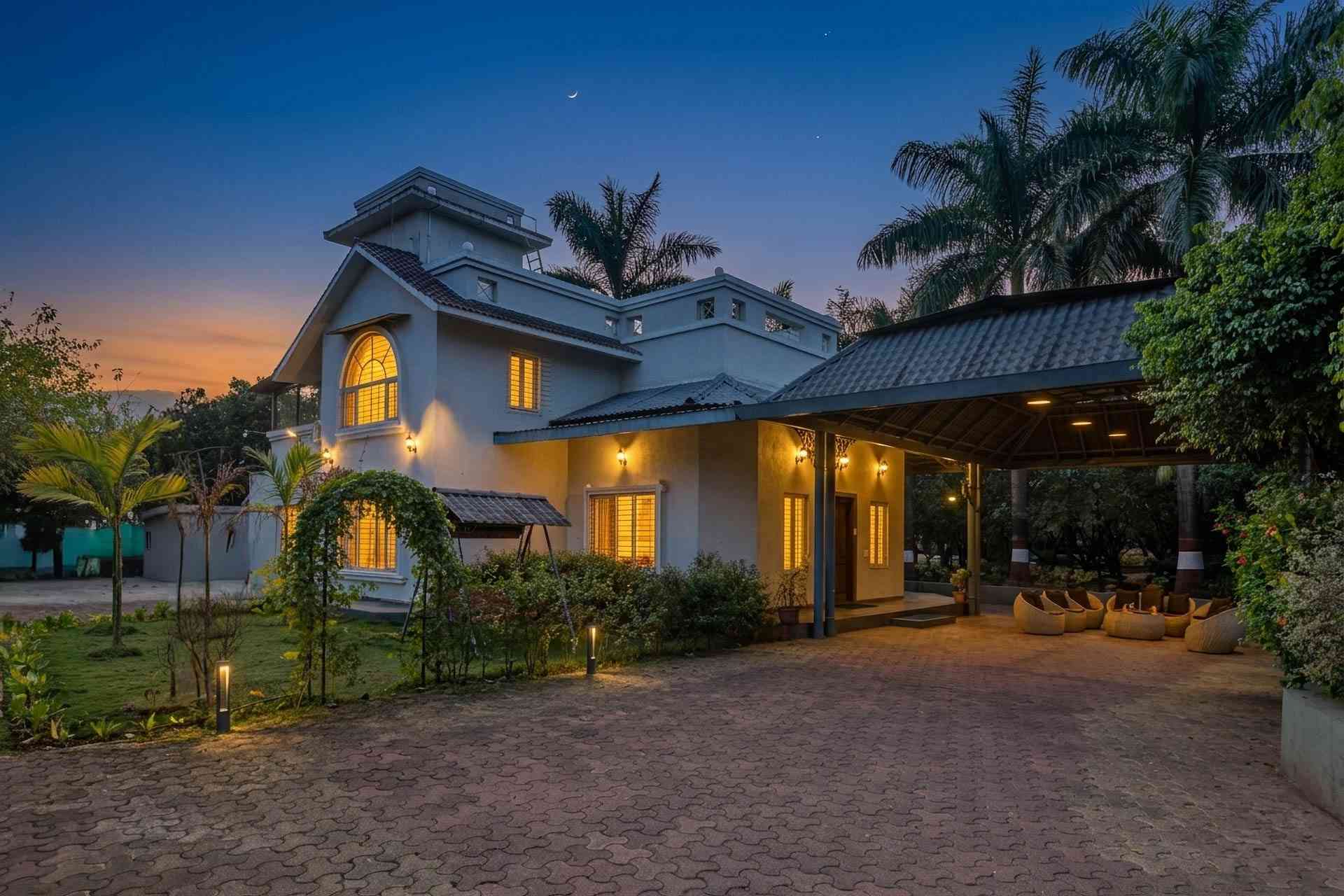
Stay options near the route: Mulshi, Paud, and Kolad have guesthouses and homestays that suit an early start.
Frequently Asked Questions
The ghat road itself remains open to vehicles during monsoon. However, specific waterfall zones and trekking areas may carry seasonal restrictions – the Raigad District Administration banned entry to certain Tamhini Ghat danger zones from June 17–September 30, 2025. Check the current year’s advisory with the Raigad District Administration before you visit.
Mulshi Backwaters and Tamhini / Nivhe Falls are both roadside, requiring no trek at all. Palase Waterfall adds a 10–15-minute forest walk and is the easiest named waterfall with its own distinct identity. All three are free to enter and accessible without physical preparation.
The drive from Chandni Chowk, Pune to Tamhini Ghat takes 2 to 2.5 hours in normal monsoon traffic. Weekend travel in July–August can add 30–45 minutes. Start before 7:00 AM to avoid traffic building on the Pirangut road.
Andharban is a moderate-difficulty trail and manageable during monsoon if you observe the rules: start no later than 9:00 AM, exit the forest by 4:30 PM (forest department requirement), and carry leech-proof socks. The trail is slippery but has no technical climbing. Avoid the trail if there’s a red or orange weather alert for the day.
Not reliably. The Raigad District Administration banned Devkund entry from June 17–September 30 in both 2024 and 2025, and the Tamhini Wildlife Sanctuary routes are confirmed closed July 1–September 30, 2026. Call the Raigad District Collector’s office to confirm Devkund’s 2026 status before visiting. October–February remains the safest window — post-monsoon flow is strong, the pool’s turquoise colour is most vivid, and the Rs 100 entry fee + compulsory local guide rule applies.
The Bottom Line
The Tamhini Ghat monsoon route earns its reputation — the Western Ghats’ 2,500–5,000 mm of annual rainfall doesn’t produce waterfalls here; it produces a landscape where waterfalls are the default state of every rock face for four months.
For most visitors, the Palase + Tamhini Falls + Reverse Waterfall cluster at 50–60 km gives you the full sensory experience of the drive in half a day. Andharban is the extension for serious trekkers. Devkund and Kolad belong to the return trip in September or October, when the water’s still running but the road is yours again.
What’s your stop order? Leave a comment or tag us if you make the drive this season.