
India’s First Cheetah Safari at Kuno National Park: The Complete 2026 Guide
TL;DR
India’s first cheetah safari opened to the public at Kuno National Park, Madhya Pradesh, on 1 October 2025. Safaris run October to June in morning and evening slots, cost roughly ₹4,000–₹5,000 per jeep for up to six people, and are booked online through the Madhya Pradesh Forest Department portal up to 120 days in advance. The park closes every year from July to September for the monsoon and reopens on 1 October.
In this Blog
Quick Info
| Fields | Details |
|---|---|
| Location | Sheopur and Shivpuri districts, Madhya Pradesh |
| Park area | 748.76 sq km |
| Safari season | 1 October to 30 June (closed July–September) |
| Best time to visit | October to March |
| Nearest airport | Gwalior Airport (~176 km) |
| Nearest railway station | Shivpuri (~70 km); Gwalior for better connectivity |
| Safari cost | ₹4,000–₹5,000 per jeep (up to 6 people) + 18% GST |
| Ideal duration | 2 days / 1 night minimum, 3 days recommended |
| Booking window | Up to 120 days in advance |
Is the Kuno cheetah safari open, and what exactly is it?

Yes. India’s first cheetah safari opened to the public at Kuno National Park on 1 October 2025, and the park now runs it as a regular seasonal offering alongside its general jungle safari.
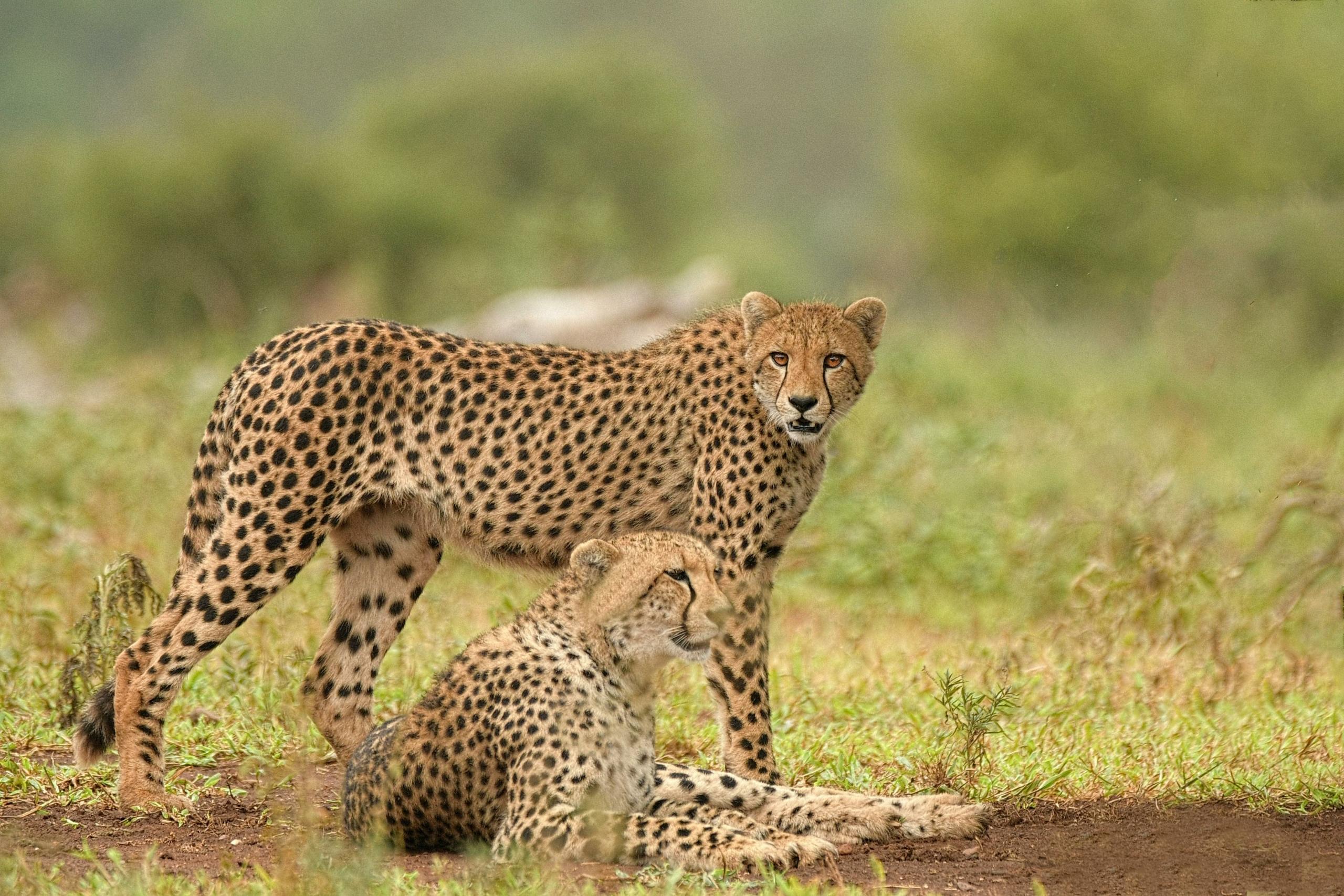
Here is what it is not: a guaranteed cheetah viewing. Kuno is a genuine open national park, not an enclosure with a viewing gallery. The cheetahs you may see are wild animals moving across 748 sq km of grassland and dry deciduous forest. Some are free-ranging across the full park. Others live in soft bomas — large fenced conditioning enclosures of 50 to 150 hectares — which are not part of the tourist route.
What makes the experience different from a tiger safari at Bandhavgarh or Ranthambore is the landscape. Kuno’s terrain is open savanna grassland broken by acacia and low ridges, which is exactly why it was chosen for cheetahs. You are not peering into dense sal forest hoping for a flash of stripe. You get long sightlines across golden grass, and when a cheetah is out, you tend to see it properly and for a while.
Cheetahs were declared extinct in India in 1952. Project Cheetah brought them back in September 2022 with eight animals from Namibia, followed by twelve from South Africa in February 2023.
Kuno cheetah safari tickets, timings and prices for the 2026-27 season
Safari slots are sold per vehicle, not per head — six people pay the same as two, which makes the trip considerably cheaper for a family or a group of friends than the headline number suggests.
Timings by season
| Season | Morning safari | Evening safari |
|---|---|---|
| October – December | 6:00 AM – 11:30 AM | 3:00 PM – 6:00 PM |
| January – March | 6:30 AM – 11:30 AM | 3:00 PM – 5:30 PM |
| April – June | 5:30 AM – 11:30 AM | 4:00 PM – 7:00 PM |
| July – September | Park closed for monsoon | Park closed for monsoon |
Each safari runs roughly three hours.
Prices
| Season | Vehicle | Capacity | Cost |
|---|---|---|---|
| October – March | Jeep / Gypsy | Up to 6 | ₹4,000 |
| April – June | Jeep / Gypsy | Up to 6 | ₹5,000 |
The jeep fare bundles the park entry fee, the vehicle charge and the naturalist guide. GST at 18% is added on top. Budget around ₹4,700–₹5,900 all-in per jeep per safari.
How to book a Kuno safari, step by step
- Go to the official portal. Bookings open on the Madhya Pradesh Forest Department site at forest.mponline.gov.in. The park also has a dedicated portal at kunocheetahjunglesafari.com.
- Book early. The window opens 120 days ahead. Weekend mornings in December and January are the first to go, and they go months out.
- Enter details for every passenger. You need full name, age, gender, nationality and an ID proof number for each person. These must match the IDs you carry.
- Save the confirmation. You get email and SMS confirmation. Carry a printout — mobile network at the gates is unreliable.
- Register at Sesaipura. Permit collection happens at Sesaipura village, roughly 18 km from the main gate. Allow 15–20 minutes. You collect your permit, vehicle sticker and guide allocation here.
- Arrive 15 minutes early. Slots start on time and late arrivals lose the first light, which is the part that matters.
Same-day tickets are sometimes available at the gate, but treating that as a plan is how people end up driving 176 km for nothing.
Will you actually see a cheetah? An honest answer

This is the question everyone asks and most guides dodge, so here it is plainly: no, sightings are not guaranteed, and a meaningful number of visitors leave without one.
When the safari first opened, this was a real source of frustration. Much of the cheetah population was still inside soft bomas at the time and only a small group was free-ranging in the tourist zones. Reports from that first season featured visitors who completed multiple safaris and saw none.
The picture has improved. India’s cheetah population has grown well past 50 animals, and the number roaming free across Kuno’s grasslands has risen with it. More free-ranging cats across the same tourist zones means better odds than the launch season offered. But they are still wild cheetahs on 748 sq km.
How to genuinely improve your chances:
- Book at least three safaris across two days. One safari is a coin flip. Three is a reasonable sample. This is the single highest-impact thing you can do.
- Prioritise mornings. Cheetahs hunt in the cooler early hours and rest through the middle of the day. First light is the window.
- Go in the cold months. December to February brings the best light, the best animal activity and the shortest grass, which matters enormously for sightlines.
- Talk to your guide properly. Kuno’s naturalists track individual animals daily and know where collared cats were last recorded. Ask before you set off, not halfway through.
- Sit high and bring glass. A 300mm lens minimum, and binoculars are more useful here than at any tiger park in India — the open terrain means sightings are frequently at distance.
Go in treating the cheetah as a bonus and the grassland itself as the experience, and you will not have a bad trip. Go in expecting a guaranteed cheetah, and you might.
Where Project Cheetah stands in 2026
| Milestone | Date |
|---|---|
| Cheetah declared extinct in India | 1952 |
| 8 cheetahs arrive from Namibia | September 2022 |
| 12 cheetahs arrive from South Africa | February 2023 |
| First cubs born on Indian soil | March 2023 |
| Two cheetahs released at Gandhi Sagar | April 2025 |
| Cheetah safari opens to the public | 1 October 2025 |
| Second-generation cubs born at Kuno | December 2025 |
| 9 cheetahs arrive from Botswana (6 female, 3 male) | February 2026 |
The Botswana translocation in February 2026 was the third international transfer and pushed India’s total well past 50. Kuno holds the large majority; Gandhi Sagar Wildlife Sanctuary in Mandsaur district holds a small group.
The more meaningful number is the India-born one. More than two dozen cubs have now been born and survived at Kuno, including a second generation — cubs whose own parents were also born in India. That is the threshold a reintroduction has to cross to stop being a translocation and start being a population.
Best time to visit Kuno National Park
October to December is the sweet spot. The park reopens on 1 October after the monsoon, the grass is still green, the light is clean and temperatures sit between 12°C and 28°C. Book well ahead — this is peak season.
January to February brings the coldest mornings, down to 6°C or lower at dawn, and the best wildlife activity of the year. Grass has dried and shortened, which improves visibility across the grasslands considerably. Our pick for serious wildlife photographers. Carry more warm layers than you think you need — an open jeep at 6:30 AM in January is genuinely cold.
March to June gets progressively hotter, touching 45°C in May. It is uncomfortable, but water sources shrink and animals concentrate around them, so sightings can actually improve. Safaris shift earlier and later to dodge the worst heat.
July to September — the park is closed. Do not plan around it.
How to reach Kuno National Park

Kuno sits in a genuinely rural corner of Madhya Pradesh. There is no shortcut, and self-drive or a hired car is the only sensible way in.
By air: Gwalior Airport (GWL) is the nearest at roughly 176 km, about a 4-hour drive. Gwalior has direct flights from Delhi, Mumbai, Bengaluru, Hyderabad and Indore. Jaipur (~340 km) and Delhi (~450 km) are alternatives if fares work out better.
By rail: Shivpuri railway station is closest at ~70 km but has limited services. Gwalior Junction is far better connected — it is on the Delhi–Bhopal main line with frequent trains — and is the practical rail choice despite the longer road transfer.
By road: Sesaipura village in Sheopur district is the gateway, about 15 km from the park entrance. From Gwalior, drive via Shivpuri on NH-46 and then towards Sheopur. From Delhi it is roughly 450 km via the Agra–Gwalior route on NH-44, a 9–10 hour drive.
What else you’ll see at Kuno
Kuno was originally prepared in the 1990s for a different reintroduction entirely — Asiatic lions from Gir — and villages were relocated to create the prey base. That project stalled, but the prey base it built is why the cheetahs are thriving.
Expect chital, sambar, nilgai, chinkara, four-horned antelope, wild boar and langur in good numbers. The predator list beyond cheetah includes Indian leopard, striped hyena, jungle cat, sloth bear, dhole and Indian wolf. Leopards in particular are well established here and are seen more often than cheetahs.
Birders do well too — a spring survey recorded 129 species, and the raptor list is strong, with vultures, eagles and owls across the grassland and along the Kuno River.
12 places to visit near Kuno National Park
Kuno pairs naturally with Gwalior and the Morena temple circuit, which is where most of the region’s heritage sits.
1. Palpur Ruins
The abandoned settlement of Palpur sits within the Kuno landscape, the remains of the village complex that gave the sanctuary its original name. Crumbling stone structures against open grassland — a quiet reminder of the human relocation that made this habitat possible.
Entry: Covered by safari permit · Timings: Safari hours only · Best time: Morning safari · How to reach: Inside the park, on some safari routes · Time required: 20–30 mins · Ideal for: History-minded travellers · Pro tip: Ask your guide in advance whether your route passes it — not all do.
2. National Chambal Gharial Sanctuary, Palighat
About 30 km from Sheopur town on the Chambal River, this is one of India’s best places to see the critically endangered gharial, alongside mugger crocodiles, Gangetic dolphins and enormous flocks of skimmers.
Timings: Boat safaris typically 7 AM–5 PM · Best time: November–March · How to reach: ~30 km from Sheopur by road · Time required: Half day · Ideal for: Families, birders · Pro tip: The boat safari is the whole point — skip the bank viewpoint and get on the water.
3. Sheopur Fort
A 16th-century fort on the banks of the Seep River, largely unrestored and almost never crowded. Worth an hour if you are staying in Sheopur town.
Entry: Free entry · Timings: Daylight hours · Best time: Late afternoon · How to reach: 2 km from Sheopur bus stand · Time required: 1 hour · Ideal for: Solo travellers, photographers · Pro tip: Sheopur is also known for its wooden lacquerware — the local market is a genuinely good souvenir stop.
4. Gwalior Fort
One of the largest and most dramatic hill forts in India, rising on a sandstone plateau above the city. The Man Singh Palace within it has some of the finest surviving tilework of its period.
Entry: ₹75 for Indians, ₹250 for foreign nationals · Timings: 9 AM – 5:30 PM daily · Best time: October–March, early morning · How to reach: ~176 km from Kuno, in Gwalior city · Time required: 3–4 hours · Ideal for: Everyone · Pro tip: The evening sound-and-light show is worth staying for if you are overnighting in Gwalior.
5. Jai Vilas Palace & Scindia Museum
The Scindia family’s 19th-century palace, built in a European style, and home to a 3,500 kg chandelier and a silver toy train that once served dinner guests. Still partly a residence.
Entry: ₹150 for Indians · Timings: 10 AM – 5 PM, closed Wednesdays · Best time: Year-round, indoors · How to reach: Gwalior city centre · Time required: 2 hours · Ideal for: Families · Pro tip: Photography rules inside are strict and enforced — check at the counter.
6. Teli ka Mandir
A 9th-century temple inside Gwalior Fort with an unusual South Indian style roof on a North Indian structure. At around 100 feet, it is the tallest building in the fort complex.
Entry: Included with Gwalior Fort ticket · Timings: 9 AM – 5:30 PM · Best time: Morning · How to reach: Inside Gwalior Fort · Time required: 30 mins · Ideal for: Architecture enthusiasts · Pro tip: Pair it with the adjacent Sas-Bahu temples in the same walk.
7. Gujari Mahal Archaeological Museum
Built by Raja Man Singh for his queen Mrignayani, now a museum holding sculpture from across the region, including the celebrated Shalabhanjika statuette.
Entry: ₹10–₹50 · Timings: 10 AM – 5 PM, closed Mondays · Best time: Year-round · How to reach: At the base of Gwalior Fort · Time required: 1 hour · Ideal for: History travellers · Pro tip: Ask specifically to see the Shalabhanjika — it is kept separately.
8. Chausath Yogini Temple, Mitaoli
A circular 13th-century temple with 64 shrines arranged around the rim, sitting on a hilltop in Morena district. It is widely cited as an architectural reference point for the design of the Indian Parliament building.
Entry: Free entry · Timings: Sunrise to sunset · Best time: Early morning · How to reach: ~40 km from Gwalior, Morena district · Time required: 1 hour · Ideal for: Architecture and photography · Pro tip: It is a steep flight of around 100 steps to the top — not ideal in midday heat.
9. Bateshwar Temple Group, Padavli
A cluster of roughly 200 sandstone temples from the 8th–10th centuries, painstakingly reassembled from rubble by the Archaeological Survey of India over two decades. One of the most remarkable restoration stories in the country.
Entry: Free entry · Timings: Sunrise to sunset · Best time: October–March, morning · How to reach: ~35 km from Gwalior, near Morena · Time required: 2 hours · Ideal for: History travellers, photographers · Pro tip: Combine Mitaoli, Padavli and Bateshwar into one half-day loop — they sit close together.
10. Kakanmath Temple, Sihoniya
An 11th-century Shiva temple built without mortar, still standing at around 115 feet despite centuries of damage. Sparse, ruined and genuinely striking.
Entry: Free entry · Timings: Sunrise to sunset · Best time: Late afternoon · How to reach: ~65 km from Gwalior, Morena district · Time required: 1 hour · Ideal for: Offbeat travellers · Pro tip: Roads in are rough — a hatchback will struggle after rain.
11. Madhav National Park, Shivpuri
A compact park with a lake system, a marsh crocodile population and the George Castle hunting lodge on a hilltop. A useful second wildlife stop that breaks the drive between Kuno and Gwalior.
Timings: Morning and evening safari slots · Best time: October–March · How to reach: ~110 km from Kuno · Time required: Half day · Ideal for: Families · Pro tip: Sunset from George Castle over Sakhya Sagar lake is the highlight.
12. Chhatris of Shivpuri
The marble and sandstone cenotaphs of the Scindia rulers, set around formal gardens and water channels. Considerably quieter than comparable monuments in Rajasthan.
Entry: ₹20–₹50 · Timings: 9 AM – 6 PM · Best time: Late afternoon · How to reach: Shivpuri town, ~70 km from Kuno · Time required: 1 hour · Ideal for: Couples, photographers · Pro tip: Golden hour here is exceptional and almost nobody is around for it.
Suggested itineraries
Weekend (2 days / 1 night) — Drive from Gwalior on Friday evening. Saturday: morning and evening safari. Sunday: one final morning safari, then drive back. Three safaris, two nights of sleep, and realistic sighting odds.
3 days / 2 nights (recommended) — Day 1: arrive, evening safari. Day 2: morning and evening safari. Day 3: morning safari, then drive to Gwalior via Shivpuri, stopping at the Chhatris. Four safaris and the odds tip properly in your favour.
5 days, full circuit — Days 1–3 at Kuno as above. Day 4: the Morena temple loop — Mitaoli, Padavli, Bateshwar, Kakanmath. Day 5: Gwalior Fort, Jai Vilas Palace, then fly out. This is the trip we would actually book.
Kuno vs Gandhi Sagar: which cheetah site should you visit?
| Kuno National Park | Gandhi Sagar Wildlife Sanctuary | |
|---|---|---|
| District | Sheopur / Shivpuri | Mandsaur / Neemuch |
| Cheetahs introduced | September 2022 | April 2025 |
| Cheetah population | Large majority of India’s total | Small group |
| Public cheetah safari | Open since October 2025 | Small group |
| Landscape | Open savanna grassland | Chambal riverine, plateau, gorges |
| Nearest airport | Gwalior (~176 km) | Indore (~250 km) |
| Best for | Cheetah sightings, first-time visitors | Landscape, quieter experience |
For a cheetah-focused trip in 2026, Kuno is the clear choice. Gandhi Sagar is worth watching as its population establishes.
Safari rules and what to pack
Kuno enforces its rules seriously. Vehicles stay under 20 km/h. Nobody steps out of the jeep at any point. Speakers and music are banned outright. Feeding, calling to or provoking animals will end your safari and can get your operator blacklisted.
Pack: layered clothing in earth tones (avoid white and bright colours), a windproof outer layer for winter mornings, binoculars, a 300mm or longer lens, spare batteries — cold drains them fast — sunscreen, a hat, and your original ID plus the printed permit. Carry cash; card acceptance around Sesaipura is patchy.
Where to stay near Kuno National Park
Accommodation immediately around Kuno is limited to forest lodges and a handful of resorts near Sesaipura, and it books out for peak-season weekends well in advance.
Most travellers we speak to build the trip around Gwalior instead — it is the arrival airport, it has the region’s best food and heritage, and it works as a comfortable base at either end of the safari leg. If you are travelling as a family or a group of friends, a private villa makes far more sense than separate hotel rooms, particularly with 5:30 AM starts and everyone on the same schedule. Browse luxury villas in Gwalior on StayVista for options with private pools and full kitchens.
If you are extending into a wider wildlife trip, StayVista’s villas in Ranthambore and homestays in Ranthambore pair well with Kuno for a tiger-and-cheetah run across Rajasthan and Madhya Pradesh.
Frequently asked questions
Yes. The safari opened on 1 October 2025 and runs every year from October to June. The park closes from July to September for the monsoon and reopens on 1 October.
Approximately ₹4,000 per jeep from October to March and ₹5,000 from April to June, for up to six people, plus 18% GST. The fare includes park entry, the vehicle and a naturalist guide.
India’s cheetah population passed 50 in 2026, with the large majority at Kuno and a small group at Gandhi Sagar. Nine cheetahs arrived from Botswana in February 2026. Not all are in tourist-accessible zones — some remain in soft-release enclosures.
No. Cheetahs at Kuno are wild animals across 748 sq km. Booking three or more safaris across two days, prioritising morning slots and visiting between December and February gives you the best realistic chance.
Book through the Madhya Pradesh Forest Department portal at forest.mponline.gov.in or the dedicated Kuno safari portal, up to 120 days in advance. You need ID details for every passenger and must collect the permit at Sesaipura before your slot.
October to March. December to February offers the best wildlife activity and shortest grass for visibility, though mornings drop below 10°C.
Roughly 450 km by road via NH-44 through Agra and Gwalior, about 9–10 hours. Alternatively fly or take a train to Gwalior, then drive the remaining 176 km.
Gandhi Sagar Wildlife Sanctuary in Mandsaur district, Madhya Pradesh, is India’s second cheetah site, with animals released from April 2025. Kuno remains the only site with an established public cheetah safari.
Planning your trip
India spent seven decades without a cheetah. Getting them back took a translocation programme across three countries, a relocated prey base built for a lion project that never happened, and a fair amount of argument. That the safari now exists at all is the interesting part — and standing in an open jeep at 6:30 AM watching one cross a Madhya Pradesh grassland is a genuinely different thing from any other wildlife experience in the country.
Book early, book several safaris, and give yourself three days. Then let StayVista handle where you sleep — browse villas and homestays in Madhya Pradesh to build the trip around it.