

Vande Bharat Sleeper Routes in 2026: Full List, Fares, Timings and the Overnight Trips They Unlock
Last updated: 29 September 2026
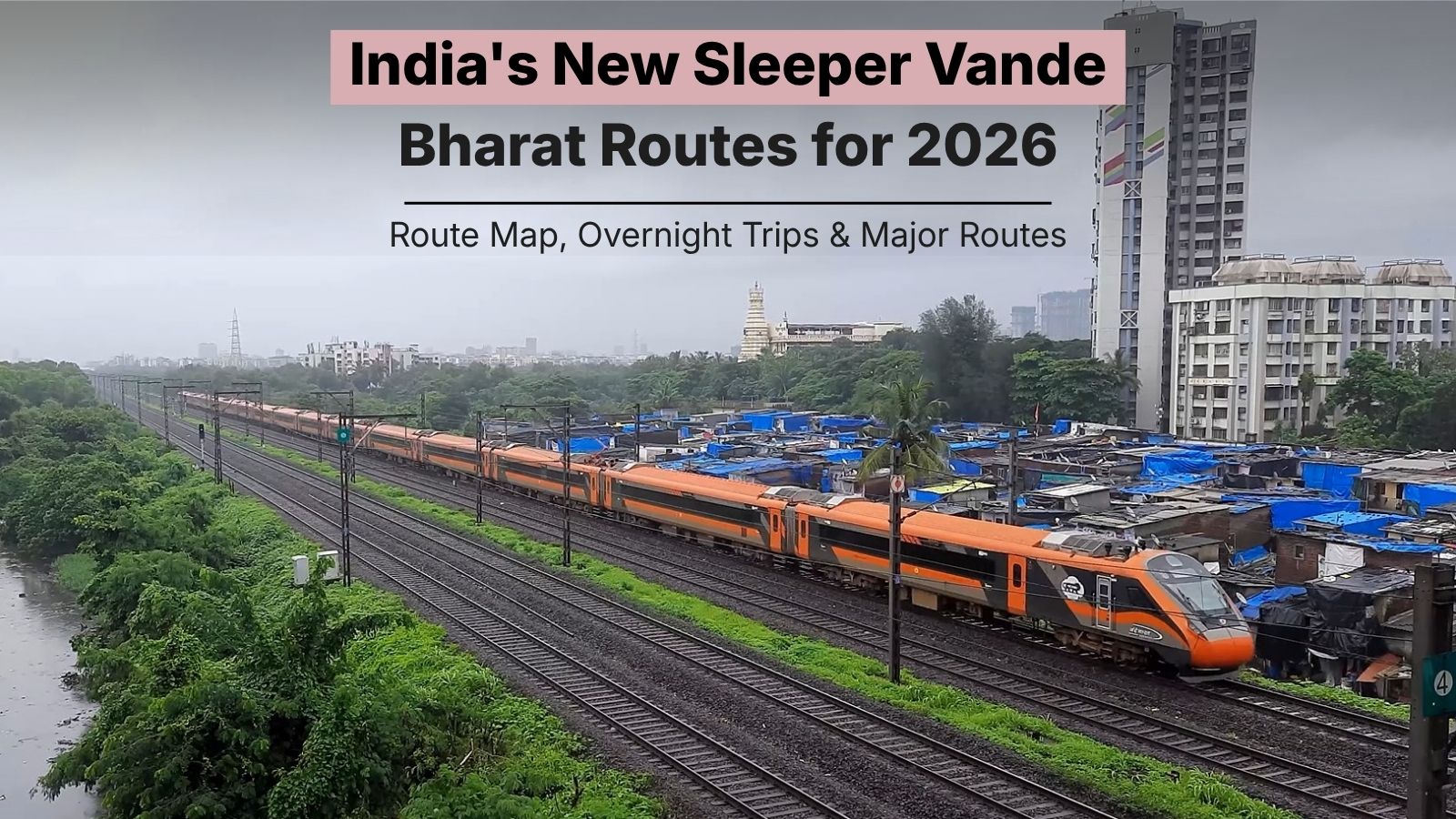
India’s railway network is entering a new phase with the arrival of sleeper coaches for Vande Bharat trains. Unlike the familiar chair-car Vande Bharat services designed mainly for daytime journeys, the sleeper version is built for longer overnight travel, with AC sleeping berths and a layout designed around journeys that can run through the night.
The first service began on the Howrah-Kamakhya corridor in January 2026. A second route between Bengaluru and Mumbai has also been approved and is moving towards launch. At the same time, several other long-distance corridors are being discussed as possible future candidates.
That makes new Vande Bharat sleeper routes for 2026 an interesting subject for anyone planning long weekend journeys. The important point is that not every route appearing on social media or search pages is officially confirmed as a sleeper service yet.
Quick answer: As of August 2026, only one Vande Bharat Sleeper service is actually running: the Howrah-Kamakhya Vande Bharat Sleeper Express (trains 27575 and 27576), which covers 968 km in about 14 hours and was inaugurated on 17 January 2026. A second rake for KSR Bengaluru-Mumbai CSMT is in final testing at SMVT Bengaluru, and a Delhi-Amritsar sleeper via Chandigarh, Ludhiana and Jalandhar was announced in February 2026 for launch by winter. Every other corridor being discussed, including Delhi-Mumbai, Delhi-Howrah and Delhi-Chennai, remains unconfirmed.
In this Blog
Vande Bharat Sleeper Quick Information:
| Detail | Status as of August 2026 |
|---|---|
| Services operating | 1 (Howrah–Kamakhya, trains 27575 / 27576) |
| Services in testing | 1 (KSR Bengaluru–Mumbai CSMT) |
| Announced, not launched | Delhi–Amritsar via Chandigarh, Ludhiana, Jalandhar |
| Rake composition | 16 coaches: 11 AC 3-tier, 4 AC 2-tier, 1 AC First |
| Passenger capacity | 823 (611 in 3AC, 188 in 2AC, 24 in 1AC) |
| Operating speed | 160 km/h (design maximum 180 km/h) |
| Built by | BEML Limited, Bengaluru; design and propulsion by Integral Coach Factory |
| Booking | IRCTC, 60-day advance reservation period |
Vande Bharat Sleeper operations are evolving month to month. All timings, halts, fares and frequencies here were verified in the last week of September 2026. Before booking, cross-check on IRCTC (irctc.co.in) or the Indian Railways enquiry portal (indianrail.gov.in) as schedules and rake availability can change on short notice.
What makes Vande Bharat overnight trains different?

The biggest change is simple: passengers can travel through the night without giving up a proper berth.
The sleeper train has AC First Class, AC Two-Tier and AC Three-Tier accommodation. The first trainset has 16 coaches and around 823 passengers, giving it a layout closer to long-distance premium trains than the familiar daytime Vande Bharat chair-car format.
The coaches also include features developed specifically for long journeys. These include automatic plug doors, sealed gangways, CCTV cameras, emergency communication systems, fire detection and suppression equipment, KAVACH and ergonomically designed ladders for upper berths.
This changes the purpose of Vande Bharat. A chair-car service can make a morning-to-evening trip more convenient, while a sleeper service can make the train itself part of the overnight plan.
For example, a passenger leaving after work on Friday evening could potentially arrive at a distant city on Saturday morning without using up most of Saturday on the journey.
New Vande Bharat Sleeper Routes for 2026 Already in Service

The first confirmed route is the Howrah-Kamakhya Vande Bharat Sleeper. It began regular commercial operation in January 2026 and became India’s first Vande Bharat sleeper service. The route links Howrah in West Bengal with Kamakhya in Assam, creating a premium overnight rail connection between eastern India and the Northeast.
The route is particularly interesting from a travel-planning point of view because the journey is long enough for a sleeper train to make practical sense. Indian Railways had earlier estimated that the service could cut several hours compared with an existing conventional service on the corridor.
For passengers, the bigger benefit is not simply speed. It is the ability to sleep during the journey and arrive with the daytime still available.
That makes cities and destinations in Assam easier to consider for short breaks from Kolkata and nearby parts of eastern India.
Howrah-Kamakhya Vande Bharat Sleeper: Timings, Fare and Halts
Train 27575 (Howrah → Kamakhya) operates six days a week, with a scheduled rest day per the Northeast Frontier Railway notification. The return service, 27576 (Kamakhya → Howrah), also runs six days a week. Both departures leave around 18:20 and arrive the following morning around 08:20, covering the 966 km route in 14 hours with 13 intermediate halts including Bandel, Malda Town, New Jalpaiguri and New Cooch Behar. This gives passengers a full working evening at origin and a fresh business-day start at destination — the core reason the service has become popular with business travellers between West Bengal and Assam.
| Class | Kamakhya → Howrah fare |
|---|---|
| AC First Class (1A) | ₹3,855 |
| AC 2-Tier (2A) | ₹3,145 |
| AC 3-Tier (3A) | ₹2,435 |
The train halts at 13 stations: Bandel, Nabadwip Dham, Katwa, Azimganj, New Farakka, Malda Town, Aluabari Road, New Jalpaiguri, Jalpaiguri Road, New Cooch Behar, New Alipurduar, New Bongaigaon and Rangiya. New Jalpaiguri is the halt most travellers care about, since it is the gateway to Darjeeling, Kalimpong and Sikkim.
Pro tip: the 18:20 departure and 08:20 arrival make this a genuine zero-hotel-night journey in both directions. Book 3A for the best value. The wider cushioned berths, individual reading lights and per-berth charging points are a clear step up from a standard AC 3-tier coach.
Mumbai to Bengaluru Vande Bharat Sleeper: the next major route
The most important confirmed addition is the Mumbai to Bengaluru Vande Bharat Sleeper service.
As of end-September 2026, the Bengaluru–Mumbai Vande Bharat Sleeper has not yet entered commercial service. South Western Railway has commissioned two trainsets at SMVT Bengaluru, and the original July 2026 target has slipped — the service is now expected to launch closer to late 2026 once route trials and timetable notification are complete. When it starts, the train will cover roughly 984 km between KSR Bengaluru and Mumbai CSMT in about 16 hours, running overnight via the Solapur–Wadi corridor. Track the official rollout on the Indian Railways portal at indianrail.gov.in.
The route is especially significant because it connects two of India’s largest business cities while also linking several major centres along the wider corridor.
For weekend planning, the idea is straightforward. A passenger could leave Mumbai in the evening, sleep on the train and reach Bengaluru the following day. The reverse journey creates the same possibility for people based in Karnataka.
The train therefore has a different role from a normal daytime Vande Bharat. It is designed around the practical value of overnight travel.
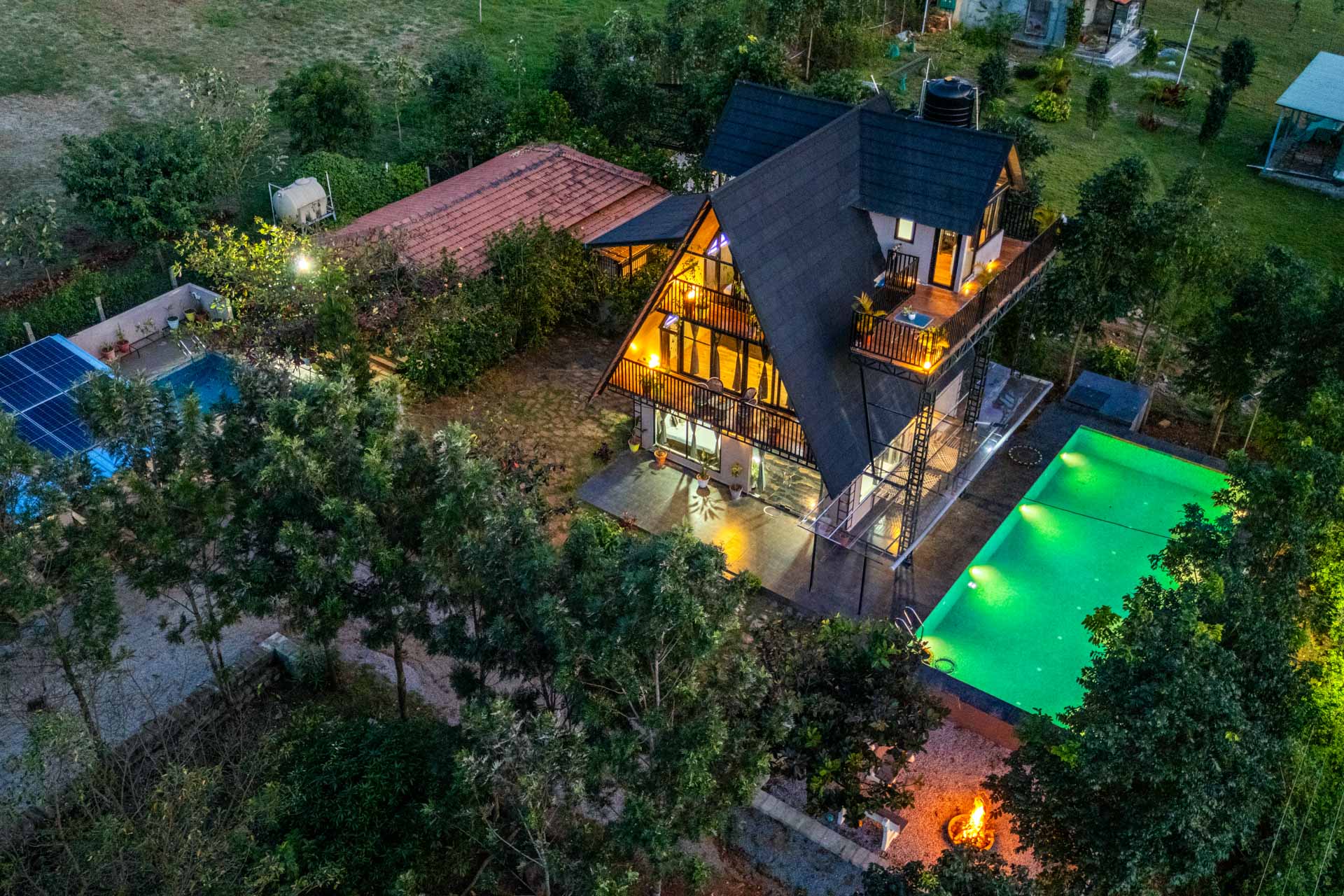
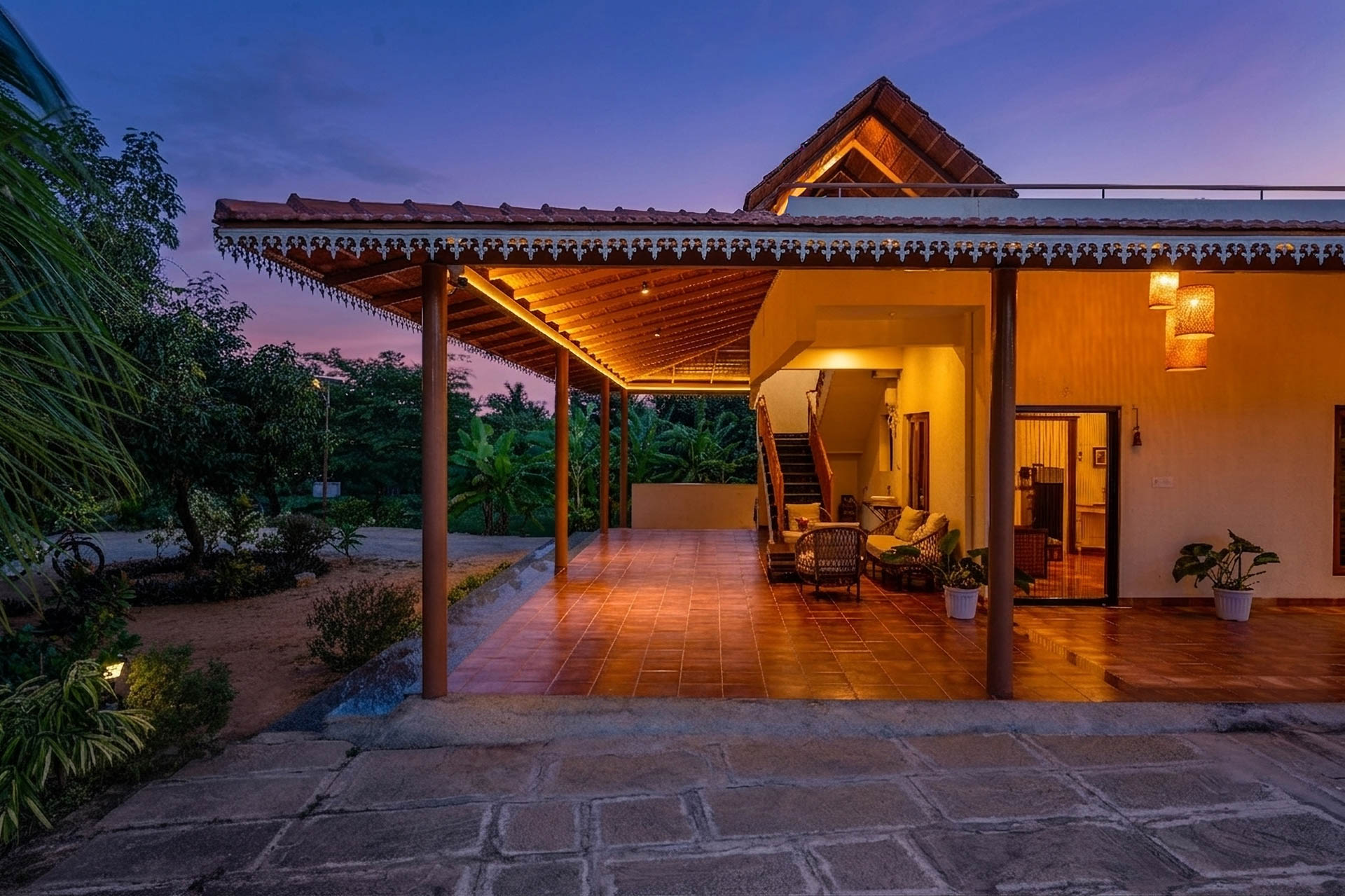
If you are planning a trip to Bengaluru following the upcoming routes, book these best places to stay in Bengaluru:
Vande Bharat Sleeper Routes List: Confirmed versus Possible
A useful Vande Bharat sleeper routes list for 2026 should separate confirmed services from routes that are only proposed, requested or expected.
| Route | Sleeper status in 2026 |
| Howrah-Kamakhya | Operating |
| Bengaluru-Mumbai | Approved and expected to start |
| Delhi-Mumbai | No confirmed sleeper service found |
| Delhi-Howrah | No confirmed sleeper service found |
| Delhi-Chennai | No confirmed sleeper service found |
| Mumbai-Hyderabad | No confirmed sleeper service found |
| Chennai-Bengaluru | No confirmed sleeper service found |
This distinction is important because existing chair-car Vande Bharat services should not be described as sleeper trains simply because the routes are long or popular.
The Ministry of Railways said in July 2026 that there were 162 Vande Bharat chair-car services and two Vande Bharat sleeper services. It also noted that the introduction of additional services depends on operational requirements, safety, technical feasibility, commercial viability and available resources.
So the sleeper network is growing, but it is still at an early stage.
Vande Bharat Route Map: Where Could the Network go Next?
The Vande Bharat route map could look very different over the next few years if sleeper production continues to increase.
BEML Limited at its Bengaluru facility is contracted to build 10 Vande Bharat Sleeper rakes under ICF technology. The original target of 10 rakes by 31 March 2026 was revised to August 2026 as the project moved into extended testing and safety validation. In April 2026, Railway Minister Ashwini Vaishnaw announced that the fleet would be expanded to 12 sleeper trainsets by end-2026, with the additional units feeding future routes such as Bengaluru–Mumbai and Delhi–Amritsar. As of end-September 2026, only the first two rakes are in revenue service — both running the Howrah–Kamakhya route since 17 January 2026.
That creates room for more long-distance corridors, particularly routes where journey times are long enough for passengers to benefit from sleeping on the train.
However, a route should not be labelled an upcoming sleeper service until Indian Railways confirms it.
This is particularly relevant to popular searches for Vande Bharat Delhi to Mumbai, Delhi to Howrah Vande Bharat, Delhi to Chennai Vande Bharat, Mumbai to Hyderabad Vande Bharat and Chennai to Bengaluru Vande Bharat.
These city pairs have obvious demand for fast rail services, but their inclusion in a list of Vande Bharat routes does not automatically mean a sleeper version has been approved.
Vande Bharat Delhi to Mumbai: Why it attracts attention

A Delhi-Mumbai sleeper Vande Bharat would be a logical candidate in terms of distance. It would also fit the basic idea behind the sleeper variant: leave in the evening, sleep during the journey and reach the destination the following morning.
But as of August 2026, there is no official confirmation that a Delhi-Mumbai sleeper Vande Bharat is launching.
That does not make the route unimportant. It simply means it belongs in the future possibilities category rather than the confirmed new Vande Bharat trains in 2026 list.
The same approach applies to other major city pairs.
Delhi to Howrah Vande Bharat and other long-distance possibilities

The Delhi-Howrah corridor is another route where an overnight Vande Bharat could make sense because of its long travel distance and strong passenger demand.
Likewise, a Delhi to Chennai Vande Bharat sleeper could potentially create a useful north-south overnight connection. Mumbai to Hyderabad Vande Bharat could also suit the sleeper format, while Chennai to Bengaluru Vande Bharat is a much shorter corridor and therefore fits the existing daytime chair-car model more naturally.
These are useful examples of how passengers should think about future routes. Sleeper Vande Bharat trains are not simply faster versions of existing trains. Their strongest advantage appears when the journey is long enough to justify sleeping onboard.
Delhi-Amritsar Vande Bharat Sleeper: Announced for Winter
Announced on 18 February 2026 by the Union Minister of State for Railways, the Delhi–Amritsar Vande Bharat Sleeper is planned to run via Ambala, Chandigarh, Ludhiana and Jalandhar. As of end-September 2026, the service has not yet launched — the Ministry of Railways is targeting a winter 2026 flag-off (December 2026 onwards), after incorporating passenger feedback from the Howrah–Kamakhya service that has been operating since January 2026. Once live, it is expected to reduce the overnight Delhi–Amritsar journey to under 6 hours end-to-end, making it a strong alternative to the current Shatabdi day service for travellers who want to arrive rested for the Golden Temple visit.
This is the shortest corridor announced so far and the one that changes weekend travel most directly. Chandigarh as a scheduled halt puts Kasauli roughly 60 km and about 90 minutes away by road, which turns a Friday-night boarding in Delhi into a Saturday-morning breakfast in the hills. Amritsar itself works as an overnight-in, overnight-out trip: Golden Temple at dawn, Wagah at sunset, back on the train the same night.
Note that no train numbers, timings or fares have been notified yet. Treat winter 2026 as an intention, not a timetable.
How Vande Bharat Sleeper routes could change weekend travel
The most interesting impact may be on how people use their weekends.
A long journey normally takes up a significant part of a Saturday or Sunday. An overnight train changes that equation. If the departure is timed for the evening, the journey can happen while passengers are sleeping.
For example, a Mumbai-Bengaluru sleeper could make a weekend in either city easier to plan for people who do not want to spend most of Saturday travelling.
The Howrah-Kamakhya service creates a similar possibility in eastern India. Instead of treating the rail journey as the main time-consuming part of a trip, passengers can use the night for travel and the following day for work, family visits or sightseeing.
This is where the sleeper format has its strongest practical value.
What a Vande Bharat sleeper train is likely to mean for families

Families travelling long distances may also find the sleeper format more convenient than a daytime chair-car journey.
The availability of AC First Class, Two-Tier and Three-Tier accommodation gives passengers different choices depending on how they prefer to travel. The dedicated sleeping arrangement also means a long journey does not have to be planned around staying awake for most of the trip.
The first trainset has modern safety systems, including KAVACH, CCTV coverage, fire detection and suppression systems and emergency communication arrangements.
For families, the real attraction is therefore simple: the journey can become part of the night’s routine rather than a full day spent sitting in a chair.
New Vande Bharat trains in 2026 and what passengers should watch
Passengers interested in the new Vande Bharat trains in 2026 should watch for three things before making travel plans.
First, there is the official approval of a route.
Second, there is the arrival and testing of the trainset.
Third, there is the formal announcement of commercial operations and the opening of bookings.
The Bengaluru-Mumbai example shows why this matters. Approval came in April, the service was announced as coming soon in May, and the second sleeper trainset reached Bengaluru in July.
Until the railway timetable and booking system reflect a new service, passengers should treat launch dates and proposed routes as provisional.
How to Book a Vande Bharat Sleeper Ticket
Vande Bharat Sleeper tickets are sold through IRCTC and railway reservation counters exactly like any other reserved train, with no separate booking channel. Search by train number (27575 for Howrah-Kamakhya, 27576 for the return) or by station pair, and book within the 60-day advance reservation window.
Three things worth knowing before you book. Only 24 AC First Class berths exist on the whole train, so 1A closes within minutes of the booking window opening. Tatkal opens one day before departure. And because there is a single rake per direction, a maintenance day or a rake swap can mean cancellation rather than a delay, so check running status on the morning of travel.
Final Thoughts
The sleeper version could eventually become one of the most useful parts of the Vande Bharat network.
Its strength is not simply speed. It is the combination of a modern train, sleeping accommodation and long-distance connectivity.
The first Howrah-Kamakhya service has already established the format, while Bengaluru-Mumbai is set to bring the concept to one of India’s busiest inter-city corridors. More sleeper trainsets are expected to enter production, creating the possibility of a much wider network by the end of 2026 and beyond.
For passengers, that could mean a different way of planning India. A Friday evening departure could increasingly become the start of a weekend rather than the end of a working day.
The most exciting part of the Vande Bharat sleeper train routes story is therefore not just which city comes next. It is the possibility of turning long distances into overnight journeys, giving passengers back the daylight hours at their destination.
FAQs – New Vande Bharat Sleeper Routes for 2026
The Howrah-Kamakhya sleeper service is already operating. The Bengaluru-Mumbai sleeper service has been approved and is expected to start soon. Other routes should be treated as proposed until Indian Railways confirms them.
Howrah, Kamakhya, Bengaluru and Mumbai are the key cities with confirmed or approved sleeper connectivity in 2026. Additional cities may be added as more sleeper trainsets become available.
The sleeper version has AC sleeping accommodation, including First Class, Two-Tier and Three-Tier coaches. The regular chair-car Vande Bharat is designed primarily for seated daytime travel.
The Howrah-Kamakhya route can support overnight trips between eastern India and Assam, while the Bengaluru-Mumbai service is expected to make overnight travel between Karnataka and Maharashtra more convenient.
There is no confirmed Delhi-Mumbai Vande Bharat sleeper service as of August 2026. It should not be included in a confirmed sleeper routes list unless Indian Railways announces it.
No confirmed sleeper service on the Delhi-Chennai corridor has been announced as of August 2026. The route remains a possible future candidate rather than a confirmed sleeper route.
More sleeper trainsets are being produced, and the Railway Minister has indicated that 12 sleeper trains are expected to be rolled out by December 2026. This creates scope for additional overnight services, although individual routes still require official confirmation.
Passengers should check official Indian Railways and IRCTC information for confirmed routes, schedules and bookings rather than relying only on proposed route lists circulating online.Kamakhya
On the Howrah-Kamakhya route, fares are approximately Rs 2,435 for AC 3-tier, Rs 3,145 for AC 2-tier and Rs 3,855 for AC First Class. Fares vary by distance and are booked through IRCTC at standard reserved-class rates.
Train 27575 departs Howrah at 18:20 and arrives at Kamakhya at 08:20 the next morning. It runs every day except Thursday. The return service, 27576, leaves Kamakhya at 18:15 and reaches Howrah at 08:15, running daily except Wednesday.
One, as of August 2026: the Howrah-Kamakhya Vande Bharat Sleeper Express, inaugurated on 17 January 2026. A second rake for Bengaluru-Mumbai is in final testing at SMVT Bengaluru and has not yet been handed over to Indian Railways.
It was announced on 18 February 2026 by Union Minister of State for Railways Ravneet Singh Bittu, with services expected by winter 2026. The route will run via Chandigarh, Ludhiana and Jalandhar. Train numbers, timings and fares have not been notified yet.
The Bengaluru–Mumbai Vande Bharat Sleeper has not entered commercial service as of end-September 2026. Two trainsets have been commissioned by South Western Railway at SMVT Bengaluru and are undergoing route trials. The original July 2026 target has passed; Indian Railways has not committed to a fresh public launch date, but industry reports point to a late-2026 rollout. The most reliable sources for the actual start are the Ministry of Railways press releases on pib.gov.in and the IRCTC booking window on irctc.co.in, a train number visible in IRCTC search results confirms the service is live.
The Delhi–Amritsar Vande Bharat Sleeper was announced on 18 February 2026 with a target launch in winter 2026. As of end-September 2026, the service has not yet been flagged off; the Ministry of Railways is targeting a December 2026 onwards start, subject to rake availability from BEML. IRCTC will open bookings 60 days before the confirmed first service — that is the definitive signal that the route is live.
Blog article written by Ruben Saha