

Karjat in Monsoon 2026: 12 Things to Do + Where to Stay
Last updated: June 2026
TL;DR: Karjat in monsoon is one of the easiest green escapes from Mumbai and Pune — a Sahyadri valley town about 2 hours from either city on the Central Railway line, ringed by waterfalls, rock-cut caves and beginner-friendly forts that only look their best once it rains. The best months are July to September, and the single most important rule is to admire spate water from a safe distance — Karjat and nearby Kolad see avoidable drownings every monsoon. Below: 12 things to do with practical details, how to reach, and where to stay.
In this Blog
Karjat in monsoon at a glance
| Best time | Mid-July to late September (full waterfalls, greener hills, fewer total washouts than peak July) |
| How to reach | ~2 hrs by road/rail from Mumbai (~80 km) or Pune (~100 km); Karjat is on the Central line |
| Nearest airport/station | Karjat Railway Station (Central line); nearest airport Mumbai (CSMIA, ~2.5 hrs) |
| Ideal duration | A weekend (2 nights) — one day for sights, one slow villa day |
| 2026 monsoon note | Below-normal (~90% of long-period average) and a touch late this year; rain is patchy, so keep plans flexible |
Is Karjat worth visiting in the monsoon?
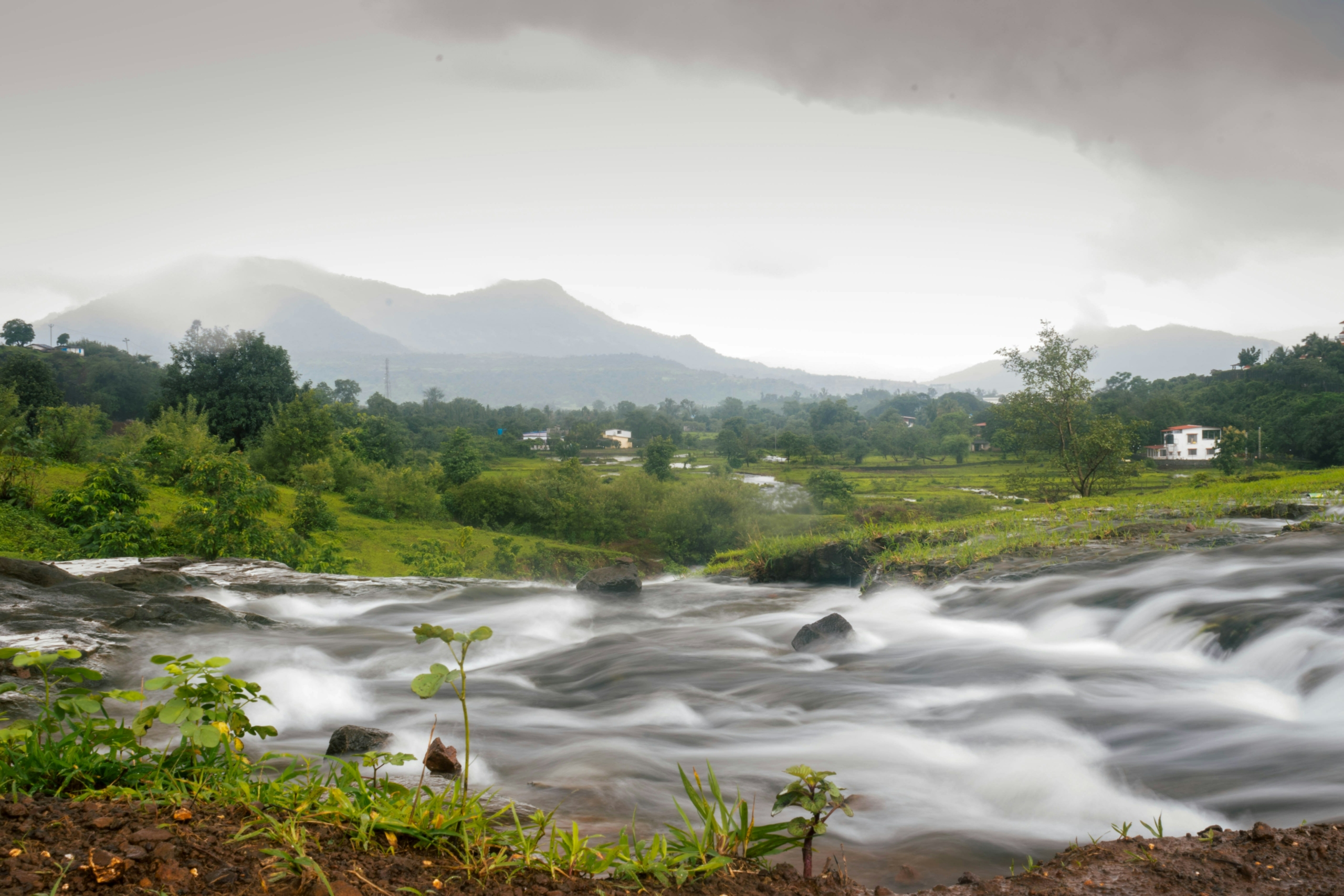
Yes — and arguably it is only worth the trip once the rain starts. Through the dry months Karjat is a dusty railway town between Mumbai and Pune. From late June the same valley turns deep green: the Ulhas and Pej rivers swell, dozens of seasonal waterfalls switch on across the Matheran and Bhimashankar ranges, and the rock-cut Kondana Caves get a curtain of water falling past their entrance. Because it sits roughly two hours from both Mumbai and Pune on the Central Railway line, it is the default monsoon weekend for anyone who wants Sahyadri scenery without a long drive.
What makes Karjat distinct from Lonavala or Bhandardara is the mix on offer in one small radius: easy waterfalls you can reach by local train, two genuinely beginner-friendly forts, India’s only year-round river-rafting stretch a short hop away at Kolad, a working film studio, and a cluster of pool villas and farm stays for the nights. You can do as little or as much as you like. The catch — and it is a serious one in monsoon — is water safety, so read the box below before you build an itinerary.
Monsoon safety in Karjat & Kolad (please read this before you go)
– Never enter, wade into, or stand under fast-flowing water. Karjat, Kolad and the wider Pune–Raigad belt see drownings every monsoon at waterfalls and dam pools — a single family was swept away near Lonavala’s Bhushi Dam in July 2024, which triggered prohibitory orders banning groups, deep-water entry and reels at picnic spots. Treat every spate stream as deadly.
– Obey prohibitory orders and local police/forest signs. When orders are in force, gatherings and entering water bodies are restricted at specific spots — check before you go and respect closures.
– Travel the ghats and village roads in daylight. Visibility drops fast in rain, and the Ambivli–Peth stretch (Kothaligad) and other approaches are landslide-prone in monsoon. Avoid driving narrow hill roads after dark.
– No selfies or reels on wet rocks and ledges. The most-reported accidents involve people stepping onto slick rock for a photo. It is not worth it.
– Carry: quick-dry clothes, trek shoes with grip, a dry bag for your phone, a power bank, basic first aid, and water. Keep a buffer half-day so a washout doesn’t wreck the plan.
12 things to do in Karjat in monsoon
1. Kondana Caves and their monsoon waterfall
The single most photographed sight near Karjat in the rains. These 2nd-century-BCE Buddhist rock-cut caves sit at the base of a hill, and in monsoon a waterfall pours down right beside the cave mouth — the reason people make the trek at all. Entry fee: free. Timings: daylight only, roughly 6 am–6 pm (there is no gate, so go early and leave well before dusk). Best time: July–September, mid-morning. How to reach: drive or train to Karjat (~80 km / 2.5 hrs from Mumbai), then an auto/jeep to Kondhane village; the walk up is gentle and takes about an hour one way. Time required: 3–4 hours including the walk. Ideal for: first-time trekkers, couples, families with older kids. Pro tip: the rock steps are slick — wear gripped shoes, and admire the fall from the side, not from under it.
2. Bhivpuri Waterfall
The easiest waterfall in the area to reach, which makes it the most crowded on weekends — go on a weekday if you can. Fed by rain off the Sahyadris, it drops into a shallow pool and is a long-time favourite for monsoon day-trippers and rappelling groups. Entry fee: free (rappelling operators charge separately). Timings: daylight hours; no formal gate. Best time: July–September. How to reach: Bhivpuri Road station (Central line) is the nearest railhead, with the falls a short auto ride or 15-minute walk away; from Karjat station it is a quick auto hop. Time required: 2–3 hours. Ideal for: families, groups, beginners. Pro tip: the pool looks calm but the inflow can be strong after heavy rain — keep children well back from the base.
3. Vihigaon (Ashoka) Waterfall, near Kasara
A taller, more dramatic fall that featured in a famous film song, which is why locals call it the Ashoka waterfall. It is the area’s best-known rappelling spot, with operators running descents straight down the cascade in season. Entry fee: free to view; rappelling is a paid, operator-led activity. Timings: daylight only. Best time: July–September, when the volume peaks. How to reach: it is past Kasara rather than central Karjat — about an hour onward by road from Karjat via Kasara to Vihigaon village; easiest with your own vehicle or a booked operator. Time required: half a day with travel. Ideal for: adventure seekers, photographers. Pro tip: only rappel with a licensed operator who provides helmet and harness — never freelance on wet rock.
4. Kolad river rafting on the Kundalika (a short hop away)
About 90 minutes south of Karjat, Kolad is the rafting capital of the region and the one stretch in India that runs year-round, thanks to controlled water releases from the Bhira Dam. Monsoon is peak season, when the Kundalika‘s grade II–III rapids are at their liveliest. Entry fee: rafting packages typically run from around ₹1,000 to ₹2,500+ per person depending on operator and inclusions — confirm current rates at booking. Timings: runs are tied to the dam release, usually a morning slot from roughly 7:45 am, with a second weekend slot in monsoon when water permits. Best time: June–September for the biggest rapids. How to reach: ~1.5 hrs by road from Karjat toward Kolad/Raigad; most travellers drive or join an operator transfer. Time required: a full half-day. Ideal for: groups, couples, first-time rafters (it is beginner-friendly with guides). Pro tip: book ahead in monsoon weekends, wear the life jacket snug, and follow your raft guide’s commands exactly.
5. Kothaligad (Peth) Fort trek
A compact, beginner-to-moderate fort trek that ends with a flight of rock-cut steps climbing through the pinnacle — atmospheric in mist. At around 3,100 ft it is one of the more doable Sahyadri forts in the rain, but the lower trail demands respect. Entry fee: free. Timings: start early; aim to be down by mid-afternoon. Best time: July–September for the cloud-and-waterfall effect, but only on a clear-ish morning. How to reach: the base is Ambivli village, about 23 km from Karjat; reach it via Karjat or Neral station then a shared jeep/ST bus. Time required: budget 6–7 hours round trip from Ambivli. Ideal for: reasonably fit walkers, small groups. Pro tip: the Ambivli–Peth stretch is landslide-prone in monsoon and the final rock patch turns very slippery on the descent — go with a guide or experienced group, and turn back if visibility collapses.
6. Peb Fort (Vikatgad)
A quieter alternative to Kothaligad on the Matheran side, popular with Mumbai trekking groups for its forest stretches and valley views. It is more demanding than Kothaligad, with some exposed sections, so it suits walkers who already have a trek or two behind them. Entry fee: free. Timings: daylight; an early start is essential. Best time: July–September on a clear morning. How to reach: typically approached from Neral (the toy-train town, ~11 km from Karjat) or the Matheran route; reach Neral by Central-line train, then a local transfer to the base. Time required: most of a day. Ideal for: experienced trekkers, fit groups. Pro tip: routes here are easy to lose in fog — carry an offline map and don’t attempt it solo in heavy rain.
7. ND’s Film World (ND Studios)
A change of pace for non-trekkers and families: a sprawling working film studio and theme attraction spread over roughly 50 acres, with sets, props and shows from Hindi cinema. It is the dry-day backup when the rain turns relentless. Entry fee: ticketed, with tiered passes for the theme-park area and the studio tour — buy at the gate or online and confirm current prices, as packages change. Timings: generally 10 am–6 pm. Best time: any day; ideal as a wet-weather plan B. How to reach: about a 90-minute drive from Mumbai and a short drive from Karjat town; easiest with your own vehicle. Time required: 3–4 hours. Ideal for: families with children, film buffs, groups. Pro tip: large parts are outdoors, so check the forecast — pick a lighter-rain day and carry a poncho rather than an umbrella for the open sets.
8. Take the Matheran day-trip — the right way in monsoon
Matheran, the vehicle-free UNESCO-protected hill station, sits just past Neral and makes a classic add-on. The important 2026 detail: the Neral–Matheran toy train is suspended during monsoon (roughly June to October) as a safety measure, so do not plan your trip around it in the rains. Entry fee: a small municipal entry charge applies at Matheran; the toy train (when running) is ticketed separately. Timings: the town is open year-round; no vehicles are allowed inside. Best time: the post-monsoon window is greenest with the train back in service, but a misty monsoon day-walk is lovely if you don’t mind getting wet. How to reach: drive to Neral (~11 km from Karjat) or Dasturi Point, where private vehicles must stop; from there you walk or hire a horse into town (no cars beyond the entry). Time required: a full day. Ideal for: couples, families who enjoy walking. Pro tip: the red-earth paths get muddy and slippery — wear shoes you don’t mind ruining, and start back with daylight to spare.
9. Chase the seasonal waterfalls along the Karjat–Neral belt
Beyond the named falls, the whole Karjat–Neral–Matheran corridor is dotted with smaller seasonal cascades that appear only in the rains, often right beside the road or a short walk from a village. A slow drive with planned stops is one of the most relaxing ways to spend a monsoon morning here. Entry fee: free. Timings: daylight. Best time: July–August, after a few days of steady rain. How to reach: self-drive the back roads off the Karjat–Neral route, or ask your villa host to point you to the current best flows. Time required: 2–3 hours. Ideal for: photographers, couples, slow travellers. Pro tip: park fully off the carriageway, never on a blind ghat bend, and keep clear of the water’s edge on rock.
10. Birdwatching and forest walks around the valley
Karjat’s wet forests come alive in monsoon — this is breeding season for many resident birds, and the paddy fields and stream edges buzz with frogs, dragonflies and butterflies. Several farm stays and nature camps run guided early-morning walks. Entry fee: free on your own; guided walks are charged by the host/operator. Timings: dawn is best. Best time: July–September mornings, just after rain eases. How to reach: most walks start from farm-stay land or village edges around Karjat — arrange through your stay. Time required: 1.5–2 hours. Ideal for: families, nature lovers, photographers. Pro tip: use insect repellent and tuck trousers into socks — leeches are common on wet trails in peak monsoon.
11. Farm-stay life: paddy, pottery and Maharashtrian food
Some of the best hours in Karjat aren’t at a sight at all. Working farm stays let you watch (or join) monsoon rice-planting, try simple village crafts like pottery or Warli-style painting, and eat a proper Maharashtrian rainy-day spread — think hot misal pav, bhakri with pithla, kanda bhaji and puran poli. Entry fee: included for staying guests; day visits vary by property. Timings: all day. Best time: the whole monsoon, especially around the rice-planting weeks. How to reach: most farm stays are 15–30 minutes from Karjat station — arrange a pickup. Time required: built into your stay. Ideal for: families, couples, anyone who wants to slow down. Pro tip: ask your host the night before for a fresh-fried bhaji-and-chai session when the rain is heaviest — it is the local way to enjoy a downpour.
12. Do nothing — a pool-and-rain villa weekend
Plenty of travellers tell us their favourite Karjat day is the one spent entirely at the villa: pool in the drizzle, board games on the covered deck, a long lunch, and the valley turning misty by evening. With the town’s strong cluster of private-pool homes, this is a legitimate plan, not a cop-out — and it neatly sidesteps the safety risks of crowded waterfalls. Entry fee: n/a. Timings: your call. Best time: any rainy weekend. How to reach: see the where-to-stay section below. Time required: as long as you like. Ideal for: couples, families, groups wanting a reset. Pro tip: confirm whether the pool is usable in rain and ask about indoor games and a covered sit-out when you book — both make a wet weekend.
How to reach Karjat
From Mumbai (~80 km): the fastest option is a Central Railway local or express to Karjat Railway Station (around 2 hours from CSMT/Dadar/Thane). By road, the Mumbai–Pune Expressway gets you most of the way before you exit toward Karjat — budget 2–2.5 hours depending on traffic and rain.
From Pune (~100 km): drive via the Expressway/old highway in roughly 2–2.5 hours, or take a train toward Karjat on the same line.
By air: the nearest airport is Mumbai (Chhatrapati Shivaji Maharaj International), about 2.5 hours away by road; Pune airport is a similar distance.
Getting around once there: the sights are spread out and public transport thins in the rain, so a self-driven or hired car is the most practical way to cover waterfalls, forts and Kolad. Autos and shared jeeps connect the railway stations (Karjat, Neral, Bhivpuri Road) to the nearer trailheads.
When is the best time to visit Karjat in monsoon?
The monsoon window runs roughly June to September, but the sweet spot is mid-July to late September. Early June is hit-or-miss — and in 2026 the monsoon arrived a little late and is forecast below normal (around 90% of the long-period average), so rain is patchy rather than relentless. By mid-July the waterfalls are reliably full; by September the hills are at their greenest with fewer total washouts than the heaviest July weeks. Weekdays are far quieter than weekends at every waterfall. For wider regional context and a month-by-month read, see our Maharashtra monsoon weather guide.
Planning your Karjat monsoon weekend
One day (day-trip from Mumbai/Pune): early train or drive in → Kondana Caves in the morning → a Maharashtrian lunch → Bhivpuri Waterfall on the way back, leaving by mid-afternoon so you travel the ghats in daylight.
Two days / a weekend (recommended): Day 1 — arrive, lunch at your villa, an easy afternoon at a waterfall or a forest walk, slow evening in the rain. Day 2 — a beginner fort trek (Kothaligad) or the Kolad rafting half-day for the active; or ND’s Film World if it is pouring; check out by noon. Keep a buffer for weather.
For groups who’d rather not trek: base the whole weekend at a pool villa, add one Kolad rafting morning, and keep the rest for food, games and the view. If you’re weighing other rainy-season bases too, our roundup of budget-friendly monsoon hill stations puts Karjat in context with the wider Sahyadris.
Where to stay in Karjat (StayVista)
Karjat is one of our strongest monsoon markets precisely because the villa is the destination on a rainy weekend. A few verified picks for different group sizes:
- Santoni Farms — 3 BHK (/villa/santoni-farms-3-bhk-villa-in-karjat-with-private-pool-and-spacious-rooms) — a riverside farm-style home with a private pool, orchard and on-site activities, about 15–20 minutes from Karjat station. Best for a small family or friends’ group who want the farm-stay feel with a pool.
- Aqua & Sage — 4 BHK (/villa/aqua-and-sage-4-bhk-villa-in-karjat-with-private-pool-and-spacious-rooms) — a riverside 4-bedroom villa with a 20×15 ft private pool, landscaped lawn and a terrace swing made for watching the rain. A comfortable pick for two families travelling together.
- The Den — 7 BHK (/villa/the-den-7-bhk-villa-with-private-pool) — part of our premium Vieda collection, set across two acres with an L-shaped pool and jacuzzi, a private sports turf and butler service; sleeps up to 21. The one to book for a large group or celebration weekend.
CTA box: Monsoon weekends in Karjat fill early, especially July–September Saturdays. If you have a date in mind, lock the villa first and plan the sights around the weather. (CTA 1 of 3.)
FAQ: Karjat in monsoon
Is Karjat good to visit in monsoon?
Yes — Karjat is at its best in the rains, roughly July to September, when its waterfalls, rock-cut caves and beginner forts come alive. It is about two hours from both Mumbai and Pune on the Central Railway line, making it one of the easiest green weekends from either city.
What are the best things to do in Karjat in the rains?
The highlights are the Kondana Caves and their monsoon waterfall, Bhivpuri and Vihigaon (Ashoka) waterfalls, the beginner-friendly Kothaligad fort trek, river rafting at nearby Kolad, ND’s Film World for a dry-day, and a slow farm-stay or pool-villa weekend.
How do I reach Karjat from Mumbai or Pune?
Karjat is around 80 km from Mumbai and 100 km from Pune, roughly two hours from either. The simplest option is a Central Railway train to Karjat station; by road, use the Mumbai–Pune Expressway and exit toward Karjat. The nearest airport is Mumbai.
Is the Matheran toy train running in monsoon?
No. The Neral–Matheran toy train is suspended during the monsoon (roughly June to October) as a safety precaution. You can still visit vehicle-free Matheran on foot or by horse from Dasturi Point in the rains, but don’t plan the trip around the train until after the monsoon.
Is river rafting at Kolad open during monsoon?
Yes. Kolad on the Kundalika River runs year-round thanks to controlled releases from the Bhira Dam, and monsoon (June–September) is peak season for the biggest rapids. Slots are tied to the dam release, usually a morning batch, so book ahead and always wear the provided life jacket.
Is Karjat safe in the monsoon?
It is, if you respect the water. Karjat and nearby Kolad see avoidable drownings every monsoon, so never enter or stand under fast-flowing water, obey any prohibitory orders, skip selfies on wet rocks, and travel the ghats and village roads only in daylight.
How many days do you need in Karjat?
A weekend (two nights) is ideal — one day for sights like a waterfall or fort, and one slow day at the villa. A single day works as a day-trip from Mumbai or Pune if you start early and leave by mid-afternoon.
Conclusion
Karjat earns its monsoon reputation honestly: green hills, easy waterfalls, two doable forts, year-round rafting at Kolad, and a deep bench of pool villas — all within two hours of Mumbai or Pune. Go between mid-July and September, keep your plans flexible for a below-normal, slightly late 2026 monsoon, and put safety first at every waterfall and river. Do that, and a Karjat weekend in the rain is about as good as a short Sahyadri break gets.