
Kailash Mansarovar Yatra 2026: Dates, Cost, Route, Booking & Permits Explained

After a five-year suspension triggered by COVID-19 and the 2020 stand-off, the Ministry of External Affairs (MEA) resumed the Kailash Mansarovar Yatra in 2025 – selecting 750 pilgrims from 5,561 applicants across 15 batches. Building on that successful return, the Government of India has announced an expanded 2026 schedule with 20 batches and roughly 1,000 confirmed seats.
This guide answers every practical question for the 2026 yatra: exact dates and batch windows, cost breakdown for all four routes (including the new helicopter option), the documents and permits you need, the medical fitness bar, and what to do if your name does not come up in the MEA lottery.
In this Blog
What is the Kailash Mansarovar Yatra and why does 2026 matter?
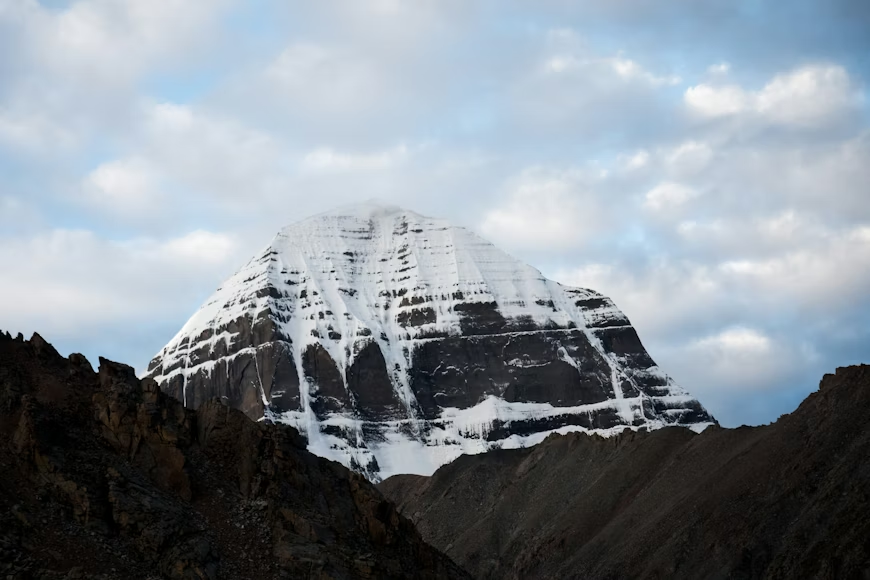
The Kailash Mansarovar Yatra is an annual pilgrimage to Mount Kailash (6,638 m) in Tibet’s Ngari prefecture and the nearby Lake Mansarovar (4,590 m) — the world’s highest freshwater lake and the most sacred body of water in Hindu, Buddhist, Jain and Bon traditions. Devotees believe a single 52-km circumambulation (parikrama or kora) of Kailash absolves a lifetime of sins.
2026 is significant because it is only the second yatra year since the 2019 closure. The resumption was negotiated bilaterally after the October 2024 India-China diplomatic thaw. Slots in 2025 were tight; 2026 nearly doubles the official intake, but demand still vastly exceeds supply.
Pre-2019, the MEA route placed roughly 1,000 pilgrims a year. In 2025, with only 5 Lipulekh batches running, capacity was halved while applications jumped to 5,561 — a 7-to-1 oversubscription rate. Expect similar pressure in 2026.
Kailash Mansarovar Yatra 2026 dates and batch schedule
The Ministry of External Affairs has scheduled the 2026 Kailash Mansarovar Yatra from June to August 2026 across 20 batches of 50 pilgrims each, equally split between the Lipulekh Pass route (Uttarakhand) and the Nathu La Pass route (Sikkim). The breakdown was 10 Lipulekh batches plus 10 Nathu La batches, beginning in the first week of June.
| Window | Route | Approx. batches | Notes |
| Early June – mid July 2026 | Lipulekh (Uttarakhand) | 10 | First batch flag-off from Delhi |
| Late June – late August 2026 | Nathu La (Sikkim) | 10 | Longer Tibet leg, fully motorable |
| Year-round (peak May–Sep) | Nepal overland & helicopter | On-demand | Private operators, no MEA quota |
Exact batch dates for each applicant are released after the draw of lots; selected pilgrims receive an MEA email with their reporting date in Delhi.
Application deadline you cannot miss
The 2026 online application window closes on 19 May 2026. There are no extensions, no spot registrations, and no offline route. Applications are submitted only at kmy.gov.in.
The four Kailash Mansarovar Yatra routes compared
There are four practical ways to reach Mount Kailash in 2026 — two government-organised MEA routes and two private routes through Nepal. Choosing correctly depends on your fitness, time, and budget. The MEA routes are cheapest and most regulated but require winning a lottery; the Nepal routes are guaranteed to operate if you book early, but cost more and offer no government backstop in an emergency.
Route 1: Lipulekh Pass (Uttarakhand) – the classical MEA route
The Lipulekh Pass route runs through Dharchula in Uttarakhand, crossing into Tibet at the 5,115 m Lipulekh Pass. The full yatra takes about 23 days, of which 12 days are spent in India (including 3–4 days in Delhi for medicals and briefings) and 11 days are spent in Tibet. Post-2020, the Border Roads Organisation completed the motorable road all the way to Lipulekh, eliminating the brutal multi-day trek that defined this route for decades.
- Cost (2025 reference): ₹1.84 lakh per pilgrim, of which roughly ₹95,000 is paid to Chinese authorities (transport, lodging, permits, ponies) and ₹89,000 covers India-side logistics. Confirm 2026 figures on the official MEA fee structure page.
- Best for: Pilgrims who want the most direct India-Tibet crossing and the strongest Hindu cultural circuit (the route passes through Jageshwar, Patal Bhuvaneshwar and other temple sites in Kumaon).
- Trade-off: Tougher acclimatisation profile because of the rapid altitude gain.
Route 2: Nathu La Pass (Sikkim) — the comfortable MEA route
The Nathu La Pass route is fully motorable on both sides and is significantly easier on the body than Lipulekh — making it the recommended option for fit pilgrims who are nonetheless wary of high-altitude trekking. The yatra runs about 25 days in total (15 days in India, 10 in Tibet) and operates from Gangtok via Nathu La (4,310 m) into Yadong and onward to Mansarovar.
- Cost (2025 reference): approximately ₹2.84 lakh per pilgrim — Nathu La is more expensive than Lipulekh because the Tibet-side road journey is far longer (the China-side share alone was ₹2.05 lakh in 2025). Confirm 2026 figures on mea.gov.in.
- Best for: Pilgrims over 55, those with prior altitude-sickness episodes, or anyone who wants to avoid trekking entirely.
- Trade-off: Higher cost; less of the traditional Himalayan trekking experience.
Route 3: Nepal overland via Kathmandu–Kerung
The Nepal route bypasses the MEA lottery entirely. Private Indian and Nepali operators run 13- to 16-day packages from Kathmandu, crossing into Tibet at the Kerung (Kyirong) border, then driving up to Mansarovar via Saga and Darchen. There is no Indian government selection; eligibility is essentially “are you fit and can you pay?”
- Cost (2026): ₹1.70–2.20 lakh per pilgrim depending on group size, accommodation grade and parikrama option (with or without horse/porter).
- Best for: Pilgrims who missed the MEA cut-off, families travelling together, or those who want flexibility on dates.
- Trade-off: No state subsidy applies, you depend on the operator for the Chinese group visa, and you must transit Nepal (an extra international leg).
Route 4: Nepal helicopter via Simikot–Hilsa – the fastest option
For pilgrims short on time or unable to handle the full road journey, the helicopter route compresses the yatra into 9–11 days. You fly Kathmandu → Nepalgunj → Simikot → Hilsa (helicopter), then cross into Tibet at the Hilsa-Purang border for a road journey to Mansarovar.
- Cost (2026): ₹2.50–3.50 lakh per pilgrim (Kailash-yatra.org helicopter packages). Some operators quote in USD (US$ 3,700–6,000).
- Best for: Working professionals with limited leave, seniors who want to skip multi-day road travel, and pilgrims who prioritise comfort.
- Trade-off: The most expensive option; weather-dependent helicopter legs can be delayed; least time for acclimatisation.
Side-by-side route comparison
| Route | Operator | Total days | Total cost (₹) | Max altitude | Trekking | Visa effort |
| Lipulekh (MEA) | Government of India | ~23 | 1.84 L | 5,630 m (Drolma La) | Light, motorable to pass | MEA arranges |
| Nathu La (MEA) | Government of India | ~25 | 2.84 L | 5,630 m (Drolma La) | Minimal | MEA arranges |
| Nepal overland | Private | 13–16 | 1.70–2.20 L | 5,630 m (Drolma La) | Light | Operator arranges |
| Nepal helicopter | Private | 9–11 | 2.50–3.50 L | 5,630 m (Drolma La) | Light | Operator arranges |
Drolma La (5,630 m) is the highest point on the 52-km Kailash kora, shared by all four routes.
How much does Kailash Mansarovar Yatra cost in 2026?
A 2026 Kailash Mansarovar Yatra costs between ₹1.70 lakh and ₹3.50 lakh per pilgrim, depending on the route chosen. The MEA Lipulekh route is the cheapest at roughly ₹1.84 lakh, while the helicopter route through Nepal sits at the top end. These figures are inclusive of the Chinese visa, Tibet Travel Permit, group transport, lodging on the Tibet side, basic meals, and ponies/porters during the Kailash parikrama where applicable.
What the MEA fee covers
- China-side group expenses (lodging, food, ponies, transport, permits) — paid in USD to the Tibet Tourism Bureau via MEA.
- India-side transport (Delhi to base camp and return).
- Delhi accommodation during medicals and briefings (typically 3–4 nights).
- Medical examinations at the ITBP Base Hospital and Delhi Heart and Lung Institute.
- Insurance and Chinese group visa.
What you pay separately (all routes)
- Personal gear: high-altitude jacket, trekking shoes, sleeping bag liner, UV sunglasses (₹15,000–₹30,000 if buying fresh).
- Optional helicopter segments on the Lipulekh route (some pilgrims hop sections to save energy — extra ₹40,000–₹80,000).
- Tips for guides, ponywallahs, kitchen staff (₹5,000–₹10,000 advised).
- Travel to Delhi/Gangtok/Kathmandu from your home city.
State government subsidies – verify your eligibility
Several Indian states reimburse a substantial portion of the yatra fee for residents. Subsidy amounts and conditions vary, so confirm with your state’s pilgrimage department before applying:
- Gujarat: up to ₹1 lakh subsidy for state residents.
- Karnataka: ₹1 lakh subsidy under the Kailash Manasa Sarovar Yatra Vikas Yojane.
- Delhi, Madhya Pradesh, Uttar Pradesh, Uttarakhand: schemes ranging from ₹20,000 to ₹1 lakh.
Subsidy claims are usually processed after the yatra is completed, on submission of bills and certificates. Subsidy details summarised here; always cross-check on your state government’s official portal.
Permits and documents required for Kailash Mansarovar Yatra 2026
You need three categories of paperwork: an Indian passport, the Chinese permits (visa + multiple internal Tibet permits), and the Indian government medical clearance. The MEA arranges the Chinese paperwork as part of the package for the Lipulekh and Nathu La routes; for the Nepal routes, your operator handles it through a Kathmandu travel agency.
Mandatory documents
| Document | Validity | Who arranges |
| Indian Ordinary Passport | ≥ 6 months from 1 September 2026 | You |
| Chinese Group Tourist Visa | Issued to MEA group only | MEA (or operator for Nepal route) |
| Tibet Travel Permit (TTP) | Trip-specific | Tibet Tourism Bureau via MEA/operator |
| Alien’s Travel Permit (ATP) | For restricted Tibet zones | Operator/MEA |
| Military Permit | For Kailash/Mansarovar border belt | Operator/MEA |
| ITBP medical clearance | Issued post-Delhi tests | MEA |
Disqualifying factors
You will be ineligible if you do not hold an Indian passport, if you are below 18 or above 70 on 1 January 2026, or if your BMI exceeds 25. The MEA also rejects applicants with uncontrolled high blood pressure, diabetes, asthma, heart disease, epilepsy, or recent major surgery. The fitness bar is real – it exists because the Drolma La crossing happens at 5,630 m, an altitude at which an emergency airlift is impossible.
How to apply for Kailash Mansarovar Yatra 2026: step-by-step
Applications for the MEA-organised yatra are submitted online at kmy.gov.in – there is no paper form, no agent, and no walk-in route. The portal opened in early May 2026 and closes on 19 May 2026. Selection is by a transparent computerised draw of lots that balances gender and route preferences.
The five steps
- Register an account using a working email and Indian mobile number.
- Fill the application form – personal details, passport scan, recent photograph, route preference (Lipulekh / Nathu La / either), and contact of a next-of-kin.
- Self-declare medical fitness – the formal ITBP medical happens later in Delhi; this is a screening declaration.
- Submit before 23:59 on 19 May 2026 – keep the confirmation PDF.
- Wait for the draw – results are typically published within 7–10 days. Selected applicants get an MEA email with batch dates and Delhi reporting instructions.
What happens after selection
Selected pilgrims report to Delhi 3–4 days before their batch departure. The Delhi window covers:
- Medical screening at the ITBP Base Hospital, Tigri and Delhi Heart and Lung Institute (ECG, BP, SpO₂, chest X-ray, blood work).
- Document verification and Chinese visa stamping (passports collected and returned).
- Briefings on altitude sickness, equipment checks, group introductions.
- Departure to base camp (Dharchula for Lipulekh, Gangtok for Nathu La).
Pilgrims who fail the Delhi medical are replaced from a wait-list — so applying does not guarantee that you will actually cross the border. The 2025 attrition rate at the Delhi medical stage was approximately 8–10% across both routes.
Medical fitness requirements and 12-week preparation
The MEA medical bar is the single biggest filter after the draw of lots. The binding criteria are: age 18–70 on 1 January 2026, BMI ≤ 25, blood pressure ≤ 140/90, resting SpO₂ ≥ 95% at sea level, and no history of cardiac events, chronic respiratory disease, diabetes requiring insulin, or epilepsy.
A realistic 12-week preparation plan
Even if you are reasonably fit, the Tibetan plateau is unforgiving. Start training at least 12 weeks before your batch date.
- Weeks 12–9: Build aerobic base. 45-minute brisk walks five days a week, plus two days of stair climbing (15–20 floors).
- Weeks 8–5: Add weighted backpack hikes (5 kg, gradually to 8 kg) on weekends. Begin breath-control practice (pranayama, box breathing).
- Weeks 4–2: Simulate altitude with elevation training masks if available, or visit a hill station above 2,500 m for a long weekend.
- Final 2 weeks: Taper intensity. Get a full cardiac screening locally – ECG, lipid profile, fasting blood sugar, HbA1c. Arrive in Delhi well-rested.
Avoid alcohol for at least two weeks before reporting; it correlates with poor acclimatisation outcomes at altitude.
What if you don’t get selected in the MEA draw?
A 7-to-1 oversubscription rate means the majority of 2026 applicants will not be selected. If your name does not come up, you still have two viable paths to Mount Kailash this year:
- Pivot to the Nepal overland route through a reputable Kathmandu-based operator. Book by early June 2026 to catch the July–September peak weather window. Costs are comparable to the MEA Nathu La route at ₹1.70–2.20 lakh, with the trade-off that you arrange your own flights to Kathmandu and back.
- Book the helicopter route – the most expensive but most time-efficient choice (9–11 days, ₹2.5–3.5 lakh). Best for working professionals who cannot take three weeks off and seniors who want to skip the multi-day road journey.
Either Nepal route bypasses the MEA lottery entirely, but it also forfeits any state subsidy claim – most state schemes specifically reimburse only the MEA-organised yatra.
What to pack and what to expect on the ground

Pack for 5°C to 20°C daytime temperatures and near-freezing nights at the Mansarovar campsite. Essential kit includes a four-season sleeping bag liner (camps provide bags), waterproof trekking boots already broken in, a down jacket, UV-rated sunglasses (snow blindness is real at 5,000 m+), high-SPF sunscreen, a personal first-aid kit with Diamox (consult your doctor on dosage), and ORS sachets. Cash matters too – Chinese yuan or US dollars in small denominations for tips, drinking water, and the occasional Tibetan tea-house stop.
Expect the 52-km parikrama to take three days, with the toughest day being the crossing of Drolma La. Most pilgrims complete the kora with porter and pony support; a fitter minority walk the entire loop. The mountain is never climbed — out of religious respect, the summit has remained un-summited.
Frequently asked questions
The 2026 yatra runs from early June to late August 2026, with 20 batches spread across the Lipulekh (Uttarakhand) and Nathu La (Sikkim) routes. Exact batch dates are communicated to selected pilgrims by the MEA after the May 2026 draw of lots.
19 May 2026 is the final deadline. Applications must be submitted online at kmy.gov.in before 23:59 IST that day. There are no extensions, no offline applications, and no spot registrations once the portal closes.
Costs range from ₹1.84 lakh (MEA Lipulekh route) to ₹3.50 lakh (helicopter route via Nepal). The MEA Nathu La route is about ₹2.84 lakh; the Nepal overland route is ₹1.70–2.20 lakh. These figures include the Chinese visa, Tibet permits, group transport, lodging on the Tibet side, and basic meals.
The Nathu La route is significantly easier on the body because it is fully motorable on both sides and avoids the brisk altitude gain of the Lipulekh approach. Lipulekh is shorter (23 days vs 25) and cheaper, but the Tibet-side road has more rough stretches. Choose Nathu La if you are over 55 or have any history of altitude sickness.
Applicants must be between 18 and 70 years old on 1 January 2026, as confirmed on the MEA eligibility page. The upper age limit is strictly enforced because of the cardiac risk at 5,630 m on Drolma La.
Yes – all pilgrims need a Chinese Group Tourist Visa plus a Tibet Travel Permit, an Alien’s Travel Permit, and a Military Permit for the Kailash/Mansarovar border belt. For MEA-organised routes the government arranges all four; for Nepal routes your operator handles them through a Kathmandu agency.
Yes – the Nepal overland and Nepal helicopter routes are fully open to Indian pilgrims who do not win the MEA draw. You book through a private operator in India or Nepal, fly to Kathmandu, and complete the yatra in 9–16 days. There is no MEA quota and no lottery — only operator availability and your own fitness.
The 52-km circumambulation takes three days and includes a single brutal day crossing Drolma La at 5,630 m. Most pilgrims use ponies and porters and walk only short segments. Fit pilgrims can walk the full loop. The altitude – not the distance – is the real challenge.
The MEA requires a BMI of 25 or below on the day of the Delhi medical. Some private operator websites cite ≤ 27, but the MEA figure is binding for the Lipulekh and Nathu La routes. There is no formal BMI cap on the Nepal routes, but operators may apply their own fitness checks.
In 2025 – the resumption year – 750 pilgrims were selected from 5,561 applications (4,024 men and 1,537 women), across 5 Lipulekh batches and 10 Nathu La batches. The 2026 intake expands to roughly 1,000 selected pilgrims.
Yes – Gujarat, Karnataka, Madhya Pradesh, Uttar Pradesh, Delhi and Uttarakhand all run yatra subsidy schemes, ranging from ₹20,000 to ₹1 lakh per pilgrim. Subsidies are typically reimbursed after the yatra is completed and almost always apply only to the MEA-organised routes, not the Nepal options. Confirm current amounts on your state’s pilgrimage department portal.
Plan your post-yatra rest in the Himalayas


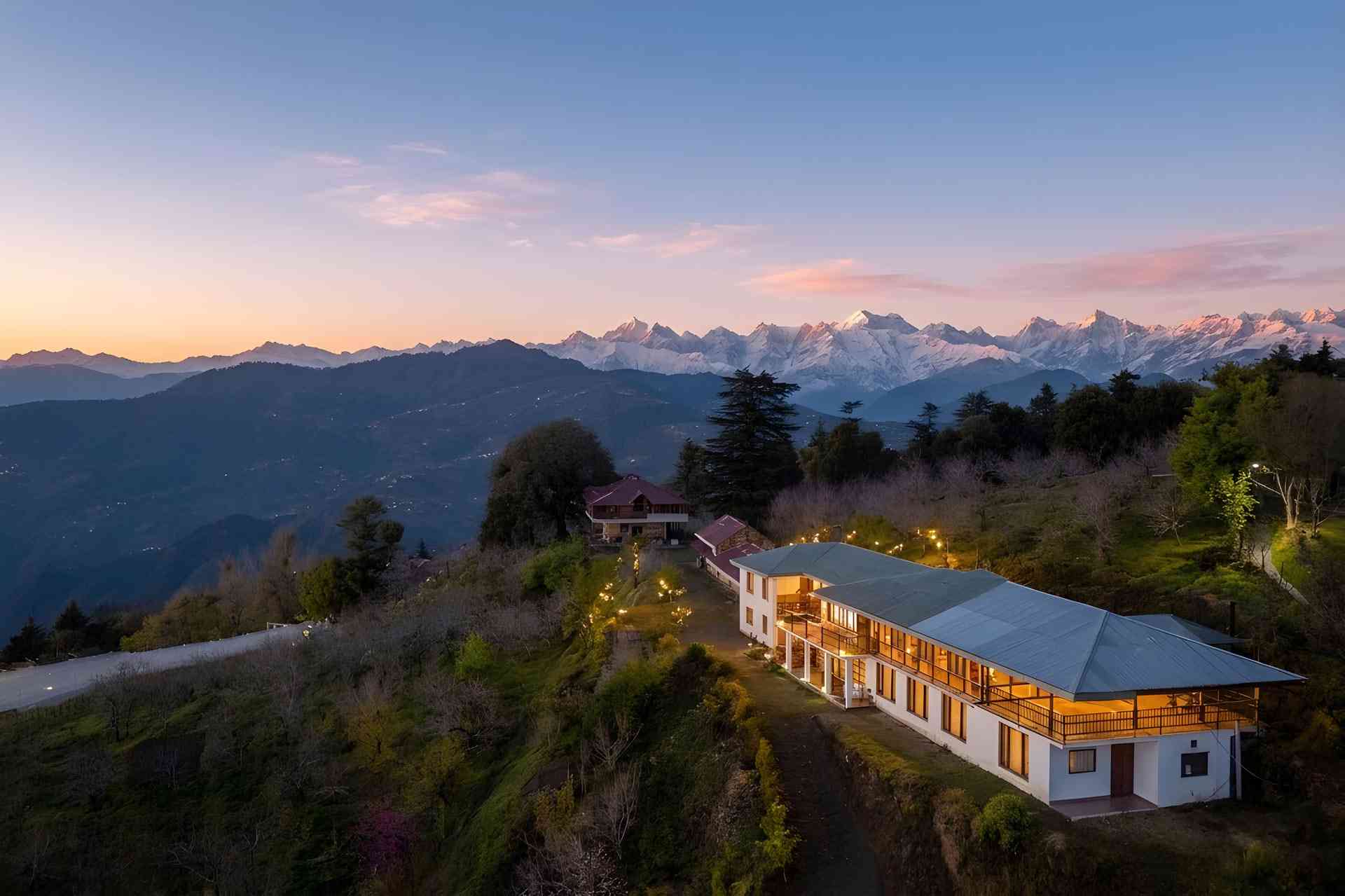
After three weeks at altitude, most pilgrims return through Delhi or Kathmandu exhausted. Many of our guests build in two or three nights in Uttarakhand or Himachal to decompress before heading home – Nainital, Ranikhet, or the lower hills of Kumaon are popular Lipulekh-return choices, while Nathu La pilgrims often unwind in Gangtok or Darjeeling. A quiet villa stay with hot meals, good Wi-Fi, and zero itinerary is a kinder re-entry than a same-day flight back to the city.
Most Lipulekh pilgrims decompress in villas in Uttarakhand. Nathu La returnees often prefer villas in Sikkim and Darjeeling for the shorter onward journey. For Nepal-route pilgrims flying into Delhi, a few quiet days in villas in Himachal – Shimla, Manali, or Kasauli, offer a gentler altitude step-down than heading straight to a metro.