
Kalimpong in July 2026: Deolo Hill, Cactus Nursery & the Complete Monsoon Guide
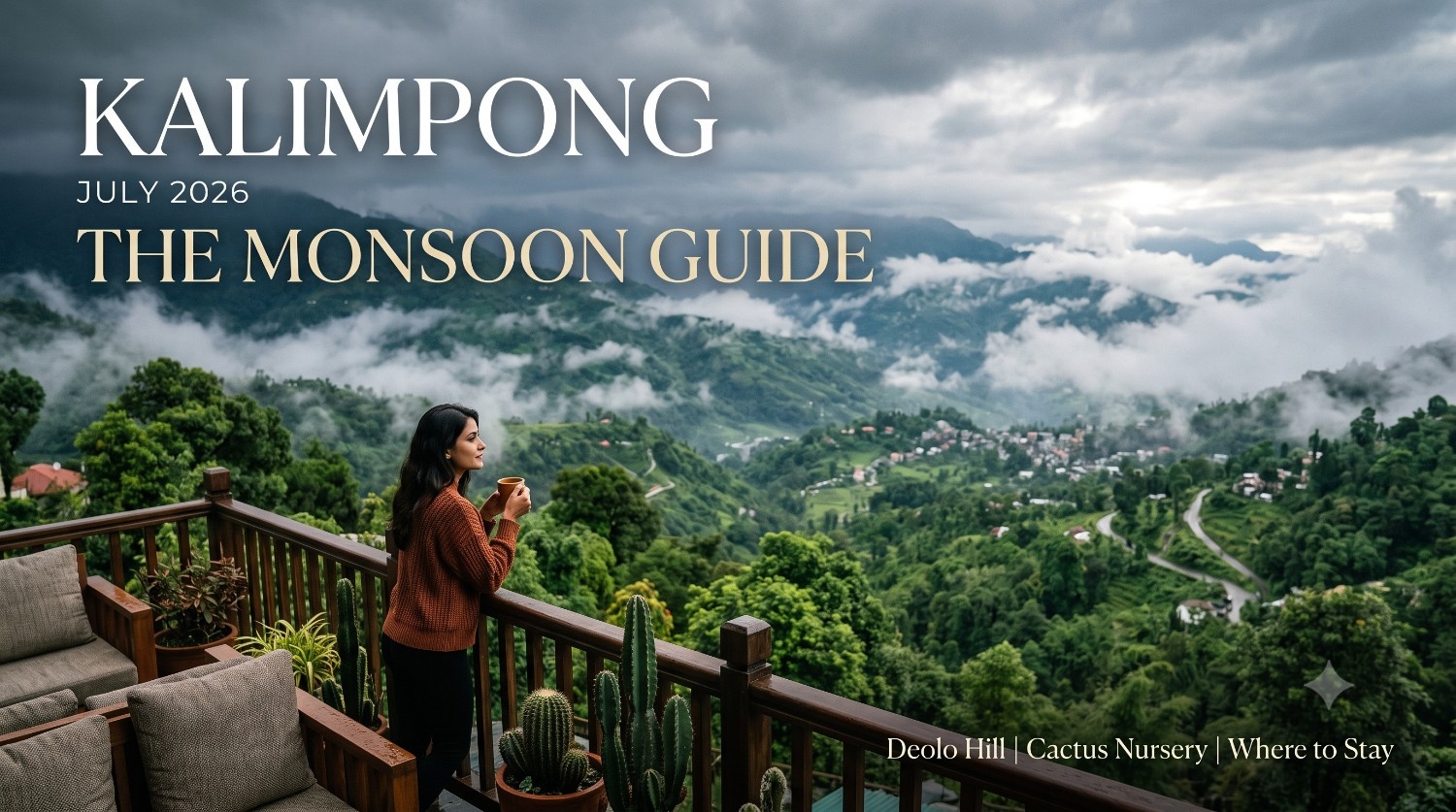
Planning kalimpong in july? This West Bengal hill town, perched at 1,247 metres above sea level, gets 450-500 mm of monsoon rain, cool 17-23°C days, and dramatic misty views from Deolo Hill (its highest point at 1,704 metres). Must-do stops include Pine View Nursery — the famous cactus nursery with 1,500-plus varieties — Durpin Monastery, Neora Valley National Park, and offbeat hamlets like Lolegaon and Rishop. Expect 20-30% fewer tourists than the October peak, lower villa rates, and orchids in full bloom.
In this Blog
Quick Info Table
| Best time to visit (monsoon) | Early July to mid-August |
| Average temperature in July | 17-23°C |
| Average rainfall | 450-500 mm |
| Rainy days in July | 22-24 |
| Nearest airport | Bagdogra Airport (IXB), 74 km, ~3 hours drive |
| Nearest railway station | New Jalpaiguri (NJP), 71 km, ~2.5 hours drive |
| Ideal duration | 3-4 days |
| Altitude | 1,247 metres above sea level |
| Budget range (per person) | ₹4,500-₹9,500 for 3 nights |
Why Visit Kalimpong in July: The Monsoon Case for This Bengal Hill Town
If you have only ever seen photos of this town in autumn brochures, kalimpong in july will feel like a completely different destination. The pine forests along Durpin Road turn emerald green, the Teesta and Relli rivers swell with silt-rich water, and the clouds sit low enough that you can watch them drift into the valleys below Deolo Hill. Room rates at boutique villas drop by roughly 20-25% compared with the October-November peak, according to typical rate cards shared by local property owners.
Kalimpong, spread across three ridges above the Teesta River in West Bengal, is quieter than neighbouring Darjeeling in the monsoon. Traffic on the RC Mintri Road thins out, cafés stay half-empty, and local nurseries — particularly the famous cactus nursery at Pine View — put on their best display of the year because succulents love the humid, filtered light that July delivers. Add the sight of Kanchenjunga peeking through cloud breaks at sunrise, and you have a highly underrated monsoon destination.
Travellers we host at StayVista often tell us Kalimpong in July feels closer to a European alpine town than a typical Indian hill station — moody, quiet, and slow. If you want the drama of the Himalayas without the crowds, this is the month.
Kalimpong Weather in July: Rain, Mist & What to Pack
Kalimpong weather in july is defined by the southwest monsoon, which reaches the eastern Himalayas by mid-June and peaks in the first two weeks of July. Daytime temperatures hover between 20°C and 23°C, dropping to 17-19°C after sunset. Rainfall averages 450-500 mm across the month, spread over 22-24 rainy days, per India Meteorological Department climatology data for the sub-Himalayan zone of West Bengal.
Rain during kalimpong in july does not usually mean all-day washouts. Most days follow a predictable pattern: misty mornings, a burst of heavy rain between 2 PM and 5 PM, and clear evening skies when the clouds retreat down the Teesta valley. Humidity stays at 85-92%. You do not need heavy woollens — a light fleece for evenings is plenty.
What to pack for kalimpong in july:
- 1 rain shell jacket and 1 folding umbrella
- 2 quick-dry trekking trousers
- Waterproof shoes with strong grip (leeches love wet leaves)
- Insect repellent — leeches and mosquitoes near forest edges
- Ziplock bags for phones and cameras
- A power bank — power cuts of 30-90 minutes are common during heavy rain
- Warm socks and a spare pair of shoes
Citation-ready fact: Kalimpong receives an average of 450-500 mm of rainfall in July, roughly 20% of its annual total, making it the wettest month of the year for the district.
20 Best Places to Visit in Kalimpong in July
Below are the top places to visit in kalimpong for a monsoon trip. Distances are measured from the town centre (RC Mintri Road / Main Bazaar) unless noted. Entry fees and timings are current as of July 2026; where verification was not possible, we have marked [VERIFY].
1. Deolo Hill (Delo Park)

Deolo Hill is the highest point in Kalimpong at 1,704 metres and the most photographed viewpoint among the tourist attractions in kalimpong. On clear morning breaks between showers, you can see the Teesta and Relli rivers meeting below, the Nathula Pass ridge, and — on very lucky days in kalimpong in july — the Kanchenjunga massif. Delo Park has a small landscaped garden, a paragliding launch point (dry weather only), and a WBTDC tourist bungalow.
Entry fee: ₹20 per adult, ₹10 per child
Timings: 9 AM to 5 PM, open all seven days
Best time to visit: 6:00-8:30 AM (before clouds roll in)
How to reach: 8 km / 25 minutes drive from town; shared taxis ₹40-₹60, private cab ₹500-₹700
Time required: 1.5-2 hours
Ideal for: Families, couples, photographers
Pro tip: Skip paragliding in July (monsoon suspension); instead, walk the ridge path for 20 minutes past the park to a quieter viewpoint locals call Delo Top.
2. Pine View Nursery (The Famous Cactus Nursery)

Pine View Nursery, on Atisha Road, is Kalimpong’s iconic cactus nursery and one of the largest private collections of succulents in Asia, with over 1,500 varieties on display. Third-generation owner Nari Sethi has been growing cacti here since the 1980s, and kalimpong in july is when many succulent species — Echinocereus, Mammillaria, Rebutia — put out their annual flowers thanks to the diffused monsoon light.
Entry fee: ₹50 per adult; ₹30 extra for cameras
Timings: 8 AM to 5 PM, closed Sundays [VERIFY: latest Sunday hours]
Best time to visit: 10 AM to 3 PM (best indoor light)
How to reach: 2 km / 8 minutes from town centre; auto ₹80-₹120
Time required: 1-1.5 hours
Ideal for: Botany enthusiasts, kids, gardening fans
Pro tip: Ask staff about the century-old golden barrel cactus in the far greenhouse — one of the oldest specimens in India.
3. Zang Dhok Palri Phodang (Durpin Monastery)

Located on Durpin Hill at 1,372 metres, this Kagyu-lineage monastery was consecrated by the 14th Dalai Lama in 1976 and holds 108 volumes of the Kangyur Buddhist scriptures gifted by the Dalai Lama himself. It is among the calmest kalimpong sightseeing places, especially in kalimpong in july when incense mixes with the smell of wet pine and low mist wraps the pagoda roofs.
Entry fee: Free
Timings: 6 AM to 6 PM
Best time to visit: 4-5 PM (evening prayers, monks chanting)
How to reach: 5 km / 15 minutes drive from town; shared jeep ₹30
Time required: 45 minutes to 1 hour
Ideal for: Solo travellers, culture enthusiasts, couples
Pro tip: Remove shoes before entering the main hall, and do not photograph during chanting hours.
4. Thongsa Gompa (Bhutanese Monastery)

Built in 1692, Thongsa Gompa is the oldest monastery in Kalimpong and belongs to the Bhutanese Drukpa Kagyu sect. Its wall murals depict the Buddhist wheel of life in vivid, hand-painted detail — some panels are more than 200 years old.
Entry fee: Free; donations welcome
Timings: 6 AM to 5 PM
Best time to visit: Morning prayers, 6:30-7:30 AM
How to reach: 3 km / 10 minutes from town centre; walkable in dry spells
Time required: 30-45 minutes
Ideal for: History buffs, culture lovers
Pro tip: Ask the caretaker for permission to visit the second-floor library — it holds centuries-old Bhutanese manuscripts.
5. Dr. Graham’s Homes & Chapel

Founded in 1900 by Scottish missionary Dr. John Anderson Graham, this hilltop school and orphanage complex spans 500 acres. The Katherine Graham Memorial Chapel, built in 1925 with stone imported from Scotland, remains one of the most beautiful churches in the eastern Himalayas. It is one of the classic tourist attractions in kalimpong that most first-time visitors skip.
Entry fee: ₹20 (grounds walk-through)
Timings: 9 AM to 4 PM, Monday to Saturday
Best time to visit: 10 AM to 12 noon (fewer crowds, softer light)
How to reach: 3.5 km / 15 minutes from town; taxi ₹200-₹300
Time required: 1-1.5 hours
Ideal for: Families, history buffs, architecture fans
Pro tip: The chapel’s stained-glass windows glow beautifully after a shower — plan your visit around a 3 PM rain break.
6. Morgan House

A stately colonial-era mansion built in the 1930s by British jute magnate George Morgan, this two-storey building sits on a hillock near Durpin. It is now a heritage tourist lodge run by WBTDC, but non-guests can walk the grounds and photograph the gothic façade.
Entry fee: Free for grounds; ₹50 for interior tour
Timings: 9 AM to 5 PM
Best time to visit: Late afternoon
How to reach: 4 km / 12 minutes from town centre
Time required: 45 minutes
Ideal for: Photographers, colonial history fans
Pro tip: Locals say the house is haunted — ask the caretaker for the Lady Morgan story if you want a monsoon-evening thrill.
7. Mangal Dham

Built in 1993 in memory of Guru Mangaldasji Maharaj, Mangal Dham is a large Pushti Marg (Vaishnav) temple complex with a Krishna idol at the sanctum. The whitewashed exterior and pink marble interior make it one of the most photogenic religious sites in the region.
Entry fee: Free
Timings: 5:30 AM to 12 noon; 4 PM to 8 PM
Best time to visit: Evening aarti, 6-7 PM
How to reach: 2 km / 7 minutes from town; shared auto ₹20
Time required: 30-45 minutes
Ideal for: Families, pilgrims
Pro tip: Photography is allowed in outer areas but not inside the sanctum.
8. Hanuman Tok

A 30-foot Hanuman statue stands at the top of Ringkingpong Hill, offering 360-degree views of the surrounding Himalayas on clear days. Popular with local pilgrims, it offers one of the least crowded panoramic views in town.
Entry fee: Free
Timings: Sunrise to sunset
Best time to visit: Sunrise, between rain spells
How to reach: 8.5 km / 25 minutes from town centre
Time required: 45 minutes to 1 hour
Ideal for: Sunrise chasers, spiritual seekers
Pro tip: Carry a windproof layer — the ridge gets breezy after showers.
9. Kalimpong Science Centre

Run by the National Council of Science Museums, this centre features an inflatable planetarium, hands-on physics exhibits, and a small 3D theatre. It is a perfect indoor stop for families during afternoon monsoon showers.
Entry fee: ₹40 adults, ₹20 children
Timings: 10 AM to 6:30 PM, closed Mondays
Best time to visit: 2-4 PM (rain shelter + activity)
How to reach: 3 km / 10 minutes from town
Time required: 1.5-2 hours
Ideal for: Families with kids, curious travellers
Pro tip: 3D shows run every 45 minutes — arrive on the hour to avoid waits.
10. Neora Valley National Park

Spanning 88 sq km at altitudes from 600 to 3,200 metres, Neora Valley is one of the last virgin forests in the eastern Himalayas. It shelters red pandas, leopards, and the elusive Himalayan black bear. The core zone requires permits, but the buffer zone around Lava is accessible for day visits.
Entry fee: ₹200 per person + ₹500 per vehicle
Timings: 6 AM to 4 PM; several trails closed 15 June-15 September
Best time to visit: Early morning
How to reach: 34 km / 1.5 hours from Kalimpong via Algarah
Time required: Full day
Ideal for: Wildlife enthusiasts, birders, trekkers
Pro tip: Book a guide in advance from the DFO office in Lava — trails are slippery in kalimpong in july and demand ankle support.
11. Lava

A hamlet at 2,353 metres, 34 km from Kalimpong, Lava is the gateway to Neora Valley and one of the coldest points in the region during July. The Lava Monastery, built in 1987, features detailed Tibetan Buddhist murals.
Entry fee: Free monastery; park permits separate
Timings: Monastery 6 AM to 6 PM
Best time to visit: Overnight stay for early-morning birdwatching
How to reach: 34 km / 1.5 hours drive; shared jeep ₹200-₹250
Time required: Half day or overnight
Ideal for: Nature lovers, birders
Pro tip: Carry cash — Lava ATMs are unreliable in monsoon due to power cuts.
12. Lolegaon (Kaffer)

At 1,675 metres, 24 km from Lava, Lolegaon is famous for its 180-metre canopy walk through a dense cinchona and pine forest. On clear July mornings, the Kanchenjunga view from Jhandi Dara (Heritage Point) is arguably the best in the district.
Entry fee: ₹50 for canopy walk
Timings: 8 AM to 4 PM
Best time to visit: Overnight; sunrise from Jhandi Dara
How to reach: 55 km from Kalimpong via Lava; 2.5-3 hours by car
Time required: Half day or overnight
Ideal for: Couples, photographers, offbeat travellers
Pro tip: The canopy walk is closed after heavy rain due to slippery planks — check with the forest office.
13. Rishop
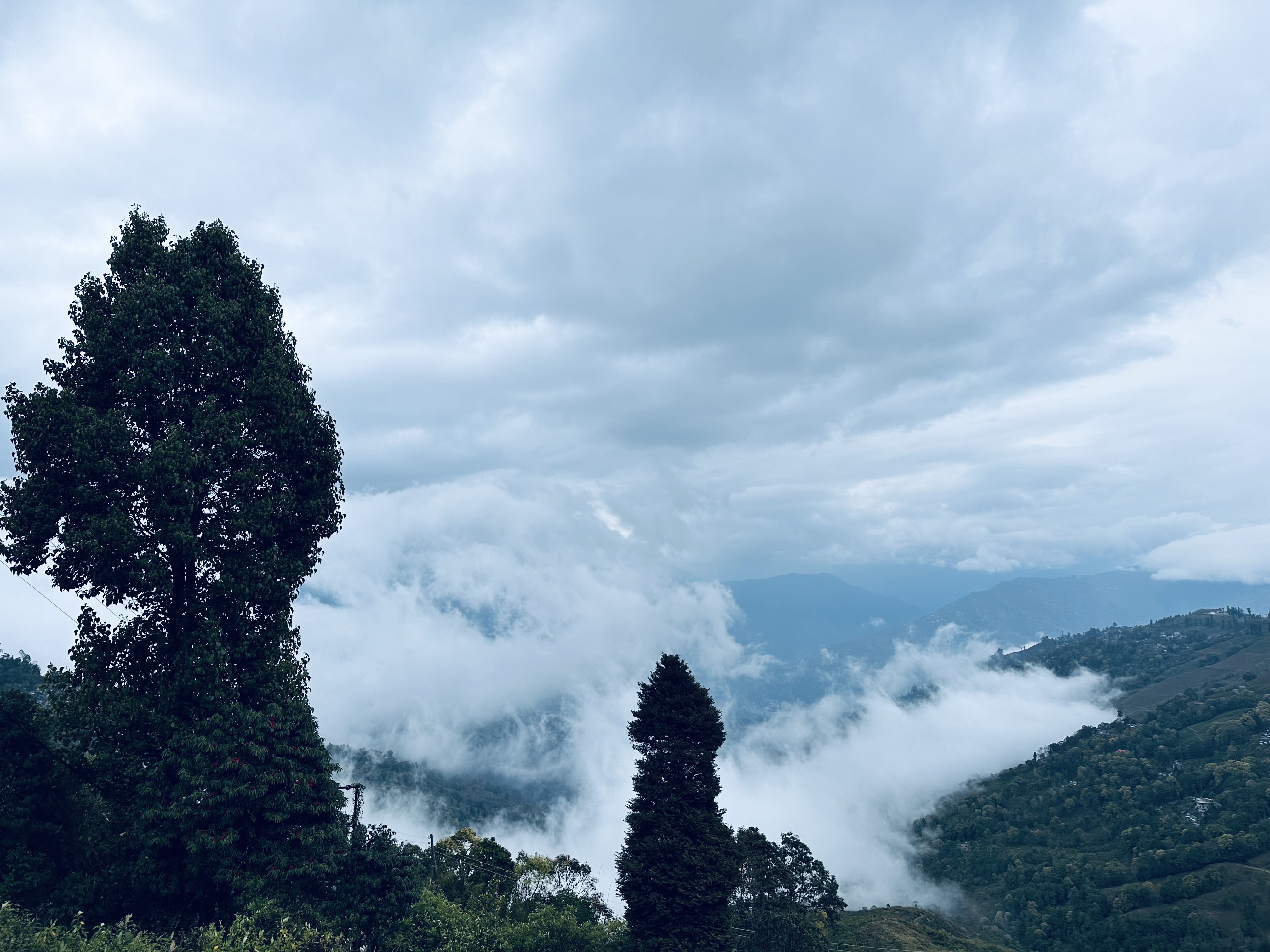
A cluster of just 10 homes at 2,591 metres, Rishop is among the most iconic kalimpong offbeat places for a slow monsoon retreat. On clear mornings you can see Kanchenjunga, Kabru, Pandim, and Simvo. Mobile signal is spotty — treat it as a feature, not a bug.
Entry fee: None
Timings: Access any time
Best time to visit: Overnight stay
How to reach: 35 km from Kalimpong via Lava; last 2 km often need 4WD in monsoon
Time required: Overnight recommended
Ideal for: Digital detox, offbeat travellers
Pro tip: Walk from Rishop to Tiffindara viewpoint — 40 minutes each way through rhododendron forest.
14. Pedong

A quiet border-town at 1,240 metres, 20 km east of Kalimpong towards Sikkim, Pedong is home to the 300-year-old Damsang Fort ruins and the Sangchen Dorjee Monastery. It is one of the best places to visit in kalimpong for travellers who want history without crowds.
Entry fee: Free
Timings: Monastery 6 AM to 5 PM; fort accessible any time
Best time to visit: Afternoon
How to reach: 20 km / 45 minutes drive
Time required: Half day
Ideal for: History fans, offbeat travellers
Pro tip: Try Pedong’s local sisnu (nettle) soup at any roadside eatery — a monsoon speciality.
15. Silent Valley

A lesser-known viewpoint about 6 km from town on the road to Bhalukhop, Silent Valley overlooks a deep gorge cut by the Relli River. Almost no tour groups come here.
Entry fee: Free
Timings: Any time
Best time to visit: Sunset
How to reach: 6 km / 20 minutes by taxi
Time required: 30-45 minutes
Ideal for: Solo travellers, couples
Pro tip: Combine with a stop at the small roadside prayer wheels 1 km before the viewpoint.
16. Kalimpong Haat (Main Bazaar)

The town’s weekly haat runs every Wednesday and Saturday, with 200-plus stalls selling local cheese, jhal-momo, kinema (fermented soyabean), Sikkimese oranges, and handwoven wool. It is easily one of the liveliest things to do in kalimpong for a rainy morning.
Entry fee: Free
Timings: 7 AM to 2 PM, Wednesdays and Saturdays
Best time to visit: 8-10 AM
How to reach: In the town centre
Time required: 1.5-2 hours
Ideal for: Everyone
Pro tip: Try the Kalimpong lollipop cheese at Larks Provisions on RC Mintri Road — an 80-year-old shop.
17. Tharpa Choling Monastery

Founded in 1892, Tharpa Choling belongs to the Gelugpa sect (the same lineage as the Dalai Lama). It has a resident population of 100-plus monks and holds an annual mask dance in December — but even in July, morning prayer chants are worth the visit.
Entry fee: Free
Timings: 6 AM to 5 PM
Best time to visit: 6:30-7:30 AM
How to reach: 3 km / 10 minutes drive
Time required: 45 minutes
Ideal for: Culture and spiritual travellers
Pro tip: Ask about the 15-metre-tall statue of Tsongkhapa inside the main hall — the tallest in the region.
18. Ralli River (Reli Khola)

The Ralli River, 12 km from town, is a tributary of the Teesta and swells dramatically in monsoon. There is a small footbridge crossing and a shaded picnic ground. Rafting operators run short 3-4 km stretches when water levels are safe.
Entry fee: Free (rafting ₹1,200-₹1,800 per person)
Timings: Daylight hours
Best time to visit: Late morning after the fog lifts
How to reach: 12 km / 30 minutes drive from town
Time required: Half day
Ideal for: Adventure lovers, families
Pro tip: Raft only with operators certified by the Indian Mountaineering Foundation — the current is strong in July.
19. Cross Hill (Jelep La Viewpoint)

On the outskirts of town, this small hill has a Christian cross planted in the 1890s and offers views of the Jelep La pass on the India-Bhutan border. The site was also used as a monsoon retreat by Scottish planters in the early 1900s.
Entry fee: Free
Timings: Sunrise to sunset
Best time to visit: Late afternoon
How to reach: 4 km / 15 minutes from town
Time required: 30-45 minutes
Ideal for: History fans, quiet walkers
Pro tip: Look for the small brass plaque near the cross listing Scottish tea planters buried in Kalimpong.
20. Nakshatra Vatika (Herbal Garden)
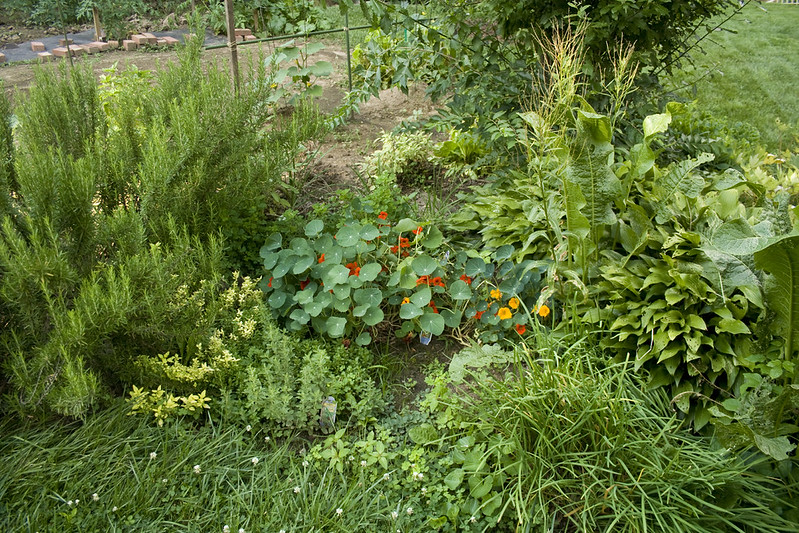
A government-run herbal garden on the way to Deolo, this 3-acre patch has 100-plus medicinal plants labelled with their Ayurvedic uses. Local schools use it for botany field trips.
Entry fee: ₹10
Timings: 9 AM to 4 PM, closed Mondays
Best time to visit: Mid-morning
How to reach: 6 km / 20 minutes from town
Time required: 45 minutes
Ideal for: Wellness travellers, botany fans
Pro tip: The garden has good WiFi and covered seating — a decent rain shelter.
Things to Do in Kalimpong in July: 15 Activities Beyond Sightseeing


Sightseeing is only half the story. Here are 15 of the best things to do in kalimpong when the monsoon takes over.
1. Buy Century-Old Kalimpong Cheese
The town has produced a distinctive semi-hard cow-milk cheese since 1922, first taught by a Swiss missionary. Larks Provisions on RC Mintri Road (established 1935) sells 200-500 g wheels for ₹250-₹500 — it travels well and makes a great gift.
2. Take a Guided Orchid Walk
Kalimpong sits at the intersection of tropical and temperate zones and hosts over 500 native orchid species. July is when Cymbidium and Dendrobium species bloom. Local guide Sailesh Sharma runs 3-hour walks for ₹1,500 per person.
3. Learn to Make Momos
Several homestays across town offer half-day cooking classes (₹800-₹1,200 including lunch). Deki Homestay and Zephyr’s are among the best-rated. Expect to make 20-plus dumplings in an hour.
4. Watch Monks Debate at Zang Dhok Palri
Every Tuesday and Thursday afternoon (2-4 PM), young monks at Durpin Monastery hold philosophical debates in the courtyard. Non-Buddhists can watch quietly from the sidelines. Free entry.
5. Try Traditional Lepcha Cuisine
The Lepcha are the indigenous people of this region. Restaurants like The Kalimpong Park Hotel serve pork buff, gyathuk noodles, and thukpa. Expect to spend ₹300-₹500 per head for a full meal.
6. Trek to Tiffindara
A moderate 3-hour trek from Rishop, Tiffindara offers a 220-degree Himalayan view on clear mornings. Local guides charge ₹700-₹1,000. Slippery in monsoon — waterproof boots essential.
7. Visit a Working Tea Estate
Selim Hill Tea Garden, 25 km from Kalimpong, offers factory tours for ₹300 per person. July is the second-flush period — the most fragrant leaves of the year.
8. Attend a Monsoon Music Session
Café Kalimpong on Chinera Bhutia Road hosts open-mic evenings on Saturdays (6-9 PM). Free entry; coffee starts at ₹80.
9. Ride the Toy Train (Nearby Darjeeling)
The Darjeeling Himalayan Railway Joy Ride, 74 km away, is a 2-hour steam-train loop. Booking through IRCTC is essential — ₹1,500-₹1,700 per person; first-class cabins available.
10. Rafting the Teesta
The Teesta River, 35 km downhill via Melli, offers rafting from June to September on grade II-III stretches. Operators pick up from Kalimpong at 7 AM. Cost: ₹1,800-₹2,500 per person.
11. Sunrise from Durpin Ridge
An easier alternative to Deolo, Durpin Ridge (10 minutes drive from town) has a paved viewing platform and no entry fee. Best just before dawn.
12. Photography Walks on RC Mintri Road
The main road is packed with 1930s-40s buildings, wooden shopfronts, and pastel colonial homes. A 90-minute walk from Motor Stand to the Deolo turn-off is one of the free things to do in kalimpong in july that most travellers overlook.
13. Pottery at Kalimpong Arts and Crafts Centre
The state-run centre near Development Area offers 2-hour pottery workshops for ₹500 per person. Great for families with kids.
14. Overnight Stay in a Cinchona Plantation
Munsong, 30 km from Kalimpong, is one of India’s few working cinchona plantations. A few homestays inside the plantation offer overnight stays at ₹1,500-₹2,500 per room.
15. Buy Bhutanese Textiles
Small shops near Thongsa Gompa sell handwoven Bhutanese kira and gho fabrics for ₹800-₹4,000 per piece. Bargain politely — most owners are second-generation Bhutanese migrants.
6 Best Kalimpong Offbeat Places for a July 2026 Trip
Some kalimpong offbeat places do not make it into standard guidebooks. Kalimpong in july is the ideal window to visit these hamlets — cardamom pods are green, orchids are in bloom, and homestay rates run 20-30% below peak season. Here are six we recommend after regular visits.
1. Kagyed Monastery, Bong
A 250-year-old monastery in Bong village, 18 km from town, with almost no tourist footfall. The caretakers are happy to walk visitors through the wall murals.
2. Ramitey Viewpoint
A ridge above the Teesta with 14 river bends visible on a clear day. A 40-minute drive from Kalimpong on the road to Sikkim.
3. Ichey Gaon (Icchey Gaon)
A cluster of 15 homes at 1,830 metres, this cardamom-growing village lies 30 km from town. Homestay rates start at ₹1,500 including three meals.
4. Sillery Gaon
Nicknamed “New Darjeeling” by locals, Sillery Gaon is a 20-home hamlet at 1,900 metres, 35 km from Kalimpong. The Damsang Fort ruin is a short walk from the village.
5. Charkhole
A quiet 12-home village at 1,860 metres near Pedong. Often paired with Rishop and Sillery on a 3-day loop.
6. Kolakham
A birding hamlet inside the buffer zone of Neora Valley National Park. Over 15 Himalayan bird species have been sighted from a single homestay porch here.
How to Reach Kalimpong
By air:
Bagdogra Airport (IXB) is the nearest, 74 km / 3 hours by taxi. Regular flights from Delhi (2h 20m), Mumbai (3h), Kolkata (1h 15m), and Bengaluru (3h). Pre-paid taxis from the airport run ₹2,500-₹3,500 to Kalimpong.
By rail:
New Jalpaiguri (NJP) is the nearest major station, 71 km / 2.5 hours. Overnight trains from Kolkata (Padatik Express 12377), Delhi (Anandvihar-NJP AC Express), and Guwahati (Kanchanjunga Express).
By road:
From Siliguri, take NH-10 toward Sevoke, cross the Coronation Bridge, then turn east onto NH-717 (formerly NH-31A) via Teesta Bazaar. Distance from Siliguri: 68 km / 2.5-3 hours. Landslides can extend travel time by 60-90 minutes in kalimpong in july, so start early and keep a rain-day buffer.
Shared jeeps:
From Siliguri’s SNT terminus, shared Sumos to Kalimpong depart every 30 minutes, ₹200-₹250 per seat. From Darjeeling, ₹150-₹200.
Suggested Itineraries
2-Day Weekend Itinerary
Day 1: Arrive from Bagdogra, check in, lunch at Gompu’s, afternoon at Durpin Monastery and Morgan House, sunset at Deolo Hill, dinner at Café Kalimpong.
Day 2: Sunrise at Deolo (weather permitting), breakfast, Pine View Cactus Nursery, Dr. Graham’s Homes, Thongsa Gompa, browse Kalimpong Haat, evening departure.
3-Day Itinerary (Recommended)
Day 1: Kalimpong town — Deolo Hill, Durpin Monastery, Kalimpong Science Centre, Mangal Dham.
Day 2: Day trip to Lava and Lolegaon — canopy walk, sunset from Jhandi Dara viewpoint.
Day 3: Half day at Neora Valley buffer zone, afternoon at Ralli River, optional overnight in Rishop.
4-Day Slow Trip (Best for Monsoon)
Add an overnight in Rishop, Sillery Gaon, or Ichey Gaon on Day 4 for real offbeat exposure. This is the itinerary we recommend to StayVista guests planning kalimpong in july — it balances the town’s main sights with genuine hill-village time.
Where to Stay in Kalimpong: StayVista Homestay Recommendation
Kalimpong has 40-plus homestays and small hotels, but only a handful are well-suited for a monsoon trip. Imagine reliable back-up power, covered balconies, in-house dining (so you do not go hunting for food during a downpour), and heaters or fireplaces for cool evenings. Consider staying at Folktail House to enjoy the best stay in Kalimpoing!
Forktail House


Frequently Asked Questions
Yes, if you are comfortable with rain and mist. Kalimpong receives 450-500 mm of rainfall in July, but daytime temperatures stay pleasant at 20-23°C. Tourist crowds are 30% lower than in October-November, room rates are 20-25% cheaper, and pine forests are at their greenest. Avoid if you specifically want clear Kanchenjunga views — those are more reliable from October to December.
3 to 4 days is ideal. Two days cover the main town, day 3 covers Lava-Lolegaon or Neora Valley, and day 4 allows an offbeat stop at Rishop, Sillery Gaon, or Ichey Gaon. A one-day trip is too short to justify the 3-hour drive from Bagdogra.
Rain follows a predictable pattern of misty mornings, an afternoon downpour of 30-90 minutes between 2 PM and 5 PM, and clear evenings. Rainy days average 22-24 across the month. Landslides can affect the Sevoke-Teesta road, so build a 2-hour buffer for travel days.
Kalimpong is quieter, warmer by 2-3°C, and roughly 20% cheaper. Darjeeling has the toy train, tea gardens, and more restaurants. If you have visited Darjeeling before, Kalimpong is the better July choice for slow travel. First-time hill station visitors may prefer Darjeeling for its infrastructure.
Yes. Kalimpong has consistently ranked among West Bengal’s safest hill towns. Public transport (shared Sumos) is safe until early evening. Solo female travellers should book homestays in the town centre rather than remote offbeat villages during July, and inform hosts of their return times.
The most famous cactus nursery in Kalimpong is Pine View Nursery on Atisha Road, near the town centre. It houses 1,500-plus varieties of cacti and succulents and has been operating since the 1980s. Other notable nurseries include Sri Ganesh Mani Pradhan Nursery for orchids and gladioli.
Leeches are common in forested areas around Neora Valley, Lava, Lolegaon and Rishop during July. Wear high socks, tuck trousers in, and apply salt or Dettol to detach them (never pull). Town-centre attractions like Deolo, Durpin, and Pine View are largely leech-free.
Budget travellers can complete a 3-day trip for ₹4,500-₹6,000 (dorm stays, shared transport). Mid-range trips at homestays with private cabs come to ₹8,000-₹12,000. StayVista-style boutique stays with a private car range from ₹15,000-₹22,000 per person for a couple sharing.