
Kolad River Rafting in 2026: Rapids, Rates & How to Reach (117 km From Mumbai)
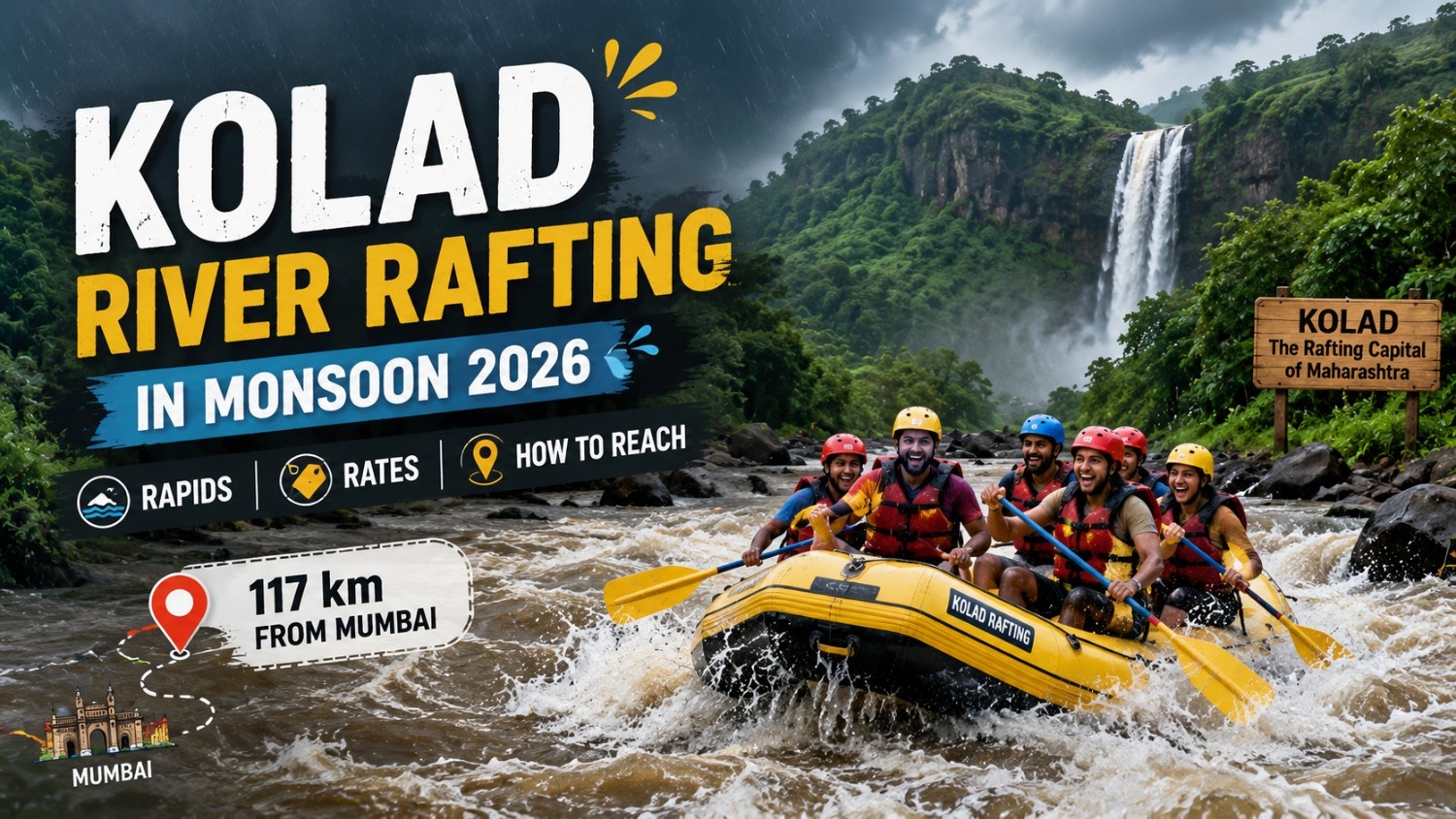
The monsoon is over, but Kolad rafting isn’t. The Kundalika runs on a daily dam release rather than rainfall, so operators raft all year, including October to February. After the monsoon there’s usually one morning batch only; report by about 7:15–7:45 AM, and confirm with your operator. The water is a little gentler, which makes this a good season for first-timers.
The southwest monsoon reached Maharashtra on 23 June 2026 — about 13 days later than its usual 10 June arrival (IMD via India.com, 2026). For most of India’s adventure rivers, that’s the signal to shut down. Rishikesh stops rafting through the rains because the rain-fed Ganga turns dangerous. But three hours from Mumbai, one river is only just hitting its best season.
Kolad, on the Kundalika in Raigad district, runs on a dam-controlled water release — not on rainfall. So while the rest of the country waits for October, Kolad’s rapids are guaranteed every single morning of the monsoon. This guide covers the 2026 rates, the dam-release timings nobody explains clearly, how to reach Kolad from Mumbai and Pune, safety for non-swimmers, a 2-day weekend plan, and where to stay.
TL;DR: Kolad is the top monsoon river-rafting spot near Mumbai (117 km) and Pune (~110 km) because its Kundalika rapids run on a dam-controlled release, not rainfall — so it operates all monsoon (June–September) when Rishikesh closes. Expect Grade II–III rapids over ~12.5 km, rates of ₹1,200 (weekday) to ₹1,700 (weekend) per person, and a morning slot timed to the dam release. Non-swimmers aged 14+ are welcome.
In this Blog
Quick info: Kolad river rafting at a glance
| Detail | Information (June 2026) |
| Where | Kundalika river, Kolad, Raigad district, Maharashtra |
| Distance from Mumbai | ~117 km · 3–3.5 hours by road |
| Distance from Pune | ~110 km · 3–3.5 hours via Tamhini Ghat |
| Nearest railway station | Kolad, on the Konkan Railway |
| Nearest airport | Mumbai (CSMIA), ~120 km; Pune is the alternative |
| Rapids grade | Grade II–III · 10–12 rapids · ~12.5 km stretch |
| Rate (per person) | ₹1,200 weekday · ₹1,700 weekend (basic 1-hr run from ₹900) |
| Timings | Report 7:30 AM (daily); afternoon slot 1:30 PM (weekends, July–Aug only) |
| Best time | Monsoon (June–September) for the strongest rapids; runs year-round |
| Age / weight | 14+ years · 40–120 kg · non-swimmers welcome |
| Ideal for | Friends, families, first-timers, corporate offsites |
Can you go river rafting near Mumbai in the monsoon?
Yes — and Kolad is the answer. The Kundalika river at Kolad is fed by a controlled release from the Bhira hydroelectric project, so the rapids run all monsoon (June–September), which is the river’s peak season. This is the opposite of rain-fed Rishikesh, which suspends rafting through the monsoon for safety. Kolad’s flow is engineered, not weather-dependent.
Here’s the mechanic competitors skip. The Bhira dam powers a 300 MW hydroelectric station (Wikipedia), and when it discharges water for power generation, that release surges down the Kundalika and creates the rapids. The water rises at Sutarwadi around 7:30 AM and reaches the Kolad rafting stretch by roughly 10 AM. No release, no rapids — which is why the timings are fixed to the dam, not the sunrise.
So why is the monsoon the best time? Two reasons. First, the dam discharges more water in the rains, which makes the rapids faster and more thrilling — Grade II–III runs can feel a notch punchier in July and August. Second, the Sahyadri around Kolad turns spectacular. The Tamhini Ghat belt nearby is among the wettest places in the Western Ghats, recording roughly 6,650 mm of rain by September 2023 (Wikipedia). Dry brown hills become green walls laced with waterfalls.
It’s worth knowing the scale of what you’re tapping into. India’s adventure-tourism market was valued at about USD 16,730 million in 2024 and is projected to reach USD 86,090 million by 2033, a compound growth rate of around 17.8% (IMARC Group, 2025). Accessible, beginner-friendly rapids three hours from a metro are exactly the kind of experience driving that growth — and Kolad is the most accessible monsoon thrill near Mumbai and Pune.
Planning a wider rainy-season trip? Pair this with our monsoon weekend getaways from Mumbai guide.
How much does Kolad river rafting cost in 2026?
Kolad river rafting costs ₹1,200 per person on weekdays and ₹1,700 per person on weekends for the full ~12.5 km run with 10 rapids, lasting about 2 to 2.5 hours (verified across kolad.in, riverraftingkolad.in and Thrillophilia, June 2026). A shorter basic run starts from around ₹900, and you can add lunch for ₹350 or a banana/bumper ride for ₹400.
If you want to stretch it into an overnight adventure, camping-plus-rafting packages (2 days, 1 night) start around ₹1,350 per person, and Kolad operators also run add-on activities like kayaking, zip-lining, river crossing and even bungee jumping (about ₹1,599). Prices vary by operator and tend to rise slightly each season, so confirm the exact figure when you book.
According to current operator listings, the standard Kolad rafting experience costs ₹1,200 per person on weekdays and ₹1,700 on weekends, covering a 12.5 km stretch of 10 rapids over about 2.5 hours (kolad.in, 2026). That makes it one of the most affordable white-water experiences within a half-day’s drive of Mumbai or Pune.
What are the rapids like — grade, distance and who can raft?
The Kundalika at Kolad has Grade II to Grade III rapids — 10 to 12 of them across roughly a 12.5 km stretch, taking about 2 to 2.5 hours (kolad.in, 2026). That’s the sweet spot for adventure: lively enough to get your heart racing, gentle enough for complete first-timers. In peak monsoon flow the same rapids feel meaningfully stronger.
You don’t need to know how to swim. Every rafter wears a life jacket and helmet, and a trained guide steers each raft — the vast majority of people who raft at Kolad are non-swimmers. The requirements are straightforward: minimum age 14 years, weight between 40 and 120 kg (so the life jacket fits securely), and a basic level of fitness. There’s no upper age limit if you’re reasonably fit.
A few people should sit this one out. Operators generally do not permit pregnant women, people with chronic asthma, heart conditions, or certain physical disabilities to raft. If you’re unsure, call the operator before you book and be honest about any condition — it’s a safety call, not a formality.
Our travel desk’s take: first-timers are often more nervous in the calm stretches between rapids than in the rapids themselves. Listen to your guide’s “forward paddle” and “get down” calls, keep your feet up if you slip into the water, and you’ll be grinning by the second rapid. Want a gentler intro? Book an October–February weekend instead, when the flow is calmer.
What are the Kolad rafting timings — and why do they change daily?
Kolad rafting timings are set by the dam, not the clock. Batch 1 reports at 7:30 AM daily; rafting begins around 8 AM once water is released, and entry is generally not possible after 9 AM (riverraftingkolad.in, 2026). In peak monsoon — typically July and August weekends — operators add a second batch reporting at 1:30 PM, when an afternoon release sends a fresh surge down the river.
This is the detail most guides gloss over, so here it is plainly. Water released upstream reaches Sutarwadi by about 7:30 AM and rises at the Kolad rafting point by roughly 10 AM (Wikipedia). Because the rapids exist only during this release window, you cannot just show up at noon on a quiet Tuesday and expect to raft. Reach the start point on time, or you miss the water.
On rare days the dam doesn’t release water at all, and rafting is cancelled — in which case reputable operators offer a full refund. To avoid disappointment, book your slot in advance for monsoon weekends, when demand from Mumbai and Pune day-trippers is highest, and arrive the night before if you can.
The practical upshot: a Kolad rafting trip is really a “stay nearby and raft at dawn” trip, which is why where you stay the night before matters as much as the rafting itself.
Can you go rafting in Kolad after the monsoon?
Yes. Kolad runs year-round, because the Kundalika’s rapids come from a controlled morning release upstream at Ravalje, not from rain. Operators list rafting 365 days a year, and current rates are ₹1,199 on weekdays and ₹1,699 on weekends, or ₹1,550 and ₹2,000 with lunch (riverraftingkolad.in). The run is 12–14 km from Sutarwadi to Kamath and takes about 2 to 2.5 hours.
So what changes after the monsoon?
- One batch a day. The 1:30 PM afternoon batch is a July–August extra. From October, it’s the morning slot only.
- Calmer water. The rapids stay Grade II–III, but with lower volume than at monsoon peak. It’s a better pick for nervous first-timers and families with teenagers.
- Warmer and clearer days. You’ll still get soaked, but you’ll dry off in the sun instead of shivering in the drizzle.
- A good time to pair with Rishikesh plans. Rishikesh reopened for the season on 23 September 2026, so October is when both rivers are running.
How to reach Kolad from Mumbai (117 km) and Pune (110 km)
Kolad sits about 117 km from Mumbai (3 to 3.5 hours by road) and roughly 110 km from Pune (3 to 3.5 hours). From Mumbai, take the Mumbai–Pune Expressway, exit at Khopoli, and follow the Pali road to Kolad. From Pune, drive via Pirangut and the Mulshi road through Tamhini Ghat — slower, but in monsoon it’s one of the most beautiful waterfall drives in the state.
Road distance to Kolad from Mumbai and Pune. Source: kolad.in, 2026.
Prefer the train? Kolad has its own railway station on the Konkan Railway, and the Mumbai–Kolad train takes roughly 3 to 4 hours — a relaxed, scenic alternative to driving, especially in the rains when ghats can get foggy. From the station, a short auto or cab ride gets you to the rafting point. The nearest airports are Mumbai (Chhatrapati Shivaji Maharaj International, ~120 km) and Pune.
By road, train or cab, Kolad is comfortably a one-tank, single-day reach from either city — which is exactly why it ranks among the most popular monsoon adventures near Mumbai and Pune. For more ideas in this direction, see our quick weekend getaways from Pune.
- From Mumbai via NH-66: the Mumbai–Goa highway through Panvel, Pen and Nagothane is the most direct road to Kolad. It’s about 93–94% complete as of September 2026 (Swarajya, Sep 2026). Work is still going on at the Nagothane flyover and the Mangaon bypass, so expect slow patches.
- From South Mumbai: take Atal Setu to Chirle and join NH-66 near Pen. That skips the Panvel city traffic.
- From Pune via the Expressway: if you take the Expressway down to Khopoli and then the Pali road, the new Missing Link, open since 1 May 2026, bypasses the Khandala ghat and saves 20–30 minutes.
- By train: the 10105 Diva–Sawantwadi Express leaves Diva at 6:25 AM and Panvel at 7:00 AM, and reaches Kolad at 9:16 AM (eRail). That’s too late for the morning rafting batch, so treat the train as a way to arrive the day before. Konkan Railway’s monsoon timetable runs until 20 October, so check NTES for winter timings after that.
What should you wear and carry for monsoon rafting?
Dress to get soaked. The best outfit for Kolad rafting is quick-dry shorts and a T-shirt, or track pants — never jeans, cotton or traditional wear, which get heavy and cold when wet (riverraftingkolad.in, 2026). On your feet, wear floaters or sports shoes with a firm grip; the riverbanks are slippery in monsoon. The operator provides the helmet, life jacket and paddle.
Pack a small dry kit: a full change of clothes, a towel, a waterproof phone pouch or dry bag, sunscreen, and a valid photo ID. Leave the loose jewellery, expensive sunglasses and DSLR at the villa — most operators don’t allow personal cameras on the raft, and the river will claim anything not strapped down.
One monsoon-specific tip: carry an extra pair of footwear and a plastic bag for wet clothes, because you’ll likely add a waterfall stop or a muddy short trek to your day. Mornings can be cool and wet even in July, so a light, packable rain layer for before and after the run is worth its space.
Make a weekend of it: things to do near Kolad in the monsoon
Kolad rewards an overnight trip. Within a 40 km radius you’ll find the wettest waterfalls in the Sahyadri, a century-old dam, a quiet lake and some excellent monsoon treks. Here are eight worth your time, with the practical details to plan around.
1. Tamhini Ghat & waterfalls
A 15 km mountain pass packed with seasonal waterfalls, mist and the famous “reverse waterfall.” Distance: ~30–40 km (on the Pune route). Entry: free. Timings: daylight hours; avoid after dark. Best time: July–September. Time required: 2–3 hours. Ideal for: photographers, couples, families. Pro tip: the IMD logged 560 mm of rain here in a single July 2024 stretch (Wikipedia) — drive slowly, fog and slick roads are real.
2. Bhira Dam
The historic Tata hydroelectric dam (1927) whose releases create your rapids — a neat full-circle stop. Distance: ~30 km. Entry: free (viewpoints). Timings: daytime. Best time: monsoon, when it’s overflowing. Time required: 1–2 hours. Ideal for: photography, slow mornings. Pro tip: pair it with a chai stop and explain the dam-rafting link to first-timers.
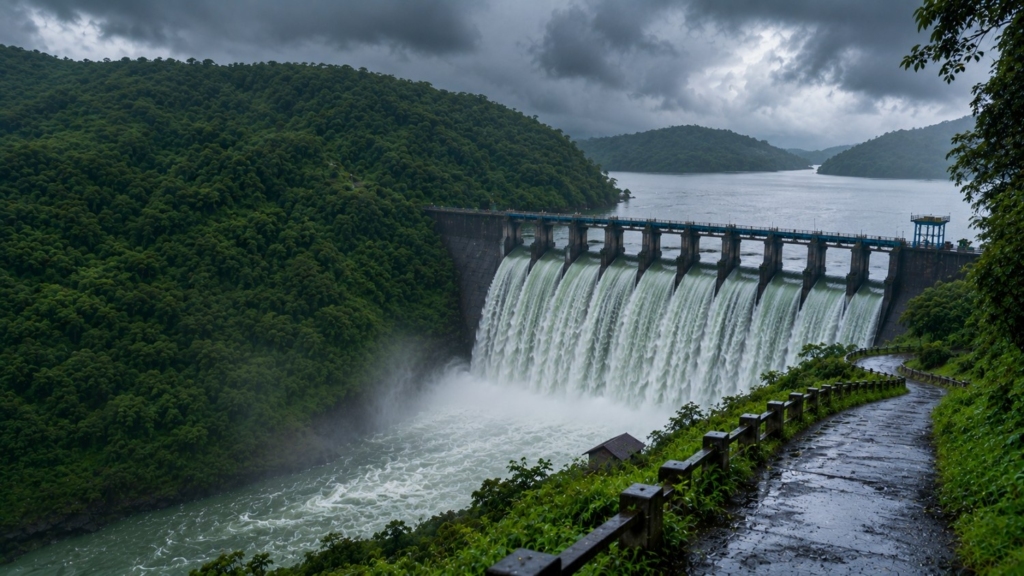
3. Sutarwadi Lake
A calm lake backed by the Sahyadris, right where the released water rises each morning. Distance: near Kolad. Entry: free. Timings: early morning best. Best time: monsoon and post-monsoon. Time required: 1 hour. Ideal for: bird-watchers, photographers. Pro tip: go at sunrise before your rafting batch for mirror-still reflections.
4. Devkund Waterfall
A stunning waterfall with a natural plunge pool, reached by a forest trek. Distance: ~30–40 km (Bhira side). Entry: nominal guide/forest fee. Timings: early start advised. Best time: monsoon peak. Time required: half day. Ideal for: fit travellers, trekkers. Pro tip: go with a registered guide and skip it after very heavy rain — flash flow makes the pool unsafe.
The monsoon ban on Devkund ran until 30 September, so the trek is open again from October, with clearer water in the plunge pool. Take the deep pool seriously, though. In July 2026, two young trekkers drowned there after ignoring a police warning at Patnus (Punekar News, Jul 2026). Go with a registered guide, and don’t swim in the plunge pool.
5. Plus Valley / Andharban trek
Classic Sahyadri monsoon treks through dense evergreen forest. Distance: near Kolad/Tamhini. Entry: guide fee. Timings: morning starts. Best time: June–September. Time required: half to full day. Ideal for: trekkers, groups. Pro tip: book a guided group; trails get cloudy and disorienting in the rain.
6. Kayaking, zip-lining & rappelling
Add-on adventure sports run by Kolad rafting operators. Distance: at Kolad. Entry: ₹400+ per activity, or bundled in combo packages. Timings: with your rafting slot. Best time: year-round. Time required: 30–60 min each. Ideal for: groups, thrill-seekers. Pro tip: bundle these when booking rafting to save versus paying à la carte.
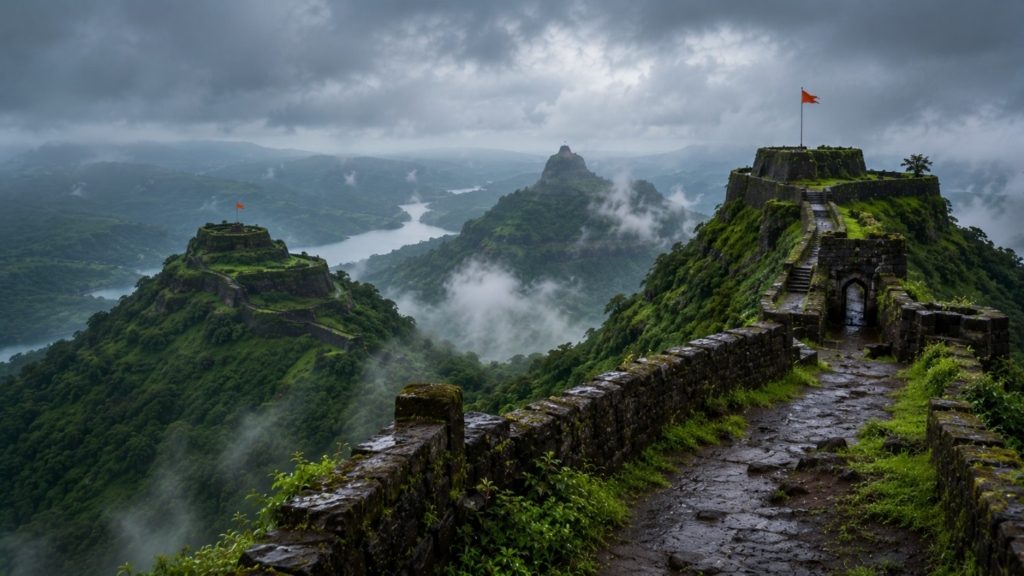
7. Ghosala, Tala & Sarasgad forts
Historic hill forts for a culture-and-views half day. Distance: 15–40 km. Entry: free. Timings: daylight. Best time: monsoon for green ramparts and views. Time required: 2–4 hours. Ideal for: history buffs, photographers. Pro tip: wear grippy shoes — fort steps are mossy and slick in the rains.
8. Kuda Caves
Ancient Buddhist rock-cut caves for a quieter heritage stop. Distance: ~30–40 km. Entry: free or nominal. Timings: daytime. Best time: any season. Time required: 1–2 hours. Ideal for: slow travellers, families with older kids. Pro tip: combine with a Konkan coast detour if you have a third day.
9. Pali Ballaleshwar
One of the eight Ashtavinayak temples of Maharashtra, and an easy half-day add-on from Kolad. Entry is free; dress modestly. Best time is early morning before the crowds. Ideal for families and pilgrims. If you’re visiting in February, Maghi Ganesh Jayanti falls on Wednesday, 10 February 2027 and draws large crowds, so plan around it or come for it.
Suggested 2-day weekend itinerary
Day 1: Drive in from Mumbai or Pune by late morning, check into your villa, then take an afternoon rafting slot (monsoon weekends) or settle in for an early start. Evening: campfire, kayaking or zip-line at the camp, dinner at the villa. Day 2: Sunrise at Sutarwadi Lake or Bhira Dam, your morning rafting batch at 7:30 AM, then a leisurely Tamhini Ghat waterfall drive on the way home (ideal for Pune-bound travellers).
Where to stay near Kolad: StayVista villas for a rafting weekend
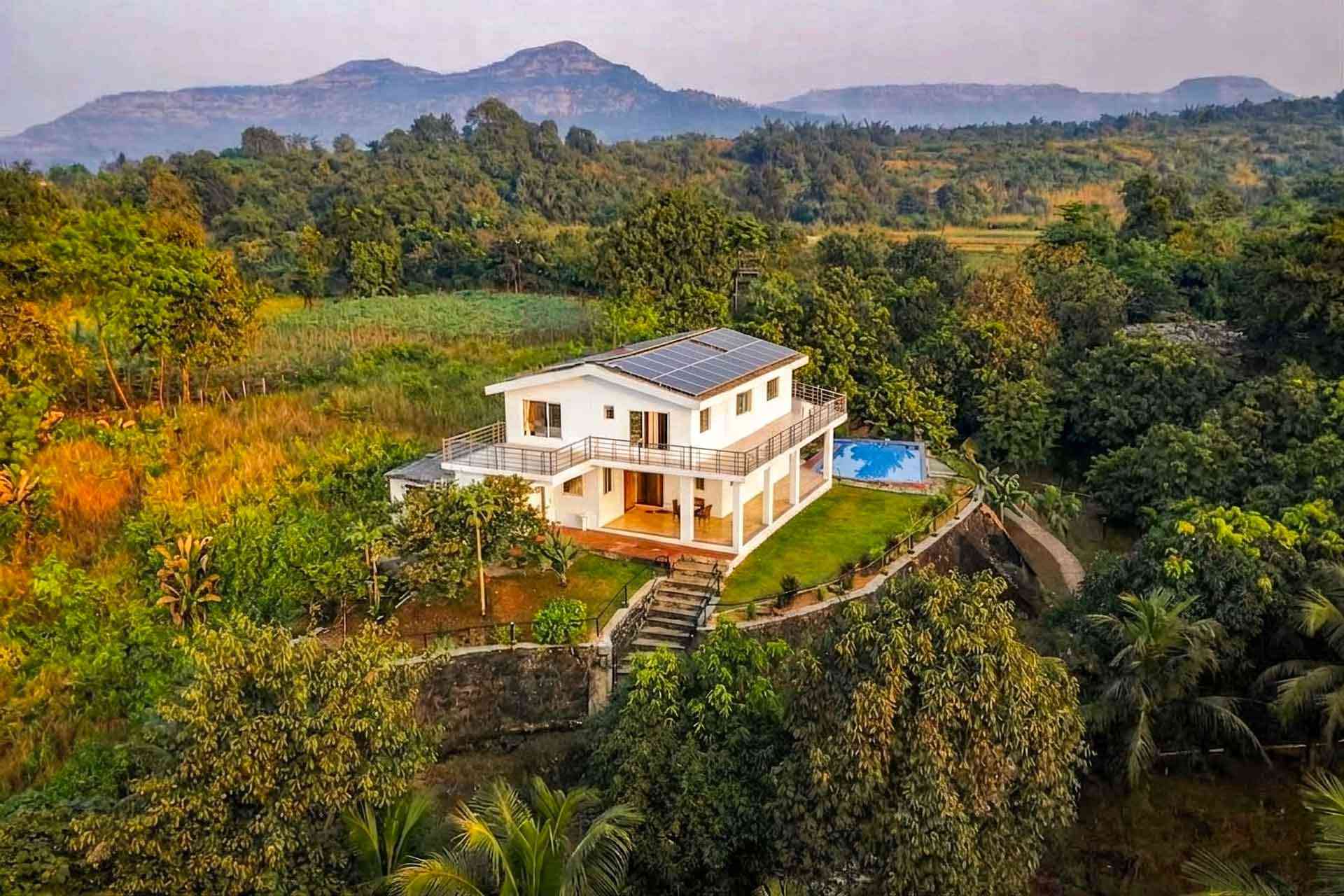
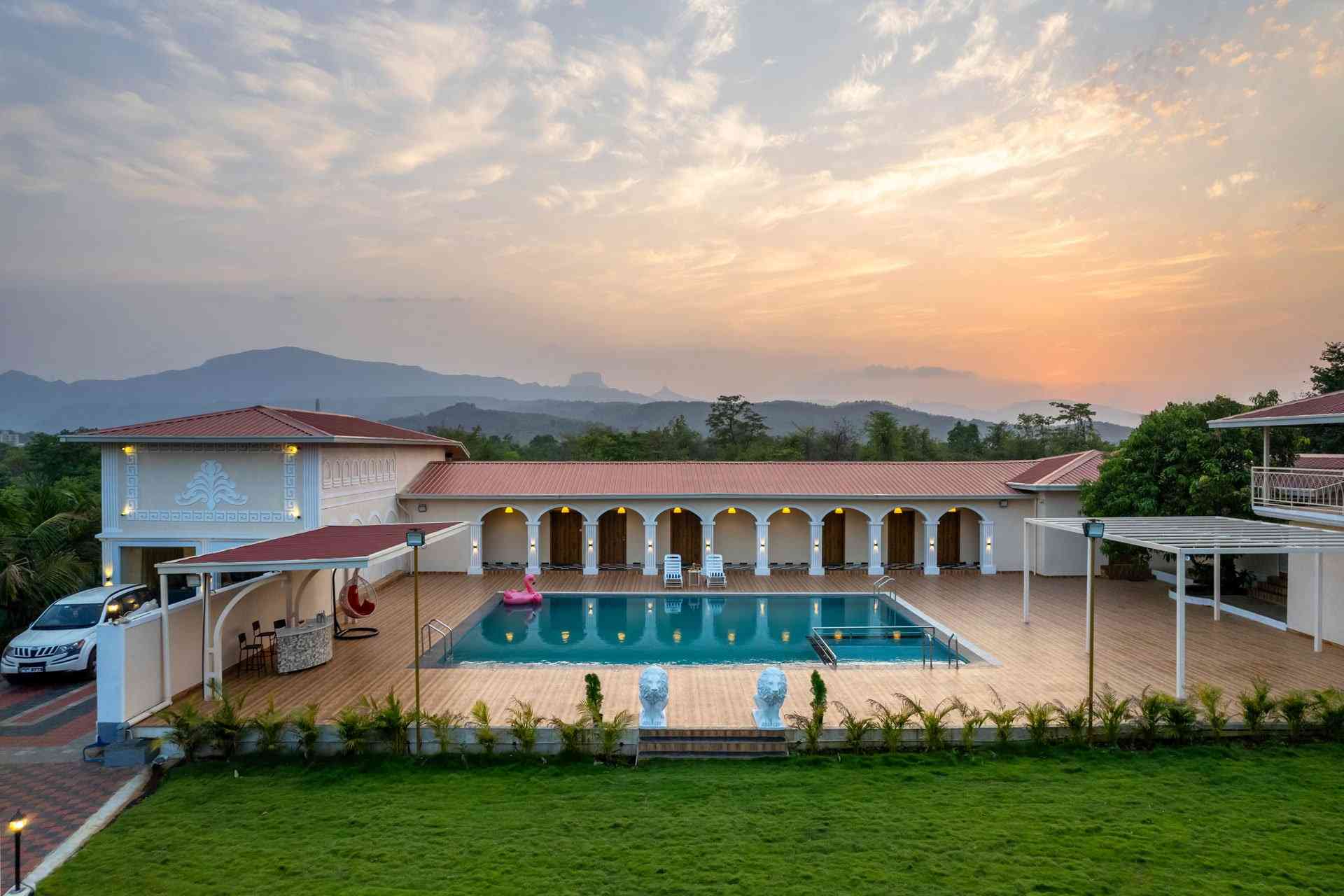
One thing to plan around: the Karjat villas are about two hours from the rafting start point, so for a 7:15–7:45 AM report you’ll need to leave around 5:30 AM. If you’d rather sleep in, the Amara Villa estate inland from Alibaug, near Nagothane on the NH-66 side, is StayVista’s closest base to the Kundalika.
Because the rapids run only in a narrow morning window, the smartest move is to stay the night before within easy reach. Karjat is the natural base — the closest cluster of private-pool villas, an easy drive from both the Kundalika launch point and the Mumbai–Pune Expressway. For groups who want to pair rafting with the coast, the Alibaug–Roha side of Raigad works too. Here are StayVista villas suited to a rafting weekend.
Frequently asked questions about Kolad river rafting
Yes. Kolad’s flow is dam-controlled rather than rain-fed, so conditions are predictable even in the monsoon. Every rafter wears a life jacket and helmet, a trained guide steers each raft, and the rapids are a moderate Grade II–III. Most participants at Kolad are non-swimmers, and the operators run safety briefings before each batch.
Monsoon — June to September — is the best and most thrilling time, because the heavier dam release makes the Grade II–III rapids stronger and the Sahyadri turns lush and waterfall-filled. October to March offers calmer, beginner-friendly water. Kolad runs essentially year-round thanks to its dam-controlled release.
Standard Kolad rafting costs ₹1,200 per person on weekdays and ₹1,700 on weekends for the full ~12.5 km, 10-rapid run of about 2.5 hours (operator listings, 2026). A basic shorter run starts from around ₹900, lunch adds ₹350, and camping-plus-rafting packages start near ₹1,350.
Kolad is about 117 km from Mumbai and roughly 110 km from Pune, with both drives taking around 3 to 3.5 hours. Mumbai travellers exit the Expressway at Khopoli; Pune travellers come via the scenic Tamhini Ghat. Kolad also has its own station on the Konkan Railway, about 3–4 hours by train from Mumbai.
The minimum age is 14 years and there is no upper age limit if you’re reasonably fit. The weight range is roughly 40 to 120 kg so the life jacket fits securely. Pregnant women and people with chronic asthma, heart conditions or certain disabilities are not permitted to raft.
Yes. The large majority of people who raft at Kolad cannot swim. Every participant is given a life jacket and helmet, and a certified guide controls the raft throughout. You don’t need any prior experience — just follow the guide’s paddling and safety instructions.
The Kundalika at Kolad has Grade II to Grade III rapids — about 10 to 12 of them across a roughly 12.5 km stretch (kolad.in, 2026). That’s an easy-to-moderate level: exciting for first-timers without being dangerous, and noticeably stronger during peak monsoon flow.
Yes. Kolad rafting runs year-round, because the Kundalika’s rapids come from a daily dam release rather than rain. From October to February there’s usually one morning batch, and the rapids stay Grade II–III with slightly calmer water. Rates are about ₹1,199 on weekdays and ₹1,699 on weekends per person.
Usually not. The extra 1:30 PM batch runs only on July–August weekends, when the dam releases more water. From October, plan on the morning batch and report by about 7:15–7:45 AM. Confirm the exact time with your operator the day before.
Not on the same morning. The earliest useful train, the 10105 Diva–Sawantwadi Express, reaches Kolad at 9:16 AM, after the rafting batch has left. Take the train the day before and stay nearby, or drive down early via NH-66. Check winter timings on NTES after 20 October.
Yes. The Raigad monsoon ban on Devkund ended on 30 September, and October brings clear water and an easier trail. The plunge pool is deep and has seen drownings, including two in July 2026, so go with a registered guide and don’t swim.
Experience Kolad River Rafting Like Never Before
If the late-arriving 2026 monsoon has you thinking the adventure season is on pause, Kolad is the exception worth driving for.
- It runs when Rishikesh doesn’t — dam-controlled flow means guaranteed rapids all monsoon.
- Affordable and accessible — ₹1,200–1,700 per person, 117 km from Mumbai, 110 km from Pune.
- Beginner-friendly — Grade II–III, non-swimmers and 14+ welcome, full safety gear.
- Time it to the dam — report by 7:30 AM; afternoon slots only on July–August weekends.
- Stay close — base in a Karjat villa so you’re at the river when the water rises.
Book your rafting slot for a June–September weekend, pick a StayVista villa near Karjat, and you’ve got the easiest big-thrill weekend within reach of both Mumbai and Pune. For more rainy-season ideas, explore our monsoon destinations in Maharashtra guide.