
Madhyamaheshwar Trek 2026: Itinerary, Best Season & Why It’s the Quietest Panch Kedar
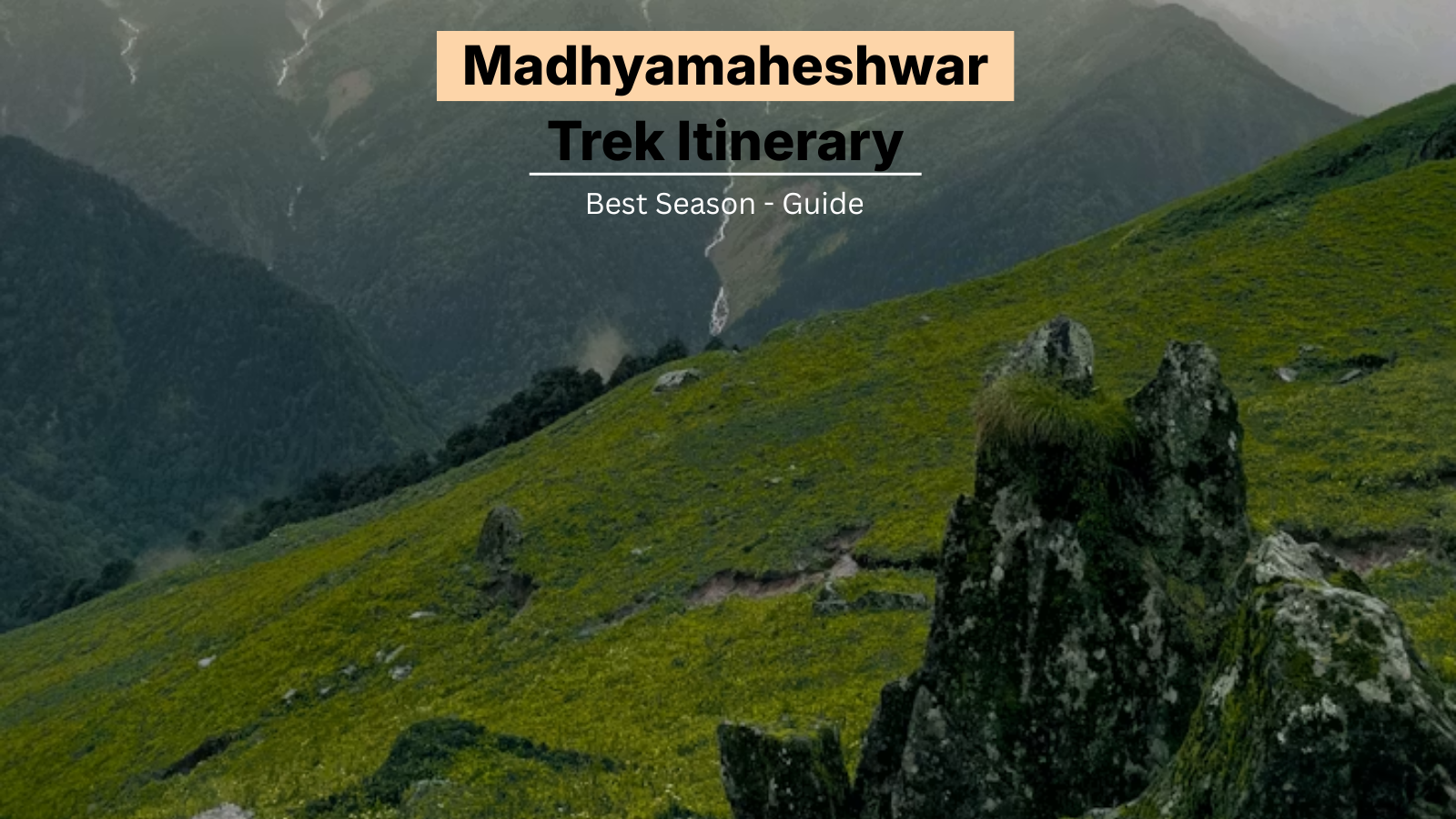
The Madhyamaheshwar trek (also written Madmaheshwar) is the Panch Kedar circuit’s best-kept secret: a 16 km walk from Ransi village in Uttarakhand’s Rudraprayag district to a 3,497 m stone temple where Lord Shiva’s navel is worshipped — with the Chaukhamba massif filling the sky behind it. No motor road, no helicopters, no queue. Just river, forest, and the occasional mule train.
That absence of machinery is the whole point. While Kedarnath hosts lakhs of pilgrims a season and Tungnath fills with day-trippers from Chopta, Madhyamaheshwar’s trail stays quiet enough to hear the Madhyamaheshwar Ganga below you for most of the walk. This guide covers the 2026 season dates, the day-wise itinerary (including the Buda Madhyamaheshwar sunrise add-on), permits, costs, and where to base yourself before and after.
TL;DR: The Madhyamaheshwar trek runs ~16 km one way from Ransi village (reached via Ukhimath) to the 3,497 m temple — moderate difficulty, 2 trekking days minimum. The temple is open late May to around 20 November for 2026. Register at the Ransi forest checkpost (₹150–200, photo ID). September–October is the best window; it’s widely regarded as the least-crowded of the five Kedars.
In this Blog
Quick Info: Madhyamaheshwar Trek at a Glance
| Field | Details |
|---|---|
| Trek distance | ~16 km one way from Ransi village (32 km round trip) |
| Altitude | 3,497 m (11,473 ft) at the temple |
| Difficulty | Moderate — gradual river-valley walk, then a steep climb after Bantoli |
| Trailhead | Ransi village, via Ukhimath and Uniana, Rudraprayag district, Uttarakhand |
| 2026 season | Opened late May 2026; closes around 20 November 2026 (dates set by the temple committee) |
| Permit | Same-day registration at Ransi forest checkpost — ₹150–200 per head, photo ID needed (Kedarnath Wildlife Sanctuary) |
| Trek days needed | 2 minimum; 3–4 comfortable (add Buda Madhyamaheshwar sunrise) |
| Nearest railhead / airport | Rishikesh (~185 km) / Jolly Grant, Dehradun (~200 km) |
| Best months | September–October (prime), May–June (opening season) |
What Is the Madhyamaheshwar Trek?
Madhyamaheshwar is the second of the Panch Kedar — five Garhwal temples where, by legend, parts of Lord Shiva’s bull form surfaced as he evaded the Pandavas after Kurukshetra. The hump rose at Kedarnath, the arms at Tungnath, the face at Rudranath, the hair at Kalpeshwar — and the navel (madhya, the middle) here, which is why the temple is also called Dwitiya Kedar, the second Kedar.
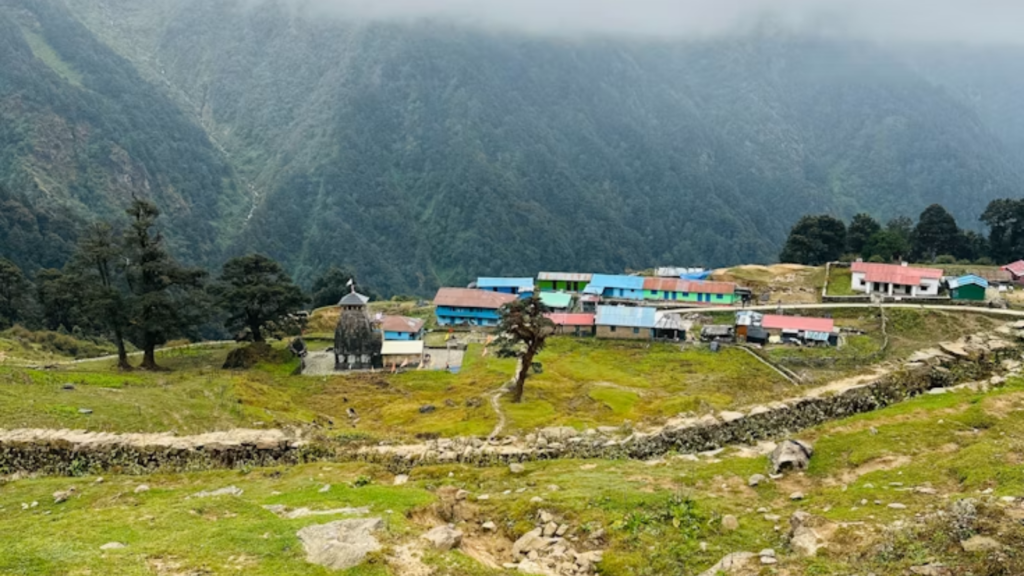
The trek itself is a classic Garhwal river-valley walk. From Ransi — the last motorable village, reached by road via Ukhimath and Uniana — the trail descends and contours along the Madhyamaheshwar Ganga through Gaundar, a hamlet at the meeting of two streams. At Bantoli, the bridge crosses the confluence, and the character flips: the final stretch climbs steeply through oak and rhododendron forest, past tiny seasonal settlements like Khatara and Nanu, onto the high meadow where the temple sits.
You’re inside the Kedarnath Wildlife Sanctuary the entire way — musk deer country, Himalayan monal country — which is why registration is mandatory and why the trail feels wilder than its 16 km suggests. Come evening at the temple, the only sounds are bells, wind, and kitchen fires.
Why Is Madhyamaheshwar the Quietest Panch Kedar?
Because it’s protected by inconvenience. Kedarnath has a highway, helicopters and a national pilgrimage machine. Tungnath is a 3.5–4 km stroll from Chopta’s roadhead — the easiest temple approach in Garhwal. Kalpeshwar is barely 2 km from Urgam’s road. Madhyamaheshwar demands a full day’s honest walking with no shortcut, no chopper, and no vehicle support past Ransi — and among trekkers it’s consistently described as the least-crowded stop on the entire Panch Kedar circuit.
| Kedar | Trailhead | One-way trek | Character |
|---|---|---|---|
| Kedarnath | Gaurikund | 16 km | Mass pilgrimage; helicopters; the crowds |
| Tungnath | Chopta | 3.5–4 km | Easiest; day-trippers; highest of the five |
| Rudranath | Sagar village | 20–24 km | The toughest — long ridges and bugyals |
| Madhyamaheshwar | Ransi | ~16 km | The quiet one — full trek, no shortcuts |
| Kalpeshwar | Urgam | 1–2 km | Road-accessible; the only Kedar open year-round |
Rudranath is actually the harder trek — but hard attracts its own expedition crowd. Madhyamaheshwar sits in the sweet spot: serious enough to filter out day-trippers, moderate enough that any fit walker can do it. The result is a big-mountain temple experience — Chaukhamba’s four summits stacked above the shrine — with a fraction of the footfall. If you want the Kedar feeling without the Kedar queue, this is the one.
Madhyamaheshwar Trek Itinerary: Day by Day
Day 0 — Rishikesh to Ransi (drive, ~185 km, 8–9 hrs)
Leave Rishikesh early and follow the classic pilgrim road up the Alaknanda valley — Devprayag, Srinagar, Rudraprayag — then branch toward Ukhimath and continue via Uniana to Ransi (~2,100 m). It’s a full mountain-driving day; aim to arrive by late afternoon, complete nothing more strenuous than chai, and sleep at a Ransi or Uniana homestay. Carry cash from Ukhimath — there are no ATMs beyond it.
Day 1 — Ransi → Gaundar → Bantoli → Madhyamaheshwar (~16 km, 7–9 hrs)
Register at the forest checkpost (₹150–200, carry photo ID) and start by 7 AM. The first half is the gentle half: a river-valley trail through Gaundar village, where dhabas do brisk maggi-and-omelette business. Cross the bridge at Bantoli — the confluence marks your halfway psychology, if not quite halfway effort — and begin the climb. The second half is steep, sustained, and beautiful: oak forest, then rhododendron, then meadow. Reach the temple by late afternoon, catch the evening aarti, and take a lodge bed or ashram room.
Day 2 — Buda Madhyamaheshwar sunrise, then descend (~18 km, 8–9 hrs)
Wake in the dark and climb the steep 2 km to Buda Madhyamaheshwar, a higher meadow with twin ponds. On a clear morning, Chaukhamba’s summits catch first light and repeat themselves in the still water — the single best sunrise on the Panch Kedar circuit, and most visitors’ phone wallpaper for the next year. Descend to the temple for breakfast, then retrace the full trail to Ransi. Knees take the toll going down; trekking poles earn their keep.
The comfortable 4-day version
Split each direction with a night at a Gaundar or Bantoli homestay. You’ll walk 4–5 hours a day instead of 8, and the river-valley evenings are their own reward.
The two-Kedars weekend add-on
Ukhimath sits close to the Chopta road — meaning Tungnath’s short 3.5–4 km climb can be added the day after you descend. Two of the five Kedars, one trip, one very satisfied trekking group.
When Is the Best Season for the Madhyamaheshwar Trek?
September to October is the prime window: the monsoon has washed the sky clean, Chaukhamba stays visible for hours instead of minutes, the meadows are still green, and temperatures run 5–18°C. May–June is the spiritual pick — opening-season energy, rhododendrons still blooming in the higher forest, and the doli (palanquin) processions bringing the deity up from Ukhimath.
The monsoon months — July and August, in other words right now — are the trade-off season. As of July 2026 the temple is open and the valley is at its greenest, but the climb after Bantoli gets slick, leeches patrol the lower forest, and the Ukhimath road stretches are prone to short landslide holds. If you trek now: start early, carry salt for the leeches, budget a buffer day, and check the weather bulletin before committing to the drive.
From late November to April, the temple closes and the deity winters at the Omkareshwar Temple in Ukhimath — the trail itself disappears under snow at the top. For 2026, the shrine opened in late May and closes around 20 November; exact ceremonial dates are set by the temple committee each season.
How Do You Reach the Trailhead at Ransi?
Ransi is ~185 km from Rishikesh — a solid 8–9 hour Himalayan drive via Devprayag, Rudraprayag, Kund and Ukhimath, then the final winding stretch through Uniana. Rishikesh is the practical gateway: the last big town, the nearest major railhead, and ~20 km from Jolly Grant Airport in Dehradun.
- By road: Self-drive or hire a cab from Rishikesh/Haridwar. Shared jeeps run Ukhimath→Uniana/Ransi for budget trekkers.
- By train: Rishikesh (or Haridwar, 25 km further) — overnight trains from Delhi work perfectly.
- By air: Jolly Grant, Dehradun (~200 km from Ransi); land by 10 AM and you can still make Ukhimath by dinner.
- Network note: Mobile signal is patchy past Ukhimath and effectively gone beyond Gaundar. Download offline maps, tell people your plan, and enjoy the silence.
Trail Stays, Food and What It Costs
This is a homestay-and-dhaba trek, and that’s part of its charm. Gaundar, Bantoli and the temple-side settlements run simple lodges and ashram rooms — expect ₹500–1,500 a night for a bed, blanket-heavy and gloriously basic. Food is dal-chawal, rajma, maggi, omelettes and endless chai; a full trekking day’s meals rarely cross ₹500. Mules carry luggage for a negotiable fee from Ransi, and local guides (worth it in monsoon or for first-time Himalaya walkers) are arranged at the trailhead.
Total damage for a self-organised 3–4 day trek from Rishikesh: roughly ₹4,000–8,000 per person including the shared cab — one of the cheapest big-mountain experiences in Uttarakhand. Carry it all in cash.
Where to Stay Before and After the Trek
Every Madhyamaheshwar itinerary brackets the trail with Rishikesh — it’s where the mountains begin, and it’s where sore legs want to land afterwards. Two StayVista picks, both live and bookable:
Mana — the Gateway Villa With a Heated Pool
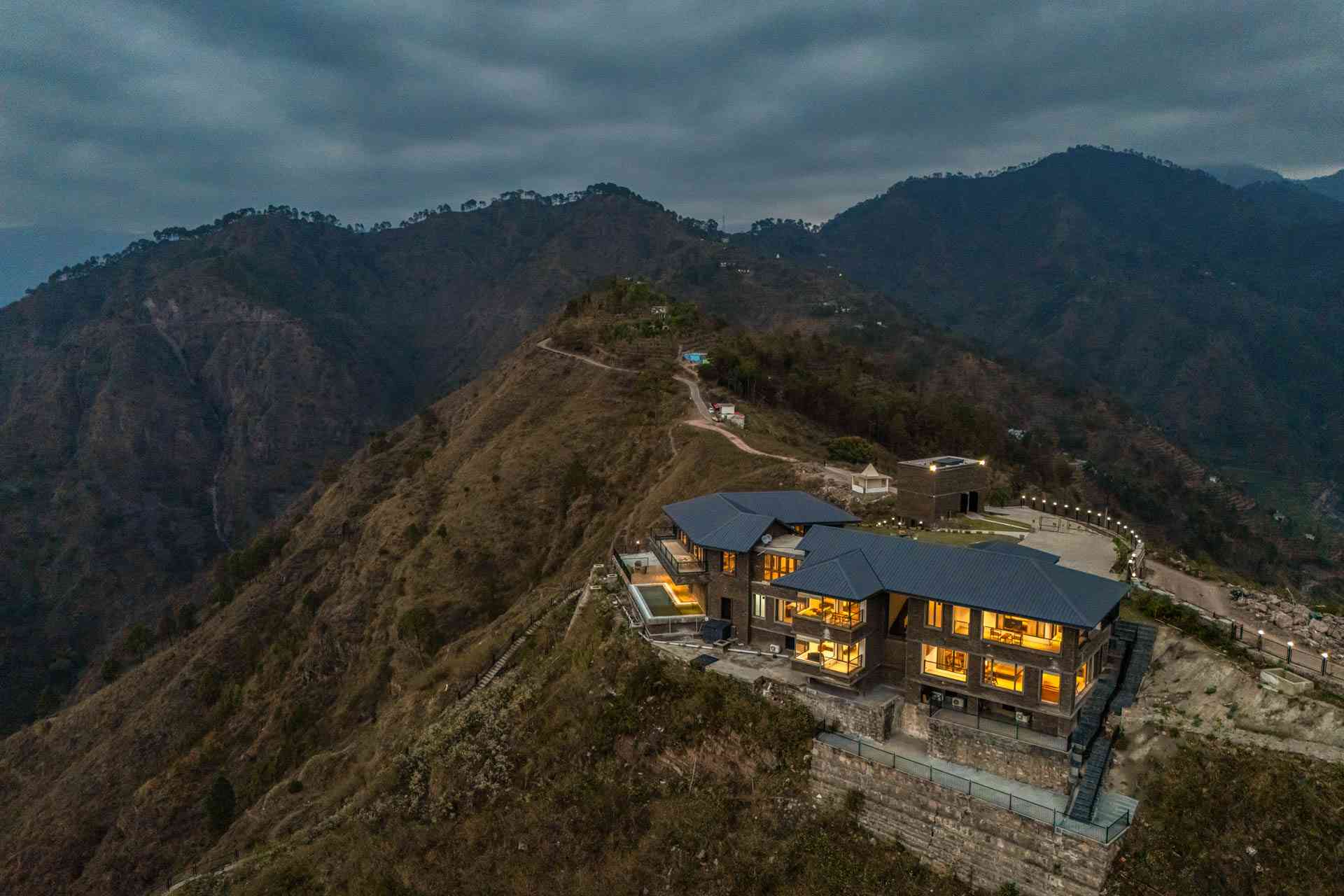
Mana is a hilltop villa above the Ganga in Rishikesh with the single most trek-relevant amenity on this page: a private heated pool (32×9 ft, with a kids’ pool alongside, open 8 AM–10 PM). Rated 4.9/5 as a Guest Favourite, it takes up to 15 guests across 3–5 rooms with meals available — the right size for a trekking group’s night-before briefing and night-after recovery. Uninterrupted Ganga and Himalayan views come standard; warm water on day-two quads feels medicinal.
Ganga’s Jewel — the Quiet River House
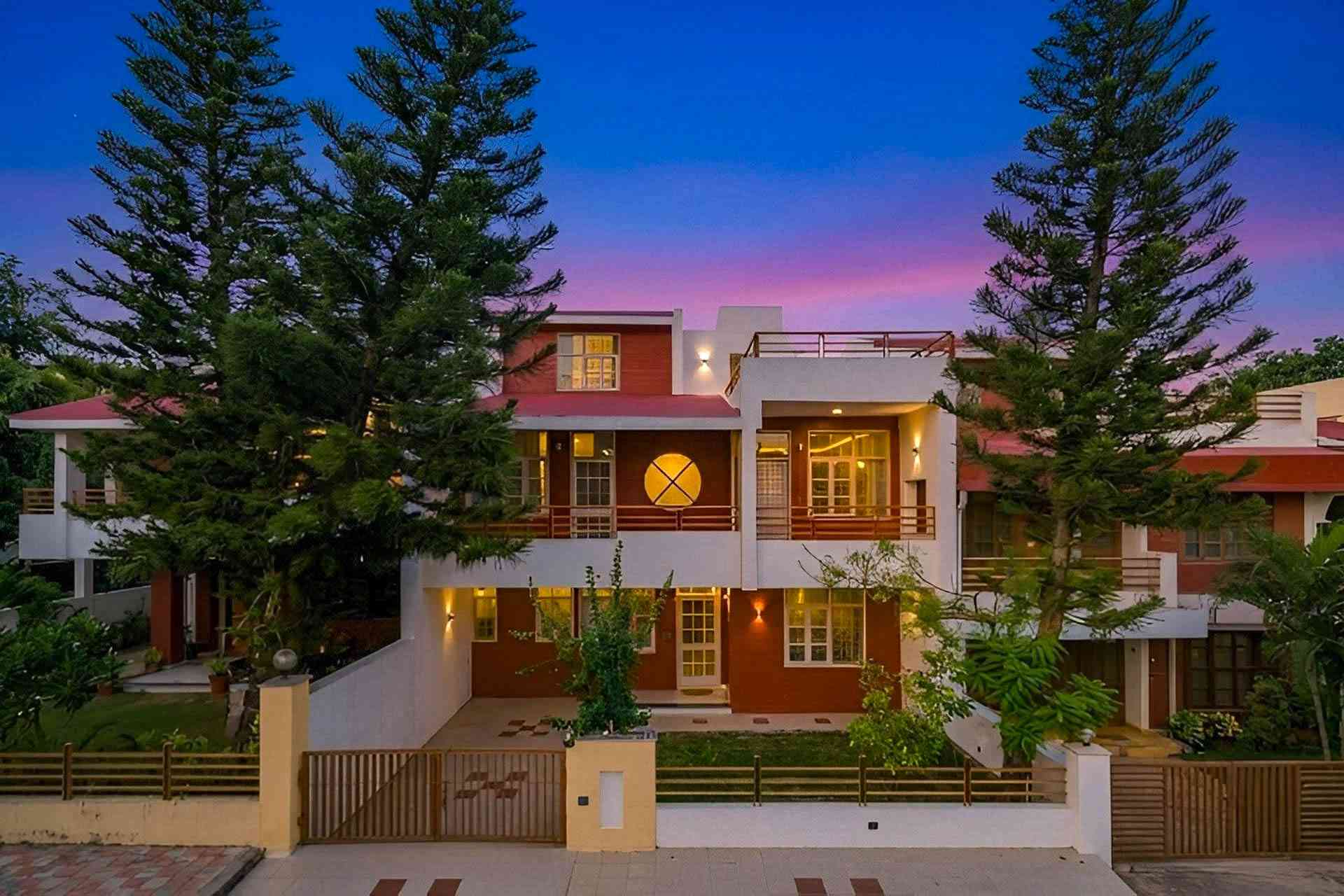
Ganga’s Jewel is the smaller-group option: Ganga river views from every window, earthy contemporary interiors, and a lawn made for a post-trek bonfire and BBQ. At ₹18,898/night (July 2026), it’s the value pick for a couple of car-loads of trekkers who want to sleep to river sound one more night before the drive home.
Both make the same plan work: arrive, sleep low, drive up at dawn — then return and let Rishikesh’s cafés, ghats and slow mornings do the recovery.
Frequently Asked Questions
Moderate. The first ~8 km from Ransi to Bantoli is a gentle river-valley walk; the second half climbs steeply through forest to 3,497 m. Any regular walker with basic fitness can do it in 7–9 hours; trekking poles and an early start make the difference. It’s harder than Tungnath, far easier than Rudranath.
About 16 km one way from Ransi village, the last motorable point — so a 32 km round trip, plus a steep 2 km extra each way if you add the Buda Madhyamaheshwar sunrise meadow (you should). Most trekkers take 2 days; 3–4 days with a Gaundar or Bantoli overnight is the comfortable version.
No advance permit — but same-day registration at the Ransi forest checkpost is mandatory, since the trail runs through the Kedarnath Wildlife Sanctuary. Carry a government photo ID and ₹150–200 per person in cash. Registration opens with daylight; the counter is right at the trailhead.
For the 2026 season, the temple opened in late May and closes around 20 November, when the deity’s doli descends to its winter seat at the Omkareshwar Temple in Ukhimath. Exact ceremonial dates are declared by the temple committee each season, so confirm before a shoulder-season trip.
Effectively no. The last reliable ATMs are in Ukhimath, and mobile signal fades past it — beyond Gaundar, consider yourself offline. Carry all cash for the trek, download offline maps, and inform someone of your itinerary before starting.
Yes — it’s the best hour of the trek. The steep 2 km trail above the temple reaches a meadow with twin ponds where the Chaukhamba massif reflects at sunrise. Leave in the dark with a torch, reach before first light, and carry a warm layer; the meadow is windy even in summer.
Tungnath — 3.5–4 km from Chopta, the easiest of the five. Madhyamaheshwar is the right second step: a real trek with homestay nights, but on a defined trail at moderate altitude. Rudranath (20–24 km, remote ridges) is the one to save for last.
The Short Version
Madhyamaheshwar gives you everything the famous treks promise — a 1,000-year-old shrine, Chaukhamba filling the horizon, a sunrise meadow with mirror ponds — minus the crowds that usually come attached. Sixteen honest kilometres from Ransi, ₹200 of paperwork, homestay dal-chawal, and the quietest of the five Kedars is yours for a weekend.
Bracket it right: a StayVista villa in Rishikesh the night before for an early start, the trek in the middle, and a heated-pool recovery when you’re back down. The mountain does the rest.