
Mount Abu in Monsoon 2026: Is It Worth Visiting in September–October? (Weather, Things to Do & Where to Stay)
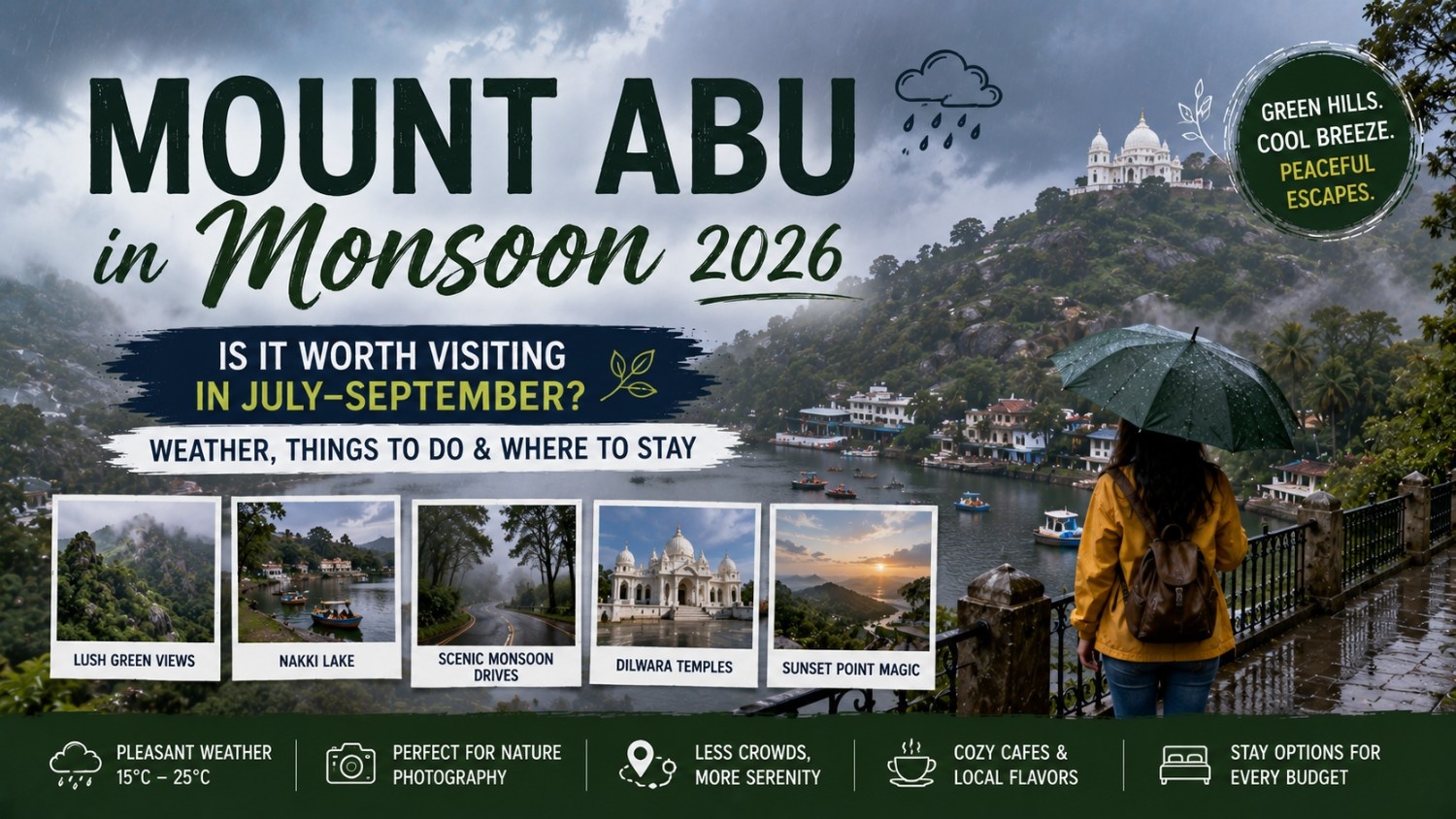
Yes — Mount Abu in monsoon is absolutely worth visiting. Rajasthan’s only hill station transforms into a misty, emerald paradise from September–October, with temperatures cooling to a pleasant 20°C–28°C while the rest of the state sizzles above 40°C. Whether you’re escaping the Delhi heat, road-tripping from Ahmedabad, or seeking a romantic villa retreat in the Aravallis, monsoon Mount Abu offers waterfalls, lush trails, and crowd-free serenity at off-season prices.
In this Blog
Should You Visit Mount Abu in Monsoon?
Here’s the thing — most generic travel guides will hedge and say “it depends.” We’re going to be straight with you: Mount Abu in monsoon is one of Rajasthan’s best-kept seasonal secrets. While the rest of the state is baking under punishing heat, this Aravalli gem sits at 1,220 metres above sea level, draped in clouds and dripping with green. Is there rain? Yes. Is there mud? Sometimes. Is it worth it? Unambiguously, yes.
Mount Abu in monsoon (September–October) offers cool temperatures (20°C–28°C), lush green landscapes, low crowds, discounted accommodations, and a magical misty atmosphere — making it one of the most underrated hill station getaways in India.
The monsoon doesn’t drown Mount Abu. It dresses it.
Mount Abu Monsoon Weather: Month-by-Month Breakdown (2026)
Understanding the weather before you pack is half the battle. Here’s what to expect, month by month.
July: The Grand Arrival
July marks the official onset of the monsoon in Mount Abu. The rocky terrain transforms into a green and misty wonderland, with average temperatures ranging from 20°C to 28°C — making it one of the most pleasant destinations in Rajasthan during this time. Rainfall is heaviest in the first half of July, so if you’re planning for this month, aim for late July when the downpours settle into refreshing intermittent showers.
July Quick Stats:
- Max temp: ~28°C | Min temp: ~20°C
- Rainfall: ~223 mm
- Crowd level: Low–Moderate (spikes around Independence Day)
- Best for: Waterfall chasing, misty morning treks, moody photography
August: The Lush Heartland
August in Mount Abu continues the monsoon season, offering cooler temperatures, lush landscapes, and a unique experience amidst nature. The temperature ranges between approximately 22.8°C to 28°C, providing a comfortable atmosphere for exploring the hill station’s scenic charm. The hills are at their richest green, Nakki Lake is full and gleaming, and the Wildlife Sanctuary is alive with birdsong.
August Quick Stats:
- Max temp: ~28°C | Min temp: ~22°C
- Rainfall: ~180 mm
- Crowd level: Low (except Raksha Bandhan weekend)
- Best for: Nature walks, wildlife spotting, lakeside evenings
September: The Sweet Spot
September is Mount Abu’s monsoon secret weapon. It’s a delightful month with post-monsoon freshness — vegetation is at its lushest, waterfalls are in full flow, and the air is crisp and clean. Rainfall drops significantly (around 92 mm), the skies begin to clear, and the landscape retains its gorgeous green from months of rain.
September Quick Stats:
- Max temp: ~29°C | Min temp: ~22°C
- Rainfall: ~92 mm
- Crowd level: Low (ideal window)
- Best for: Trekking, sightseeing, photography, villa stays
October: The Golden Farewell
October marks the graceful exit of the monsoon and the arrival of Mount Abu’s most reliable stretch of clear skies. The rains have all but stopped, the air turns crisp, and Nakki Lake settles into a calm, glassy stillness that mirrors the surrounding hills. Days stay warm and sunny while nights start carrying a gentle chill — the first hint of the winter ahead. With visibility at its best, this is the month sunset-point views and starlit evenings really come into their own.
October Quick Stats:
- Max temp: ~28°C | Min temp: ~17°C
- Rainfall: ~15–20 mm
- Crowd level: Moderate–High (festive season, Diwali travel, and wedding season pick up)
- Best for: Sunset-point views, Nakki Lake boating, stargazing, wedding/honeymoon stays
Top Things to Do in Mount Abu in Monsoon
1. Boat on Nakki Lake (Even in the Drizzle)
Nakki Lake is recognised as the first-ever man-made lake in India and is a popular place to visit in Mount Abu. You can choose to take a boat ride and watch the sun set past the beautiful hills surrounding this place. In monsoon, the lake swells to its fullest and is ringed by mist-covered hills — it’s dramatically beautiful. Carry a light raincoat, hire a paddleboat, and let the drizzle add to the magic.
Pro tip: The lake-facing cafés serve piping hot chai and moong dal pakodas — the perfect monsoon indulgence.
2. Trek to Guru Shikhar
At 1,722 metres, Guru Shikhar is the highest peak in the Aravalli Range — and it earns its legendary status in the monsoon months. Recognised as the highest point on this mountain range, Guru Shikhar is an exquisite place for sightseeing in Mount Abu. Taking about 300 steps up, you reach the temple of Guru Dattatreya, and people flock to this place both for its religious aspects and the panoramic views. On a clear monsoon morning, the valley below is a sea of cotton-white clouds. Wear trekking shoes with grip — the path gets slippery.
This is one of the finest adventures in Mount Abu, full stop.
3. Explore the Dilwara Temples
Established between the 11th and 13th centuries, the Dilwara Jain temples are considered to be among the best specimens of architectural perfection in the country. Monsoon is actually a wonderful time to visit — fewer tourists means you can truly absorb the jaw-dropping marble latticework without jostling elbows with a crowd. Photography is restricted inside, so let your eyes do the remembering.
Timing: Open from 12 PM to 6 PM; entry is free.
4. Wildlife Safari at Mount Abu Wildlife Sanctuary
The Mount Abu Wildlife Sanctuary is home to a diverse array of plant species and picturesque landscapes. In the monsoon, the sanctuary bursts into life. Leopards, sloth bears, sambar deer, and over 250 species of birds call this forest home — and the wet season draws them into visibility near water sources. A guided jeep safari here is one of the most rewarding adventures in Mount Abu.
5. Chase Waterfalls
This one’s exclusively a monsoon gift. The streams and seasonal waterfalls around Mount Abu — including Dhrudhiya Waterfalls — thunder to life between September and October. You won’t find these on any “peak season” itinerary. Pack a dry bag, a good camera, and your sense of wonder.
6. Sunset Point (When the Clouds Part)
Sunset Point offers one of the best views in Mount Abu. Every evening, people gather here to watch the sun slowly set behind the hills, lighting up the sky with orange and red colours. In monsoon, the spectacle becomes otherworldly — golden rays piercing through breaking storm clouds create the kind of sky that makes photographers weep.
7. Visit Achalgarh Fort
A short drive from the town centre, Achalgarh Fort sits atop a rocky peak with commanding views of the misty Aravalli valleys. The drive up is gorgeous during monsoon, with waterfalls appearing alongside hairpin bends. The fort complex contains the Achleshwar Mahadev temple and the serene Mandakini Lake, which makes for stunning monsoon photography.
Adventures in Mount Abu: Monsoon Edition
Mount Abu isn’t a passive hill station — it earns its reputation for adventures in Mount Abu that go well beyond sightseeing. During September–October, these are worth adding to your list:
- Rock climbing & rappelling near the Aravalli outcrops (guided sessions available in town)
- Trekking routes through the wildlife sanctuary with certified guides
- Caving experiences in lesser-known cave formations near the forest edges
- Nature photography walks at Trevor’s Tank — a small reservoir popular for crocodile sightings and migratory birds
- Camping under the monsoon sky for those who want to truly unplug (best done in September when rain is lighter)
“Mount Abu in monsoon is where Rajasthan reveals its softest, most beautiful self — a side that most tourists never get to see.”
How to Reach Mount Abu: Routes from Major Cities
Getting to Mount Abu (Abu Road) is straightforward regardless of where you’re travelling from.
Delhi to Mount Abu
The Delhi to Mount Abu journey is a popular weekend-to-weekend escape. Distance: approximately 690–720 km.
- By Train: Aravalli Express and other trains connect Delhi (Hazrat Nizamuddin or Jaipur) to Abu Road railway station (28 km from town). Journey time: ~11–13 hours. A cab from Abu Road to Mount Abu takes about 45 minutes.
- By Road: NH48 via Jaipur and Ajmer → Sirohi → Abu Road → Mount Abu. A scenic but long drive (12–14 hours); best broken with a night halt in Jaipur or Jodhpur.
- By Flight: Fly from Delhi to Udaipur (Maharana Pratap Airport, 185 km from Mount Abu), then hire a cab. Flight time ~1.5 hours; total journey ~4–5 hours.
From Abu Road to Mount Abu
The Abu Road to Mount Abu stretch is a 28-km, 45-minute mountain drive that starts the moment you exit Abu Road railway station. The sky is clear and the evenings are pleasant once you ascend, but monsoon mist on the mountain road can reduce visibility. Shared taxis (₹100–150/person) and private cabs (₹700–1,000) are readily available.
Monsoon Road Tip: The ghat road between Abu Road and Mount Abu is well-maintained but can have minor landslides after heavy rains. Always check local conditions before driving up at night.
From Other Cities
| City | Distance | Best Mode |
| Ahmedabad | ~222 km | Road (4 hrs) or Abu Road train |
| Udaipur | ~185 km | Road (3.5 hrs) or cab |
| Jodhpur | ~235 km | Road (4.5 hrs) |
| Mumbai | ~670 km | Flight to Udaipur + cab |
| Jaipur | ~490 km | Train to Abu Road + cab |
Where to Stay in Mount Abu During Monsoon
The Case for a Villa in Mount Abu
Monsoon is the best time to book a private villa in Mount Abu — prices are 20–40% lower than peak season, and the experience of waking up to mist-covered Aravalli hills from a private balcony is genuinely special. A villa in Mount Abu during the rainy season means private sit-outs, bonfires in the evening, and the luxury of watching the clouds roll in from your own garden.
StayVista curates some of the finest holiday villas and private homes in Mount Abu — from cosy lake-view cottages to sprawling mountain retreats that can comfortably host families and groups. Properties like Mangal House by the Lake exemplify the kind of characterful, private luxury that turns a monsoon trip into a memory you’ll carry for years. Think terrace views of Nakki Lake, fully equipped kitchens, and the kind of silence that only a private villa offers.
Budget & Mid-Range Stays
For travellers not going the villa route, Mount Abu offers solid options across budgets:
- Heritage Hotels (like Palace Hotel/Bikaner House): Colonial-era charm, leafy gardens, and staff who genuinely know the mountain.
- Guesthouses near Nakki Lake: Central location, easy access to restaurants and the lakeside promenade.
- Forest Rest Houses: Bookable through the Rajasthan Forest Department — basic, characterful, and surrounded by trees. Book these months in advance.
Monsoon Booking Tip: Always confirm road access and check whether the property has covered parking. Monsoon days can bring short, intense bursts of rainfall, so covered common areas and a good indoor living space matter more than they do in summer.
Practical Monsoon Travel Tips for Mount Abu
- Pack smart: Waterproof jacket or poncho, quick-dry clothing, shoes with a rubber grip, a dry bag for electronics.
- Don’t skip the evenings: Visiting during monsoons has its perks — you’ll enjoy lower accommodation rates, fewer crowds, and unique seasonal experiences. Monsoon brings lush greenery, while winter offers crystal-clear mountain views.
- Watch for holiday weekends: Independence Day (15 August), Raksha Bandhan, and Janmashtami all bring domestic tourist surges. Book accommodation in advance for these dates.
- Local food must-tries: Dal Baati Churma, Gatte ki Sabzi, corn-on-the-cob from the lakeside vendors, and masala chai everywhere.
- Health & Safety: The monsoon air is beautiful, but mosquitoes spike. Carry repellent. Roads on the ghats can be slippery — hire a local driver if you’re unfamiliar with mountain driving.
- Connectivity: Most hotels and villas have Wi-Fi. Cellular signal can dip in heavy downpours or deep forest areas.
FAQ: Mount Abu in Monsoon — People Also Ask
Q: Is Mount Abu safe to visit during the monsoon season? Yes, Mount Abu is generally safe during the monsoon. The main precaution is the ghat road from Abu Road, which can become slippery in heavy rainfall. Check weather conditions before travelling and avoid night driving on the mountain section. The town itself is well-maintained and accessible throughout September–October.
Q: What is the temperature in Mount Abu in July 2026? Average temperatures in Mount Abu in July range from 20°C to 28°C, making it significantly cooler than the surrounding Rajasthani plains. Evenings can dip to around 18°C–20°C — carry a light jacket.
Q: Is Nakki Lake open during the monsoon? Yes. Nakki Lake remains open year-round. Boating is available even during the monsoon season, and the lake is at its fullest and most scenic between September and October.
Q: What should I pack for Mount Abu in the monsoon? Pack waterproof shoes with grip, a rain jacket or poncho, quick-dry clothes, a small dry bag for electronics, mosquito repellent, and light woollens for cool evenings. Formal attire is unnecessary — Mount Abu is a casual hill station.
Q: Is Mount Abu better in monsoon or winter? It depends on what you want. Monsoon brings lush greenery and fewer crowds at lower prices, while winter (October–March) offers crystal-clear mountain views, comfortable trekking weather, and the full range of outdoor activities. Monsoon is ideal for nature lovers and budget-conscious travellers; winter is better for those who want maximum sightseeing comfort.
Q: How many days are enough for Mount Abu in monsoon? A 2–3 day trip comfortably covers all major attractions: Nakki Lake, Guru Shikhar, Dilwara Temples, Sunset Point, the Wildlife Sanctuary, and one waterfall excursion. If you’re staying in a villa and want to slow down and soak up the atmosphere, 4 days is ideal.
Q: Can I visit Dilwara Temples during the monsoon? Yes. The Dilwara Temples are open year-round (12 PM–6 PM) and are actually less crowded during the monsoon — making it a better time for unhurried exploration of the exquisite marble carvings.
Q: What is the best month to visit Mount Abu in monsoon? September is widely considered the sweet spot. Rainfall tapers off significantly, the landscape is still gloriously green, temperatures are ideal, crowds are minimal, and hotel rates remain at off-season lows.
The Final Word: Mount Abu in Monsoon Is Worth Every Raindrop
Here’s the truth that seasoned travellers know: the best version of any hill station isn’t the one you see in peak season brochures. It’s the one veiled in morning cloud, alive with the sound of rain on jungle canopy, where you and a handful of other travellers have the whole mountain to yourselves.
Mount Abu in monsoon is that version. It’s the destination dressed in its most honest, most beautiful self — without the tourist rush, without the summer heat, and with waterfalls and green valleys that exist only in these three months.
Whether you’re travelling from Delhi, making the short drive from Ahmedabad, or booking a private villa in Mount Abu for a long weekend with family, the September–October window is when this hill station rewards you most generously.
Book your StayVista villa in Mount Abu, pack your rain jacket, and go find out what the brochures don’t tell you.
The clouds don’t obscure Mount Abu in monsoon. They complete it.