
Mumbai to Nashik in 2.5 Hours: Samruddhi Expressway Guide 2026
Last Updated: October 2026
Quick Answer: The Mumbai–Nashik stretch of the Hindu Hrudaysamrat Balasaheb Thackeray Samruddhi Mahamarg cuts travel time from 4.5–6 hours on the old NH-160 to around 2.5–3 hours. The full 701 km Nagpur–Mumbai expressway has been operational end-to-end since 5 June 2025, when the final Igatpuri–Amane leg opened — a 76 km stretch that includes India’s longest highway tunnel (7.8 km near Kasara Ghat) and three major interchanges at Igatpuri, Kutghar (Shahapur) and Amane (Thane). Toll for a car on the Mumbai–Nashik segment typically works out to ₹600–₹800 one way at the ₹2.45/km LMV rate, payable via FASTag.
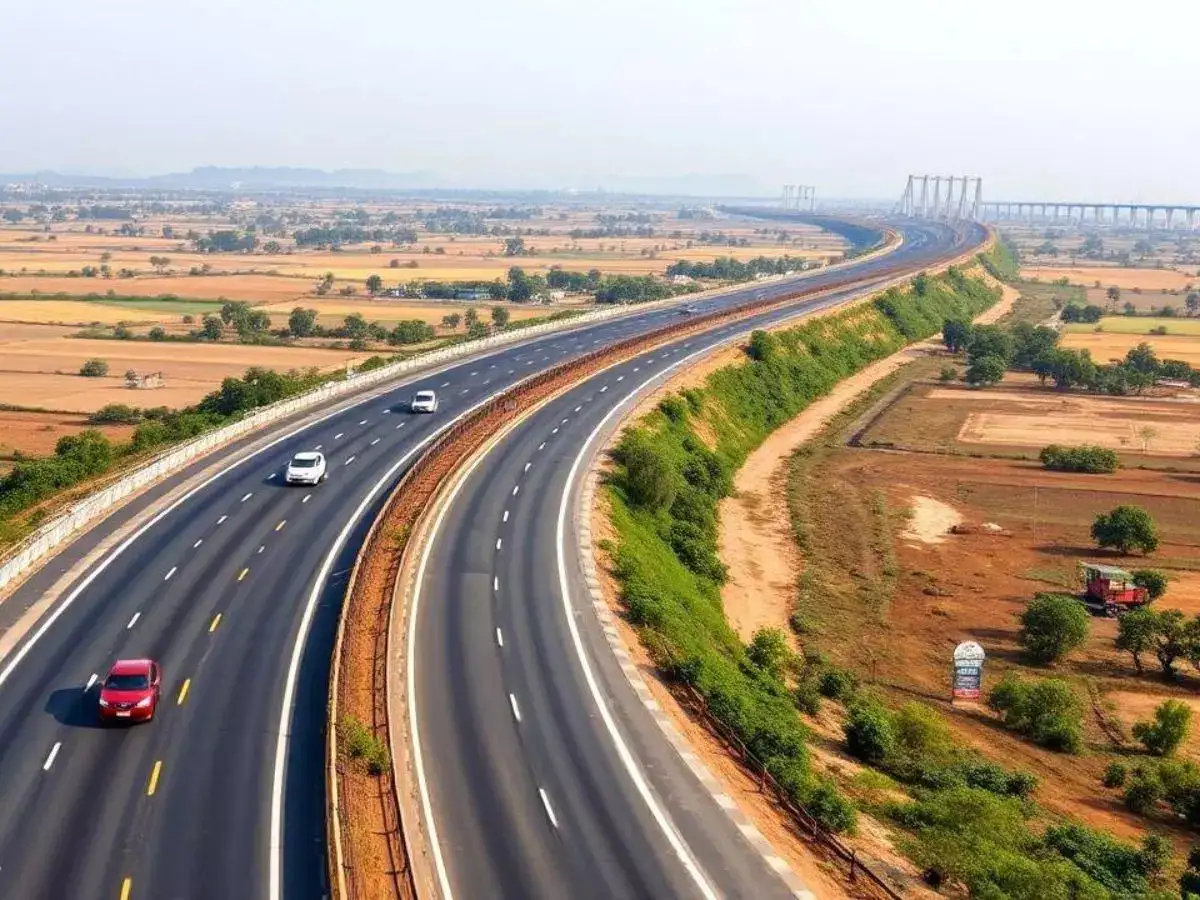
Mumbai to Nashik via Samruddhi Mahamarg currently takes around 2.5 to 3 hours, cutting earlier road travel time by nearly half. The access-controlled expressway bypasses congestion-prone stretches, offers signal-free driving, and provides a faster, safer alternative to the older Mumbai–Nashik highways.
In this Blog
Mumbai to Nashik via Samruddhi Mahamarg: What Changed in 2026?
The Hindu Hrudaysamrat Balasaheb Thackeray Samruddhi Mahamarg has been fully operational end-to-end since 5 June 2025, when the final 76 km Igatpuri–Amane stretch was inaugurated by Chief Minister Devendra Fadnavis. That stretch was the missing piece for Mumbai Metropolitan Region travellers — before it opened, drivers from Mumbai still had to join the expressway further north via Shahapur or Igatpuri with slower connecting roads. Today, the Amane interchange near Thane connects directly into the expressway, and the headline change for Mumbai–Nashik commuters is a reliable 2.5–3 hour drive that was closer to 5 hours on the old NH-160 route.
The ₹1,182 crore final stretch includes three major interchanges — Igatpuri, Kutghar (Shahapur) and Amane (Thane) — and India’s longest highway tunnel: a 7.8 km twin-tube tunnel near Kasara Ghat that bypasses the hairpin bends drivers used to crawl through.
Quick Info. on Samruddhi Mahamarg
| Field | Detail |
|---|---|
| Expressway full name | Hindu Hrudaysamrat Balasaheb Thackeray Maharashtra Samruddhi Mahamarg |
| Total length (Mumbai–Nagpur) | 701 km |
| Mumbai–Nashik segment | ~155 km from Amane (Thane) to Igatpuri exit |
| Travel time Mumbai–Nashik | 2.5–3 hours (vs 4.5–6 hours earlier) |
| Lanes | 6-lane, access-controlled (expandable to 8) |
| Speed limit for cars | 120 km/h on open stretches; 80 km/h in tunnels and ghat sections |
| Toll rate for cars | ₹2.45 per km (LMV); effective until 10 December 2032 |
| Mumbai–Nashik one-way toll (car) | Approximately ₹600–₹800 depending on entry point |
| Payment | FASTag mandatory; cash and card also accepted |
| Two-wheelers | Not permitted |
| Operator | Maharashtra State Road Development Corporation (MSRDC) |
| Fully operational since | 5 June 2025 |
Travel Time Reduction: How Mumbai–Nashik Became a 2.5-Hour Drive
Before the expressway, Mumbai to Nashik drives commonly took 4.5 to 6 hours, depending on traffic density and time of day. Peak-hour congestion near Thane, Bhiwandi, and Kasara Ghat often extended travel well beyond estimates.
With the Samruddhi corridor now operational, Mumbai to Nashik via Samruddhi Mahamarg averages 2.5–3 hours under normal conditions. The reduction is driven by:
- Signal-free expressway design
- Higher permitted cruising speeds
- Minimal local vehicle interference
This predictability is one of the biggest advantages for travellers planning tight schedules.
Travel Advisory Note (9–18 February 2026)
Short maintenance closures on specific stretches do happen a few times a year — MSRDC publishes advance notices on its official channels. Before a long drive, cross-check the Samruddhi Mahamarg status page or the MSRDC Twitter/X handle for any live advisories.
The Actual Driving Route from Mumbai to Nashik
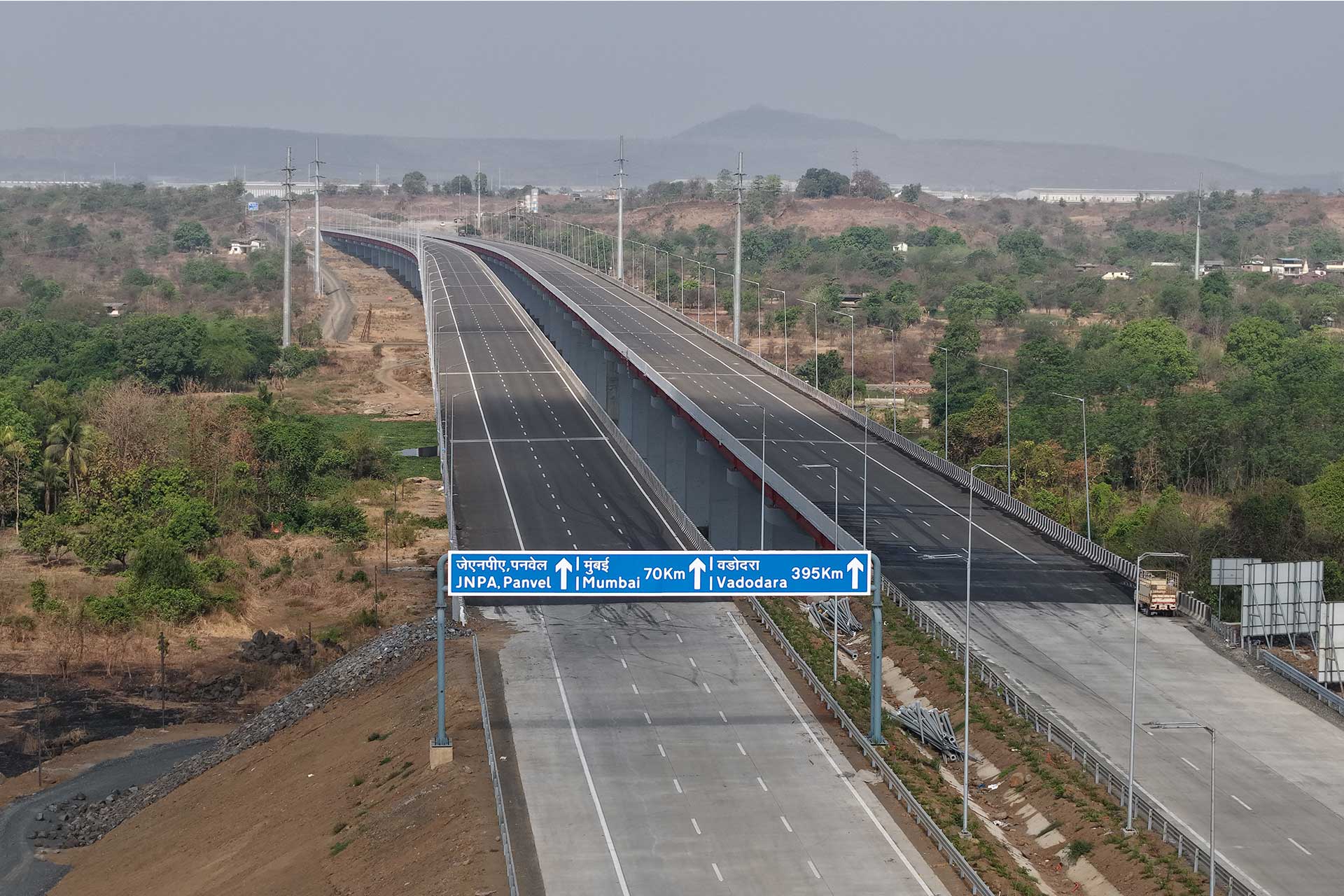
The Mumbai–Nashik journey via Samruddhi Mahamarg follows a mixed expressway and connector route rather than a single uninterrupted stretch.
Typical route flow:
- Mumbai → Thane / Bhiwandi access point
- Entry onto Samruddhi Mahamarg
- Exit via Igatpuri-side connector
- Final approach to Nashik city via state highways
This routing avoids Kasara Ghat entirely and keeps long-distance traffic off local roads for most of the journey.
Navigation apps now reflect updated exits, but drivers should ensure maps are refreshed before starting.
Exits, Interchanges and the Kasara Tunnel
The Mumbai–Nashik leg of the Samruddhi Mahamarg uses three main interchanges on its southern end:
- Amane (Thane) is the primary Mumbai Metropolitan Region entry point. Access is from the Mumbai–Nashik old highway (NH-160) just past Bhiwandi.
- Kutghar (Shahapur) is the mid-way interchange, useful for travellers from Kalyan–Dombivli or those breaking the drive at Bhatsa Dam area.
- Igatpuri is the natural exit for Nashik-bound travellers continuing on NH-160 or branching off to Igatpuri town itself.
The Kasara Ghat tunnel — a 7.8 km twin-tube tunnel, India’s longest highway tunnel — sits between Kutghar and Igatpuri. The tunnel has internal lighting, ventilation shafts and emergency bays every 500 metres. Dash-cam footage is permitted; stopping is not. Mobile network coverage is maintained inside the tunnel on Jio and Airtel; expect brief dropouts on other carriers.
Access from Mumbai city: From South and Central Mumbai, the shortest run to Amane interchange is via the Eastern Express Highway to Mulund, then NH-160 past Bhiwandi (~45–60 minutes from Dadar depending on time of day). Vadpe interchange upgrades to improve direct Mumbai Metro region access have been in progress through 2026 — check MSRDC updates for the latest connectivity status.
Samruddhi Mahamarg vs Old Mumbai–Nashik Highway
The table below outlines why most drivers now prefer the expressway despite toll costs.
| Factor | Samruddhi Mahamarg | Old NH-160 (via Bhiwandi–Kasara) |
|---|---|---|
| Distance (Mumbai–Nashik) | ~155 km from Amane | ~165 km |
| Travel time | 2.5–3 hours | 4.5–6 hours (traffic-dependent) |
| Lanes | 6-lane access-controlled | 4-lane with mixed traffic |
| Toll | ₹600–₹800 (one-way, car) | ₹200–₹300 (one-way, car) |
| Fuel stops | Limited to wayside amenities | Many along the route |
| Food options | Wayside food courts | Many dhabas, restaurants |
| Monsoon reliability | High (bypasses landslide stretches) | Moderate (ghat landslide risk) |
| Night driving | Safer (lighting, divider, emergency bays) | Less safe (mixed traffic, ghats) |
| Two-wheelers | Not permitted | Permitted |
| Best for | Business travel, fast transit, families with kids | Scenic drives, biking trips, dhaba stops |
For frequent travellers, time savings and reduced stress often outweigh the higher toll expense.
Toll Charges, FASTag Rules, and Running Costs
TToll on the Samruddhi Mahamarg is charged at ₹2.45 per kilometre for light motor vehicles (cars, SUVs), under the revised rate structure that remains in force until 10 December 2032. For the full 701 km Nagpur–Mumbai run, a car pays ₹1,717 one-way. For the Mumbai–Nashik segment specifically, most private cars pay between ₹600 and ₹800 one-way depending on which interchange you enter and exit from (Amane–Igatpuri works out to roughly ₹380–₹420; adding onward sections toward Shirdi or Nashik city raises the total).
FASTag is mandatory for all permitted vehicles. Toll plazas on the Samruddhi Mahamarg also accept cash and card as backup, but FASTag lanes move 3–4x faster and are the only way to avoid long queues at peak times. Keep your FASTag balance topped up before you start — a dead FASTag at a Samruddhi plaza triggers double-toll penalty under NHAI rules.
Safety, Speed Limits, and Driving Conditions
Samruddhi Mahamarg is designed to meet modern expressway safety standards, making it suitable for both day and night driving.
Is Samruddhi Mahamarg safe for night driving?
Yes. The expressway features divided carriageways, controlled entry points, reflective signage, and regular patrolling, which together improve night-time driving safety.
What are the speed limits on the expressway?
The MSRDC speed limit for cars and other light motor vehicles on open stretches of the Samruddhi Mahamarg is 120 km/h. Inside tunnels — including the 7.8 km Kasara Ghat tunnel — and through the ghat sections, the limit drops to 80 km/h. Trucks and buses are capped at 100 km/h on open stretches. Speed-enforcement cameras are active across the expressway and tickets are generated automatically; FASTag details are used to issue e-challans.
Best Time to Travel and Seasonal Driving Insights
Travel timing still plays a role, even on an access-controlled expressway.
When is the best time to start from Mumbai?
Early mornings (5:00–8:00 AM) and late evenings (after 8:00 PM) usually offer the smoothest exit from Mumbai and steady cruising conditions.
Does monsoon affect Mumbai–Nashik travel on Samruddhi Mahamarg?
Heavy rainfall may slightly increase travel time due to regulated speeds, but the expressway remains far more reliable than older ghat routes during monsoon months.
Fuel Stops and Rest Areas
The Samruddhi Mahamarg has designated wayside amenities roughly every 40–50 km. On the Mumbai–Nashik segment specifically, drivers will find:
- Shahapur wayside amenity — fuel (HPCL/BPCL), clean restrooms, quick-service cafes
- Kasara-side amenity (approaching Igatpuri from Mumbai) — fuel, food courts and the first proper break-point for drivers heading to Nashik
Practical tip: Fuel pumps on the expressway itself are limited compared to NH-160. If your car’s range is tight, top up at Bhiwandi before entering at Amane, or exit at Igatpuri for the many pumps on the Nashik approach. Don’t rely on finding fuel inside the 76 km Amane–Igatpuri stretch at odd hours.
Places to Visit in Nashik After Driving via Samruddhi Mahamarg
The shorter Mumbai to Nashik via Samruddhi Mahamarg drive has made Nashik more accessible for short breaks and same-day travel. Visitors typically prioritise compact, well-connected attractions rather than extended sightseeing loops.
Key places to visit in Nashik include:
- Trimbakeshwar Temple
One of the twelve Jyotirlingas in India, located about 30 km from Nashik city. Early morning visits are preferred to avoid crowd pressure. - Sula and York Vineyards
Located close to the city, these vineyards are among the most visited leisure stops for weekend travellers arriving from Mumbai. - Panchavati and Ramkund
A culturally significant area along the Godavari River, often combined with brief temple visits rather than long excursions. - Anjaneri Hills
Situated on the Nashik–Trimbakeshwar route, Anjaneri is known for short hikes and elevated views, especially popular during post-monsoon months. - Igatpuri
Frequently paired with Nashik visits, Igatpuri lies close to the Samruddhi Mahamarg exit and is preferred for its cooler climate and hill-facing accommodations.
These locations align well with the reduced travel time enabled by the expressway, allowing visitors to plan focused, low-fatigue trips.
Staying Near Nashik After the Mumbai–Nashik Expressway Drive
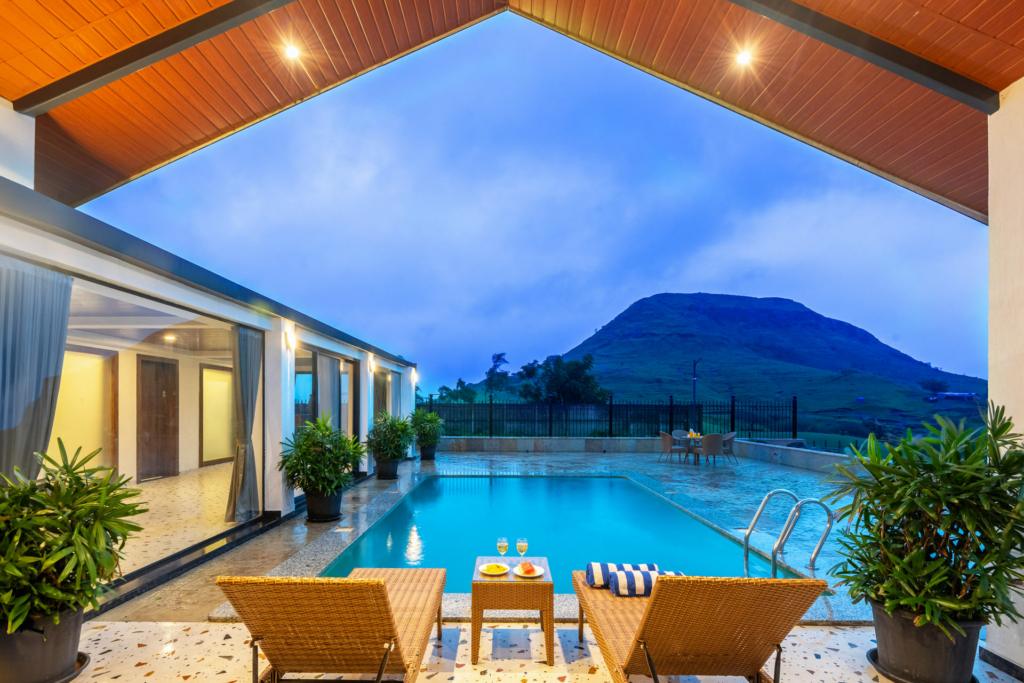
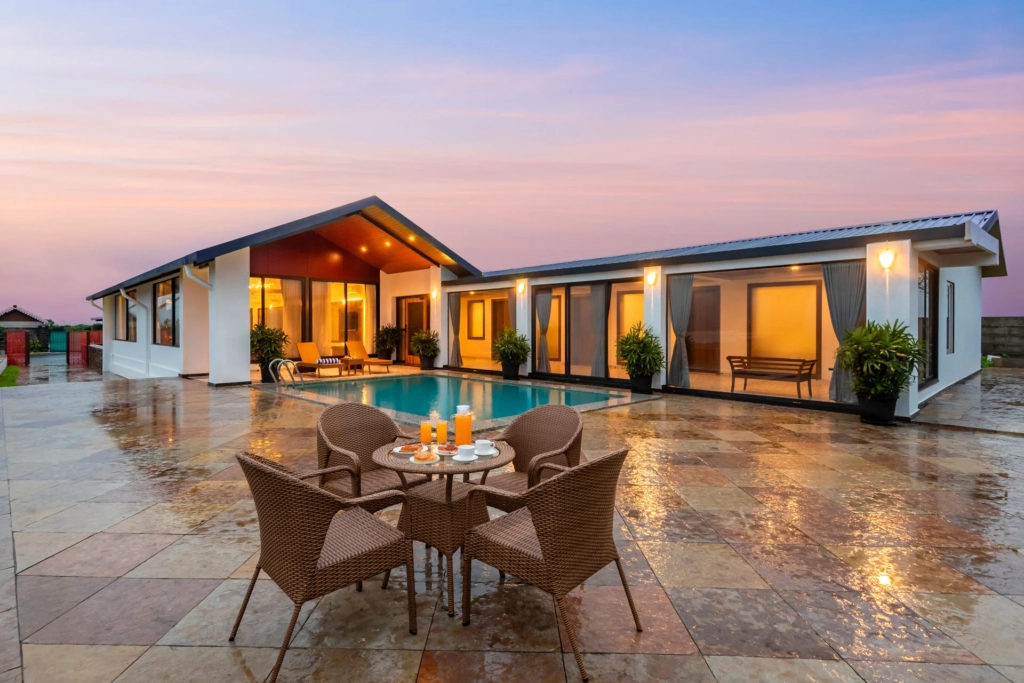
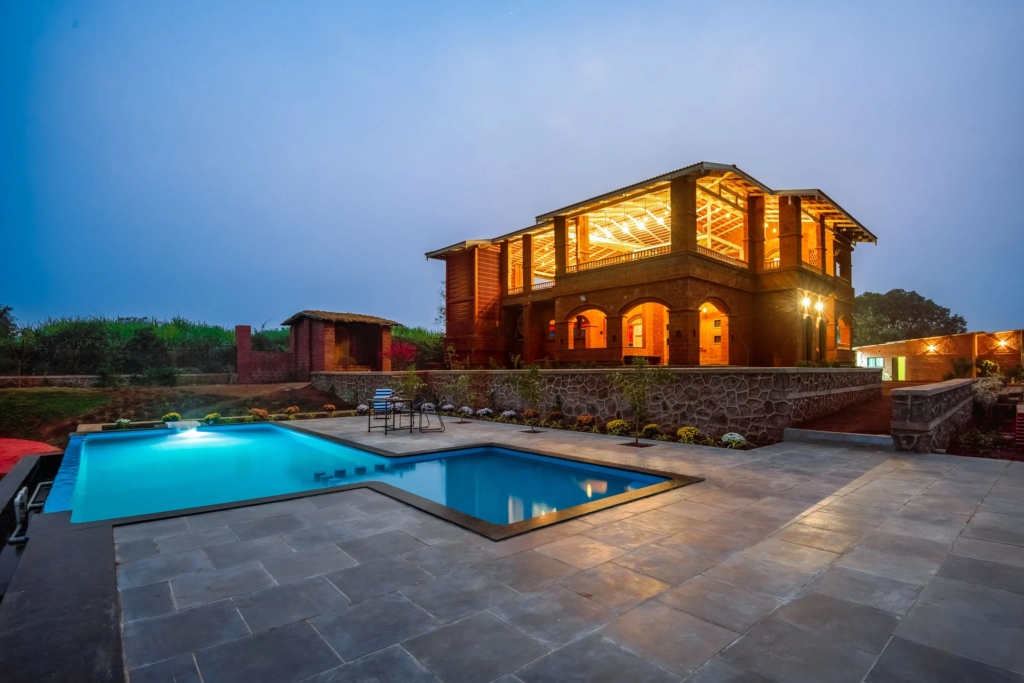
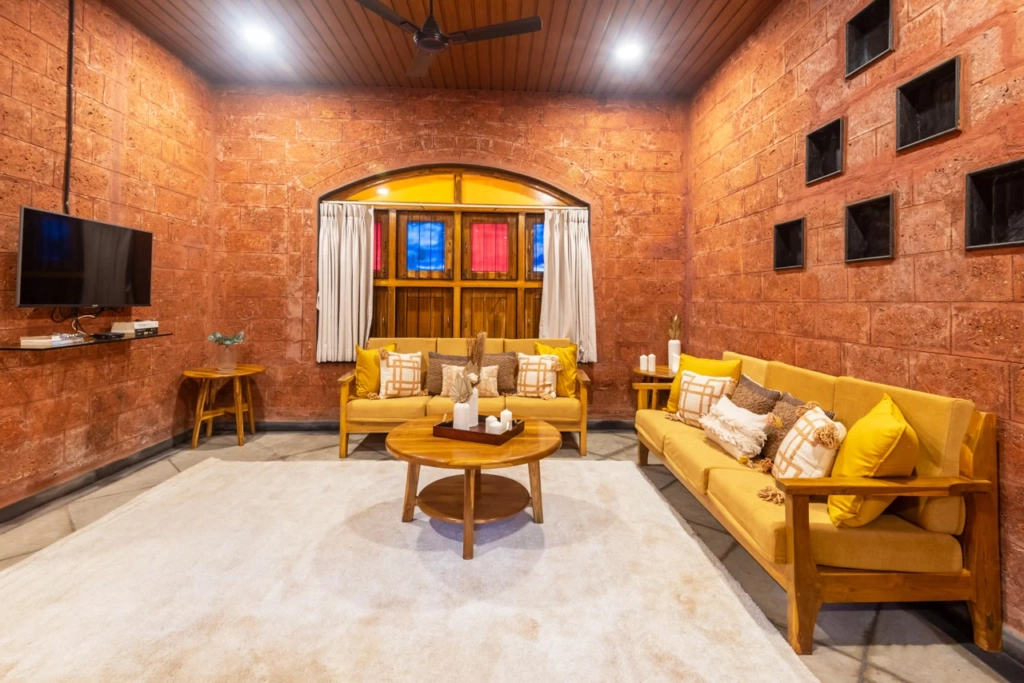
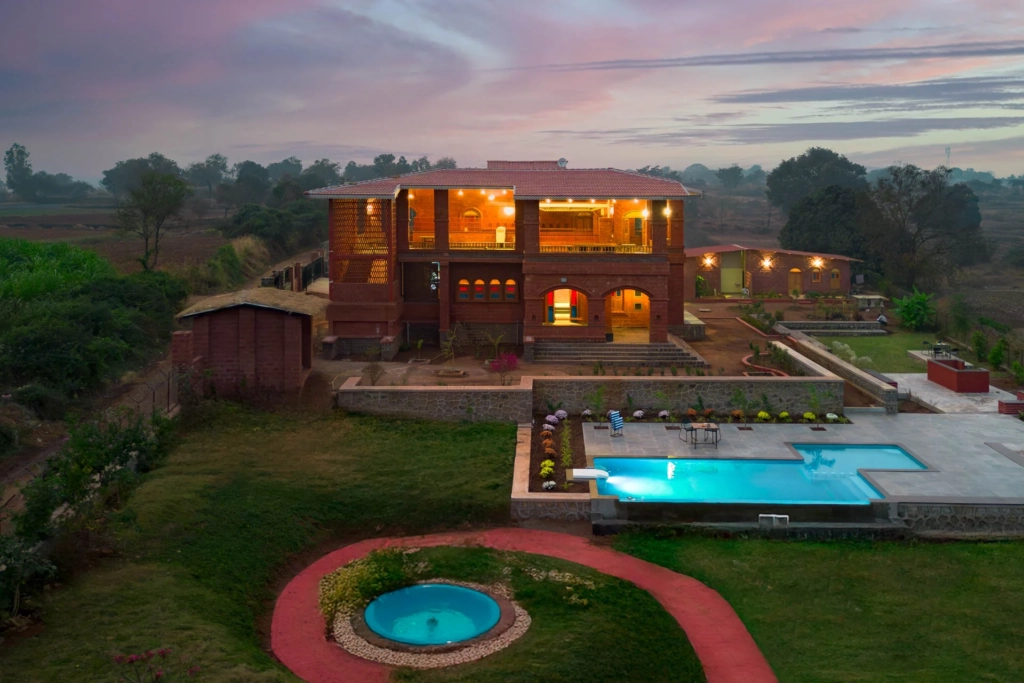
With Mumbai to Nashik via Samruddhi Mahamarg now achievable in under three hours, many travellers prefer villa-style stays on the outskirts of Nashik or around Igatpuri, rather than hotels within the city core.
Mokshah
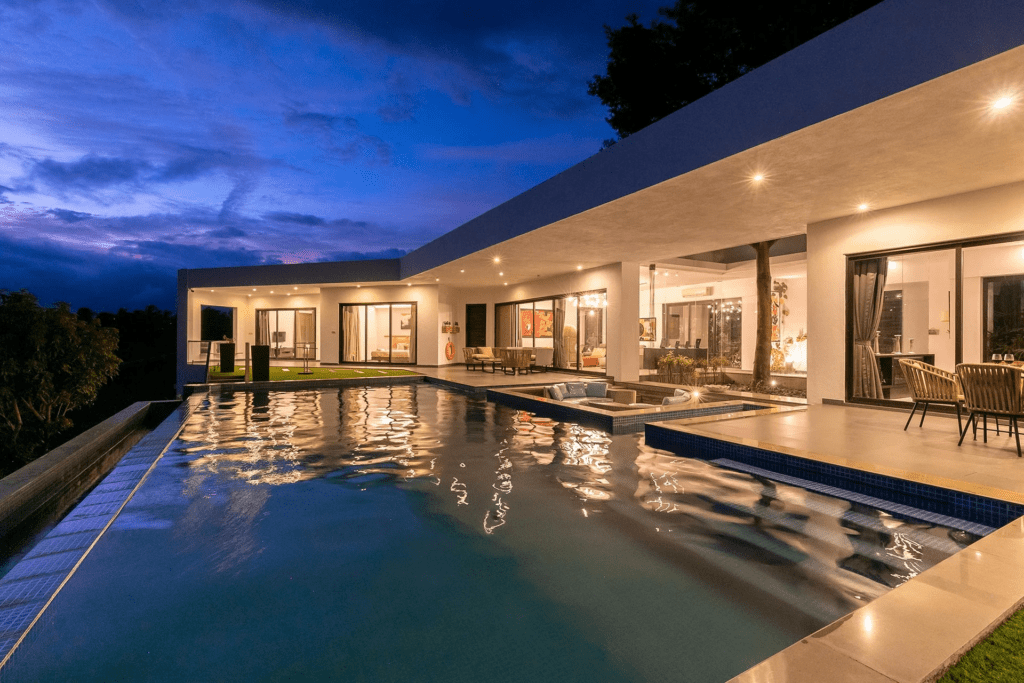
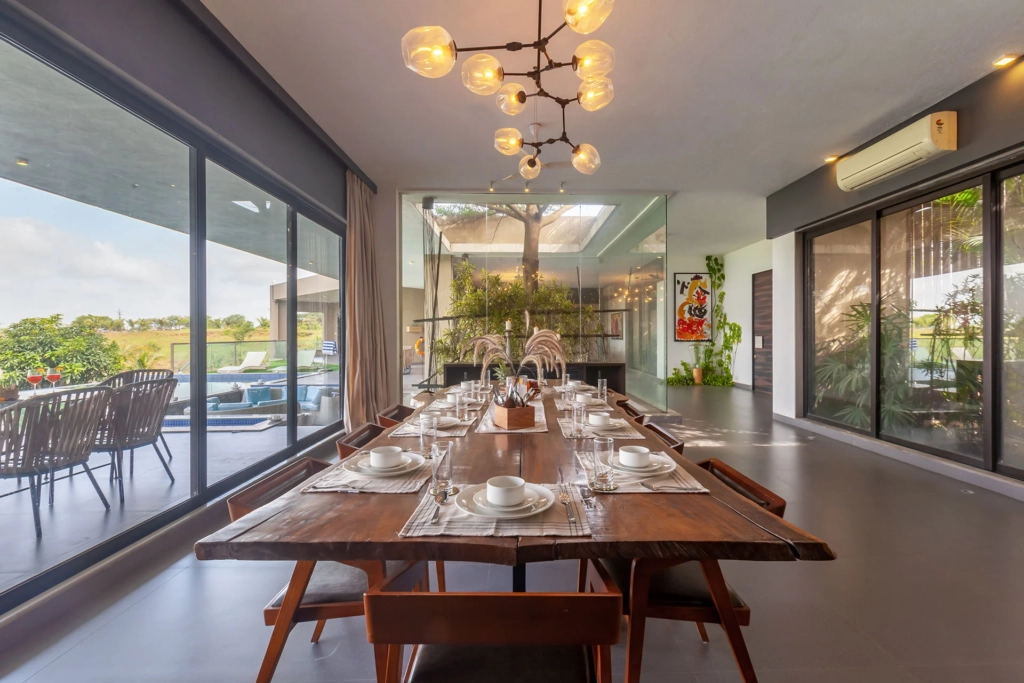
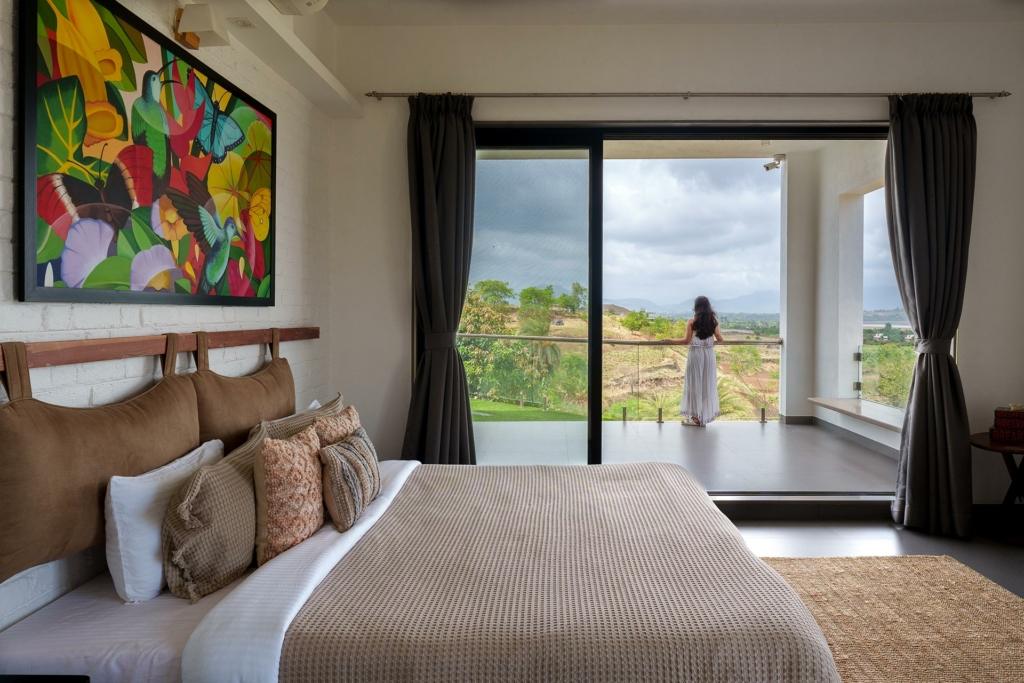
Whispering Woods, Igatpuri
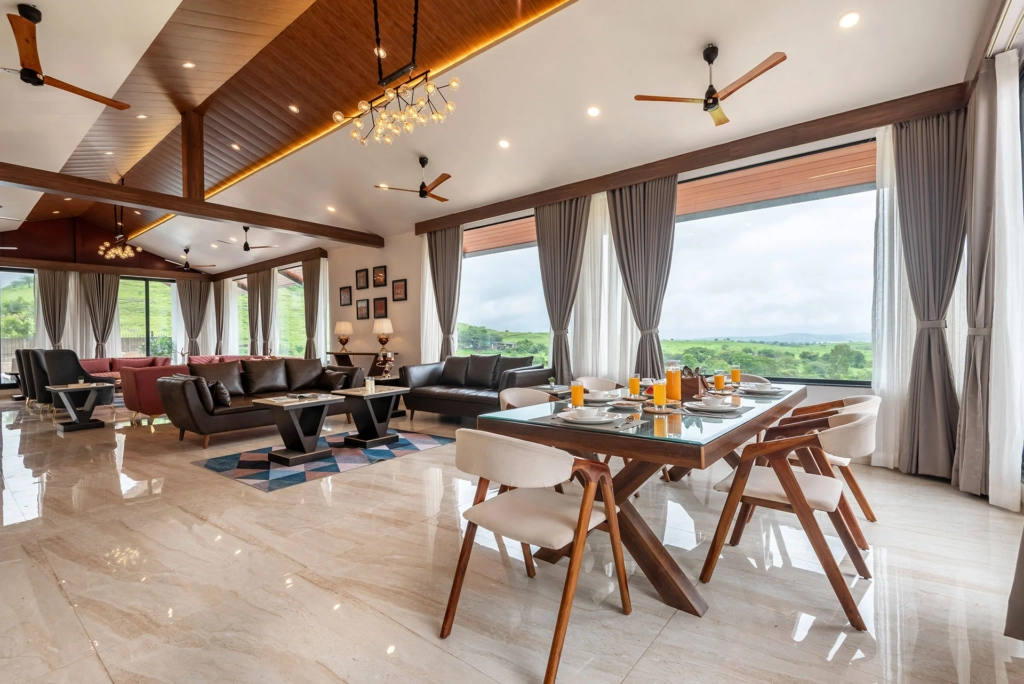
Bahava, Igatpuri
FAQs: Mumbai to Nashik via Samruddhi Mahamarg
Mumbai to Nashik via Samruddhi Mahamarg typically takes 2.5 to 3 hours under normal traffic and weather conditions.
Yes, the operational stretches and connectors allow uninterrupted Mumbai to Nashik travel using Samruddhi Mahamarg.
No. Two-wheelers are not permitted as the expressway is access-controlled.
Yes. It offers faster travel, better safety controls, and more predictable driving conditions than NH-160.
Yes. Toll payment via FASTag is mandatory for all permitted vehicles.
The Samruddhi Mahamarg is engineered for monsoon driving: proper drainage, no low-lying waterlogged stretches, and the Kasara Ghat tunnel bypasses the most landslide-prone section of the old NH-160. That said, the Igatpuri–Kasara belt sees heavy rain and dense fog from mid-June through September, which can reduce visibility to under 100 metres. Drive at 60–80 km/h in these conditions, use fog lamps and keep extra distance from the vehicle ahead. Avoid night-driving the Igatpuri ghat section in peak monsoon unless you’re familiar with it.