

Ooty in Monsoon: What’s Open, Toy Train Status & Rainy-Day Plan
Ooty in monsoon is quieter, greener, and considerably cheaper than the summer rush — but it also means fog-shrouded viewpoints. This toy train runs on a shortened, weather-dependent schedule, and a need to plan indoor backups. If you’re wondering whether the Nilgiris are worth visiting between June and September, the short answer is yes, provided you go in with the right expectations and a flexible itinerary.
Most first-time visitors picture Ooty as a mist-free postcard of blue mountains and tea gardens. During the monsoon, that picture shifts — the mist becomes the main character. Waterfalls swell, tea estates turn an almost unreal green, and the town empties out of the crowds that clog Charing Cross in April. This guide covers exactly what’s open, how the toy train is affected, and a rainy-day plan you can actually use.
In this Blog
Quick Facts: Ooty in Monsoon Season
- Monsoon months: June to September (Ooty gets both southwest and northeast monsoon influence)
- Average temperature: 11°C to 18°C — pack layers and a proper raincoat, not just an umbrella
- Toy train status: Runs, but is prone to delays and occasional suspension during heavy rain or landslides
- Best for: Photographers, honeymooners, budget travelers, and anyone who prefers Ooty without the crowds
- Avoid if: You specifically want unobstructed valley views from viewpoints like Dolphin’s Nose or Lamb’s Rock
In one line: Ooty in monsoon trades postcard-clear skies for dramatic mist, waterfalls at full flow, and a much calmer town — with a toy train and outdoor sightseeing plan that both need weather flexibility built in.
Ooty Toy Train Status in Monsoon — Quick Reference
| Route | Monsoon Status | Notes |
|---|---|---|
| Mettupalayam–Ooty (full route) | Runs, but frequently delayed/suspended | Most landslide-prone section (near Kallar); highest cancellation risk |
| Ooty–Coonoor (short route) | Runs, comparatively more reliable | Best pick if you want the toy train experience with lower cancellation risk |
| Peak-season extra trains (Fri/Sun specials) | Typically not running | Extra services are seasonal add-ons for summer rush, not standard monsoon schedule |
| Ticket refunds on weather cancellation | Not automatic | IRCTC doesn’t auto-rebook — always keep a backup plan for that day |
Is Ooty Worth Visiting in Monsoon?
Visiting Ooty in monsoon season is a genuinely different experience from the peak summer months, and honestly, a lot of seasoned Nilgiris travelers rate it higher. The hills are at their most lush, waterfalls that look like a trickle in December are roaring by July, and hotel rates drop meaningfully.
The trade-off is visibility. Ooty tourist places built around scenic overlooks — Dolphin’s Nose, Lamb’s Rock, Doddabetta Peak — depend on clear skies, and monsoon mist can swallow those views whole for hours at a stretch. If your Ooty package is built entirely around photography from viewpoints, October to March gives better odds. If you’re chasing atmosphere, greenery, and a slower pace, Ooty in monsoon delivers something summer simply can’t.
Weather Pattern During Ooty in Monsoon Season
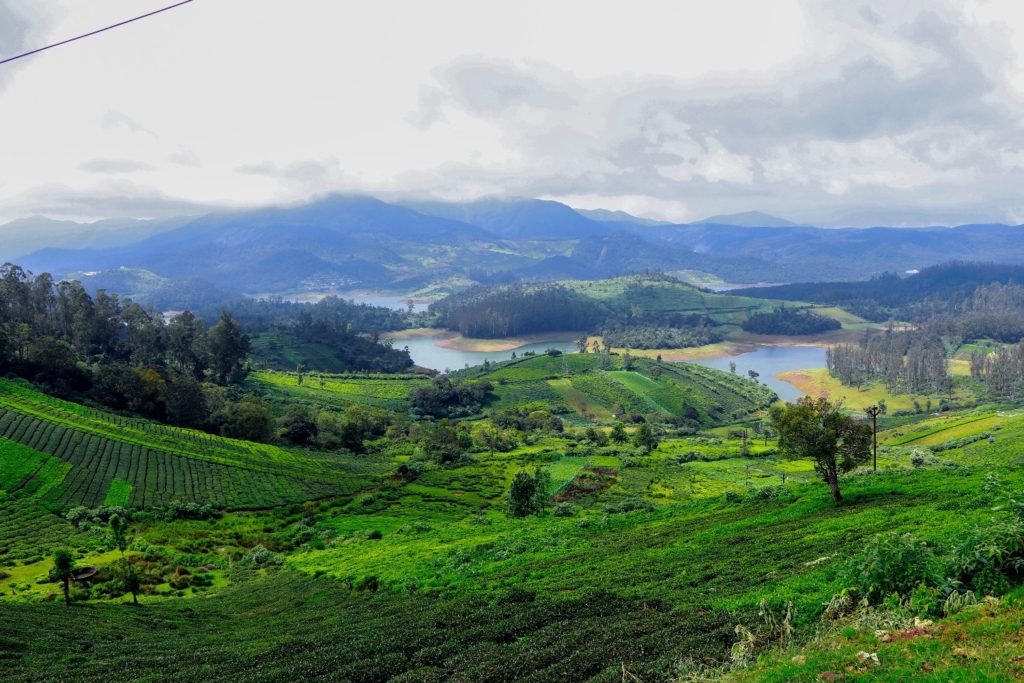
Ooty doesn’t get one dramatic monsoon burst — it gets two. The southwest monsoon (June–August) brings the heavier, more persistent rain, while the northeast monsoon (October–November) adds a second, shorter wet spell. Between these, July and August tend to be the wettest months, with intermittent sunny mornings that are worth building your outdoor plans around.
A practical pattern many locals point to: mornings are more likely to be clear, afternoons bring cloud build-up, and by evening it’s raining again. Structuring sightseeing around 8 AM–12 PM slots noticeably improves your odds.
Ooty Toy Train Status in Monsoon: What You Need to Know
This is usually the first thing people search before booking a trip, so here’s the direct answer: the Nilgiri Mountain Railway (the “toy train”) does not shut down completely for monsoon, unlike some other hill railways in India, but services are genuinely more prone to delays, partial cancellations, and route restrictions during heavy rain.
The full Mettupalayam–Ooty stretch is the section most affected, since it climbs through the steepest, most landslide-prone terrain via the rack-and-pinion section near Kallar. The shorter Ooty–Coonoor leg is comparatively more reliable, though it isn’t immune either.
Toy train monsoon reality check:
- The daily Mettupalayam–Ooty service typically continues to run, but can be delayed or suspended on specific days if there’s heavy rainfall or a landslide alert
- The Ooty–Coonoor short route is a safer bet if you want the toy train experience without the risk of a full cancellation eating your day
- IRCTC bookings don’t automatically refund or rebook for weather cancellations — always keep a backup plan for that day
- Peak-season extra trains (the Friday/Sunday specials) generally don’t run once the core monsoon months set in
Always confirm your specific travel date directly on IRCTC or with railway enquiry, since monsoon disruptions are announced close to the date, not months in advance.
What’s Open in Ooty During Monsoon
Not everything shuts down — far from it. Here’s a realistic breakdown of Ooty sightseeing options by weather-dependence, which is more useful than a simple open/closed list.
What’s Open in Ooty During Monsoon — At a Glance
| Attraction | Monsoon Status | Best Time to Visit |
|---|---|---|
| Government Botanical Garden | Reliably open | Anytime; covered walkways help |
| Ooty Lake & Boat House | Reliably open | Boating pauses only in heavy downpour |
| Tea Museum & Tea Factories | Reliably open | Ideal rainy-day activity |
| Rose Garden | Reliably open | Right after a rain break, when petals look freshest |
| Toda Tribal Museum / St. Stephen’s Church | Reliably open | Fully indoor/covered |
| Doddabetta Peak | Weather-dependent | Early morning, before cloud build-up |
| Dolphin’s Nose & Lamb’s Rock (Coonoor) | Weather-dependent | Clear mornings only; skip if misty |
| Pykara Falls & Lake | Weather-dependent | Falls look best in monsoon; boating may pause in heavy flow |
| Avalanche Lake & trekking trails | Often restricted | Check locally — leech activity and slippery terrain are common concerns |
Reliably Open, Rain or Shine
- Government Botanical Garden — covered walkways and dense tree cover make this workable even in light rain
- Ooty Lake & Boat House — boating pauses in heavy downpour but resumes quickly; the lakeside walk is lovely in drizzle
- Tea Museum & Tea Factories — indoor tastings and tours, genuinely better suited to rainy days than sunny ones
- Rose Garden — one of Asia’s largest, best visited during a break in the rain when petals are freshly washed
- Toda Tribal Museum & heritage churches (St. Stephen’s Church) — fully indoor/covered options
Weather-Dependent (Check Before You Go)
- Doddabetta Peak — the highest point in the Nilgiris, and the first place to disappear into cloud cover
- Dolphin’s Nose & Lamb’s Rock (Coonoor) — valley views need clear conditions; monsoon mist can obscure them completely
- Pykara Falls & Lake — the waterfall is genuinely more dramatic in monsoon, but boating can be suspended during heavy flow
- Avalanche Lake & trekking trails — often restricted or closed to visitors during peak monsoon due to slippery terrain and leech activity
A good rule for places to visit in Ooty during monsoon: pair one weather-dependent stop with one reliable indoor stop each half-day, so a sudden downpour doesn’t derail your whole plan.
A Rainy-Day Plan for Ooty
Here’s a practical, hour-by-hour framework for a day when the monsoon simply refuses to let up — built around things to do in Ooty that don’t depend on visibility.
- Morning (9 AM–11 AM): Government Botanical Garden, followed by a short walk around Ooty Lake if the rain has eased
- Late morning (11 AM–1 PM): Tea Museum or a working tea factory tour with tasting — warm chai and dry indoor space, ideal when it’s pouring outside
- Lunch: A Nilgiris-style meal at a local restaurant near Charing Cross; homemade chocolate and eucalyptus oil shopping doubles as a good rain-day activity
- Afternoon (2 PM–4 PM): Toda Tribal Museum or St. Stephen’s Church, both indoor-friendly and rich in local history
- Evening (5 PM onward): Head back to your stay early — Ooty’s monsoon evenings drop in temperature fast, and this is where a good villa with a fireplace or hot water genuinely earns its keep
This is exactly the kind of day where where you’re staying matters as much as what you’re doing outside.
Where to Stay in Ooty During Monsoon
Given how weather-dependent outdoor plans can be, places to stay in Ooty during monsoon should be chosen with rainy-day comfort in mind — think fireplaces, indoor common spaces, hot water, and enough room that a full family isn’t stuck staring at four walls if it rains all day.
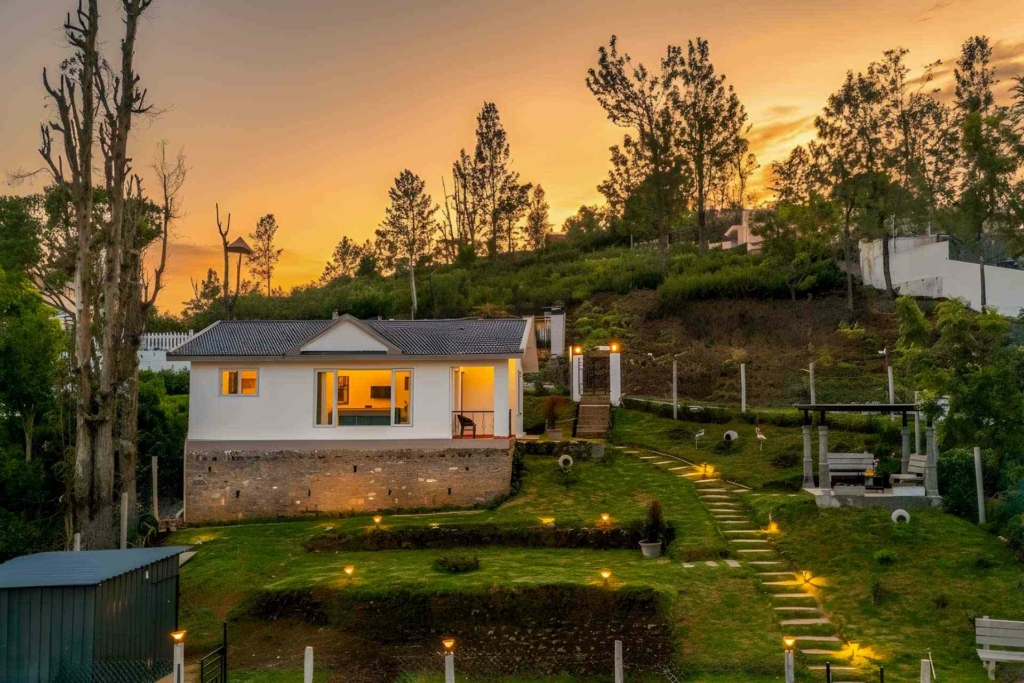
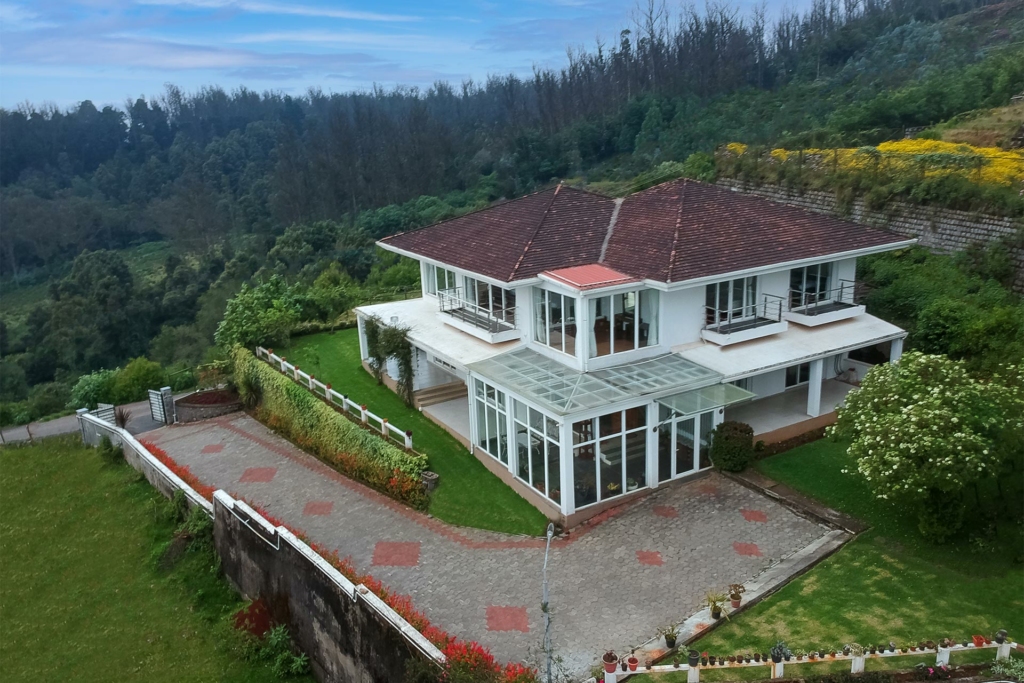
This is where a StayVista Ooty villa makes a genuine difference over a standard hotel room. StayVista’s curated villas in the Nilgiris are built around exactly this scenario: private living spaces, working fireplaces for the monsoon chill, kitchens for when you’d rather not brave the rain for every meal, and enough space that a rainy afternoon indoors still feels like part of the holiday, not a compromise.
For families specifically searching for the best place to stay in Ooty for family stay, villas solve a problem that hotels for family stay in Ooty often can’t — private space for kids to be loud, a common living area for board games during a downpour, and no shared corridors or lobbies to navigate with tired children.

Planning an Ooty Package for 3 Days in Monsoon
A 3-day Ooty package built for monsoon should front-load weather-dependent sightseeing and keep buffer days for indoor options:
- Day 1: Arrival, check-in, Botanical Garden and Ooty Lake (both forgiving in light rain), settle into your villa by evening
- Day 2: Early toy train ride (Ooty–Coonoor is the safer monsoon choice), Coonoor sightseeing including Sim’s Park, back to Ooty by evening
- Day 3: Pykara Falls and Lake in the morning while conditions are usually clearer, Tea Museum and local market shopping before departure
Building in this kind of flexibility is the single biggest difference between an Ooty in monsoon trip that feels magical and one that feels frustrating.
Frequently Asked Questions
Yes — Ooty in monsoon offers lush greenery, full-flow waterfalls, and far fewer crowds than peak summer, though viewpoint visibility can be limited by mist and rain.
The toy train generally continues to operate during monsoon, but is more prone to delays or occasional cancellations on the Mettupalayam–Ooty stretch due to heavy rain or landslides. Always confirm on IRCTC close to your travel date.
June and September tend to have relatively lighter rainfall compared to the peak wet months of July and August, making them a gentler entry point into Ooty’s monsoon season.
A proper raincoat (not just an umbrella), waterproof footwear, warm layers for temperatures between 11°C and 18°C, and a dry bag for electronics.
Generally yes — monsoon is off-peak season in the Nilgiris, and both hotels and villas typically offer better rates and availability than during the April–June summer rush.
Explore Ooty in Monsoon Like Never Before
Ooty in monsoon isn’t the Ooty of postcards — it’s better suited to travellers who want mist over their morning tea, waterfalls at full roar, and a hill station that finally has room to breathe. Pack the raincoat, build a flexible itinerary, and pick a stay that makes the rainy hours feel just as good as the sunny ones. If a misty, unhurried version of the Nilgiris sounds like your kind of trip, a StayVista villa in Ooty is a good place to start planning it.