
Pawna Lake in September & October 2026: A Weekend at Gram’s

Pawna Lake is at its most atmospheric towards the end of the monsoon. By September, the Sahyadri hills are still lush, waterfalls are still flowing, and the heaviest spells of rain begin to ease. Come October, the weather becomes more comfortable for outdoor plans, and activities such as boating start returning to the lake.
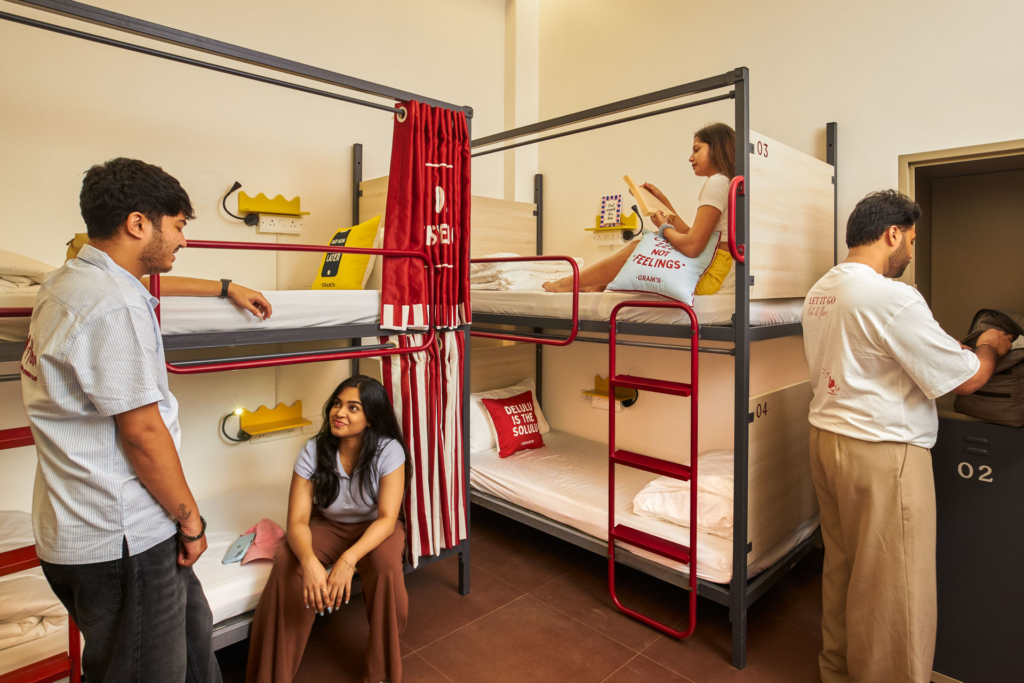
For a September–October 2026 weekend, Gram’s at Shivom makes a practical base for exploring Pawna and Lonavala without having to rely on a packed itinerary. The lake-facing property has private rooms, 4-bed and 8-bed dorms, and an on-site multi-cuisine restaurant, giving couples and groups a comfortable place to stay between outings.
The late-monsoon window is particularly good if you want the greenery and mist of Pawna without committing to the heaviest July–August rainfall. September is better suited to viewpoints and shorter outdoor excursions, while October opens up more opportunities for lake activities and clearer days.
Here’s how to plan a Pawna Lake weekend at Gram’s in September and October 2026.
Pawna Lake is at its best between mid-June and mid-September, when the Sahyadri hills turn green and waterfalls like Bhushi Dam and Kune Falls run at full flow. Gram’s at Shivom — a lake-facing StayVista property with private rooms, 4-bed and 8-bed dorms, and an on-site multi-cuisine restaurant — is a practical base because you don’t have to step out in heavy rain for meals or views.
| Detail | September–October 2026 |
|---|
| Best time | September for greenery and lighter rain; October for clearer weather and outdoor activities |
| Average temperature | Around 20–28°C; varies with rainfall |
| Drive time from Mumbai | 3–4 hours, depending on traffic and rain |
| Drive time from Pune | 1.5–2 hours |
| Nearest railway station | Lonavala Railway Station, ~8 km from Gram’s |
| Nearest airport | Pune International Airport, ~74 km |
| Boating | Typically resumes from October, subject to local conditions |
| Ideal duration | 2 nights / 3 days |
For more on the area beyond monsoon, see our things to do in Lonavala guide.
In this Blog
When Is the Best Time to Visit Pawna Lake in September and October?
September is the sweet spot for travellers who want Pawna’s monsoon character without the intensity of July and August. The hills remain vividly green, mist still settles around the lake, and showers are generally lighter as the monsoon begins to retreat.
Early September: Expect greenery, occasional heavy showers and flowing waterfalls. Plan shorter outdoor excursions and keep rain gear handy.
Late September: Rain usually eases further, making viewpoints and fort visits easier to plan. This is a good period for travellers who want a mix of greenery and outdoor time.
October: Pawna starts transitioning out of monsoon. Days are generally more comfortable for exploring, and lake activities such as boating can resume, subject to local weather and operator conditions.
Our pick: Choose September for the classic lush Pawna landscape; choose October if you want more flexibility for outdoor activities and lake experiences.
Arriving at Gram’s in the rain
We drove down from Mumbai on a Friday evening in late July 2025. The Mumbai–Pune Expressway was steady until Khopoli; from there, the rain thickened. Lonavala was a slow crawl through fog and trucks. The turn-off toward Pawna — past Lonavala station and through Gevande Apti village — was where the trip actually started: narrow, hilly, and lined with rain-fed streams running across the road.
Gram’s at Shivom sits on Survey No. 144, Village Gevande Apti — about 8 km / 5 mi from Lonavala Railway Station. The last 2 km in the monsoon is a slow drive. It’s fine for a sedan if you take it easy; more comfortable in an SUV. We pulled in around 9 PM. Headlights caught the lake on our left, mist sitting low over the water.
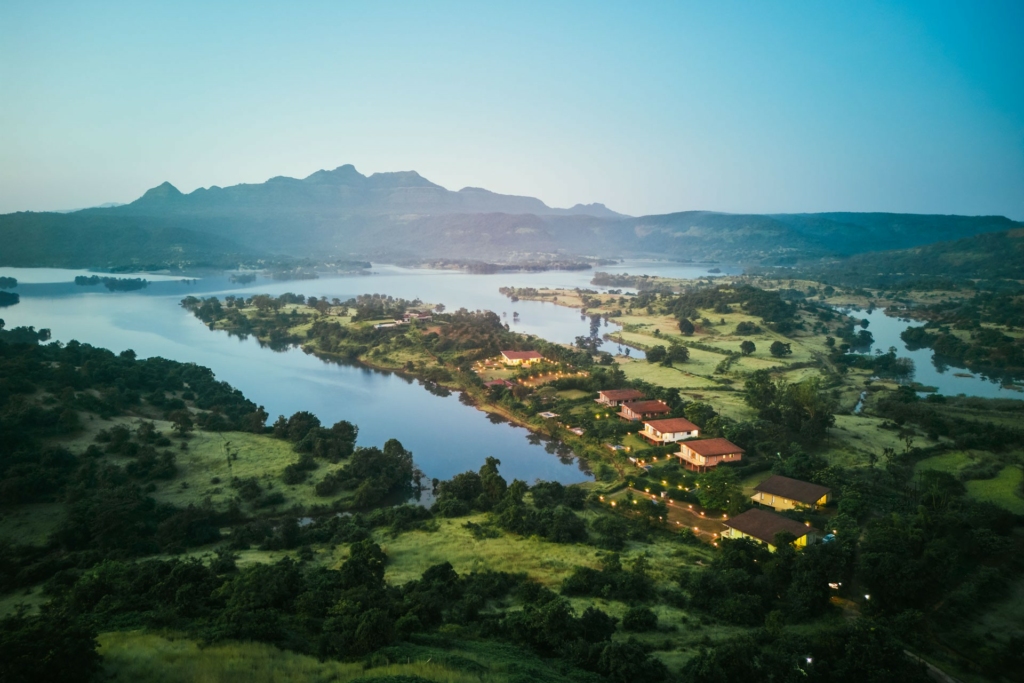
The property looks different in the rain than in any photo we’d seen. The lawn is darker green. The pool is fringed by wet stone. The lake — visible from most of the property — is a flat sheet of grey-blue with the hills disappearing into cloud on the far side. Check-in was quick. The restaurant was open. We were eating khichdi within twenty minutes of arrival. That is the trip in one moment.
If you’d rather take the train, Lonavala station is well-connected from both Mumbai and Pune — and Gram’s can arrange a pickup. See our Lonavala destination guide for the full area context.
Why does Gram’s work as a monsoon base?
Three things make Gram’s at Shivom unusually well-suited to a Pawna monsoon weekend — and they’re not the things a typical villa listing leads with. Lakeside geometry, an on-site kitchen, and a flexible room mix together solve the three real problems of a rainy weekend: the view, the meals, and the people in your group who don’t all want the same thing.
The lake-facing geometry. Most rooms either look at the lake or face the pool with the hills behind. In monsoon, that means you can sit indoors and still feel like you’re in the landscape — the view does the work even when the rain doesn’t let you out.
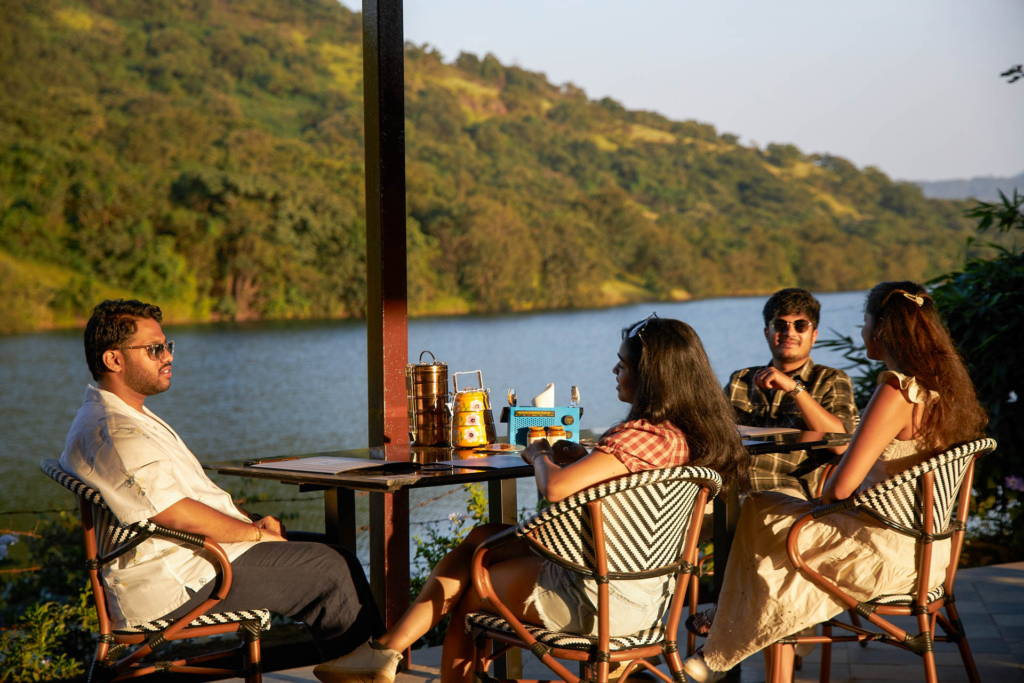
The on-site multi-cuisine restaurant. This is the single biggest difference between Gram’s and most other Pawna stays. In monsoon, when stepping out for a meal can mean a 30-minute drive in the rain, having a kitchen on the property — serving brunch, lunch, dinner, and high tea — changes the math of the entire weekend.
The room mix. Gram’s offers private rooms and 4-bed and 8-bed dorm rooms. Most Pawna properties are full-villa rentals, which means either you bring twelve people or you book a hotel. Here, a couple can take a private room while a group of friends takes a dorm on the same property. For villas with a view in Lonavala, this format is unusual.
What’s the on-site restaurant like in monsoon?
The restaurant is part of a Pawna monsoon trip you don’t have to plan around. It serves a multi-cuisine menu — Indian, Chinese, Italian, pizza, and local Maharashtrian — across brunch, lunch, dinner, and high tea. The kitchen runs through monsoon, when stand-alone restaurants along the Pawna ring road keep irregular hours. In two days, we ate every meal on the property and didn’t repeat a dish.
What we’d actually order in monsoon:
- Breakfast: Misal pav, poha, masala omelette, filter coffee. The misal is genuinely good.
- Lunch: Thali for two if you’ve come back wet from a walk and want comfort food. The dal khichdi is the right call in rain.
- High tea (4–6 PM): Hot bhajiyas and adrak chai with the lake right there. This is the slot to plan for — high tea by the lake in July is the reason people post photos of Pawna.
- Dinner: Tandoori platter or the wood-fired pizza if you want a change from Indian. Italian is the kitchen’s second strength.
What can you do near Gram’s in monsoon?
Pawna in monsoon isn’t about a packed itinerary — it’s about three or four well-chosen outings between long stretches at the property. We pick by weather and how much driving anyone wants to do that morning. Here are ten places within an easy radius of Gram’s, with the practical details for each.
1. Bhushi Dam
- Entry fee: Free
- Timings: Open during daylight; entry to the water and surrounding forest area is prohibited after 6 PM under Pune district admin orders
- Distance from Gram’s: ~11 km / 6.8 mi
- Time required: 1.5 to 2 hours
- Ideal for: Couples, families, friend groups
- Pro tip: Go on a weekday morning. By weekend afternoons in July, the dam steps get extremely crowded and slippery.
Bhushi Dam is the postcard Lonavala monsoon image — water cascading over the spillway steps with people sitting in it. It’s spectacular in July and August, when the overflow is constant. It’s also genuinely dangerous if you go too far in — five people died at the dam in July 2024, and Pune district administration has since enforced annual prohibitory orders during monsoon: no gatherings of 5+ people, no entry into the water, no selfies or reels on the spillway, and no entry after 6 PM (Business Standard). Stay on the lower steps, follow the posted advisories, and skip it entirely after heavy rain.
2. Kune Falls
- Entry fee: Free; parking ₹30–50
- Timings: 7 AM – 6 PM
- Distance from Gram’s: ~11 km / 6.8 mi
- Time required: 1 hour
- Ideal for: Families, photographers
- Pro tip: The best viewpoint is the lower deck. Carry a microfibre cloth for camera lenses — spray reaches the viewing area.
Kune Falls is a three-tiered waterfall and one of India’s highest falls. In peak monsoon, it runs at full flow, and the spray drifts across the viewpoint. The walk-in is short. This is the easiest monsoon viewpoint trip near Gram’s for anyone who doesn’t want to climb.
3. Tikona Fort
- Entry fee: Free
- Timings: Sunrise to sunset
- Distance from Gram’s: ~9 km / 5.6 mi
- Time required: 3 to 4 hours
- Ideal for: Fit adults, trek-experienced groups
- Pro tip: Attempt only in light rain or on a clear-ish morning. Wear trekking shoes with grip. Skip after heavy overnight rain — the upper rock-cut steps get unsafe.
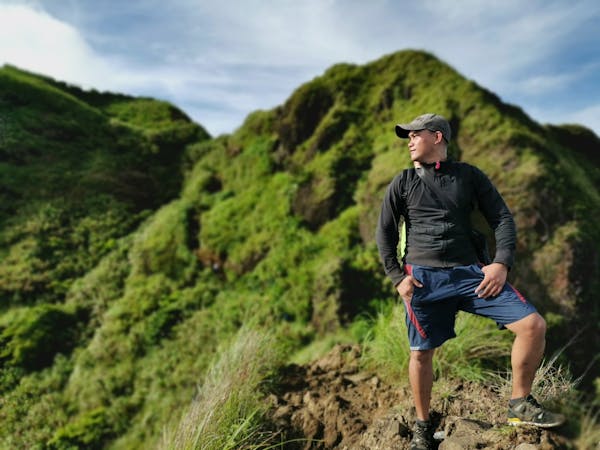
Tikona is the closest fort trek to Pawna and the easiest one to slot into a Pawna weekend. The pyramid-shaped fort sits at about 3,500 ft and gives the best aerial view of Pawna Lake on the way up. The catch in the monsoon is the last stretch — narrow rock steps with no railing. Hire a local guide from the base village if it’s your first time. See Maharashtra Tourism’s trekking guidance.
4. Lohagad Fort
- Entry fee: Free
- Timings: Sunrise to sunset
- Distance from Gram’s: ~18 km / 11 mi
- Time required: 4 hours
- Ideal for: First-time monsoon trekkers, photographers
- Pro tip: Combine with Visapur across the saddle if the weather holds. The “scorpion tail” wall on Lohagad is the photo spot — go early before clouds roll in.
Lohagad is the most beginner-friendly monsoon trek in the Lonavala–Pawna belt. The path is stone-stepped most of the way. The summit gives sweeping views of the Pawna basin on a clear day, or a sea of cloud on a heavy-rain day — both are worth the climb.
5. Visapur Fort
- Entry fee: Free
- Timings: Sunrise to sunset
- Distance from Gram’s: ~19 km / 11.8 mi
- Time required: 4 to 5 hours
- Ideal for: Experienced trekkers
- Pro tip: The seasonal Visapur waterfall on the trek route is the highlight. Don’t attempt during heavy rain — the natural rock steps become a stream.
Visapur is bigger and less restored than Lohagad. The reward in monsoon is the waterfall halfway up the trail — you walk through it. Carry a dry bag for your phone. This one is a step harder than Lohagad and should be skipped by anyone who hasn’t done a monsoon trek before.
6. Lion’s Point and Tiger Point
- Entry fee: Free
- Timings: Best 7 AM – 6 PM (avoid after dark in monsoon)
- Distance from Gram’s: ~16 km / 9.9 mi
- Time required: 1.5 hours combined
- Ideal for: Couples, families, sunset chasers
- Pro tip: Mist often closes the view for hours at a time. Check from the car before walking out — and if you see clear sky, move fast.
These are the two iconic Lonavala viewpoints. In monsoon, they’re either spectacular (deep green valleys, cloud-filled gorges) or completely whited out by mist. Both are roadside — no trekking needed. The bhutta and chai stalls run through the season.
7. Pawna Dam
- Entry fee: Free
- Timings: Daylight hours (entry after 6 PM prohibited during monsoon under Pune district orders)
- Distance from Gram’s: ~4 km / 2.5 mi
- Time required: 45 minutes
- Ideal for: Anyone, including elderly travellers
- Pro tip: The dam wall is closed to vehicles during the monsoon. Park at the approach and walk the last stretch. Best at sunset on a clear-ish day.
Pawna Dam is the closest “view” outing from Gram’s — a short drive away, no trek, clean view of the reservoir at its fullest. This is the right outing for the day, where the rain hasn’t stopped enough to commit to a fort.
8. Karla Caves
- Entry fee: ₹25 for Indian nationals (free for children up to 15)
- Timings: 9 AM – 5 PM, daily
- Distance from Gram’s: ~22 km / 13.7 mi
- Time required: 1.5 hours
- Ideal for: Families, history-interested travellers
- Pro tip: Combine with Bhaja Caves — they’re 9 km apart and the same kind of outing.
The Karla Caves are 2nd-century BCE Buddhist rock-cut caves and an Archaeological Survey of India protected site. The main chaitya hall is striking, with a row of pillars and a stupa. The climb up is sheltered, which makes Karla a good rain-day outing.
9. Bhaja Caves
- Entry fee: ₹5 for Indian nationals (₹100 for foreigners)
- Timings: 9 AM – 5 PM, daily
- Distance from Gram’s: ~26 km / 16.2 mi
- Time required: 1.5 hours
- Ideal for: Photographers, history travellers
- Pro tip: The seasonal waterfall right next to the cave entrance only runs in monsoon — that’s the reason to come now.
Bhaja is older and quieter than Karla. Twenty-two rock-cut caves and one of the more beautiful monsoon waterfalls in the Lonavala region — the falls drop right beside the cave path during peak rain. Worth pairing with Karla on the same morning.
10. Lonavala Market and Chikki
- Entry fee: Free
- Timings: Most shops 10 AM – 9 PM
- Distance from Gram’s: ~9 km / 5.6 mi
- Time required: 1 to 2 hours
- Ideal for: Last-day trip, families with kids
- Pro tip: Maganlal Chikki and National Chikki are the original ones. Most other “chikki marts” aren’t. Buy fudge and chikki to take back.
The right slot for the Lonavala market is the last morning, on the way home. It’s the trip’s souvenir stop, and the covered shops are an easy plan for a rainy half-day.
What should you NOT do at Pawna in monsoon?
Some popular Pawna activities are genuinely closed or unsafe in monsoon. Most of the SERP won’t tell you this because most of the SERP is selling the trip. Plan around them.
- Lakeside tent camping: Most lakeside tent camps shut between mid-June and mid-September. The lake level rises and the ground gets waterlogged. If a camp claims to be open in peak July, double-check before booking — and verify whether the tents are actually lakeside or shifted inland.
- Boating and water sports on Pawna Lake: Suspended during monsoon by the local authorities for safety. Boating resumes from October.
- Entry into water bodies at Bhushi Dam and Pawna Dam: Banned under annual Pune district administration orders following the 2024 Bhushi Dam tragedy. No gatherings of 5+, no selfies or reels at the spillway, no entry after 6 PM.
- Heavy-rain fort treks: Skip Visapur, Korigad, and the Tikona summit on days with continuous heavy rain. Slippery rock steps and reduced visibility are the two real risks.
- Leech-prone trails after rain: The Lohagad and Visapur trails get leeches between July and early September. Long socks tucked into trekking shoes are the practical fix. Carry salt or a small spray.
- Adlabs Imagica’s water park: The dry rides park (~29 km / 18 mi from Gram’s) stays open in monsoon and operates from 10:30 AM to 7:00 PM. The water park operates in light rain but limits rides in heavy rain — check before driving down.
What to pack for Pawna in monsoon
A short, useful list — not a thirty-item travel checklist.
- Rain shell or poncho (umbrellas are useless on fort treks)
- Quick-dry trek shoes with grip — running shoes aren’t enough for monsoon trails
- Two pairs of clothes per day — what you wear out, you’ll come back wet in
- Dry bag or large ziplocks for phone, camera, wallet, charger
- Mosquito repellent and a small first-aid pouch with antiseptic
- Long socks (leech protection on Lohagad/Visapur)
- A microfibre towel and a power bank
- A paperback or two — this is a reading trip as much as a travel one
What does a 2-day monsoon weekend from Mumbai or Pune look like?
This is the itinerary our team actually used. Adapt for an arrival from either city. It assumes Saturday is the more “active” day and Sunday is the “wind down and head home” day.
Friday evening
- 5:00 PM: Mumbai group leaves
- 7:00 PM: Pune group leaves
- 9–10 PM: Arrival at Gram’s. Quick dinner at the on-site restaurant. Early night.
Saturday
- 8:30 AM: Misal-pav breakfast on the property
- 10:00 AM: Drive to Lohagad Fort. Trek up and back.
- 2:30 PM: Late lunch back at Gram’s
- 4:30 PM: High tea by the lake — hot bhajiyas, masala chai
- 7:30 PM: Wood-fired pizza dinner. Board games or cards.
Sunday
- 8:00 AM: Breakfast
- 9:30 AM: Drive to Bhushi Dam, then Kune Falls — combine on the way back toward Lonavala
- 1:00 PM: Lonavala market — chikki, fudge, gifts
- 2:00 PM: Lunch
- 3:30 PM: Check out
- 7:00 PM: Reach Mumbai (or 5:30 PM Pune)
Extra night? Swap in Tikona Fort on Saturday morning or Karla–Bhaja on Sunday morning, weather permitting. For more 2-day plans, see our weekend getaways from Mumbai roundup.
Who is Gram’s at Shivom right for?
Gram’s at Pawna Lake is unusually flexible because it offers three room types under one property — and that decides who it suits best.
| Group | Best room type at Gram’s | Capacity |
|---|---|---|
| Up to the property capacity | Private room with lake or pool view | 2 |
| Small family (3–4) | Private room or 4-bed dorm | 3–4 |
| Friends trip (6–8) | 8-bed dorm | 8 |
| Couples/honeymoons | Mix of dorms + private rooms | Up to property capacity |
The on-site multi-cuisine restaurant means you can book meal packages instead of running a kitchen for a group. For a monsoon trip — when stepping out for every meal is friction — that’s the part most groups appreciate after the fact.
Planning a Pawna monsoon weekend? Check availability and rates for Gram’s at Shivom. Lake-facing rooms book out fastest between mid-July and late August — block dates 2–3 weeks ahead.
Frequently Asked Questions
Pawna Lake is safe to visit in the monsoon, but lakeside activities like boating and tent camping are suspended for safety. Stay on solid ground, avoid wading into the lake, and skip fort treks during heavy rain. The drive from Mumbai or Pune is straightforward — only the last 2 km to the lake area needs care.
No. Boating, kayaking, and other water sports on Pawna Lake are typically suspended between mid-June and mid-September. The lake rises significantly, and local authorities restrict access for safety. Water activities resume from October once levels stabilise.
The Mumbai–Pune Expressway is well-maintained year-round. The turn-off from Lonavala to Pawna — about 8 km — narrows and occasionally waterlogs in heavy rain, but is fully drivable in a sedan. Plan 3 to 4 hours from Mumbai and 1.5 to 2 hours from Pune.
Leeches are common on fort treks (Lohagad, Visapur, Tikona) between July and early September, especially after rain. They aren’t a problem on roads, at viewpoints, or on the Gram’s property. Long socks tucked into trek shoes plus a small bottle of salt or repellent solve the issue.
Most lakeside tent camps shut between mid-June and mid-September because of high water levels and waterlogging. For a monsoon stay, a built villa or property like Gram’s is the practical choice. Camping resumes from late September.
Yes — the on-site multi-cuisine restaurant at Gram’s at Shivom serves brunch, lunch, dinner, and high tea year-round, including the peak monsoon months of July and August. This is one of the main reasons travellers choose it as a monsoon base.
The dry theme park at Adlabs Imagica stays open through the monsoon, operating from 10:30 AM to 7:00 PM. The water park operates in light rain but limits rides during heavy downpours. Imagica is roughly 29 km / 18 mi from Gram’s at Pawna Lake.
For a late-monsoon trip, September offers the best combination of lush greenery, flowing waterfalls and lighter rain. October is better if you want more comfortable outdoor conditions and the possibility of boating, subject to local operations and weather.
Boating and water sports are generally suspended during the monsoon and typically resume from October. Always confirm with the local operator before planning your trip around boating.
Yes. October offers a transition from monsoon to clearer weather, while the surrounding hills can still retain their greenery. It is also a better month for combining sightseeing with outdoor and lake activities.
Yes. September is particularly good for travellers who want lush green hills, mist and waterfalls without the intensity of peak July–August rainfall.
Yes, but conditions matter. Fort trails can remain slippery after rain in September, so check the weather before setting out. October generally offers more comfortable trekking conditions, but heavy showers can still make exposed trails unsafe.
Final word
Pawna in monsoon is a slower trip than Pawna in winter. You’ll spend more time on the property and less time chasing activities — and that’s the right way to plan it. Pick a stay that earns its keep when the rain settles in for half a day: a window view, a working kitchen, the option to step out only when it makes sense. Gram’s at Shivom is built for that kind of weekend.
If you’re planning a 2026 monsoon trip from Mumbai or Pune, check rates and availability at Gram’s at Pawna Lake — and tell us in the comments what your favourite Pawna monsoon outing has been. For other Maharashtra rain weekends, see our Karjat destination guide.