
10 Places to Visit Near Bhimashankar — and the Best Stops on the Drive From Pune

The best places to visit near Bhimashankar are the Jyotirlinga temple itself, Bhimashankar Wildlife Sanctuary, Gupt Bhimashankar, Hanuman Lake, Nagphani Point, Bhorgiri Fort, Shivneri Fort, Lenyadri Caves, Ozar Vighneshwar Temple and Chas Kaman Dam. Bhimashankar sits roughly 110–125 km from Pune, Maharashtra — about 3 to 4 hours by road via Chakan, Rajgurunagar and Manchar. In August, stick to the temple, the forest trails and the reservoir stretch; leave the exposed ridge treks for October.
A drive to Bhimashankar in the monsoon is not really a temple errand. The last 30 km climb through the Sahyadris turns into a corridor of dripping karvi thickets and roadside streams, and the forest around the Jyotirlinga goes properly, ridiculously green. What most travellers miss is that the route itself is stacked with things worth stopping for — a 17th-century birthplace fort, rock-cut Buddhist caves with a Ganpati inside, two Ashtavinayak temples and a reservoir that looks like a lake from the roadside.
This guide covers ten places to visit near Bhimashankar, sorted by where they actually fall on the map, with honest notes on what rain does to each one. We’ve included distances, fees, timings and the stops we’d skip in heavy showers — plus a note on where to base yourself if you want two unhurried days instead of one long, damp one.
In this Blog
Quick Info: Pune to Bhimashankar
| Field | Detail |
|---|---|
| Distance from Pune | Approx. 110–125 km, depending on route and starting point |
| Driving time | Approx. 3–4 hours one way, excluding stops |
| Route | Pune → Chakan → Rajgurunagar (Khed) → Manchar → Ghodegaon → Bhimashankar |
| Nearest airport | Pune International Airport (Lohegaon), approx. 125 km |
| Nearest railway station | Pune Junction, approx. 115 km |
| Best overall season | October to February — clear views, dry trails, comfortable walking |
| Best scenic season | June to September — peak green, waterfalls, slippery trails |
| Ideal duration | 1 day for the temple and forest; 2 days to add the Junnar circuit |
| Elevation | Approx. 1,050 m above sea level |
| Budget | Approx. ₹800–1,500 per person for a self-drive day trip (fuel, food, fees) |
Important August 2026 update: Bhimashankar Temple was shut for regular darshan through much of early 2026 for redevelopment work under the Bhimashankar Area Development Plan, including demolition of the old sabhamandap. It reopened for public darshan from 15 June 2026, and with construction currently paused, authorities have restored extended Shravan hours of roughly 5:00 am to 9:30 pm. Shravan began on 13 August 2026, so expect very heavy crowds on Shravan Mondays. Confirm the day’s status on the official Bhimashankar temple portal before you leave Pune.
What Are the Best Places to Visit Near Bhimashankar?
The ten best places to visit near Bhimashankar fall into three clusters — the sanctuary zone within 5 km of the temple, the Junnar heritage circuit that is a genuine 40–60 km detour, and the stops on the Pune drive itself. Knowing which cluster a place belongs to is the difference between a good day and a rushed one.
| No. | Place | Where it sits | Best for | Time needed | Monsoon verdict |
|---|---|---|---|---|---|
| 1 | Bhimashankar Temple | Sanctuary zone | Pilgrimage, architecture | 1–2 hrs | Go — but early |
| 2 | Bhimashankar Wildlife Sanctuary | Sanctuary zone | Forest walks, Shekru | 2–4 hrs | Best in rain |
| 3 | Gupt Bhimashankar | 1.5–3 km walk from temple | Quiet spiritual stop | 1–2 hrs | Go with a guide |
| 4 | Hanuman Lake | ~1 km from temple | Easy nature break | 45–90 min | Go |
| 5 | Nagphani Point | Sanctuary ridge | Views, short trek | 2–3 hrs | Skip in heavy rain |
| 6 | Bhorgiri Fort | Pune-side approach | Village trek | 3–5 hrs | Experienced only |
| 7 | Shivneri Fort | Junnar detour | Maratha history | 2–3 hrs | Go, steps are wet |
| 8 | Lenyadri Caves | Junnar detour | Caves, Ashtavinayak | 1.5–3 hrs | Go |
| 9 | Ozar Vighneshwar Temple | Junnar circuit | Ashtavinayak darshan | 45–90 min | Go |
| 10 | Chas Kaman Dam | Pune route / return | Backwaters, sunset | 1–2 hrs | Go, view only |
The Pune to Bhimashankar Route (and Where to Stop)
Almost all the places to visit near Bhimashankar hang off one spine: Pune → Chakan → Rajgurunagar (Khed) → Manchar → Ghodegaon → Bhimashankar. The first 75 km to Manchar is straightforward four-lane and state highway. After Ghodegaon the road narrows into a ghat with tight hairpins, blind bends and almost no shoulder — this is the section that gets genuinely tricky in rain.
Three practical rules from travellers who do this drive often:
- Fuel at Manchar, not later. Manchar is the last town with reliable pumps, ATMs, mechanics and proper food. Treat it as your final services stop.
- Mobile network drops past Ghodegaon and stays patchy around the temple. Download offline maps in Pune.
- Do not descend the ghat after dark in the monsoon. Fog rolls in fast above 900 m and oncoming buses take the whole road on bends. Start your return by 4:30 pm.
| Stop | Position on route | Why stop | Label |
|---|---|---|---|
| Chakan | ~30 km from Pune | Early breakfast, tea | Quick break |
| Rajgurunagar (Khed) | ~55 km | Local snacks, supplies | Quick break |
| Chas Kaman Dam | ~70 km, short diversion | Backwater views | Worth a detour |
| Manchar | ~75 km | Fuel, food, last services | Mandatory |
| Bhorgiri | Diversion via Chas Kaman | Fort and trek base | Two-day trip only |
| Shivneri / Lenyadri / Ozar | Junnar side, 40–60 km detour | Heritage and Ashtavinayak | Separate day |
10 Places to Visit Near Bhimashankar from Pune:
1. Bhimashankar Temple

Bhimashankar Temple is revered as one of the twelve Jyotirlingas of Lord Shiva and sits at roughly 1,050 m in the Sahyadri hills of Pune district, Maharashtra. The Nagara-style stone shrine is partly sunken below courtyard level, so you descend a short flight into the sanctum — which is why the interior fills with the sound of rain during a downpour. The old assembly hall has been rebuilt under the area development plan, so the approach looks different from older photos.
- Entry fee: Free. VIP darshan and pooja passes are bookable online
- Timings: Approx. 5:00 am – 9:30 pm during Shravan 2026; standard hours from around 4:30 am with Kakad Aarti
- Best time: 6:00–8:00 am. Skip Mondays entirely in Shravan
- How to reach: 110–125 km from Pune via Manchar; MSRTC buses run from Shivajinagar bus stand
- Time required: 1–2 hours including the queue
- Ideal for: Pilgrims, families, first-time visitors
- Pro tip: Footwear is left outside and the stone gets slick in rain — wear sandals you can carry, not laced shoes. Phones are usually restricted inside the sanctum, so keep a pocket for them.
2. Bhimashankar Wildlife Sanctuary

Of all the places to visit near Bhimashankar, this is the single best reason to come here in August. The sanctuary protects roughly 130 sq km of Western Ghats forest and is the declared home of the Shekru — the Indian giant squirrel, Maharashtra’s state animal. Sightings are never guaranteed, but early-morning walks on the marked trails give you a realistic chance, along with Malabar whistling thrushes, hornbills and a forest floor full of fungi and fresh streams. It is a protected sanctuary, not a safari park — there is no jeep circuit.
- Entry fee: No personal entry fee. Vehicle charges approx. ₹10 for two-wheelers and ₹50 for four-wheelers
- Timings: Trails generally 6:00 am – 6:00 pm
- Best time: June to September for greenery; November to February for comfortable walking
- How to reach: The sanctuary surrounds the temple — you are already inside it when you park
- Time required: 2–4 hours
- Ideal for: Nature lovers, birdwatchers, photographers, families with older children
- Pro tip: Carry salt and a small bottle of Dettol for leeches — they are common on wet trails in August. Hire a local guide near the temple; the forest paths are not signposted, and voices carry, so keep quiet if you actually want to see a Shekru.
3. Gupt Bhimashankar

Gupt Bhimashankar is a small shrine set beside a stream in the forest, roughly 1.5–3 km from the main temple depending on which path you take. It is believed to be the spot where the Bhima river originates, and locals treat it as the older, quieter counterpart to the main Jyotirlinga. In the monsoon the stream runs full and the last stretch is a genuine walk over wet rock — beautiful, and not a place to be alone.
- Entry fee: Free entry
- Timings: Daylight only — do not attempt after 4:30 pm in monsoon
- Best time: Mid-morning, after the mist lifts
- How to reach: Forest trail from behind Bhimashankar Temple; ask for the Gupt Bhimashankar path at the temple
- Time required: 1–2 hours round trip
- Ideal for: Fit walkers, trekkers, spiritual travellers
- Pro tip: Not suitable for senior citizens or children under eight in the rain. Take a local guide — the trail forks more than once and rain erases the tread lines.
4. Hanuman Lake

A small forest-fringed lake about a kilometre from the temple, and the most underrated of the easy places to visit near Bhimashankar. There is no boating and nothing built up around it, which is precisely the appeal — you get twenty minutes of birdsong and reflections before the next group arrives. In August the water level rises and the surrounding grass goes waist-high.
- Entry fee: Free entry
- Timings: Daylight hours
- Best time: 7:00–9:00 am for still water and birds
- How to reach: Short walk from Bhimashankar Temple, signposted locally
- Time required: 45–90 minutes
- Ideal for: Couples, families, photographers
- Pro tip: Do not enter the water — the banks are soft and undercut in the monsoon. Facilities are minimal, so use the temple-area washrooms first
5. Nagphani Point

Nagphani, or “cobra’s hood”, is the highest point in the sanctuary, named for the flared rock formation at its summit. On a clear post-monsoon morning the view stretches across the Konkan escarpment and the plateau drops away in one sheer sweep. In heavy August rain, you will see cloud. That is the honest trade-off.
- Entry fee: Free entry
- Timings: Daylight only; start before 8:00 am
- Best time: October to February, or a clear break in late September
- How to reach: Trail from the Bhimashankar plateau, roughly 4–5 km round trip
- Ideal for: Fit trekkers, sunrise chasers
- Pro tip: Skip this entirely during active rainfall — the final approach is exposed rock with a serious drop, and wind at the edge is no joke. Carry two litres of water; there is nothing on the trail.
6. Bhorgiri Fort

Bhorgiri is a small fort with rock-cut caves above Bhorgiri village, and it doubles as the base for the classic 12 km Bhorgiri–Bhimashankar forest trek that crosses streams and seasonal waterfalls before reaching Gupt Bhimashankar. As a standalone visit it is a short, rewarding climb through village fields; as a trek it is a five-hour monsoon commitment.
- Entry fee: Free entry
- Timings: No gate — daylight hours only
- Best time: Late June to September for the trek; November onwards for the fort alone
- How to reach: Approx. 85–90 km from Pune via Chakan, Rajgurunagar and Chas Kaman Dam, then a village road to Bhorgiri
- Time required: 3–4 hours for the fort; 5–6 hours for the full trek to Bhimashankar
- Ideal for: Experienced trekkers, groups with a guide
- Pro tip: Do the trek as a descent from Bhimashankar to Bhorgiri instead of a climb if you have two vehicles — it is far easier on the knees and you finish before the afternoon downpour. Don’t attempt it as a first monsoon trek.
7. Shivneri Fort

Shivneri Fort in Junnar is the birthplace of Chhatrapati Shivaji Maharaj and the strongest of the places to visit between Pune and Bhimashankar — though it is a real detour, not a roadside stop. You pass through seven gates on the way up, and the Shivai Devi temple that gave Shivaji his name still stands on the plateau along with Badami Talav and the Shivkunj memorial. The stepped climb is well built and walkable for most fitness levels.
- Entry fee: Approx. ₹25 for Indian nationals, ₹300 for foreign nationals [VERIFY: current ASI rate]
- Timings: Approx. 9:00 am – 5:00 pm, daily
- Best time: 8:00–11:00 am, before the heat or the afternoon rain
- How to reach: Approx. 90 km from Pune via Narayangaon and Junnar; approx. 60 km from Bhimashankar
- Time required: 2–3 hours
- Ideal for: History travellers, families with school-age children
- Pro tip: The steps hold water and moss in August — grippy shoes matter more here than anywhere else on this list. Plastic bags, alcohol and non-vegetarian food are not permitted inside.
8. Lenyadri Caves and Girijatmaj Temple

Lenyadri is a group of roughly 30 rock-cut Buddhist caves near Junnar, dating to the early centuries CE, with cave number seven housing the Girijatmaj shrine — one of the eight Ashtavinayak Ganpati temples. It is the only Ashtavinayak set inside a cave, and the climb of about 338 steps opens onto a broad pillared verandah with valley views. In monsoon the hillside below turns solid green and mist drifts through the cave mouths.
- Entry fee: Approx. ₹25 per person for the ASI caves; parking approx. ₹20 for two-wheelers, ₹50 for cars
- Timings: Approx. 6:00 am – 6:00 pm
- Best time: Early morning; avoid Sankashti Chaturthi and Ganesh Chaturthi week for crowds
- How to reach: Approx. 5 km from Junnar, approx. 94 km from Pune
- Time required: 1.5–3 hours including the climb
- Ideal for: Pilgrims, heritage travellers, families
- Pro tip: A palkhi (palanquin) service carries visitors who cannot manage the steps, at roughly ₹1,000 per person [VERIFY]. Do the climb before 9:00 am — the stone steps get uncomfortably warm later even in August’s brief dry spells.
9. Ozar Vighneshwar Temple

Ozar’s Vighneshwar Ganpati is another of the Ashtavinayak eight, dedicated to the Ganesha who removes obstacles, and it pairs naturally with Lenyadri roughly 15 km away. The temple has a golden-topped shikhar, thick stone fortification walls and a calm courtyard that stays cool even at midday. It is the most accessible stop in the Junnar cluster — no steps, no climb, easy for senior citizens.
- Entry fee: Free entry
- Timings: Approx. 5:00 am – 10:00 pm
- Best time: Any time of day; mornings for a quieter darshan
- How to reach: Approx. 15 km from Lenyadri, approx. 85 km from Pune via Narayangaon
- Time required: 45–90 minutes
- Ideal for: Pilgrims, senior citizens, families
- Pro tip: Ganesh Chaturthi turns this into a multi-hour wait — in 2026 that falls in mid-September, so an August visit is genuinely well timed. There are simple khanavals near the temple for a thali lunch.
10. Chas Kaman Dam

Chas Kaman Dam sits on the Bhima river in Khed taluka, roughly 70 km from Pune, and the approach road across farmland to the backwaters is one of the most photogenic stretches on the whole route. Monsoon fills the reservoir to a wide sheet of water with the Sahyadri outline behind it — a genuinely good sunset stop on the return leg, and a favourite of ours for exactly that.
- Entry fee: Free entry
- Timings: Daylight hours; access to the dam wall itself may be restricted
- Best time: 5:00–6:30 pm for sunset over the backwaters
- How to reach: Approx. 70 km from Pune; short diversion from Rajgurunagar on the Bhorgiri road
- Time required: 1–2 hours
- Ideal for: Couples, photographers, families wanting an easy stop
- Pro tip: Do not swim or wade — reservoir discharge is unpredictable and the drop-off is steep. There are tea shacks on the approach road but no proper restaurant, so eat at Manchar.
Which Places to Visit Near Bhimashankar Are Best in Monsoon?
If you are wondering which places to visit in August in India deliver the most greenery for the least effort, the Bhimashankar plateau is a strong answer — the forest peaks in August, the streams run, and you are back in Pune the same evening.
Not all places to visit near Bhimashankar hold up in heavy rain, so here is the split we’d actually recommend for August.
Do this in August: Bhimashankar Temple (early), the sanctuary’s marked forest trails, Hanuman Lake, Lenyadri’s valley views, and Chas Kaman Dam for sunset.
Leave for October: Nagphani Point, the full Bhorgiri–Bhimashankar trek, and any unmarked ridge walk.
Monsoon safety box
- The final ghat above Ghodegaon has hairpins, no shoulder and frequent fog. Drive in second gear on the descent and use your horn on blind bends.
- Landslip debris is common on the ghat after heavy nights. Check with locals at Manchar before climbing.
- Trails are leech country. Wear full-length trousers tucked into socks, carry salt.
- Shravan Mondays in August 2026 will see huge pilgrim volumes and parking chaos. If you are here for the forest and not the darshan, come on a weekday.
- Waterfall selfies at unfenced spots cause most of the accidents in this belt every year. Don’t.
Suggested Itineraries
One-day monsoon plan from Pune (temple + forest)
- 5:30 am — Leave Pune. Roads are empty and you beat the Shravan queue.
- 7:00 am — Breakfast at Chakan or Rajgurunagar.
- 8:00 am — Refuel and top up snacks at Manchar.
- 9:30 am — Reach Bhimashankar. Darshan first.
- 11:00 am — Guided forest walk in the sanctuary, then Hanuman Lake.
- 1:30 pm — Lunch at a temple-area khanaval.
- 3:00 pm — Begin the descent.
- 5:30 pm — Chas Kaman Dam for sunset, then Pune by 8:00 pm.
Two-day Bhimashankar and Junnar itinerary
Two days is what it takes to see the places to visit near Bhimashankar across both clusters without watching the clock.
Day 1: Pune → Shivneri Fort → Lenyadri Caves → Ozar Vighneshwar Temple → overnight near Junnar, Malshej or Manchar. Day 2: Early Bhimashankar darshan → sanctuary trails → Gupt Bhimashankar or Hanuman Lake → return via Chas Kaman Dam.
This split is the reason we push people towards two days. Attempting Shivneri, Lenyadri, Ozar and Bhimashankar in a single day means roughly 280 km of driving with 40 minutes at each stop — technically possible, genuinely miserable.
Where to Stay for a Bhimashankar Trip
Accommodation at Bhimashankar itself is basic — a handful of small lodges and dharamshalas built for overnight pilgrims. Since none of the places to visit near Bhimashankar have comfortable stays on their doorstep, most travellers pick one of two approaches.
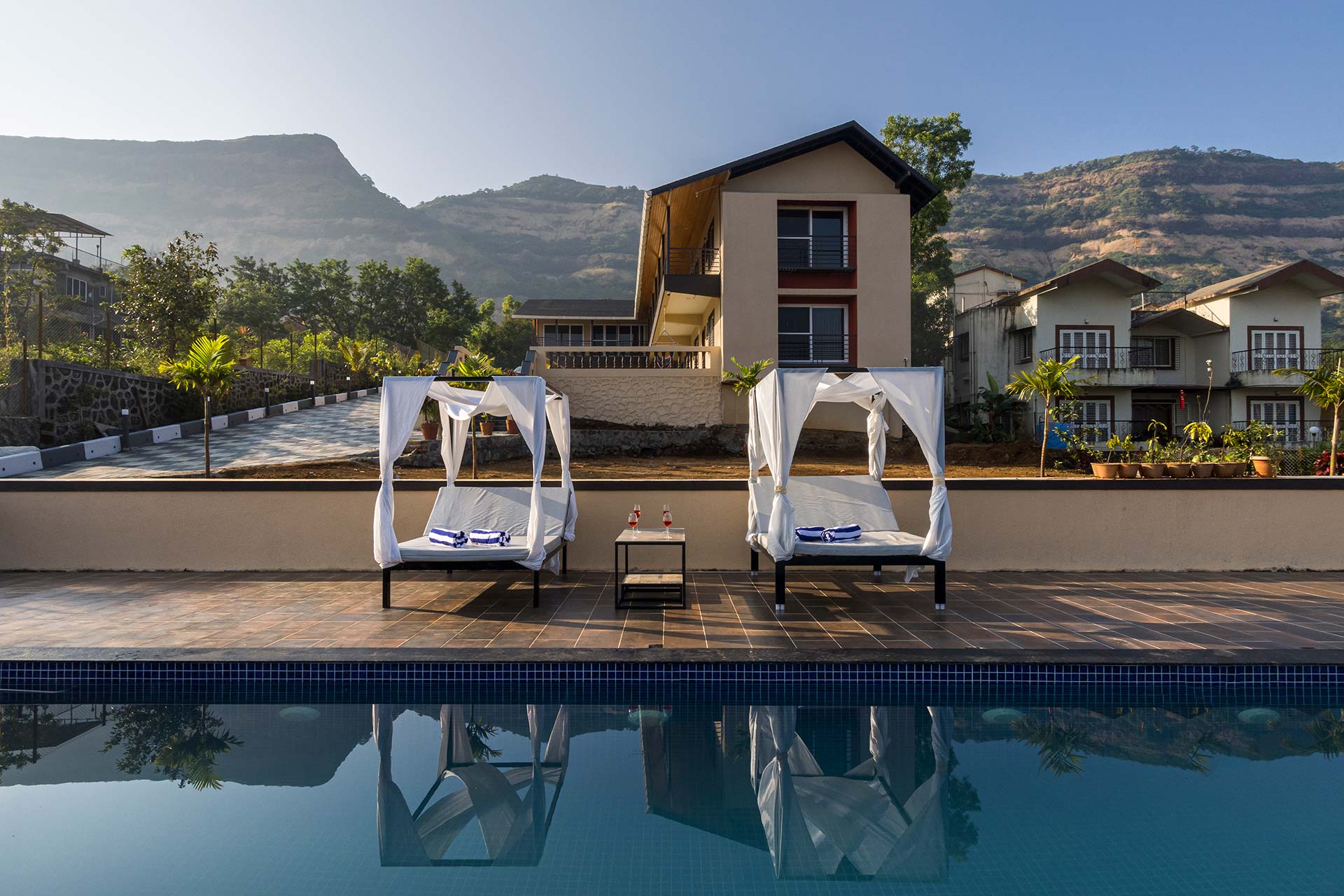
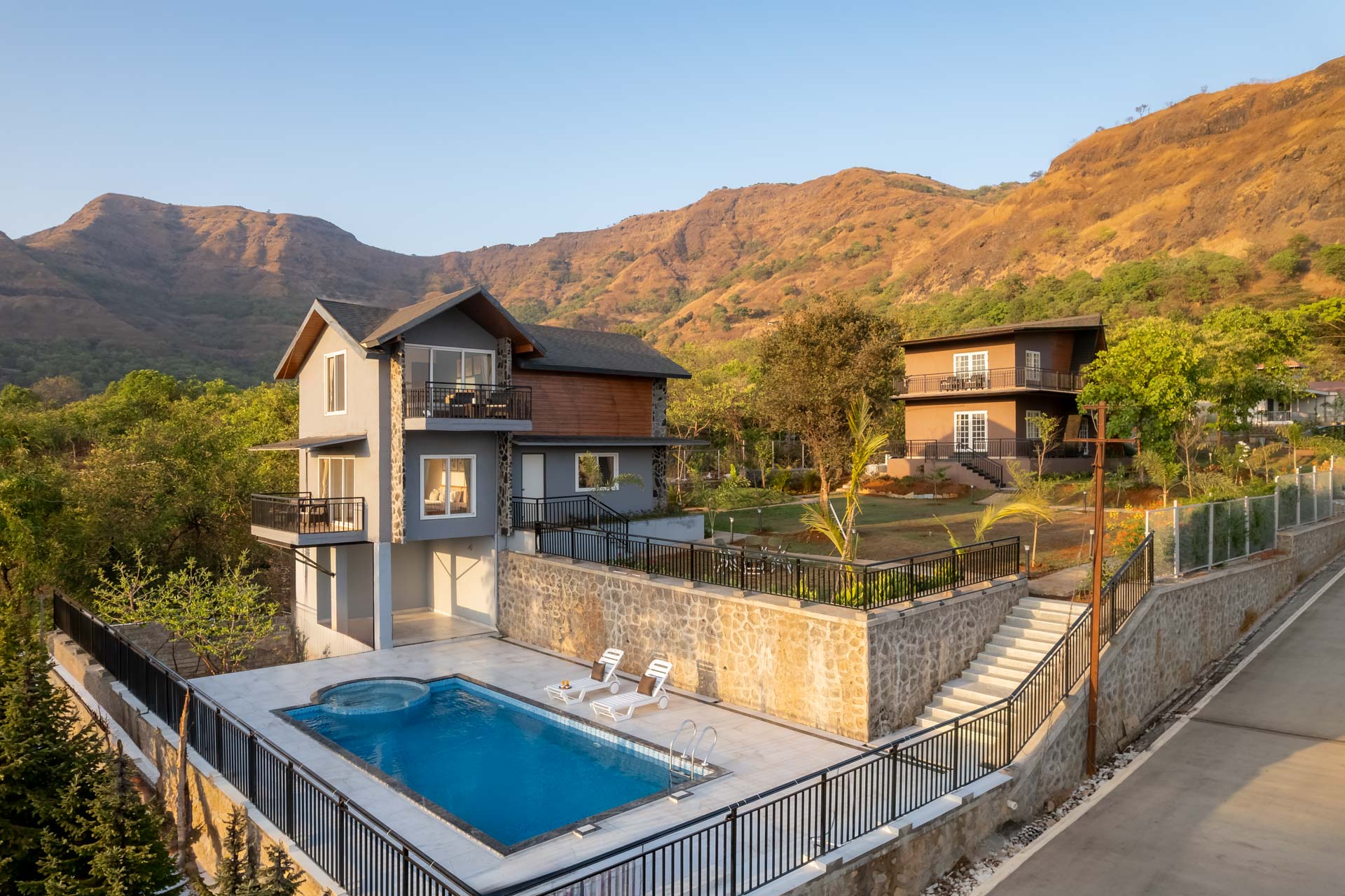
Option 1 — Stay on the Pune side and leave early. A villa in Pune’s northern belt cuts an hour off your 5:30 am start. StayVista’s villas in Pune and villas with a private pool in Pune work well for groups who want a proper dinner and a real bed before an early temple run.
Option 2 — Base yourself in the Junnar–Malshej belt for two days. This puts Shivneri, Lenyadri and Ozar within 30–45 minutes and Bhimashankar within reach of a morning drive. StayVista’s villas in Malshej sit in the same ghat landscape, which in August means waterfalls from the balcony rather than a two-hour drive to find them.
FAQs About Places to Visit Near Bhimashankar
The best places to visit near Bhimashankar are Bhimashankar Temple, Bhimashankar Wildlife Sanctuary, Gupt Bhimashankar, Hanuman Lake and Nagphani Point inside the sanctuary zone, plus Shivneri Fort, Lenyadri Caves and Ozar Vighneshwar Temple on the Junnar detour, and Chas Kaman Dam and Bhorgiri on the Pune route.
Bhimashankar is approximately 110–125 km from Pune, Maharashtra, depending on your starting point in the city and the route taken. The drive takes about 3 to 4 hours one way via Chakan, Rajgurunagar, Manchar and Ghodegaon.
Yes. A 5:30 am departure from Pune comfortably covers darshan, a sanctuary forest walk and Hanuman Lake, with a sunset stop at Chas Kaman Dam on the way back. What does not fit into one day is adding Shivneri, Lenyadri and Ozar.
Yes, and it is arguably the best time for the forest. August brings full streams, mist and peak greenery. The trade-offs are slippery trails, leeches, cloud-covered viewpoints and a difficult ghat drive that should not be attempted after dark.
Yes. After being closed for redevelopment through much of early 2026, the temple reopened for public darshan on 15 June 2026, and extended Shravan hours of roughly 5:00 am to 9:30 pm are in effect. Shravan began on 13 August 2026, so Mondays will be extremely crowded.
Not comfortably. The Junnar cluster and the Bhimashankar plateau are 40–60 km apart on hill roads, so combining all three means around 280 km of driving. Split them across two days instead.
The sanctuary’s marked nature trails and Hanuman Lake walk suit beginners and families. Nagphani Point and the 12 km Bhorgiri–Bhimashankar trek need reasonable fitness and a guide, and neither is advisable during active rainfall.
Ozar Vighneshwar Temple is the easiest — no steps, no climb. Bhimashankar Temple involves a short descent into the sanctum, and Hanuman Lake is a level walk. Skip Lenyadri’s 338 steps, Nagphani and Bhorgiri.
Planning Your Bhimashankar Drive
The point of building your trip around places to visit near Bhimashankar rather than the temple alone is that the drive stops being dead time. Chas Kaman on the way out, the forest on arrival, and Junnar’s forts and caves on a second day turn a 250 km round trip into a proper weekend. Go early, fuel at Manchar, keep the ridge treks for October, and let August do what it does best — turn the whole plateau green.
Whether you are planning a one-day darshan run or a two-day Junnar circuit, browse StayVista’s villas across Maharashtra to find a base that fits your group — and read our companion guide to Bhimashankar in monsoon before you go.