
Post-Monsoon India: The Short Window of Clearest Skies and 12 Places to Use It
India’s monsoon reshapes rivers, fills reservoirs, and covers the plains in green within weeks of arriving. But it also blocks the sky. From June through September, most of the country is under cloud cover, and the visibility that makes India’s mountains, ruins, deserts, and coastlines photogenic is largely absent. Then, between September and November, that changes. The monsoon withdraws in stages, leaving behind air that has been thoroughly washed, temperatures that have dropped from their summer peaks, and a quality of light that photographers specifically travel to find. This is the window the travel industry calls post-monsoon travel in India, and it is arguably the best short season the country has.
Quick answer: The best time to visit India after monsoon is October to November across most of the country. The southwest monsoon withdraws from northwest India by mid-September, central India by late September, and the southern coast by early October, per IMD data. This makes October travel in India particularly rewarding in Rajasthan, the Himalayas, Uttarakhand, Karnataka, Madhya Pradesh, and Goa. Tamil Nadu and parts of Kerala follow a different pattern, with the northeast monsoon bringing rain from October to December
In this Blog
How the Post-Monsoon Window Works Across India
The India Meteorological Department confirms the monsoon retreats in sequence: northwest India clears by mid-September, central India by late September, the southern coast by early October. What follows is a window of atmospheric clarity when months of rainfall have washed haze from the air, humidity drops sharply, and the land is green while the sky is clear blue. This combination defines clear weather destinations in October in India and is why experienced visitors plan trips for this period over the more obvious December peak. The one exception is the southeast coast: Tamil Nadu and coastal Andhra Pradesh receive the northeast monsoon from October through December, so anyone deciding where to go after the rains should look westward and northward during this period.
1. Hampi, Karnataka

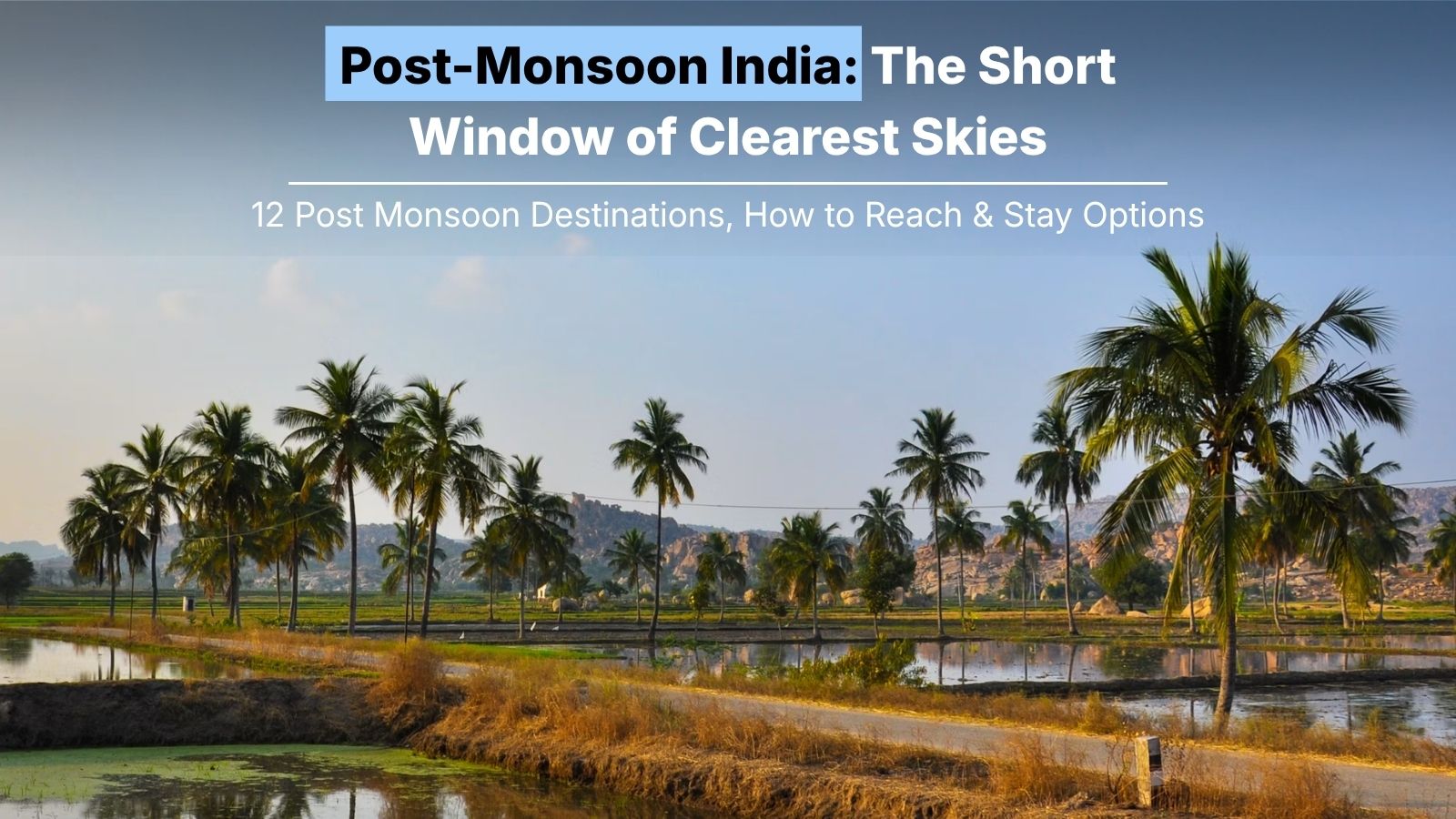
Hampi is at its most striking in October. The 4,187-hectare UNESCO site preserving the Vijayanagara Empire is usually dry and red. After the rains, the granite boulders are clean and dark with moisture, banana plantations are productive, and the Tungabhadra River runs deep enough for coracle crossings to the quieter north bank. Portuguese visitor Domingo Paes described Hampi in the 16th century as “as large as Rome and very beautiful to the sight.” In October, with the ruins washed clean and banana groves in full leaf, that holds true.
Places to visit in Hampi include Virupaksha Temple, the Vittala Temple complex with its stone chariot and musical pillars, and Matanga Hill for a 360-degree view of the site. Add the Zenana Enclosure for the Lotus Mahal and Elephant Stables, Hemakuta Hill for a quieter sunset, and the Hazara Rama Temple’s Ramayana bas-reliefs. Across the Tungabhadra, Anjanadri Hill is 575 steps up to Hanuman’s reputed birthplace.
Weather in Hampi in September and October
September: Expect roughly 22–32°C with the tail of the southwest monsoon delivering short, heavy afternoon bursts through most of the month. Humidity stays high, mornings are often overcast, and the Tungabhadra runs at its fullest.
October: Temperatures ease to about 20–31°C and rain thins to occasional evening showers as the monsoon withdraws from north Karnataka in the first fortnight. Nights drop to around 20°C, and the two hours after sunrise give the clearest light of the year over the boulder fields.
How to reach Hampi
- By air: Hubballi Airport is 143 km away; Bengaluru’s Kempegowda International is 340 km.
- By rail: Hospet Junction (Hosapete) is the railhead, 13 km from the ruins, with direct trains from Bengaluru, Hubballi, Mysuru and Goa.
- By road: Roughly 350 km from Bengaluru via NH-48 and NH-50, about six to seven hours. KSRTC and private overnight buses run Bengaluru to Hospet daily; autos and rented scooters cover the last stretch to Hampi Bazaar.
- By ferry: Coracles and a motorised boat cross the Tungabhadra to Virupapur Gadde on the north bank through daylight hours, and the river is deep enough for them from October.
2. Jim Corbett National Park, Uttarakhand

Jim Corbett reopens its core safari zones on 1 October after the monsoon closure. The forest is at its freshest and greenest in the first weeks of the month, and the Ramganga River runs high. The Dhikala zone has no electricity and no mobile connectivity, making overnight stays a genuine break. The park has recorded over 600 bird species, and October brings migratory arrivals including paradise flycatchers.
Places to visit in Jim Corbett start with Dhikala, the deepest core zone, then Bijrani for grasslands, Jhirna for year-round access and Durga Devi for riverside birding. Sitabani Forest Reserve needs no safari permit and suits a short trip. Outside the park, Corbett Falls, the Garjiya Devi Temple on its Kosi River rock island and the Corbett Museum at Kaladhungi fill a non-safari day.
Weather in Jim Corbett in September and October
September: Roughly 24–32°C, humid, with the monsoon still active through most of the month and the core zones closed until the 30th. The Ramganga runs high and forest tracks stay waterlogged.
October: Daytime settles around 27–30°C while nights fall to 15–17°C, and rainfall drops to almost nothing after the first week. Mornings turn genuinely cool by the last fortnight, so early safaris need a jacket.
How to reach Jim Corbett
- By air: Pantnagar Airport is 80 km from Ramnagar; Delhi’s Indira Gandhi International is 260 km.
- By rail: Ramnagar is the gateway station, five to six hours from Delhi on the Ranikhet Express or Corbett Link Express.
- By road: Ramnagar is about 250 km from Delhi via NH-9 and Moradabad, roughly six hours. Uttarakhand Roadways and private buses run from Anand Vihar ISBT; park entry gates at Dhangarhi, Amdanda and Bijrani are 15–20 km further by jeep.
Places to Stay in Jim Corbett


3. Jaisalmer, Rajasthan

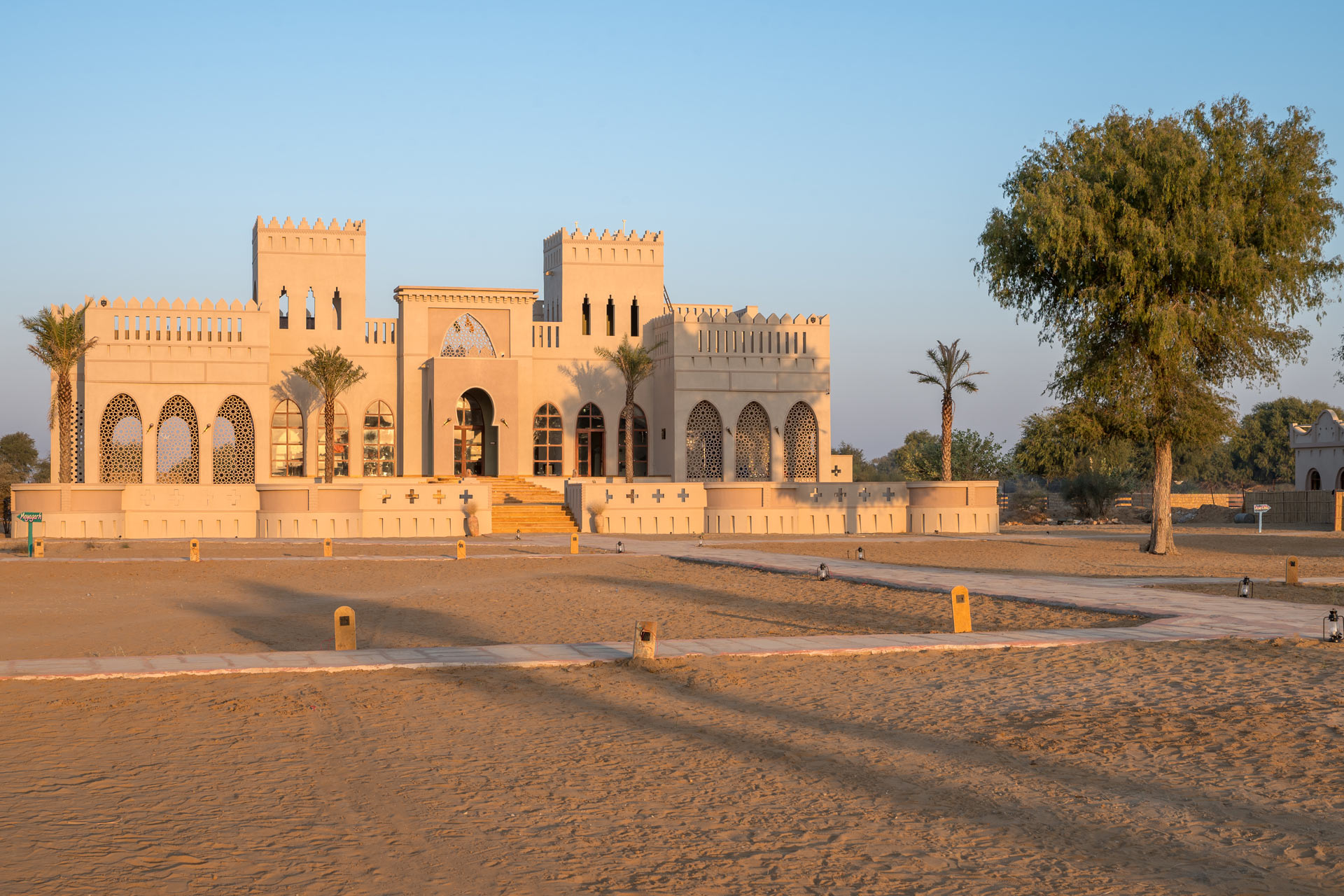
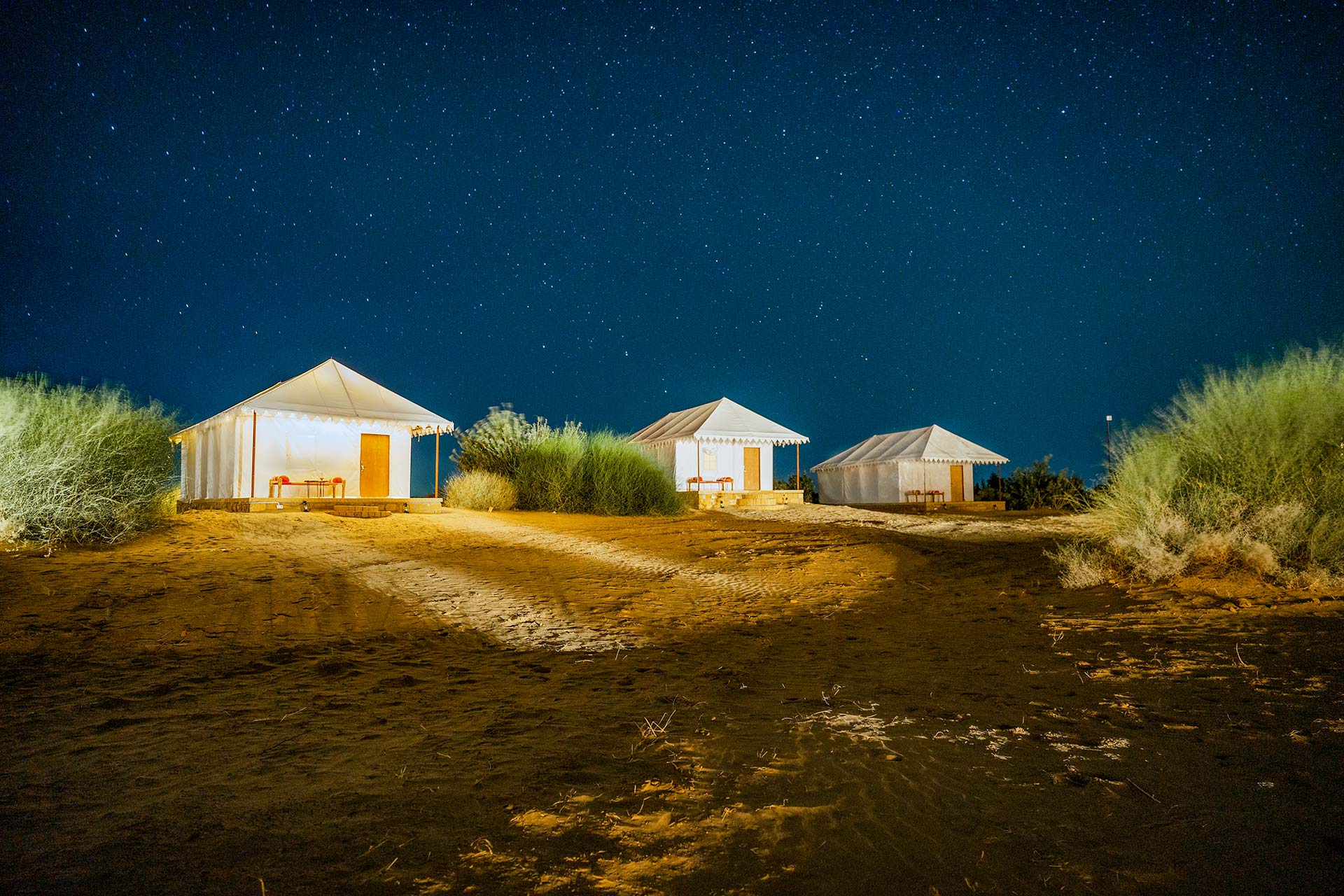
Jaisalmer in October has air free of the summer dust and visibility that reaches the horizon. The Jaisalmer Fort is one of the only fully inhabited medieval forts in the world, with around 4,000 people still living inside its walls. The abandoned village of Kuldhara, 25 km away, was vacated overnight by its entire community of Paliwal Brahmins in 1825 in protest at forced taxation and has not been inhabited since. At night, the Sam Sand Dunes give a star field with zero light pollution in any direction.
Places to visit in Jaisalmer are the living fort, Kuldhara’s abandoned village and the Sam Sand Dunes, plus Patwon Ki Haveli, the finest of the merchant mansions. Gadisar Lake is the sunrise walk and Bada Bagh’s royal cenotaphs the sunset one. Longer days out reach Desert National Park for the Great Indian Bustard and the Longewala war memorial near the border.
Weather in Jaisalmer in September and October
September: Roughly 25–36°C, with the last of the weak desert monsoon giving a handful of brief showers and slightly higher humidity than usual. Days still feel hot in open sun, but the dust has settled and long-range visibility is already improving.
October: Daytime holds around 34–36°C while nights fall sharply to 19–21°C, and rainfall is effectively zero. This wide day-night swing is what makes October dune camping comfortable, so carry a layer for after 8 PM.
How to reach Jaisalmer
- By air: Jaisalmer Airport runs seasonal domestic flights, typically from October to March. Jodhpur Airport, 285 km away, is the reliable year-round alternative.
- By rail: Jaisalmer station has direct trains from Jodhpur (five to six hours), Jaipur, Bikaner and Delhi, including the overnight Delhi–Jaisalmer Express.
- By road: 285 km from Jodhpur via NH-125, about five hours, and 560 km from Jaipur. RSRTC and private sleeper buses connect Jodhpur, Bikaner, Jaipur and Ahmedabad; jeeps to Sam and Khuri dunes take 45 minutes to an hour from town.
Places to Stay in Jaisalmer
4. Binsar, Uttarakhand

Binsar is a 47-square-kilometre wildlife sanctuary in Almora district where October delivers the clearest possible view from Zero Point: a 300-kilometre panorama of the Himalayan chain from Kedarnath to the Nepal peaks, unobstructed by the cloud cover that occupies this view through most of the year. The oak and rhododendron forest is beginning its autumn colour change, and over 200 bird species include October migrants not seen in summer.
Places to visit in Binsar centre on Zero Point, a two-kilometre forest walk to the 300-km Himalayan panorama, and the 16th-century Bineshwar Mahadev Temple inside the sanctuary. Kasar Devi’s ridge near Almora offers nearly the same view with far less effort. Jageshwar Dham, 50 km away with over 100 stone temples in a deodar valley, is the best day trip out.
Weather in Binsar in September and October
September: Roughly 12–22°C with frequent cloud and rain through the first three weeks as the monsoon withdraws from the Kumaon hills. Views from Zero Point are hit-and-miss, and forest trails stay slippery.
October: Days settle at about 15–20°C and nights drop to 6–9°C, with rainfall close to zero after the first week. This is the month of the clearest sightlines, though mornings before 8 AM are genuinely cold and need a fleece.
How to reach Binsar
- By air: Pantnagar Airport is 145 km away, and Dehradun’s Jolly Grant is 320 km.
- By rail: Kathgodam is the nearest railhead, 120 km out, served by the Ranikhet Express, Shatabdi and Uttar Sampark Kranti from Delhi.
- By road: About 400 km from Delhi via NH-9, Haldwani and Almora, nine to ten hours. Uttarakhand Roadways buses run Delhi–Almora overnight, and shared taxis cover the final 33 km from Almora to the sanctuary gate. Private vehicles pay a forest entry fee at the gate.
5. Goa

Goa in early October sheds the rough monsoon seas and the Velha Goa churches, part of the UNESCO World Heritage listing, emerge into clear light. The Basilica of Bom Jesus, built in 1594, is one of the oldest baroque churches in Asia. The Se Cathedral, completed in 1619, is the largest church in Asia. Dudhsagar Falls are at their highest water volume in October, making this the best month to see them. Room rates in October are well below the December peak, and popular beaches are less crowded.
Places to visit in Goa include the Basilica of Bom Jesus and Se Cathedral in Old Goa, Dudhsagar Falls at peak volume, and Panaji’s Fontainhas Latin Quarter. Fort Aguada, Chapora and the far quieter Cabo de Rama are all free to enter. Chorao Island’s Salim Ali Bird Sanctuary and the 12th-century Tambdi Surla Mahadev Temple are the two best post-monsoon additions.
Weather in Goa in September and October
September: Roughly 24–30°C with the monsoon still active and 250–300 mm of rain typical for the month, mostly in heavy morning and evening spells. Humidity is high, the sea remains rough, and red flags stay up on most beaches.
October: Temperatures rise slightly to about 24–32°C as rainfall falls away through the month, and by the second fortnight showers are brief and occasional. Humidity stays noticeable, but the sea calms enough for water sports to restart and Dudhsagar is at peak flow with safe access.
How to reach Goa
- By air: Manohar International (Mopa) in the north and Dabolim in the south both take direct flights from every major Indian city, plus international arrivals.
- By rail: Madgaon and Thivim are the main Konkan Railway stations, with direct trains from Mumbai (10–12 hours), Pune, Mangaluru and Delhi. Karmali is the closest station to Panaji and Old Goa.
- By road: 590 km from Mumbai via NH-66, about 11 hours, and 450 km from Bengaluru via NH-48. Kadamba Transport and private overnight sleeper buses run from Mumbai, Pune, Bengaluru and Hyderabad.
- By ferry: Free vehicle ferries cross the Mandovi and Zuari at Ribandar–Chorao, Old Goa–Divar and Ras al Khaimah–Querim, and they are the quickest way to reach the island bird sanctuary.
Places to Stay in Goa


6. Coorg, Karnataka

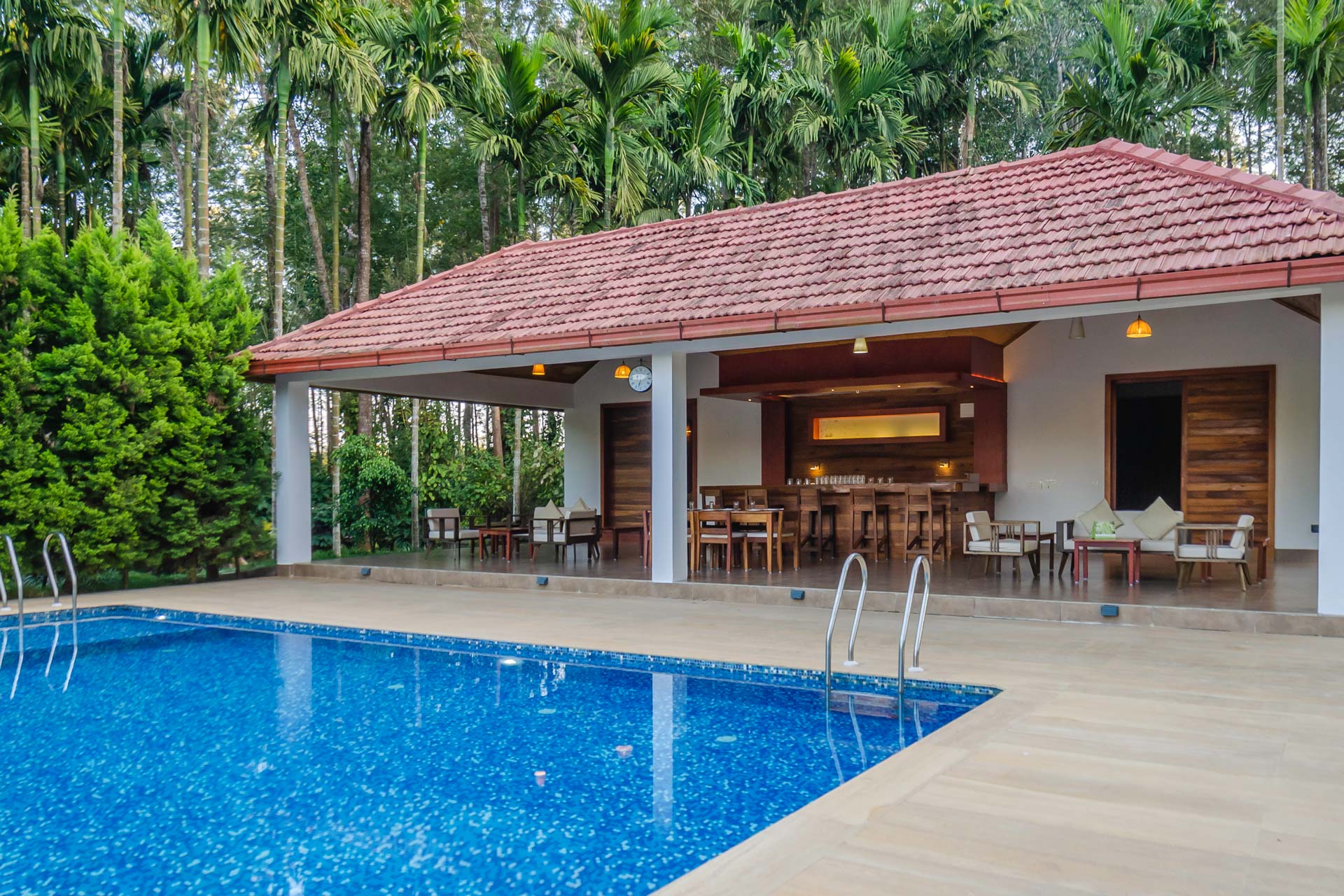
Coorg begins its coffee harvest in October, when the cherries ripen from green to red across the estates around Kakkabe and Siddapura. The picking is done entirely by hand, and visitors can watch the process on plantation homestays. A specific fact: Coorg’s coffee cultivation traces directly to Baba Budan, a 17th-century Sufi saint who reportedly smuggled seven seeds from Yemen and planted them in the Baba Budangiri hills. Every cup of Indian coffee originates from those seven plants.
Places to visit in Coorg are Abbey Falls near Madikeri, the bigger Iruppu and Mallalli falls, and Talakaveri at the Kaveri’s source, 44 km out. The Mandalpatti jeep trail is the one viewpoint that specifically rewards post-monsoon clarity. Add Namdroling Monastery at Bylakuppe, Dubare Elephant Camp and Barapole rafting as river flows drop to a safe grade.
Weather in Coorg in September and October
September: Roughly 18–26°C with heavy rain continuing through most of the month, often 250 mm or more, and persistent mist over the plantations. Trails are slippery and leeches are common in the forest sections.
October: Temperatures hold at about 17–27°C while rainfall roughly halves and shifts to short afternoon showers. Mornings clear enough for hill views by mid-month, nights turn cool at 16–18°C, and the harvest gets under way across the estates.
How to reach Coorg
- By air: Mangaluru International is 155 km from Madikeri, Kannur International 90 km, and Bengaluru’s Kempegowda International 265 km.
- By rail: Mysuru Junction is the nearest useful railhead at 120 km, with Mangaluru Central 135 km and Hassan 115 km. There is no railway line into Coorg itself.
- By road: Madikeri is about 265 km from Bengaluru via NH-275 through Mysuru, five to six hours, and 135 km from Mangaluru via Sampaje Ghat. KSRTC and private overnight sleeper buses run nightly from Bengaluru; local buses and taxis link Madikeri to Kushalnagar, Siddapura and Kakkabe.
Places to Stay in Coorg

7. Ranthambore, Rajasthan

Ranthambore reopens its core tiger zones on 1 October. The park is built around a 10th-century Rajput fort, and Zones 3 and 4 run close enough to the fort walls that a tiger sighting here can produce a photograph with a medieval fortification and a wild tiger in the same frame. This combination exists nowhere else in India. The three main lakes fill during the monsoon and attract significant wildlife to their edges in October.
Places to visit in Ranthambore are the safari zones, with 3 and 4 running closest to the fort walls, and the free-to-enter Ranthambore Fort itself with its Trinetra Ganesh temple. Padam Talao, Raj Bagh and Malik Talao are the highest-probability October sighting spots. Surwal Lake outside the park needs no permit and is the area’s best birding stop.
Weather in Ranthambore in September and October
September: Roughly 24–33°C, humid, with the last monsoon spells filling the lakes and core zones closed until the 30th. The forest is at its thickest and the grass is shoulder-high.
October: Days hold around 32–33°C while nights fall to 18–20°C, and rain is largely finished after the first week. Early safaris are pleasant, but midday drives are still warm, so the first morning slot is worth the early start.
How to reach Ranthambore
- By air: Jaipur International is the nearest airport at 160 km, with Delhi 380 km and Kota 145 km.
- By rail: Sawai Madhopur Junction sits on the Delhi–Mumbai main line, four to five hours from Delhi and about two from Jaipur, and is 11 km from the park gate. Most trains on the route stop here.
- By road: 380 km from Delhi via NH-48 and Dausa, roughly six hours, and 160 km from Jaipur via NH-552, about three hours. RSRTC buses run Jaipur–Sawai Madhopur through the day; canters and gypsies for safaris depart from designated points in town.
8. Kaziranga, Assam

Kaziranga reopens in October after the annual monsoon flooding that temporarily submerges the grasslands and keeps the soil fertile. The first post-monsoon safaris of the season reach animals that have been undisturbed for four months. Kaziranga has one of the highest tiger densities of any reserve in India, in addition to its famous rhinoceros population. Morning safaris begin at 5:30 AM, and the light over the Brahmaputra floodplain at that hour is genuinely distinctive.
Places to visit in Kaziranga are its four ranges: Kohora for classic tall-grass rhino habitat, Bagori for the highest rhino density, Agoratoli for birding wetlands, and the quiet forested Burapahar. The Kaziranga Orchid and Biodiversity Park and Panbari Reserve Forest fill an afternoon. Hoollongapar Gibbon Sanctuary, 100 km away, and Majuli island suit a longer trip.
Weather in Kaziranga in September and October
September: Roughly 25–33°C, humid, with the monsoon still delivering heavy rain and the park closed as the Brahmaputra floods the grasslands. Roads through the reserve are frequently underwater.
October: Temperatures ease to about 22–31°C and rainfall drops steeply after the first fortnight as the water recedes. Mornings turn misty and cool, which is exactly the condition that makes the 5:30 AM floodplain light worth the alarm.
How to reach Kaziranga
- By air: Jorhat Airport is 97 km from Kohora, and Guwahati’s Lokpriya Gopinath Bordoloi International is 220 km with far better connectivity.
- By rail: Furkating Junction is the closest station at 75 km, with Guwahati the main hub for long-distance trains from Kolkata and Delhi.
- By road: Kohora sits directly on NH-715, five to six hours from Guwahati and two from Jorhat. ASTC and private buses run the Guwahati–Jorhat route daily and will stop at Kohora on request.
- By ferry: Majuli island is reached by government ferry from Nimatighat near Jorhat, roughly 90 minutes, with a limited daily schedule.
9. Andaman Islands

Andaman Islands transition from rough monsoon seas to calmer October conditions when diving around Havelock (Swaraj Dweep) and Neil (Shaheed Dweep) islands improves. The bioluminescent plankton that makes night kayaking glow blue is most active in the post-monsoon warming months. The Cellular Jail in Port Blair has a sound-and-light show each evening that gives the building’s history a weight a daytime visit alone does not convey.
Places to visit in the Andaman Islands are the Cellular Jail and its evening sound-and-light show in Port Blair, Radhanagar and Elephant beaches on Havelock, and Neil Island’s Natural Bridge. Ross Island holds the forest-swallowed ruins of the British administrative capital. Baratang’s limestone caves and mud volcano make a long but worthwhile day out.
Weather in the Andaman Islands in September and October
September: Roughly 24–30°C with very heavy rain, often 400 mm or more for the month, and seas rough enough to disrupt ferries. Humidity sits near saturation and many water-sports operators are still shut.
October: Temperatures barely move at about 24–30°C, but rainfall eases through the month and the sea state improves steadily. Expect short intense showers rather than all-day rain, and build a spare day into any island-hopping plan for ferry delays.
How to reach the Andaman Islands
- By air: Veer Savarkar International at Port Blair takes direct flights from Chennai (about two hours), Kolkata, Delhi, Bengaluru and Hyderabad. This is how almost everyone arrives.
- By ferry: Government passenger ships sail from Chennai, Kolkata and Visakhapatnam and take three to four days each way. Inter-island travel to Havelock and Neil runs on Makruzz, Green Ocean and government ferries, 90 minutes to two hours from Port Blair, and needs booking well ahead in season.
- By road: There is no rail link, and road travel is limited to the Andaman Trunk Road, which runs north from Port Blair towards Baratang and Diglipur in a timed convoy through the Jarawa reserve.
10. Orchha, Madhya Pradesh

Orchha holds one specific distinction no other town in India can claim: the Ram Raja Temple here is the only temple in the country where Lord Ram is worshipped in the form of a king, complete with a royal flag, a police honour guard, and a royal salute. This happened because a statue brought from Vrindavan could not be moved from the queen’s palace, where it had rested overnight, so the palace became the temple. The red sandstone complexes along the Betwa River are at their richest colour in October after the rains have washed them clean.
Places to visit in Orchha are almost all walkable: Jahangir Mahal, Raja Mahal’s surviving murals, the Ram Raja Temple and the tall Chaturbhuj Temple beside it. The Laxmi Narayan Temple’s frescoes include scenes from the 1857 revolt. The 14 Bundela chhatris along the Betwa are the town’s best sunset spot, with rafting on the river at good October volume.
Weather in Orchha in September and October
September: Roughly 24–33°C with the monsoon tapering off across Bundelkhand and rain still likely in the first three weeks. The Betwa runs high, and humidity keeps afternoons uncomfortable on the exposed terraces.
October: Days hold around 31–33°C while nights fall to 17–19°C, and rainfall is essentially finished by the second week. Early mornings and the hour before sunset are when the red sandstone reads warmest, so plan the chhatris for late afternoon.
How to reach Orchha
- By air: Gwalior Airport is 130 km away, Khajuraho 175 km, and Bhopal’s Raja Bhoj International 320 km.
- By rail: Jhansi Junction is 18 km away on the Delhi–Mumbai main line, with Shatabdi and Gatimaan services putting Delhi four to five hours out. Orchha has a small halt station with limited passenger services.
- By road: 470 km from Delhi via NH-44 and the Jhansi bypass, about seven hours, and 120 km from Khajuraho. Autos, shared tempos and taxis cover the Jhansi–Orchha stretch in around 40 minutes, and MP and UP state buses stop at Jhansi.
11. Chopta, Uttarakhand

Chopta at 2,600 metres, has a specific post-monsoon window that closes early. The high-altitude bugyals turn green in October, the trail to Tungnath Temple, the highest Shiva temple in the world at 3,680 metres, is at its clearest, and the musk deer and Himalayan monal pheasants moving to lower altitudes before winter are visible more frequently than at any other time of year. By November, early snowfall typically closes the trail.
Places to visit in Chopta are trailheads rather than sights: Tungnath Temple is a 3.5 km climb from the road, with Chandrashila summit 1.5 km beyond it for a 360-degree line-up of Nanda Devi, Trishul and Chaukhamba. Deoriatal, a 2.5 km trek from Sari village, is worth an overnight camp. Kanchula Korak Musk Deer Sanctuary sits on the road towards Chamoli.
Weather in Chopta in September and October
September: Roughly 10–20°C with regular rain and cloud through the first three weeks, and the Chandrashila views often completely closed out. Trails are muddy and leeches are present in the lower forest.
October: Days drop to about 8–15°C and nights to 2–5°C, falling below freezing on the ridge by the last week, with rainfall near zero. This is the clearest and coldest combination of the year, so a four-season sleeping bag is not optional if you are camping.
How to reach Chopta
- By air: Jolly Grant Airport at Dehradun is 240 km away, the only practical airport for the region.
- By rail: Rishikesh and Haridwar are the nearest railheads at 220 km and 245 km, both with direct trains from Delhi.
- By road: 220 km from Rishikesh via Devprayag, Srinagar (Garhwal) and Ukhimath, seven to eight hours on NH-7 and the Kedarnath road. There is no direct bus to Chopta, so take a Garhwal Mandal or private bus to Ukhimath and a shared jeep for the final 30 km; the last stretch is narrow and best driven in daylight.
12. Spiti Valley, in Himachal Pradesh

Spiti Valley sits in a rain shadow, so the monsoon barely reaches it. But October brings its own transformation: pre-monsoon dust has settled, summer traffic has thinned, and the post-harvest poplars and willows have turned gold against the bare grey mountains. Tabo Monastery, with 1,000-year-old frescoes, is sometimes called the Ajanta of the Himalayas and is best visited in October when visitor numbers are low, and the cool light suits the ancient interior.
Places to visit in Spiti Valley run along one road: Tabo Monastery’s thousand-year-old frescoes, Key Monastery above Kaza, and cliff-top Dhankar with its lake walk behind. The high cluster above Kaza covers Langza’s fossil beds, Komic at about 4,587 metres and Hikkim’s world-highest post office. Chandratal and Pin Valley National Park are the two detours worth an extra day.
Weather in Spiti Valley in September and October
September: Roughly 3–20°C with negligible rainfall thanks to the rain shadow, strong sun during the day and cold nights. Both the Manali and Shimla approaches are normally open through the month.
October: Days fall to about 8–15°C and nights to between -4°C and 0°C, dropping further by month end, with clear skies almost throughout. Kunzum Pass and Chandratal access can shut on a single snowfall, so treat mid-October as the hard cutoff for the Manali route.
How to reach Spiti Valley
- By air: Bhuntar (Kullu-Manali) Airport is 250 km from Kaza and Shimla Airport 400 km, both with limited flights. Chandigarh, 520 km away, is the reliable airport.
- By rail: Kalka is the nearest broad-gauge railhead for the Shimla approach, connected onward by the narrow-gauge Kalka–Shimla toy train. Joginder Nagar is the closest station to Manali at 165 km.
- By road: Two routes. Manali to Kaza over Kunzum Pass is 200 km and nine to ten hours, open roughly June to mid-October. Shimla to Kaza via Kinnaur is 420 km and stays open year-round, best split over two days with a night at Kalpa or Nako. HRTC runs a daily Shimla–Kaza bus and a seasonal Manali–Kaza service; both need an early start and a permit check near Sumdo.
Post-Monsoon Travel Tips and Packing Guide
Book safaris the day the 1 October reopening dates are confirmed, because Dhikala, Ranthambore Zones 3 and 4, and Kaziranga’s Kohora range are the first to sell out. Pack by altitude rather than by month: light cotton layers for Hampi, Goa, Jaisalmer and Orchha; a mid-weight fleece for Coorg, Binsar and Kaziranga mornings; and a down jacket plus a waterproof shell for Chopta and Spiti, where nights go below freezing before October ends. Keep a compact umbrella through September and the first week of October anywhere south or east, since the withdrawal is staggered rather than clean.
Waterproof shoes with real grip matter more than any other single item, because trails in Coorg, Chopta and Hampi’s boulder fields stay slick for weeks after the last rain. Add strong mosquito repellent, oral rehydration salts, high-SPF sunscreen for altitude UV, and a power bank, since Dhikala has no electricity at all. Carry cash, because Spiti, Chopta and Binsar all have patchy network coverage and very few working ATMs. Finally, check road and trail status before committing to high-altitude plans, as Kunzum Pass and the Tungnath route can close on a single day’s snowfall from mid-October onward.
The Window Closes Gradually
The best time to visit India after monsoon is not a single date but a sequence moving from northwest to southeast through October. The twelve places above cover wildlife parks, heritage ruins, desert stargazing, plantation harvests, and alpine meadows. All of them are at their most rewarding in this short corridor between the monsoon and the winter peak season. October travel in India rewards people who plan around it, and it remains one of the less crowded, better-value windows in the country’s tourism calendar.
FAQs
The southwest monsoon retreats from northwest India by mid-September, central India by late September, and the southern coast by early October; full withdrawal completes by mid-October, with Tamil Nadu and coastal Andhra Pradesh as exceptions because they receive the northeast monsoon from October to December.
The best clear weather destinations in October are in Rajasthan, Uttarakhand, Himachal Pradesh, Karnataka, Madhya Pradesh, and Goa, with the Tamil Nadu coast and coastal Andhra Pradesh best avoided during this period as they are in their rainy season.
October is one of the best months for post-monsoon travel in India: skies clear, temperatures drop, national park core zones reopen on 1 October, festivals including Dussehra and Diwali fall in this period, and prices and crowds are lower than the December-January peak.
Jim Corbett, Ranthambore, Kaziranga, Pench, and Kanha Tiger Reserve all reopen core zones in October after the monsoon closure, making the start of October travel in India one of the country’s best windows for wildlife across multiple regions simultaneously.
Months of rainfall wash aerosols and dust from the atmosphere, humidity drops sharply as the rains end, and dry air from the Tibetan Plateau replaces the moist monsoon air, together producing the optical clarity that makes Himalayan peaks visible from distances that are impossible at other times of year.
For where to go after the rains in October, packing depends on altitude: light layers for low-altitude spots like Hampi and Goa, a jacket for mid-altitude places like Coorg and Binsar, and warm layers with a waterproof outer for high-altitude destinations like Chopta and Spiti where early snowfall is possible.
October gives the clearest mountain views of the year across Uttarakhand and Himachal Pradesh, with good trekking conditions from late September through mid-November before higher passes close; Chopta, Binsar, and Spiti Valley are all at their best for post monsoon travel in India in this month.
Yes: the southwest monsoon pulls back in early October, Dudhsagar Falls are at peak volume, the Velha Goa churches look best in clear post-rain light, and room rates are well below the December peak, making October travel in India to Goa one of the better-value decisions of the year.
Blog article written by Ruben Saha, edited by Krutartha Chitnis