

Saptashrungi Devi, Vani: A Shakti Peetha in the Clouds — Darshan & How to Reach

Saptashrungi Devi Temple sits at roughly 1,230 metres in the Sahyadris above Vani, Maharashtra, ringed by seven peaks that give the goddess her name — Saptashrungi, “she of the seven mountains.” Right now, in the heart of monsoon, that altitude means something specific: clouds don’t just gather near the shrine, they move through it. Visit on a wet July or August afternoon and you’ll watch mist roll across the courtyard mid-aarti, the seven peaks appearing and vanishing like they’re deciding whether to show themselves.
The temple is one of Maharashtra’s most important Shakti Peethas — the 51 sites across the subcontinent where, in the Sati legend, a part of the goddess’s body fell to earth. This guide covers darshan timings, the ropeway that saves you 510 steps, the routes in from Nashik, Mumbai and Shirdi, and why the temple is best understood as one of just three-and-a-half such sites in the entire state.
TL;DR: Saptashrungi Devi Temple, Vani is open 6 AM–9:30 PM daily. Reach the shrine via 510 stone steps or the ropeway (₹90 adult round trip, 3-minute ride). It’s about 65 km from Nashik (1 hr 10 min), 250 km from Mumbai, and 110 km from Shirdi. Monsoon (June–September) brings the temple into the cloud line — its most dramatic season to visit.
In this Blog
Quick Info: Saptashrungi Devi Temple at a Glance
| Field | Details |
|---|---|
| Deity | Saptashrungi Nivasini — 18-armed form of Goddess Durga, self-manifested rock idol |
| Significance | One of the 3.5 Shakti Peethas of Maharashtra (with Kolhapur, Tuljapur, Mahur — Purnagiri is the “half”) |
| Where | Vani village, Nashik district, Maharashtra — on the Saptashrungi hill range |
| Altitude | ~1,230 m (average peak height ~1,400 m / 4,500 ft) |
| Darshan timings | 6:00 AM – 9:30 PM, open daily |
| Ropeway timings | 6:00 AM – 9:30 PM |
| Ropeway fee | ₹90 adult / ₹45 child (round trip) |
| Steps (if walking) | ~510 stone steps from the base |
| Distance from Nashik | ~65–70 km (about 1 hr 10 min) |
| Distance from Mumbai | ~250 km (Mumbai–Nashik ~180 km, then ~70 km on) |
| Distance from Shirdi | ~110 km |
| Best time | October–February for clear views; June–September for the cloud-forest spectacle |
What Are Saptashrungi Devi Temple’s Darshan Timings?
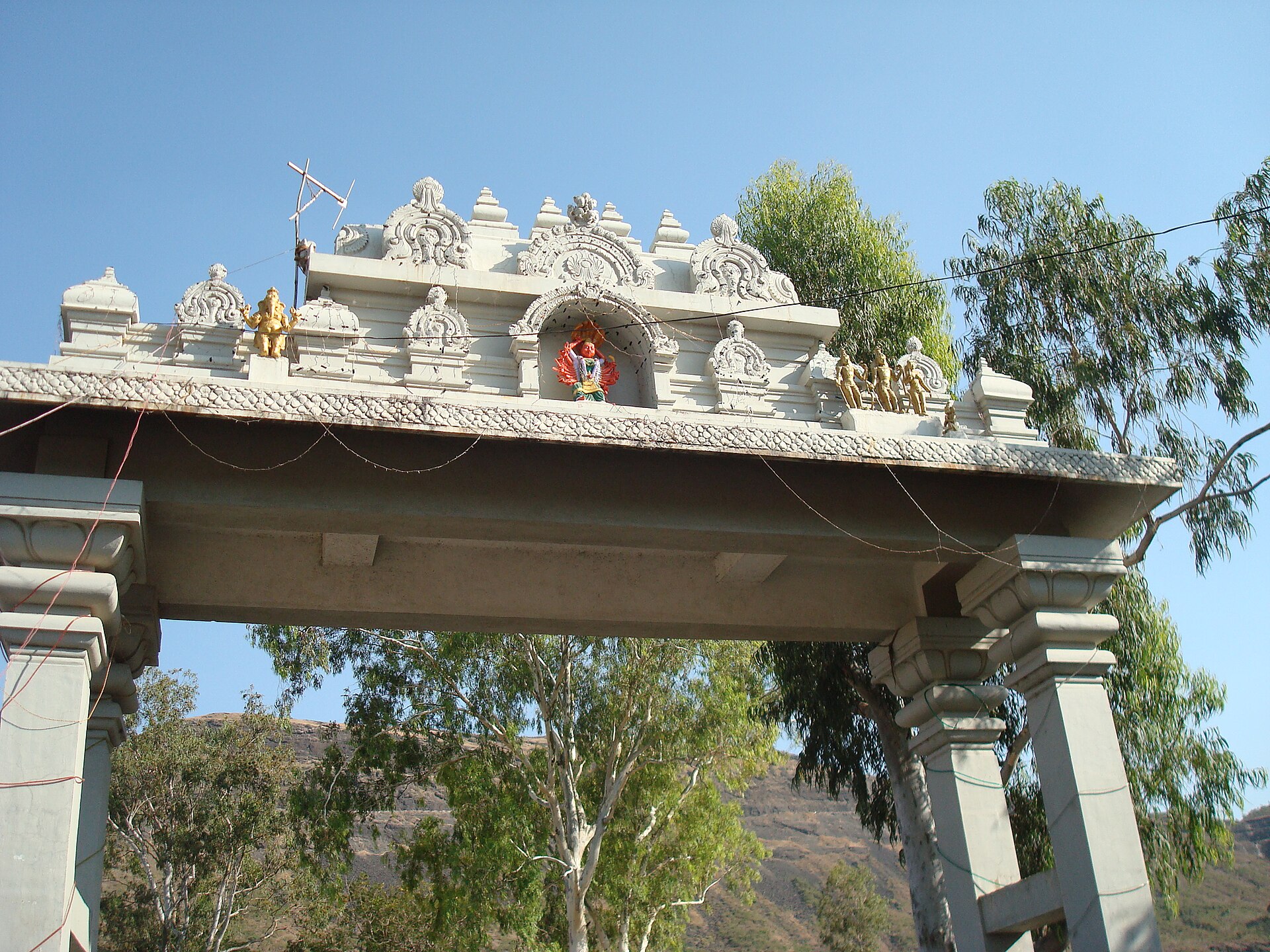
Saptashrungi Devi Temple is open every day from 6 AM to 9:30 PM, with no weekly closure — a rare convenience among major Shakti Peethas. The ropeway runs the same hours, 6 AM to 9:30 PM, so early-morning and evening-aarti visits are both fully accessible without a long climb.
Darshan is generally unhurried outside festival periods — this isn’t a temple that requires slot bookings for a normal weekday visit. That changes sharply during Navratri and Chaitra Navratri, when lakhs of pilgrims arrive and queues stretch for hours; if your dates align with either festival, plan for crowds and consider arriving before sunrise.
Two practical notes locals give first-timers: carry a light shawl even in summer, since wind at 1,230 m turns cool fast once the sun dips, and confirm aarti timings with the temple trust (ssndtonline.org) if you specifically want to catch the morning or evening ritual, since exact ceremony times can shift slightly by season.
How Do You Reach the Temple — Steps or Ropeway?
You have two ways up from the base: climb roughly 510 stone steps, or take the ropeway and cover the same vertical distance in about three minutes. The ropeway — technically a funicular trolley — runs two air-conditioned cars, each seating 60 passengers, moving at a 36-degree angle up the hillside. Round-trip tickets cost ₹90 for adults and ₹45 for children.
| Option | Time | Cost | Best for |
|---|---|---|---|
| Ropeway (funicular trolley) | ~3 minutes each way | ₹90 adult / ₹45 child (round trip) | Elderly visitors, families with young kids, anyone short on time |
| Stone steps (~510) | 30–45 minutes, moderate effort | Free | Fit visitors, those doing it as a devotional climb |
Most pilgrims go up by ropeway and walk down — you get the exercise on the easier direction and skip it on the harder one. In monsoon specifically, the steps turn slippery with moss and runoff, and the ropeway becomes less a convenience than the sensible choice; check with the counter on heavy-rain days, since operations can pause briefly in high wind exactly when cloud cover is thickest.
Why Is Saptashrungi One of the 3.5 Shakti Peethas of Maharashtra?
Because Maharashtra’s Shakti tradition recognises exactly three-and-a-half full Peethas, and Saptashrungi is one of the three complete ones — alongside Mahalakshmi at Kolhapur and Tulja Bhavani at Tuljapur, with Renuka Devi at Mahur as the third, and Purnagiri near Nandurbar counted as the “half” Peetha. Across all of India, there are 51 Shakti Peethas, each marking where a part of Sati’s body is said to have fallen after Shiva carried her form across the sky in grief; at Saptashrungi, tradition holds it was her right arm.
The temple’s murti reinforces the site’s power: an 18-armed, self-manifested (svayambhu) rock form of Durga, each arm carrying a different weapon — trident, sword, discus, bow, conch, mace, lotus, rosary among them — carved not by artisans but said to have appeared naturally in the rock face. Surrounding it, seven distinct peaks give the goddess her name and the range its silhouette, visible for kilometres on a clear day and nowhere at all on a cloud-wrapped one.
For pilgrims tracking the full circuit, the natural pairing is a 3.5-Peetha yatra: Saptashrungi, Kolhapur, Tuljapur and Mahur across Maharashtra’s breadth, usually done as a multi-day loop rather than a single trip.
Why Visit Saptashrungi in Monsoon — “The Clouds” in the Title, Explained
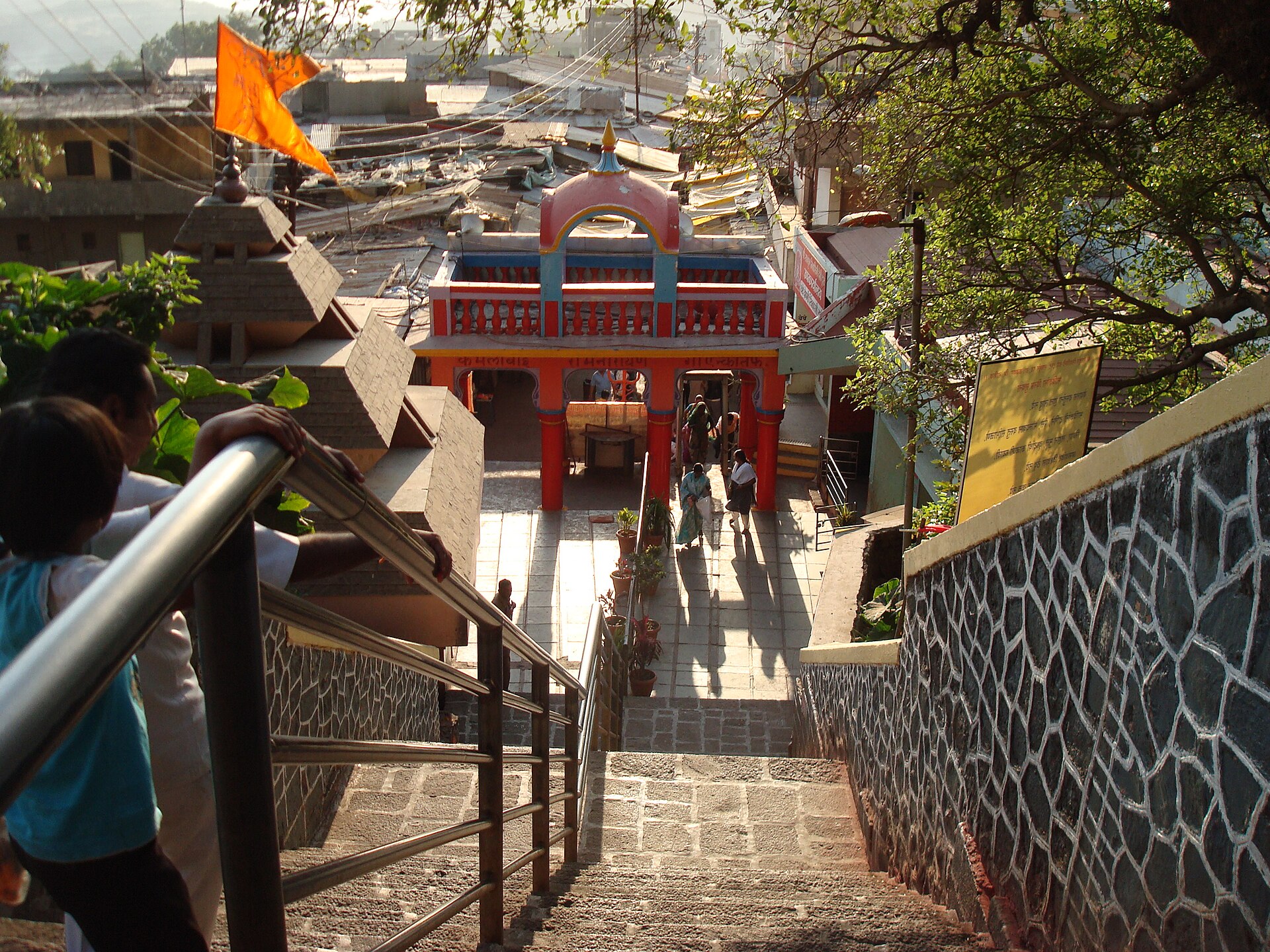
Most temple guides push you toward October–February for “clear views,” and that’s genuinely the season for photographs of all seven peaks in a row. But June through September gives Saptashrungi something no other season can: the temple sits inside the weather. At 1,230 m in the Sahyadri monsoon belt, cloud doesn’t hover in the distance — it moves through the courtyard, wraps the ropeway cars mid-ascent, and turns the seven-peak backdrop into something glimpsed rather than photographed.
This is the literal “Shakti Peetha in the Clouds” — not a metaphor, a weather pattern. Waterfalls appear on the hillside that don’t exist in summer, the approach road through Dindori runs impossibly green, and the crowd thins compared to festival season, since monsoon isn’t peak pilgrimage timing. The trade-off is real: wet stone steps, occasional ropeway pauses in high wind, and a road that demands careful, unhurried driving. For a visit built as much around the mountain as the mandir, though, July and August are when Saptashrungi becomes something closer to a Sahyadri trek with a temple at the summit.
How Do You Reach Saptashrungi Devi Temple?
Vani sits in Nashik district, and Nashik city is the practical gateway for every route in.
- From Nashik: ~65–70 km via Dindori — about 1 hr 10 min by car, or take a bus (frequent departures 5 AM–6 PM, roughly 1.5 hrs, stopping at Dindori and Vani).
- From Mumbai: ~250 km total — the Mumbai–Nashik stretch (~180 km via NH-160/Samruddhi corridor) followed by ~70 km on to the temple. Budget 5–6 hours door to door.
- From Shirdi: ~110 km — a popular pairing, since many pilgrims combine Sai Baba darshan with a Saptashrungi visit on the same Maharashtra circuit.
- From Vani town itself: ~26 km to the temple base — local taxis and autos cover this stretch easily if you’ve arrived by bus.
- Alternate routes: via Pimpalgaon Baswant (~51 km from Nashik) or via Nadurgaon village, which locals consider the easiest approach at just ~14 km from Vani.
- Nearest airport: Ozar (Nashik) Airport, ~65–70 km from the temple.
- Nearest railhead: Nashik Road Railway Station, on the Mumbai–Bhusawal line, with taxis and buses covering the onward distance.
Whichever direction you’re coming from, Nashik city is where you’ll want fuel, food and a final phone-signal check — the last stretch through the hills thins out both.
Where to Stay Near Saptashrungi
Base yourself in Nashik and Saptashrungi becomes a comfortable day trip — up by ropeway in the morning, back down to a pool by afternoon. Two StayVista picks, both live and bookable:
Casa Boho — Near Sula Wines

Casa Boho is a 4-bedroom villa near Nashik’s Sula Wines, rated 4.6/5 across 94 reviews, sleeping up to 12. The pool runs 30×12 ft with an attached kids’ pool and shower, accessible till 10 PM — exactly what tired temple legs want after 510 steps (or even the ropeway version). It’s ~37 km from Ozar Airport and ~27 km from Nashik Road station, with meals available so the evening after Saptashrungi needs zero further planning.
Bellissimo Panorama — the Lakeside Option

Bellissimo Panorama suits smaller groups: 3 bedrooms on a full acre, an infinity pool facing a 180° lake view, and an open-to-sky bathtub for good measure. From ₹26,341/night (July 2026), it pairs a quiet couples’ or small-family base with easy access to both Saptashrungi and Nashik’s vineyard belt — temple in the morning, wine tasting in the afternoon, a combination this district does better than anywhere else in Maharashtra.
Both sit in Nashik city, so treat either as the base and Saptashrungi as a half-day excursion rather than an overnight-at-the-hill trip — there’s little lodging infrastructure right at Vani itself.
Frequently Asked Questions
The temple is open every day from 6 AM to 9:30 PM, with no weekly closure. The ropeway operates the same hours. Crowds are light on ordinary weekdays but heavy during Navratri and Chaitra Navratri, when early arrival is strongly advised.
Around 510 stone steps lead from the base to the temple. Most visitors take the ropeway up (about 3 minutes) and walk down, or use the ropeway both ways if travelling with elderly family or young children.
The round-trip ropeway ticket costs ₹90 for adults and ₹45 for children. The funicular trolley covers the climb in about 3 minutes using two air-conditioned cars, each seating 60 passengers, moving at a 36-degree incline.
Nashik is the closest major city at about 65–70 km (roughly 1 hr 10 min by road). Mumbai is around 250 km, typically a 5–6 hour drive. Shirdi is about 110 km away, and many pilgrims combine both temples on one Maharashtra circuit.
Maharashtra recognises three full Shakti Peethas — Saptashrungi (Vani), Mahalakshmi (Kolhapur), and Tulja Bhavani (Tuljapur) — plus Purnagiri near Nandurbar as the “half” Peetha, together forming the state’s 3.5 Shakti Peethas. Saptashrungi is where Sati’s right arm is said to have fallen.
Yes, for a different experience than the classic clear-weather visit. From June to September, cloud cover regularly envelops the hilltop temple, giving Saptashrungi its “Shakti Peetha in the clouds” character, with seasonal waterfalls on the approach road. Expect slippery steps and occasional brief ropeway pauses in high wind.
Eighteen. The self-manifested (svayambhu) rock idol depicts Goddess Durga with 18 arms, each holding a different weapon or object — including a trident, sword, discus, bow, conch and rosary — making it one of the most distinctive murti forms among India’s Shakti Peethas.