

Shimla Summer 2026 Guide: Mall Road, Kufri, Naldehra & How to Beat the Crowds
Last updated: April 2026
[su_box title=”TL;DR” box_color=”#2d6a4f” title_color=”#ffffff”]Shimla in summer (April–June) is India’s original hill station escape — temperatures hover between 15°C and 25°C while the plains cook at 40°C+. The town gets genuinely busy in May and June, so go in April for fewer crowds or book May accommodation 4–6 weeks ahead. Beyond Mall Road, the Kalka–Shimla toy train (UNESCO World Heritage), Kufri views, Naldehra golf, and the apple orchards of Narkanda make this far more than a one-day trip.[/su_box]
| Detail | Info |
|---|---|
| Best time to visit | April (fewer crowds), May–June (peak, all attractions open) |
| How to reach from Delhi | Train to Kalka then toy train to Shimla; or direct Volvo bus (~9–10 hrs) |
| How to reach from Chandigarh | Road via NH-5, 90 km (~2.5 hours) |
| Nearest airport | Shimla Airport (Jubbarhatti), 22 km — seasonal, limited services; Chandigarh Airport, 115 km |
| Nearest railway station | Shimla railway station (toy train terminus); Kalka, 96 km (broad gauge) |
| Altitude | Shimla: 2,205 m | Kufri: 2,600 m | Narkanda: 2,700 m |
| Ideal duration | 3–5 days (2 days for Shimla city, 1–2 days for day trips) |
In this Blog
Why Shimla in Summer Makes Complete Sense
Shimla, Himachal Pradesh, was India’s summer capital during British rule — and the logic that made it the seat of the colonial government from April to October every year still holds perfectly today. While Delhi and Chandigarh cross 42–45°C by late May, Shimla sits at 2,205 metres with temperatures that rarely exceed 25°C. The hills are lush green, the air is clean, and the colonial architecture along Mall Road looks its best when framed by full-leaf oak and rhododendron trees.
Summer is unambiguously peak season for Shimla — which is both its greatest asset and its biggest practical challenge. May and June bring enormous volumes of domestic tourists, particularly families on school holiday. Mall Road on a Sunday in mid-May can feel genuinely overwhelming. But travel smart — mid-week, slightly off the most obvious routes, or in April rather than May — and you get all the pleasures of the destination with a fraction of the crowd.
Here is the honest visitor reality: the Shimla of Instagram and the Shimla of a May long weekend are different places. If your itinerary includes Kufri, Naldehra, and Narkanda rather than just Mall Road, you will find quieter Himachal Pradesh even in the heart of summer season. Plan day trips from a Shimla base mid-week, stay in a property with a mountain view terrace to appreciate the surroundings properly, and you will leave with a very different impression than day-trippers who drive up, photograph the Ridge, and leave.
Planning a Shimla summer stay? StayVista has curated homestays in Shimla and the surrounding hills — many with private terraces, mountain views, and the kind of quiet garden setting that helps you actually recover from city life. Book for May at least 4–6 weeks ahead.
Shimla City Highlights: What to See and When
1. Mall Road and The Ridge
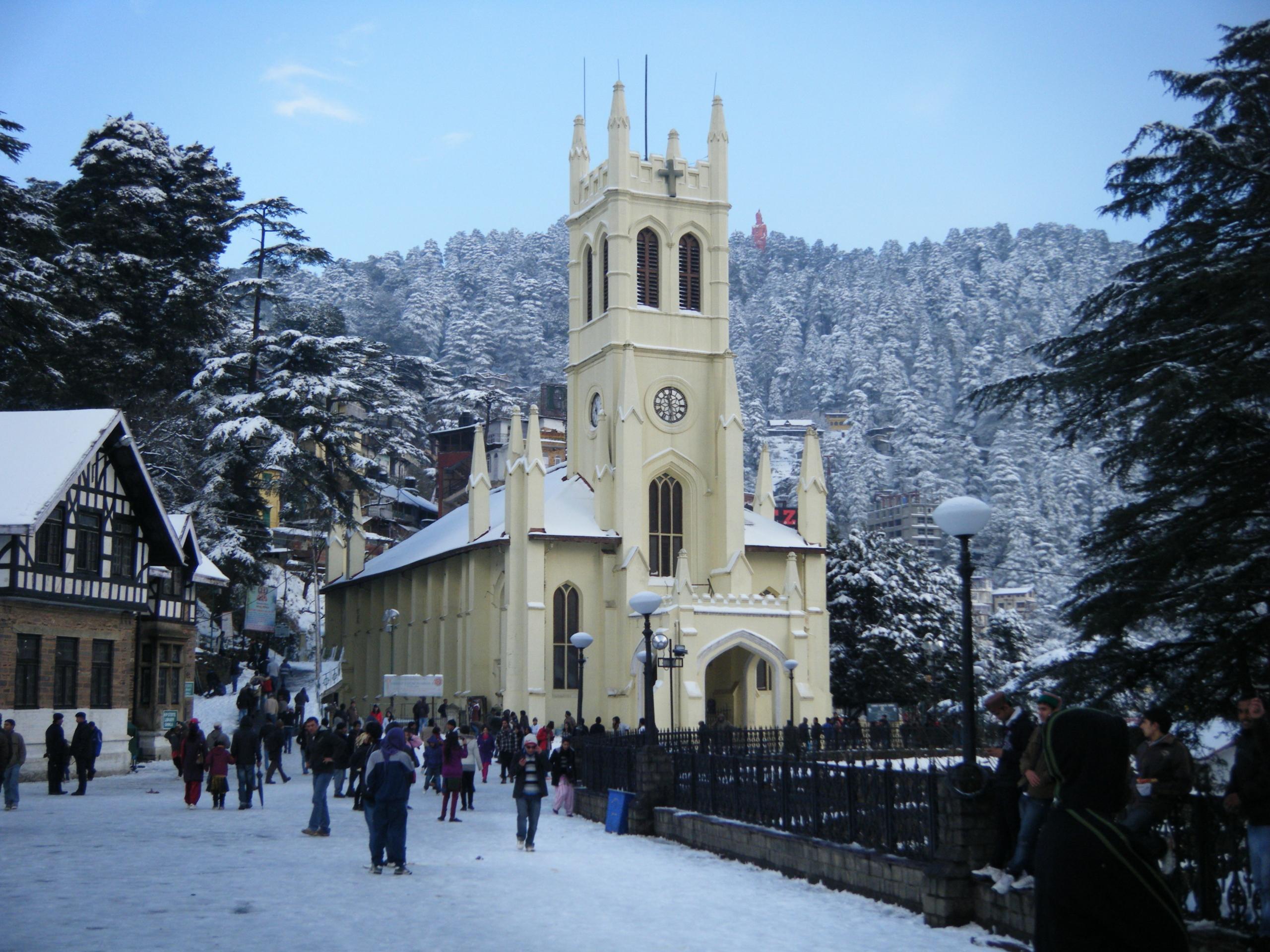
Mall Road is Shimla’s pedestrian heart — a colonial-era promenade running the length of the town’s ridge with shops, cafés, restaurants, and the best mountain views in the area. The Ridge, at the highest point, has an open plaza with views of the surrounding peaks and is the social centre of Shimla at any time of day. Christ Church (built 1857, one of North India’s oldest churches) anchors one end of the Ridge — its stained glass and Gothic architecture are genuinely worth seeing even if you’re not a religious tourist.
Entry fee: Free (Mall Road is public; Christ Church charges a small donation for entry)
Timings: Open all day; Christ Church best visited 9 AM–12 PM and 3–5 PM
Best time to visit: Early morning (7–8 AM) for quiet; evenings (6–8 PM) for atmosphere and cooler air — though evening crowds are substantial in peak season
How to reach: Mall Road is in the town center, accessible on foot from most Shimla hotels; Upper Mall Road is car-free
Time required: 1.5–2 hours for a proper stroll with coffee and shopping stops
Ideal for: All traveler types; families love the food stalls and craft shops, couples enjoy the evening ambience
Pro tip: The best coffee in Shimla is at Café Simla Times on Mall Road — small, consistently good, and somehow always less crowded than it should be given its location. For local Himachali snacks, look for the vendors selling sidu (steamed wheat bread) and madra (chickpea curry) on side streets off Mall Road.
2. Jakhu Temple and Jakhu Hill
Jakhu Hill, at 2,455 metres, is the highest point immediately accessible from Shimla town and is crowned by the ancient Jakhu Temple dedicated to Lord Hanuman. The temple sits within a forest inhabited by a very large population of rhesus macaque monkeys — hundreds of them, genuinely bold and accustomed to humans. The 108-metre Hanuman statue visible from much of Shimla stands at the temple complex and is one of the tallest such statues in the world.
Entry fee: Free (rope car to Jakhu costs ₹250–300 per person return; the walk up is free)
Timings: Temple open 5 AM–12 PM and 3–9 PM; ropeway operates 8 AM–8 PM
Best time to visit: Early morning (5–7 AM) if you walk up — cooler, fewer monkeys active, good light for photography. Avoid late afternoon when monkey activity peaks
How to reach: 2 km from The Ridge — steep walking trail (takes 30–45 minutes up); ropeway from near ISBT Shimla; taxis available to the base of the ropeway
Time required: 2–3 hours including ropeway and temple visit
Ideal for: All traveler types; families, temple visitors, those who want elevated views over Shimla
Pro tip: The monkeys at Jakhu are notorious for snatching sunglasses, bags, and food. Keep bags closed and zipped, remove hanging items, and do not take food out in the open. A walking stick (available for hire near the trail start) deters most monkey approaches. Despite the warnings, the walk through the forested trail is genuinely pleasant in summer with the oak and rhododendron canopy.
3. Shimla State Museum
The Himachal Pradesh State Museum sits in a colonial-era building with beautiful gardens and houses an excellent collection of Pahari miniature paintings, Kangra art, tribal jewelry, and archaeological finds from across the state. It is consistently undervisited — a blessing on a crowded Shimla summer day when you want an hour away from the crowds with something genuinely interesting to see.
Entry fee: ₹10 per person (Indians), ₹50 (foreigners); camera charge ₹50
Timings: 10 AM–1:30 PM and 2–5 PM; closed Mondays and national holidays
Best time to visit: Afternoon, when outdoor sightseeing in summer heat becomes less appealing
How to reach: Chaura Maidan area, approximately 1 km from The Ridge — walkable or ₹100 taxi ride
Time required: 1–1.5 hours
Ideal for: History and art enthusiasts, solo travelers, anyone wanting a calm interlude during a busy Shimla day
Pro tip: The museum’s garden is lovely for a quiet sit after the chaos of Mall Road. The Pahari miniature painting collection is one of the best accessible outside of Delhi museums — ask the staff to point you to the most significant pieces if you have limited time.
Kufri: Views, Horse Rides, and Wildlife — 13 km from Shimla
Kufri, Himachal Pradesh, is a small hill resort 13 km from Shimla at 2,600 metres — a straightforward half-day excursion that offers the kind of expansive mountain views that Shimla town itself, surrounded by buildings, can’t deliver. In summer, Kufri is green and breezy, with clear-day views extending to snow-capped peaks across the valley. In winter it’s a ski destination; in summer it’s about the views, horse rides, and the Himalayan Wildlife Zoo.
Key attractions at Kufri:
- Mahasu Peak: A horse or pony ride (or trek on foot) from the main Kufri area to Mahasu Peak gives 360-degree views of the Himalayan range. The ride takes 30–40 minutes each way. Pony hire: ₹400–700 depending on season and bargaining. The peak itself at approximately 2,800 metres offers some of the best unobstructed Himalayan views in the Shimla region.
- Himalayan Nature Park (Eco Park): A 70-acre protected area with Himalayan fauna including snow leopards, barking deer, pheasants, and Himalayan black bear. Open year-round.
- Himalayan Wildlife Zoo: Small zoo with local Himalayan species including snow leopard, red fox, and Himalayan birds. Entry: ₹100 per adult.
Entry fee: Eco Park entry ₹100 per adult; Himalayan Wildlife Zoo ₹100 per adult; Mahasu Peak pony rides ₹400–700
Timings: Eco Park and Zoo open 9 AM–5 PM; open year-round
Best time to visit: April–June for lush green scenery and clear views; early morning visits are best for wildlife spotting and thinner crowds
How to reach: 13 km from Shimla — taxis available from Shimla taxi stand (₹400–600 one way) or shared cabs from Cart Road. The road is good year-round.
Time required: 3–4 hours for a half-day excursion including Mahasu Peak ride and zoo
Ideal for: Families (children love the ponies and zoo animals), couples seeking views, photography enthusiasts
Pro tip: Go on a weekday — Kufri on Saturday in May is extremely congested, with pony queues stretching 45+ minutes and the road to the viewpoint often jammed. A clear morning in April or early May, arriving before 10 AM, gives you the entire place practically to yourself. Carry a jacket even in June — the peak area is noticeably colder than Shimla town.
Naldehra: India’s Oldest Golf Course and Shimla’s Best-Kept Secret
Naldehra is one of those places that frequent Shimla visitors know about and almost never mention to first-timers, which is rather convenient for them. Located 23 km from Shimla at 2,200 metres, this small meadow town is home to the Naldehra Golf Course — a 9-hole course originally laid out by Lord Curzon in 1905, set among cedar and oak forest with mountain views that would be embarrassing at a more famous course. It is genuinely one of the most beautiful golf settings in Asia.
You do not need to play golf to enjoy Naldehra. The meadows around the course are perfect for a picnic, a long walk, or simply sitting and watching the light change on the mountains. The forest around the course is full of Himalayan birds (including the cheer pheasant) and the air quality is noticeably better than Shimla town. Horse riding is available in the meadows — far less crowded and cheaper than at Kufri.
Entry fee: Golf: ₹[VERIFY: current green fee at Naldehra Golf Course] per round; meadow and viewpoint area: free
Timings: Golf course open 9 AM–6 PM; best visited anytime during daylight hours for the meadows
Best time to visit: April–June (lush and green); April is outstanding — the apple and peach trees are in blossom and the crowds are minimal
How to reach: 23 km from Shimla via Chharabra — taxi from Shimla costs ₹600–900 one way (45 minutes drive). No direct public bus — combine with Tattapani or Chail for a full day trip.
Time required: 2–3 hours
Ideal for: Couples, families wanting open space, golf enthusiasts, birdwatchers, anyone wanting a quiet alternative to Shimla’s crowds
Pro tip: The HPTDC hotel at Naldehra has a basic café with decent food and a terrace overlooking the golf course — a genuinely good lunch spot before heading back to Shimla or onward to Tattapani. The Incredible India page for Naldehra has historical background worth reading before your visit.
Tattapani: Hot Springs on the Sutlej — 51 km from Shimla
Tattapani (the name literally means “hot water” in Hindi) is a small river resort town on the banks of the Sutlej River, 51 km from Shimla at a much lower altitude of around 655 metres. It’s significantly warmer than Shimla and Kufri — in May, Tattapani can reach 30°C — but the natural sulphur hot springs along the riverbank are the draw. The springs are believed to have medicinal properties, and locals have bathed in them for generations.
Tattapani also offers river rafting on the Sutlej, though the rapids are gentler than Beas rafting in Manali. Several riverside resorts have set up hot spring pools that are more convenient than the natural riverside springs.
Entry fee: Natural hot spring access free; resort pools ₹200–500 per person. River rafting: ₹1,000–1,800 per person depending on stretch.
Timings: Open all day; hot spring bathing best in the morning
Best time to visit: April–May before temperatures get too high at the lower altitude; morning visits recommended as the valley can get warm by afternoon
How to reach: 51 km from Shimla via Rampur road — taxi costs ₹1,200–1,800 return (day trip). HRTC buses also serve this route. Journey time: 1.5–2 hours each way.
Time required: Full day (or overnight if you want to do rafting and hot springs)
Ideal for: Couples, families seeking river experiences, anyone wanting to combine hot spring bathing with a river landscape
Pro tip: Note that the original natural hot spring pools at Tattapani have been partially submerged due to the Koldam Dam project — some springs are no longer accessible. Confirm current conditions with your hotel or a local operator before making it the centerpiece of your day trip.
Narkanda: Apple Orchards, High-Altitude Views, and Hatu Peak — 65 km from Shimla
Narkanda, Himachal Pradesh, sits at 2,700 metres — higher than Shimla and Kufri — on the old Hindustan-Tibet road, 65 km from Shimla. In summer, it is an apple orchard landscape: the orchards are either in late blossom (April) or in early fruit growth (May–June), and the sweeping views of the Himalayan range from Hatu Peak make it one of the most underrated day trips in Himachal Pradesh.
Narkanda is notably quieter than Kufri and Chail — it sees only a fraction of the tourist volume and has retained a more authentic Himachali town feel. The market has local apple products, fruit wines, and mountain honey.
Hatu Peak
Hatu Peak stands at 3,400 metres — the highest point in the Narkanda area — and is reached by a 7-km drive on a forest road from Narkanda town plus a short walk to the summit. The Hatu Mata Temple at the top is an ancient site with religious significance for local communities. On a clear day, the 360-degree panorama from Hatu Peak takes in Kinnaur, Lahaul, and the entire western Himalayan range. It is one of the best high-altitude viewpoints accessible by road in Himachal Pradesh without requiring a trekking permit.
Entry fee: Free
Timings: Accessible in daylight hours; forest road may be closed in low visibility. Best: 9 AM–1 PM for clearest views before afternoon cloud build-up
Best time to visit: April–June for clear skies; morning visits are critical as clouds frequently build over the peaks by early afternoon
How to reach: Drive to Narkanda (65 km from Shimla, 1.5–2 hours by taxi; cost ₹1,500–2,500 for a Narkanda day trip) then a jeep or taxi to Hatu Peak (7 km from Narkanda town; ₹500–800 return)
Time required: Full day from Shimla — Narkanda town + Hatu Peak + return
Ideal for: Those wanting high-altitude views without trekking, photography enthusiasts, travelers who have already seen Kufri and Chail
Pro tip: Combine Narkanda and Hatu Peak with a stop at Narkanda’s apple orchards and the local market on the way back. In April, you may see the apple trees in late blossom — a genuinely beautiful sight that most Shimla visitors never see because they don’t venture this far. The Tannu Jubbar Lake, a small lake 8 km from Narkanda, is worth a quick stop on the return journey.
The Kalka–Shimla Toy Train: A UNESCO World Heritage Journey
The Kalka–Shimla Railway is a UNESCO World Heritage Site and one of the most scenic narrow-gauge rail journeys in the world. Built in 1903, the 96-km line climbs from Kalka (656 metres) to Shimla (2,076 metres) passing through 102 tunnels, 988 bridges, and 919 curves over approximately 5–7 hours depending on the train. The views of the Himalayan foothills, pine forests, and cascading valleys are spectacular — and the journey itself is the attraction, not just the destination.
Train options:
- Himalayan Queen (5 AM Kalka): The most popular service. Arrives Shimla around 10:30 AM. Book on IRCTC as far in advance as possible — fills 60–90 days out in summer.
- Shivalik Deluxe Express: Faster and more comfortable; Vistadome option available with glass-roof cars for panoramic views. Higher fare but worth it for the views.
- Shivalik Palace/Rail Motor: Shorter services covering portions of the route.
Cost: ₹25–290 for regular trains depending on class; Vistadome cars ₹600–1,400
Timings: Multiple departures from Kalka between 5 AM and 5:55 PM; journey duration 5–7 hours
Best time to take: Morning departure (first train) for best light photography; sit on the right side (when traveling Kalka to Shimla) for the most dramatic valley views
How to reach Kalka: Kalka is 65 km from Chandigarh and well connected by broad-gauge rail from Delhi (Kalka Mail, Shatabdi Express). Drive from Chandigarh takes about 1 hour.
Ideal for: All traveler types; particularly memorable for children and rail enthusiasts; excellent for solo travelers who want to start the Shimla trip with the journey as an experience
Pro tip: Book toy train tickets on IRCTC at least 2–3 months before May and June travel — they sell out rapidly. If you can’t get the full Kalka–Shimla journey, the Barog–Shimla stretch (last 40 km) is the most scenic section and easier to book. Carry snacks and water — the station food options are limited.
Where to Stay in Shimla in Summer
Shimla accommodation options broadly divide into three zones:
- Mall Road area (Upper Shimla): Most convenient for sightseeing, restaurants, and taxi booking. Higher prices, more noise. Best for short 2-night stays.
- Mashobra, Kufri road, and Chharabra: 8–15 km from Mall Road with far better views, quieter surroundings, and mountain-facing properties. The preferred choice for families wanting space and couples wanting romance over convenience.
- Naldehra and surroundings: Quietest option, 23 km out — best for those who want the Shimla hills experience without the town’s noise and crowds.
For properties that give you private terrace mountain views, room to breathe, and the kind of early-morning Himalayan panorama that makes getting up at 6 AM feel worthwhile, StayVista’s homestays in and around Shimla cover the Mashobra and Kufri road area well. These book out fast for May — plan 4–6 weeks ahead minimum, and prioritise properties on the Kufri side of town for sunrise views across the valley.
Common Mistakes to Avoid in Shimla in Summer
- Going only on weekends: Shimla on a Saturday in May is genuinely difficult — traffic queues on NH-5 approaching town, Mall Road at capacity, Kufri backed up with cars. Go Thursday–Saturday for a better experience, or adjust weekend timing to arrive Friday evening and leave Sunday morning before the peak checkout rush.
- Not booking in advance for May: Shimla accommodation books out 4–6 weeks ahead for peak May. The same applies to the Kalka–Shimla toy train. If you’re planning a May trip, accommodation and toy train bookings should be the first things you do.
- Underestimating Shimla traffic: The approach roads to Shimla are single-lane for much of the route and prone to severe jams on weekends. Build 30–60 minutes of buffer into any Saturday journey estimate.
- Skipping the surrounds: Staying on Mall Road for two days and calling that “Shimla” misses most of what makes the destination worthwhile. Even one day trip — Naldehra, or Kufri + Narkanda combined — transforms the trip significantly.
- Expecting winter prices: Summer rates in Shimla are noticeably higher than offseason. Budget roughly 30–50% more than the rates you might find in November–February for equivalent properties.
Shimla Summer Itinerary Suggestions
2-Day Shimla City Focus
Day 1: Arrive, check in. Afternoon: Mall Road and The Ridge at leisure. Evening: Christ Church, sunset from the Ridge. Dinner at a Mall Road restaurant.
Day 2: Early morning: Jakhu Temple trek (6:30 AM departure — finish before the monkey rush). Mid-morning: Shimla State Museum. Afternoon: Kufri (half-day) — Eco Park, Mahasu Peak pony ride, views. Evening: return to Mall Road for dinner and shopping.
4-Day Extended Himachal Hills Stay
Day 1: Travel from Delhi — take the Shatabdi to Kalka, then the morning toy train to Shimla. Arrive early afternoon. Check in and rest.
Day 2: Kufri full morning (depart 8 AM, return by 1 PM). Afternoon: Mall Road and museum.
Day 3: Naldehra + Tattapani day trip (combine both — Naldehra morning, Tattapani hot springs afternoon). Full day, taxi arranged through hotel.
Day 4: Narkanda and Hatu Peak day trip (depart 8 AM, return by 4 PM). Apple orchard walk, Tannu Jubbar Lake. Evening departure from Shimla.
Frequently Asked Questions: Shimla in Summer 2026
Is Shimla good to visit in summer?
Yes — summer is Shimla’s peak season precisely because the temperatures (15–25°C in May) make it a genuine escape from the 40°C+ heat of the plains. The hill station is functioning at its fullest with all restaurants, shops, and day-trip routes fully operational. The trade-off is crowds — go mid-week or in April for a noticeably better experience than peak May weekends.
What is the best time to visit Shimla in summer?
April (fewer crowds, temperatures 10–20°C, apple orchards in bloom) is the sweet spot for experienced travelers. May and June are peak season with all attractions fully operational and the warmest temperatures (15–25°C) but significantly higher crowds. Avoid May long weekends entirely if possible.
How do I reach Shimla from Delhi?
The most scenic option is the Shatabdi Express from Delhi to Kalka (3 hours) followed by the Kalka–Shimla toy train (5–7 hours) — a full travel day but genuinely memorable. By road: Volvo buses from ISBT Delhi take 9–10 hours. By air: seasonal flights to Shimla Airport (Jubbarhatti, 22 km from town) or fly to Chandigarh and drive 90 km (2.5 hours) to Shimla.
Is Shimla very crowded in summer?
Yes, summer is Shimla’s busiest season. May weekends and school holiday periods (mid-May through June) bring very large crowds to Mall Road and Kufri. Accommodation books out 4–6 weeks ahead for May. Strategies to avoid the worst crowds: visit weekdays, arrive before 10 AM at popular spots like Kufri, and stay in properties outside the main town (Mashobra, Naldehra area).
Is the Kalka–Shimla toy train worth taking?
Yes, without question — it is one of India’s most scenic rail journeys and a UNESCO World Heritage Site. The 5–7 hour journey through 102 tunnels and 988 bridges is an experience in itself. Book on IRCTC as far in advance as possible for May–June travel (it fills 2–3 months out). Choose the Vistadome glass-roof car if available, and sit on the right side (travelling from Kalka to Shimla) for the best valley views.
How far is Kufri from Shimla?
Kufri is 13 km from Shimla town — approximately 30–40 minutes by road in normal conditions. Taxis from the Shimla taxi stand charge ₹400–600 one way. On peak summer weekends, add 20–30 minutes for traffic near Shimla. Go on a weekday morning for the fastest and most comfortable experience.
What should I carry for a summer trip to Shimla?
Light layers are essential — Shimla afternoons in May can reach 22–25°C but mornings and evenings drop to 10–14°C. Carry a light fleece or jacket, comfortable walking shoes (Shimla involves a lot of uphill walking), sunscreen (UV at altitude is strong even in overcast conditions), and a compact rain jacket for unexpected showers. For Jakhu Temple, absolutely do not wear loose dangling jewelry or carry open food bags due to the monkeys.