
Pune to Mahabaleshwar in Monsoon 2026: A Weekend Trip Guide
Last updated: June 2026
TL;DR: Mahabaleshwar is about 120 km from Pune via NH4/Surur–Wai, a 3 to 3.5-hour drive that turns into a green, fog-wrapped weekend in monsoon. The waterfalls — Lingmala in particular — run at full force from July to September, while the famous viewpoints (Arthur’s Seat, Wilson, Kate’s) are often fog-bound, so views are hit-or-miss. Note one thing honestly: strawberry season is winter (November–March), not the rains, so come for the mist and the falls, not for strawberry picking. Drive in daylight, keep headlights on through the ghats, and you have a perfect 2-day getaway.
In this Blog
Pune to Mahabaleshwar in monsoon, at a glance
| Distance from Pune | ~120 km (3–3.5 hrs by road) |
| Best time | July–September for waterfalls and greenery; carry rain gear |
| How to reach | Drive via NH4 → Surur → Wai → Panchgani → Mahabaleshwar |
| Nearest airport/station | Pune Airport (~120 km); Wathar / Satara railheads (~55–60 km) |
| Ideal duration | A 2-day weekend (1 night, ideally 2) |
| 2026 monsoon note | Below-normal monsoon forecast (~90% of average) and slightly delayed in patches — rain is still very likely on the ghats, just less predictable. Check the day’s forecast before you leave. |
How far is Mahabaleshwar from Pune, and how do you get there in monsoon?
Mahabaleshwar sits roughly 120 km southwest of Pune, and in clear conditions the drive takes about 3 to 3.5 hours. In monsoon, budget closer to 3.5–4 hours: the last stretch beyond Wai climbs through ghats where mist, sharp bends and slow trucks set the pace. The most reliable route is Pune → Kasurdi → Khandala (Satara) → Surur → Wai → Panchgani → Mahabaleshwar, using the wide, well-surfaced NH4 corridor for most of the way before you peel off towards Wai and start the climb. Maharashtra’s hill stations are at their most dramatic now — the Maharashtra Tourism board lists Mahabaleshwar and Panchgani among the state’s signature monsoon escapes, and you will understand why the moment the valley below Panchgani disappears into cloud.
There are three honest ways to make the trip. By car is the best for a monsoon weekend — you control your own stops, you can wait out a heavy spell with a chai, and you reach the scattered viewpoints that buses skip. By bus, MSRTC and private operators run frequently from Pune’s Swargate and Shivajinagar stands; it is cheap and comfortable, but you will then need local autos or a hired car for sightseeing, which is awkward in rain. By bike is tempting and the Tapola road is a rider’s dream in clear weather — but in peak monsoon the combination of fog, slick tarmac and steep camber makes two wheels genuinely risky, so we would steer most travellers away from it in July–August.
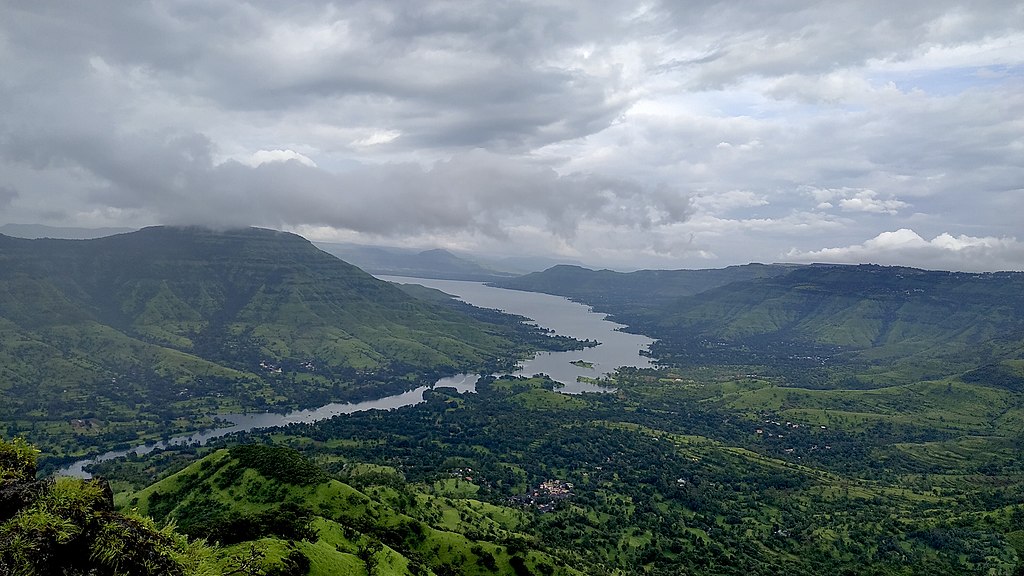
A quick word on what the rains do here. The greenery is unreal, the waterfalls run full, and the air is cool enough for a light jacket even at midday. The trade-off is visibility: the viewpoints Mahabaleshwar is famous for spend a lot of monsoon afternoons inside a cloud. That is not a reason to skip them — fog rolling through Arthur’s Seat is its own kind of beautiful — but it is a reason to manage expectations and keep your plans flexible.
Monsoon safety on the Pune–Mahabaleshwar route (read before you drive)
– Drive in daylight. Fog and low cloud sit on the ghats above Wai and around the Mahabaleshwar–Panchgani points; visibility can drop to a few metres after dusk. Aim to reach your villa before dark.
– Headlights on, speed down through the ghat section — sharp turns, oncoming traffic and runoff across the road are common.
– Fuel up before Panchgani. Petrol pumps thin out on the ghat and Tapola roads.
– Respect waterfalls. Lingmala and the streams are in full spate — do not enter the water or climb wet rocks near the edge; people slip every season.
– Pratapgad’s steps get slick. The fort’s stone stairways are slippery when wet — wear grippy shoes and take the climb slowly.
– Carry: a light rain jacket, non-slip footwear, a power bank, and a buffer half-day in case rain reshuffles your plan.
Stops worth making on the drive from Pune
The journey is half the trip. Wai, about 35 km before Mahabaleshwar on the Krishna river, is a temple town with old ghats and the much-photographed Dholya Ganpati — a good leg-stretch and a glimpse of small-town Maharashtra. Many travellers also know Wai’s riverfront as a popular Bollywood shooting location. A short detour off the Wai road brings you to Dhom Dam on the Krishna, where the backwaters spread out against the Sahyadris; in monsoon the reservoir fills and the surrounds turn emerald, and you will find low-key boating and a quiet picnic spot rather than a crowd. Closer to Panchgani, roadside strawberry and mulberry stalls appear — though remember the fruit here peaks in winter, so monsoon stalls lean more towards jams, crushes and chikoo than fresh-picked berries. None of these stops needs more than 30–45 minutes; together they break the climb nicely.
11 things to do in Mahabaleshwar and Panchgani in monsoon
Here is the honest, weather-aware list — what is genuinely good in the rains, and what to expect when the clouds close in. Each spot includes the practical details you need.
1. Venna Lake
The easy, all-weather heart of Mahabaleshwar town and a good first stop. You can take a rowboat or pedal boat out, and the lakeside path is lined with corn-on-the-cob carts and pony rides — a relaxed, family-friendly hour even in light drizzle.
– Entry fee: Free to enter; boating is paid — roughly ₹250 for a rowboat and ₹440 for a pedal boat (per outing).
– Timings: ~7:00 AM–7:00 PM; boating allowed until sunset.
– Best time: Late afternoon, around 4 PM, for soft light; skip boating during a heavy downpour.
– How to reach: In Mahabaleshwar town, ~2 km from the bus stand.
– Time required: 1–1.5 hours.
– Ideal for: Families and couples.
– Pro tip: Boating is at its prettiest when the rain pauses and mist hangs over the water — wait ten minutes for a gap rather than rowing out into a squall.
2. Lingmala Falls
This is the monsoon headline act. The main fall plunges over 500 feet and is at its thunderous best from July to October, when the volume is genuinely spectacular. There is a viewing platform for the big drop, and a shorter walk to a smaller cascade you can get close to.
– Entry fee: A nominal ticket of about ₹25 per person, payable at the gate.
– Timings: Roughly 8:00 AM–5:30 PM (gates close earlier than the town’s viewpoints).
– Best time: July–September for peak flow; go mid-morning before afternoon cloud thickens.
– How to reach: ~6 km from Mahabaleshwar bus stand on the Mahabaleshwar–Panchgani road; a 1.5 km walk to the smaller fall and ~2.5 km to the main viewpoint from the gate.
– Time required: 1.5–2 hours including the walk.
– Ideal for: Couples, families with older kids, photographers.
– Pro tip: Do not swim or wade in the monsoon — the current is powerful and the rocks are lethally slippery. Admire the main fall from the platform.
3. Mapro Garden
Part orchard, part food court, part factory tour — and reliably enjoyable when rain rules out the open viewpoints. Sample squashes, crushes and the famous strawberry-cream (made from preserved/processed fruit in monsoon), browse the produce, and grab a pizza or sandwich. It is the closest thing to a guaranteed-good rainy-afternoon plan.
– Entry fee: Free; you pay only for what you eat and buy.
– Timings: ~8:00 AM–8:00 PM, all week.
– Best time: Any time; ideal as a mid-day rain shelter.
– How to reach: On the Mahabaleshwar–Panchgani road, ~6 km from Mahabaleshwar town.
– Time required: 1–1.5 hours.
– Ideal for: Families and groups.
– Pro tip: The chocolate-strawberry milkshake and the wood-fired pizza are the crowd favourites; weekends get busy by noon, so arrive early.
4. Arthur’s Seat
Often called the “Queen of the Points,” Arthur’s Seat looks over a sheer drop into the Savitri valley where the dense Konkan greenery starts. On a clear monsoon morning it is the best view in the region; on a foggy afternoon you will see swirling white and not much else — both are worth experiencing, just know which you are likely to get.
– Entry fee: Free; parking ~₹20–50 per vehicle.
– Timings: ~9:00 AM–8:00 PM daily (a short walk from the car park to the point).
– Best time: Early morning, before cloud builds up the valley.
– How to reach: ~12 km from Mahabaleshwar town towards the Panchgani side.
– Time required: 1–1.5 hours including the walk.
– Ideal for: Couples, photographers, anyone chasing the big view.
– Pro tip: Go right after a rain break — you sometimes get a five-minute “clearing” when the valley reveals itself before the next cloud. Hold your spot and wait.
5. Wilson Point (Sunrise Point)
The highest point in Mahabaleshwar at about 1,439 m, and the only one where you can theoretically catch both sunrise and sunset. It is a broad plateau with three viewing towers. In monsoon, sunrise is a genuine gamble — many mornings are socked in — but when it clears, the light over the Sahyadris is superb.
– Entry fee: Free.
– Timings: ~6:00 AM–8:00 PM daily.
– Best time: Sunrise on a clear morning; otherwise late afternoon.
– How to reach: ~2 km from Mahabaleshwar bus stand; you can drive almost to the top.
– Time required: 45 minutes–1 hour.
– Ideal for: Early risers, couples.
– Pro tip: Manage expectations for monsoon sunrise. If the sky is fully grey at dawn, sleep in and come back for a moody, cloud-streaked afternoon instead.
6. Kate’s Point & Elephant’s Head Point
These two sit on the same Mahabaleshwar–Panchgani plateau road and are usually visited together. Kate’s Point overlooks the Dhom and Balakwadi reservoirs; Elephant’s Head Point (also called Needle Hole Point) frames a rock formation shaped like an elephant’s trunk. The drive between them through dripping forest is half the pleasure in the rains.
– Entry fee: Free; nominal parking ~₹30–50 per car.
– Timings: ~6:00 AM–6:00 PM daily.
– Best time: Late afternoon for warm light and deeper valley contrast.
– How to reach: ~7 km from Mahabaleshwar bus stand, clustered together.
– Time required: 1.5–2 hours for both.
– Ideal for: Couples, photographers, road-trippers.
– Pro tip: Cloud movement here is dramatic — watch a bank of fog pour over the ridge and refill the valley in real time. It is more reliably spectacular than the “clear view,” ironically.
7. Pratapgad Fort
A genuine slice of Maratha history and a satisfying half-day from Mahabaleshwar. Built by Chhatrapati Shivaji Maharaj in 1656, Pratapgad was the site of the pivotal Battle of Pratapgad (1659) against Afzal Khan. The climb to the upper fort and the Bhavani temple is rewarding, and in monsoon the ramparts float in and out of cloud.
– Entry fee: Free entry to the fort (small charges for optional local guides).
– Timings: ~6:00 AM–7:00 PM daily.
– Best time: Morning, to climb before afternoon rain and fog set in.
– How to reach: ~23–24 km west of Mahabaleshwar (about 1 hour by road, then a stepped climb).
– Time required: 3–4 hours including drive and climb.
– Ideal for: History lovers, families with active kids, fit travellers.
– Pro tip: The stone steps are slippery in the wet — wear shoes with real grip, use the handrails, and skip the climb entirely in a downpour. Carry water; stalls are limited up top.
8. Panchgani Table Land
A 30-minute drive towards Panchgani brings you to the Table Land, one of Asia’s largest flat-topped plateaus at about 1,387 m. In the dry season it is a wide-open expanse for horse rides and go-karts; in monsoon it greens over and the edges drift in cloud. Note that authorities sometimes restrict access in heavy rain or thick fog, so check locally on the day.
– Entry fee: Free (activities like horse rides are paid).
– Timings: Daylight hours; subject to weather restrictions in heavy fog/rain.
– Best time: A clear morning for the open views.
– How to reach: ~19 km from Mahabaleshwar; on the edge of Panchgani town.
– Time required: 1–1.5 hours.
– Ideal for: Families, groups, couples.
– Pro tip: If fog has shut the plateau, do not force it — the road up is steep and exposed. Save it for a brighter window or your drive home.
9. Devil’s Kitchen
Tucked at the southern end of Table Land, Devil’s Kitchen is a cluster of laterite caves and rock fissures wrapped in local legend — folklore links it to the Pandavas’ exile. It is short, atmospheric and best paired with a Table Land visit.
– Entry fee: Free (no separate ticket; it is part of the Table Land area).
– Timings: Daylight hours, alongside Table Land access.
– Best time: Late morning, after the plateau.
– How to reach: ~2 km from Panchgani bus stand, at the south end of Table Land.
– Time required: 30–45 minutes.
– Ideal for: Curious travellers, families with kids who like a story.
– Pro tip: The rock can be slick after rain and the light is dim inside the fissures — step carefully and keep a hand free.
10. Tapola (Mini Kashmir)
The quiet gem. About 25 km southeast of Mahabaleshwar, Tapola sits on the Shivsagar (Koyna) backwaters, ringed by hills that go vivid green in the rains — hence its “Mini Kashmir” nickname. Boating on the reservoir is the main draw.
– Entry fee: Free to visit; boating is paid (roughly ₹750 per person for a ~45-min speedboat ride, more for longer outings).
– Timings: Open all day; boating runs in daylight and depends on water conditions.
– Best time: Late monsoon to post-monsoon, when the lake is full and the hills are lush.
– How to reach: ~25 km from Mahabaleshwar via a narrow, winding ghat road (~1 hour).
– Time required: Half a day, including the drive.
– Ideal for: Couples and small groups wanting calm over crowds.
– Pro tip: The Tapola road is scenic but tight and prone to fog — drive it in daylight and check whether boating is running before you set off, as operators pause in rough weather.
11. Dhom Dam backwaters
On the way in or out via Wai, the Dhom Dam on the Krishna river is an easy, uncrowded stop. The reservoir swells in monsoon and the Sahyadri backdrop is at its greenest; you will find gentle boating and a place to sit with a snack rather than a tourist circus.
– Entry fee: Free to visit; boating where available is paid.
– Timings: Daylight hours.
– Best time: Monsoon and just after, when the dam is full.
– How to reach: Near Wai, a short detour off the Pune–Mahabaleshwar route (~20 km before Panchgani).
– Time required: 45 minutes–1 hour.
– Ideal for: Families, anyone wanting a relaxed pause on the drive.
– Pro tip: Pair it with a Wai temple stop on your way home so you are not adding a separate trip.
A monsoon CTA, the honest way: A villa with a covered deck or veranda is worth its weight in gold here — when the rain comes down, you will spend hours watching the valley fill with cloud, chai in hand, instead of dashing between viewpoints. Pick a stay with a sheltered outdoor space and you have already won the weekend. (CTA 1 of 3.)
A 2-day Pune–Mahabaleshwar monsoon itinerary
Day 1 — Drive in, settle, easy sights. Leave Pune by 8 AM to beat both traffic and afternoon fog. Break at Wai and Dhom Dam (about an hour total), reach your villa near Mahabaleshwar or Panchgani by early afternoon, and check in. Spend the late afternoon at Venna Lake for boating and corn, then drop by Mapro Garden before it closes for tastings and an early dinner. Keep the evening loose — monsoon evenings are made for a covered deck and the sound of rain.
Day 2 — Waterfall, viewpoints, history, drive back. Start early at Lingmala Falls while the flow is full and the crowds are thin. Then run the points loop — Arthur’s Seat, Kate’s Point and Elephant’s Head Point — accepting that some will be fogged in. History buffs can swap the points loop for a morning at Pratapgad Fort instead. Have lunch in town, and aim to start the drive back to Pune by mid-afternoon so you clear the ghats in daylight.
If you have a third day (a long weekend), add Tapola for half a day of backwater boating and Panchgani’s Table Land and Devil’s Kitchen — this is also the version of the trip that lets you slow down and actually wait out the weather for the good light.
Where to stay (StayVista)
For a rainy weekend, the right base does most of the work: a sheltered deck, a warm interior, and a short drive to the falls and points. Two StayVista homes fit the brief.
- Emilia Villa, Mahabaleshwar (/villa/emilia-villa) — a spacious 6-bedroom home roughly a 7-minute walk from Lingmala Falls, with a terrace deck looking onto the Sahyadris, an outdoor jacuzzi, and indoor games and a gym in the basement. The indoor options make it a strong monsoon pick when rain keeps you in for an afternoon — good for a family or a larger group of friends.
- Status Villa, Panchgani (/villa/status-villa) — a heritage-style property on one of Bhilar’s highest points with a heated pool, a red-stone colonial facade and broad valley views. A heated pool is a genuine luxury in the cool, damp monsoon air, and the Panchgani location puts Table Land, Devil’s Kitchen and Mapro within easy reach.
Either way, look for a stay with a covered outdoor space and reliable hot water — both matter more in monsoon than they do in season.
If you want to read more before you book, our guide to the best villas in Mahabaleshwar goes deeper on options across the hill station.
Plan around the weather first
Two StayVista reads pair well with this trip. For the bigger picture on when and where the rains hit hardest across the state, see our Maharashtra weather guide for monsoon travel. And if you are still weighing destinations, our roundup of budget-friendly monsoon hill stations in India puts Mahabaleshwar in context against the alternatives.
FAQ: Pune to Mahabaleshwar in monsoon
How far is Mahabaleshwar from Pune and how long does it take?
Mahabaleshwar is about 120 km from Pune, a drive of roughly 3 to 3.5 hours in clear conditions. In monsoon, allow 3.5–4 hours because fog and slow ghat traffic beyond Wai reduce your pace. The usual route is NH4 to Surur/Wai, then up through Panchgani.
Is it worth visiting Mahabaleshwar in monsoon?
Yes, if you come for the right reasons. Monsoon (July–September) gives you the lushest greenery and Lingmala Falls at full flow, plus cool, jacket-weather days. The trade-off is that the viewpoints are often fog-bound, so big valley views are unpredictable. Come for waterfalls, mist and atmosphere rather than guaranteed panoramas.
Can you pick strawberries in Mahabaleshwar during monsoon?
No. Strawberry season runs from roughly November to March (peaking January–February), not in monsoon. In the rains you will find jams, crushes and processed strawberry products at places like Mapro, but fresh-picking happens in winter.
Which waterfalls are best near Mahabaleshwar in the rains?
Lingmala Falls is the star — its main drop of over 500 feet is thunderous from July to October. Streams and smaller cascades run everywhere along the ghats. Enjoy them from viewing platforms only; do not swim or climb wet rocks, as monsoon currents and slippery surfaces are dangerous.
Is the Pune–Mahabaleshwar drive safe in monsoon?
It is safe with sensible precautions: drive in daylight, keep headlights on through the ghats, slow down on the bends, fuel up before Panchgani, and leave a buffer for fog delays. The NH4 stretch is good; the care is needed on the climb past Wai and on the narrow Tapola road.
What should I pack for a monsoon trip to Mahabaleshwar?
A light rain jacket or poncho, non-slip footwear (essential for Lingmala and Pratapgad), a power bank, quick-dry clothes, and a small dry bag for your phone and camera. Evenings get cool, so add a light sweater.
How many days do you need for Mahabaleshwar from Pune?
A 2-day weekend (one night) covers the drive, Venna Lake, Mapro, Lingmala and the main points. With a third day you can add Tapola’s backwaters and Panchgani’s Table Land at a relaxed pace — and have a spare half-day to wait out the weather for better light.
Conclusion
A Pune to Mahabaleshwar monsoon weekend is one of the easiest, greenest escapes in Maharashtra — a short 120 km drive into cool air, full-flow waterfalls and cloud-draped hills. Go in with clear eyes: the falls will reward you, the viewpoints are a lovely gamble, and the strawberries can wait for winter. Drive in daylight, keep your plans flexible around the rain, pick a stay with a sheltered deck, and the monsoon will do the rest.