
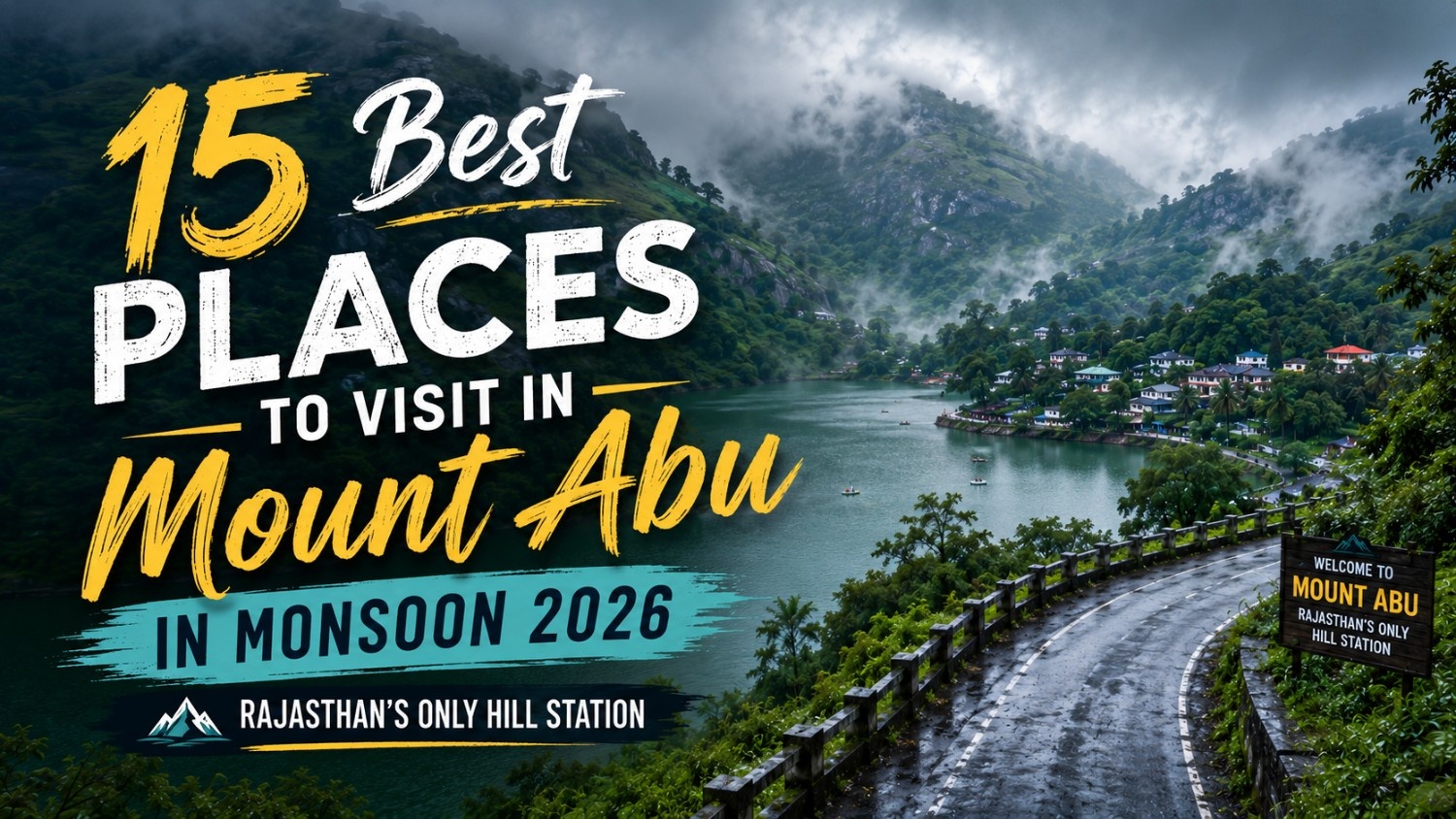
15 Best Places to Visit in Mount Abu in Monsoon 2026: Rajasthan’s Only Hill Station
Last updated: October 2026
Reading this in October or later? The 2026 monsoon has ended, and Mount Abu has entered its best window of the year. October runs 20–28°C with humidity dropped and skies clearing; November to February — 12–25°C, bone-dry, perfect sightseeing weather — is the peak season. The Mount Abu Winter Festival (29–31 December) is the single biggest event on the calendar, with Rajasthani folk performances, a shobha yatra to Nakki Lake, cultural shows and a boat race. Book accommodation 3–4 weeks ahead for the Winter Festival window and for the Christmas–New Year weekend. The 15 places below are all accessible year-round; the monsoon-specific notes in each section apply only to the June–September window.
Most people associate Rajasthan with forts, deserts, royal palaces and warm weather. That is why first-time visitors are often surprised when they learn that the state is also home to a cool hill destination surrounded by forests, lakes and mountain roads. Located in the Aravalli Range, Mount Abu in monsoon offers a completely different side of Rajasthan.
During the monsoon season, the region changes noticeably. The hills become greener, seasonal streams begin flowing, clouds drift across the roads, and viewpoints provide dramatic views throughout the day. For anyone looking for a refreshing break from city life, Mount Abu in the monsoon presents a side of Rajasthan that many people never expect.
What makes Mount Abu even more special is that it remains Rajasthan’s only hill station, giving visitors a mountain experience that is quite different from the state’s better-known destinations.
Mount Abu in monsoon is one of Rajasthan’s best rainy-season destinations. July and August bring cooler temperatures, greener surroundings and beautiful cloud-covered viewpoints. Attractions such as Nakki Lake, Guru Shikhar, Dilwara Temples and Trevor’s Tank make it one of the top places to visit in Mount Abu during 2026.
In this Blog
Weather in Mount Abu During the Monsoon
Mount Abu’s climate is unusually gentle for Rajasthan — the hill station sits at 1,220 metres and stays 10–15°C cooler than the plains year-round.
Summer (May–early June): 25–34°C — still cool enough to be a Rajasthan refuge, but the standout months are November to February and October’s shoulder.
Monsoon (June–September): 18–28°C with regular rain; lush, misty, atmospheric. Peak flow July to mid-August. Occasional dense cloud cover at Guru Shikhar and Sunset Point.
Post-monsoon shoulder (October to mid-November): 20–28°C, humidity dropping sharply, clearest skies of the year, lush landscapes still intact. One of the best windows.
Winter (mid-November to February): 12–25°C during the day, 5–10°C overnight. The town’s peak tourist season. Mount Abu Winter Festival runs 29–31 December.
Spring (March–April): 20–30°C, pleasant and uncrowded. Dilwara and the temples are busy with pilgrim traffic.
Places to Visit in Mount Abu
Nakki Lake
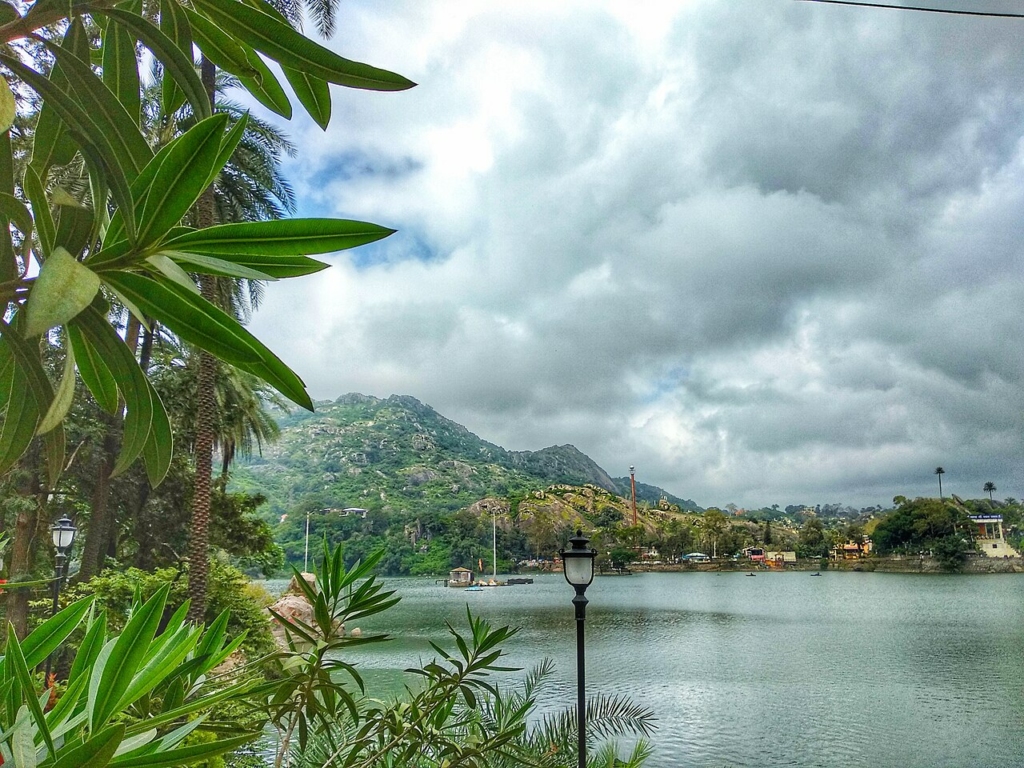
Nakki Lake sits at the centre of Mount Abu town and is the social and visual focal point of any visit — surrounded by markets, cafes and viewpoints.
Entry fee: Free to access the lakeside walk; boating tickets ₹200 per person for a 30-minute shared paddle boat, ₹400–₹600 for private boats.
Timings: Lake walk 24 hours; boating operations typically 9:00 AM to 7:00 PM.
How to reach: Walk from any town-centre hotel; the Mount Abu central market opens straight onto the lakefront.
Time required: 1–2 hours for a boat ride plus walk; longer if combining with the surrounding viewpoints.
Ideal for: Couples, families, evening-walk visitors.
Pro tip: The paddle boats are the easiest option; the manually-rowed boats are atmospheric but slow. Avoid the lakefront between 5 and 7 PM in peak season (December–January) — the crowd density is uncomfortable.
Monsoon note: Boating pauses during active rainfall; verify the day’s status with any boat operator at the ghat.
Guru Shikha
At 1,722 metres, Guru Shikhar is the highest point in the Aravalli range and in all of Rajasthan. The summit houses a small temple dedicated to Lord Dattatreya and offers panoramic views of the surrounding hills — on a clear post-monsoon day you can see all the way to the plains below.
Pro tip: October and November mornings offer the clearest post-monsoon visibility; by December the hilltop can get genuinely cold (down to 5°C before sunrise), so carry a jacket.
Entry fee: Free; small parking fee ₹20–₹30 at the base.
Timings: 7:00 AM to 7:00 PM; sunrise visits are the standout experience.
How to reach: 15 km from Mount Abu town centre, 20 km from Nakki Lake; drive to the summit road-head, then a 200-step climb to the Dattatreya temple at the top.
Time required: 2–3 hours including the drive.
Ideal for: Sunrise photographers, families with reasonable fitness.
Dilwara Temple
Dilwara is a complex of five Jain temples built between the 11th and 13th centuries, considered one of India’s finest examples of marble architecture.
Pro tip: Visit on a weekday afternoon between 2 and 4 PM — weekend tourist crowds between 12 and 2 PM slow down the queue at the camera/phone deposit lockers. Hire the on-site guide (₹200–₹300) — the ceiling carvings are easy to miss without someone pointing them out.
Entry fee: Free for all visitors.
Timings: 12:00 PM to 6:00 PM for tourists (non-Jain visitors). Jain devotees may enter from 6:00 AM to 12:00 PM for worship — tourists are not permitted during these morning hours.
Strictly prohibited inside: Cameras, mobile phones, laptops, smart watches, and any leather items (belts, wallets, bags). This rule is enforced at the entry gate — lockers are available on-site for storing these items free of charge.
Dress code: Shoulders and knees must be covered. No sleeveless tops, shorts or short skirts.
Footwear: Must be removed before entry; a shoe counter is provided.
Time required: 1 to 2 hours for a proper visit; 2–3 hours if you want to study the carvings carefully.
How to reach: 2.5 km from Mount Abu town centre; auto-rickshaws from Nakki Lake ₹100–₹150 one way.
Ideal for: Architecture enthusiasts, history buffs, families (though young children need supervision in silent zones).
Toad Rock
Toad Rock is one of Mount Abu’s most photographed natural formations.
The rock resembles a giant toad preparing to leap into Nakki Lake. While it may sound unusual, the formation has become one of the town’s most recognisable landmarks.
The short climb to reach the viewpoint is manageable for most visitors.
Things to do in Toad Rock include photography and sightseeing.
Sunset Point
Monsoon clouds often create some of the most memorable sunsets in Mount Abu.
Sunset Point provides visitors with wide views of the surrounding hills and valleys. During the rainy season, gaps in the clouds frequently create dramatic lighting conditions.
Many locals consider it one of the best evening attractions in town.
Things to do in Sunset Point include photography and evening walks.

Honeymoon Point
Despite its name, Honeymoon Point attracts visitors of all ages.
The viewpoint provides panoramic views across the surrounding hills and is especially beautiful after rainfall when visibility improves.
The quieter atmosphere makes it appealing for those seeking a less crowded experience.
Things to do in Honeymoon Point include photography and sightseeing.
Trevor’s Tank
Trevor’s Tank is one of Mount Abu’s lesser-known attractions.
Originally developed as a crocodile breeding area, it has evolved into a popular location for birdwatching and nature observation. The surrounding forest becomes particularly attractive during monsoon months.
Things to do in Trevor’s Tank include birdwatching and photography.
Mount Abu Wildlife Sanctuary
The wildlife sanctuary protects an important section of the Aravalli ecosystem.
Monsoon enhances the sanctuary’s appearance as vegetation becomes greener and seasonal water sources reappear.
The sanctuary is home to numerous bird species and a variety of wildlife.
Things to do in Mount Abu in monsoon Wildlife Sanctuary include wildlife observation and nature walks.
Achalgarh Fort
Achalgarh Fort combines history with mountain views.
Originally built by the Paramara rulers and later renovated by Maharana Kumbha, the fort continues to attract history enthusiasts. The elevated position provides impressive views after rainfall.
Things to do in Achalgarh Fort include sightseeing and photography.
Achaleshwar Mahadev Temple
Located near Achalgarh Fort, this temple attracts both pilgrims and tourists.
One of its most unusual features is a naturally occurring formation believed to represent Lord Shiva’s toe. The temple’s historical significance adds to its appeal.
Things to do in Achaleshwar Mahadev Temple include temple visits and cultural exploration.
Peace Park
Peace Park provides a different experience from the town’s more popular attractions.
Managed by the Brahma Kumaris organisation, the park focuses on meditation, nature and quiet reflection.
The monsoon season adds freshness to the surroundings, making it especially pleasant.
Things to do in Peace Park include walking and meditation.
Arbuda Devi Temple
This temple is closely linked to the origin of Mount Abu’s name.
Visitors climb several hundred steps to reach the shrine, but the views along the way make the effort worthwhile.
The temple remains an important pilgrimage destination.
Things to do in Arbuda Devi Temple include temple visits and photography.
Gaumukh Temple
Gaumukh Temple combines spirituality with natural beauty.
A spring emerging from a cow-shaped rock formation gives the site its name. During the monsoon, water flow increases and enhances the overall experience.
Things to do in Gaumukh Temple include sightseeing and spiritual visits.
Raghunath Temple
Located near Nakki Lake, Raghunath Temple remains one of Mount Abu’s oldest temples.
Its convenient location allows visitors to combine it with a visit to the lake and nearby attractions.
Things to do in Raghunath Temple include temple visits and cultural exploration.
Universal Peace Hall
This attraction reflects Mount Abu’s role as an important centre for spiritual learning.
The large meditation hall attracts visitors from across India and abroad.
Its modern architecture contrasts with many of the region’s historical sites.
Things to do in Universal Peace Hall include meditation and sightseeing.

How to Reach Mount Abu in Monsoon
Understanding how to reach Mount Abu in monsoon is important for planning a trip.
The nearest railway station is Abu Road, located approximately 28 kilometres from Mount Abu town. Regular trains connect Abu Road with major cities such as Delhi, Jaipur, Ahmedabad and Mumbai.
Visitors travelling by road can reach Mount Abu through well-maintained highways from Udaipur, Ahmedabad and Jaipur.
The nearest airport is Maharana Pratap Airport in Udaipur.
Udaipur vs Mount Abu in Monsoon
The Udaipur vs Mount Abu in Monsoon comparison depends on what type of experience visitors prefer.
Mount Abu focuses on mountain views, forests, lakes and cooler weather. Udaipur is known for lakes, palaces and heritage attractions.
Visitors looking for cooler temperatures and hill station experiences often choose Mount Abu. Those interested in royal architecture and city sightseeing generally prefer Udaipur.
Many travellers combine both destinations in a single Rajasthan itinerary.
For most of the year, this is a choice between Udaipur’s palace-and-lake grandeur and Mount Abu’s cooler, quieter hill-station rhythm. In the monsoon, Mount Abu wins on green landscapes and comfortable weather. From October to February, both are strong — pick Udaipur for a shorter, culture-dense weekend and Mount Abu for a slower, cooler one.
Where to Stay in Mount Abu in Monsoon?
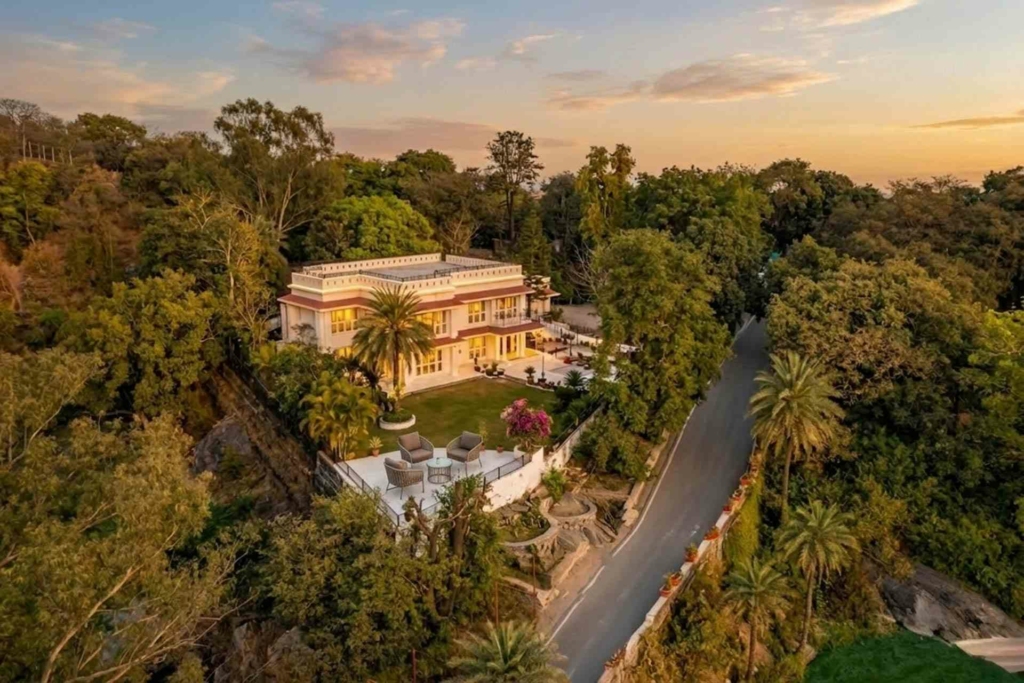
A villa in Mount Abu can be an excellent accommodation option for families and groups.
Many villas are located away from the busiest parts of town, allowing visitors to enjoy views of the surrounding hills while still remaining close to major attractions.
The monsoon season often makes these stays particularly enjoyable because of the cooler temperatures and scenic surroundings.
Mangal House by the Lake
Why Mount Abu Deserves a Place on Any Rajasthan Trip
Mount Abu is Rajasthan’s only hill station, and that alone makes it a worthwhile detour from the desert circuit of Jaipur, Jodhpur and Jaisalmer. The monsoon turns it into a mist-and-waterfall destination; October to February turns it into one of India’s quietest, most comfortable hill stations with a rare combination of Jain temple architecture (Dilwara), Aravalli summits (Guru Shikhar), lake walks (Nakki) and spiritual-retreat infrastructure (Brahma Kumaris). It’s rare for a destination this well-known to still feel this uncrowded outside the Winter Festival weekend — if your Rajasthan plans allow for two spare days, Mount Abu earns them.
FAQs
Yes. Mount Abu is generally considered safe during the monsoon. Visitors should follow weather updates and exercise normal caution while travelling on mountain roads.
July to September is excellent for monsoon scenery, while October to February provides cooler and drier weather.
Boating at Nakki Lake is largely closed during periods of heavy rain.
Tourist entry to the Dilwara Temples is generally free, although timings apply for non-pilgrims.
Mount Abu is Rajasthan’s only hill station.
The weather in Mount Abu during July is generally cool and pleasant, with temperatures often ranging between 18°C and 28°C.
Yes. Many visitors consider Mount Abu in the monsoon to be one of the most enjoyable times to experience the destination because of the greenery and cooler climate.
Boating charges generally start from around ₹50 per person, depending on the type of boat selected.
Yes — October is one of the best windows of the year. The monsoon has retreated, temperatures sit at a comfortable 20–28°C, humidity has dropped, and the landscape still carries its monsoon green. Weekends in October are quieter than the November–February peak season, which makes it the best time for a stress-free Dilwara visit before the winter tourist rush.
No. Cameras, mobile phones, laptops, smart watches and leather items (belts, bags, wallets) are strictly prohibited inside the Dilwara Temples complex. Lockers are available at the entry gate free of charge. This rule is strictly enforced — plan ahead and leave your valuables at your hotel if you’re not comfortable using the locker.
The Mount Abu Winter Festival is held annually from 29 to 31 December, celebrating the arrival of the new year with Rajasthani folk performances (kalbelia, ghoomar, gair), a shobha yatra to Nakki Lake, a boat race, cultural shows, adventure sports (rappelling, hot air ballooning), and a Bollywood music concert on the final evening. Accommodation books out 3–4 weeks ahead for this window — plan early.
Written By: Ruben Saha
Also Read: