

Can ChatGPT, Gemini or Perplexity Plan Your India Trip? 9 Errors to Catch Before You Book
Ask an AI assistant to plan four days in Goa and you’ll get something that looks excellent. Clean day-wise structure, sensible pacing, a beach for sunset and a waterfall for the afternoon. It reads like a travel agent wrote it.
Then you land in July and discover the waterfall safari has been shut for six weeks.
That gap — between an itinerary that reads well and one that survives contact with an actual Indian road — is where most AI trip planning quietly fails. Research reported through 2025 and 2026 found that 90% of AI-generated itineraries contained at least one factual error (Copyleaks, via Open Jaw). Not one in ten. Nine in ten. So where does an AI itinerary actually break?
TL;DR: Nine in ten AI-generated itineraries contain at least one factual error, and more than half suggest visiting places outside their operating hours (Copyleaks, 2025). On Indian routes the failures cluster in four places: seasonal road and attraction closures, drive times, permit rules, and altitude pacing. Check those four and the itinerary is usually salvageable.
How we checked this? Every error pattern below is a real, verifiable detail about a real Indian route — a road that genuinely shuts, a permit that genuinely exists, a monument that genuinely closes on a particular day. Each one is sourced and linked. This isn’t a scored head-to-head between the three assistants; it’s a field guide to the specific facts they tend to miss, ordered by how badly they miss them.
In this Blog
Why Do AI Trip Planners Get India Wrong So Often?
Because 68% of Indian travellers say they’re likely to use AI to plan their next trip (Agoda 2026 Travel Outlook Report) — and the models were trained on a web that documents Goa exhaustively and Spiti barely at all. An AI planner is only as good as what the internet wrote down about a place, and India’s internet coverage is wildly uneven.
There’s a second problem. A language model doesn’t know today’s date the way a road-status board does. It has no live feed for a pass that closed last Tuesday, a forest department that suspended safaris this morning, or a temple that shifted its timings last season. It produces the most plausible-sounding answer, which for travel means the answer that was true on average, some time ago.
The pattern worth knowing: AI itinerary accuracy tracks how thickly a destination is documented online, not how far away it is or how hard the trip is. That’s why the three routes below are ordered by data density — Goa, then Wayanad–Coorg, then Spiti. The errors don’t just multiply as you go up that ladder. They change character, from mildly annoying to genuinely unsafe.
The trust gap makes this sharper. Around 88% of Indian respondents said they trust AI-powered travel recommendations, and 53% said they rely completely on AI trip-planning apps while travelling (Agoda). High trust plus a 90% error rate is not a comfortable combination.
Worth saying plainly: none of this makes AI useless for trip planning. It makes it a first draft.
Itinerary 1 — Goa in Four Days: Where AI Looks Right and Isn’t
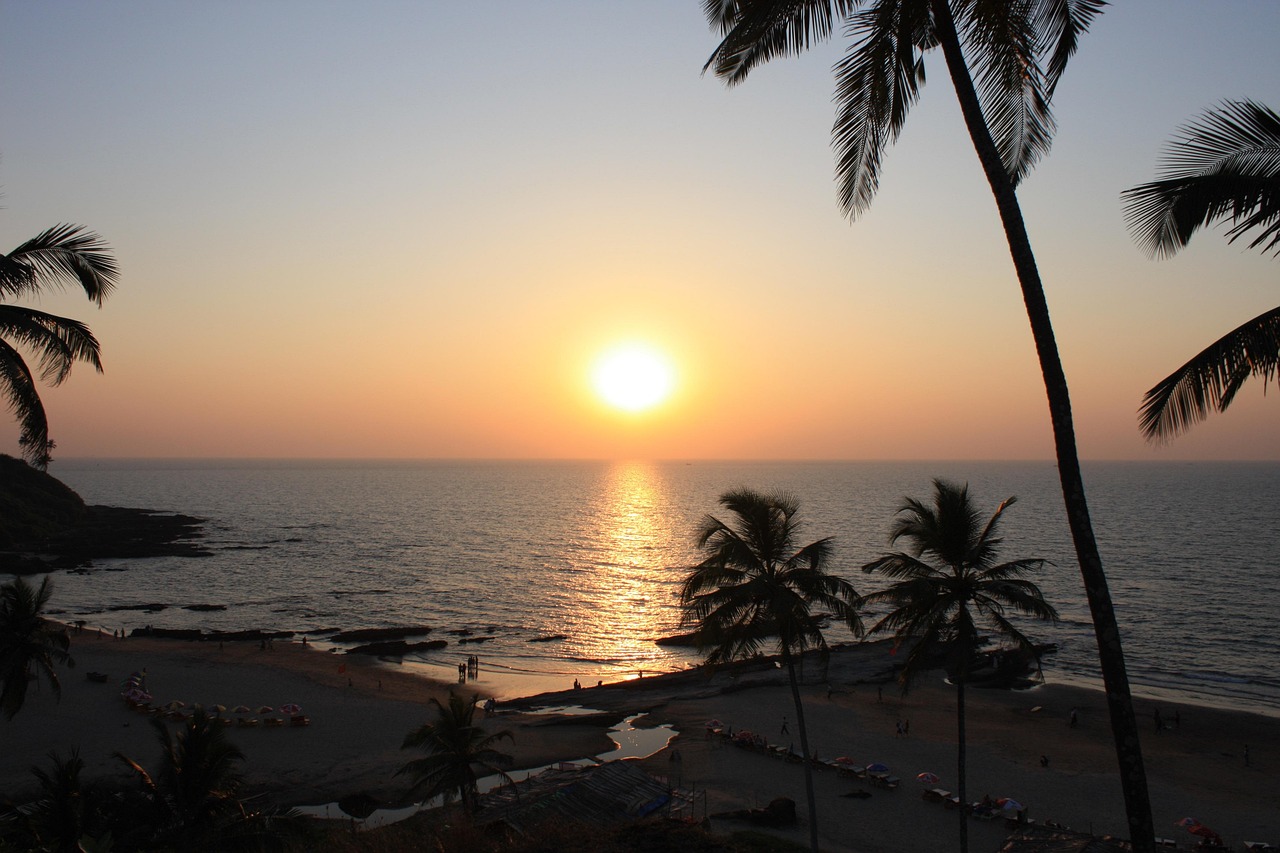
Goa is the best-documented leisure destination in India, so AI planners handle the shape of the trip well. The failures here are seasonal, and they’re the sneaky kind: the itinerary stays plausible right up to the moment you arrive. Goa’s southwest monsoon runs roughly June to September, with July and August the wettest (India Someday).
Show Image
Error 1: Water sports booked into a monsoon. Drishti Marine, the agency that runs beach safety across Goa, issues a monsoon advisory every year stating that swimming and water activities aren’t advisable from June to September. Parasailing, jet skis and banana boats aren’t running in any reliable way in July. An AI planner that slots “Day 2: water sports at Baga” into a mid-July trip isn’t lying, exactly. It’s averaging across a year that has two very different halves. Does that make a July trip pointless? Not remotely. It makes the AI’s version of it wrong.
Error 2: Dudhsagar by jeep in the rain. This is the one that catches people. Dudhsagar Falls is at its most spectacular during the monsoon, so it reads as an obvious monsoon pick — and the jeep safari through Mollem is suspended precisely then, closed roughly June through September, reopening around early October (NativePlanet). Forest entry is ₹20 per person with ₹30 for a still camera, and safari bookings start near ₹400 per person when the season is open.
The workaround is genuinely lovely, and almost no AI itinerary offers it: during peak monsoon the falls are visible from the train on the Vasco da Gama–Castle Rock line. We wrote that route up separately in our Dudhsagar Falls monsoon train guide.
Error 3: Shack-dependent evenings. Beach shacks have historically not operated between June and August, though the rules on dismantling the structures have loosened. If your itinerary hangs three dinners on named shacks, check whether they’re serving before you plan around them.
Citable summary: Goa’s monsoon runs June to September, and Drishti Marine advises against swimming and water activities across that window. The Dudhsagar jeep safari is suspended for the same months, reopening around early October (NativePlanet). AI planners rarely flag either, because both facts are seasonal rather than permanent.
Planning a rainy-season trip on purpose? Our guide to where to travel in India during the monsoon covers the destinations that actually improve when it pours.
Itinerary 2 — Wayanad and Coorg in Five Days: The Drive-Time and Closure Trap
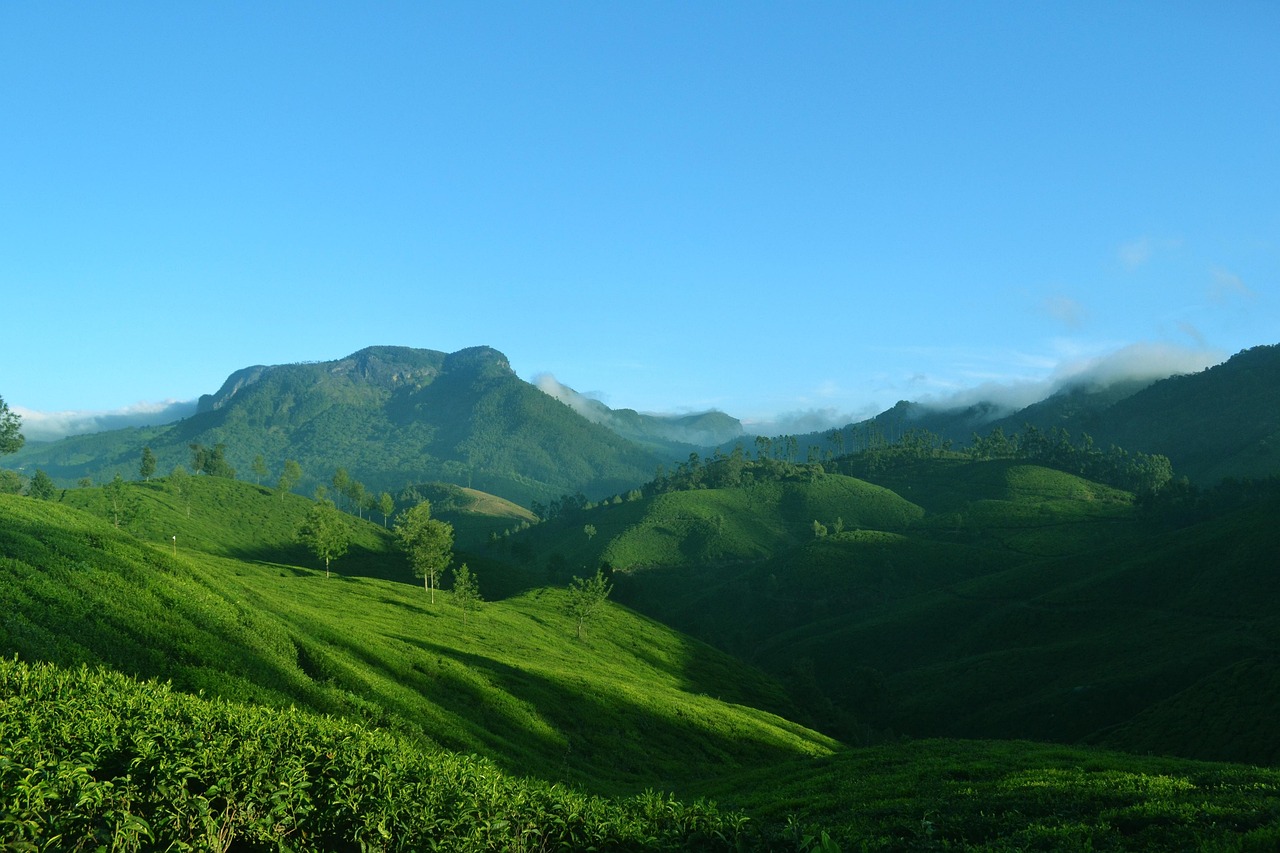
Two hill districts, one border, moderate online documentation. This is where AI itineraries start breaking in ways that cost you half a day rather than an afternoon. Wayanad to Coorg is 130 to 135 km and takes about three hours via Mananthavady, Kutta and Virajpet (Savaari) — a figure we’ve now published twice, because optimistic two-hour estimates keep circulating.
Show Image
Error 4: Drive times borrowed from straight-line distance. Ask for a Wayanad–Coorg hop and you’ll often get “about two hours.” The road is ghat road through plantation country and around the edge of Nagarhole. Three hours is the honest number, more in heavy rain. We broke the whole route down in our Wayanad to Coorg distance and monsoon guide.
Error 5: Night driving through a closed forest highway. This one AI planners miss almost universally. National Highway 766 between Gundlupet and Sultan Bathery cuts through Bandipur Tiger Reserve, and night traffic has been banned there since a 2009 order under the Motor Vehicles Act — 9 pm to 6 am for vehicles, and from 6 pm for two-wheelers (Deccan Herald). Roughly 34.6 km of the highway runs through the reserve (ThePrint). An itinerary that has you leaving Mysuru at 8 pm to reach Wayanad by midnight simply doesn’t work. And how would a model know? The restriction lives in a state transport notification, not a travel guide.
Error 6: Monday-blind attraction stacking. Edakkal Caves closes on Mondays and national holidays, runs 8 am to 4 pm, and charges ₹50 for adults, ₹30 for children and ₹70 for foreign nationals. Slot it into a Monday and you’ve lost the morning. AI planners distribute attractions to look balanced across days. They don’t cross-check weekly closures.
Error 7: Permit-capped treks treated as walk-ups. Chembra Peak needs a forest office permit, caps entry at 200 trekkers a day, and stops issuing permits around 2 pm with entry running 7 am to 3 pm (NativePlanet). Trekking fees run about ₹4,000 for five people plus ₹800 per additional person for Indian visitors. “Afternoon: hike Chembra Peak” is not a plan you can execute.
Citable summary: Night traffic on NH-766 through Bandipur Tiger Reserve has been prohibited from 9 pm to 6 am since 2009, and from 6 pm for two-wheelers (Deccan Herald). Chembra Peak caps trekkers at 200 per day with permits closing around 2 pm. Both constraints routinely break AI-generated Wayanad itineraries.
Our places to visit in Wayanad list carries current timings and fees for the rest of the district.
Itinerary 3 — Spiti in Seven Days: Where an AI Itinerary Can Actually Hurt You
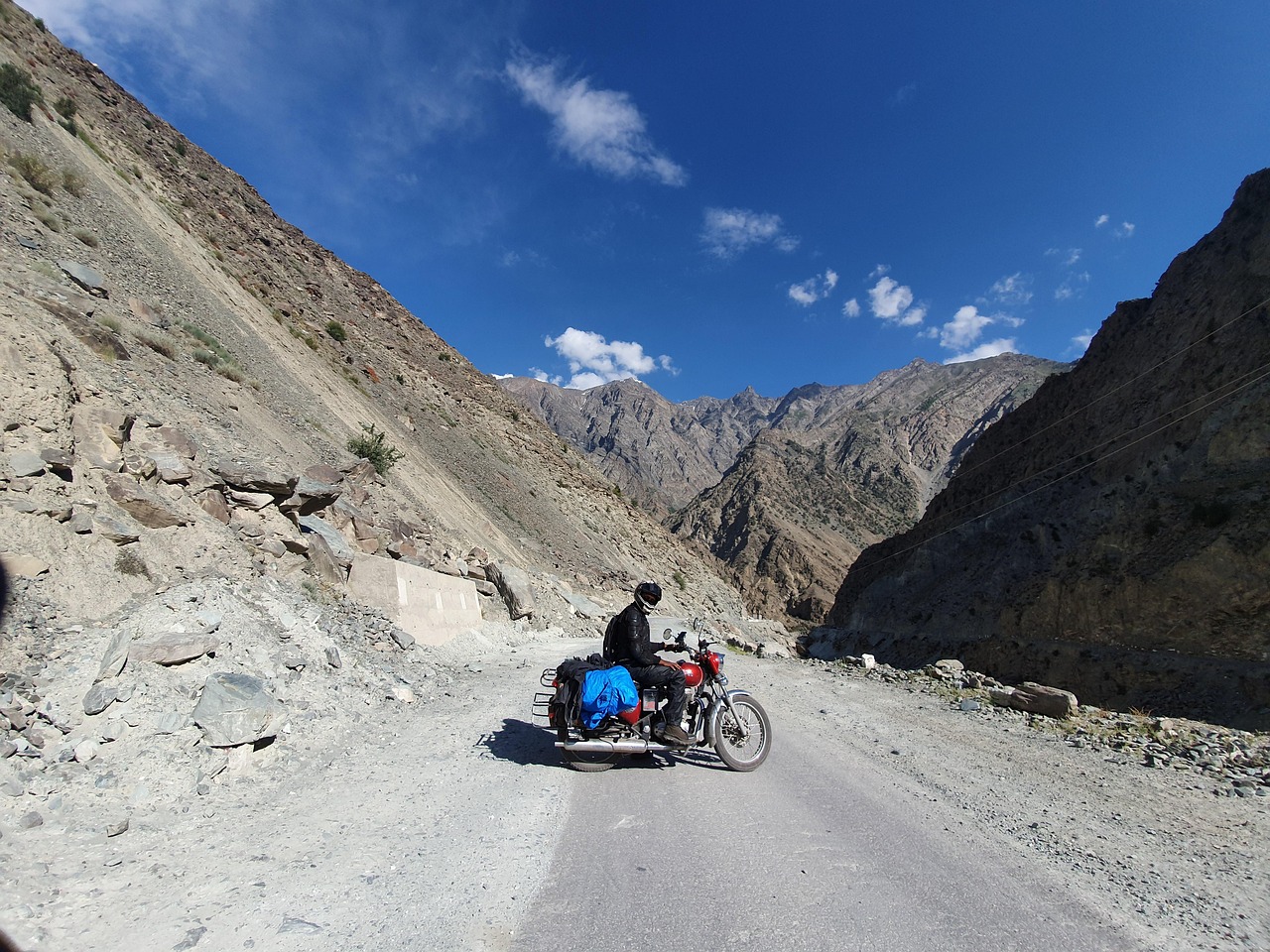
Spiti is thinly documented, seasonally brutal and administratively fiddly — the exact combination that produces confident nonsense. And here the stakes change. A wrong drive time costs you an afternoon. Wrong altitude pacing at Kaza’s 3,800 m, on a road typically shut from November to April (Vargis Khan), sends someone to a clinic.
Show Image
Error 8: A winter Manali–Kaza itinerary that can’t be driven. The Manali–Kaza route closes for winter, roughly November through April, when Kunzum Pass is under snow. Kunzum typically opens between late May and the second week of June, and shuts by late October or early November — sometimes as early as late September after an early snowfall (Vargis Khan). Ask for a January Spiti trip and you may well get a Manali-based route, complete with day-wise stops that are physically unreachable.
The Atal Tunnel, open since October 2020, is what confuses this. It bypasses Rohtang year-round, and that fact is well documented online — so AI planners often conclude the whole route is open. It isn’t. The stretch from Gramphu over Kunzum to Kaza still shuts in winter. The year-round approach is Shimla–Kinnaur, which has no pass that blocks permanently, though the Nako–Kaza section can close for two or three days to two or three weeks in heavy December-to-February snow.
Error 9: Altitude gained faster than a body can take it. Kaza sits at about 3,800 m. Manali is around 2,000 m, and the Manali route crosses Kunzum at roughly 4,500 m. Doing that in a single day means climbing 2,500 m and dropping back — and a pounding headache on arrival, with someone vomiting by evening, is a common outcome (Vargis Khan). The Shimla–Kinnaur approach gives you three to four days of stepped gain instead. Regional guidance is to spend a minimum of two nights in Kaza before going higher.
Ask an AI planner for “7 days in Spiti” and you’ll frequently get Day 1 Manali, Day 2 Kaza. It’s the shortest path on a map. It’s also the itinerary most likely to end with someone on oxygen. Would an experienced local operator route you that way? Not one who’d driven it.
The extra error, for foreign travellers: Inner Line Permits. Foreign nationals need an ILP or Protected Area Permit once past Jangi — about 35 km from Reckong Peo — covering Nako, Tabo, Dhankar, Kaza and beyond. Permits are issued at DM, SDM and ADC offices including Reckong Peo and Kaza, and a PAP generally has to be arranged through a registered travel agent with passport, visa, three photographs and a full itinerary (Discover with Dheeraj). AI itineraries mention permits sometimes. They rarely tell you where the boundary sits, or that an agent may be required.
Citable summary: The Manali–Kaza road into Spiti closes roughly November to April, with Kunzum Pass typically opening between late May and mid-June (Vargis Khan). Kaza sits at 3,800 m, and the Manali approach crosses 4,500 m in a single day, making acute mountain sickness likely. The Shimla–Kinnaur route stays open year-round with gentler altitude gain.
Which Errors Should You Check First?
Start with timing, because that’s where the volume is. Audits found more than half of AI itineraries suggested visiting a site outside its operating hours, and close to a quarter recommended attractions that had permanently closed (Copyleaks, via Open Jaw). Timing errors are also the cheapest to fix — one search each.
Sorted by how much damage they do, Indian-route errors fall into four buckets:
- Seasonal closures — roads, safaris, water sports, shacks. High frequency, high cost, and the category AI handles worst because the truth changes four times a year.
- Operating hours and weekly closures — the Monday-closed museum, the 2 pm permit cutoff. Highest frequency, lowest cost, trivially checkable.
- Drive times — consistently optimistic on ghat roads and anything crossing a state border.
- Permits and restrictions — ILPs, trek caps, night traffic bans. Low frequency, but the one that can end a trip on the spot.
Worth noticing: These four categories share one trait. Every single one is a fact that exists on a government or forest department noticeboard rather than in a travel blog. That’s the real boundary of AI trip planning — not obscure destinations, but administratively governed facts that were never written down at scale on the open web.
Why does this matter more each year? Because reliance is climbing faster than accuracy is. Look at the numbers for Indian travellers specifically.
Fifty-three percent relying completely on a tool with a nine-in-ten error rate is the whole story in one line.
How Do You Sanity-Check an AI Itinerary in 20 Minutes?
Run four checks, in this order. More than half of audited AI itineraries suggested visiting a place outside its operating hours (Copyleaks, 2025), so timing comes first. Between them these four catch most of what goes wrong, and none takes more than a few minutes.
Check 1: Season-test every outdoor activity. Take each water-based, trek-based or safari-based item and search it with your travel month attached. “Dudhsagar jeep safari July” answers itself in one result. If an activity depends on weather, assume the itinerary is wrong until you’ve confirmed otherwise.
Check 2: Verify the weekly closure of every ticketed site. Museums, caves, forts, monuments. The Taj Mahal is closed to general visitors every Friday for congregational prayers, and Agra Fort follows a different pattern altogether — an AI itinerary pairing them on a Friday is a classic. One search per site.
Check 3: Re-price every drive on a live maps app. Not the AI’s estimate — a live routing app, ideally at the hour you’ll actually drive. Add 30% for ghat roads and monsoon. Then check whether the road has a night restriction, which no maps app will tell you either.
Check 4: Search “[destination] permit” before you book anything. ILPs, forest permits, trek caps, daily visitor limits. If the answer is yes, find out where it’s issued and whether it needs an agent. This is the check people skip, and the one that turns into a wasted flight. Sounds like a chore? It’s four searches.
Citable summary: Four checks catch most AI itinerary failures on Indian routes: season-test outdoor activities against your travel month, confirm weekly closures for ticketed sites, re-price drives on a live routing app, and search for permit requirements. More than half of audited AI itineraries suggested visits outside operating hours (Copyleaks, 2025), which Check 2 alone resolves.
For a route-level starting point that already has timings and fees built in, our best places to visit in India for first-time travellers guide is structured around exactly these constraints.
What Is AI Genuinely Good At When Planning an India Trip?
Quite a lot, and it’s worth being fair about it. Among travellers who intend to use AI, the leading uses are recommendations (75%), itinerary planning (70%) and discovery (69%), while only 13% expect to use it for booking (IMG Travel Outlook Survey). People are already using it as an idea machine rather than an authority, which is roughly the correct instinct.
AI is strong at shortlisting — narrowing forty possible destinations to five that match your dates, budget and tolerance for driving. It’s good at structure, at producing a defensible day-by-day skeleton you can then correct. It’s excellent at the tedious comparison work: three regions, four criteria, one table. And it’s genuinely useful for the questions that have stable answers, like what to pack for a cold desert in October.
What it can’t do is know what changed this week. That’s not a flaw you can prompt your way out of.
Frequently Asked Questions
Partly. It produces a well-structured skeleton but misses time-sensitive detail. Audits found 90% of AI-generated itineraries contained at least one factual error, with more than half suggesting visits outside operating hours (Copyleaks, 2025). Treat the output as a first draft, then verify seasons, closures, drive times and permits.
None is reliably accurate on time-sensitive Indian detail, because the limitation is shared: no live feed for road status, permits or forest department notices. Tools with live web search cite sources you can check, which helps. Accuracy tracks how well a destination is documented online more than which assistant you use.
Because closures change several times a year and are usually published on government or forest department notices rather than travel sites. Dudhsagar’s jeep safari shuts June to September and reopens around early October (NativePlanet). A model trained on averaged web text reproduces the average year, not this one.
Not without checking altitude pacing and road status. Kaza sits at 3,800 m, and the Manali route crosses Kunzum Pass at roughly 4,500 m in a single day, which commonly triggers acute mountain sickness (Vargis Khan). The Manali–Kaza road is also typically closed November to April.
68% of Indian travellers say they’re likely to use AI for their next trip, 88% report trusting AI-powered travel recommendations, and 53% say they rely completely on AI trip-planning apps while travelling (Agoda 2026 Travel Outlook Report). India is among the world’s most AI-receptive travel markets.
The Short Version
AI trip planning in India fails in a predictable pattern, and that predictability is good news — a predictable failure is a checkable one.
- Nine in ten AI itineraries carry at least one factual error, and over half get operating hours wrong (Copyleaks, 2025).
- Errors scale with how thinly a destination is documented. Goa gets seasonal mistakes, Wayanad–Coorg gets logistics mistakes, Spiti gets mistakes that affect your safety.
- The four checks that matter: season-test outdoor activities, confirm weekly closures, re-price drives live, search for permits.
- Use AI for shortlisting and structure, not for anything that could have changed since last season.
- 68% of Indian travellers plan to use AI on their next trip (Agoda). The tool isn’t going away, so the checking habit has to arrive instead.
Use the machine for the shortlist. Do the verification yourself. Then book somewhere that already knows which roads are open — start with the StayVista Journal for route-tested guides across all three regions above.
Also Read: