
14 Best Monsoon Weekend Getaways from Bangalore in 2026
Last updated: June 2026
TL;DR: The best monsoon weekend getaways from Bangalore sit along its natural travel arc — the Western Ghats to the west and the dry Deccan and rain-shadow coast to the east. For green hills and waterfalls, drive 4–6 hours to Coorg, Chikmagalur or Sakleshpur. For wildlife, base near Kabini or BR Hills. For drier skies, head to Hampi or Pondicherry. The 2026 monsoon is forecast below-normal (~90% of average) and arrived a few days late, so expect lush days broken by clear spells rather than non-stop rain. Drive Ghat roads only in daylight, and never approach a waterfall in full spate.
In this Blog
Monsoon getaways from Bangalore at a glance
| Best time | June to September for green hills; July–October for peak waterfalls |
| How to reach | Self-drive or cab; Western Ghats picks are 4–6 hrs west, Deccan/coast picks 3–7 hrs |
| Nearest airport/station | Kempegowda International (BLR) and KSR Bengaluru City station are the hubs |
| Ideal duration | A weekend (2 nights) for most; 3 days for Wayanad, Ooty or Hampi |
| 2026 monsoon note | below-normal (~90% of average), arrived a few days late; expect rain in spells, not constant downpour |
The best monsoon weekend getaways from Bangalore in 2026
Bangalore is unusually lucky in the rains. Drive a few hours west and you are deep in the Western Ghats — Coorg, Chikmagalur, Sakleshpur, the Nilgiris — where the monsoon turns coffee country a saturated green and switches every dry gully into a waterfall. Drive a few hours east or north instead and you reach the Deccan plateau and the Coromandel coast, both far drier in these months, so Hampi and Pondicherry give you ruins and beaches without the relentless wet. That spread is the whole point of this list: we have anchored the 14 picks on where Bangaloreans naturally travel for a weekend, not on any one stay type, so you can match the trip to the weather you actually want.
A quick honesty note on the season. The IMD’s 2026 monsoon outlook is for below-normal rainfall, around 90% of the long-period average, and the monsoon reached Kerala and south Karnataka a few days later than usual. In plain terms: the Ghats will still be green and the waterfalls will still run, but you are likely to get workable clear windows between spells rather than days of unbroken rain. That is good news for a weekend — just keep your plans flexible and your driving to daylight.
Monsoon safety from Bangalore (StayVista’s signature box — read before you book)
– Drive Ghat roads in daylight only. The Shiradi, Sampaje, Bisle and Mettupalayam–Coonoor ghats see minor landslides and slips most monsoons; a falling tree or a blocked bend after dark is a real risk.
– Never approach a waterfall in spate. At Shivanasamudra, Hogenakkal and similar falls, bottom-access and coracle rides are closed in high water for good reason — lives have been lost. View from the marked platforms and stay behind barriers.
– Mind the Wayanad caveat. After the July 2024 Mundakkai–Chooralmala landslides, avoid that specific belt; base in the safer Vythiri–Kalpetta side instead.
– Carry the basics: waterproof jacket, quick-dry clothes, grippy shoes, a power bank, and salt or repellent for leeches on plantation and forest trails.
– Keep a buffer day. Ghat closures and bridge cut-offs can add hours; don’t schedule a flight the same evening you drive back.
The Western Ghats picks (green hills, coffee and waterfalls)
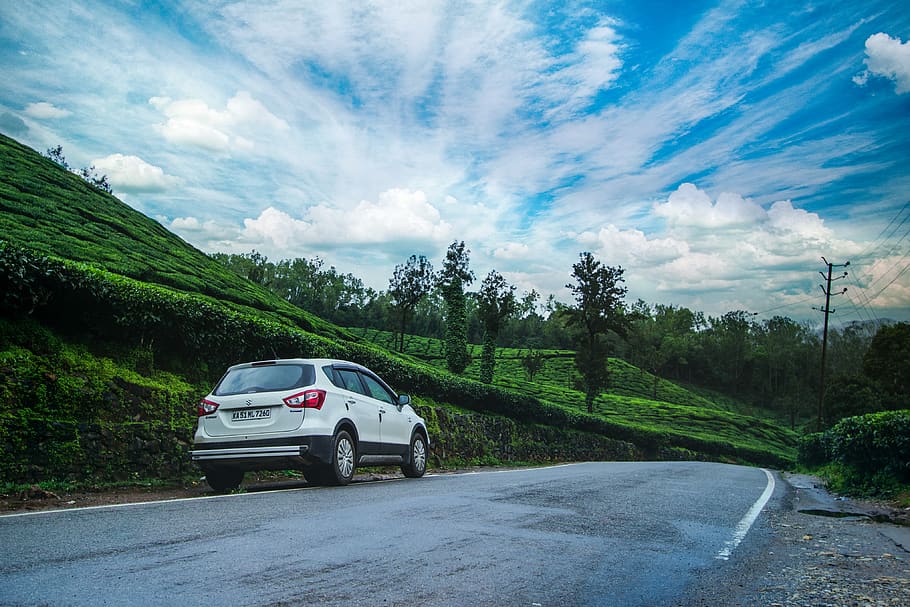
These are the classic monsoon weekends — wettest, greenest, and the reason Bangaloreans put up with the traffic out of the city. Expect mist, leeches on the trails, and the occasional ghat slip; expect, too, the best rain-season scenery in South India.
Coorg — 250 km, 5–6 hrs
Coorg (Kodagu) is the default monsoon escape for a reason: rolling coffee and spice estates that go almost luminous green in the rain, plus waterfalls running at full volume. The headline sight is Abbey Falls near Madikeri — entry around ₹15, open roughly 9 AM to 5 PM, about 8 km from town with a short walk through plantations to a viewing bridge. Best for couples and families who want scenery over strenuous activity; the trekking peaks like Tadiandamol get slippery and leech-heavy in peak rain, so save serious hikes for later. Time required is a full weekend. Pro tip: the steps at Abbey Falls get genuinely slick — wear grippy shoes and keep children close. For the full picture, see our complete monsoon guide to Coorg and the detailed Bangalore-to-Coorg monsoon drive.
Chikmagalur — 245 km, 5 hrs
Chikmagalur is Coorg’s quieter cousin — coffee estates, fog-draped peaks, and waterfalls like Hebbe and Jhari that roar to life in the rains. Mullayanagiri, Karnataka’s highest peak, is here, though the summit road and trails are often cloud-wrapped and slippery in heavy monsoon, so treat a clear morning as a bonus rather than a plan. Best for couples and small groups who want plantation walks, filter coffee and a slow pace. Time required is a weekend; entry to most viewpoints and falls is a nominal fee paid at the gate. Pro tip: Hebbe Falls is reached by a jeep ride plus a short wade-prone walk that the forest department may restrict in spate — confirm access locally before setting out. Our Chikmagalur travel guide covers estates and stays in depth.
Sakleshpur — 220 km, 4–5 hrs
Sakleshpur is the underrated one — closer than Coorg, with the same coffee-and-spice landscape and the dramatic Bisle Ghat viewpoint looking over three mountain ranges and the Kumaradhara valley. In the monsoon the whole basin fills with cloud, which is the magic and the catch: when it socks in, you see white instead of the view. Best for couples and friends after a short, scenic reset. Time required is a weekend; the viewpoint is free, roughly 35–40 km (1–1.5 hrs) from Sakleshpur town. Pro tip: the railway-track trek is popular but is on a live, restricted line and trees do fall across the Bisle road in heavy rain — go in daylight, skip the tracks, and don’t push on in a downpour. See our guide on Sakleshpur in monsoon and how to reach it from Bangalore.
Wayanad — about 280 km, 6–7 hrs
Wayanad, just over the Kerala border, is all waterfalls, spice gardens and glowing paddy in the rains. It comes with an essential caveat: after the July 2024 Mundakkai–Chooralmala landslides, avoid that specific belt and base yourself on the safer Vythiri–Kalpetta side, which stays well-connected and is fine for first-timers. Best for couples and families who can spare 2–3 days; this is not a one-night dash. The serious landslide-risk window is mid-July to August, when slopes are fully saturated, so early or late monsoon is the more comfortable bet. Pro tip: several trek and dam areas (Chembra, Banasura) close or restrict access in heavy rain — check what’s open the week you travel. The Kerala Tourism Wayanad site lists current conditions.
Ooty — about 270 km, 5–6 hrs
Ooty, the Nilgiri queen, is cool, green and busy even in the rains. The Botanical Garden, Ooty Lake and the toy-train ride are the staples, and the post-rain blooms are genuinely good. The honest monsoon note: July is the heaviest month here, with frequent mist and the occasional ghat closure, so it suits travellers who actively enjoy rain and don’t need reliable road timing. Best for families and couples who want a hill-station classic over adventure. Time required is 2–3 days; pack a light layer, as evenings turn properly cold. Pro tip: the Mettupalayam–Coonoor ghat is landslide-prone in July and can shut for hours — build in slack and avoid night driving on it.
Coonoor — about 270 km, 5–6 hrs
If Ooty feels too crowded, stop short at Coonoor — smaller, leafier and surrounded by tea estates, with Sim’s Park, Dolphin’s Nose and Lamb’s Rock as the main viewpoints (best caught between showers, as cloud rolls in fast). Best for couples and anyone wanting a slower Nilgiri base; it pairs naturally with Ooty on the same trip. Time required is 1–2 days; the Nilgiri Mountain Railway, a UNESCO site, runs through here, though monsoon services can be disrupted by track slips. Pro tip: the same Mettupalayam ghat caution applies — check road and train status the morning you travel.
The wildlife picks (forest, buffer zones and safaris)
A monsoon caveat up front: most national-park core/safari zones run reduced operations in the rains and some close entirely, because tracks turn to mud and animals scatter in the green. You come for the dripping forest and the chance of a sighting, not a guaranteed one — and you base in the buffer.
Kabini / Nagarhole (buffer) — about 220 km, 5–6 hrs
The Kabini side of Nagarhole is the marquee wildlife weekend from Bangalore, famous for elephants and the occasional black panther. In the monsoon, official safaris run a reduced schedule and can pause after heavy rain, so go for the lush, low-season forest rather than a packed sighting list, and confirm safari status with your stay before booking. Best for couples and families happy to swap certainty for atmosphere and lower crowds. Time required is a weekend. Pro tip: book through your property or the forest department and keep the day flexible; the boat safaris on the backwaters are weather-dependent. See Karnataka Tourism for park updates.
BR Hills — about 200 km, 4.5 hrs
Biligiri Rangana Betta (BR Hills), where the Western and Eastern Ghats meet, is a quieter, higher alternative — mist, sholas and a tiger reserve, with the hilltop Rangaswamy temple as a landmark. Safaris run in two morning batches and, like all reserves, scale back in the rains; the dry months see more sightings, but the monsoon delivers the best mood. Best for couples and small groups after forest calm over a checklist. Time required is a weekend. Pro tip: the hilltop can be fully clouded — carry a layer and don’t expect the long valley views every day. Kabini is about an hour away if you want to combine the two.
The view-only and offbeat picks
Shivanasamudra Falls — 130 km, 3 hrs (view only in monsoon)
When the Cauvery is high, the twin falls of Gaganachukki and Bharachukki at Shivanasamudra are spectacular — and dangerous. In the monsoon the river is in full spate, so bottom-access and the coracle rides are closed and you view strictly from the marked platforms (Bharachukki’s platform area typically open ~8 AM–5 PM, a nominal fee). Best for a day trip or a half-day add-on; do not try to get into the water. Time required is 2–3 hours at the falls. Pro tip: treat every barrier as non-negotiable here — people have died wading at these falls. Our safe monsoon places guide explains why waterfalls in spate top the danger list.
Hampi — 340 km, 6.5–7 hrs
Hampi flips the script: the Vijayanagara ruins sit on the dry Deccan, so you get far less rain than the Ghats while the surrounding Tungabhadra runs full and the boulder landscape turns green at the edges. Most temples and the bazaar are open through the day (the Vittala complex and Virupapur Gadde “island” side may see coracle-only access if the river is high). Best for history lovers and couples who would rather walk ruins than dodge downpours. Time required is 2–3 days. Pro tip: it can still be hot and humid here even in the monsoon — start early, carry water, and check coracle status before relying on the river crossing. Background on the Tungabhadra and the Hampi UNESCO site helps you plan a route.
Pondicherry — 320 km, 6–7 hrs
Pondicherry sits in the Western Ghats’ rain shadow, so while Bangalore’s hills are soaking, the French Quarter and its beach promenade stay relatively dry — the Coromandel coast gets most of its rain later, in the October–December northeast monsoon. Expect warm, humid days, café-lined streets and Auroville nearby. Best for couples and friends after a relaxed, walkable weekend rather than nature and hills. Time required is 2–3 days. Pro tip: the sea is rough and swimming is unsafe along the rocky Promenade — go to Paradise or Auroville beach for a swim, and check sea conditions if you’re heading out on the water.
Nandi Hills (Chikballapur) — 60 km, 1.5 hrs
The closest pick on this list, Nandi Hills is the easy monsoon morning out — sunrise above a sea of cloud, a fort, and Tipu’s old summer spots. Entry is a nominal ₹15-ish, gates open early (around 6 AM), and the cloud inversions are at their best in the rains. Best for an early-start day trip with friends, families or a sunrise-chasing solo run. Time required is a half-day. Pro tip: go on a weekday and arrive by 5:30–6 AM — weekend crowds and a one-way vehicle system can mean long queues, and the view clears fast once the sun is up.
Yercaud — 215 km, 4–5 hrs
Yercaud, the “poor man’s Ooty” in Tamil Nadu’s Shevaroy Hills, is a low-key coffee-and-orange-grove hill station that stays gentler and less crowded than the Nilgiris. The lake, Pagoda Point and the Botanical Garden are the main stops, and the monsoon greens it nicely without the Nilgiris’ heavy-rain disruption. Best for couples and families who want a quiet, affordable hill weekend. Time required is a weekend. Pro tip: the 20-hairpin climb is scenic but slippery in rain — drive it in daylight and let faster vehicles pass.
Hassan – Belur – Halebidu — about 185 km, 3–3.5 hrs
For something different, base in Hassan and visit the Hoysala temples at Belur and Halebidu — among the Sacred Ensembles of the Hoysalas, inscribed by UNESCO in 2023. The intricate stone carving actually looks its best under monsoon’s soft, even light, and the sites are open through the day with low or no entry fees. Best for history and architecture lovers, couples and families with older kids. Time required is 1–2 days; the two temple towns are about 16 km apart and roughly 30 km from Hassan. Pro tip: carry a small torch — the carved interiors are dim — and pair the temples with nearby Shravanabelagola if you have a second day.
Plan it: how to choose your monsoon weekend
Want green hills and waterfalls? Pick Coorg, Chikmagalur or Sakleshpur — all 4–6 hours west, all peaking in July–September. Sakleshpur is the shortest drive; Coorg has the most to do.
Want wildlife and forest? Base near Kabini or BR Hills (4.5–6 hours), accept reduced monsoon safaris, and go for atmosphere over guaranteed sightings.
Want to dodge the heavy rain? Head east or north to Hampi (ruins, drier Deccan) or Pondicherry (rain-shadow coast) — both stay relatively dry while the Ghats soak.
Only have a day? Nandi Hills for a cloud-inversion sunrise (1.5 hrs), or Shivanasamudra for waterfalls in spate, viewed safely from the platforms (3 hrs).
Two-night classic itinerary: Friday evening drive to Coorg or Chikmagalur, Saturday for estates and a waterfall, Sunday for a slow morning and the drive back — leaving a daylight buffer for any ghat delays.
Where to stay (StayVista)
Where StayVista has stays that genuinely fit a pick, here’s where they slot in — but the destinations above stand on their own whether you stay with us or not.
- Coffee & Mist, Coorg — a 5-acre coffee-estate property near Madikeri that wakes up under mist in the mornings; an easy base for Abbey Falls and Madikeri.
- Firefly by the River, Coorg — overlooking the Harangi river, paddy fields and bamboo groves; good for a quieter, water-side Coorg weekend.
- Cicada, Chikmagalur — a hilltop coffee-plantation farmhouse with wide valley views and birdlife; a relaxed spot for a Chikmagalur reset.
For wildlife bases (Kabini, BR Hills), hill-town picks (Ooty, Coonoor, Yercaud) and the drier escapes (Hampi, Pondicherry), look for stays in the safer, well-connected parts of each town — and read the monsoon notes above before you lock dates.
CTA box — Travelling in the rains? Pick your stay first, then plan the drive around daylight and a buffer day. Browse StayVista homes in Coorg and Chikmagalur for the Western Ghats end of this list. (CTA 1 of 3 max.)
For more route-level help, our canonical guide to places to visit in Karnataka in monsoon maps the whole state, and the safe monsoon places guide covers what to avoid.
FAQ: monsoon weekend getaways from Bangalore
Which is the best monsoon getaway from Bangalore?
For most travellers, Coorg is the best all-round monsoon weekend from Bangalore — about 5–6 hours west, with green coffee estates and waterfalls like Abbey Falls at full flow from July to October. If you want a shorter drive, Sakleshpur (4–5 hours) offers the same Western Ghats scenery with fewer crowds.
Is it safe to travel near Bangalore during the monsoon?
Yes, with sensible precautions. Drive Western Ghats roads (Shiradi, Sampaje, Bisle, Mettupalayam) in daylight only, never approach waterfalls in spate, and avoid the 2024 Wayanad landslide belt (Mundakkai–Chooralmala) — base in safer Vythiri–Kalpetta instead. Keep a buffer day for possible ghat closures.
Where can I go from Bangalore to avoid heavy rain in monsoon?
Head east or north to the drier side. Hampi sits on the Deccan plateau and Pondicherry lies in the Western Ghats’ rain shadow, so both stay relatively dry in June–September while the hills to the west are soaking. The Coromandel coast gets most of its rain later, in the October–December northeast monsoon.
Is the 2026 monsoon good for travel near Bangalore?
The IMD forecasts a below-normal 2026 monsoon (around 90% of the long-period average), and it arrived a few days late. For weekend travel that’s actually convenient — expect a lush landscape with workable clear spells between rain, rather than days of non-stop downpour. Just keep plans flexible and drive in daylight.
Can you see waterfalls safely near Bangalore in monsoon?
Yes, from marked viewpoints. At Shivanasamudra (130 km) and similar falls, the river is in full spate, so bottom-access and coracle rides are closed and you view from the platforms only. Abbey Falls in Coorg has a viewing bridge. Never wade or cross barriers — lives have been lost at these falls in high water.
What’s a good monsoon weekend getaway from Bangalore for wildlife?
Base near Kabini (Nagarhole buffer) or BR Hills, both 4.5–6 hours away. Note that national-park safaris run reduced schedules in the monsoon and can pause after heavy rain, so go for the green, low-crowd forest atmosphere and confirm safari status with your stay before booking.
How many days do I need for a monsoon trip from Bangalore?
A two-night weekend works for Coorg, Chikmagalur, Sakleshpur, Yercaud, BR Hills and Kabini. Give Wayanad, Ooty and Hampi 2–3 days. Nandi Hills and Shivanasamudra are comfortable day trips.
Is Wayanad safe to visit in monsoon after the 2024 landslides?
Parts of it are. Avoid the Mundakkai–Chooralmala belt that was hit in July 2024, and base instead in the safer, well-connected Vythiri–Kalpetta side. The highest landslide risk is mid-July to August when slopes are saturated, so early or late monsoon is more comfortable, and you should always check current road and trek status before travelling.
Conclusion
The reason Bangalore is such a good monsoon launchpad is range: in the same season you can chase waterfalls in Coorg, walk misty coffee estates in Chikmagalur, dodge the rain entirely in Hampi or Pondicherry, or just catch sunrise above the clouds at Nandi Hills. Match the trip to the weather you want, respect the Ghats — daylight driving, no waterfalls in spate, the Wayanad caveat — and keep a buffer day in hand. Do that, and the rains turn an ordinary weekend into one of the best times of year to leave the city.