
Char Dham Yatra Guide: Itinerary, Helicopter Packages, Stay

Last Updated: October, 2026
The Chhota Char Dham is the Uttarakhand Himalayan pilgrimage circuit of 4 shrines — Yamunotri, Gangotri, Kedarnath, Badrinath. Traditional sequence: west to east. Char Dham 2026 closes in next 2-3 weeks. Char Dham 2027 opens May 9, 2027 (Akshaya Tritiya). Mandatory online registration at registrationandtouristcare.uk.gov.in. By road: 10-12 days from Rishikesh. By helicopter: 2-3 days. Altitudes above 3,000 metres carry AMS risk. Traditional dress code at all four shrines.
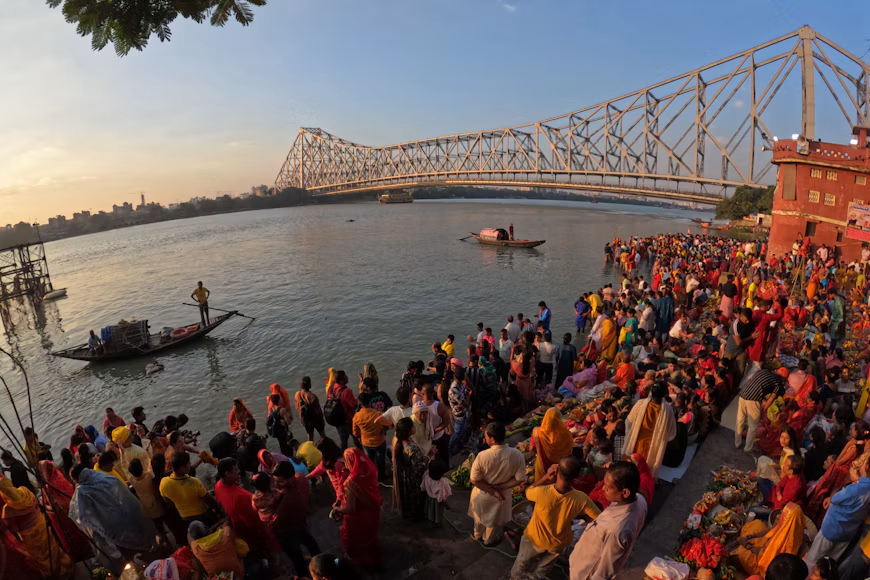
The holy Uttarakhand Char Dham Yatra is one of the most sought-after places in India. With deep rooted spiritual beliefs, the sites are frequented by nearly 54 lakh pilgrims and are some of the top visited places in India. Call it due to its serene valley, rocky stretches, making it one of the most difficult treks in India or an ideal summer destination in India, Char Dham is inspiring and challenging. Situated in the Garhwal region of Uttarakhand, the four sites – Yamunotri, Gangotri, Kedarnath and Badrinath can take nearly 10 days to complete.
Although there are many Char Dham Yatra family packages that will cover everything, they are often risked with fighting for bus seats or unsanitary accommodations. With this Char Dham Yatra guide, we promise to deliver all the where’s and how’s of the Uttarakhand Char Dham Yatra trip while helping you experience the scenic wonder of this Himalayan charm.
Quick Info.
| Shrine | District | Altitude | 2026 close | 2027 open |
|---|---|---|---|---|
| Yamunotri | Uttarkashi | 3,293 m | ~Nov 10, 2026 | May 9, 2027 |
| Gangotri | Uttarkashi | 3,100 m | ~Nov 9-10, 2026 | May 9, 2027 |
| Kedarnath | Rudraprayag | 3,583 m | ~mid-Nov 2026 | ~May 6-7, 2027 |
| Badrinath | Chamoli | 3,133 m | ~mid-late Nov 2026 | ~May 10-12, 2027 |
Table of Contents

Best Time to Visit the Char Dham Yatra: 2026 Closing and 2027 Opening Windows
- Yamunotri closes approximately November 10, 2026 (Bhai Dooj)
- Gangotri closes approximately November 9-10, 2026 (Diwali-Govardhan Puja)
- Kedarnath closes approximately mid-November 2026
- Badrinath closes approximately mid-to-late November 2026
Char Dham 2027 opening (predictable per Akshaya Tritiya):
- Yamunotri and Gangotri: May 9, 2027 (Akshaya Tritiya)
- Kedarnath: approximately May 6-7, 2027
- Badrinath: approximately May 10-12, 2027
Best travel windows within the season:
- May to June: Peak crowds, warm pleasant weather
- Early July (pre-monsoon): Shoulder window
- September to mid-October: Post-monsoon clarity (recommended for photography)
- Avoid: July to August peak monsoon (landslide risk on NH-7)
How to get there
By Air
The Jolly Grant Airport in Dehradun is the closest airport to Haridwar. Haridwar to Rishikesh is quite close by road and can perhaps serve as an alternate starting point for Char Dham Yatra. We advise booking your tickets in advance as the Char Dham Yatra flights fill in seats quite quickly. Another alternative would be through helicopter as there are many Char Dham Yatra by helicopter services from Delhi and Dehradun.
By Train
Both Haridwar and Rishikesh are well connected through railways. During peak season, it is recommended to travel the Char Dham Yatra by public transport. One can also travel Char Dham Yatra by own
Char Dham Yatra by Helicopter Packages

Char Dham Helicopter Packages
Helicopter services operate primarily for Kedarnath (from Phata, Sersi, and Guptkashi helipads) and are available for Yamunotri and Gangotri on select operator packages. Badrinath has road access to the temple itself so helicopter demand is lower there.
Approved helicopter operators (via UCADA — Uttarakhand Civil Aviation Development Authority):
- Aryan Aviation
- Pawan Hans
- Himalayan Heli Services
- Kestrel Aviation
- Trans Bharat Aviation
- Pinnacle Air
Booking: Through heliyatra.irctc.co.in (official IRCTC-UCADA portal) or directly with authorised operators. Rotor flights to Kedarnath run from early morning weather-dependent slots.
Important weather note: All helicopter operations are weather-dependent. Flights cancel for low visibility, high wind, or rain. Build at least 1 to 2 buffer days into any helicopter-based Char Dham itinerary.
Mandatory Online Registration
All Char Dham pilgrims must register online at registrationandtouristcare.uk.gov.in before travel — this has been mandatory since 2023. The system assigns darshan slots and manages crowd flow at Kedarnath (both helicopter and foot approach) and Badrinath.
How to register:
- Visit registrationandtouristcare.uk.gov.in or download the “Tourist Care Uttarakhand” app
- Register each traveller individually with ID proof (Aadhaar, Passport, Voter ID)
- Select darshan date and shrine
- Download the QR code — this is checked at trail entry points, helicopter bases, and shrine queues
- Registration opens approximately 2 to 4 weeks before each shrine opens
- For Char Dham 2027: Expect registration to open approximately mid-April 2027
No registration = no darshan. This is strictly enforced.
Char Dham Yatra Route
Although the four sites, Yamunotri, Gangotri, Kedarnath and Badrinath are located closeby to each other, the higher altitudes often make it difficult to travel. It is often advised to take a detour to charge yourselves. However, many people often take the Char Dham Yatra by helicopter and complete it within two days.
To start the Char Dham Yatra, one needs to travel to Rishikesh from Delhi as it serves as a common gateway to these sites. According to Hindu mythology, the Char Dham Yatra has to be completed from west to east and hence, one needs to travel to Yamunotri from Haridwar, Gangotri from Yamunotri, and then Kedarnath to Badrinath.

Day 1 – 2 Haridwar to Yamunotri

Yamunotri is the first Dham to be covered in the Char Dham Yatra trip from Haridwar. Start your day with a dip in the Ganga as early as possible. Travelling from Haridwar or Rishikesh to Yamunotri would possibly take two complete days as the later half of the journey requires a trek to reach Yamunotri.
From Haridwar, take a bus or taxi to Barkot, which is situated at an elevation of 1220 mts. This route from Haridwar to Yamunotri goes through Barkot and leads to Janki Chatti. From Janki Chatti, one needs to then trek to Yamunotri which may take anywhere from 4-5 hours. The trek might be difficult, but splendid views are guaranteed during this trek. Through these holy stairways will lead to Yamunotri, which is dedicated to Yamuna and is built of black marble.
Day 2 – 3 Yamunotri to Gangotri
The route to Gangotri goes via Rishikesh again. However, if you’re too fatigued from the Yamunotri trek, we recommend looking for a stay in Rishikesh and charging yourselves up. There are many beautiful stays in Rishikesh to choose from as Rishikesh in summer has pleasant weather and amazing sightseeing. Rishikesh serves as a common point for all the Char Dham Yatra sites.
From Rishikesh, one can then head back to Barkot and start a trek towards Gangotri Dham. Gangotri and Yamunotri are connected to each other by Barkot and perhaps are some of the most challenging aspects of the Char Dham Yatra.
While travelling to Gangotri by road, one can stop by the Gangnani – a hot water spring. Breaks are vital while on the Char Dham Yatra and Gangnani hot spring is an ideal one. If you leave from Barkot at 6 AM, you’ll reach Gangotri by 4 PM.
Day 4 – 5 Gangotri to Uttarkashi

Uttarkashi translates to ‘Benaras of the North’ and offers an experience no less than Benaras. Whether you take the Char Dham Yatra by helicopter or road, it is ideally recommended to stop by Uttarkashi. However, heading into Uttarkashi from Gangotri, take the journey leisurely and there aren’t many places that offer a paradise like Uttarkashi.
This small town offers similar temples and ghat views like the very city is named after. Perhaps being situated between two rivers, a dip in the river is not a bad idea to recharge yourselves.
Day 5 – 7 Uttarkashi to Kedarnath via Gaurikund
Uttarkashi to Kedarnath is a pretty long and strenuous route. It is highly recommended to make an overnight stay in Gaurikund while travelling from Uttarkashi to Kedarnath. Uttarkashi to Gaurikund will take nearly 10 hours if you’re travelling to Kedarnath by road. The third Dham is possibly one of the most remote Dhams and takes a lot of time to travel. Perhaps the reason why we recommend travelling till Gaurikund is the various types of accommodations in Gaurikund that can help you rest and relax.

As the next step from Gaurikund is a trek to Kedarnath dham, do take a dip in the hot water springs and start early to get a headstart.
Day 7 – 8 Gaurikund to Kedarnath

This will be by far the most challenging treks in the Char Dham Yatra. Being in a remote location and flood hit in 2013, Kedarnath is considered one of the most revered dhams of all the Char Dhams.
Located in Shivji’s home, the trek to Kedarnath is nearly 11 kms long at an elevation of 3,583 mts above sea level. Unchanged for centuries and even after being hit by a disastrous flood in 2013, a trek to Kedarnath is the most satisfying and rewarding of all. The deep rooted faith and voices of Lord Shiva echoing from the devotees, the trek is similar to Vaishno Devi.
For the elderly, we recommend travelling to Kedarnath by horse or doli as it can be very difficult. The rates will be charged subject to the amount of pilgrims anywhere from Rs. 100 to Rs. 2500.
Day 8 – 9 Kedarnath to Badrinath via Rudraprayag
Although many people travel to Rudraprayag from Kedarnath, we recommend staying at Gaurikund since the trek to Kedarnath is strenuous and shouldn’t be risked in completing it in a day. The next morning, one can head towards Rudraprayag from Gaurikund.
There are many buses to Rudraprayag that leave from Gaurikund and charge a nominal fee. Situated in the Garhwal region, Rudraprayag to Badrinath is one of the most difficult legs of the journey and it is advised to take ample rest.
Day 10 – 11 Rudraprayag to Badrinath

The closest one can get to spiritual awakening according to Hinduism, Rudraprayag to Badrinath by road takes nearly 9 hours. Badrinath is the only site to be included in the chota Char Dham and the India Char Dham.
The routes to Badrinath promise splendid vistas and captivating mountain scenery that releases all the tiredness a devotee can have. As it’s said, Badrinath is another route to heaven, a spiritual liberation.
Back to Rishikesh
There are many buses to Rishikesh from Birahi that leave as early as 4 AM. If you visit the temple at night, you can leave for Rishikesh in the morning. However, if you’re in the mood for more exploration, you should definitely explore the city of Rishikesh.

Rishikesh is one of the most beautiful cities in India. Rishikesh in summers or regardless of the weather is pretty mesmerising to look at. Enjoy a Ganga aarti in the foothills of Himalayas or check out the famous food places in the pure-veg city.
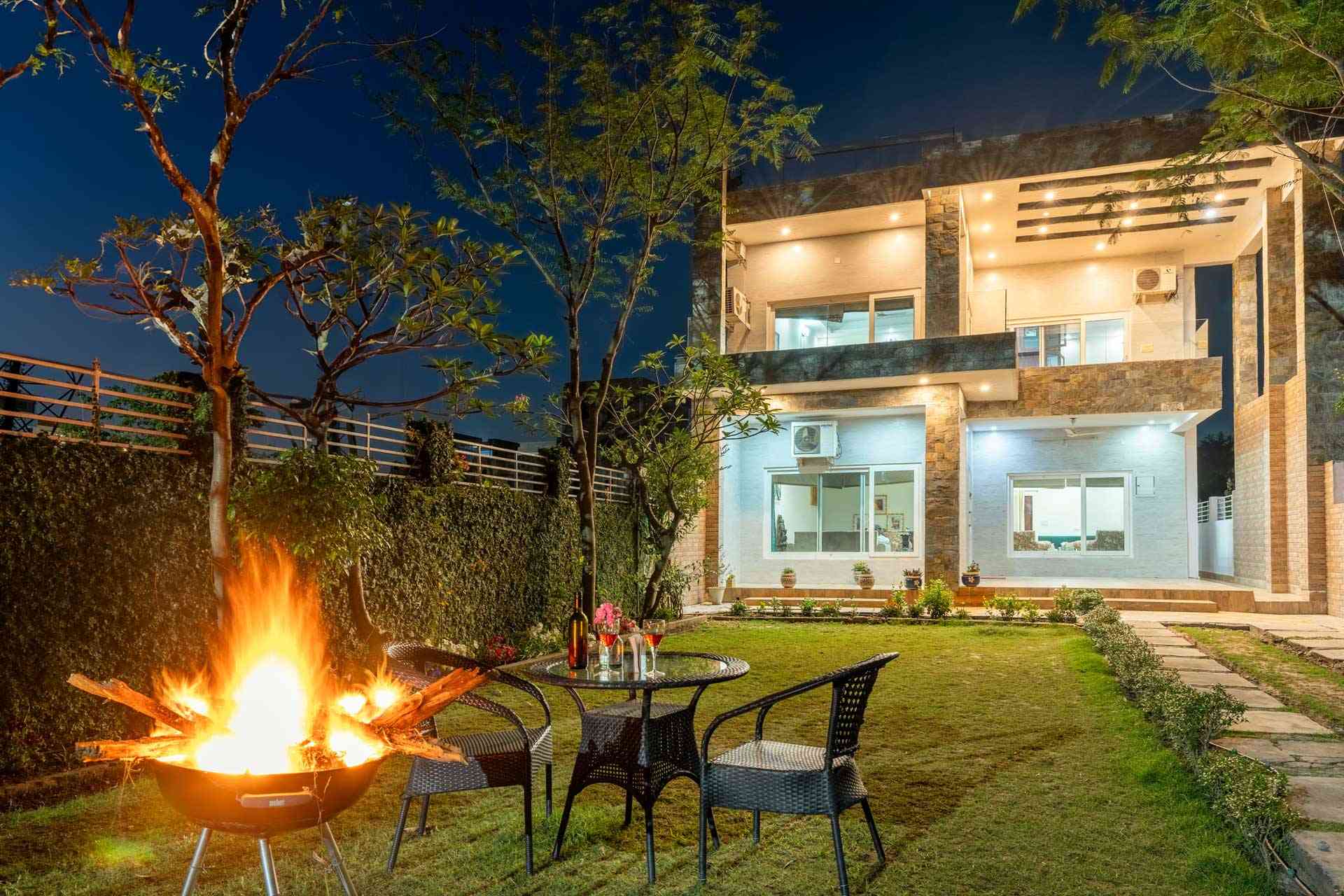
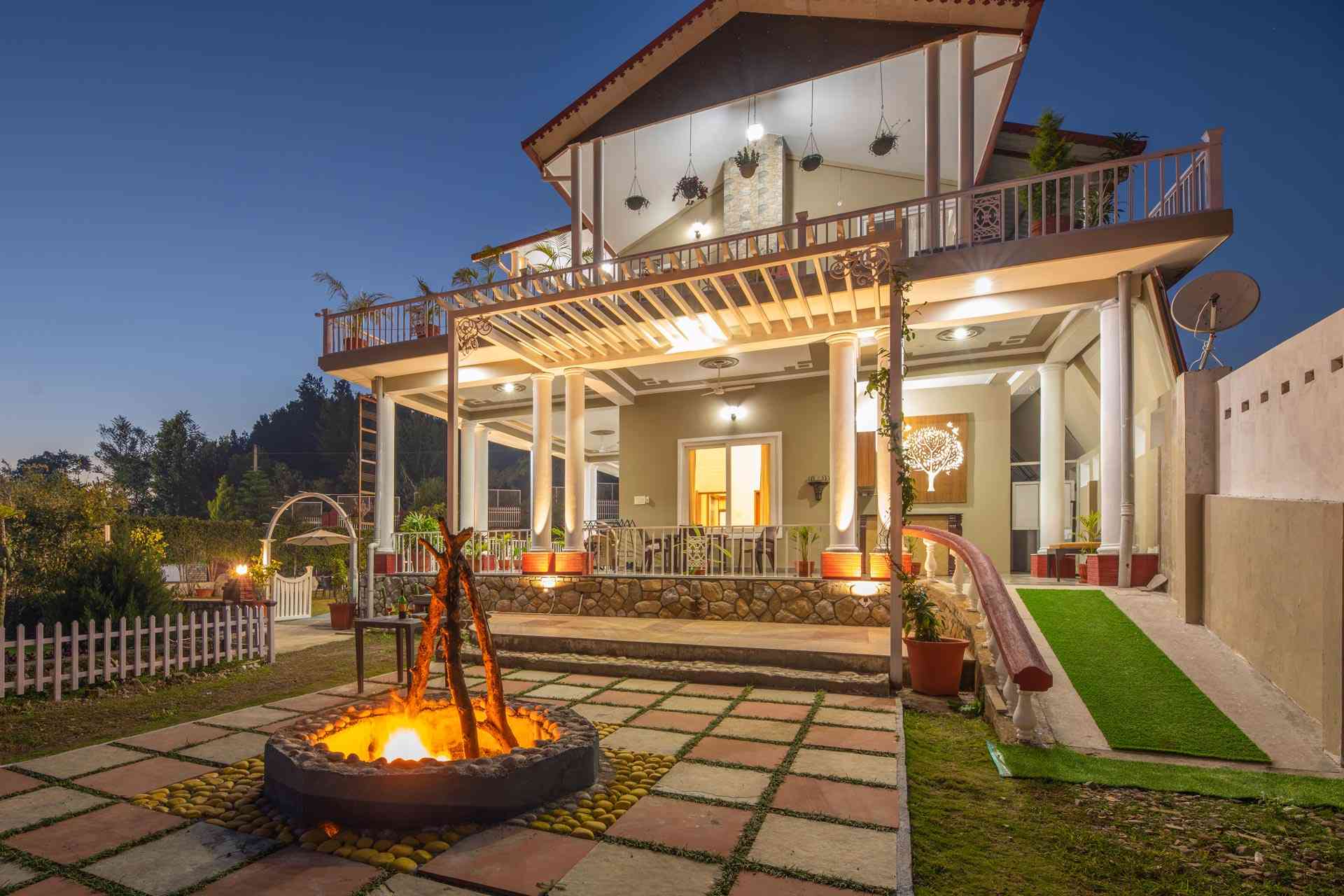
If you’re looking for a stay in Rishikesh, do make sure to check out these cottages and homestays in Rishikesh by StayVista that feature a fireplace, lawn and many other amenities for a comfortable stay with family. Rishikesh not only offers scenic vistas but there are also many adventure sports in Rishikesh like river rafting. Additionally, you can also extend your trip to Mussoorie, Kasauli or Shimla.
Essential Tips for travelling the Char Dham Yatra trip in May – June
- Make sure to check the opening and closing dates of the Char Dham Yatra.
- As the Char Dham Yatra is the most revered sites visited by millions of devotees, book your stays in Haridwar and Rishikesh in advance.
- With May to July being the best time to visit Char Dham Yatra, travelling during the rainy season is not advised.
- Given the cold weather throughout the year, carry essential woollen winter clothing, torches, medicines such as painkillers and antibiotics.
- Stay hydrated, carry enough snacks as they can be difficult to source during the treks.
Essential Reading –
- 8 Mesmerising Places To Visit In Uttarakhand
- Namaste and Navigate: Yoga Retreats with River Rafting in Rishikesh
- Undiscover Uttarakhand: The Land of Gods
Altitude Sickness Warning
Char Dham sites sit at altitudes where Acute Mountain Sickness (AMS) can affect unacclimatised travellers:
- Hemkund Sahib (if combined): 4,329 m — highest, significant risk
- Kedarnath: 3,583 m — moderate to high risk
- Yamunotri: 3,293 m — moderate risk
- Badrinath: 3,133 m — moderate risk
- Gangotri: 3,100 m — moderate risk
Prevention:
- Spend 1-2 nights at intermediate altitude (Guptkashi/Phata for Kedarnath; Joshimath for Badrinath; Harsil for Gangotri; Barkot for Yamunotri) before ascending
- Hydrate heavily — minimum 3 litres per day
- Avoid alcohol first 24 hours at altitude
- Consult doctor about Diamox (acetazolamide) before travel if you have known AMS sensitivity
- Travellers with heart or respiratory conditions should get medical clearance before Char Dham
Symptoms to watch: Headache, nausea, dizziness, loss of appetite, difficulty sleeping. Severe signs (confusion, breathlessness at rest, blue lips) require immediate descent to lower altitude.
Where to Stay for Your Char Dham Yatra