
Filter Coffee Country: How South India’s Coffee Is Grown and Brewed, and 7 Coffee Estate Stays in Karnataka
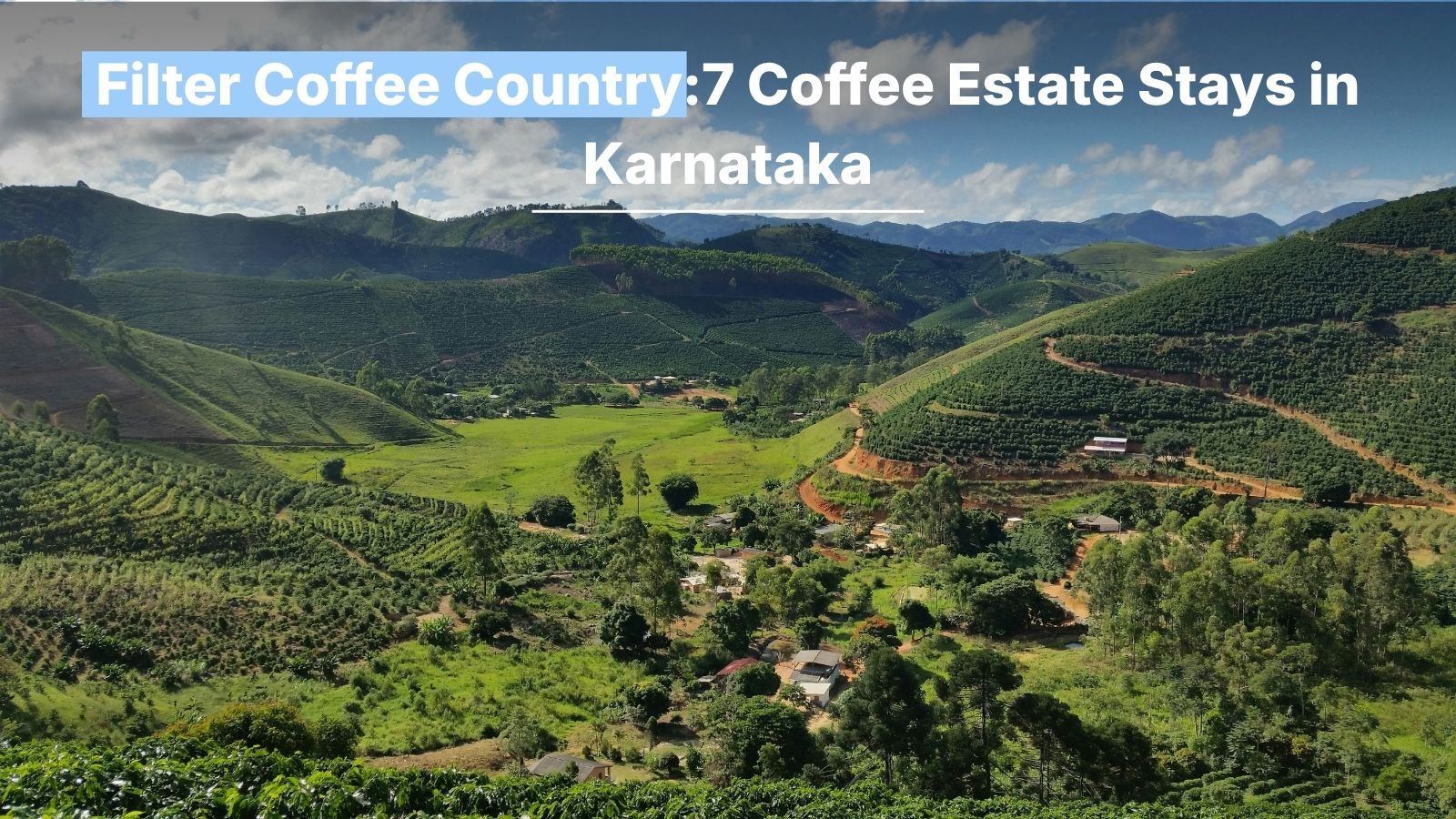
South Indian filter coffee is a strong, sweet, milky drink made from a coffee-and-chicory decoction, and most of the coffee behind it is grown in Karnataka, mainly in Kodagu (Coorg), Chikmagalur and Hassan. If you want to experience it where it grows, stay on or near an estate. Seven StayVista villas in Chikmagalur and Coorg are tied to coffee estates by their own pages: Misty Barn (a British-era retreat in a coffee colony), Cicada (a farmhouse in a coffee estate), Sienna and Cedar at Strelitzia (reached through a coffee plantation), Villa Mandimane and, in Coorg, Mudra Tattva and Mudra Manor, where estate and factory tours can be arranged.
There is a version of a filter coffee trip that is a list of cafés. This is the other version: a stay in coffee country, where the coffee is grown, with mornings that start with the aroma of the plantations and the estate on your doorstep. We have written it around the villas we can verify, so you can choose a base first. We keep to what each villa’s page says, and we say plainly where a villa has no pool or does not take pets. Rates, availability, and policies change, so check each page for current details.
In this Blog
1. What is South Indian filter coffee
Indian filter coffee is made by mixing hot milk and sugar with a decoction, the strong liquid produced by slowly percolating finely ground coffee through a traditional metal filter. The coffee powder is usually blended with chicory, which slows the drip of hot water and gives a rounder, bolder cup (Wikipedia: Indian filter coffee). It is known locally as filter kaapi.
It is traditionally served in a steel tumbler set inside a wide steel saucer called a dabarah. The drink is poured back and forth between the two, which cools it and gives it a froth. That serving style, and the quality of the froth, is how many people judge a cup.
The ingredients are simple, but the result depends on the details: the coffee-and-chicory ratio, the grind, the freshness of the decoction, and the milk. That is why the same drink tastes different from one house to another.
How to judge a cup. A good filter coffee is hot, strong, and sweet, with a layer of froth on top. Look for a decoction that is dark and full-bodied but not bitter, milk that is hot rather than lukewarm, and a balance between strength and sweetness. Many people also order by preference, asking for it stronger, lighter or with less sugar, so it is worth saying how you like it.
2. Where the coffee comes from
Most of India’s coffee is grown in Karnataka. The state accounts for about 70 percent of national production in recent years, with Arabica and Robusta both grown (Statista; Coffee Board of India). Within Karnataka, the largest producing districts are Kodagu (Coorg), Chikmagalur and Hassan.
According to a legend recorded in the history of Indian coffee, the Sufi saint Baba Budan smuggled seven coffee beans from Yemen and planted them in the hills of Chikmagalur, which were later named Baba Budan Giri. It is a legend, not a documented date, but it explains why Chikmagalur is called the cradle of Indian coffee.
Arabica and Robusta. Both varieties are grown in Karnataka. Arabica is generally the milder, more aromatic of the two, and Robusta is the stronger, more bitter one, and many filter coffee blends use a mix of both with chicory. If you visit an estate, ask which varieties it grows and how the beans are processed.
So if you want to see where the cup begins, Coorg and Chikmagalur are the places to go, and those are the two regions where StayVista has villas tied to the estates.
3. What it is like to stay on or near an estate
A coffee estate stay is quieter than a typical hill station stay. Mornings are misty, the air smells of the plantation, the roads are narrow, and the day moves slowly. Several of our villa pages describe it directly: a farmhouse set in a coffee estate, a heritage retreat in a coffee colony, a gated community reached through a coffee plantation.
Two practical points are worth knowing:
- Most villas in coffee country are near estates, not inside working ones. The pages tell you which. We have named only those that say so.
- Estate tours are usually an add-on, not part of the stay. At Mudra Tattva and Mudra Manor, the pages say a coffee estate tour and a coffee factory tour can be arranged. At the Chikmagalur villas, the pages list nearby coffee plantations and the Coffee Yatra Museum as places to visit. Ask the team how to arrange any of these.
4. The 7 coffee estate stays at a glance
| Villa | Where | Coffee link (from its page) | Rooms | Guests | Pool | Pets |
|---|---|---|---|---|---|---|
| Misty Barn, Oodsey | Chikmagalur | Heritage retreat in a coffee colony, once a British planter’s | 5 | 10 to 15 | Private pool | Yes |
| Cicada | Chikmagalur | Farmhouse nestled in a coffee estate | 2 | 4 to 8 | No pool | Yes |
| Sienna @ Strelitzia | Chikmagalur | Last 2 km pass through a coffee plantation | 3 | 6 to 12 | No pool | Yes |
| Cedar @ Strelitzia | Chikmagalur | Same gated community as Sienna | 2 | 4 to 6 | No pool | Yes |
| Villa Mandimane | Chikmagalur | Coffee estates nearby | 3 | 6 to 9 | Private pool | No |
| Mudra Tattva | Coorg | Estate and factory tours can be arranged | 2 | 4 to 6 | Plunge pool, jacuzzi | Yes |
| Mudra Manor | Coorg | Estate and factory tours can be arranged | 4 | 8 to 12 | Heated pool, jacuzzi | Yes |
5. Chikmagalur
Chikmagalur sits at the foot of the Mullayanagiri range in the Western Ghats, in the hills where the legend places the first Indian coffee. Four villas are tied to coffee by their own pages.
1. Misty Barn, Oodsey: a British-era retreat in a coffee colony
The page describes a vintage heritage retreat set in the middle of a coffee colony, originally owned by a British coffee planter. It has five rooms for 10 to 15 guests, a private pool, a gazebo, a bonfire area, and a lawn, with indoor and outdoor games, mountain views, and a pet-friendly policy. The page suggests visiting the nearby plantations and the Coffee Yatra Museum. Noise should be kept down after 10 PM, and the property is not wheelchair-friendly.
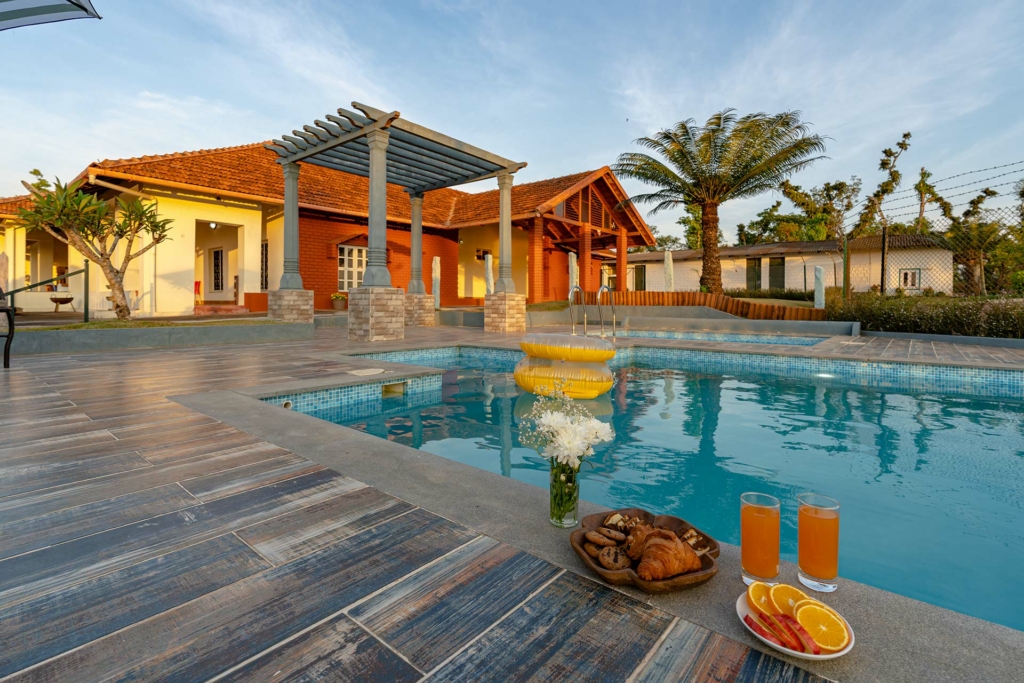
Best for: a group of friends or a family that wants history and a pool. Its smaller units, Mocha, Arabica and Robusta, are named for coffee varieties and suit couples and small families.
2. Cicada: a farmhouse in a coffee estate
A contemporary, rustic farmhouse on a hill, nestled in a coffee estate, with the aroma of the plantations and views of the foliage. It has two rooms for 4 to 8 guests, a lawn, a BBQ, a bonfire area, and indoor and outdoor games, with breakfast included, and it welcomes pets. It does not have a pool. Noise should be kept down after 10 PM.
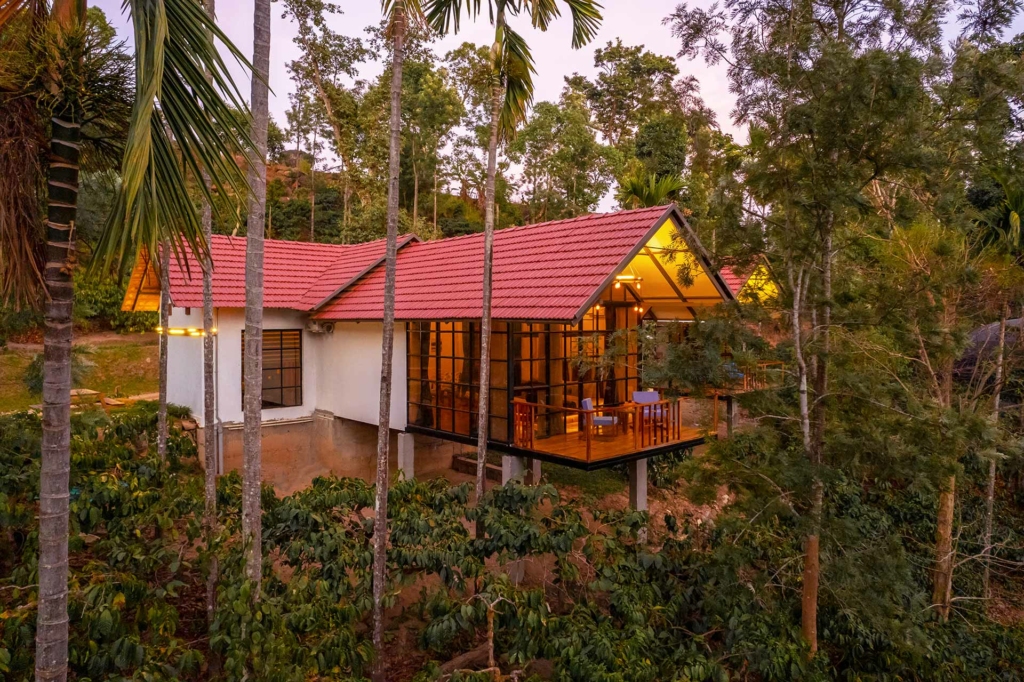
Best for: a couple or a small family that wants quiet and a morning coffee on the lawn.
3. Sienna @ Strelitzia: through the plantation
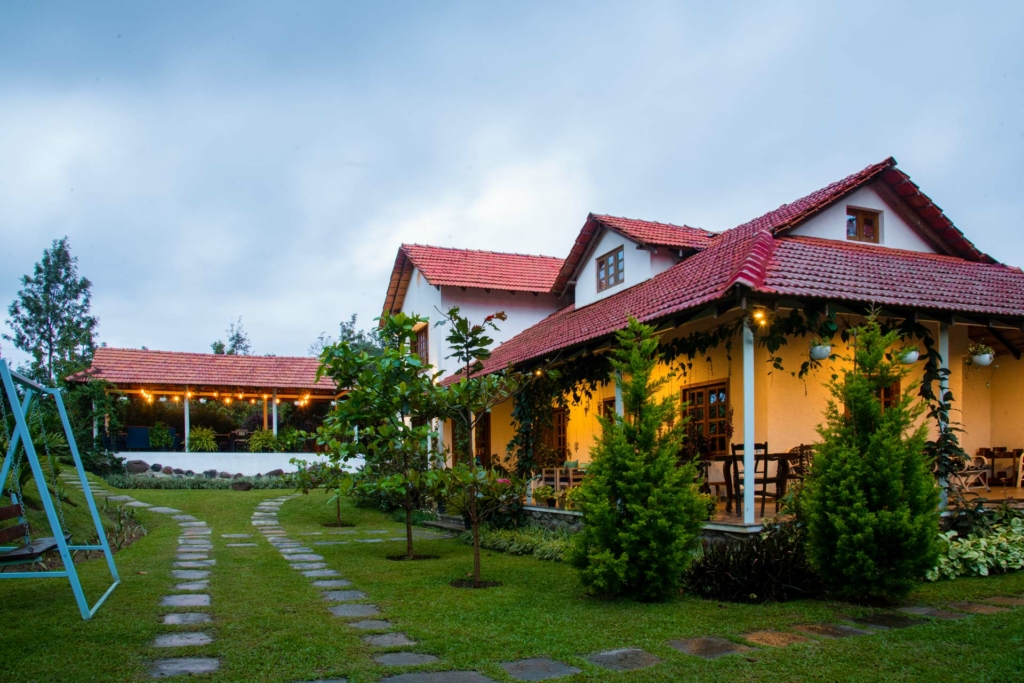
Part of a quiet gated community of luxury villas, reached by a final 2 km off-road stretch that passes through a coffee plantation. Sienna has three rooms for 6 to 12 guests, a jacuzzi, a lawn, a BBQ and a bonfire area, with breakfast included, and it welcomes pets. It does not have a pool. The villa asks guests to keep noise to a minimum at all times. Ask about the approach road before you drive in, especially in the rains.
Best for: a small group that values quiet. Sienna @ Strelitzia
For a couple or a small family, Cedar @ Strelitzia is in the same community, with two rooms for 4 to 6 guests, a jacuzzi, a lawn, a BBQ and a bonfire area, and breakfast included. It also welcomes pets and has no pool.
4. Villa Mandimane: a pool near the estates
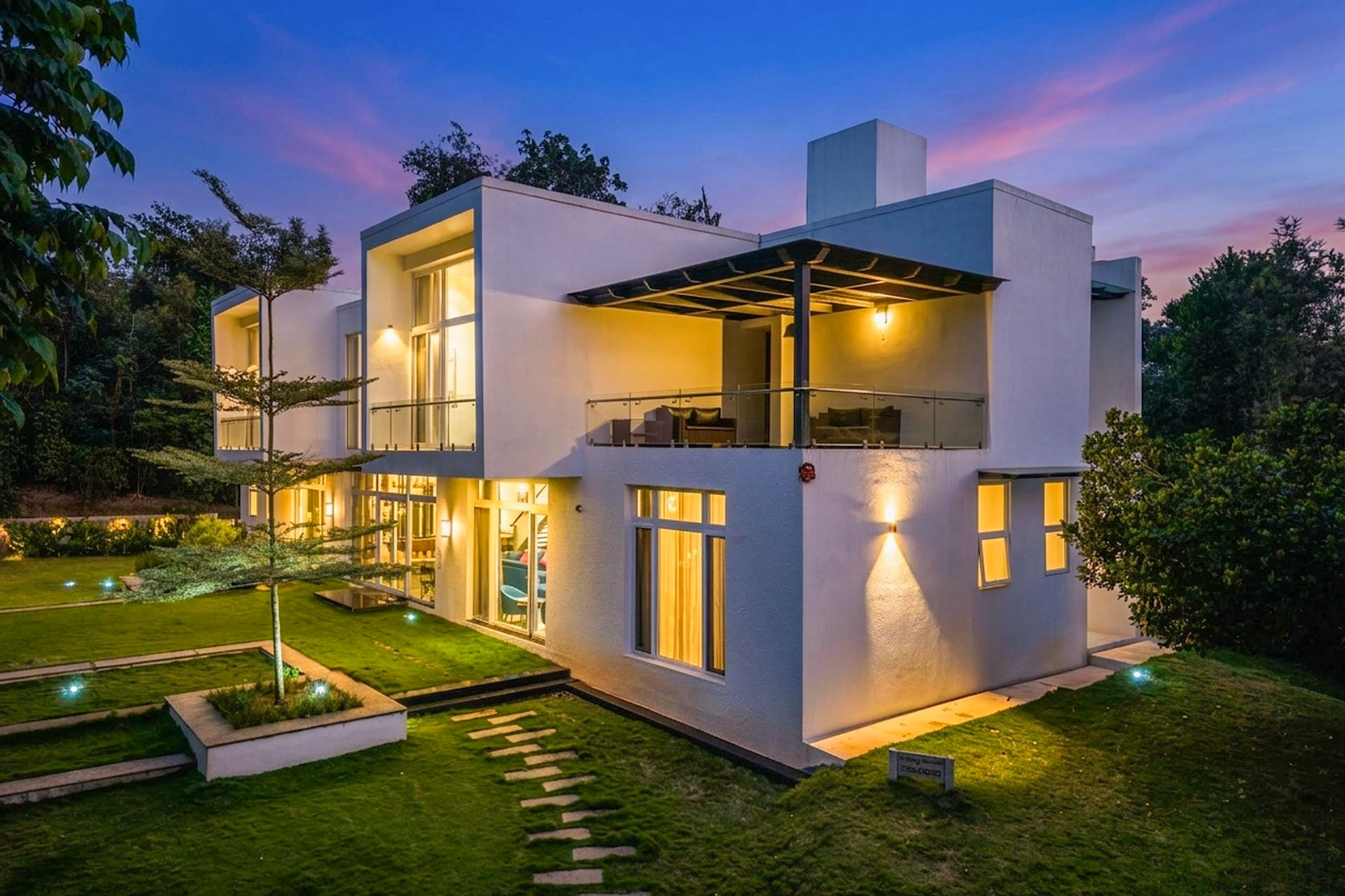
A three-room villa for 6 to 9 guests with a private pool, a lawn, a bonfire area, and indoor and outdoor games. Its page suggests visiting Chikmagalur’s coffee estates, which are nearby. It is not pet-friendly, all-male groups are not allowed, and noise should be kept down after 10 PM.
Best for: a small group that wants a pool and an easy base for estate visits.
6. Coorg
Coorg (Kodagu) is the largest coffee-producing district in Karnataka. Two of our Coorg villas say on their pages that estate experiences can be arranged.
5. Mudra Tattva: a small villa with estate tours
A two-room villa for 4 to 6 guests with a small plunge pool and a jacuzzi, a bonfire area, a heater, a lawn and a home theatre with a projector set-up, with breakfast included. Pets are welcome. The page says a coffee estate tour and a coffee factory tour can be arranged for guests. Noise should be kept down after 10 PM.

Best for: a couple or a small family that wants to see how coffee is grown and processed.
6. Mudra Manor: a heated pool and estate tours
A four-room villa for 8 to 12 guests with a heated pool, a jacuzzi, a gazebo, a BBQ, a bonfire area, a heater and indoor and outdoor games, with breakfast included. Pets are welcome, and the page says the same coffee estate and factory tours can be arranged. Noise should be kept down after 10 PM.
Best for: a family or friends’ group that wants a pool in the cooler months and an estate visit.
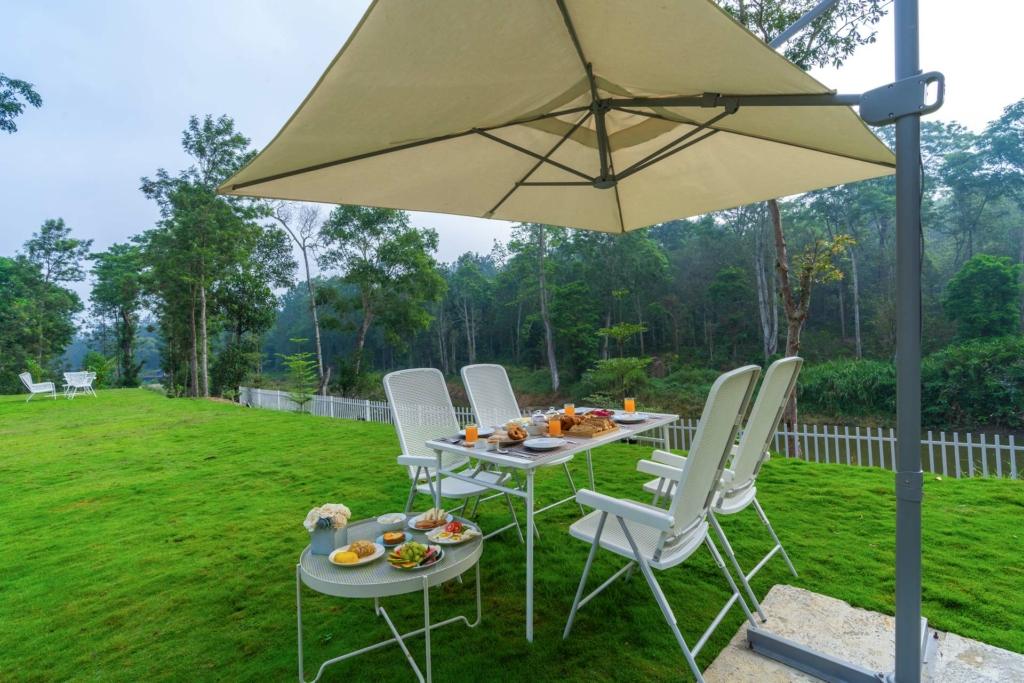
Ready to pick a base? Check live availability at Misty Barn for a pool and a heritage setting, Cicada for a quiet farmhouse in an estate, or Mudra Manor for Coorg with estate tours.
7. Make filter coffee at the villa
You do not need a café to taste filter coffee in coffee country. If you bring a traditional two-chamber steel filter and a coffee-and-chicory blend, the method is simple:
- Put the ground coffee into the upper chamber of the filter and press the perforated disc on top.
- Pour hot water over the disc and put the lid on.
- Wait for the decoction to drip into the lower chamber. This takes some time, and it is why filter coffee is called slow coffee.
- Mix a small amount of the decoction with hot milk and sugar.
- Pour it between a tumbler and a dabarah to cool it and raise the froth.
Check the villa’s kitchen rules first. Some villas limit guest kitchen use to light tasks such as making tea or coffee or reheating food, and a few have a caretaker or cook who handles the kitchen, so ask before you plan to brew
8. What to ask the villa team before you book
- Estate tours. Ask how to arrange a coffee estate or factory tour, and whether it needs notice.
- The approach. Some roads in coffee country are narrow or unpaved; Sienna’s last 2 km are off-road. Ask whether your vehicle is suitable, especially in the rains.
- Meals. Several of these villas include breakfast, and others have a caretaker who can arrange meals. Ask how it works.
- Group and pet rules. Pets, noise, all-male groups and outside food differ by villa.
- The pool. Cicada, Sienna and Cedar do not have one. If a pool matters, pick Misty Barn, Villa Mandimane or Mudra Manor.
- Availability. Check the live calendar on each villa’s page.
10. Frequently asked questions
In Karnataka, which accounts for about 70 percent of national production. The largest districts are Kodagu (Coorg), Chikmagalur and Hassan.
A drink made by mixing hot milk and sugar with a strong decoction brewed by percolating finely ground coffee, usually blended with chicory, through a traditional metal filter. It is served in a steel tumbler and dabarah.
It slows the drip of the hot water through the filter, which helps give a rounder, bolder cup.
At Mudra Tattva and Mudra Manor in Coorg, the pages say a coffee estate tour and a coffee factory tour can be arranged. At the Chikmagalur villas, nearby plantations and the Coffee Yatra Museum are listed as places to visit. Ask the team how to arrange a visit.
A legend says the saint Baba Budan smuggled seven coffee beans from Yemen and planted them in the Chikmagalur hills, which are named after him.
11. Conclusion
Filter coffee is a slow drink with a strong sense of place, and the place is Karnataka’s coffee country. If you want to taste it where it grows, base yourself on or near an estate: Misty Barn for a heritage retreat and a pool, Cicada or the Strelitzia villas for a quiet farmhouse, Villa Mandimane for a pool near the estates, or Mudra Tattva and Mudra Manor in Coorg with estate tours. Check each villa’s page for its current features, rules and availability.
Check availability: Misty Barn | Cicada | Sienna @ Strelitzia | Villa Mandimane | Mudra Tattva | Mudra Manor
Sources and references:
- Wikipedia: Indian filter coffee
- Statista: India’s coffee production by state
- Coffee Board of India
- Features, capacities and policies as listed on each villa’s page on stayvista.com, October 2026