
Gangotri to Gaumukh Trek 2026: 18 km to the Ganga’s Source – Mid-June Is Your Last Window
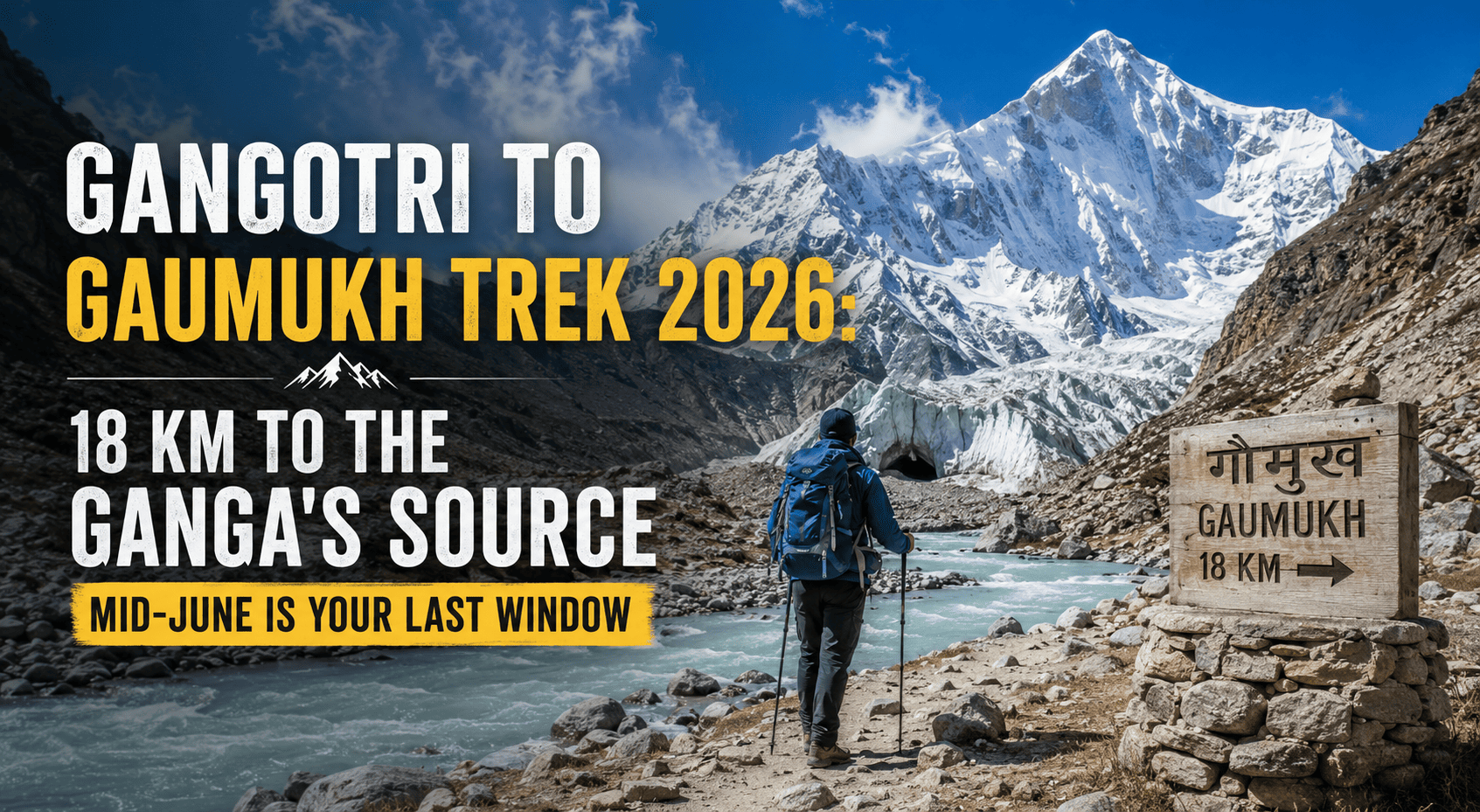
You can walk to the exact spot where the Ganga is born. It’s a glacier snout in Uttarakhand called Gaumukh, about 18 km up from Gangotri, and the meltwater that drips off its ice becomes the Bhagirathi — the river India calls holy. But two things stand between you and that walk this week. Only 150 people a day are allowed in. And the gate effectively shuts for the monsoon in mid-June, not reopening until September.
Search this trek today and you’ll hit a wall of conflicting numbers, stale dates, and package upsells — and not one of them tells you the window is about to close. So here’s a single, current 2026 guide: is it open, how far, the permit, the cost, the 2-day itinerary, and where to break the long drive up. If you’re driving from Delhi or the plains, a night in Rishikesh or Dehradun makes the climb far kinder — more on that near the end.
The Gangotri to Gaumukh trek is an ~18 km (one-way) walk to the snout of the Gangotri Glacier — the source of the Bhagirathi (Ganga) — at about 4,023 m. Gangotri National Park reopened on 1 April 2026, and only 150 trekkers a day are allowed to Gaumukh (₹150 permit for Indians). The catch: mid-June is the last pre-monsoon window — after ~20 June the route closes until mid-September. Best done as a 2-day trek with a night at Bhojbasa.
In this Blog
Quick Info Table
| Detail | Quick answer |
| Best time | May to mid-June, and mid-September to mid-October |
| Distance | ~18 km one way (Gangotri → Gaumukh) |
| Gaumukh altitude | ~4,023 m (13,200 ft) |
| Permit | ₹150 (Indian) / ₹600 (foreigner), valid 2 days |
| Daily cap | 150 trekkers/day (Uttarakhand Forest Department) |
| Park open | 1 April – 30 November 2026 |
| How to reach | Gangotri ~300 km from Dehradun (Jolly Grant) airport |
| Ideal duration | 2 days (Gaumukh); 4–5 days for Gaumukh–Tapovan |
Is the Gaumukh trek open right now — and how long is the window?
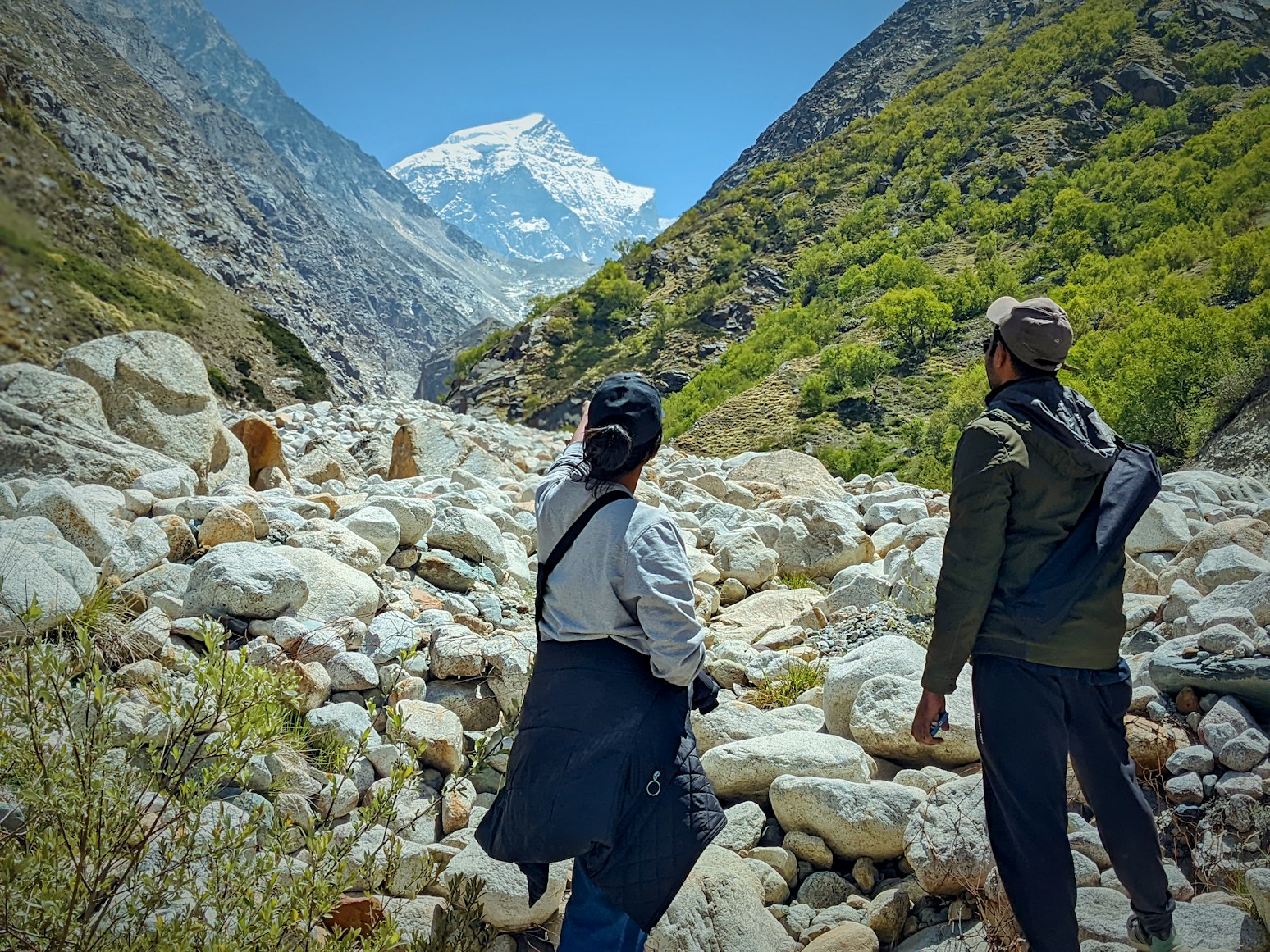
Yes — the trek is open, but the pre-monsoon window runs only to about mid-June, then closes until September. Gangotri National Park reopened on 1 April 2026 and stays open through 30 November (Outlook Traveller, 2026). After roughly 20 June, monsoon landslides and swollen rivers shut the route, which doesn’t reopen until mid-September (IndiaHikes, 2026).
So the timing matters more than anything else in this guide. The Gaumukh trail has only two clean windows in a year: May to mid-June, and mid-September to mid-October. Right now, in early-to-mid June, you’re at the tail end of the spring window. Wait two weeks and the decision makes itself — the route closes.
Worth separating two things people often blur. The park (the trekking permit zone) follows the 1 April–30 November calendar. The Gangotri Dham temple runs on a different clock: it opened on 19 April 2026 on Akshaya Tritiya and closes around 10 November (Republic World, 2026). You can read more on Gangotri’s 2026 opening dates and Char Dham registration in our dedicated Char Dham Yatra 2026 guide.
The snow question comes up a lot. Snow that lingers on the upper trail at the April reopening clears by June, and conditions through this window are stable (Outlook Traveller, 2026). That’s exactly why June feels deceptively safe — the trail looks perfect, right up until the monsoon arrives and makes the Gangotri road genuinely dangerous.
2026 Season Status (as of 10 June 2026)
- 1 April 2026 — Gangotri National Park reopens for the season
- 19 April 2026 — Gangotri Dham temple opens (Akshaya Tritiya)
- May → ~mid-June — pre-monsoon trekking window (open now)
- ~20 June → early September — monsoon shutdown (route effectively closed)
- Mid-September → mid-October — post-monsoon window reopens
- ~30 November — park closes for winter
The key fact: right now, mid-June is your last chance until mid-September.
Gangotri National Park reopened on 1 April 2026 and remains open through 30 November, but the pre-monsoon Gaumukh window runs only to about mid-June. After roughly 20 June, monsoon landslides shut the route until mid-September (Outlook Traveller, 2026; IndiaHikes, 2026).
How far is the Gangotri to Gaumukh trek? (distance & altitude)
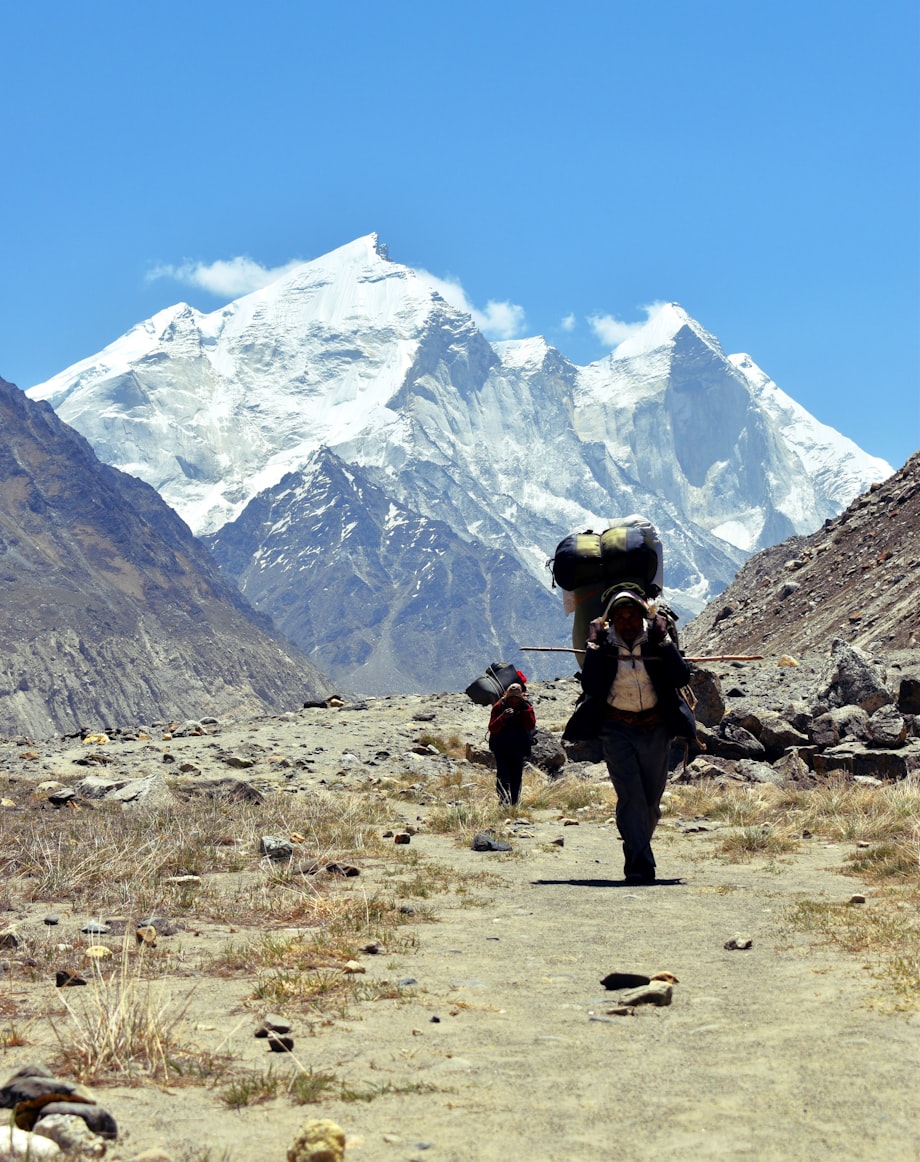
It’s about 18 km one way — Gangotri (3,100 m) → Chirbasa (9 km) → Bhojbasa (14 km) → Gaumukh (~4,023 m). That headline figure answers the most-searched question about this trek. The Gangotri Glacier itself is roughly 30 km long and 2–4 km wide, and Gaumukh is simply its snout — the mouth where the ice ends and the river begins (Wikipedia – Gangotri Glacier).
The route breaks into clean segments. The first 9 km to Chirbasa is a gentle, well-graded forest path through Himalayan pines, running alongside the Bhagirathi. From Chirbasa it’s another 5 km to Bhojbasa (~3,800 m), where most trekkers spend the night. The final stretch from Bhojbasa to Gaumukh is only about 4 km, but it crosses a slow boulder field and a moraine — far harder than the distance suggests.
Gaumukh sits at roughly 4,023 m (13,200 ft), though glaciological surveys place the retreating snout closer to ~3,900 m as the ice pulls back each year (Wikipedia – Gomukh). The total elevation gain from Gangotri is a little under 1,000 m — modest on paper, but you’re doing it at altitude, where every climb costs more.
Want to go further? The Gaumukh–Tapovan extension adds about 6 km and a steep climb to a high meadow at ~4,460 m, with a front-row view of Shivling and the Bhagirathi peaks. That’s a 4–5 day trek, not a 2-day one, and it needs more acclimatisation.
Gangotri 3,100 m Chirbasa (9 km) Bhojbasa 3,800 m · 14 km Gaumukh 4,023 m · 18 km Distance from Gangotri trailhead →Source: route distances and altitudes from Wikipedia – Gomukh and Wikipedia – Gangotri Glacier.
The Gangotri to Gaumukh trek is about 18 km one way, climbing from Gangotri at 3,100 m through Chirbasa (9 km) and Bhojbasa (14 km) to Gaumukh — the snout of the 30 km-long Gangotri Glacier — at roughly 4,023 m / 13,200 ft (Wikipedia – Gomukh).
Why only 150 people a day? The Gaumukh permit cap explained
The Uttarakhand Forest Department caps entry at 150 trekkers per day on the Gaumukh trail, to protect a fragile glacier ecosystem — so permits can run out in peak season (Outlook Traveller, 2026). If you’ve read elsewhere that the cap is “100 a day,” that figure is stale; the current limit is 150. Camping at Gaumukh itself is banned, and the whole zone sits inside a protected eco-sensitive area.
That area is the Bhagirathi Eco-Sensitive Zone, spanning 4,179.59 sq km, notified by the MoEF&CC on 18 December 2012 (Drishti IAS, 2012). The cap isn’t bureaucratic fussiness. It’s a direct response to what’s happening to the ice.
Here’s the part competitors leave out. The Gangotri Glacier is retreating fast. A Wadia Institute study found it pulled back about 1,700 m between 1935 and 2022, with the rate climbing from roughly 20 m a year in the late 20th century to as much as ~38 m a year recently (Wadia Institute via Business Standard, 2022). The 150-cap and the short season aren’t obstacles to resent — they’re the only reason a place this fragile is still walkable at all. Reframe the scarcity as conservation, and the rules make sense.
Demand is real, too. In 2025, the park recorded 29,162 visitors and over ₹80 lakh in entry-fee revenue (Outlook Traveller, 2025). Pack those numbers into a few peak weeks of May and June and you understand why daily permits vanish. Apply early.
~20 m/yr ~38 m/yr 1935–1996 recent ~1,700 m total retreat since 1935Source: Wadia Institute study via Business Standard, 2022.
The Uttarakhand Forest Department caps the Gaumukh trail at 150 trekkers a day to protect the Bhagirathi Eco-Sensitive Zone (4,179.59 sq km). The Gangotri Glacier has retreated about 1,700 m since 1935, at rates reaching ~38 m a year (Outlook Traveller, 2026; Wadia Institute, 2022).
How to get the Gaumukh trek permit (step-by-step)
Get the permit from the DFO office in Uttarkashi or the forest office at Gangotri. It costs ₹150 for Indians and ₹600 for foreigners, valid 2 days. Since September 2024, a registered guide, trekking insurance, and a medical fitness certificate have also been mandatory (Outlook Traveller, 2026; NDI). This is the part the SERP gets messiest on, so here’s the clean version.
The steps, in order:
- Carry an original photo ID. Aadhaar or passport works; foreigners need their passport. The forest office logs every entrant against the 150-a-day cap.
- Apply online or at the forest office. The cleanest route is the official Pathik single-window portal (swstourismuki.com) in advance, since the Gangotri forest office issues permits only in limited daily windows — commonly reported as 8–10 AM and 5–7 PM, all days of the week. As a backup, the DFO office in Uttarkashi can process it during regular government working hours on weekdays (it stays closed on Saturdays and Sundays), before you reach the trailhead.
- Pay the fee. ₹150 (Indian) / ₹600 (foreigner), valid for 2 days — enough for a standard Gaumukh trek, and extendable if you’re continuing to Tapovan (Outlook Traveller, 2026).
- Bring the mandatory paperwork. Since September 2024, you need a registered guide, valid trekking insurance, and a medical fitness certificate (Himalayan Dream Treks). Most guided operators arrange all three as part of the package.
- Apply early. Between the 150-a-day cap and the closing window, late June especially, permits go quickly.
One honest caveat. There’s no publicly retrievable government circular for the 150-cap or the September-2024 guide rule — they’re consistent across operators and news reporting, but rules in this zone change. Confirm current requirements with the DFO Uttarkashi office before you travel. That single phone call can save a wasted drive.
The Gaumukh trek permit is issued by the forest office at Gangotri or the DFO Uttarkashi, costs ₹150 for Indians and ₹600 for foreigners, and is valid two days. Since September 2024, a registered guide, trekking insurance and a medical fitness certificate are mandatory (Outlook Traveller, 2026; NDI).
2-Day Gaumukh trek itinerary (Gangotri → Bhojbasa → Gaumukh)
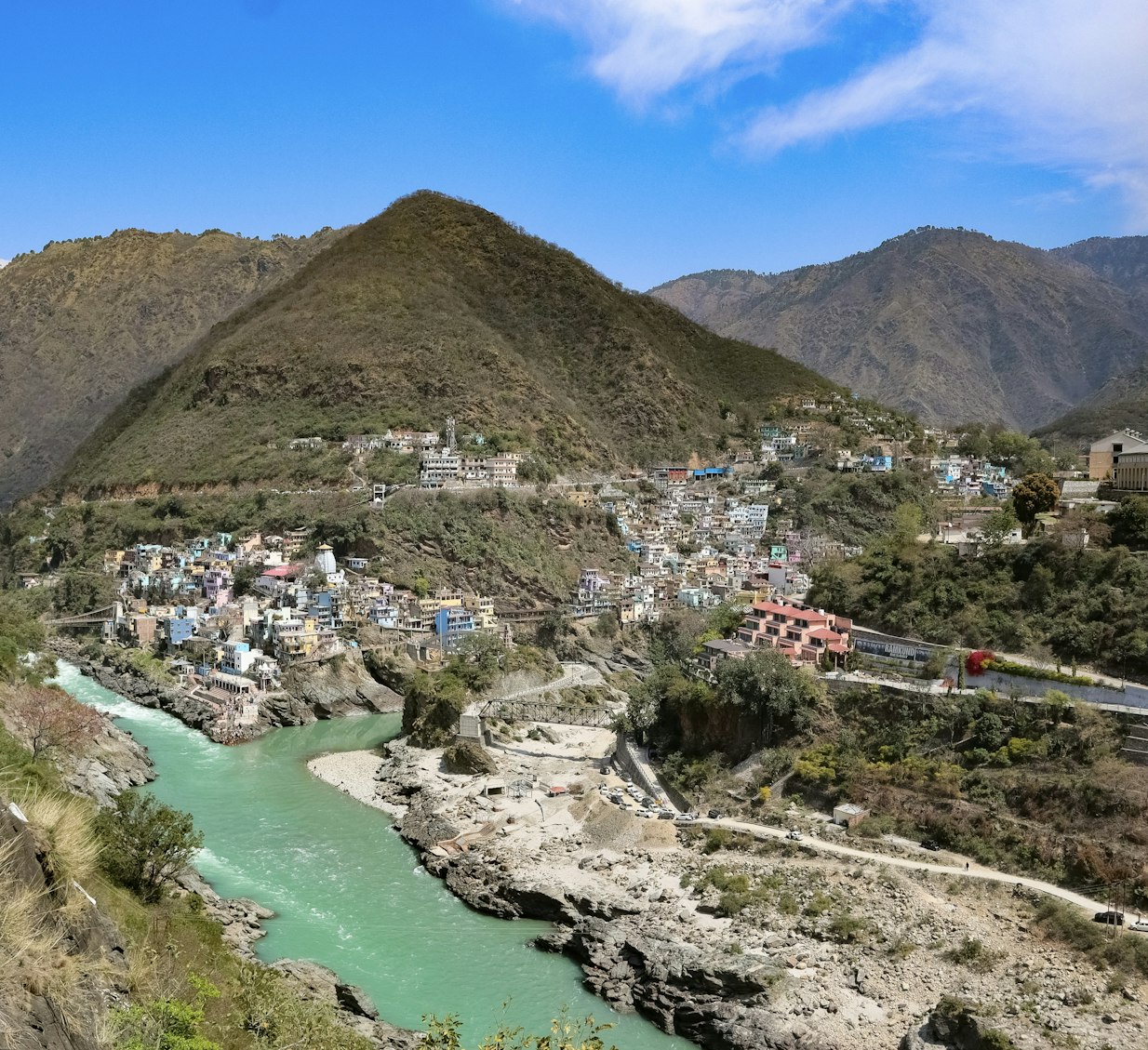
Most trekkers do Gaumukh in 2 days: Day 1, Gangotri → Bhojbasa (14 km, overnight); Day 2, Bhojbasa → Gaumukh and back (8 km round trip), then descend. It’s the standard structure for a good reason — it splits the distance sensibly and gives you a night at altitude to acclimatise. Travellers tell us the Bhojbasa–Gaumukh boulder stretch took our team nearly twice as long as the 4 km suggests; we recommend starting that leg by 6 AM to beat the afternoon glacier wind.
Day 1 — Gangotri to Bhojbasa (14 km)
A long but gradual day along the Bhagirathi, first to Chirbasa, then Bhojbasa.
- Distance: ~14 km (Gangotri → Chirbasa 9 km → Bhojbasa 5 km)
- Difficulty: Easy to moderate — well-graded path, steady incline, but long at altitude
- Time required: 6–8 hours at a comfortable pace
- Where to stay/eat: Bhojbasa’s GMVN Bhojwasa Tourist Rest House offers dormitory beds only (hot water, pure-veg restaurant), open through the summer trekking season — beds start at around ₹350 per person on GMVN’s official site, though on-ground rates often run closer to ₹400–500 plus food, so book ahead as space is very limited. If GMVN is full, the Lal Baba and Ram Baba ashrams offer simple dorm stays with meals for roughly ₹300–350 per person
- Ideal for: Reasonably fit trekkers — beginners with some hiking experience manage it with a guide
- Pro tip: Ponies are available up to Bhojbasa only (not beyond), so it’s a fair option for the long Day 1 if your group includes someone struggling with the distance.
Chirbasa (9 km mark)
The first major stop, a pine-fringed flat by the river — most people pause here for tea, not a night.
- Distance from Gangotri: ~9 km
- Difficulty to here: Easy, gentle gradient
- Time required: 3–4 hours from the trailhead; a 20–30 minute rest stop
- Where to eat: A seasonal tea stall/dhaba usually operates at Chirbasa through the trekking months (including June), serving chai, Maggi and parathas — but there’s nothing in between the stops, so carry your own water and snacks
- Ideal for: A catch-your-breath halt and your first clear views toward the Bhagirathi peaks
- Pro tip: Refill water and eat something here — the stretch beyond gets more exposed.
Day 2 — Bhojbasa to Gaumukh and back (8 km round trip)
The payoff day: the glacier snout, then the descent.
Gaumukh (the glacier snout)
The mouth of the Gangotri Glacier, where the Bhagirathi pours out from beneath the ice.
- Distance: ~4 km each way from Bhojbasa (8 km round trip)
- Difficulty: Moderate to difficult — a boulder field and unstable moraine, slow underfoot
- Time required: 5–7 hours round trip from Bhojbasa, including time at the snout
- Where to stay: Nowhere — overnight stays at Gaumukh are banned; you return to Bhojbasa or descend
- Ideal for: Trekkers who’ve acclimatised at Bhojbasa; not a casual day walk
- Pro tip: Start by 6 AM. The boulder section is slow and the glacier wind builds through the afternoon — and never climb onto the ice or stand directly under the snout, where ice and rock fall without warning.
After Gaumukh, most groups return to Bhojbasa, pack up, and walk back down toward Gangotri the same day, or split the descent. If you’ve got the days and the legs, the Gaumukh–Tapovan extension (a steep ~6 km climb to a ~4,460 m meadow) turns this into a 4–5 day trek with the finest Shivling views in the range. For other options across the region, see our roundup of other Uttarakhand and Himachal treks worth doing.
The standard Gaumukh trek is two days: Day 1 covers 14 km from Gangotri to Bhojbasa (overnight at a GMVN guest house or ashram), and Day 2 is an 8 km round trip from Bhojbasa to the Gaumukh snout and back. Overnight stays at Gaumukh are banned.
Best time to do the Gaumukh trek
There are two windows only: May to mid-June, and mid-September to mid-October. Avoid July–August (monsoon) and the December–March winter closure. Right now, in early-to-mid June, you’re at the tail end of the spring window (IndiaHikes, 2026). That’s not a soft suggestion — it’s the difference between a clear trail and a closed, landslide-prone road.
The spring window (May to mid-June) brings stable weather, clearing snow on the upper trail, and the longest daylight. It’s also the most crowded, which pushes the 150-a-day cap to its limit — so permits are hardest to get exactly when conditions are best. The post-monsoon window (mid-September to mid-October) is quieter, with crisp air and famously clear mountain views, before the cold sets in.
July and August are the months to avoid outright. The monsoon makes the Gangotri road dangerous, with frequent landslides and swollen rivers, and the route effectively shuts. From roughly December to March, snow closes the park entirely. The key fact: the trail is closed Dec–March and effectively July–August — so if you’re reading this in mid-June, the decision is now.
| Month | Status |
| Jan–Mar | Closed (winter snow) |
| April | Park reopens (1 April); upper-trail snow clearing |
| May | Open · peak window · permits in high demand |
| June (to ~20th) | Open · CLOSING NOW — last pre-monsoon days |
| July–Aug | Avoid — monsoon, landslides, route effectively shut |
| Mid-Sep–mid-Oct | Open · clear post-monsoon window |
| Late Oct–Nov | Open but cold; park closes ~30 Nov |
Source: season windows from IndiaHikes and Outlook Traveller, 2026.
The Gaumukh trek has two annual windows: May to mid-June and mid-September to mid-October. July and August are unsafe due to monsoon landslides on the Gangotri road, and the park closes entirely from roughly December through March (IndiaHikes, 2026).
How much does the Gaumukh trek cost?
The permit is just ₹150, but a guided Gaumukh or Gaumukh–Tapovan package typically runs ₹12,000–₹18,000 per person, rising to ₹25,000–₹30,000+ for premium or longer Tapovan itineraries (Thrillophilia, 2026). Most of what you pay isn’t the permit — it’s logistics, the mandatory guide, meals, and your stay. Operator figures vary widely, so treat these as ranges, not quotes.
What drives the cost? A guided package usually bundles the registered guide (now mandatory), trekking insurance, the medical-certificate process, transport from Dehradun or Rishikesh, the Bhojbasa stay and all meals on the trail. The longer Tapovan extension adds days, porters, and camping logistics, which is why it sits at the top of the range.
Doing it yourself is cheaper on paper — the ₹150 permit, a GMVN bed at Bhojbasa (~₹350), and simple meals. But since September 2024, a registered guide is mandatory anyway, so a fully solo, fully DIY trek isn’t really on the table now. In our experience, the honest middle path is hiring a local registered guide at Gangotri and arranging your own stay — you keep costs sensible while meeting the rules.
₹150 ₹12,000–18,000 Permit only Guided package Per person · packages vary by operatorSource: package range from Thrillophilia, 2026; permit fee from Outlook Traveller, 2026.
The Gaumukh trek permit costs only ₹150 for Indians, but a guided Gaumukh or Gaumukh–Tapovan package typically runs ₹12,000–₹18,000 per person, with premium or longer Tapovan itineraries reaching ₹25,000–₹30,000+. Most of the cost is logistics, guide, meals and stay (Thrillophilia, 2026).
How to reach Gangotri (the trailhead)
Gangotri is ~300 km from Dehradun (nearest airport, Jolly Grant), ~250 km from Rishikesh and ~105 km from Uttarkashi — a full day’s mountain drive (eUttaranchal). There’s no shortcut: the last stretch is slow, winding hill road, and you should plan to break the journey rather than push through in one exhausting go.
By air, fly into Jolly Grant Airport (Dehradun), then drive up via Uttarkashi. By train, the nearest railheads are Rishikesh (~234 km) and Haridwar (~288 km), both well connected to Delhi. From any of these, you’ll take a taxi or a shared cab; state buses and shared taxis also run up the Gangotri road during the season, though they’re slower and weather-dependent.
The smart move is to drive Day 1 only as far as Rishikesh, Dehradun or Mussoorie, sleep, then tackle the long hill section fresh the next morning. If Rishikesh is your gateway, our guide on how to reach Rishikesh covers the routes in detail.
Uttarkashi Rishikesh Dehradun 105 km 250 km 300 km Road distance to GangotriSource: eUttaranchal.
Gangotri, the Gaumukh trailhead, lies about 300 km from Dehradun’s Jolly Grant Airport, 250 km from Rishikesh and 105 km from Uttarkashi — a full day’s drive on winding mountain road, best broken with an overnight halt (eUttaranchal).
Where to Stay for the Long drive up?
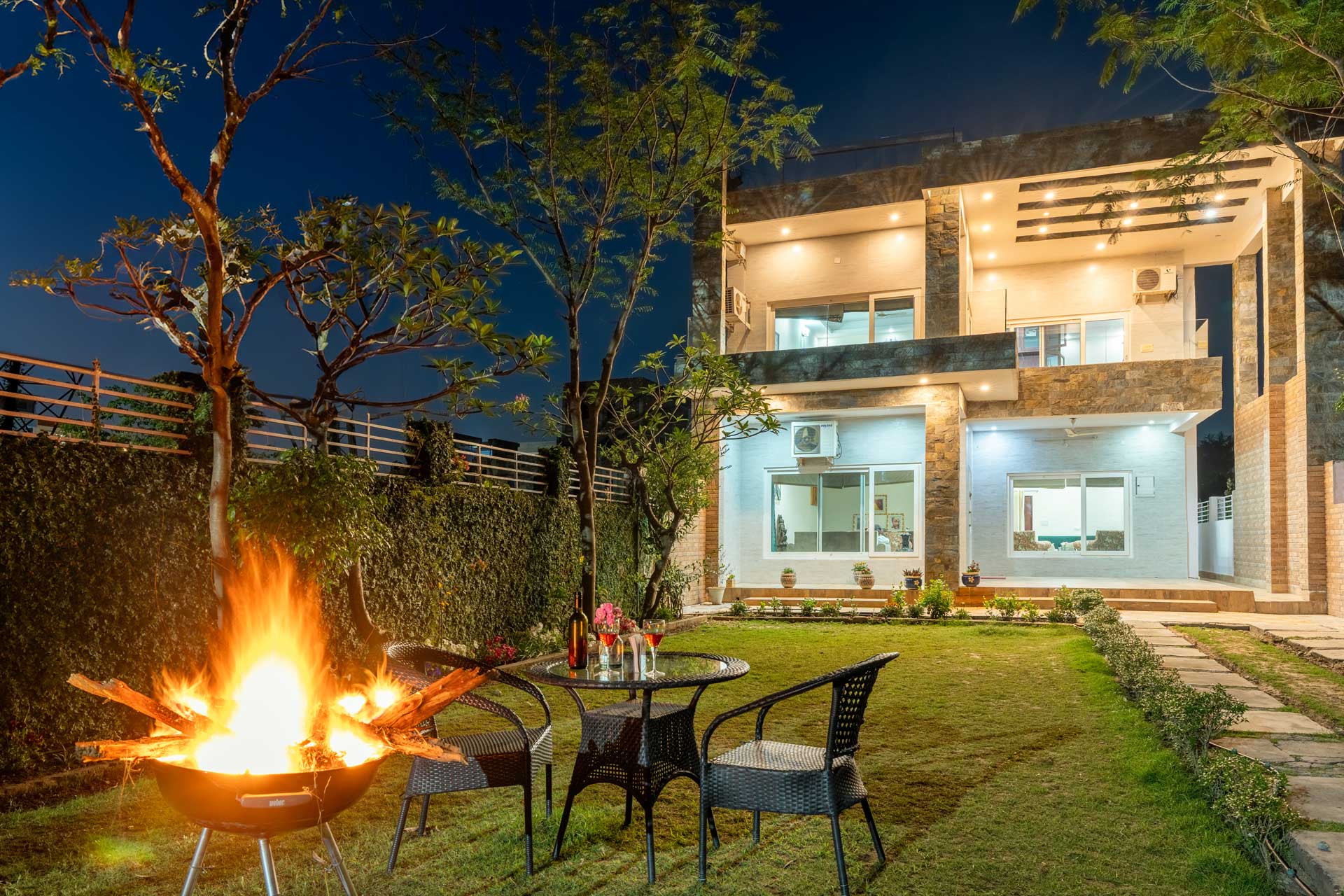
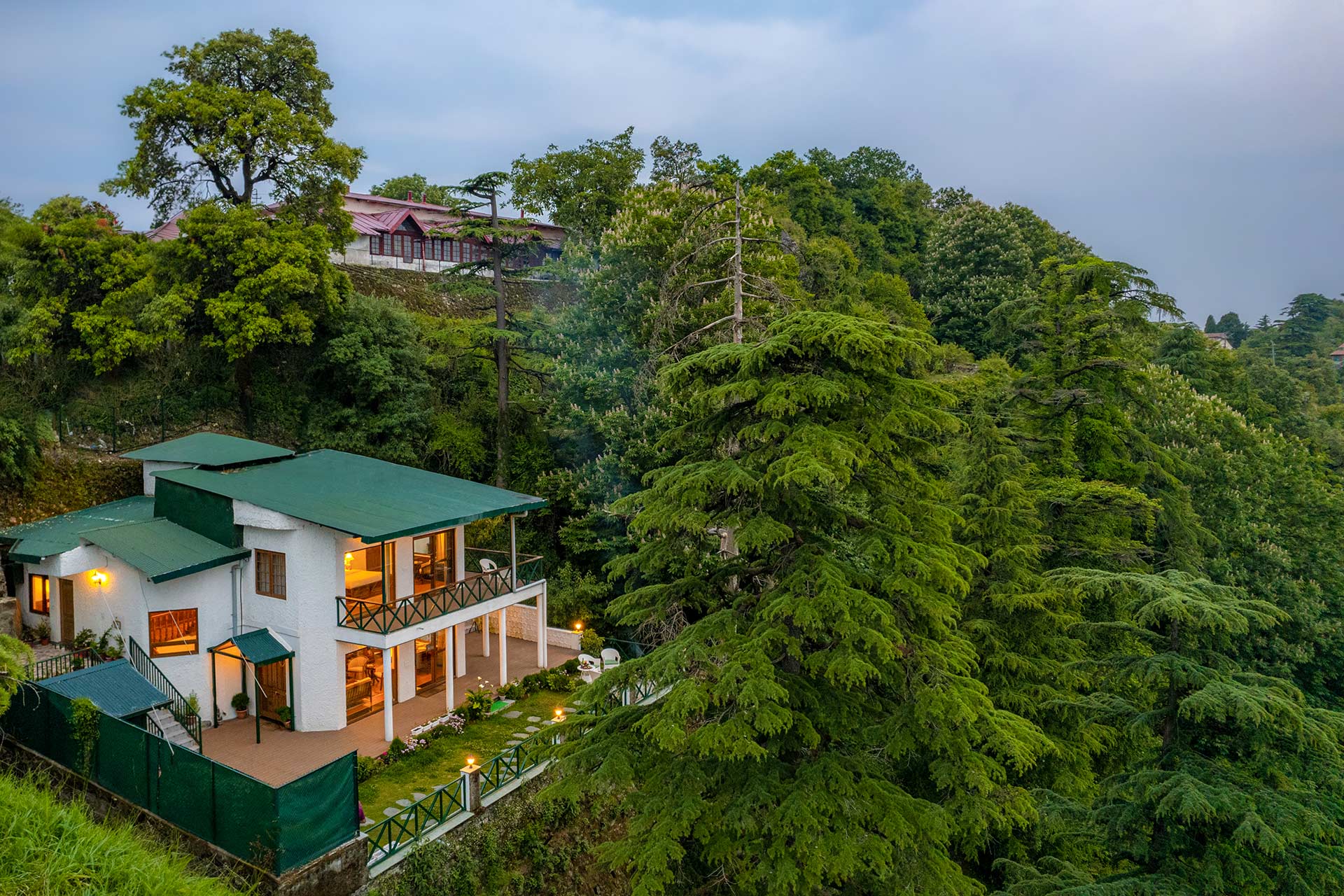
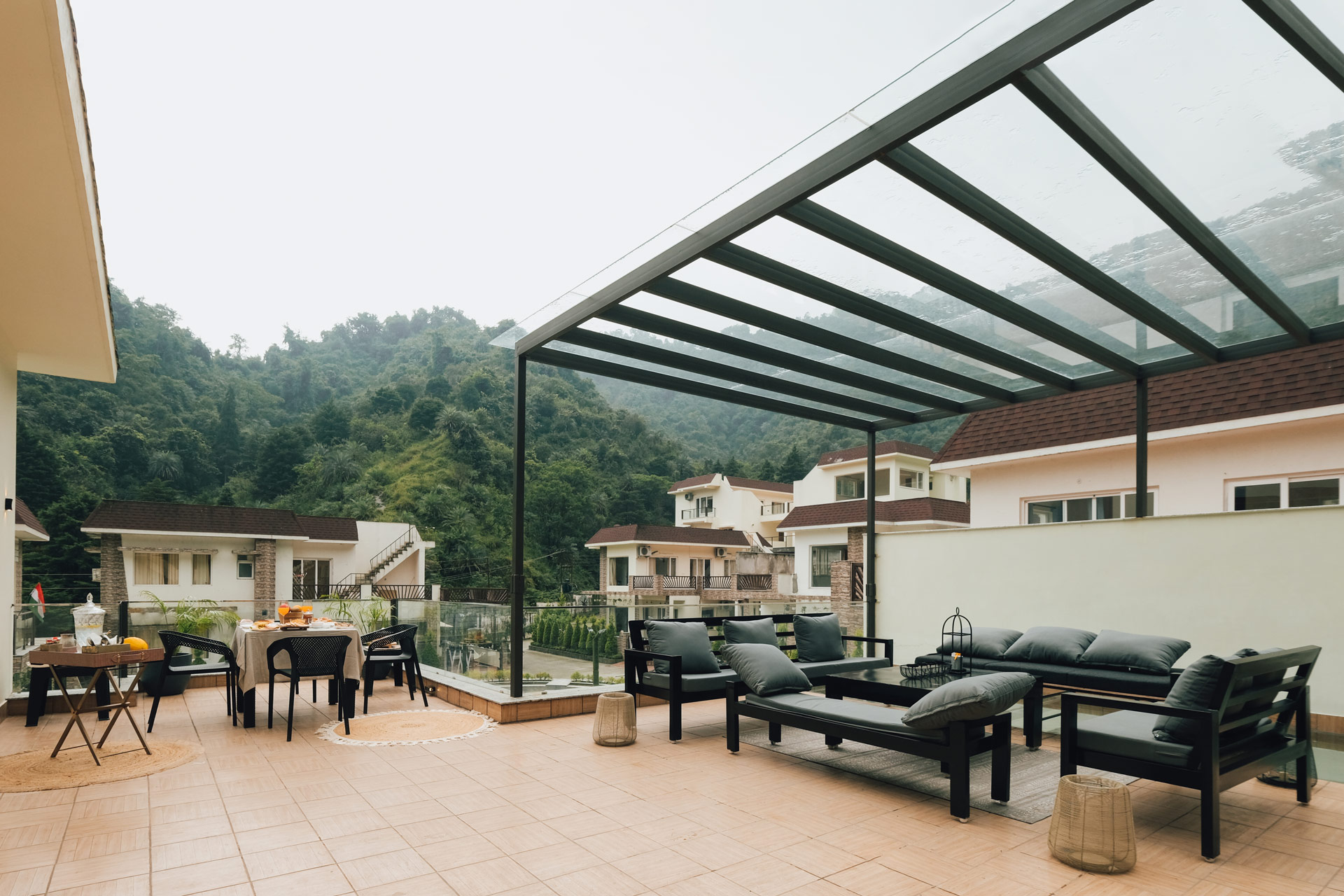
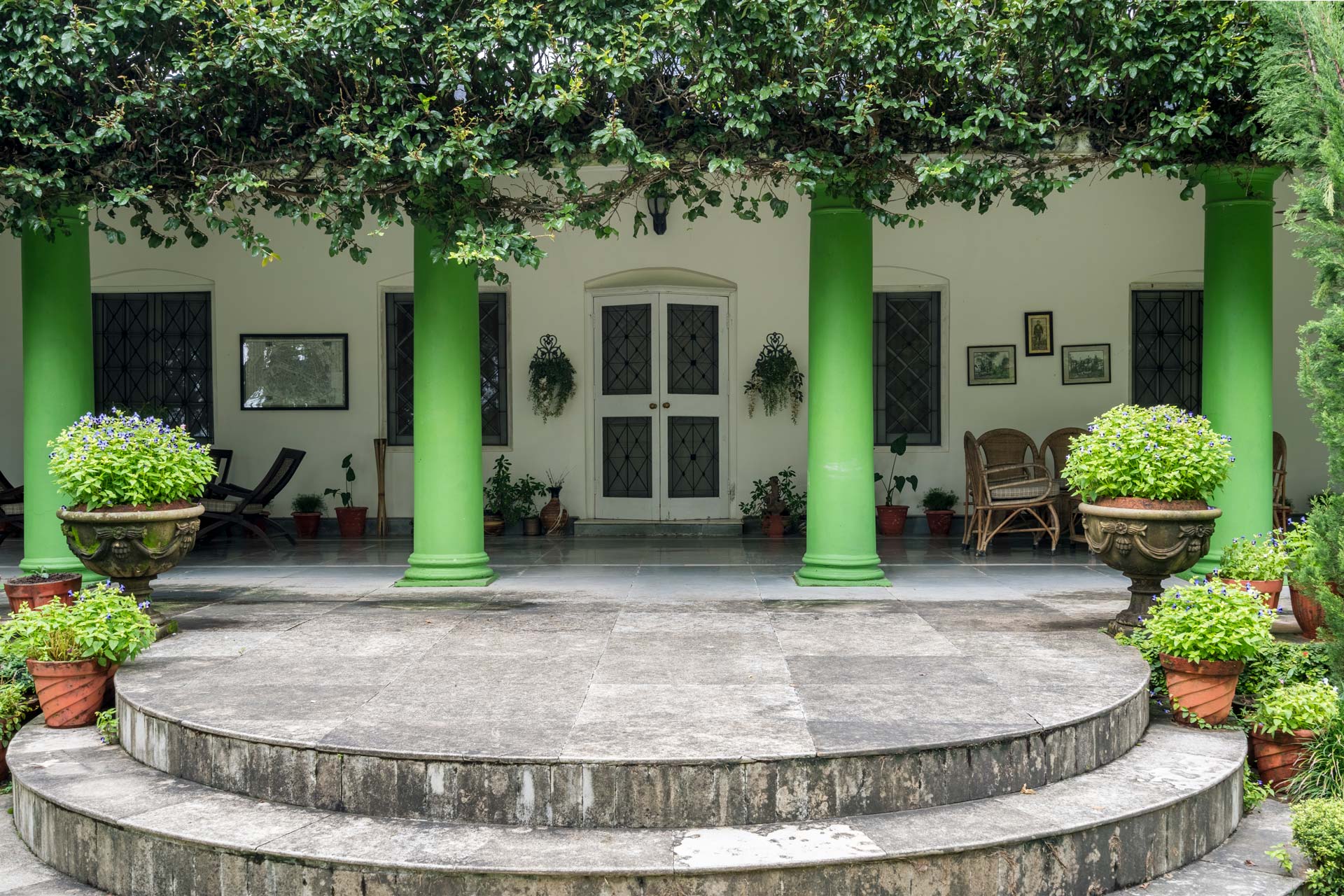
StayVista has no on-trail basecamp — the trail’s only beds are the GMVN huts and ashrams at Bhojbasa. But the drive to Gangotri is a full day, and the smart play is a comfortable night in Rishikesh, Dehradun or Mussoorie on the way up — and a recovery stop on the way down. That’s the part operator pages skip entirely, and it’s where a real bed makes a genuine difference to how you feel at altitude the next day.
A few of our properties sit naturally on these routes, framed as on-route stops, not basecamps:
While you’re staging in the foothills, there’s plenty to do — from rafting and riverside cafés to evening aarti. Browse things to do in Rishikesh on the way up or things to do in Dehradun before your trek to make the staging night count.
Frequently asked questions
Yes. Gangotri National Park reopened on 1 April 2026 and stays open through 30 November. But the pre-monsoon window closes around mid-June, after which monsoon landslides shut the route until mid-September (Outlook Traveller, 2026). If you’re reading this in mid-June 2026, this is the last clear window for about three months.
It’s about 18–19 km one way, climbing from Gangotri (3,100 m) through Chirbasa (9 km) and Bhojbasa (14 km) to the Gaumukh snout at roughly 4,023 m (Wikipedia – Gomukh). Most trekkers cover it over two days, with the round trip totalling about 36 km.
The Uttarakhand Forest Department caps entry at 150 trekkers a day on the Gaumukh trail to protect the fragile glacier ecosystem (Outlook Traveller, 2026). In peak season, permits can run out — so apply early, especially in May and the first half of June.
Yes. You need a forest permit from the Gangotri forest office or DFO Uttarkashi, costing ₹150 for Indians and ₹600 for foreigners, valid for two days (Outlook Traveller, 2026). It’s extendable if you continue to Tapovan. Carry an original photo ID when you apply.
No. Since September 2024, a registered guide, trekking insurance and a medical fitness certificate are mandatory for the Gaumukh trek (Himalayan Dream Treks). Rules in this zone change, so confirm current requirements with the DFO Uttarkashi office before you travel.
It’s a moderate-to-difficult trek — the long Day 1 and the boulder field near the snout are the hard parts. You cannot camp at Gaumukh; overnight stays there are banned. Trekkers stay at Bhojbasa, in a GMVN guest house or ashram dorm, before the final push to the glacier.
Two windows: May to mid-June, and mid-September to mid-October (IndiaHikes, 2026). Avoid July and August, when the monsoon makes the Gangotri road dangerous, and December to March, when winter snow closes the park completely.
A guided Gaumukh or Gaumukh–Tapovan package typically runs ₹12,000–₹18,000 per person, rising to ₹25,000–₹30,000+ for premium or longer Tapovan itineraries (Thrillophilia, 2026). Most of the cost is logistics, the mandatory guide, meals and stay — the permit itself is only ₹150.
The takeaway: go now, or wait until September
The Gangotri to Gaumukh trek is one of the few walks in India that ends somewhere genuinely sacred — the dripping mouth of a glacier where the Ganga begins. Here’s what to hold onto:
- Open since 1 April 2026, park closes ~30 November
- ~18 km one way to Gaumukh at ~4,023 m
- 150 permits a day — apply early; ₹150 for Indians
- Mid-June is the last window until mid-September
That last point is the one that decides your trip. The glacier is retreating fast — about 1,700 m of ice gone since 1935 — and the daily cap and the short seasons exist precisely because this is a fragile place under pressure (Wadia Institute, 2022). Walk it lightly, follow the rules, and don’t climb on the ice.
If you’re going this week, sort your permit, line up your guide, and break the drive with a night in the foothills so you arrive at the trailhead rested. Planning beyond Gaumukh? Browse more places to visit in Uttarakhand, or read our complete Kedarkantha trek guide for another Garhwal classic.