

Kashmir in August–September 2026: 12 Places for a Family Trip
Last updated: June 2026
TL;DR: August and September are a genuinely good time to bring a family to Kashmir. The Valley sits in the monsoon’s rain-shadow, so while much of India gets soaked, Srinagar gets only brief afternoon showers — warm days around 25–30°C, cool 10–15°C nights, lush gardens and the run-up to apple and saffron season. Plan for Srinagar (Dal Lake, Mughal Gardens), Gulmarg (gondola), Pahalgam (Betaab, Aru, Chandanwari) and Sonmarg. The one real monsoon risk is the Jammu–Srinagar NH-44 highway through Ramban, which can shut for days after rain — flying into Srinagar sidesteps it entirely.
In this Blog
Kashmir in August–September at a glance
| Best time | Late Aug–Sep: warm days, cool nights, fewer crowds than peak May–Jun |
| How to reach | Fly to Srinagar (avoids the highway); or NH-44 from Jammu by road |
| Nearest airport/station | Srinagar Airport (SXR); railhead Jammu Tawi (then ~7–8 hr drive) |
| Ideal duration | 6–7 days for Srinagar + Gulmarg + Pahalgam + Sonmarg |
| 2026 monsoon note | Below-normal monsoon expected; Valley stays mostly dry, but the Ramban stretch of NH-44 can see landslides — check road status before driving up |
Is August–September a good time to visit Kashmir with family?
Yes — and the reason is geography. The high ranges that ring the Kashmir Valley block most of the south-west monsoon, so while Mumbai, Goa and the Western Ghats are deep in rain through August and September, Srinagar stays largely dry. You get short afternoon showers that usually pass within an hour, followed by clear skies and washed-clean mountain views. Daytime temperatures sit around 25–30°C and nights cool to roughly 10–15°C, so a family can sightsee in light layers and sleep comfortably without air-conditioning.
For families specifically, these two months hit a sweet spot. The frantic May–June peak has eased, so shikara queues, gondola lines and hotel rates all soften. The meadows of Gulmarg and Pahalgam are at their greenest, the Mughal Gardens are in full leaf, and by late September the first apples are being picked and the saffron crocus is only weeks from bloom in Pampore. It is shoulder season in the best sense: pleasant weather, lower prices, and scenery that still earns the journey.
The honest caveat is the approach by road. Unlike most hill stations where the danger is the destination’s own ghats, in Kashmir the destination is calm and the road in is the hazard. We cover that in the safety box below — and it is the single most important thing to plan around.
Monsoon safety in Kashmir (the road in matters more than the Valley)
– The Jammu–Srinagar NH-44 through the Ramban–Banihal sector runs across fragile, over-steepened slopes and is repeatedly shut by landslides, mudslides and “shooting stones” in rain — sometimes for several days at a stretch. In 2026 it has already closed for multiple consecutive days after heavy spells. See StayVista’s guide to landslide-prone hill stations to avoid in monsoon.
– Flying into Srinagar avoids the road risk almost entirely. With young children or elderly parents, book the flight rather than the 7–8 hour drive from Jammu — your itinerary won’t hostage itself to a debris-clearance update.
– If you do drive, travel in daylight only, never start a leg without checking the day’s traffic advisory, and keep a buffer day so a one-day highway closure doesn’t collapse your whole trip.
– Pack a light fleece and a compact umbrella or rain shell for everyone; afternoon showers are brief but real. For where else stays calm in the rains, see safe places to visit in monsoon in India.
– Carry essential medicines, keep cash on hand (mobile signal and ATMs thin out beyond Srinagar), and confirm permits/timings for higher points like Zojila on the day.
12 places to visit in Kashmir in August–September with family
These are grouped by base — Srinagar, Gulmarg, Pahalgam and Sonmarg — so you can build a clean route rather than backtrack. Distances are from Srinagar unless noted. Fees and timings are current for the 2026 season; the Valley’s tourist sites generally run April–October hours through this period.
1. Dal Lake & a shikara ride, Srinagar
Dal Lake is the obvious, and earns it. A slow shikara ride past floating vegetable gardens, kingfishers and the lake’s wooden houseboats is the gentlest possible introduction for kids and grandparents alike, and the late-afternoon light in September is superb. The floating market and the lotus stretches near Nehru Park are worth asking your boatman to include.
- Entry fee: No entry to the lakefront; shikara rides are hired by the hour. Rates are negotiated at the ghat (a 1-hour ride is typical) — agree the price and route before you push off.
- Timings: Rides run roughly dawn to dusk; early morning and the golden hour before sunset are calmest.
- Best time: Sunrise for the floating market; late afternoon for photographs.
- How to reach: Central Srinagar; ghats line the Boulevard road.
- Time required: 1–2 hours on the water.
- Ideal for: Families, couples, first-timers, photographers.
- Pro tip: Negotiate the fare and the loop up front, and carry small cash for the on-water sellers of saffron, papier-mâché and Kashmiri tea.
2. Mughal Gardens — Nishat, Shalimar & Chashme Shahi, Srinagar
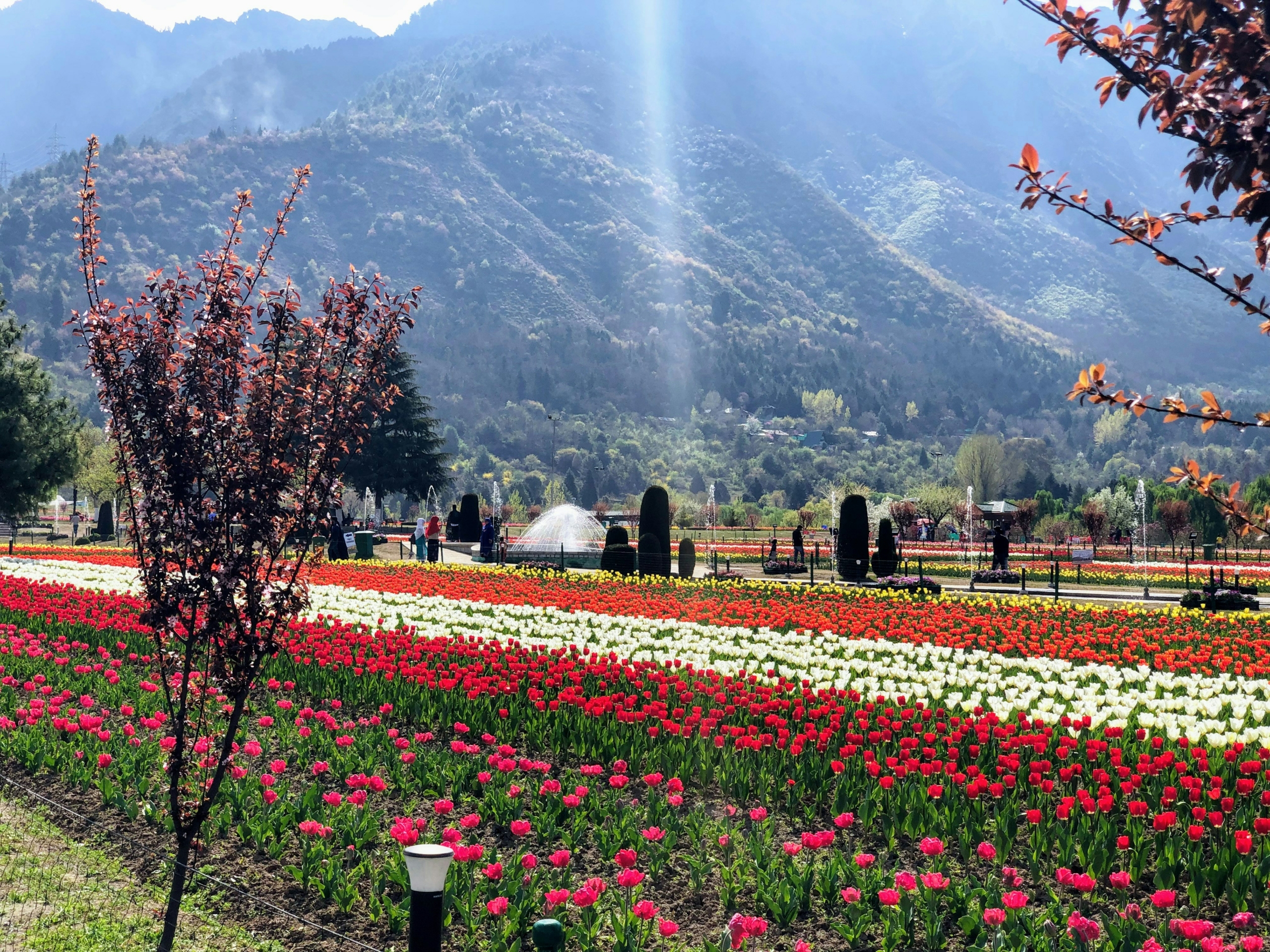
The three terraced Mughal gardens on Dal’s eastern shore are the easiest “win” of any Srinagar day: flat, shaded, full of fountains and chinar trees, and a hit with children who can run between the terraces while adults photograph the Zabarwan backdrop. Nishat Bagh has the grandest layout; Shalimar Bagh is the largest at around 31 acres; Chashme Shahi is the smallest and built around a spring.
- Entry fee: Around ₹20 per adult for Indian visitors at each garden (about ₹300 for foreign nationals); nominal, payable at the gate.
- Timings: Roughly 9:00 AM–7:00 PM daily.
- Best time: Morning, before tour groups arrive; the gardens are lush and green in Aug–Sep.
- How to reach: 8–12 km from the city centre along the eastern shore of Dal Lake; all three sit close together.
- Time required: About 2–3 hours for all three.
- Ideal for: Families, older travellers, easy-pace days.
- Pro tip: Do the three in one loop in the order Chashme Shahi → Nishat → Shalimar, and carry water — there’s a fair bit of gentle uphill walking on the terraces.
3. Gulmarg Gondola (cable car), Gulmarg
The headline family experience of any Kashmir trip. The two-stage gondola climbs from Gulmarg to Kongdori (Phase 1) and on towards Apharwat Peak (Phase 2), and even in summer the upper station can hold patches of snow that delight first-time visitors. The meadow views on the way up are worth the ticket alone.
- Entry fee: Phase 1 (Gulmarg–Kongdori) around ₹800 per adult; Phase 2 (Kongdori–Apharwat) around ₹1,000; children under 3 ride free. Book in advance — Phase 2 frequently sells out.
- Timings: Generally 9:00 AM–3:30 PM, run in forenoon and afternoon slots; subject to weather.
- Best time: First forenoon slot, for the clearest skies before afternoon cloud builds.
- How to reach: Gulmarg is about 50 km (1.5–2 hr) from Srinagar; the base station is a short walk from the town.
- Time required: Half a day, allowing for queues at both phases.
- Ideal for: Families, couples, anyone after a snow-touch in summer.
- Pro tip: Book Phase 2 online 2–3 weeks ahead; carry sunglasses and a warm layer even in August — Apharwat is markedly colder than the meadow.
4. Gulmarg meadow, golf course & gondola walks, Gulmarg
Beyond the cable car, Gulmarg itself is a flat, walkable bowl of meadow ringed by pine — easy on small legs and elderly knees. The Gulmarg Golf Course is among the highest in the world and pleasant to stroll around even if you don’t play, and pony rides across the meadow are a low-key thrill for children.
- Entry fee: No fee to walk the meadow; pony rides and golf access are charged separately and negotiated locally.
- Timings: Open through the day; best in clear morning light.
- Best time: Aug–Sep, when the meadow is green and wildflowers linger.
- How to reach: Within Gulmarg town, on foot from most stays.
- Time required: 1–2 hours, or fold it around your gondola slot.
- Ideal for: Families, gentle walkers, photographers.
- Pro tip: Fix the pony route and price before mounting, and keep an eye on children near the ponies — the meadow paths can get busy midday.
5. Betaab Valley, Pahalgam
Named after a Bollywood film shot here, Betaab Valley is a postcard meadow hemmed by deodar slopes with the Lidder stream running through — and it’s one of the few Pahalgam spots with a managed entry, so it stays relatively tidy. There’s space for kids to roam, a small bridge for photos, and snack stalls near the gate.
- Entry fee: Around ₹100 per adult; about ₹50 for children aged 6–12; free under 6.
- Timings: Roughly 8:00 AM–6:00 PM in the April–October season.
- Best time: Morning, before the day-trip crowd from Pahalgam arrives.
- How to reach: About 15 km from Pahalgam town; reached by the local union taxi — outside vehicles are generally not allowed past Pahalgam, so you hire a union cab for the Betaab–Chandanwari circuit.
- Time required: 1–1.5 hours.
- Ideal for: Families, photographers, gentle picnics.
- Pro tip: Combine Betaab and Chandanwari in one union-taxi circuit to save money, and agree the full-circuit fare before you set off.
6. Aru Valley, Pahalgam
Quieter and greener than Betaab, Aru is a riverside meadow about 12 km up from Pahalgam that doubles as the trailhead for longer Himalayan treks. For a family it’s simply a beautiful, low-key place to walk, let children paddle at the water’s edge, and have tea — far less commercial than the headline stops.
- Entry fee: No entry charge for visitors; a nominal vehicle/parking charge applies, and a small per-person walking charge may be collected locally.
- Timings: Open daylight hours; the road up is best driven before mid-afternoon.
- Best time: Aug–Sep mornings, when the meadow is at its lushest.
- How to reach: About 12 km from Pahalgam by union taxi; the last stretch is a winding hill road.
- Time required: 2–3 hours, more if you walk in.
- Ideal for: Families wanting calm, nature lovers, slow mornings.
- Pro tip: Aru is the gentlest of the three Pahalgam valleys for elderly travellers — flatter walking and fewer crowds.
7. Chandanwari, Pahalgam
The highest of the Pahalgam circuit at around 2,895 m, Chandanwari is the starting point of the Amarnath Yatra and holds patches of snow that survive into summer near the famous snow bridge over the Lidder. The drive up is the experience as much as the spot itself, with the river tumbling alongside the road.
- Entry fee: No formal entry charge; covered within the union-taxi circuit fare.
- Timings: Daylight hours; go early as afternoons can cloud over.
- Best time: Aug for lingering snow patches; clear mornings for the drive.
- How to reach: About 16 km from Pahalgam by local union taxi only.
- Time required: 1–1.5 hours at the top, plus drive time.
- Ideal for: Families chasing summer snow, photographers.
- Pro tip: It’s noticeably colder and higher here — carry a warm layer and take it slow if anyone feels the altitude. During the Amarnath Yatra window the area can be busy and access regulated, so check on the day.
8. Baisaran meadow, Pahalgam
Often called “mini Switzerland,” Baisaran is a high alpine meadow above Pahalgam ringed by pine forest, reached on horseback or a short trek. It’s a classic family photo stop with open space for children. Note: access and security arrangements here have changed since 2025 — confirm whether the meadow is open and what the current entry/escort rules are with your stay or the local tourism office before you plan a half-day around it.
- Entry fee: Historically a nominal charge; verify current status locally before going.
- Timings: Daylight hours when open.
- Best time: Clear mornings in Aug–Sep.
- How to reach: About 5 km uphill from Pahalgam, by pony or on foot.
- Time required: 2–3 hours including the ride up.
- Ideal for: Families comfortable with a pony ride, photographers.
- Pro tip: Fix the pony rate both ways in advance, and check open/closed status on the day — don’t assume it from older blogs.
9. Sonmarg & Thajiwas Glacier
“The meadow of gold,” Sonmarg is the greenest of the big four and the base for a short walk or pony ride up to the Thajiwas Glacier — a genuine glacier-snout a family can reach without serious trekking. The Sindh river runs broad and clear here, and the surrounding peaks feel close enough to touch.
- Entry fee: No entry charge to Sonmarg or the Thajiwas trail; pony rides to the glacier are hired and negotiated locally.
- Timings: Open through the day; aim to be at Thajiwas by late morning.
- Best time: Aug–Sep, when the meadow is lush and the glacier walk is snow-free underfoot.
- How to reach: About 80 km (2.5–3 hr) from Srinagar; the new Z-Morh tunnel now keeps Sonmarg accessible year-round, smoothing what used to be a weather-dependent drive.
- Time required: A full day trip from Srinagar, or an overnight.
- Ideal for: Families, light adventurers, photographers.
- Pro tip: The glacier is a roughly 2 km walk (about 45 min each way) from the meadow — fine for most, but hire a pony for young children or tired legs, and agree the return fare first.
10. Zojila Pass & Zero Point (day trip from Sonmarg)
For families wanting a taste of high-mountain drama, the drive beyond Sonmarg toward Zojila Pass and “Zero Point” climbs into raw, treeless terrain on the way to Ladakh. It’s a there-and-back excursion best done with a local driver who knows the road and the day’s conditions.
- Entry fee: No formal entry; a local vehicle is hired for the run beyond Sonmarg.
- Timings: Morning departures only; the high road is weather-dependent.
- Best time: Clear Aug–Sep mornings; conditions can change fast at altitude.
- How to reach: Zero Point is roughly 25 km beyond Sonmarg by hired local vehicle.
- Time required: Half a day from Sonmarg.
- Ideal for: Families with older children who travel well; adventure-curious couples.
- Pro tip: This is high altitude — keep the visit short, carry water and a warm layer, and skip it if anyone is unwell. Always confirm the road is open that morning.
11. Pampore saffron fields
By late September the saffron crocus is only weeks from bloom in Pampore, the saffron heartland just outside Srinagar — and a stop here is a lovely, low-cost lesson for children in where the world’s priciest spice comes from. Full purple bloom peaks mid-October to early November, but a late-September visit lets you walk the fields, meet growers and buy genuine Kashmiri saffron at source ahead of the rush.
- Entry fee: Free to walk the roadside fields; you pay only for any saffron you buy.
- Timings: Best at dawn during bloom, when flowers are freshly open.
- Best time: Mid-October–early November for full bloom; late Sep for the green build-up and quieter fields.
- How to reach: About 15 km from Srinagar on the Srinagar–Pahalgam road — an easy add-on en route to Pahalgam.
- Time required: 30–60 minutes.
- Ideal for: Families, food-curious travellers, photographers.
- Pro tip: Buy saffron only from a grower or a reputable shop and check it’s pure (real saffron is deep red with an orange tip) — roadside “bargains” are often adulterated.
12. Old Srinagar — Jamia Masjid, Shankaracharya & local markets
To balance the meadows with some culture, give a half-day to old Srinagar: the wooden-pillared Jamia Masjid, the hilltop Shankaracharya Temple with a panoramic view over the city and Dal Lake, and the bustling lanes for walnut wood, pashmina and Kashmiri food. It’s the part of the trip kids remember for the snacks and the sights, not just the scenery.
- Entry fee: No entry charge to the mosque or temple; the temple involves a climb (and a security check — no phones/cameras at the top).
- Timings: Mosque open outside prayer times; Shankaracharya Temple roughly daytime hours.
- Best time: Late afternoon for the temple view; mornings for the markets.
- How to reach: Central and southern Srinagar; both are short drives from Dal Lake.
- Time required: Half a day combined.
- Ideal for: Families, culture-minded travellers.
- Pro tip: Dress modestly for the mosque, and leave phones in the car before the temple climb as they aren’t permitted at the shrine.
Planning your Kashmir family trip: suggested routes
6–7 day classic (recommended for families): Day 1 fly into Srinagar, shikara on Dal Lake at sunset. Day 2 Mughal Gardens + old Srinagar. Day 3 day trip to Gulmarg for the gondola. Days 4–5 to Pahalgam, doing the Betaab–Aru–Chandanwari circuit and a slow morning by the Lidder. Day 6 Sonmarg and Thajiwas Glacier (or overnight there). Day 7 Pampore saffron stop en route to the airport. This keeps drives short and gives everyone a rest day’s worth of slack.
4–5 day short break: Srinagar (2 nights) + one of Gulmarg or Pahalgam (2 nights). Pick Gulmarg for the gondola if you have younger children, Pahalgam for greener valleys and gentler walks.
Weekend (3 days): Srinagar only — Dal Lake, Mughal Gardens, old city and a half-day to Pampore. Genuinely doable and restful, and the safest option if highway/weather news is unsettled, since you stay close to the airport.
Whichever you choose, fly both ways if young children or elderly parents are along — it removes the NH-44 variable and saves two long, winding road days.
Where to stay in Kashmir with family
Kashmir’s stay scene is distinct from the rest of India: Srinagar runs on houseboats and homestays rather than villas, while Gulmarg, Pahalgam and Sonmarg are cottage markets — wooden, often family-run, with lawns and bonfire decks rather than pools. Inventory in the higher towns is genuinely limited and books out in shoulder season, so reserve early.
A few pointers for families:
– In Srinagar, a heritage houseboat on Dal Lake is the once-in-a-lifetime choice for one or two nights — but confirm bathrooms and heating suit young kids; otherwise a homestay or cottage in the quieter Nishat/Brein areas near the gardens is easier with luggage and prams.
– In Pahalgam, look for a riverside cottage near the Lidder so children have safe space and you’re a short hop from the union-taxi stand for the valleys.
– In Gulmarg/Sonmarg, a cottage close to the base station or meadow saves a cold early-morning transfer to your gondola slot or glacier walk.
For trip-specific picks, StayVista’s homestays and cottages in the region include:
– The Loft, Srinagar (/villa/the-loft) — a pet-friendly A-frame cottage on the city’s outskirts, good for a family wanting quiet and character over a lakefront address.
– Maryam Cottage, Pahalgam (/villa/maryam-cottage) — a bright two-bedroom cottage with wooden panelling and a river beside the lawn, well placed for the Betaab–Aru circuit.
– Gaash Cottage, Sonmarg (/villa/gaash-cottage) — a three-bedroom cottage with a lawn and bonfire deck, handy for an overnight before the Thajiwas walk.
CTA box — Travelling with grandparents or small kids? Book a ground-floor cottage room and keep one buffer night unplanned, so a rainy afternoon or a highway hiccup becomes a slow tea-and-lawn day rather than a scramble. (CTA 1 of 3 max.)
FAQ: Kashmir in August–September
Is August–September a good time to visit Kashmir?
Yes. The Kashmir Valley sits in the monsoon’s rain-shadow, so it stays mostly dry while the rest of India is wet. Expect warm days (about 25–30°C), cool nights (10–15°C), lush gardens and meadows, smaller crowds than the May–June peak, and the run-up to apple and saffron season.
Does it rain a lot in Kashmir in August?
Not heavily inside the Valley. Srinagar typically gets only a handful of rainy days a month, usually brief afternoon showers that clear within an hour. The bigger weather risk is to the approach road — the NH-44 highway through Ramban can shut after rain — not to your time in Srinagar itself.
Is it safe to drive to Kashmir during the monsoon?
The Valley is safe, but the Jammu–Srinagar NH-44 through the Ramban–Banihal sector is prone to monsoon landslides and can close for days. With family, flying into Srinagar avoids this risk almost entirely. If you must drive, go in daylight, check the day’s traffic advisory before each leg, and keep a buffer day.
What are the best places in Kashmir for a family trip?
Srinagar (Dal Lake shikara rides and the Mughal Gardens), Gulmarg (the gondola and meadow), Pahalgam (Betaab, Aru and Chandanwari valleys) and Sonmarg (Thajiwas Glacier). Add Pampore’s saffron fields and old Srinagar’s mosque, temple and markets for variety.
How many days do you need for Kashmir with family?
Six to seven days covers Srinagar, Gulmarg, Pahalgam and Sonmarg at a comfortable pace with short drives. A shorter 4–5 day trip can do Srinagar plus one of Gulmarg or Pahalgam, and a 3-day weekend works for Srinagar on its own.
How much does the Gulmarg gondola cost in 2026?
Phase 1 (Gulmarg to Kongdori) is around ₹800 per adult and Phase 2 (Kongdori toward Apharwat) around ₹1,000; children under three ride free. It runs roughly 9:00 AM–3:30 PM in forenoon and afternoon slots, weather permitting. Book Phase 2 online 2–3 weeks ahead as it sells out.
Can you see saffron fields in Kashmir in September?
In late September you can walk Pampore’s saffron fields as the crop greens up, but full purple bloom peaks from mid-October to early November. Visit at dawn during bloom for the best sight, and buy saffron from a grower at source.
Is there snow in Kashmir in August and September?
Not in the towns, but you can still touch snow at altitude — patches survive into summer near Apharwat (top of the Gulmarg gondola), at Chandanwari above Pahalgam, and around the Thajiwas Glacier near Sonmarg. Carry a warm layer for these higher points even in August.
Conclusion
August and September give families the best of Kashmir without the peak-season crush: dry, mild weather thanks to the Valley’s rain-shadow, green meadows, easy access to summer snow, and softer prices on shikaras, gondolas and stays. Build a relaxed 6–7 day loop through Srinagar, Gulmarg, Pahalgam and Sonmarg, fly in and out to dodge the NH-44 highway risk, and keep a buffer day in hand. Do that, and the only thing left to plan is how much saffron to carry home.