
7 Scenic Vande Bharat Routes for the Monsoon and the Villas at the End
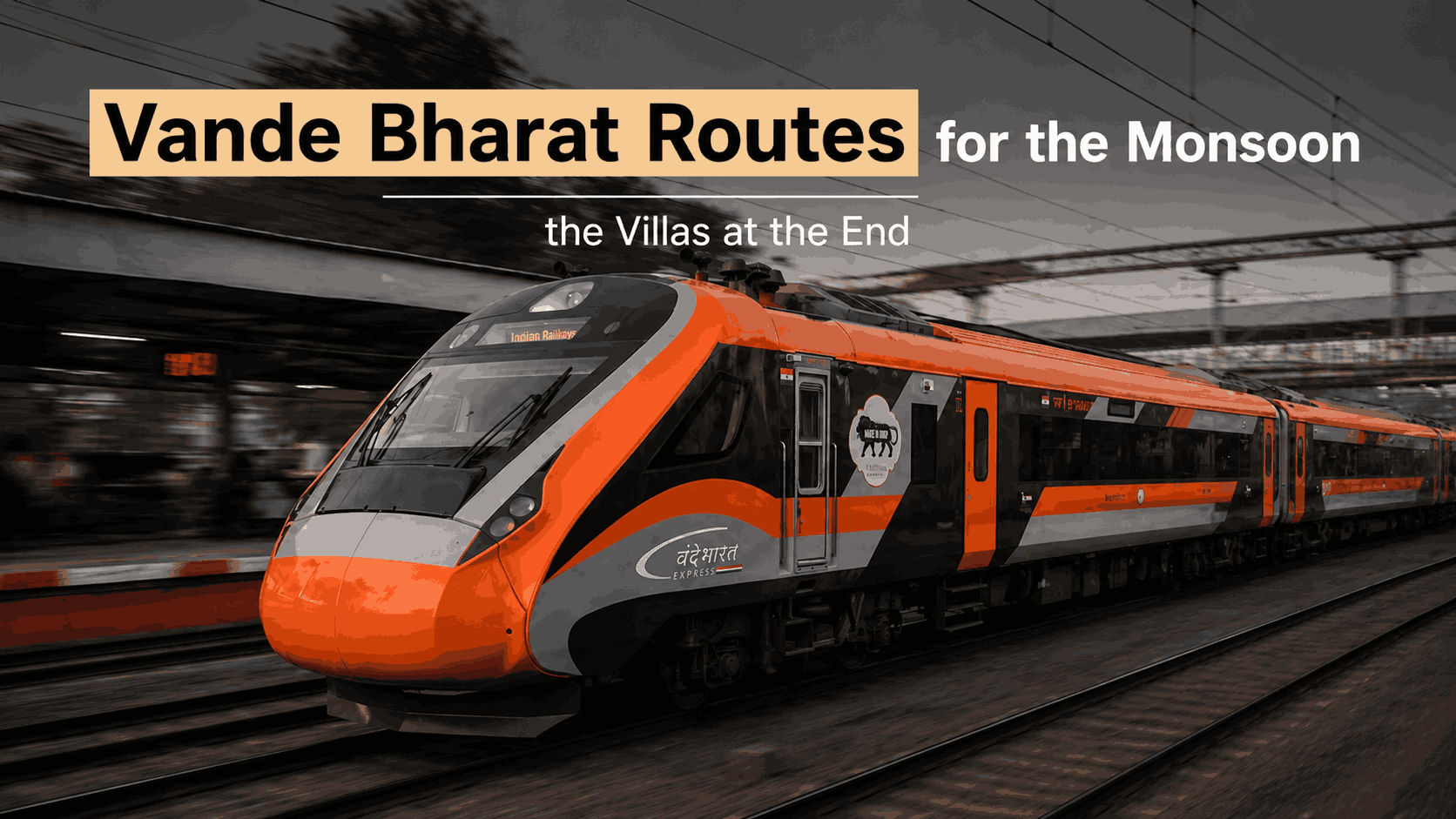
India’s Vande Bharat network has grown to 164 services across 82 routes as of 2026 — and a handful of them happen to run straight through the country’s most dramatic monsoon geography: the Konkan coast’s 2,000-odd bridges and 90 tunnels, the Sahyadri ghats climbed without a single banking engine for the first time in Indian Railways history, the Shivalik foothills on the approach to Dehradun, Kerala’s coconut-and-Ghats corridor. These aren’t scenic by accident — the routes were laid a century ago by engineers chasing the easiest gradient through the hardest terrain, and monsoon is when that terrain shows off.
This is a train-then-villa guide: seven Vande Bharat routes worth taking specifically for the monsoon views, and a real, bookable StayVista villa waiting at (or a short drive from) each one.
TL;DR: The seven best monsoon-scenic Vande Bharat routes run through the Konkan coast (Mumbai–Madgaon), the Sahyadri ghats (Mumbai–Shirdi via Kasara Ghat, and Pune–Kolhapur via Satara), the Himalayan foothills (Delhi–Dehradun and Delhi–Amb Andaura), and South India’s Western Ghats (Kasaragod–Thiruvananthapuram, and Chennai–Mysuru onward to Coorg). Each ends near a bookable StayVista villa — from Goa’s coastline to Coorg’s coffee estates.
In this Blog
Quick Reference: The 7 Routes at a Glance
| # | Route | Distance | Duration | Scenic Highlight | Villa at the End |
|---|---|---|---|---|---|
| 1 | Mumbai CSMT–Madgaon | ~581–586 km | 7h45m (10h05m in monsoon) | Konkan Railway: 2,000+ bridges, ~90 tunnels, seasonal waterfalls | Goa (Ashore, Morjim / Oceanic Sunsets, Reis Magos) |
| 2 | Mumbai CSMT–Sainagar Shirdi | 343 km | 5h25m | Thal/Kasara Ghat — first VB trains to climb the Sahyadris with no banking engine | Sunset on the Lake, Igatpuri |
| 3 | Pune–SCSMT Kolhapur | 326 km | 5h25m | Satara, Karad, Koyna Sahyadri belt | Ajuban, Kolhapur |
| 4 | New Delhi–Dehradun | — | Under 5 hrs | Shivalik hills, Haridwar forest stretches, misty mountain approach | Mana, Rishikesh |
| 5 | New Delhi–Amb Andaura | 412 km | 5h15m | Via Kalka–Chandigarh, gateway to Himachal’s lower hills | The Kasa, Kasauli |
| 6 | Kasaragod–Thiruvananthapuram | — | — | Kerala backwaters, coconut forests, Western Ghats via Kozhikode/Kannur | Rivera, Wayanad (via Kannur) |
| 7 | MGR Chennai Central–Mysuru | 497 km | 6h30m | South India’s first Vande Bharat; onward drive climbs into Coorg’s coffee hills | The Haven – Grandeur, Coorg |
1. Mumbai CSMT–Madgaon: The Konkan Railway Run
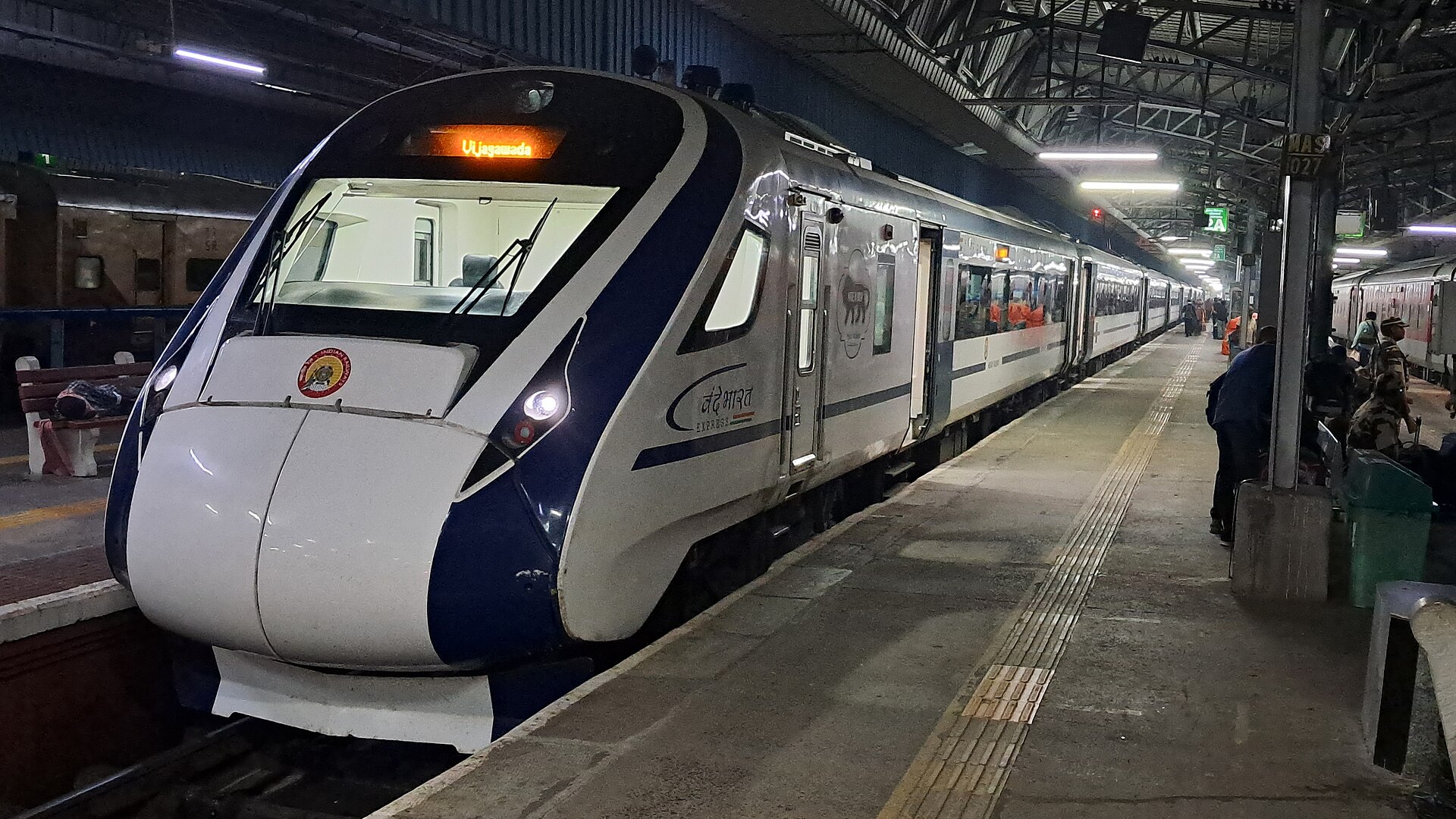
This is the one everyone means when they say “scenic Vande Bharat route.” The 22229/22230 service was the 19th Vande Bharat in India and the first to run on the Konkan Railway, covering roughly 581–586 km between Mumbai CSMT and Madgaon Junction (Goa) with stops at Dadar, Thane, Panvel, Khed, Ratnagiri, Kankavali and Thivim. The Konkan Railway itself spans about 740 km of engineering that shouldn’t really work on paper — over 2,000 bridges and nearly 90 tunnels carved through the Western Ghats’ western face, built specifically because there was no gentler way to lay track along this coast.
Monsoon is this route’s defining season, not a side effect of timing: rain fills every one of those 90-odd tunnels’ approach cuttings with dripping green, and seasonal waterfalls activate directly alongside the tracks in stretches that stay bone-dry the rest of the year. The trade-off is time — average journey duration runs 7h45m outside monsoon but stretches to 10h05m during it, as the railway runs more cautiously through slope-stability-sensitive sections. Budget the extra 2+ hours rather than treat it as a delay.
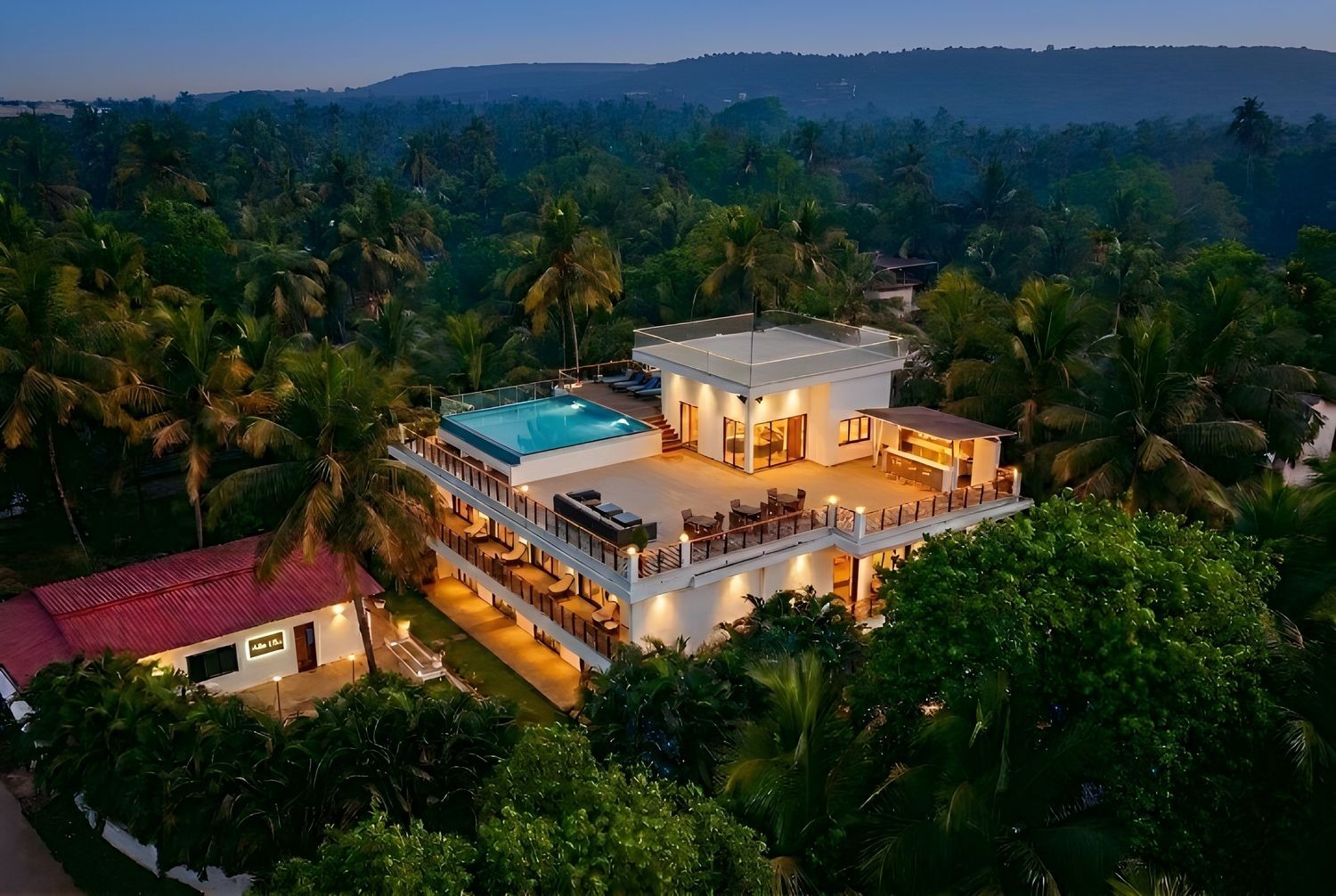
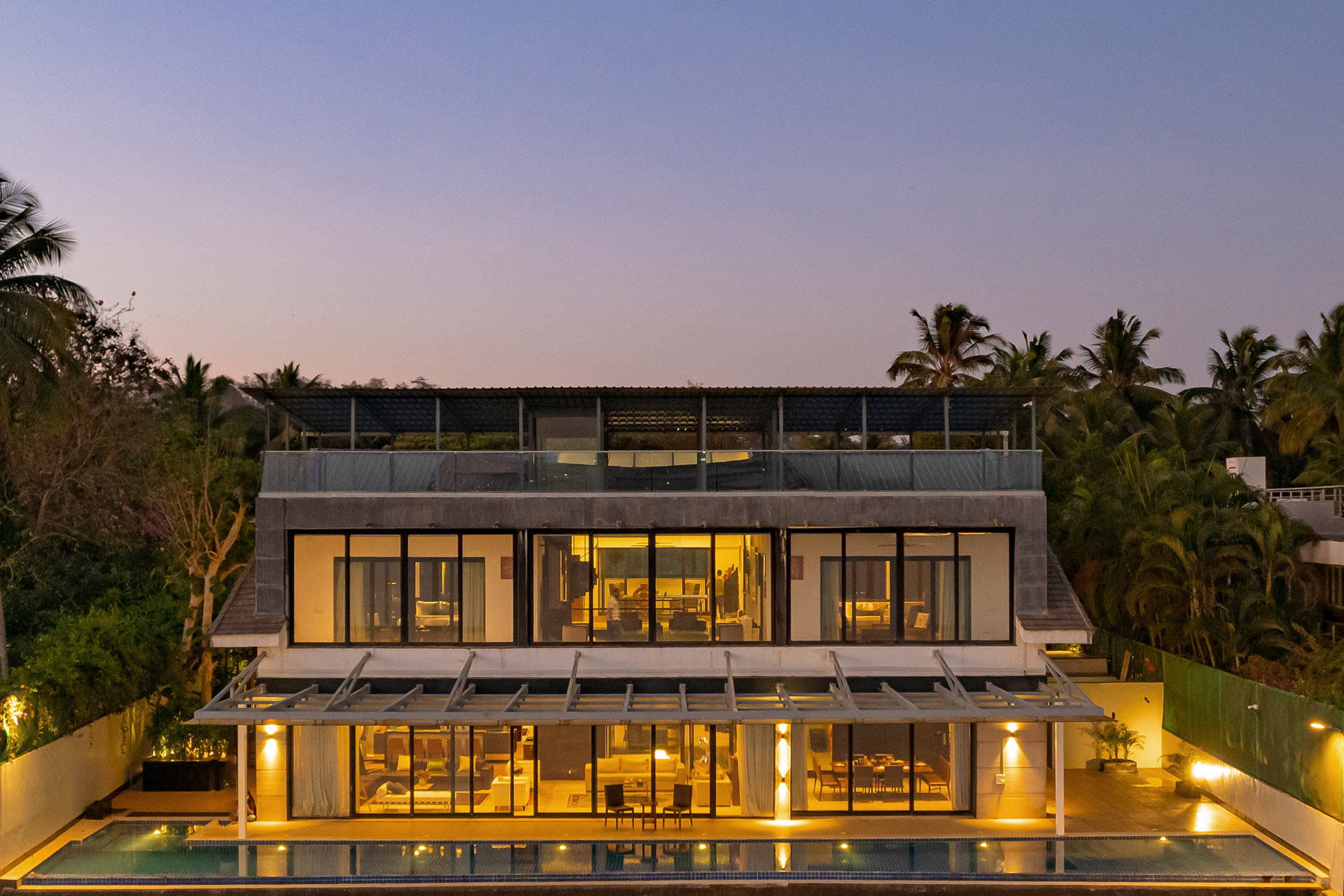
The villa at the end: Goa rewards the wait either at Ashore in Morjim — a 6-bedroom villa directly opposite the beach with an infinity pool facing the sea — or, for river-quiet instead of surf, Oceanic Sunsets in Reis Magos, whose 70×12 ft infinity pool opens straight off the living room onto the Mandovi estuary. (StayVista’s own Mumbai to Goa Vande Bharat guide covers full timings and ticket classes — worth linking rather than duplicating here.)
2. Mumbai CSMT–Sainagar Shirdi: Through the Thal Ghat, First Without a Banking Engine
The 22223 Mumbai CSMT–Sainagar Shirdi Vande Bharat covers 343 km in 5h25m — about 50 minutes faster than the Superfast Express it replaced — and its signature stretch is the 14 km Thal Ghat (also called Kasara Ghat) between Kasara and Igatpuri. That climb matters more than it sounds: this was the first time in Indian Railways history that Vande Bharat trains ascended a steep ghat section under their own power, with no additional banking locomotive pushing from behind — a genuine engineering milestone on a route most passengers just experience as “the pretty bit before Nashik.”
In monsoon (July–September), that pretty bit becomes the whole reason to take this train over flying or driving: the Kasara Ghat and Igatpuri belt turn into what regional coverage consistently calls a green paradise, fog drifting across the cuttings and waterfalls appearing on slopes that show nothing but rock in summer. The route serves Nashik, Trimbakeshwar, Shirdi and Shani Singanapur along the way, running the entire length through the Sahyadri ranges.
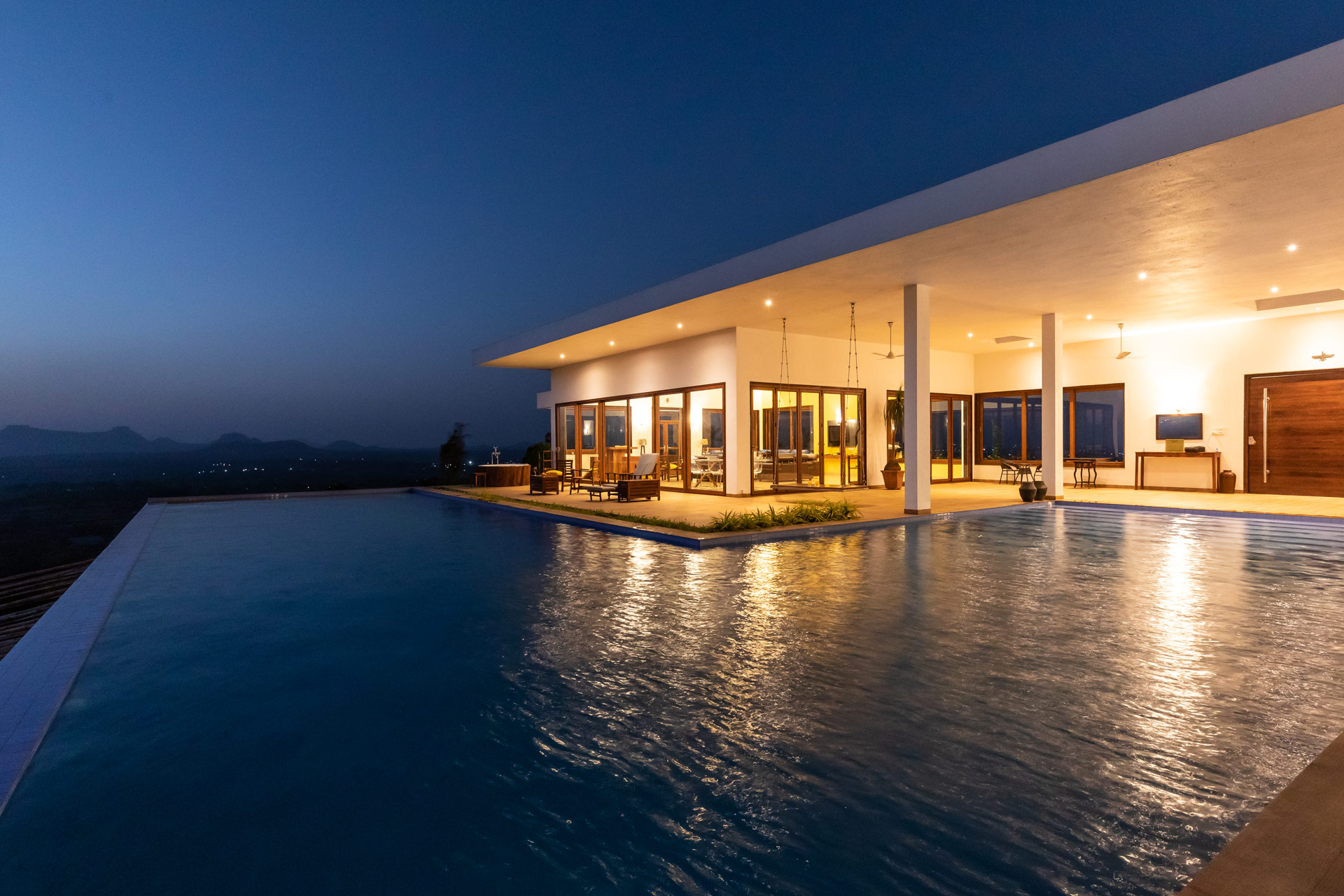
The villa at the end: Sunset on the Lake sits right in the belt the train climbs through — a 5-bedroom hilltop villa above an Igatpuri lake, rated 4.5/5 across 76 reviews, with an L-shaped 15×50 ft infinity pool that visually merges into the water below. Break your Shirdi-bound journey here, or make Igatpuri the destination itself.
3. Pune–SCSMT Kolhapur: Satara, Karad, and the Koyna Sahyadri Belt
The 20673/20674 Pune–Kolhapur Vande Bharat runs 326 km in 5h25m, calling at Satara, Karad, Kirloskarvadi, Sangli and Miraj Junction before terminating at Kolhapur, and it operates three days a week (Sunday, Wednesday, Friday from Pune). The stretch through Satara and Karad skirts the edge of the Koyna Wildlife Sanctuary belt — a discreet, less-touristed pocket of the Sahyadris around Koynanagar in Satara’s Patan taluka — which turns into some of Maharashtra’s most vivid monsoon green precisely because it’s spared the Lonavala-Mahabaleshwar crowds.
This is the quieter cousin of route #2: same mountain range, same monsoon transformation, considerably fewer people doing it for the view. The train’s large-window coaches, onboard WiFi and infotainment are standard Vande Bharat spec, but the real feature here is simply having the Sahyadris to yourself through a train window rather than sharing a ghat-road traffic jam.
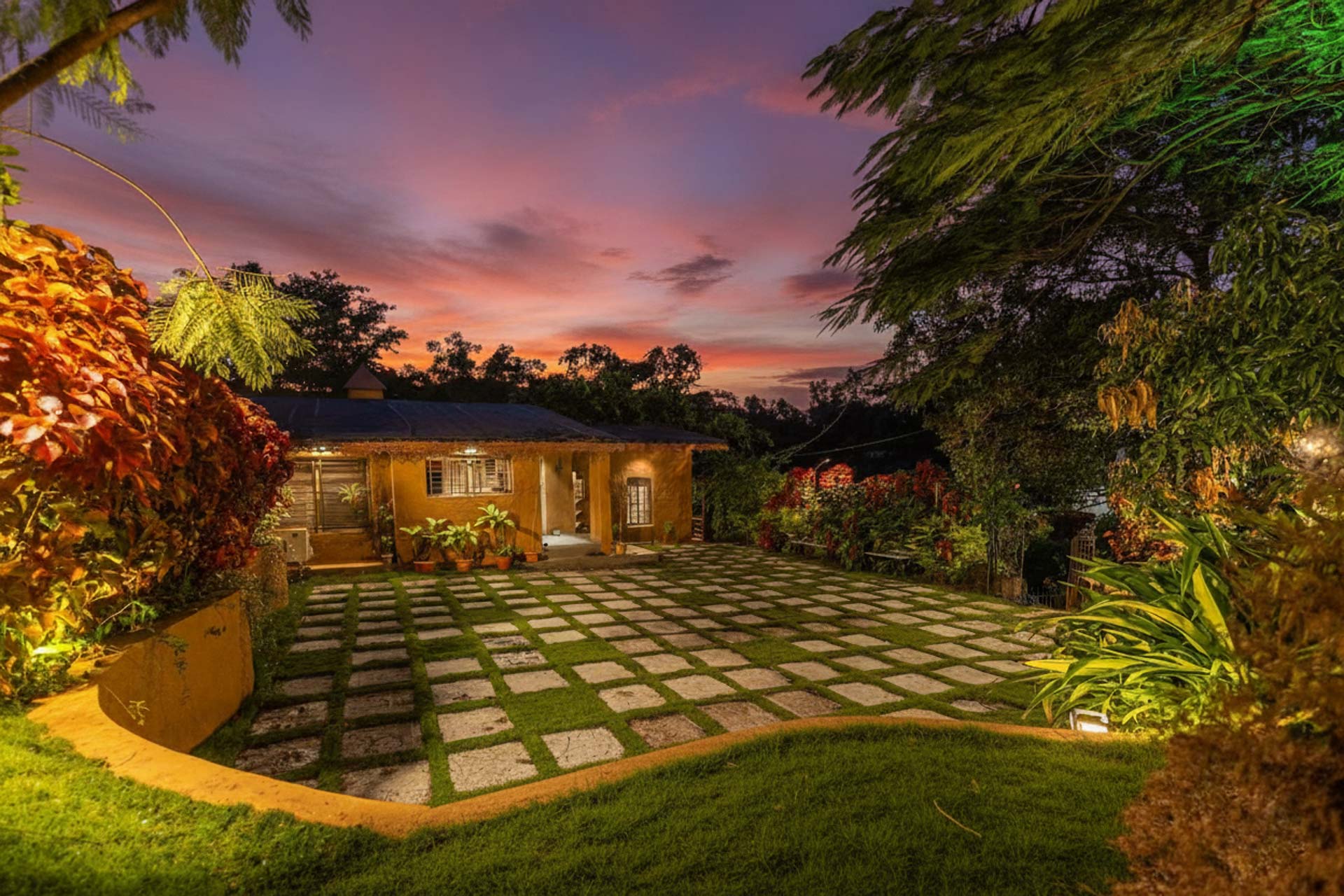
The villa at the end: Ajuban in Kolhapur is a 2-bedroom villa for up to 6 guests with both mountain and lake views, alfresco dining, board games and a BBQ grill — a small, calm base at the end of the line rather than a big-group party villa, well suited to travellers who took this train specifically for the quiet.
4. New Delhi–Dehradun: Shivalik Hills and the Ganga Approach
The New Delhi–Dehradun Vande Bharat covers the run in under five hours, and it’s become one of the most popular routes among nature-minded travellers precisely because Dehradun’s approach does so much of the scenic work: forest stretches near Haridwar give way to the Shivalik hills, and the final run into Dehradun climbs into genuinely misty mountain terrain rather than just arriving at a plains city that happens to be near the Himalayas.
Monsoon intensifies every part of that transition — the Shivaliks run a deeper green, the Ganga at Haridwar swells with Himalayan rain, and the temperature drop on arrival into Dehradun feels earned rather than incidental. It’s a genuinely different train journey in July than in January, in a way the under-5-hour duration doesn’t fully convey until you’re on it.
The villa at the end: Mana sits on a Rishikesh hilltop above the Ganga, a short onward drive from Dehradun, with uninterrupted river and Himalayan views and — the monsoon-relevant detail — a private heated pool (32×9 ft, plus a kids’ pool), rated 4.9/5 as a Guest Favourite. Warm water while the Shivaliks steam in the rain is exactly the payoff this route sets up.
5. New Delhi–Amb Andaura: The Kalka Corridor Toward Himachal’s Lower Hills
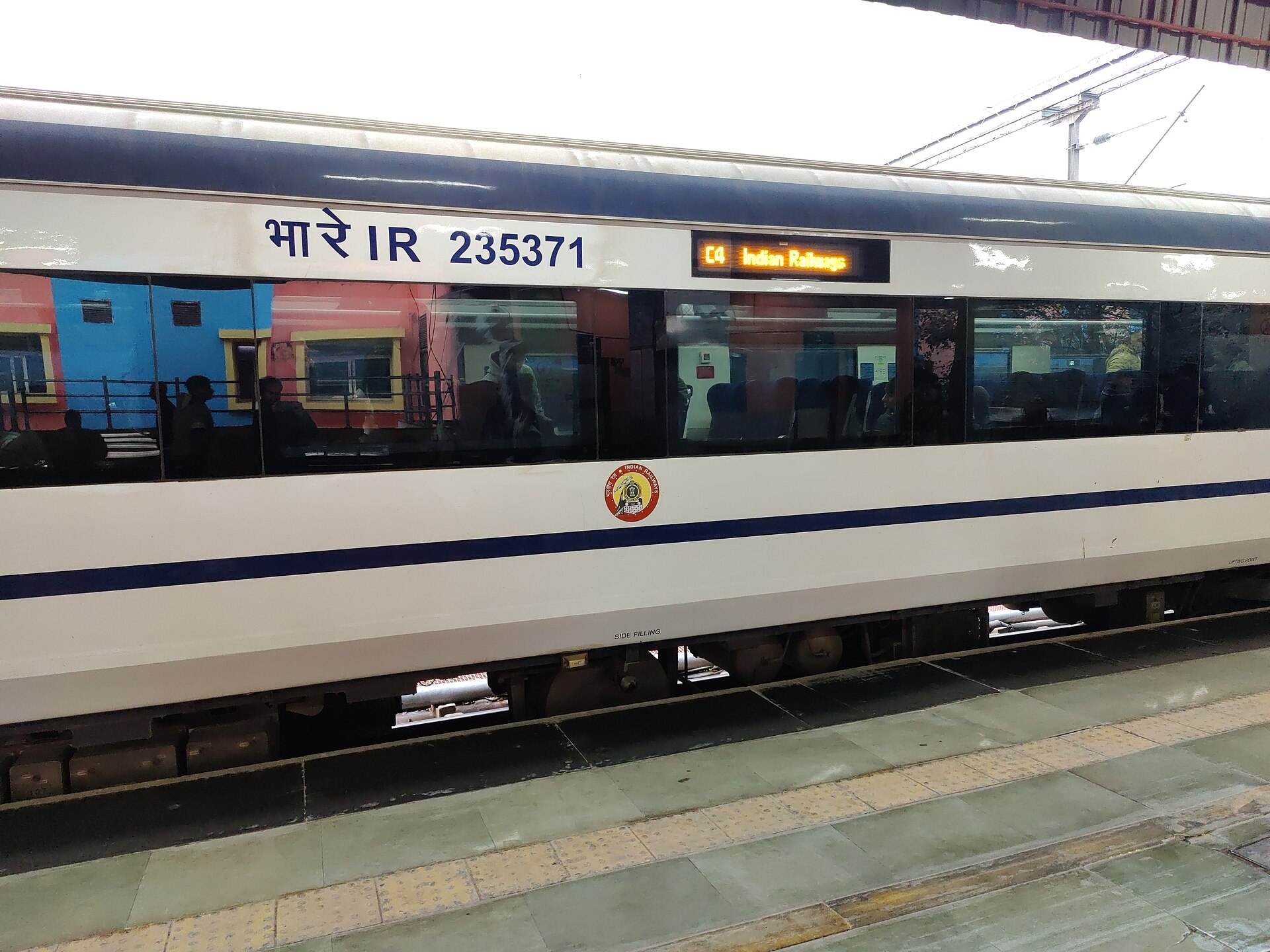
The New Delhi–Amb Andaura Vande Bharat runs 412 km in 5h15m, six days a week, tracing the Delhi–Kalka line through Haryana and Chandigarh before continuing on the Chandigarh–Amb Andaura line into Punjab and Himachal Pradesh. It’s a genuinely useful route for reaching Himachal’s lower hill stations by rail rather than road for the entire journey — Kalka itself, the classic broad-gauge terminus for the narrow-gauge Kalka–Shimla toy train, sits directly on this line, and Chandigarh makes an easy staging point for anything further into the hills.
For Kasauli specifically, this route gets you to the Kalka/Chandigarh corridor by rail, with roughly an hour’s onward drive to the hill station itself — a meaningfully shorter final leg than the full ~305 km Delhi-to-Kasauli road drive, since the train handles the flat Haryana-Punjab stretch and leaves only the actual hill climb to the car.
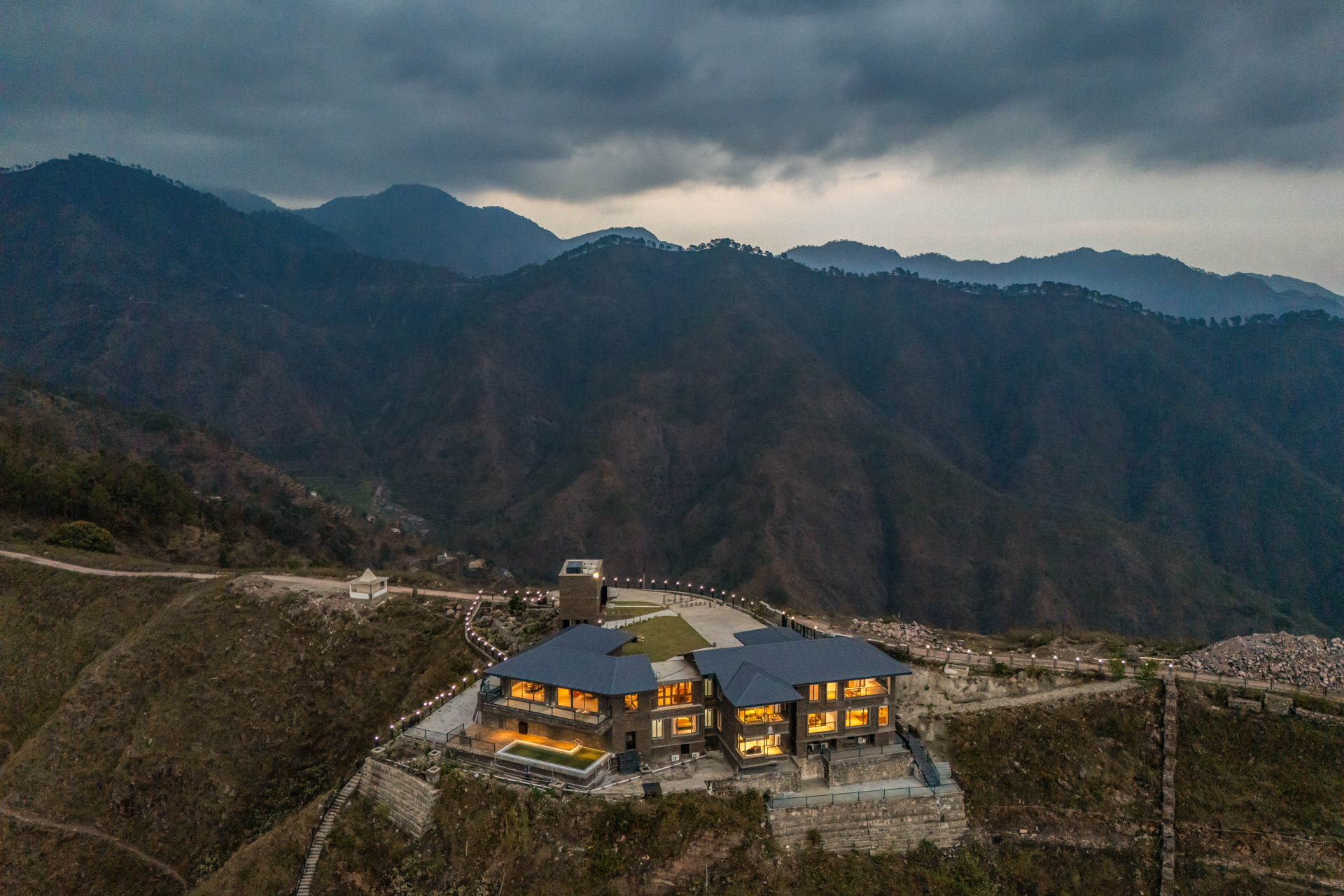
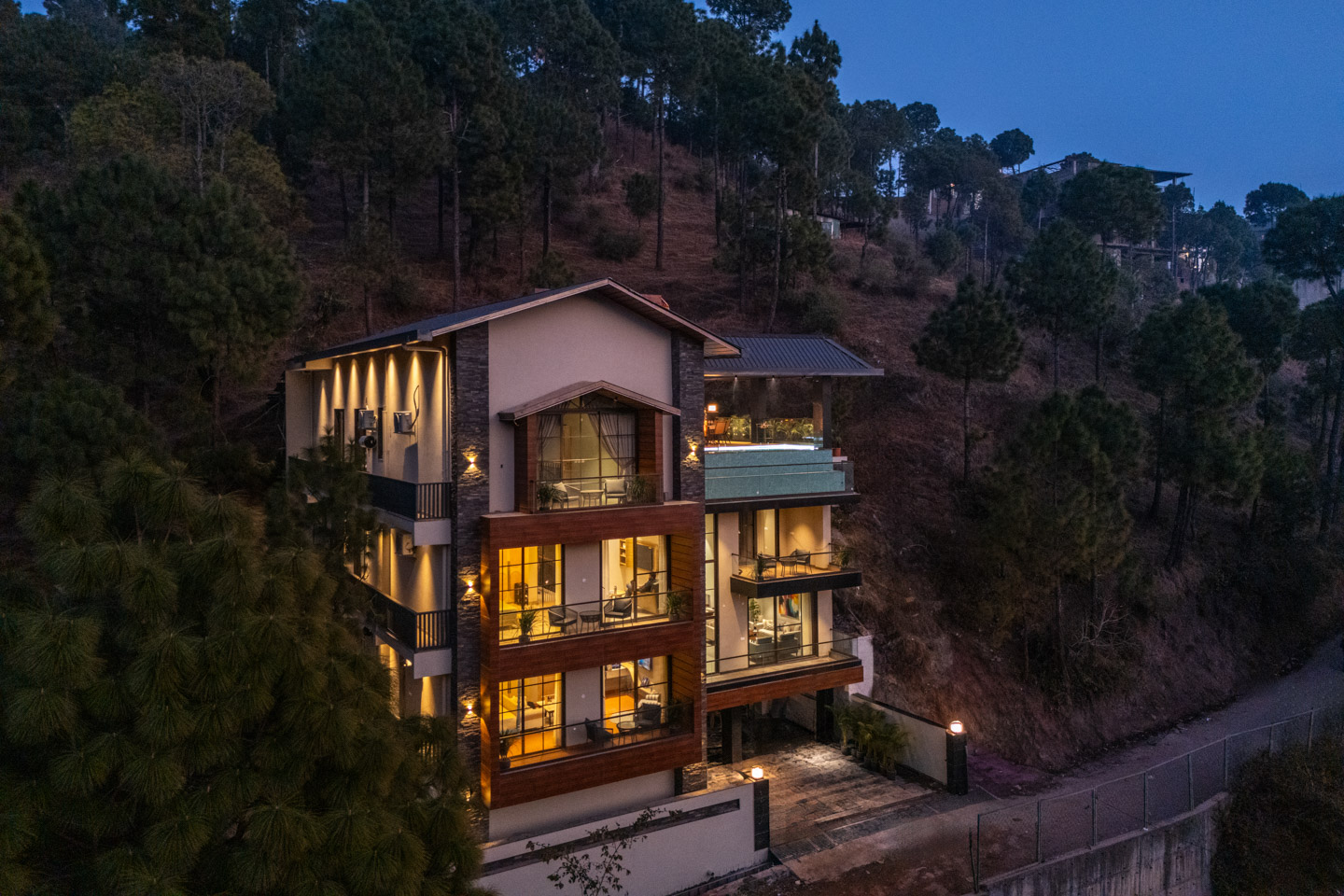
The villa at the end: The Kasa in Kasauli answers the one problem every Himachal monsoon trip has — cold water at altitude — with a heated infinity pool (23×11 ft, 4.5 ft deep) aimed at the pine-covered ridgelines, plus a home theatre for when the mist rolls in and erases the view entirely.
6. Kasaragod–Thiruvananthapuram: Kerala’s Full Coast-to-Ghats Corridor
The Kasaragod–Thiruvananthapuram Vande Bharat runs the length of Kerala, passing through Kozhikode and Kannur along the way, and covers a stretch consistently described as running through scenic backwaters, coconut forests and the Western Ghats — genuinely one route touching all three of Kerala’s signature landscapes rather than favouring just one. Kerala’s monsoon arrives earlier and harder than the rest of peninsular India — the 2026 season reached the state on 24 May, the earliest onset since 2009 — so by the time most of India is mid-monsoon, Kerala’s backwater-and-Ghats corridor has already been green for weeks.
The reason this route makes the list for Wayanad specifically: Kannur International Airport, one of the train’s stops, is also the nearest airport to Wayanad’s villa belt — about 60 km away. A traveller taking this train for the Kerala coastal scenery can disembark at Kannur and be at a Wayanad hillside villa inside 90 minutes, no flight connection required.
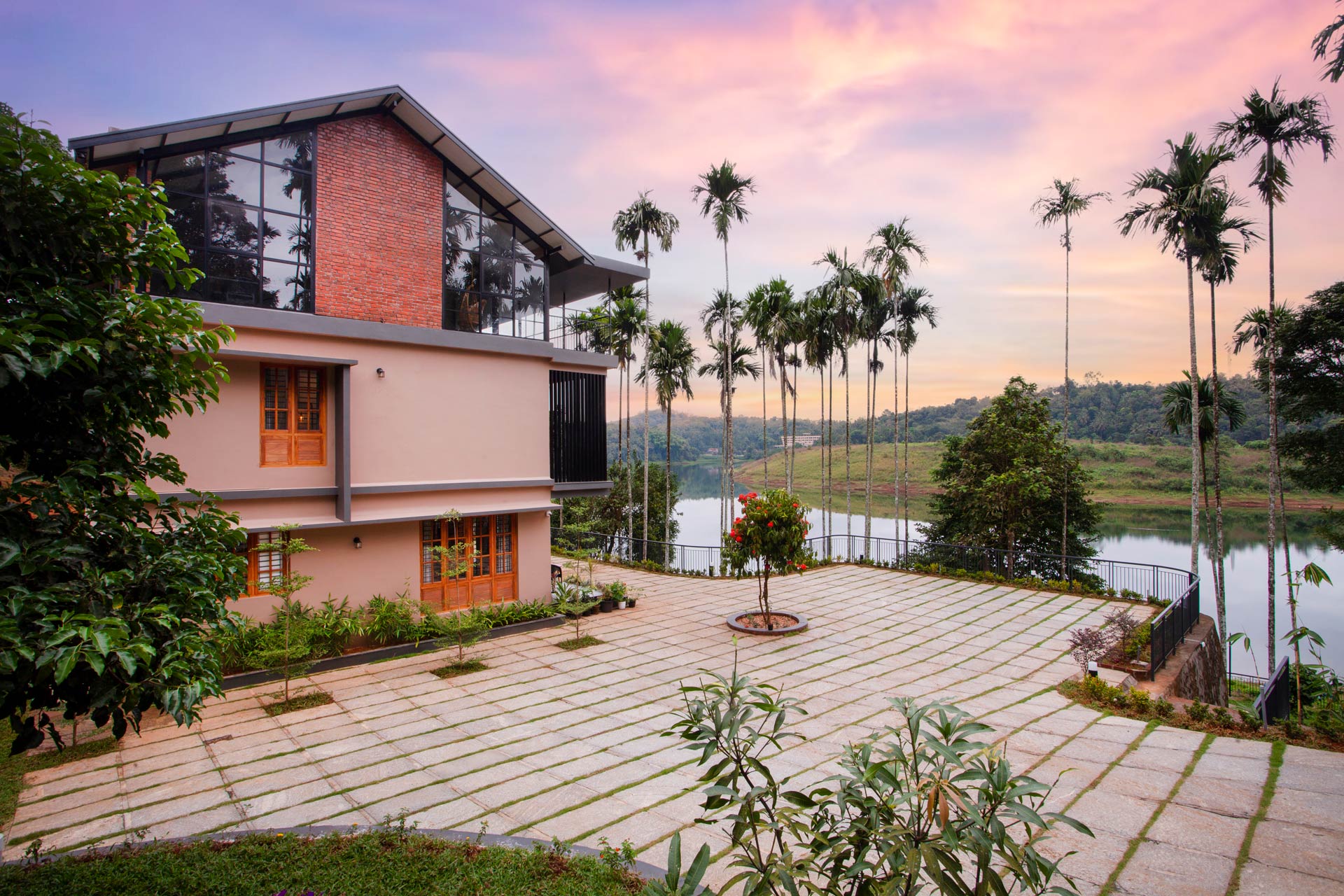
The villa at the end: Rivera in Wayanad puts you 6.6 km from Banasura Sagar Dam — India’s largest earthen dam, its reservoir at full monsoon volume — with lake-view first-floor bedrooms, complimentary breakfast, and a 4.5/5 rating across 73 reviews. From the same Wayanad belt, Soochipara and Kanthanpara waterfalls are both a short onward drive.
7. MGR Chennai Central–Mysuru: South India’s First, With Coorg a Drive Away
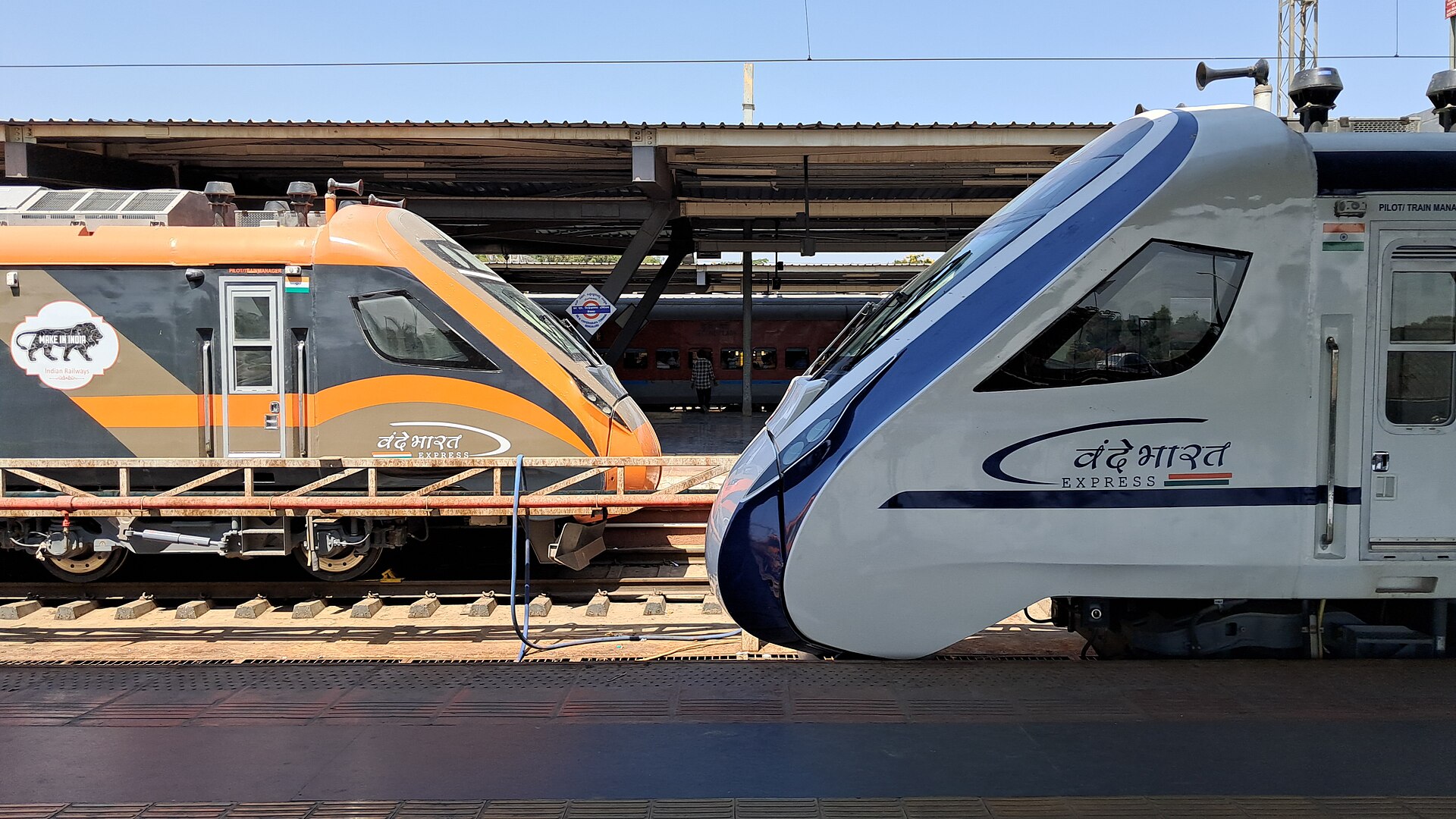
The MGR Chennai Central–Mysuru Vande Bharat was South India’s first Vande Bharat service, covering 497 km via Bengaluru in 6h30m. Mysuru itself isn’t a ghat town — the dramatic monsoon scenery on this itinerary actually starts once you leave the train, on the roughly 2.5–3 hour drive from Mysuru into Kodagu (Coorg), where the road climbs into coffee and cardamom estate country and the Western Ghats proper begin.
That’s worth being upfront about: this is the one route on this list where the train gets you to the gateway rather than through the scenery itself. It’s still the right entry point — Mysuru is a genuine rail hub with fast, frequent connections from Chennai and Bengaluru, and the last leg by road is short enough to do same-day.
The villa at the end: The Haven – Grandeur in Coorg is a 4-bedroom villa rated 4.9/5 across 190 reviews (a Guest Favourite), secluded in the countryside with forest views, breakfast included, and home-cooked meals using local ingredients — the kind of estate-stay experience Coorg’s coffee country is built around.
Frequently Asked Questions
The Mumbai CSMT–Madgaon Vande Bharat on the Konkan Railway is the most celebrated — over 2,000 bridges and roughly 90 tunnels through the Western Ghats, with seasonal waterfalls activating alongside the tracks in monsoon. Journey time extends from 7h45m to about 10h05m during the season as the railway runs more cautiously through the wettest stretches.
The Konkan Railway runs through slope-sensitive terrain with heavy cutting and embankment sections, and speeds are reduced as a safety precaution during heavy rain. The average journey time increases from 7h45m outside monsoon to roughly 10h05m during it — a genuine operational adjustment, not a delay.
It runs through the 14 km Thal Ghat (Kasara Ghat) between Kasara and Igatpuri, and was the first Vande Bharat service in India to climb a steep ghat section without an additional banking locomotive — a genuine engineering first, not just a scenic stretch.
Not directly to any of the three. The closest workable options are Chennai–Mysuru for Coorg (about a 2.5–3 hour onward drive) and Kasaragod–Thiruvananthapuram for Wayanad via Kannur (about 60 km onward). Ooty and Darjeeling currently rely on their historic narrow-gauge lines rather than a Vande Bharat connection.
Under 5 hours, passing through forest stretches near Haridwar and the Shivalik hills before arriving into Dehradun’s misty mountain approach — genuinely one of the fastest rail routes into the Himalayan foothills from Delhi.
Not directly, but the New Delhi–Amb Andaura Vande Bharat runs via the Delhi–Kalka–Chandigarh corridor, cutting Kasauli’s road journey down to roughly an hour’s onward drive from Kalka or Chandigarh, instead of the full ~305 km Delhi-to-Kasauli drive.
The Short Version
Monsoon turns seven Vande Bharat routes into some of India’s best scenic train journeys — the Konkan coast’s bridges and tunnels, two different Sahyadri ghat crossings, two Himalayan-foothill approaches, and Kerala’s coast-to-Ghats corridor, each ending near a villa worth the trip on its own. Take the train for the ghats and the waterfalls; let the villa at the other end handle the rest.
Whichever route you pick, browse StayVista’s full destination list before booking tickets — matching the villa to the train, not the other way round, is what makes this kind of trip work.