

Bird Watching in Jim Corbett: 20 Species, 6 Hotspots & Best Time to Visit (2026)
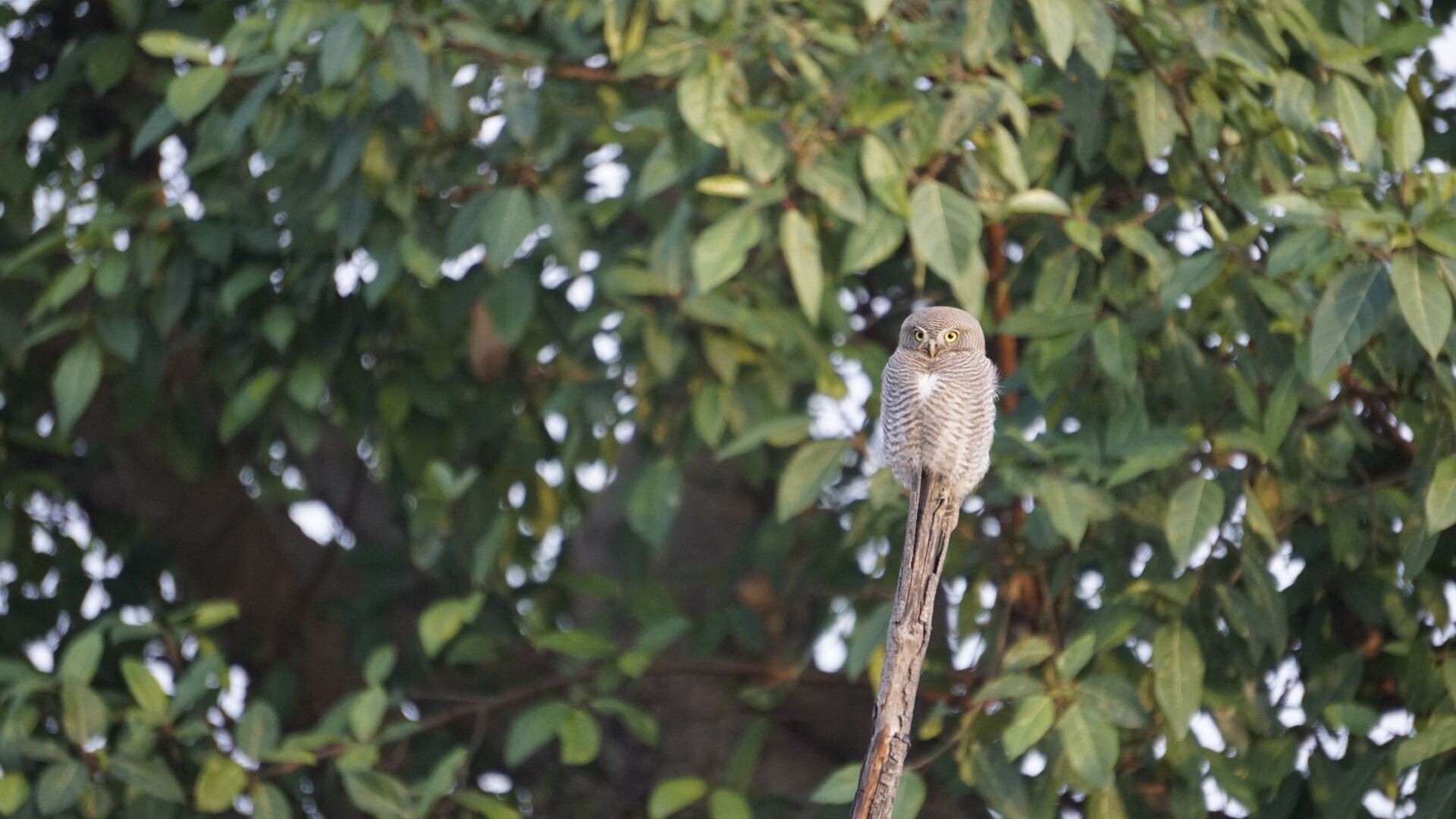
Jim Corbett is India’s richest birding destination with 650+ recorded bird species — including 51 of India’s 69 diurnal raptors and 15 of 26 woodpecker species (India Birdwatching, 2026). November to March is the peak window for migratory birds. Sitabani Forest, the Kosi riverbed and Dhikala grasslands are the strongest hotspots — and staying within 30 minutes of the gate is what separates birders who catch the dawn chorus from those who miss it. 12 min read.
In this Blog
Why Jim Corbett Is India’s Best Birding Destination
Most people book Jim Corbett for a tiger. Birders book it for everything else.
India’s oldest national park, established in 1936, holds 650+ recorded bird species — the highest count of any tiger reserve in the country (Junglerevives / Zoological Survey of India, 2026). Tigers get the marketing budget. The birds get the better odds. On a single February morning at Sitabani, an attentive birder with binoculars can clock 50-60 species before lunch — something even Dhikala’s tiger seekers rarely manage with their target animal.
This guide covers what serious birders actually need: 20 must-spot species with where to find each one, the six best hotspots (including the one most blogs skip), the real best months for each bird category, what a birding day costs in 2026, and where to stay so you’re on the trail by 5:30 AM instead of stuck in a 60-kilometre dawn drive.
How Many Bird Species Are in Jim Corbett National Park?
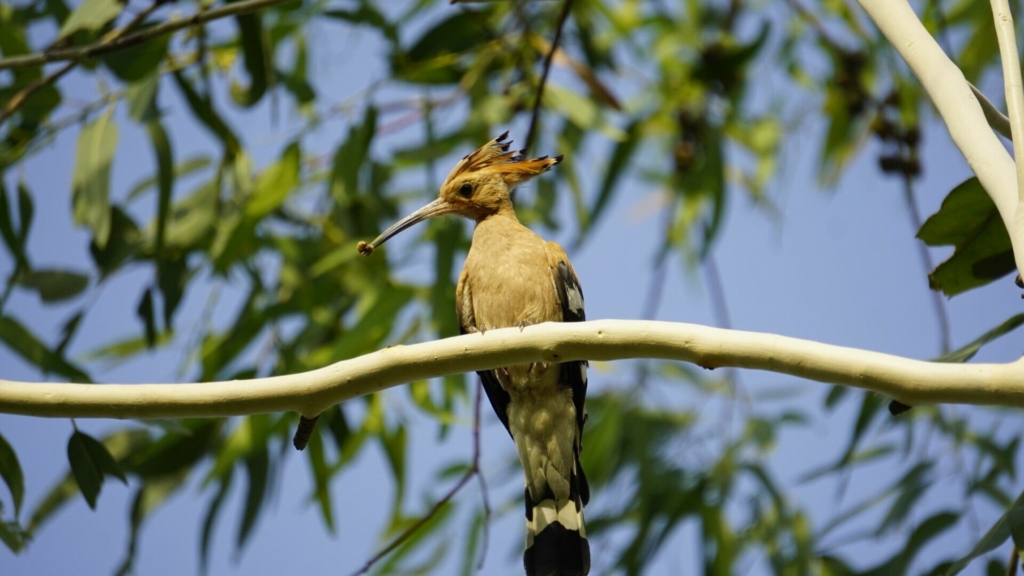
Jim Corbett hosts more than 650 bird species — a count that includes 51 of India’s 69 diurnal raptor species and 15 of 26 Indian woodpecker species (India Birdwatching, 2026). That’s the highest avifaunal diversity of any tiger reserve in India and one of the densest concentrations anywhere in the Himalayan foothills.
The species mix splits roughly into four groups. Resident birds — peafowl, Indian Pitta, junglefowl, hornbills, kingfishers — stay year-round. Altitudinal migrants — Wallcreepers, redstarts, certain thrushes — drop down from higher Himalayan elevations each winter. Long-distance migrants — Pallas’s Fish Eagle from Mongolia, Osprey from Central Asia, several duck species from Europe — arrive between late October and early December. And monsoon breeders — Indian Pitta, several cuckoos — show up just before the rains.
Why so many? Corbett sits at a geographical pivot. Lowland Sal forests meet sub-Himalayan riverine grasslands, meet the foothills of Kumaon. Within 30 kilometres, you cross three ecosystems, and each carries its own bird community. The Ramganga River system adds wetland species that the surrounding forest can’t support on its own.
When Is the Best Time for Bird Watching in Jim Corbett?
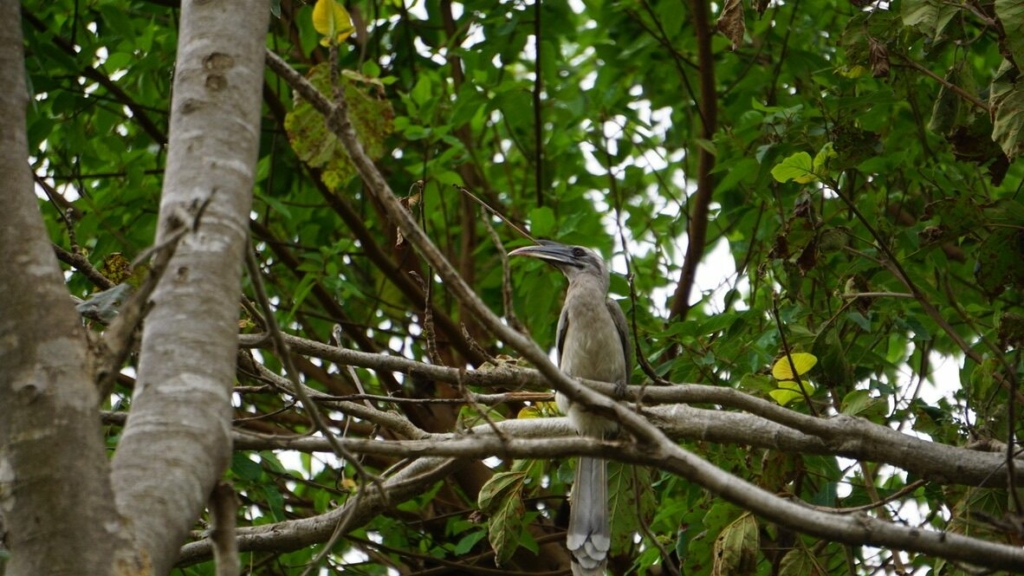
November to March is the peak window. Migratory species from Central Asia, Europe and East Africa swell the resident bird population to its annual high (India Birdwatching, 2026). Cool dry weather also makes for steadier light, clearer canopy visibility, and birds that move at predictable times instead of hiding from the heat.
That said, the “best month” depends on what you’re chasing.
| Month | What’s peaking | Notable arrivals / activity |
|---|---|---|
| November | Early migrants settling in | Wallcreeper, redstarts, first ducks on Ramganga |
| December | Peak migratory population | Pallas’s Fish Eagle, Osprey, all duck species |
| January | Highest species count of the year | Cleanest viewing conditions, full migrant presence |
| February | Migrants stay; courtship begins | Raptor activity peaks for hunting |
| March | Migrants depart; residents court | Hornbills nesting, Indian Pitta arrives |
| April-May | Resident breeding plumage | Peafowl in full display; dry riverbed birding |
| June 15 onwards | Monsoon — limited access | Dhikala and Bijrani close; Sitabani/Jhirna stay open |
Sources: India Birdwatching, StayVista Corbett Safari Zones guide, 2026.
The sleeper insight: December and January are the species-count months, but late February and early March are when the light, the lack of crowds, and the start of resident courtship converge. That’s the window professional bird photographers quietly book first.
Which 20 Bird Species Should You Spot at Jim Corbett?
This isn’t a complete checklist (the official park list runs to 650+). It’s the realistic top-20 for a 2-3 day birding trip — flagship species, easy-to-identify residents, and the rarities serious birders fly in for. Each entry tells you where to look and when.
1. Great Hornbill (Buceros bicornis)
The flagship. A metre-long forest spectacle with a yellow casque and a wingbeat you’ll hear before you see. Where: Sitabani and Bijrani Sal forests. When: March-May, nesting near tree cavities. IUCN: Vulnerable. ID tip: Listen for the heavy “whoosh-whoosh” of the wings — it’s louder than the call.
2. Ibisbill (Ibidorhyncha struthersii)
The grail bird for many Indian birders. A pale grey wader with a long downcurved red bill, almost invisible against river gravel. Where: Kosi riverbed near Loha Pul (Iron Bridge) and Sitabani’s stream beds. When: November-March. IUCN: Least Concern but rare. ID tip: Scan slow-moving stretches of rocky river — they don’t fly often.
3. Pallas’s Fish Eagle (Haliaeetus leucoryphus)
A Mongolian winter visitor and one of the world’s most endangered raptors. Where: Ramganga riverbanks and Kalagarh reservoir, Dhikala zone. When: December-February. IUCN: Endangered. ID tip: Huge wingspan, dark body, distinctly pale head.
4. Tawny Fish Owl (Ketupa flavipes)
One of Asia’s largest owls. Where: Forested stream edges in Bijrani and Dhikala. When: Year-round, best spotted at dawn or dusk. IUCN: Least Concern. ID tip: Look up into Sal tree forks near water.
5. Crested Serpent Eagle (Spilornis cheela)
The most commonly seen Corbett raptor. Where: All forested zones. When: Year-round. ID tip: The repeated “kiu-liu-liu” call carries through Sal forest before you ever see the bird.
6. Great Slaty Woodpecker (Mulleripicus pulverulentus)
The world’s largest woodpecker — and Pawalgarh Reserve next to Corbett holds one of the best populations on earth. Where: Pawalgarh and Sitabani. When: Year-round; loudest in March-April. IUCN: Vulnerable. ID tip: 50 cm long, slate-grey, sounds like a small hammer hitting wood.
7. Himalayan Flameback (Dinopium shorii)
A flash of orange in the canopy. Where: Bijrani and Jhirna Sal forests. When: Year-round. ID tip: Bright golden-yellow back, crimson crown.
8. Blue-throated Barbet (Psilopogon asiaticus)
Heard far more than seen. Where: All forested zones. When: Year-round. ID tip: Repetitive “tukaroo-tukaroo” — once you know it, you’ll hear it everywhere.
9. Brown Fish Owl (Ketupa zeylonensis)
Tawny Fish Owl’s more common cousin. Where: Stream and river edges. When: Year-round. ID tip: Streaked underparts, ear tufts that lean sideways.
10. Wallcreeper (Tichodroma muraria)
A high-altitude wanderer that descends to Corbett’s cliffs in winter. Where: Rocky cliffs in Durga Devi zone. When: November-February. ID tip: Crimson wing flashes when it opens its wings against grey rock.
11. Lesser Fish Eagle (Icthyophaga humilis)
The resident fish eagle. Where: Ramganga and Kosi rivers. When: Year-round. IUCN: Near Threatened. ID tip: Smaller than Pallas’s, dark cap on a paler head.
12. Indian Pitta (Pitta brachyura)
A monsoon breeder and a colour explosion. Where: Bijrani forest understory. When: April-September. ID tip: Nine colours on one bird — once seen, never forgotten.
13. Red Junglefowl (Gallus gallus)
The wild ancestor of every domestic chicken on earth. Where: Sal forest floor across all zones. When: Year-round. ID tip: Cockerel-like but slimmer; the call sounds familiar but cuts off at the end.
14. Plum-headed Parakeet (Psittacula cyanocephala)
Small, fast, and overlooked. Where: Canopy across all zones. When: Year-round, vocal in dry months. ID tip: Male has the plum-coloured head; female’s is grey.
15. Crested Kingfisher (Megaceryle lugubris)
The largest kingfisher in India. Where: Fast-flowing stretches of Kosi and Ramganga. When: Year-round. ID tip: Black-and-white scaling, oversized crest, almost crow-sized in flight.
16. Black-chinned Yuhina (Yuhina nigrimenta)
A small Himalayan flock-bird that drops in winter. Where: Mid-elevation forest in Durga Devi and Sitabani. When: November-February. ID tip: Travels in noisy parties of 8-15.
17. White-capped Redstart (Phoenicurus leucocephalus)
The river boulder bird. Where: Mid and upper Kosi. When: November-March. ID tip: Snow-white cap, chestnut body, constant tail-flicking.
18. Oriental Magpie Robin (Copsychus saularis)
The familiar one for non-birders. Where: Lodges, villages, forest edges. When: Year-round. ID tip: Bold black-and-white, sings from prominent perches at dawn.
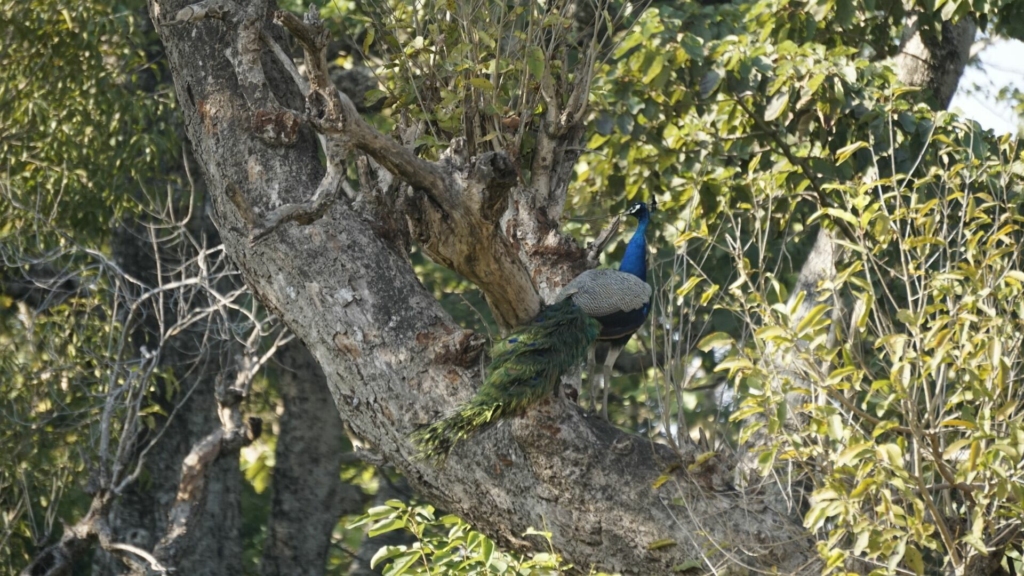
19. Indian Peafowl (Pavo cristatus)
National bird. Where: All zones, often near water. When: Year-round; full breeding plumage April-June. ID tip: If you have to ask, you’re not awake yet.
20. Great Thick-knee (Esacus recurvirostris)
A heavy-billed riverine wader. Where: Kosi gravel beds and Ramganga sand banks. When: Year-round. ID tip: Massive head, yellow eye-ring, freezes when approached.
Where Are the Best Birding Hotspots in Jim Corbett?
Six zones do most of the heavy lifting for Corbett birding. Their seasonal access, permit needs, and species mix vary — so a serious birding itinerary should hit at least three.
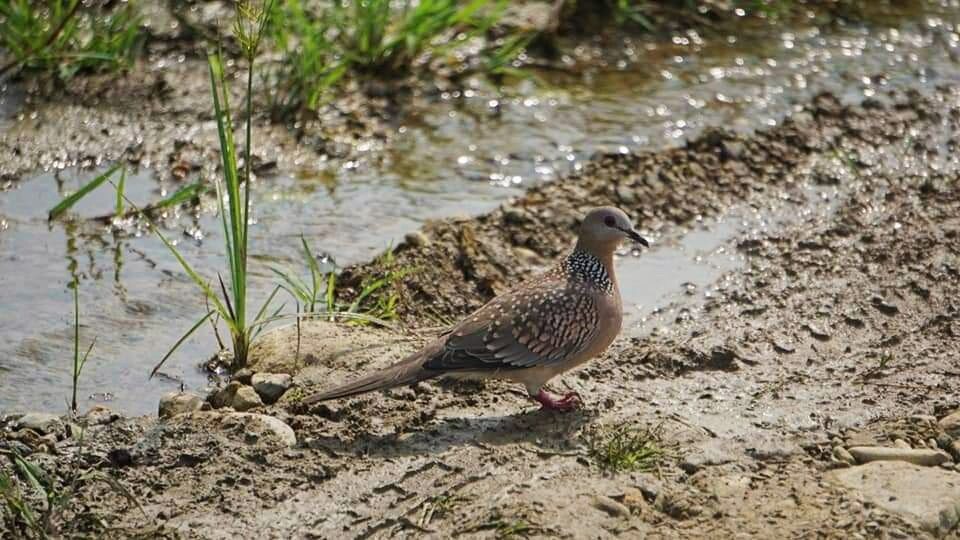
1. Sitabani Wildlife Reserve — the birder’s-best-kept-secret zone
Sitabani sits just outside the core Corbett Tiger Reserve and holds 500+ recorded bird species (Junglerevives, 2026). Critically, it stays open year-round — no monsoon shutdown — and doesn’t need the lottery-permit grind that Dhikala does.
- Best time: November-March for maximum species; year-round access
- How to reach: 18 km from Ramnagar town; 12 km from Corbett Calling and the Sitabani gate cluster
- Time required: 4-5 hours per session, ideally one morning and one evening
- Ideal for: Walking birders, photographers, repeat Corbett visitors who’ve done Dhikala
- Pro tip: Walk the stream beds north of the Sitabani temple at first light — that’s where the Great Hornbill, Tawny Fish Owl and (rarely) the Ibisbill all overlap.
2. Kosi River and Loha Pul (Iron Bridge)
Corbett’s most underrated birding spot, because you don’t need any permit at all.
- Best time: November-March for Ibisbill and Wallcreeper; year-round for Crested Kingfisher
- How to reach: Loha Pul sits on the Ramnagar-Dhangarhi road, about 8 km north of Ramnagar town
- Time required: 2-3 hours of slow walking along the gravel beds
- Ideal for: First-day warm-up birding, families, anyone who didn’t get safari permits
- Pro tip: Park at the bridge, walk a kilometre downstream, scan every gravel bar with binoculars — Ibisbills sit motionless until you’re nearly on top of them.
3. Dhikala Grasslands — the iconic core zone
India’s most famous safari grassland. Pallas’s Fish Eagle, raptors and grass-edge species are the draw.
- Best time: 15 November-15 June (zone closed monsoon)
- How to reach: Dhangarhi gate; 18 km from Ramnagar plus 32 km inside the park
- Time required: 2 nights inside the Dhikala forest rest house for full birding value
- Ideal for: Serious birders chasing Pallas’s Fish Eagle, raptor watchers, photographers
- Pro tip: Book Dhikala rest house 45-60 days ahead — day-visit safaris give you 4 hours; an overnight gives you 16 hours of birding the same grassland.
4. Bijrani Zone
Dense Sal forest and the strongest hornbill territory in the park.
- Best time: 1 October-30 June (closed monsoon)
- How to reach: Aamdanda gate, 1 km from Ramnagar bus stand
- Time required: One safari (4 hours) covers it
- Ideal for: Hornbill spotting, Indian Pitta in monsoon shoulder months
- Pro tip: The Malani area inside Bijrani is the most reliable Great Hornbill stretch.
5. Pawalgarh Conservation Reserve
Adjoining Corbett’s western edge with 365+ recorded bird species and the highest concentration of woodpeckers in north India — 17 species including the world’s largest, the Great Slaty (Tusk Travel, 2026).
- Best time: November-April
- How to reach: 15 km north-east of Ramnagar via Tedha
- Time required: A half-day walking session
- Ideal for: Woodpecker specialists, photographers seeking a quieter alternative to Sitabani
- Pro tip: Hire a Pawalgarh-resident naturalist locally — they know individual Great Slaty Woodpecker territories.
6. Kalagarh Reservoir
The waterbird outpost. Ducks, cormorants, herons, terns.
- Best time: December-February for migratory ducks
- How to reach: 80 km west of Ramnagar via Kotdwar (long drive — combine with a Dhikala stay)
- Time required: A half-day if you’re already inside Dhikala zone
- Ideal for: Waterfowl listers, anyone already on a multi-night Dhikala booking
- Pro tip: Carry a spotting scope — most reservoir birds sit 200-400 m offshore.
How Should You Plan a Bird Watching Trip to Jim Corbett?
A birding trip isn’t a tiger safari with binoculars. The logistics are different.
Start with the calendar. Decide which bird category you’re chasing first, then pick the month: late November-January for migrants and the highest species count, March-April for hornbill nesting and Indian Pitta, April-May for resident breeding plumage and dry-riverbed waders. Once you’ve fixed the month, work backwards on permits — Dhikala bookings open 45-60 days in advance and the morning slots disappear within hours of the window opening.
Pack right. A pair of 8×42 or 10×42 binoculars is the minimum useful kit — phone cameras can’t bridge canopy distance. Wear neutral colours (olive, grey, brown — no white, no blue, no red), avoid all scent products, and carry a field guide. Inskipp and Grimmett’s Birds of the Indian Subcontinent is the standard reference. A spotting scope helps at Kalagarh but is overkill for Sitabani walks.
| Cost item | 2026 price range (INR) | Notes |
|---|---|---|
| Jeep safari (Dhikala / Bijrani) | ₹8,000-12,000 per jeep | Seats up to 6; book 45-60 days ahead |
| Naturalist / certified birding guide | ₹2,500-4,000 per day | Worth every rupee for migrant ID |
| Sitabani walking permit | ₹500-1,000 per person | Pay at the gate |
| Binocular rental | ₹500-800 per day | Available at Ramnagar shops |
| Pawalgarh entry + guide | ₹2,000-3,500 total | Group rate, hire locally |
| Dhikala forest rest house (per night) | ₹3,500-6,000 | Limited inventory; books out fastest |
Sources: Corbett National Park online booking, on-ground rate sampling May 2026.
What does a sensible 3-day Corbett birding itinerary look like?
- Day 1 — Arrival and Kosi warm-up: Reach Ramnagar by lunch, check in to your villa, then walk the Kosi riverbed at Loha Pul (Iron Bridge) from 3 PM. Free access, no permit needed — ideal for first-day Ibisbill, Crested Kingfisher, and Wallcreeper.
- Day 2 — Sitabani double session: Sitabani forest from 5:30 AM (carry packed breakfast). Return for a midday break and pool downtime when birds shelter from heat. Evening session at the Sitabani stream beds from 3:30 PM.
- Day 3 — Bijrani then Pawalgarh: Bijrani jeep safari at dawn (book 45-60 days ahead) for hornbills and raptors. After lunch, drive 15 km to Pawalgarh Conservation Reserve for the Great Slaty Woodpecker afternoon, or rest the legs if energy is gone.
- Optional Day 4 — Dhikala overnight: If you have a fourth day, book Dhikala forest rest house 45-60 days ahead. One night inside the zone gives you 16 hours of grassland birding versus 4 hours on a day safari — the species-count difference is significant.
Where Should You Stay for Bird Watching at Corbett?
The single most underrated decision in a birding trip is the accommodation distance from the gate. Sunrise birding requires being on the trail by 5:30 AM — which means leaving your accommodation by 5:00 AM. Most resorts on the Ramnagar-Dhangarhi road are 60-90 minutes from the Sitabani and Bijrani gates. Birders staying that far away miss the dawn chorus. Every single time.
For Sitabani and Pawalgarh birding, you want to be within 30 minutes of the gate. For Bijrani, within 15 minutes of Ramnagar town. For Dhikala, the only realistic option is the forest rest house inside the zone — book it 45-60 days out or skip it.
Featured stay: Corbett Calling by StayVista
Corbett Calling by StayVista is a six-bedroom villa in Ramnagar that sits about 30 minutes from the Sitabani and Pawalgarh gates. The geography is the feature — you can be parked at the Sitabani trailhead before the first hornbill calls.
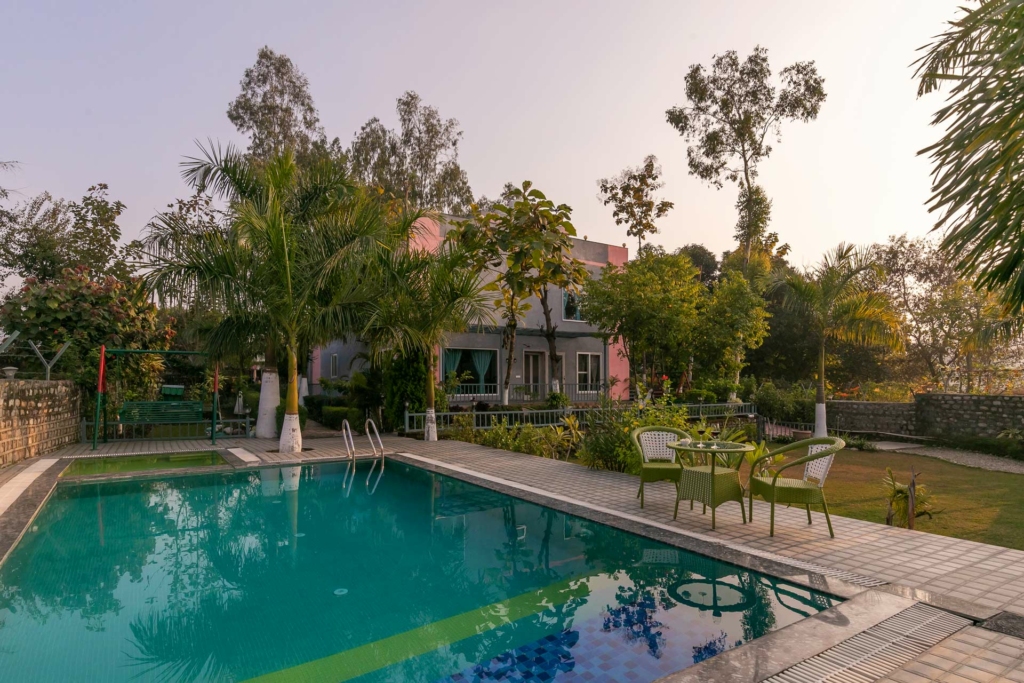
- 6 bedrooms across a 3,470 sq ft estate; sleeps up to 15
- Private pool, jacuzzi, and drop-down theatre — useful for the post-safari afternoon downtime when birds disappear in the heat
- Sister villas: Cedar @ Corbett Calling and Oak @ Corbett Calling on the same estate, with combined capacity of 30+ guests for larger birding groups
- In-villa chef who’ll set up 5 AM coffee and packed breakfasts before the sunrise safari window
- Walking access to the Kosi riverbed at certain times of year — useful for evening Crested Kingfisher and Brown Fish Owl sessions
- Best for: Two-family birding trips, photographers travelling with kit, club outings (Bombay Natural History Society chapters and Delhi-Bird groups have stayed here)
For smaller groups of 4-6 who don’t need the full 15-guest capacity, browse our other Ramnagar villas — most sit in the same 20-40 minute radius of the birding gates.
A practical note: confirm sunrise breakfast service when you book. Not every Corbett property handles a 5 AM kitchen, and you don’t want to discover that on Day 1.
Do You Need a Guide for Bird Watching at Corbett?
For maximum species count, yes. A certified naturalist materially raises your sightings count — particularly for migratory bird identification and for the canopy species that move fast and look similar. A first-time birder with a guide will out-spot a returning birder without one almost every time (Nature Safari India, 2026).
You can self-guide some sessions. Kosi riverbed walks at Loha Pul, the Sitabani perimeter path, and the gardens around your accommodation are all fine on your own. The Crested Kingfisher and Indian Peafowl don’t need a translator.
You definitely want a guide for:
- Dhikala interior — distances are long and species ID needs experience
- Pawalgarh woodpecker territories — guides know individual nest trees
- Migrant ID in November-February — three duck species look alike at 200 m through a scope
- Raptor identification — separating Pallas’s Fish Eagle from Lesser Fish Eagle requires a trained eye
To find one: the Corbett Tiger Reserve office at Ramnagar maintains a list of certified guides. Asian Adventures and Bubo Birding run specialist birding tours that include experienced ornithologists. Or ask your accommodation host — most Ramnagar properties have a regular naturalist they work with.
Jim Corbett vs Other Indian Birding Hotspots — How Does It Stack Up?
Corbett isn’t India’s only premier birding destination. So why pick it?
| Destination | Species count | Best season | Distance from Delhi | Best for |
|---|---|---|---|---|
| Jim Corbett | 650+ | Nov-Mar | 260 km (5-6 hrs) | Combined tiger + birds |
| Keoladeo (Bharatpur) | 370+ | Nov-Feb | 220 km (4 hrs) | Waterbirds, waders |
| Sattal | 500+ | Mar-May | 300 km (7 hrs) | Photography hides |
| Pangot | 250+ | Mar-Jun | 320 km (7-8 hrs) | Himalayan species |
| Nameri (Assam) | 370+ | Nov-Mar | Fly to Tezpur | Bengal Florican, Ibisbill |
Sources: India Birdwatching, Tusk Travel, 2026.
Corbett’s edge: nowhere else in India do you get 650+ bird species and a realistic shot at a wild tiger on the same trip. Bharatpur has higher migrant density per acre but no megafauna. Sattal has better photography hides but a third of the species count. Pangot is genuinely Himalayan but the drive eats your weekend. For a Delhi-based birder with three days, the math favours Corbett.
Jim Corbett National Park has more than 650 recorded bird species — the highest of any tiger reserve in India. The count includes 51 of India’s 69 diurnal raptor species and 15 of 26 woodpecker species, according to the Zoological Survey of India and India Birdwatching’s 2026 records.
December and January are peak — full migratory presence, cool dry weather, and the year’s highest species count. February and early March give you migrants plus the start of resident courtship and softer light, which is why bird photographers quietly favour that window.
Yes. The Kosi riverbed at Loha Pul (Iron Bridge) is free public access and holds Ibisbill, Crested Kingfisher and Wallcreeper in winter. Sitabani Wildlife Reserve requires only a walking permit (₹500-1,000) — far easier than the Dhikala or Bijrani jeep safari lottery.
The Kosi River gravel beds near Loha Pul (Iron Bridge) and the stream beds inside Sitabani Wildlife Reserve, between November and March. Ibisbills are nearly invisible against river stones, so scan slow-moving stretches with binoculars and walk softly along gravel bars.
Expect ₹2,500-4,000 per day for a certified naturalist guide, plus ₹8,000-12,000 per jeep safari for Dhikala or Bijrani zones (seats up to 6). Sitabani walking permits run ₹500-1,000 per person. A 3-day trip for two people typically costs ₹25,000-40,000, including stay.
Within 30 minutes of the Sitabani or Bijrani gates. Properties like Corbett Calling by StayVista in Ramnagar put you on the trail by 5:30 AM. Resorts on the far Ramnagar-Dhangarhi road are 60-90 minutes from gates and miss the dawn chorus.
The Bottom Line for Birders Planning a Corbett Trip
- 650+ bird species make Corbett India’s richest tiger reserve for birding
- November to March is the peak window; December-January for species count, February-March for light and resident courtship
- Sitabani is the sleeper hotspot — 500+ species, year-round access, no safari lotteryA
- 30-minute gate proximity separates birders who catch the dawn chorus from those who don’t
- Budget ₹25,000-40,000 for two people over 3 days including stay, guide, and one safari
For trip planning around the broader park, see our Jim Corbett safari zones guide — useful even on a birding-first trip, because tigers do sometimes show up in your binoculars while you’re scanning for Pallas’s Fish Eagle. Corbett rewards birders who show up prepared and stay close to the gate. The 5:30 AM start is the whole game.