

Delhi to Dehradun in 2.5 Hours: New Expressway 2026 Route, Toll & Weekend Trip Guide
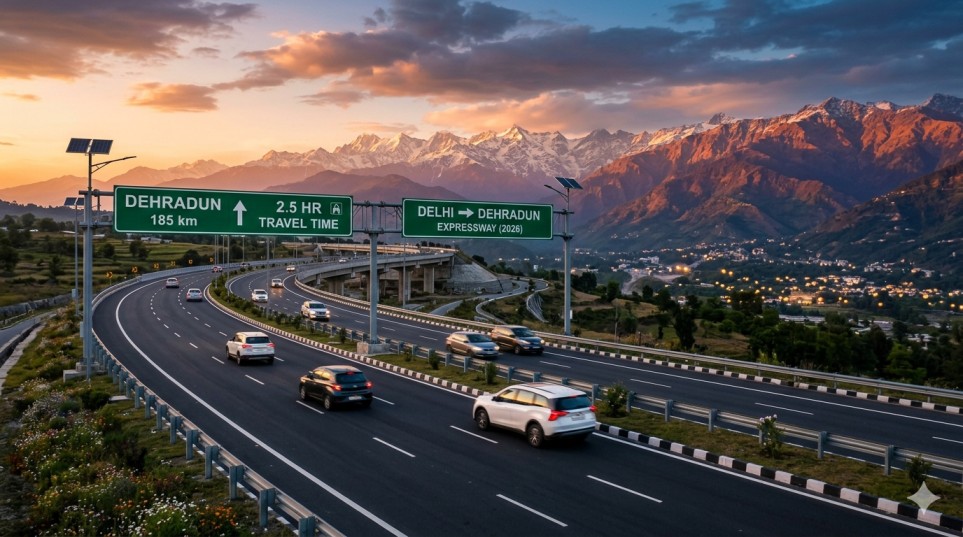
On April 14, 2026, Prime Minister Narendra Modi inaugurated the 210-km Delhi–Dehradun Expressway, and overnight, the math of every weekend trip from NCR to Uttarakhand changed. What used to be a six-hour grind on NH-7 — through Modinagar, Muzaffarnagar, and Roorkee — is now a 2.5-hour run on a 6-lane access-controlled corridor with a 100 km/h speed limit and zero traffic signals.
This guide is for the family in Noida planning a Mussoorie weekend, the friends in Gurgaon eyeing a 2-night Rishikesh trip, and the multi-generational group from Faridabad timing a Char Dham yatra. Inside, we’ve covered the new Delhi Dehradun expressway distance and time, every toll plaza, the speed limit, and the exits. Plus the safety rules and four weekend trip plans that finally make sense as 2-nighters from Delhi NCR.
The Delhi–Dehradun Expressway opened on April 14, 2026, cutting the 250-km, 6-hour drive to a 210-km, 2.5-hour journey via a 6-lane access-controlled corridor through Baghpat, Shamli, and Saharanpur. One-way car toll: ~₹670 (Sunday Guardian, 2026). Mussoorie, Rishikesh, and Haridwar weekend trips from Delhi NCR are now genuinely viable in 2 nights.
In this Blog
Delhi–Dehradun Expressway 2026: Quick Info Table
| Detail | Value |
|---|---|
| Length | 210 km |
| Travel time | ~2.5 hours (down from 5–6 hours via NH-7) |
| Lanes | 6, expandable to 8; Phase 1 (Akshardham → Baghpat) is 12-lane |
| Opened | April 14, 2026 (inaugurated by PM Narendra Modi) |
| Project cost | ₹13,000 crore |
| Authority | National Highways Authority of India (NHAI), under Bharatmala Pariyojana |
| Route | Akshardham (Delhi) → Baghpat → Baraut → Muzaffarnagar → Shamli → Saharanpur → Dehradun |
| Toll plazas | 5 |
| Interchanges | 12 |
| Entry/exit points | 6 |
| One-way car toll | ₹670–675 (round-trip ~₹1,000 within 24 hours) |
| Annual FASTag pass | ₹3,000 |
| Speed limit | 100 km/h (cars), 80 km/h (SUVs/trucks); two-wheelers not permitted |
| Wildlife corridor | 12 km elevated section over Rajaji National Park (Asia’s longest) |
| Tunnels | 2.32-km twin-tube tunnel + 340-m single-tube tunnel near Daat Kali |
| Service roads | 76 km |
| Underpasses | 113 (including 2 dedicated 200-m elephant underpasses) |
Sources: NHAI, Wikipedia, India TV News, Sunday Guardian.
How long does it take to drive from Delhi to Dehradun on the new expressway?
The Delhi–Dehradun Expressway covers 210 km in about 2.5 hours at the 100 km/h speed limit, down from 5–6 hours on the old NH-7 route (NHAI / Wikipedia). PM Modi inaugurated the corridor on April 14, 2026, opening the full stretch from Delhi’s Akshardham to Dehradun. That’s the headline number — but the figure most travellers actually need is door-to-door from their NCR suburb.
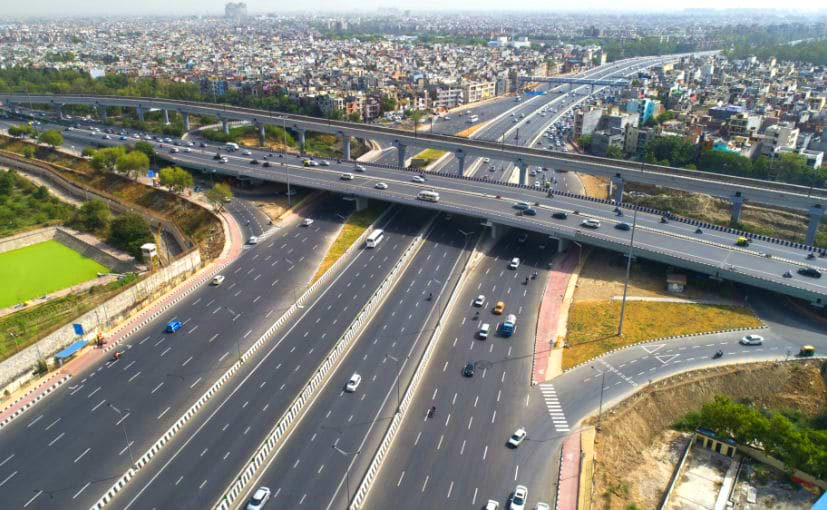
Door-to-door drive times from major NCR suburbs
The 2.5-hour figure measures the distance from Akshardham (the expressway entry point) to Dehradun. If you’re starting from Noida or Gurgaon, add the time it takes to reach Akshardham. The new Delhi Dehradun expressway travel time 2026, measured door-to-door, looks like this:
| Origin | Akshardham approach | Expressway leg | Total door-to-door |
|---|---|---|---|
| Akshardham (start point) | — | 2hr 30min | 2hr 30min |
| Ghaziabad (Indirapuram) | ~25 min via NH-9 | 2hr 30min | ~2hr 55min |
| Noida (Sector 18) | ~30 min via DND → ITO | 2hr 30min | ~3hr |
| Faridabad (Sector 21) | ~50 min via Eastern Peripheral Expressway | 2hr 30min | ~3hr 20min |
| Gurgaon (Cyber Hub) | ~75 min via NH-48 + UER-II | 2hr 30min | ~3hr 45min |
Source: Akshardham → Dehradun expressway leg per NHAI / Wikipedia. NCR-suburb approach times derived from Google Maps live data (off-peak weekday averages, May 2026). Real-world Friday-evening departures should add 30–60 minutes for traffic.
Our team’s drive-test (April 2026): Akshardham to Dehradun’s Asharodi exit clocked 2hr 28min on a weekday morning run. Gurgaon Cyber Hub to Dehradun took 3hr 41min via NH-48 → UER-II → Akshardham — the longest of the five NCR origins we tested.
Friday-evening departure reality check
Can you really leave NCR after work and reach Mussoorie before midnight? The math now says yes — barely. From Akshardham, the calculation is 2.5 hours expressway + 1 hour Dehradun → Mussoorie spur via Mussoorie Road = 3.5 hours of driving. Add 60–90 minutes to exit NCR in Friday-evening traffic, and a 4 PM departure from your office in Gurgaon puts you at a Mussoorie homestay around 10 PM. That’s the honest version. Leave at 6 PM, and you’re driving the Mussoorie Road switchbacks past midnight — possible, not advisable.
Is the Delhi Dehradun expressway open now in 2026?
Yes, the Delhi Dehradun Expressway is fully open as of April 14, 2026, when Prime Minister Narendra Modi inaugurated the complete 210-km corridor (NDTV, 2026). Both the Delhi-end (Akshardham) and Dehradun-end sections are operational, FASTag toll collection is active across all 5 toll plazas, and NHAI has launched a ₹3,000 annual pass for frequent travellers (Sunday Guardian, 2026).
The project was sanctioned in 2019, missed its original 2024 deadline, and went through several inauguration postponements before the full April 14 opening. The final phase — the 19.5-km eco-sensitive section near Dehradun, including a 2.32-km twin-tube tunnel and the 12-km elevated wildlife corridor over Rajaji National Park — was the most complex and the last to clear engineering trials. As of May 2026, the corridor is operating at full capacity with no reported lane closures.
If you’ve been waiting to plan a Delhi to Dehradun by car via the new expressway 2026 trip, this is the green light. The Delhi to Dehradun expressway travel time of 2.5 hours is no longer a projection — it’s the operational reality that NCR drivers are living with daily.
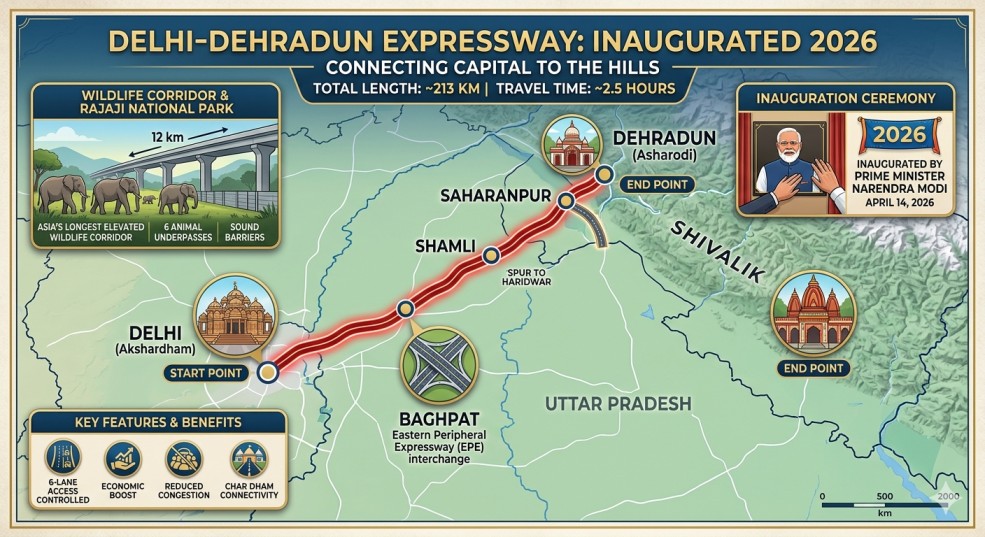
What is the Delhi Dehradun expressway route map for 2026? (210 km via Saharanpur)
The Delhi Dehradun Expressway begins at Akshardham in East Delhi and ends in Dehradun, passing through Baghpat, Baraut, Muzaffarnagar, Shamli, and Saharanpur in Uttar Pradesh (Wikipedia). The Delhi Dehradun expressway distance is 210 km, which is the standard NHAI figure. The route runs via the Delhi Dehradun six-lane expressway with 5 toll plazas, 12 interchanges, and 6 entry/exit points. It includes a 12-km elevated wildlife section over Rajaji National Park — Asia’s longest such corridor (The Federal, 2026). Below is how to reach Dehradun from Delhi via the new expressway, broken down phase by phase.
Phase-by-phase route breakdown
The Delhi Dehradun expressway route via Saharanpur is built in four engineered phases, each with a distinct character:
- Phase 1 — Akshardham → Eastern Peripheral Expressway (32 km, 12-lane). The widest stretch is designed to handle Delhi’s exit traffic. This is where most NCR drivers will spend their first 30–40 minutes.
- Phase 2 — EPE junction → Saharanpur (~118 km, 6-lane). The fast middle section. Open landscape, minimal congestion, the one where you’ll cover ground at the full 100 km/h limit.
- Phase 3 — Saharanpur → Ganeshpur (~40 km). The transition zone where the expressway begins climbing toward the Doon Valley.
- Phase 4 — Ganeshpur → Dehradun (~20 km, includes 12-km wildlife corridor + 2.32-km tunnel). The eco-sensitive final stretch. Slower (advisory 80 km/h through the elevated wildlife section), but the most engineered.
Wildlife corridor and tunnels
The final 19.5-km section is the engineering centrepiece. It packs in a 2.32-km twin-tube tunnel, a 4.82-km elevated flyover (6m clearance for wildlife), a 2.12-km at-grade hill road, and a 340-m single-tube tunnel near Daat Kali Mata Mandir before the descent into Dehradun (Express Builders, 2026). Two dedicated 200-m underpasses are built for elephant herds — a wildlife-mitigation design that’s now a reference template for future expressways through forest land.
When you drive this stretch, slow down. The 100 km/h limit doesn’t change officially. But the visual cues of the wildlife corridor invite caution, and nighttime crossings by deer and elephants are documented in the Rajaji buffer zone.
Major exits — and which exit to take from the Delhi Dehradun Expressway for Dehradun city
The corridor has 6 entry/exit points along its 210-km run, and the Delhi Dehradun expressway exits and tolls together determine which destination is fastest from your last toll plaza:
| Exit / Interchange | Approx km | Access for |
|---|---|---|
| Akshardham (Delhi) | 0 | Start point, Delhi NCR |
| Loni Border | 18 | Loni, Ghaziabad east; toll-free segment ends here |
| Khekra (Baghpat) | 30 | Baghpat city, Meerut via spur |
| Lohadda | 55 | Baraut, rural west UP |
| Karonda Mahajan | 75 | Karonda, Khekra-Baraut connector |
| Khyawari / Shamli | 95 | Shamli, western UP, Yamunanagar approach |
| Saharanpur | 140 | Saharanpur city, Haryana via NH-707 |
| Ganeshpur | 190 | Rajaji National Park, Haridwar via NH-58 spur, Rishikesh |
| Asharodi / Mohkampur (Dehradun) | 210 | Dehradun city, Mussoorie via Mussoorie Road |
Source: Route stops verified via Wikipedia: Delhi–Dehradun Expressway, Travellers of India guide, and NHAI signage. Total NHAI-counted entry/exit points across the corridor: 16; major exits with destination access listed above.
For Dehradun city, take the Asharodi/Mohkampur exit at the end of the corridor. For Mussoorie, exit at Dehradun and continue on the Mussoorie Road spur (~35 km, ~1 hour). For Rishikesh, exit at Ganeshpur and take the NH-58 connector. For Haridwar, the Ganeshpur exit is also the cleanest route. The Delhi Dehradun expressway map 2026 is straightforward once you know the exit logic — full visual map below.
How much is the Delhi–Dehradun Expressway toll in 2026?
The one-way car toll on the Delhi–Dehradun Expressway is about ₹670–675 in 2026, while a round-trip return within 24 hours costs around ₹1,000 (Sunday Guardian, 2026). Frequent travellers can purchase NHAI’s annual FASTag pass for ₹3,000, providing unlimited expressway access for one calendar year. All 5 toll plazas use FASTag-only collection — there are no manual cash lanes.
Toll breakdown by vehicle type
The Delhi Dehradun expressway toll charges 2026 vary by vehicle category:
| Vehicle | One-way | Round-trip (24 hr) | Annual pass |
|---|---|---|---|
| Cars / small SUVs | ₹670–675 | ₹1,010 | ₹3,000 |
| Light Commercial Vehicles (LCV / mini-bus) | ~₹1,085–1,100 | ~₹1,640 | — |
| Buses (2-axle) / 2-axle trucks | ~₹2,275–2,300 | ~₹3,440 | — |
| Multi-axle trucks (3+ axles) | ~₹2,480 | ~₹3,720 | — |
Source: NHAI 2026 toll notification, reported by DNA India and Sunday Guardian (2026). Round-trip rates reflect the standard ~25% discount for return journeys completed within 24 hours.
Toll-free section to know about: The first 18 km from Akshardham to Loni Border is fully toll-free, so you only start paying at the Khekra (Baghpat) plaza onward. For partial trips: Delhi → Ganeshpur is about ₹563, and Delhi → Saharanpur is ~₹417 (Travellers of India, 2026).
FASTag essentials — and what happens if it fails
Carry a FASTag with at least ₹800 balance for a one-way trip. If your FASTag fails (low balance, sticker damage, or read error), the lane will not open, and you’ll be redirected to a manual reconciliation lane where the standard penalty is twice the toll plus a fee — so the cost of one failed FASTag read can exceed ₹1,500. Recharge before you leave; don’t rely on patchy mobile data near the toll plazas.
How much time does Delhi Dehradun Expressway save vs NH-7?
The new Delhi Dehradun Expressway saves about 3–3.5 hours and 40 km versus the old NH-7 route. NH-7 covers 250 km in 5–6 hours through congested towns including Modinagar, Muzaffarnagar, and Roorkee (Tribune India, 2026). The expressway covers 210 km in 2.5 hours via a controlled-access corridor with no traffic signals, no town crossings, and a 100 km/h speed limit. Which highway to take from Delhi to Dehradun now? For most travellers, the answer is the new expressway — but not always.
| Factor | Old NH-7 | New Expressway |
|---|---|---|
| Distance | 250 km | 210 km |
| Time | 5–6 hours | 2.5 hours |
| Toll | Minimal / free | ₹670 one-way |
| Traffic signals | Many | Zero |
| Town crossings | Modinagar, Muzaffarnagar, Roorkee | None |
| Fuel cost (sedan, ~15 km/L @ ₹105/L) | ~₹2,000 | ~₹1,500 |
| Scenic value | High (Cheetal Grand, mango belt) | Low (utilitarian) |
| Best for | Leisure drives, no time pressure | Time-sensitive trips, weekend windows |
The Delhi Dehradun highway travel time reduced to 2.5 hours story is real. But it skips one nuance. NH-7 still has the legendary Cheetal Grand food halt, the mango orchards of Saharanpur, and a kind of slow Indian highway charm the expressway removes by design. If you’re driving with elderly parents who like a 90-minute lunch break, NH-7 might still be your route. For most NCR weekenders trying to make a Friday-night Mussoorie arrival, the expressway wins decisively.
Speed limit on the Delhi Dehradun Expressway, and is it safe at night?
The speed limit on Delhi Dehradun Expressway is 100 km/h for cars and 80 km/h for SUVs and commercial vehicles, monitored via automatic speed cameras at multiple points. Two-wheelers are not permitted. The expressway is access-controlled with 113 underpasses and zero traffic signals (NHAI rules / PWOnlyIAS, 2026), but driver fatigue, fog (December–February), and nighttime wildlife crossings near Rajaji require real caution. The Delhi Dehradun expressway night driving safety story is good — but only if you respect those three risks.
Is the Delhi Dehradun expressway safe at night?
Yes, the expressway is safe at night. Toll plazas run 24/7, interchanges are lit, and there’s an emergency helpline (1033 NHAI / 112 national emergency). But “safe” comes with three conditions. Don’t drive tired — the corridor’s monotony makes drowsy driving the biggest real risk. Expect fog between Saharanpur and Dehradun in December and February. And slow down through the wildlife corridor section after Ganeshpur. Wildlife crossings — deer, occasional elephants — are documented in the Rajaji buffer zone, and even the elevated design doesn’t fully eliminate the risk on the at-grade segments.
For the Delhi to Dehradun expressway, the best time to drive monsoon or winter. Avoid the peak fog window (10 PM – 5 AM, December – early February) and during heavy monsoon (July – mid-September), when landslide debris in the Saharanpur–Dehradun stretch occasionally requires lane closures. April–June and October–November are the cleanest driving windows.
What about two-wheelers, and is cargo transport allowed?
Two-wheelers are not permitted — full stop. They must use NH-7. Heavy commercial vehicles (Delhi Dehradun expressway cargo transport users) can use the corridor at the 80 km/h limit, but for short hauls (Delhi → Saharanpur), the toll cost may not justify the time saved. Long-haul Delhi → Dehradun cargo benefits clearly from the new corridor, with NHAI projecting ~30% reduction in inter-city freight time.
Which weekend trips work best via the Delhi–Dehradun Expressway?
The Delhi Dehradun Expressway makes four destinations newly viable as 2-night weekend trips from NCR: Mussoorie (~4 hours door-to-door), Rishikesh (~3.5 hours), Haridwar (~3 hours), and Dehradun itself (2.5 hours). All four were previously 3-night minimum from Delhi due to NH-7 drive times. The Delhi to Dehradun new expressway weekend trip math finally works for the leave-Friday-after-work, return-Sunday-night family. And the Delhi Dehradun expressway’s impact on Uttarakhand tourism is already visible in early booking patterns.
This shift matters for two crowds in particular. First, the Delhi to Dehradun weekend getaway by car via expressway segment — NCR families upgrading from one-day picnics to proper hill weekends. Second, the Delhi to Dehradun new expressway for tourists segment — flying-in travellers from Mumbai, Bangalore, and abroad who can now treat Delhi as a weekend launchpad to the Doon Valley. A Delhi to Dehradun Expressway via Saharanpur weekend trip used to be a stretch. Now it’s the default plan.
Mussoorie weekend (4 hours from Delhi)
Mussoorie is the obvious winner of the new expressway. The 4-hour total drive (2.5 hr expressway + 1.5 hr Dehradun → Mussoorie spur) finally makes a 2-nighter realistic for NCR families.
Practical detail Mussoorie Total drive from Delhi ~4 hours Best time to visit April–June, September–November Time required 2–3 nights ideal Ideal for Families, couples, hill-station first-timers Things to do Mall Road (free, open all day), Kempty Falls (entry ₹30, 8 AM – 6 PM, expect crowds 11 AM – 4 PM), Gun Hill (cable car ₹150 round-trip, 10 AM – 6 PM), Lal Tibba viewpoint, Cloud’s End walk Pro tip Mall Road parking fills by 11 AM on weekends — arrive earlier or use Library Bazaar parking and walk
Rishikesh weekend (3.5 hours from Delhi)
Rishikesh is the bigger conceptual change. A weekend yoga-and-rafting trip from Delhi was a stretch before the expressway — now it’s a default option for the wellness-curious DINK couple in Gurgaon.
| Practical detail | Rishikesh |
|---|---|
| Total drive from Delhi | ~3.5 hours |
| Entry fee | Free entry to ghats; specific ashrams may charge |
| Best time to visit | February–April, September–November |
| Time required | 2 nights minimum |
| Ideal for | Couples, solo travellers, friend groups, yoga seekers |
| Things to do | Triveni Ghat Ganga aarti (6 PM, free), white-water rafting (open Sept–June, ~₹600–1,500 per person), Beatles Ashram (entry ₹150, 9 AM – 4 PM, closed Tuesdays), Lakshman Jhula, Ram Jhula, Tapovan café-hopping |
| Pro tip | Book riverside camp stays 6 weeks ahead for March–May — inventory sells out fast |
Haridwar weekend (3 hours from Delhi)
For multi-generational families and pilgrimage trips, Haridwar is now the closest of the four — and a useful base for a Char Dham launch. The Delhi to Dehradun expressway from the Rishikesh Haridwar approach is the same: exit at Ganeshpur and take NH-58 east.
| Practical detail | Haridwar |
|---|---|
| Total drive from Delhi | ~3 hours |
| Entry fee | Free entry to ghats and most temples |
| Timings | Har Ki Pauri Ganga aarti at 6 PM (sunset, varies seasonally) |
| Best time to visit | October–March (Kanwar yatra in July–August brings huge crowds — avoid) |
| Time required | 1–2 nights |
| Ideal for | Pilgrimage families, multi-generational groups |
| Things to do | Har Ki Pauri Ganga aarti (free), Mansa Devi Mandir (cable car ₹150 round-trip, 7 AM – 7 PM), Chandi Devi Mandir, Bharat Mata Mandir |
| Pro tip | For the evening Ganga aarti, arrive at Har Ki Pauri by 5 PM to claim a riverside spot |
Dehradun weekend (2.5 hours from Delhi)
The shortest of the four, Dehradun, is now genuinely a Saturday-day-trip option for the Delhi family that wants a hill-fringe lunch and a museum visit. Or a 2-night base for the Mussoorie + Dehradun combo.
| Practical detail | Dehradun |
|---|---|
| Total drive from Delhi | 2.5 hours |
| Best time to visit | March–June, September–November |
| Time required | 2 nights ideal (Dehradun + Mussoorie day-trip combo) |
| Ideal for | Couples, foodies, museum walkers |
| Things to do | Robber’s Cave / Guchhupani (entry ₹25, 7 AM – 6 PM), Sahastradhara springs (free, open sunrise – sunset), Tapkeshwar Mandir (free), Forest Research Institute (FRI) campus walk (entry ₹40, 9:30 AM – 5 PM, last entry 4:30 PM), Doon’s growing café scene |
| Pro tip | Visit Robber’s Cave before 9 AM to walk the cave-stream without crowds |
Char Dham Yatra 2026: How the new expressway changes pilgrimage logistics
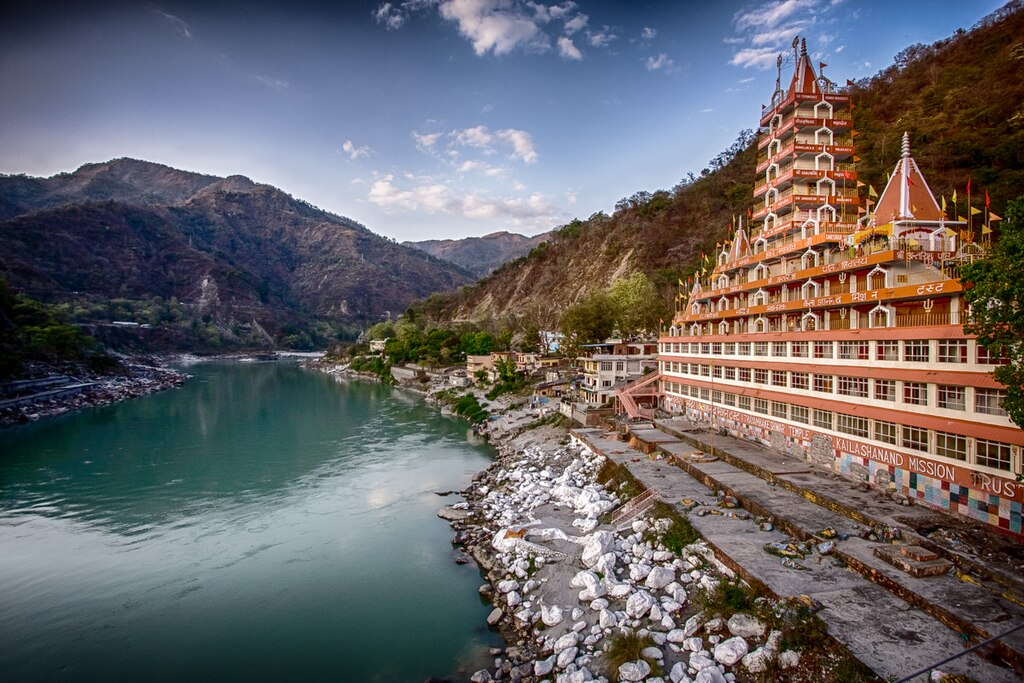
The Char Dham Yatra 2026 portals open on April 19 (Yamunotri & Gangotri), April 22 (Kedarnath), and April 23 (Badrinath) (The Statesman, 2026). The new Delhi–Dehradun Expressway cuts day-1 of the yatra from a 7-hour Delhi → Haridwar grind to a 3-hour drive, allowing pilgrims to begin the actual mountain leg the same evening they leave NCR. For elderly travellers, this single change is the difference between a punishing first day and a comfortable one.
Char Dham 2026 portal dates at a glance
| Dham | Opens | Closes |
|---|---|---|
| Yamunotri | April 19, 2026 | November 11, 2026 |
| Gangotri | April 19, 2026 | November 10, 2026 |
| Kedarnath | April 22, 2026 | November 11, 2026 |
| Badrinath | April 23, 2026 | November 13, 2026 |
Source: Uttarakhand Char Dham Devasthanam Management Board. Online registration: registrationandtouristcare.uk.gov.in. Registration is mandatory and free in 2026. Offline counters opened April 15.
New ideal day-1 plan via the expressway
The old NH-7 day-1 looked like this: leave Delhi 5 AM → reach Haridwar 12 noon → late lunch → push to Rishikesh by 4 PM → onward to Yamunotri base by midnight. Brutal on grandparents.
The new day-1 via the expressway: leave Delhi 6 AM → reach Haridwar 9 AM → optional darshan and Ganga aarti or quick break → onward to Rishikesh by 11 AM → reach Yamunotri base by early evening with a real lunch and rest stop in between. The Delhi to Dehradun expressway Char Dham route reads less like an endurance test and more like a planned holiday. That’s the change.
For the complete Char Dham planning guide including registration, route options, and budget, see our Char Dham Yatra 2026: Complete Guide with Opening Dates, Registration, Route & Budget
Where should you stay along the Delhi–Dehradun Expressway?
Travellers using the new Delhi Dehradun Expressway have curated villa and homestay options in Mussoorie, Dehradun, Rishikesh, and Haridwar — all reachable within 4 hours of leaving NCR. StayVista’s properties in these destinations include private-pool villas, riverside camps, and family homestays located within 30 minutes of the relevant expressway exit point. For NCR families wanting a stay near Dehradun with easy access from the Delhi expressway, this is the curated list. The Delhi to Dehradun expressway for weekend villas search has been climbing since the April 14 opening — and below is what we’d actually recommend.
Best Dehradun villas accessible via Delhi Dehradun expressway
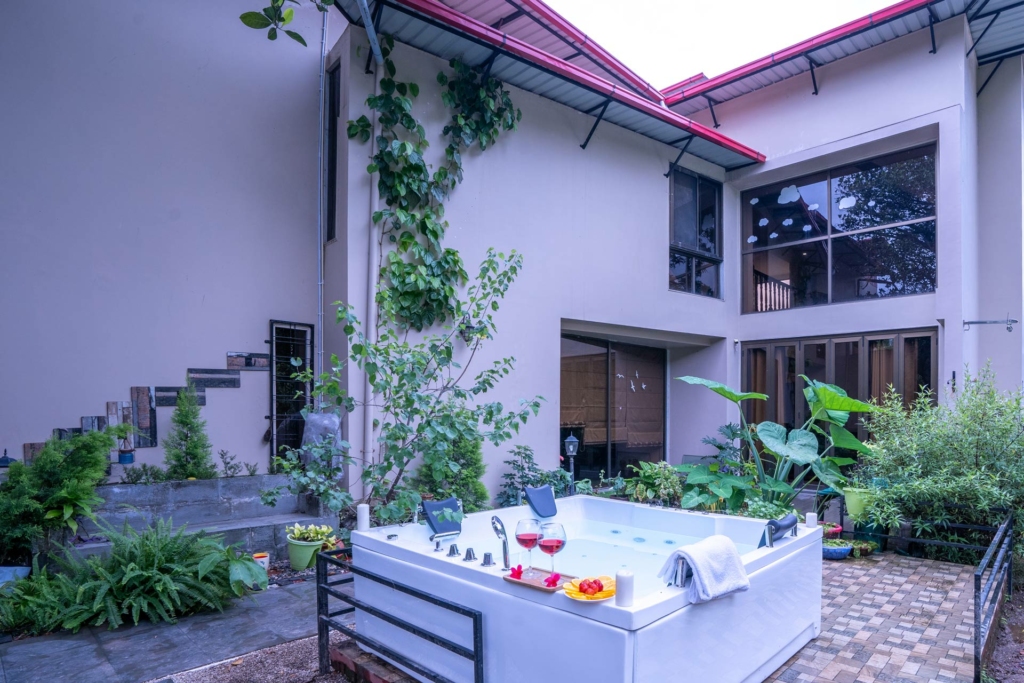
Dehradun is the closest of the four (2.5 hours), and our villa inventory here ranges from valley-view homes in Rajpur to forest-edge stays near Sahastradhara. Most properties are 15–30 minutes from the Asharodi/Mohkampur exit. Standout picks for the post-expressway weekender:
- StayVista at Dudly Manor with Swimming Pool — A heritage-style 2BHK cottage cluster in the Suswa valley, surrounded by Shivalik foothills, with a swimming pool and garden. Best for families and small groups (4–8 guests across the cottage units). ~20 min from the Asharodi exit.
- StayVista at Villa Vaari with Pvt Pool & Gazebo — A contemporary villa with a private pool and a garden gazebo for evening drinks. Mountain-facing layout makes it our pick for couples and friend groups. ~25 min from the expressway exit.
- StayVista at Mystic Grove (Rajpur) — Set in the quieter Rajpur foothills with a pool, BBQ pit, and bonfire setup. Ideal for groups planning Mussoorie day-trips while basing in Dehradun. ~30 min from the exit.
- StayVista at Villa Sierra Sky — A hill villa with mountain views and a calm setting. Quiet, view-led, ideal for couples wanting Mussoorie access without Mall Road crowds.
- StayVista at The Willowfield — Garden-led home with BBQ grill and bonfire, popular for small celebrations and team weekends. ~20 min from the exit.
- StayVista at Ivycrest Estate — A larger property with 360° views of Mussoorie ridge, suited to multi-family bookings and milestone trips. Strong pick for Char Dham yatra group break-stays.
Browse the full inventory on the StayVista Dehradun page.
Best villas near Delhi Dehradun Expressway for weekend trips — Mussoorie
Our Mussoorie homestays cluster around Mall Road and Library Bazaar (5–10 minutes from the action) and the quieter Landour ridge (20 minutes out, popular with couples). The Dehradun → Mussoorie spur road takes 60–90 minutes from the expressway exit. Curated picks:
- StayVista at Lawrence Terrace with Free Breakfast at Mall Road — A hill home steps from Mall Road with included breakfast and valley views. Our highest-traffic Mussoorie booking for first-time visitors. Best for families.
- StayVista at Mellow Cottage near Mall Road — A 3BHK cottage with scenic views, walking distance to Mall Road shops and cafés. Right-sized for couples and small families.
- StayVista at Arncliff Villa, 5 Mins from Mall Road — A 2-bedroom heritage villa with classic Mussoorie character, 5 minutes’ drive from Mall Road. Suits couples and small groups.
- StayVista at Aspen Heights — Hidden In Clouds (Landour) — Sequestered on a private road on Mussoorie’s fringes, with colonial-era themed bedrooms and balconies opening to hill-and-valley views. Ideal for couples and writers’ retreats.
- StayVista at Pineview @ Albert Estate — A villa within the heritage Albert Estate compound, with pine forest surrounds and ridge views. Popular for multi-generational family bookings.
- StayVista at Alpine Bliss — A 5-bedroom luxury retreat with private balconies on every room, designed for the friend-group weekend or extended-family booking.
- StayVista at Cottage in the Clouds — A romantic hilltop stay with double-bed rooms and panoramic views; couples-favourite for short Mussoorie weekends.
- StayVista at Sirmour Baag, in Kasauli – A pet-friendly resort in Kasauli near Delhi with 16 serene cottages, with a shared jacuzzi and an inhouse restaurant.
Browse all on the StayVista Mussoorie page.
Delhi–Dehradun Expressway FAQs: tolls, exits, safety & timing
The Delhi–Dehradun Expressway was inaugurated by Prime Minister Narendra Modi on April 14, 2026, opening the full 210-km corridor between Akshardham in Delhi and Dehradun in Uttarakhand. The expressway is fully operational with FASTag toll collection across all 5 toll plazas (Sunday Guardian, 2026).
The drive takes about 2.5 hours for the 210-km expressway stretch at the 100 km/h speed limit, down from 5–6 hours on the old NH-7 route. Total door-to-door times from NCR suburbs vary: roughly 3 hours from Ghaziabad, 3.5 hours from Gurgaon, and 3 hours from Noida (NHAI, 2026).
Yes. The expressway leg itself is 2.5 hours from Akshardham, and most NCR suburbs add 25–75 minutes to reach Akshardham. Ghaziabad, Noida, and central Delhi origins can comfortably reach Dehradun in 3–3.5 hours door-to-door. Gurgaon is the slowest at 3.5–4 hours due to NCR exit traffic.
The one-way car toll is about ₹670–675 across all 5 toll plazas combined. A round-trip return within 24 hours costs around ₹1,000. NHAI offers an annual FASTag pass at ₹3,000 for unlimited expressway access for one calendar year (Tribune India, 2026).
The speed limit is 100 km/h for cars and 80 km/h for SUVs and commercial vehicles, monitored by automatic speed cameras. Two-wheelers are not permitted on the expressway. The corridor is access-controlled with 113 underpasses and zero traffic signals (PWOnlyIAS, 2026).
For Dehradun city, take the Asharodi/Mohkampur exit at the Dehradun end of the expressway. For Mussoorie, exit at Dehradun and continue on the Mussoorie Road spur (~35 km, ~1 hour). For Rishikesh and Haridwar, exit before Dehradun via Ganeshpur and take the NH-58 connector.
The bigger picture: a structural shift in NCR weekend travel
The deeper change isn’t 3.5 hours of saved driving. It’s that the Delhi–Dehradun Expressway has structurally rewritten what a “weekend trip from Delhi” can mean. NCR families can now think of Mussoorie and Rishikesh the way Mumbaikars think of Lonavala — a 2-nighter, not a 3-nighter. That single shift moves Uttarakhand’s hill destinations from the holiday-planning category to the long-weekend category. And it’s already reshaping booking patterns across the corridor.
If you’re planning your first trip via the new expressway, our advice is simple. Leave on a Friday afternoon, not Saturday morning. The expressway’s biggest gift isn’t faster driving. It’s the ability to arrive at your homestay before dinner instead of after midnight.
When you’re ready to book, our team has curated stays in all four destinations along the corridor. Browse Mussoorie, Dehradun, and Rishikesh homestays