
Escape Delhi & Gurgaon’s 45°C Heat: Your Manali Monsoon 2026 Guide
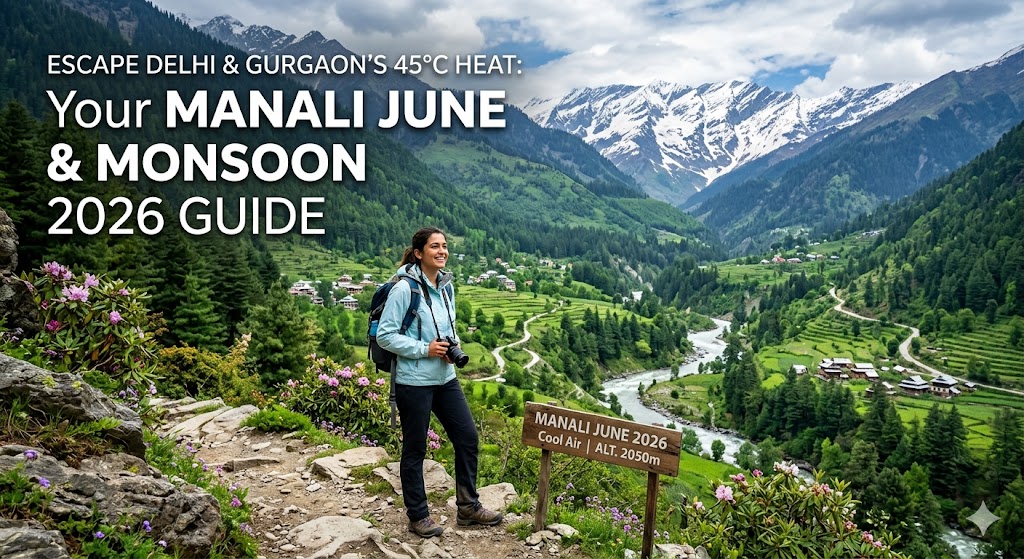
Manali daytime temperatures sit around 20–28°C in summer, 18–26°C through the monsoon, 12–22°C in October–November, and 1–10°C from December to February. Nights are a layer cooler across every season. For context, Delhi and Gurgaon routinely run 15–20°C warmer than Manali from April through September, which is what drives the summer and monsoon escape traffic.
But here’s the catch most travel pages skip: if you’re planning for July, August, or even September, you’re no longer planning a summer trip — you’re planning a monsoon one. And Manali in the monsoon is a very different decision. This guide gives you the honest version: go now to beat the heat, and read the monsoon section before you book a single rainy-season night.
Manali is a cool 20–28°C escape from the 45°C NCR heat. Monsoon arrives by late June–early July and peaks in August, the wettest month. July–August carry real landslide risk on the Mandi–Manali highway, which has 44 high-risk slide spots . Safest windows: June, or mid-September onward.
In this Blog
Manali in monsoon at a glance
| Detail | What to know |
|---|---|
| Monsoon window | Late June–early July onset; peaks August; tapers by late September |
| Daytime temperature | 20–28°C day / 12–16°C night (vs 44–46°C in Delhi-NCR) |
| Wettest month | August (~245 mm avg, weather aggregators) |
| Landslide risk | High on NH-21 (Mandi–Manali), July–August |
| Nearest airport | Bhuntar (KUU), ~50 km — monsoon delays common |
| Nearest railhead | Joginder Nagar (narrow gauge) or Chandigarh (broad gauge) |
| Safest months to visit | June, mid-September, October |
| Off-season saving | Stays often up to ~50% below peak in July–August |
Quick reference for planning a Manali trip in June or the monsoon months of 2026.
Why escape to Manali in June 2026?
Manali daytime temperatures sit around 20–28°C in summer, 18–26°C through the monsoon, 12–22°C in October–November, and 1–10°C from December to February. Nights are a layer cooler across every season. For context, Delhi and Gurgaon routinely run 15–20°C warmer than Manali from April through September, which is what drives the summer and monsoon escape traffic.
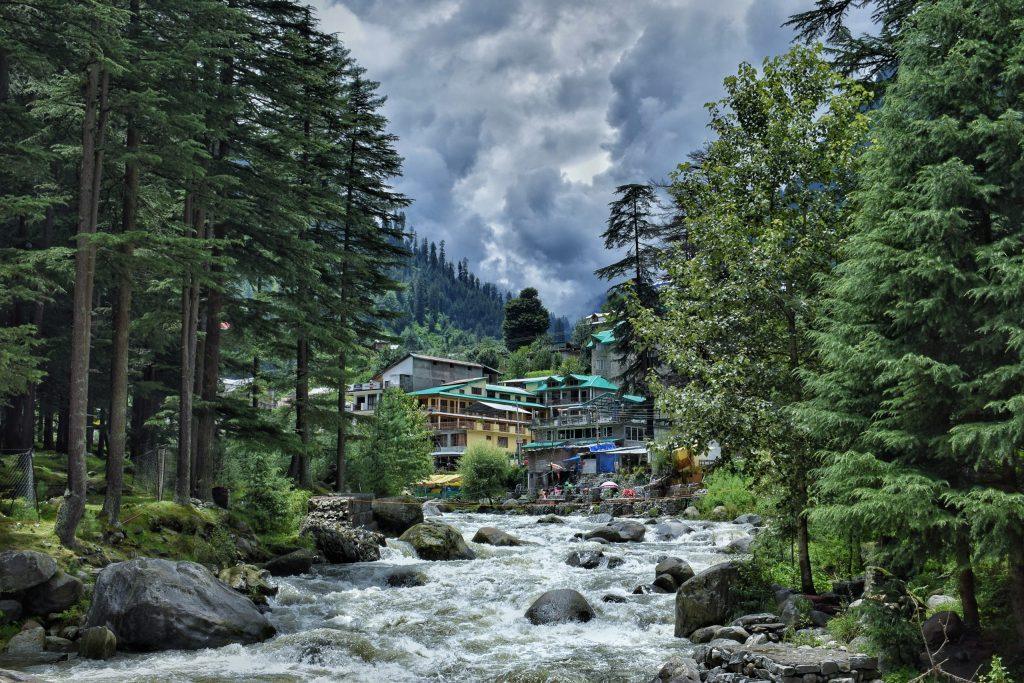
June is also the last clean-weather window before the rain. Roads are open, the high passes have just cleared, and the valley is green without being waterlogged. Rohtang Pass reopened on 17 May 2026, so the snow-and-meadow experience is still on the table through June. If your dates are flexible and you simply want out of the plains, this is the month to move.
Source: NewsX / IMD heatwave bulletins, June 2026. Manali’s figure is a typical June daytime high.
For a full breakdown of treks, rafting, and what’s open in the dry season, our Manali summer 2026 travel guide covers the June experience in detail. This article focuses on the question that trips people up: what happens when the rain arrives?
Is it safe to visit Manali in Monsoon 2026?
Mostly yes — but July and August carry genuine risk, and it’s almost entirely about the roads. The Mandi–Manali stretch of NH-21 has 44 identified high-risk landslide locations, with 34 of them on the Kullu–Manali section alone (The Tribune, 2024). Manali town itself is rarely dangerous; getting to and from it is the part that needs planning.
Heavy rain triggers slides and slush that block the highway, cause long traffic jams, and occasionally shut routes for hours. The 2023 Kullu and Mandi flash floods were the extreme version of this, and they’re why locals treat monsoon road travel with respect. The fix is straightforward: build in buffer days, travel only in daylight, and check the district and BRO advisory before you set out.
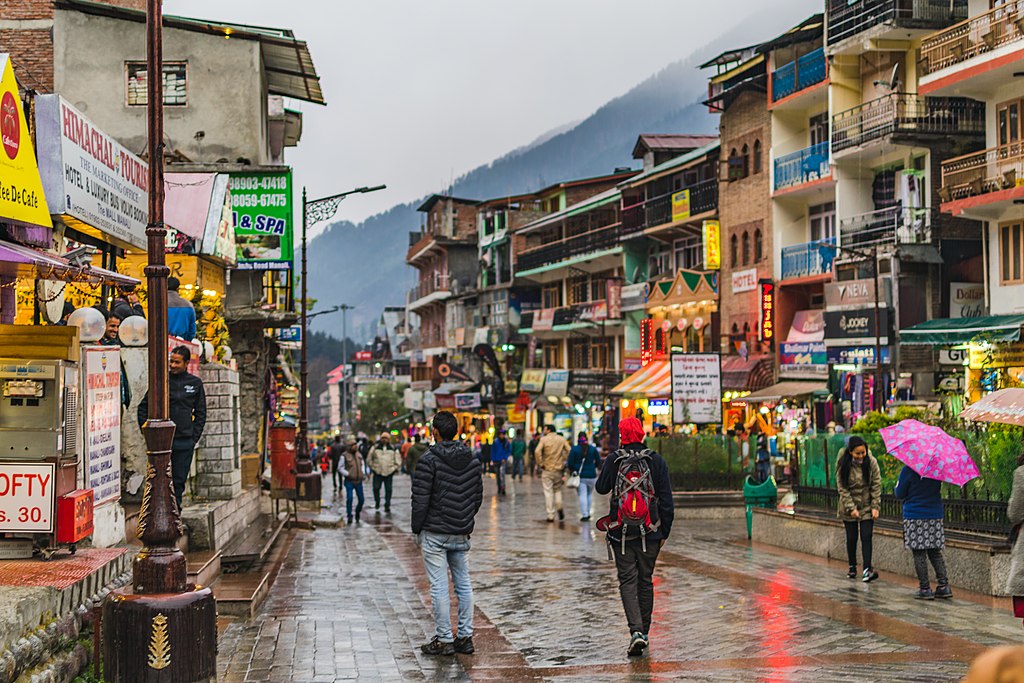
The government is spending on it, too. NHAI has approved ₹825 crore for repair, slope stabilisation and landslide control on the Kiratpur–Manali highway (Tractor Junction Infra, 2026). That work helps over time, but it doesn’t change the basic rule for your trip: in July and August, the road is the risk, not the destination.
So is it safe? For a flexible traveller who plans around the weather, yes. For a family on a fixed three-day itinerary with elderly parents and small kids, the odds of a stressful, stuck-on-the-highway day are higher than most people expect.
When does monsoon start in Manali, month by month?
The southwest monsoon usually reaches Himachal Pradesh between late June and the first week of July (IMD). It strengthens through July, peaks in August — the wettest month, averaging around 245 mm per weather aggregators — then eases off through September. By the second half of September, the rain is patchy and the valley is at its greenest.
There’s a useful nuance for 2026. The IMD has forecast a below-normal monsoon nationally at 90% of the long-period average, but it flags Northwest India — which includes Himachal — as a likely exception, with normal-to-above-normal rainfall (Down To Earth; Onmanorama, 2026). In plain terms: don’t expect a dry hill season this year. Plan for proper rain in the high months.
Here’s how the months stack up:
| June | July–August (peak monsoon) | September (post-monsoon) | |
|---|---|---|---|
| Weather | Pleasant, mostly clear | Wet, humid, heavy spells | Mild, clearing skies |
| Landslide risk | Low | High | Low |
| Crowds | High | Low | Low–medium |
| Stay rates | Peak | Up to ~50% lower | Lower |
| Activities | All open | Limited (sports paused) | Most reopen |
| Best for | Families, adventure | Budget, solitude, photography | Best all-rounder |
Choosing your month: June and mid-September are the low-risk picks; July–August reward flexibility.
If your only goal is the best overall trip, our guide to the best time to visit Manali makes the same case across all four seasons. For monsoon specifically, the short answer is: go in June, or wait for mid-September.
What’s open in Manali during monsoon (and what isn’t)?
Plenty stays open — the temples, town walks, hot springs, and cafes are all monsoon-friendly. What closes or turns risky is the high-altitude adventure: paragliding in Solang shuts down for the rains, and Rohtang access becomes weather-dependent. Here’s the practical rundown, with the rainy-day picks first.
Hadimba Devi Temple
A 16th-century cedar-wood temple ringed by deodar forest, which keeps it atmospheric even in drizzle.
- Entry: Free | Timings: 8:00 AM–6:00 PM daily
- How to reach: ~2 km from Mall Road (10-min drive or a 20–30 min forest walk)
- Time required: 45 min–1 hr | Ideal for: Families, couples, first-timers
- Pro tip: Go in the morning before the afternoon rain rolls in.
Vashisht Temple & Hot Springs
Natural sulphur hot springs that feel made for a cool, wet day — the water runs around 40–50°C.
- Entry: Free (temple and public baths) | Timings: Temple 7:00 AM–9:00 PM; baths 7 AM–1 PM & 2–9 PM
- How to reach: ~3–4 km from Mall Road, across the Beas
- Time required: 1–1.5 hrs | Ideal for: Couples, families, wellness seekers
- Pro tip: Separate bathing areas for men and women; this is also where the Jogini trail begins.
Old Manali cafes
The cafe strip above town is the obvious rainy-afternoon refuge — warm interiors, long menus, slow mornings.
- Entry: Free (area) | Timings: Most cafes ~9 AM–11 PM (some scale back in the July–August low season)
- How to reach: ~3 km uphill from Mall Road (15–20 min walk)
- Time required: 2–4 hrs | Ideal for: Couples, backpackers, solo, slow travellers
- Pro tip: Cafe 1947, The Lazy Dog, and Drifters are the year-round classics for waiting out a downpour, though the riverside outdoor seating depends on the weather — call ahead to confirm monsoon hours.
Mall Road & the Tibetan Monastery
Covered shopping plus the Gadhan Thekchhokling Gompa make a compact, mostly-sheltered town circuit.
- Entry: Free | Timings: Shops ~10 AM–9 PM; monastery 6 AM–6 PM
- How to reach: Town centre; the monastery is ~500 m off Mall Road
- Time required: 1.5–2 hrs | Ideal for: Everyone
- Pro tip: The 1960 pagoda-style gompa and its handicraft shops are a good dry stop between showers.
Jogini Waterfall trek
The falls hit peak volume in monsoon — spectacular, but the trail turns slick.
- Entry: Free | Timings: Daylight only; start early
- How to reach: Trailhead beside Vashisht Temple; ~45 min to the base, ~3 hrs round trip
- Time required: Half day | Ideal for: Moderately fit travellers
- Pro tip / safety: The trail turns muddy, slippery and landslide-prone in July–August (and leech-prone in the forest stretches), so go with a guide and grippy shoes — or save the trek for September–November. Skip the upper section during or right after heavy rain.
Van Vihar & Manu Temple
Two easy, low-effort stops — a lakeside deodar park in town and a quiet village temple in Old Manali.
- Van Vihar: Nominal entry fee (around ₹10–50); 8 AM–7 PM; on Mall Road; 45 min–1 hr; lakeside boating is charged separately and may pause in heavy rain.
- Manu Temple: Free; 6 AM–5 PM; ~3 km from town in Old Manali; 30–45 min; quieter than Hadimba.
Solang Valley, Rohtang Pass & the Atal Tunnel (plan carefully)
This is where monsoon changes your options. Treat the high stuff as weather-dependent.
- Solang Valley: ~13 km from Manali; free to enter. Paragliding and adventure sports shut during July–September for safety. Still worth a short scenic visit. If you travel in early June (pre-onset), sports usually still run.
- Rohtang Pass: ~51 km; reopened 17 May 2026 and reliable through June. A permit is mandatory — ₹550 for cars (₹500 fee plus ₹50 congestion charge) via the official Rohtang permits portal — with a daily cap of 1,200 vehicles and a Tuesday closure for maintenance. From July the approach turns landslide- and slush-prone and can shut without notice, so check our Rohtang Pass 2026 status guide first.
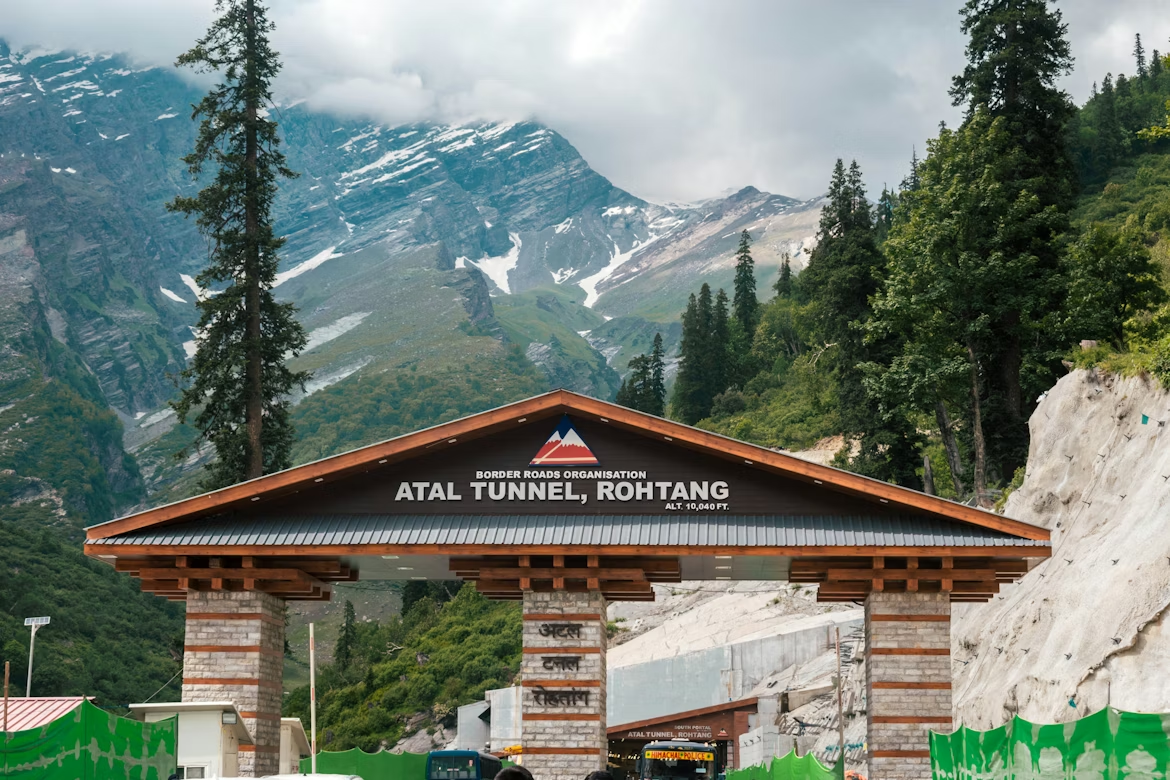
- Atal Tunnel / Sissu: The 9.02 km tunnel stays open year-round and bypasses Rohtang — the safest high-country day trip in monsoon. Manali to Sissu is ~40 km (1–1.5 hrs). See our Atal Tunnel road-trip guide, and still start early.
How to reach Manali safely in the monsoon
Travel by daylight and keep a buffer day — those two habits prevent almost every monsoon horror story. The Chandigarh–Mandi–Manali highway (NH-21) is the main artery, and the Mandi–Manali stretch is the landslide-prone weak link with its 44 high-risk spots (The Tribune). Slides clear fastest in daylight, so a morning departure beats a night drive every time.
A few rules that actually matter:
- Fly only with a backup plan. Bhuntar airport (~50 km away) sees frequent monsoon delays and cancellations on its small fleet of flights.
- Prefer Volvo or a driver who knows the road over self-driving in heavy rain, especially after dark.
- Check the advisory the morning you travel — district administration and BRO updates flag active blockages.
- Add one flexible day to your itinerary so a half-day road closure doesn’t sink the whole trip.
For door-to-door options, routes and timings, our complete guide to reaching Manali breaks down every mode. And if your trip strings together higher routes, the 2026 Manali–Leh and Srinagar road-status guide tracks pass openings through the season.
What to pack & monsoon safety checklist for Manali
Pack for wet and cool, not cold — monsoon Manali sits at a comfortable 12–16°C at night, so you want waterproofing far more than heavy layers. The single most useful item is grippy, quick-drying footwear; the second is patience with the weather.
Run through this before you leave:
- Waterproof jacket and a compact umbrella
- Grippy, water-resistant shoes (trails and steps get slippery)
- One warm layer for evenings and a quick-dry change of clothes
- Power bank, offline maps, and a basic medical kit
- Travel insurance and screenshots of your bookings
- A buffer day in the plan for road delays
On the ground, three habits keep you safe: avoid riverbanks and stream crossings during heavy rain, don’t trek solo or after dark in wet conditions, and never push onto a high pass when the weather has turned. The mountains aren’t going anywhere — a cancelled plan beats a stranded one.
Planning a rainy-season trip? A warm, well-placed base turns a wet afternoon into the best part of the day. Browse StayVista’s homestays in Manali for valley-view stays with cosy interiors and genuine off-season value.
Who should visit Manali in monsoon — and who should wait?
Monsoon Manali isn’t for everyone, and that’s the honest framing most guides avoid. It rewards travellers who value quiet, green and cheap over packed itineraries. Booking.com found 53% of Indian travellers specifically seek destinations known for natural scenery during the monsoon (Travel Trends Today / Booking.com, 2024) — and rain-washed Manali delivers exactly that.
Go in monsoon if you’re:
- A budget traveller — stays drop sharply, often up to ~50% off peak
- After solitude, the crowds thin out dramatically in July and August
- A photographer or nature lover — mist, full waterfalls, and deep green hillsides
- Flexible on dates and relaxed about a possible road delay
Wait for June or September if you’re:
- Travelling with elderly parents or young children
- Locked into a fixed, short itinerary with no slack
- Coming mainly for Rohtang, paragliding, or high treks (all unreliable or shut)
- A first-timer at mountain road travel
The appetite is clearly there: Agoda recorded a 410% jump — more than four times — in Indian monsoon-travel searches versus pre-pandemic levels (Business Traveller / Agoda, 2023). Monsoon hill trips are popular for good reason — just go in with open eyes.
Where to stay in Manali during monsoon
In the rain, your stay does more work than anywhere else on the trip — you’ll spend more afternoons indoors, so the view from the window and the warmth of the room genuinely matter. Since Manali leans toward homestays over large hotels, a well-located homestay with a fireplace or a covered balcony turns a washout afternoon into a highlight.
StayVista’s homestays in Manali are built for exactly this: valley-facing rooms, cosy interiors, and the kind of off-season pricing that makes July and August the smart-money months. Look for a property within a short drive of Old Manali or Vashisht, so you’re never far from a cafe or a hot spring when the weather closes in. A few stays that come into their own in the rain:
- Tulip Terraces — A stone-clad cottage at roughly 7,000 ft with private balconies, misty-hill views, a bonfire pit, and a barbecue kit. It’s about 1 km from Mall Road and close to the Vashisht hot springs, so a wet afternoon turns into a soak and a fire rather than a write-off. Best for families and friend groups.
- Stonehurst Cottage — Wrapped in apple orchards with valley views and an English-cottage feel, and stocked with karaoke and indoor games — exactly what you want when the rain keeps everyone in. Ideal for group getaways and celebrations.
- The Wisteria Cottage — A wood-and-stone home in the quiet hamlet of Nasogi, with heaters, electric blankets, and valley-facing sit-outs. The warm, snug setup is made for cool monsoon evenings, and the layout suits larger families.
If you’d rather plan around what to do near your base, our roundup of things to do and places to visit in Manali pairs well with a monsoon stay.
Frequently asked questions
Yes, with planning. Manali town is safe; the risk is the Mandi–Manali highway, which has 44 high-risk landslide spots and can be blocked during heavy July–August rain (The Tribune). Travel by daylight, keep a buffer day, and check advisories.
The southwest monsoon reaches Himachal between late June and early July, peaks in August — the wettest month at around 245 mm — and tapers through September (IMD). Late September is green and largely dry again.
For budget, solitude and photography travellers, yes — stays drop up to ~50% and crowds thin out. For families on fixed itineraries or anyone here for Rohtang and adventure sports, no, since those are unreliable or shut during peak monsoon.
Generally open, but landslide-prone on NH-21. Slides cause delays and occasional closures rather than permanent shutdowns. NHAI has approved ₹825 crore for stabilisation work on the Kiratpur–Manali route (Tractor Junction Infra). Always check the BRO advisory before travelling.
Mid-September through October. The rain has eased, the valley is at its greenest, skies are clear for mountain views, and landslide risk drops back to low — widely considered the best all-round window of the year.
It reopened on 17 May 2026 and is reliable through June, but from July, the approach is landslide- and slush-prone and can close without notice. For a safer high-altitude day trip in the monsoon, use the year-round Atal Tunnel to Sissu instead.
Yes. July and August are the off-season, and homestays and hotels often drop up to ~50% below peak rates. Combined with thin crowds, it’s the cheapest and quietest time to experience the valley — the main trade-off being the weather and the roads.
The bottom line
Manali is the smartest heat-escape in North India, and a more complicated call once the rain sets in. To recap:
- June: 15–20°C cooler than Delhi, open roads, clear skies — the last reliably dry window of summer
- July–August monsoon: Cheap, green, solitary — demands flexibility and awareness of NH-3 landslide hazard
- Mid-September to mid-November: The best all-rounder window — safe roads, green-to-gold valleys, manageable crowds, Rohtang and Atal Tunnel both still open
- December–February: Snow in Manali town, Solang for snow sports, Atal Tunnel as reliable north access when Rohtang is closed
- Always: Travel by daylight on mountain roads, confirm Rohtang and Atal Tunnel status the night before departure, choose stays within easy reach of Mall Road or Old Manali
Ready to swap 45°C for mountain air? Browse StayVista’s Manali homestays, or bookmark this guide and book a September stay while off-season rates are still live.