

15 Best Monsoon Homestays in South India: Misty Estates & Hill Retreats You Can Actually Book (2026)
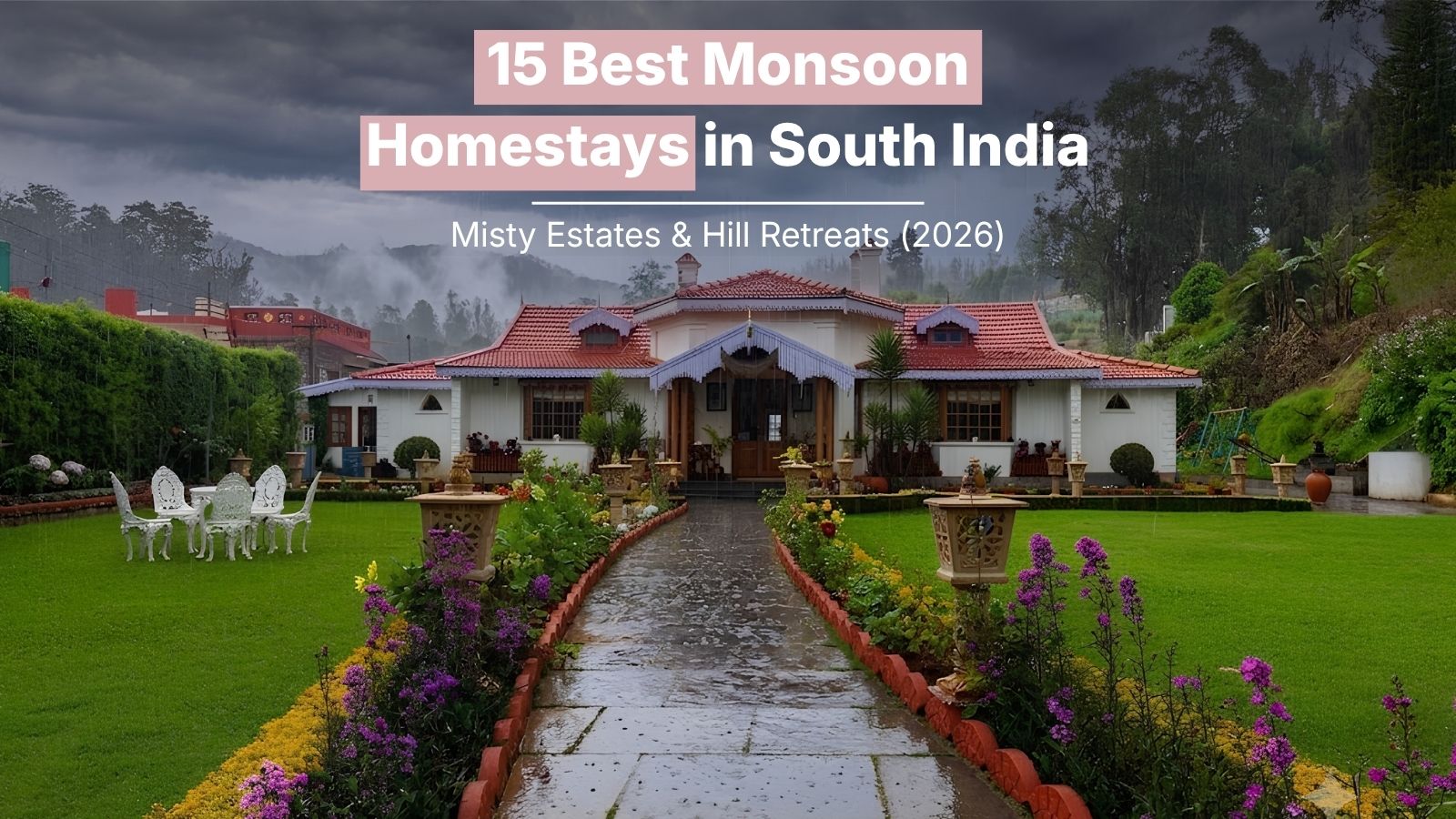
The Western Ghats catch between 2,500 and 3,500 mm of rain between June and September — more than most of Europe sees in a full year (India Meteorological Department). That single fact is why South India’s monsoon reads so differently in person than it does on paper. It’s also why most “best monsoon homestays” lists get it wrong: they confuse destinations with stays, ignore road resilience after the 2024 Wayanad landslides, and pretend altitude doesn’t matter when it decides whether you spend your holiday inside a warm plantation home or waiting out an advisory.
We’ve shortlisted 15 StayVista homestays that stay comfortably accessible, dry-linen dry, and rainy-day interesting through the peak of the South-West monsoon. Coffee, cardamom, tea, and Nilgiri mist — every pick is named, bookable, and slotted by altitude and safety band.
South India records 2,500–3,500 mm of rainfall between June and September, the highest concentration on the peninsula (IMD). We’ve shortlisted 15 StayVista homestays across four estate typologies — coffee, cardamom-spice, tea, and Nilgiri mist — that stay drivable, dry-linen dry, and indoors-interesting through peak monsoon. Each pick includes altitude, monsoon rainfall, and a rainy-day activity slate.
In this Blog
Where in South India Should You Go for Monsoon 2026?

For monsoon 2026, our shortlist skews toward Coorg (Kodagu), Chikmagalur, Vagamon and Coonoor for landslide safety, while keeping Wayanad’s lower-elevation lodges — below 800 m — firmly in scope. India logged 2,948 million domestic tourist visits in 2024, up 17.5% year on year (Ministry of Tourism), and monsoon is now travel’s structural third season, with July 2025 hotel bookings pacing about 10% ahead of the previous year (Business Standard).
The quick answer to where: coffee estates in Karnataka give you the safest monsoon typology, cardamom and pepper plantations in Kerala give you the most dramatic mist, tea slopes in Vagamon and Coonoor give you the easiest access, and the Nilgiri lake belts give you the calmest experience. Below is what the numbers actually look like.
| Destination | Altitude | Avg July rainfall | Drive time | Safety band | Best for |
| Coorg (Kodagu) | 1,100 m | ~280 mm | 5.5 h from Bangalore | Green (safe) | First-timers, families |
| Chikmagalur | 1,090 m | ~205 mm | 4.5 h from Bangalore | Green | Weekenders, couples |
| Wayanad (lower belt) | 700–800 m | ~390 mm | 6 h from Bangalore, 3 h from Kozhikode | Amber (verify road) | Slow travellers, plantation lovers |
| Munnar / Bison Valley | 1,000–1,600 m | ~433 mm | 4 h from Kochi | Amber | Photographers, honeymooners |
| Vagamon | 1,100 m | ~245 mm | 3.5 h from Kochi | Green | Quiet weekends |
| Coonoor | 1,850 m | ~235 mm | 2.5 h from Coimbatore | Green | Tea-estate walkers |
| Ooty | 2,240 m | ~270 mm | 3 h from Coimbatore | Green | Families, forest views |
| Kodaikanal | 2,100 m | ~180 mm | 3.5 h from Madurai | Green | Calm mist, small groups |
Safety bands are our own read of terrain, road resilience and post-2024 landslide advisories. Cross-check with IMD nowcasts 48 hours before travel.
Which Coffee Estate Homestays Are Safest in Monsoon?
Coffee estates are the safest monsoon typology in South India, and Coorg’s Kodagu belt records 2,500–3,500 mm of annual rainfall spread across the June–September window (IMD Karnataka). The reason they’re safer than their headline rainfall suggests: gentler slopes, older drainage lines, and estates that have been managing rain-runoff for a century. Chikmagalur, next door, gets a slightly drier profile with better all-weather roads — the sensible pick if you want the coffee-belt experience without a road advisory. Sakleshpur, three hours further west, is the third leg of Karnataka’s coffee triangle and gets fewer visitors than either.
1. Crystal Homestay, Coorg
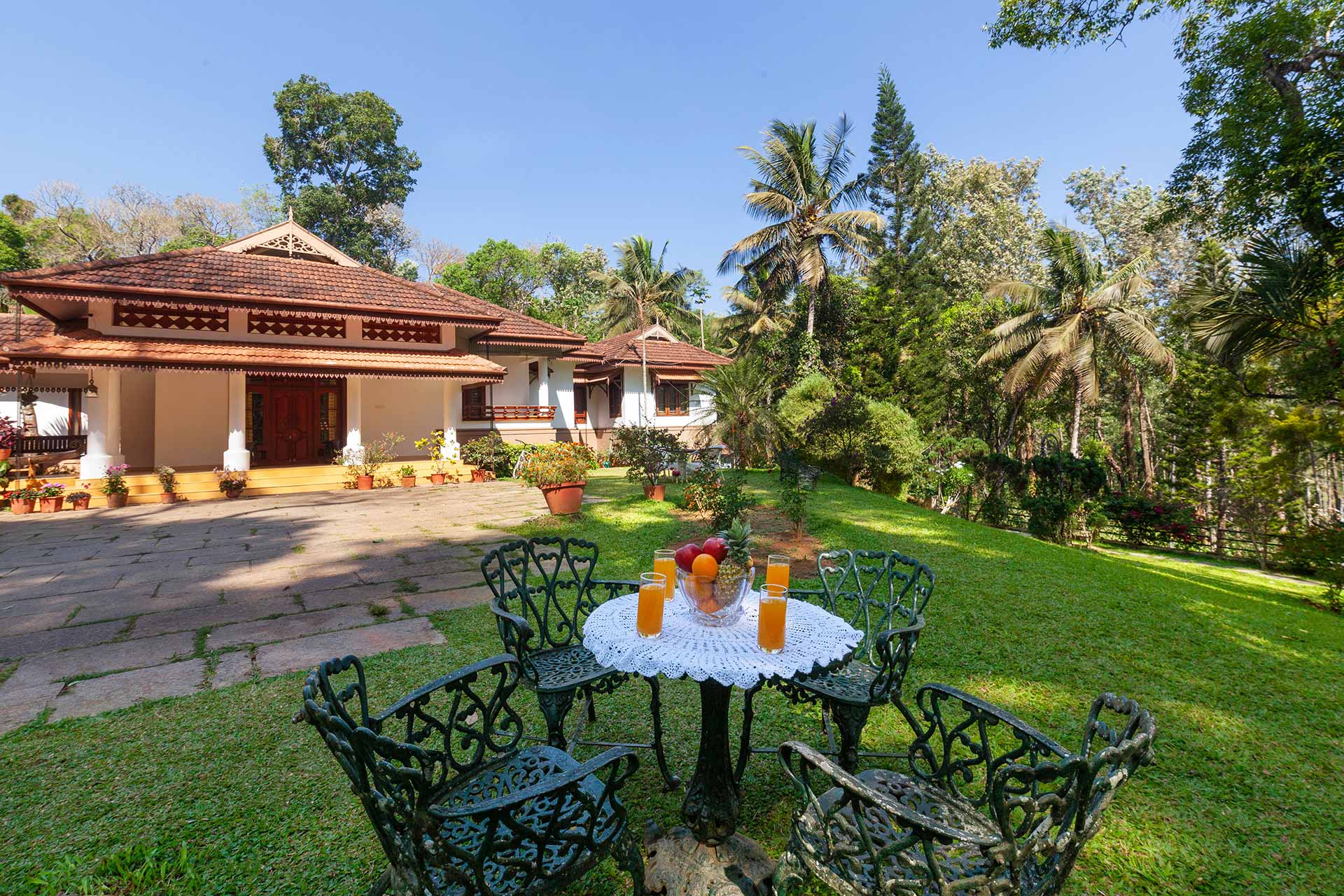
- Type: Heritage plantation homestay
- Best for: Couples, first-time monsoon travellers, filter-coffee ritualists
- Rainy-day activities: Coffee-walk with the estate manager, filter-coffee tasting, indoor board games, plantation kitchen meals
- Pro tip: Ask for the early-morning walk. Mist lifts off the estate around 6:30 AM and it’s the shortest, best light of the day.
- Where: Kodagu belt, low-landslide zone · ~5.5 hours from Bangalore
2. Firefly by the River, Coorg
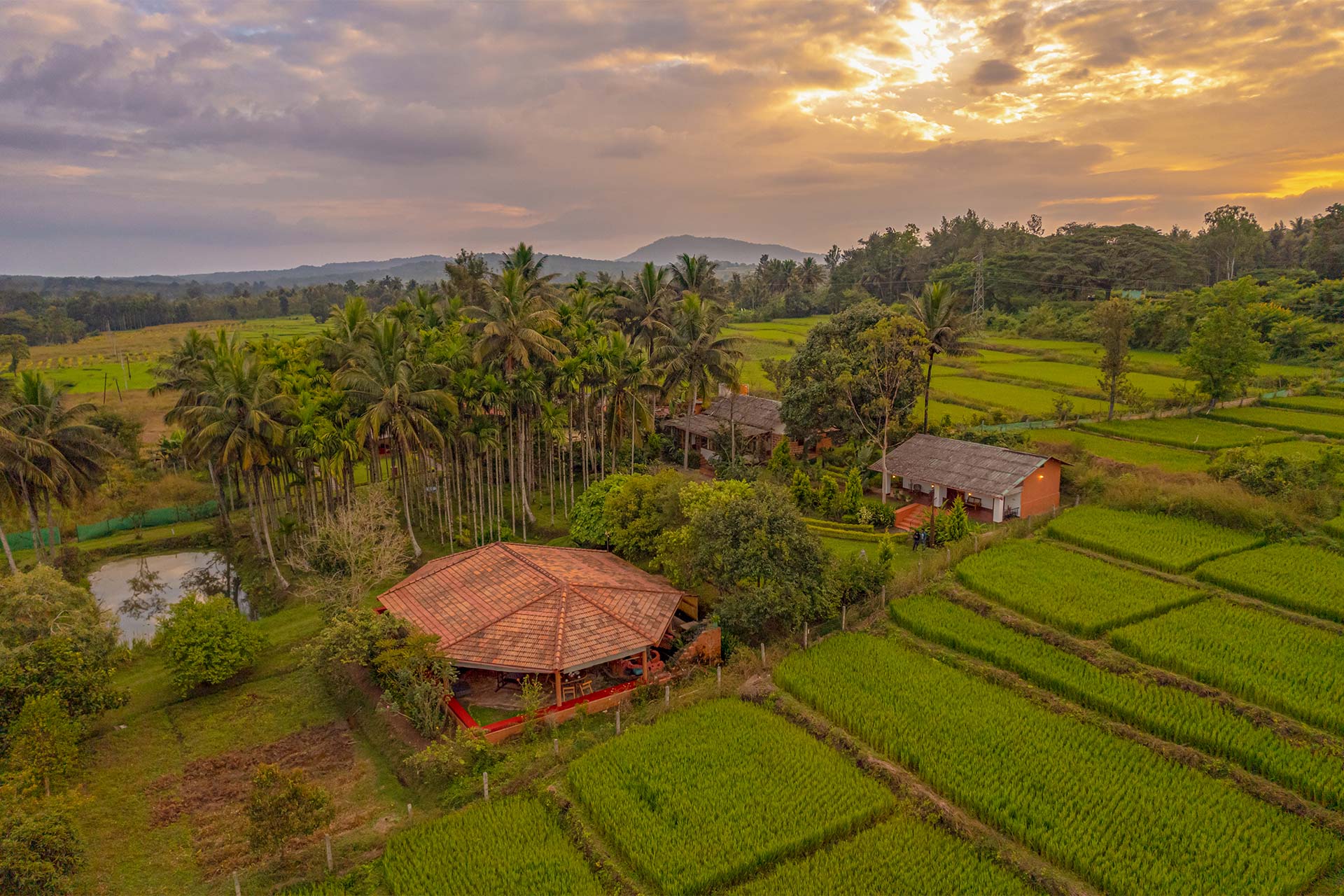
- Type: 5-bedroom riverside coffee-belt villa
- Best for: Larger families, groups of 10, sound-of-the-river seekers
- Rainy-day activities: Riverside verandah rain-watching, plantation walks in dry spells, filter-coffee mornings, on-property Coorgi meals
- Pro tip: The stream running past the property swells beautifully after a heavy overnight rain. Book a ground-floor room to catch the sound at night.
- Where: Kodagu / Coorg, riverside · ~5.5 hours from Bangalore
3. Misty Barn (Oodsey), Chikmagalur
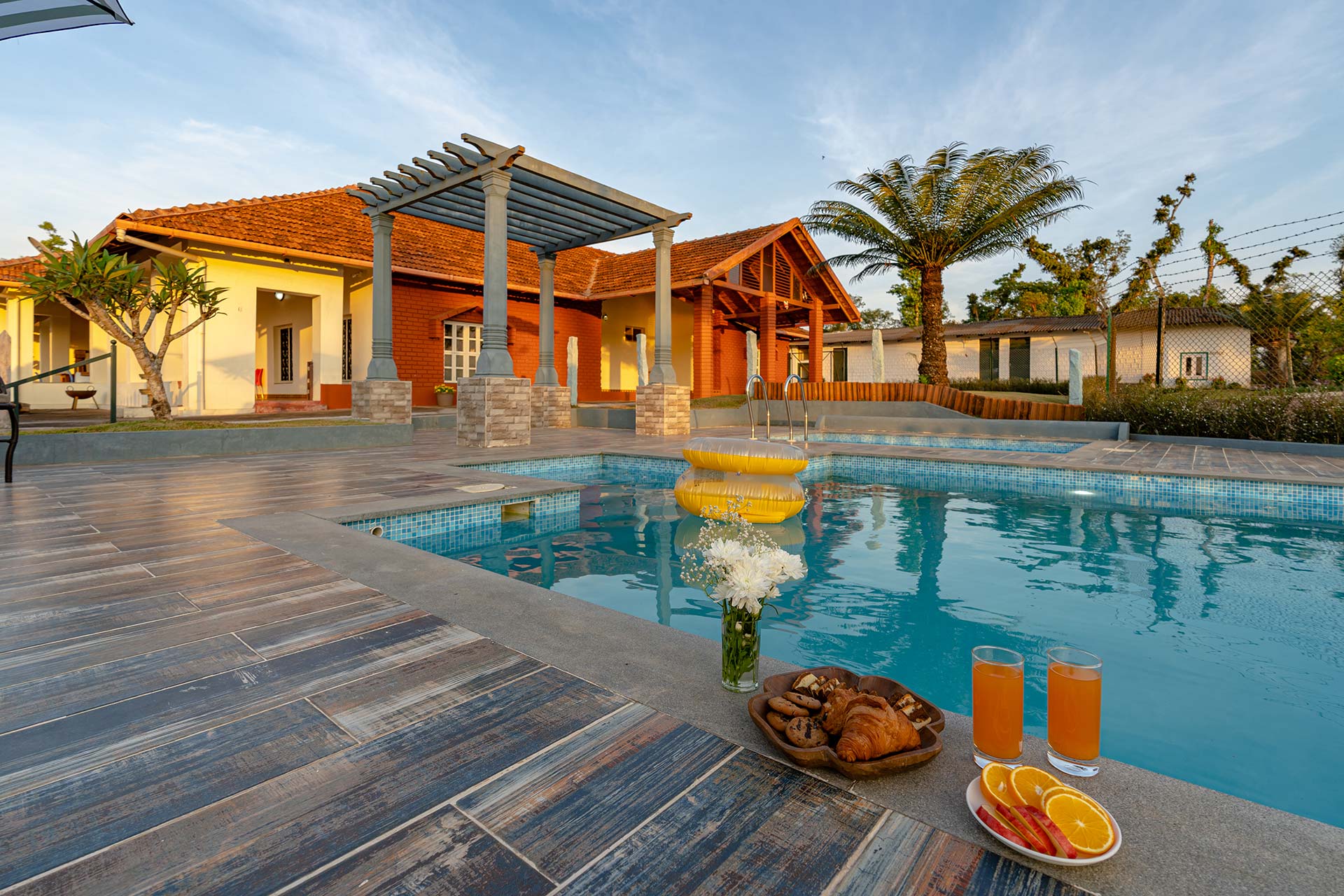
- Type: Coffee-estate barn conversion
- Best for: Couples, photographers, board-game evenings
- Rainy-day activities: Barn library, plantation walk between rain spells, in-house Malnad-style meals, fireplace nights
- Pro tip: The name is honest — mist rolls in by 4 PM most July afternoons. Carry a warm layer even if the forecast says 22°C.
- Where: Chikmagalur, Malnad region · ~4.5 hours from Bangalore
4. Bean & Brick Villa, Sakleshpur–Chikmagalur Coffee Belt

- Type: Coffee-estate villa in the Sakleshpur–Chikmagalur coffee belt
- Best for: Coffee-first travellers, small groups, weekend house-takes from Bangalore
- Rainy-day activities: Plantation walks in dry windows, filter-coffee ritual, indoor lounging, Malnad breakfasts (akki roti, chutney pudi, filter coffee)
- Pro tip: Sakleshpur sees a fraction of the visitors Coorg does — same coffee-belt quality, quieter roads. Best mid-week in July–August; leech salt at the ready for plantation walks.
- Where: Sakleshpur–Chikmagalur coffee belt, Karnataka · ~4.5 hours from Bangalore
For a longer read on how Coorg and Chikmagalur compare in the monsoon, see our detailed Coorg vs Chikmagalur in Monsoon guide.
Which Cardamom & Spice Estates Are Worth the Rain?
Kerala’s cardamom belt and Wayanad’s pepper-and-coffee plantations get the loudest monsoon in South India. Munnar records an average 433 mm of rain in July alone (Climate-Data.org), and Wayanad district picks up around 2,464 mm across the full South-West monsoon — roughly 80% of its annual total (Down To Earth). Kerala welcomed 2.22 crore tourists in 2024, a 21% jump over pre-pandemic numbers (Kerala Tourism), so book early.
A note on Wayanad safety: after the July 2024 Meppadi–Chooralmala landslides, road access and elevation matter more than they used to. Every Wayanad pick below sits outside that corridor and stays at lower elevations with more resilient road connections. If you’re bringing young children or elderly parents, check the Kerala State Disaster Management Authority (KSDMA) alert map 24 hours before you leave.
5. Spice Notes — Bison Valley, Munnar
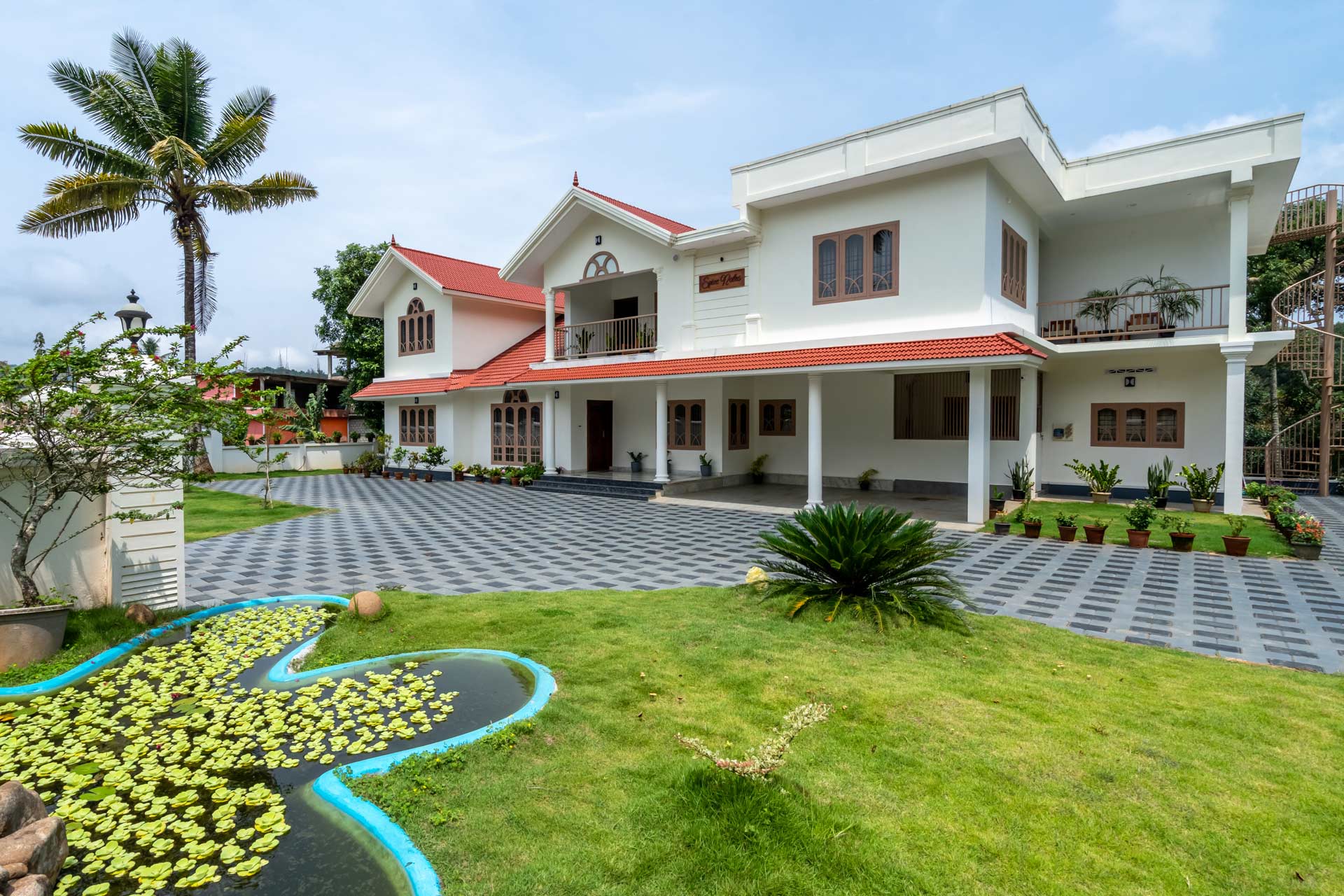
- Type: Cardamom-and-spice plantation homestay
- Best for: Slow-monsoon travellers, botanists at heart, honeymooners
- Rainy-day activities: Guided spice-plantation walk, cardamom-drying yard visit, plantation kitchen classes, silent-mornings-on-the-veranda
- Pro tip: Bison Valley sits lower than Munnar town — the road stays open even on heavy-rain days when Munnar’s higher stretches get closed off.
- Where: Bison Valley, Idukki district · ~4 hours from Kochi
6. Cardamom Casa, Munnar
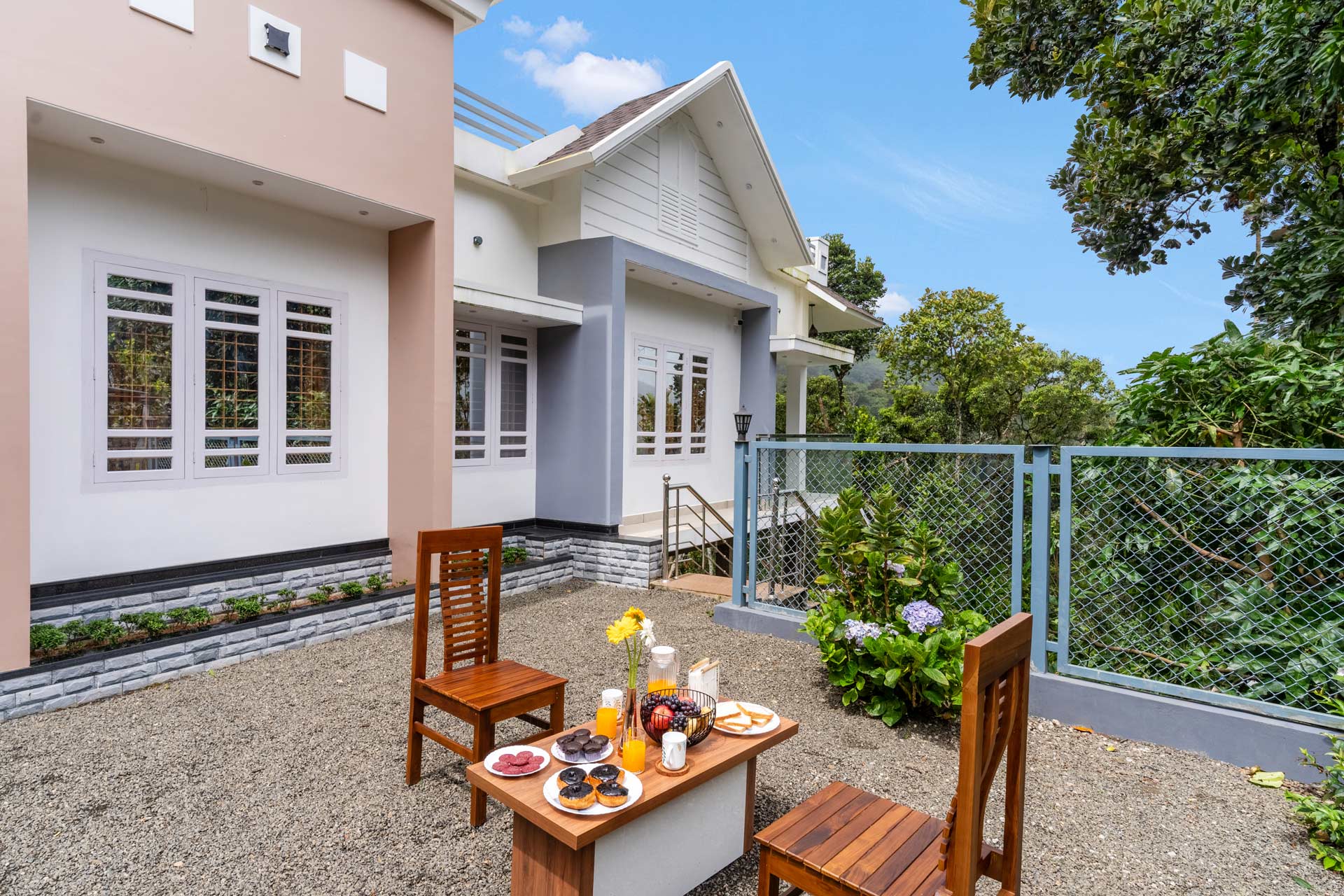
- Type: Three-bedroom plantation villa
- Best for: Families, groups of 6–8
- Rainy-day activities: Terrace views into the cardamom estate, plantation-side lawn (covered), estate-grown Kerala meals
- Pro tip: The cardamom flowers bloom low, close to the ground. Ask the host to point them out on the estate walk — you’ll walk past dozens otherwise.
- Where: Munnar / Idukki belt · ~4 hours from Kochi
7. Palm Tree Homes, Wayanad
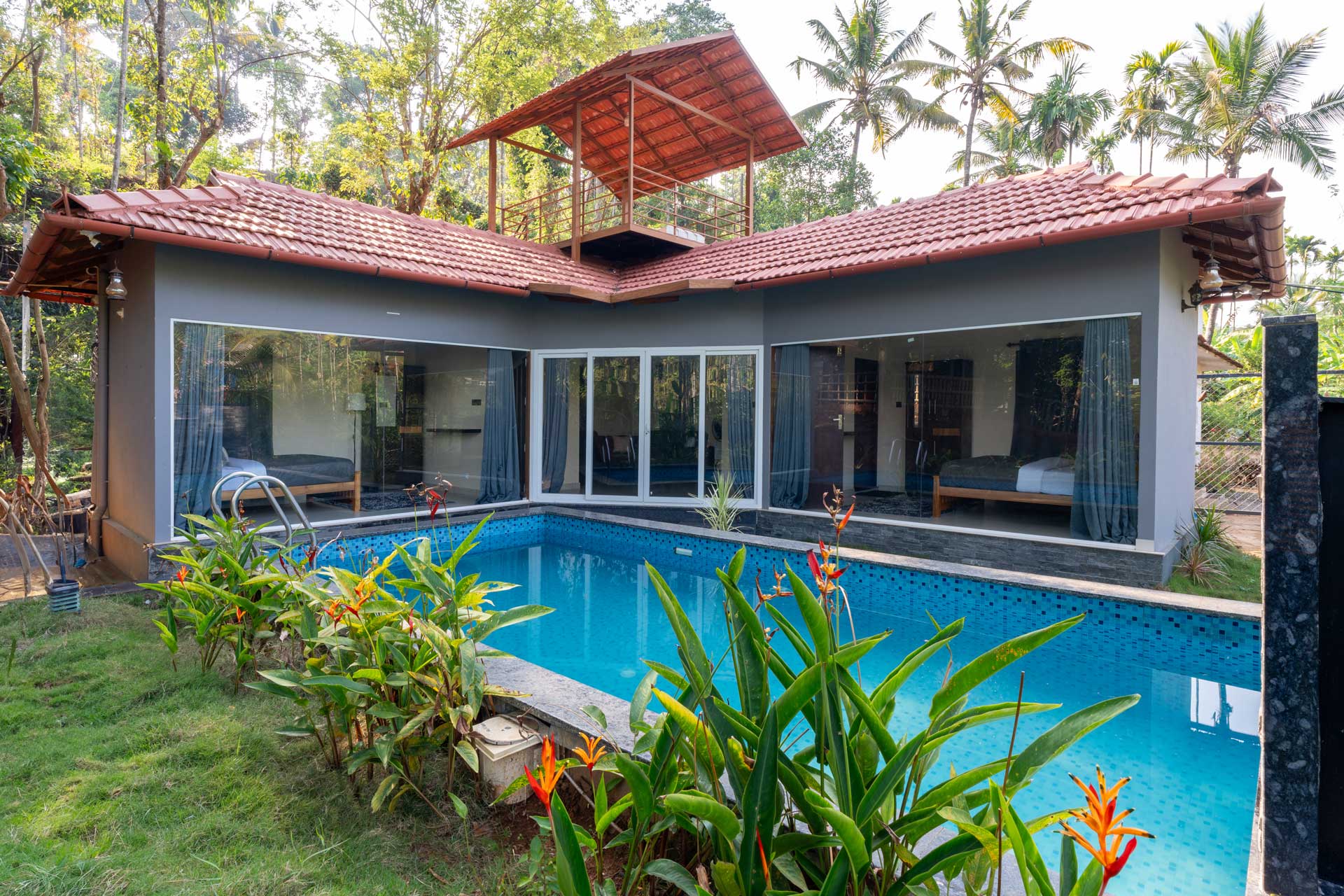
- Type: Lower-elevation Wayanad homestay
- Best for: Post-2024 monsoon-cautious travellers, families
- Rainy-day activities: Estate walks between rain spells, indoor Kerala meals, covered-veranda reading afternoons
- Pro tip: This one sits below 800 m — well outside the Meppadi–Chooralmala landslide zone. Road access holds up on all but the heaviest-red-alert days.
- Where: Wayanad, lower belt · ~3 hours from Kozhikode airport
8. Whitewood Serene, Wayanad
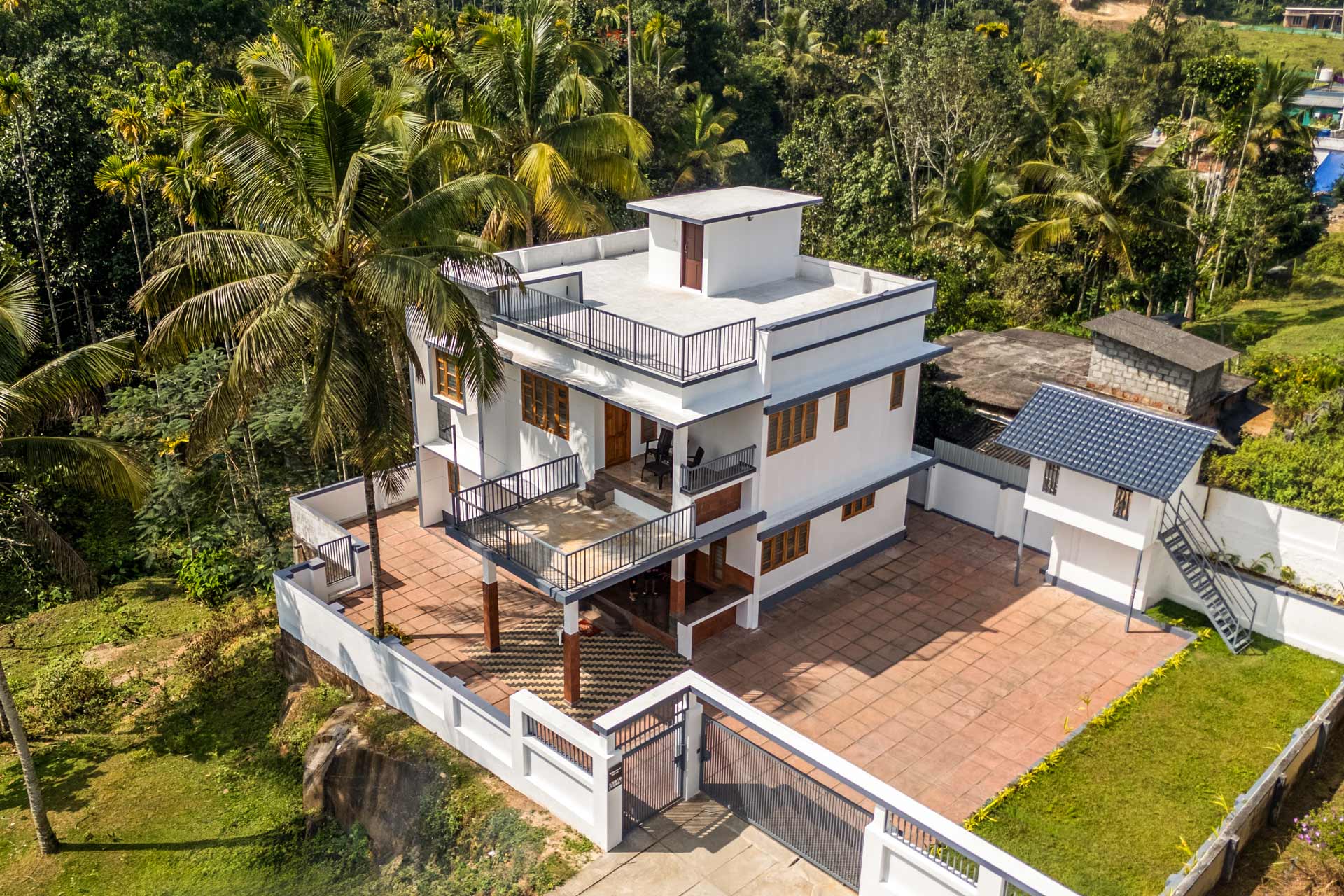
- Type: Spice-plantation-edge villa
- Best for: Couples, small groups, walk-and-read travellers
- Rainy-day activities: Short forest trail (safe in light rain), spice-market day trips to Sultan Bathery, indoor Kerala cooking
- Pro tip: Carry salt or salt sachets. Leeches are common on the trails in July–August; a pinch on your ankles keeps them off.
- Where: Wayanad · ~3 hours from Kozhikode
9. Wellbeing Villa, Wayanad

- Type: Quiet-enclave villa
- Best for: Solo travellers, writer’s retreats, couples wanting silence
- Rainy-day activities: Reading corners, yoga on the covered deck, plantation walks in dry spells
- Pro tip: Two of the best rain sounds happen an hour apart: heavy rain on the tin sections of the veranda (loud, dramatic) and the softer patter on banana leaves out back. Both are worth catching.
- Where: Wayanad · ~3 hours from Kozhikode
10. Mountain Rain, Wayanad
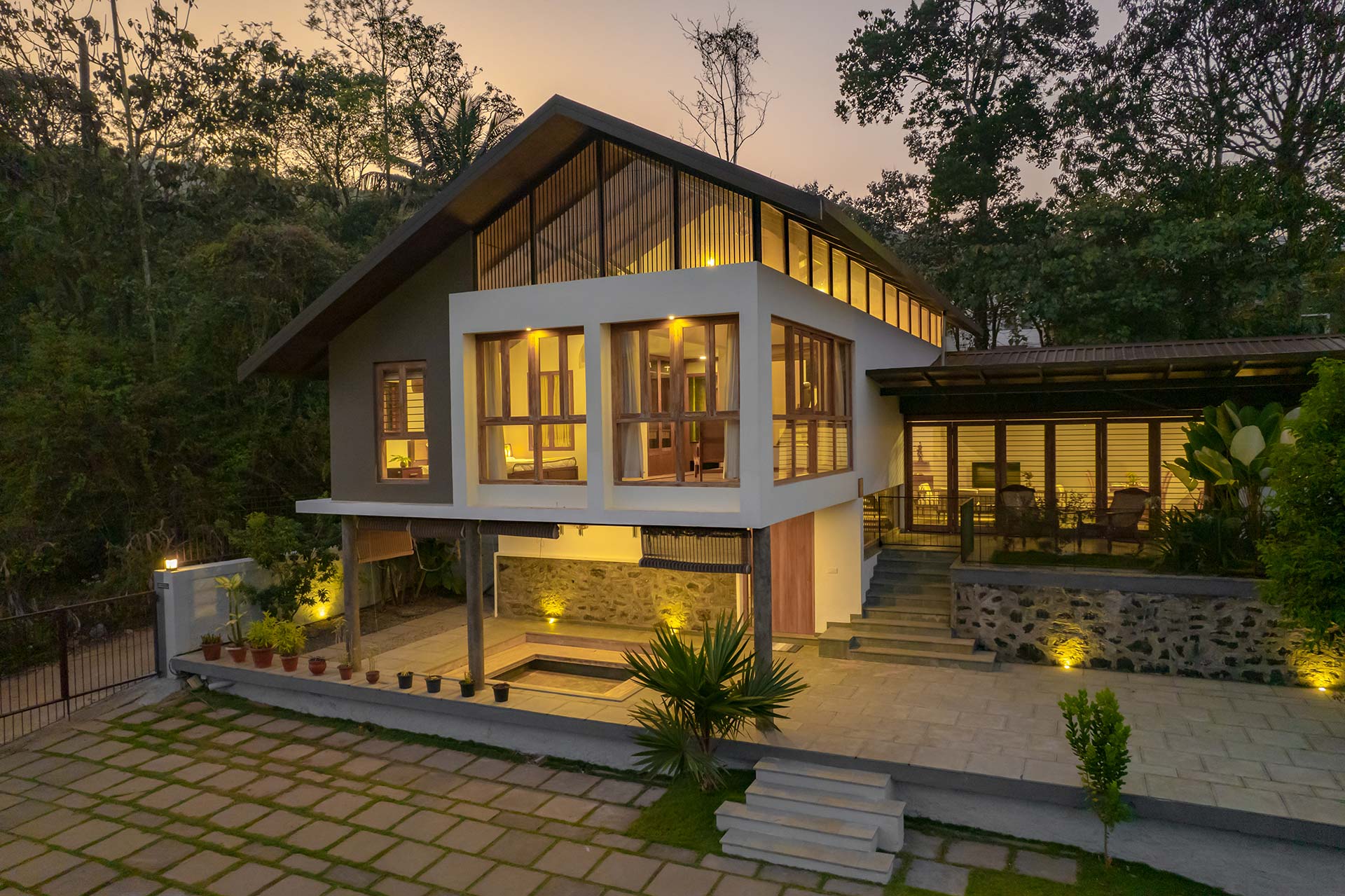
- Type: Cardamom-and-coffee estate cottage
- Best for: Couples, honeymooners, the “we want it to actually rain” traveller
- Rainy-day activities: Fireplace evenings, covered veranda, spice-and-coffee estate walk, filter-coffee ritual at dawn
- Pro tip: The name is not a metaphor. Book this one when you actively want peak-monsoon drama, not when you’re hedging.
- Where: Wayanad · ~3 hours from Kozhikode
For more misty spots and waterfalls, our dedicated Wayanad in Monsoon 2026 guide maps 12 places to see between homestay stays.
Which Tea-Country Homestays Work Best in Monsoon?
Vagamon and the Nilgiris log the softest average July rainfall on this list — 245 mm at Vagamon and 235 mm at Coonoor (Climate-Data.org) — roughly half of what Munnar’s interior takes over the same window. If Munnar’s tea slopes have become too crowded and its interior roads too weather-dependent, Vagamon and the Nilgiris tea belt are the underrated substitutes. Vagamon sits at 1,100 m altitude, and the Nilgiris tea country around Ooty and Coonoor sits between 1,850 m and 2,200 m — giving you fog-and-tea views with the shortest metro drive on this list at three hours from Coimbatore.
11. Ozone Greens, Vagamon

- Type: Villa perched over Vagamon’s tea slopes and meadows
- Best for: Couples, small groups, walk-into-a-cloud photographers
- Rainy-day activities: Verandah tea-time, meadow walks in dry windows, plantation-side reading, in-house Kerala meals
- Pro tip: Vagamon fog rolls right through the verandah on cold-front mornings. Stay two nights to catch a thick one; single-night visitors often miss it.
- Where: Vagamon, Idukki district · ~3.5 hours from Kochi
12. Villa Hugel, Nilgiris Tea Belt
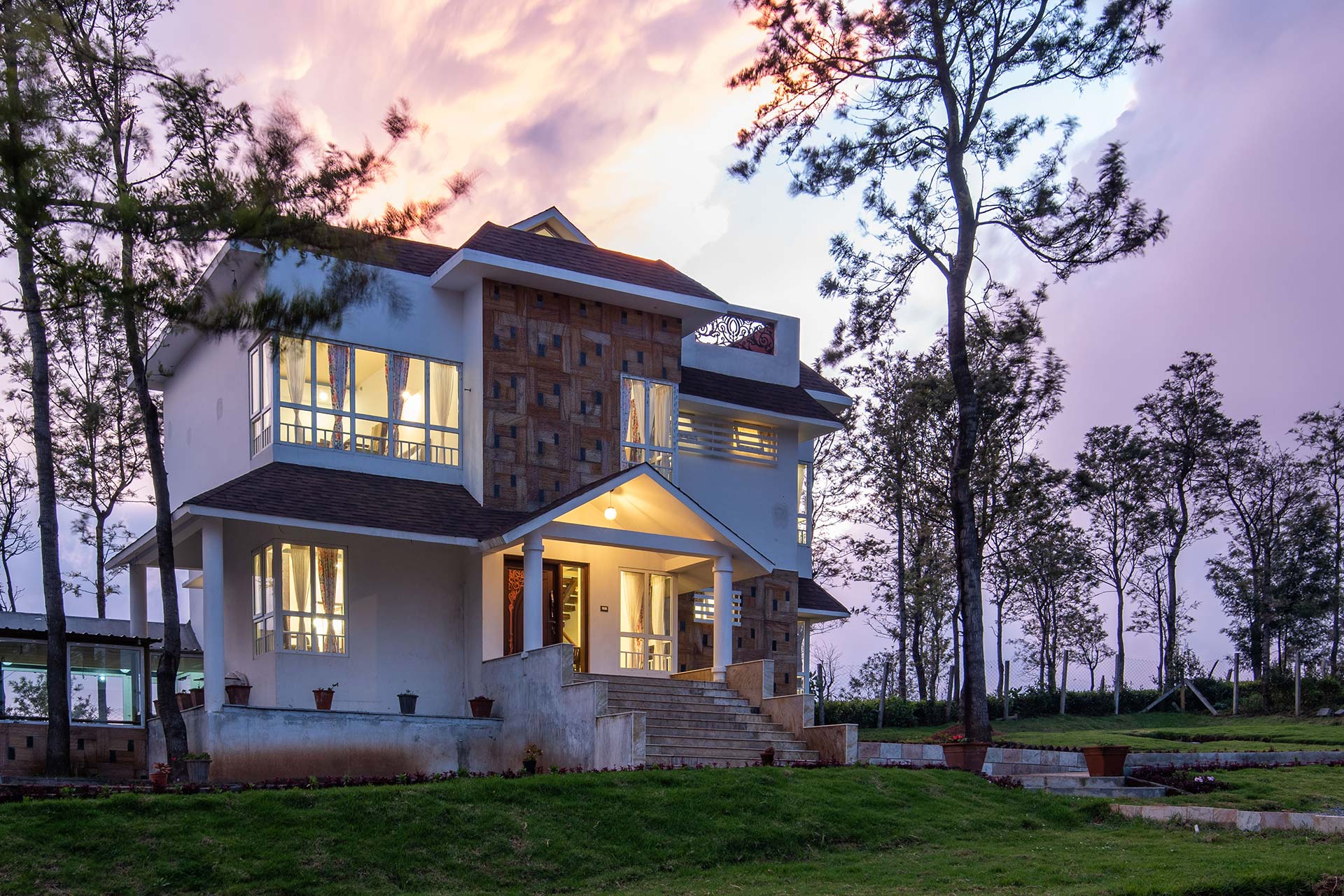
- Type: 5-bedroom Nilgiris tea-country villa
- Best for: Larger groups of 10, family reunions, rain-watching
- Rainy-day activities: Deep-verandah rain sessions, plantation walks in dry spells, in-house Nilgiri meals, board games
- Pro tip: The deep verandahs are the property’s actual feature. Sit out there through a full rain spell — more rewarding than moving indoors when it picks up.
- Where: Ooty–Coonoor Nilgiris belt · ~3 hours from Coimbatore
Which Nilgiri Retreats Give the Softest Monsoon?
Ooty and Kodaikanal sit at the calmest end of the South India monsoon — higher altitudes, softer rainfall (180–270 mm in July), and roads that hold up because the tourism infrastructure has been maintained for over a century. Tamil Nadu recorded 18.49 crore domestic tourist visits in the first half of 2024, the highest of any Indian state (Deccan Chronicle). Book two to three weeks ahead in July–August.
13. Villa Misty Oaks, Ooty
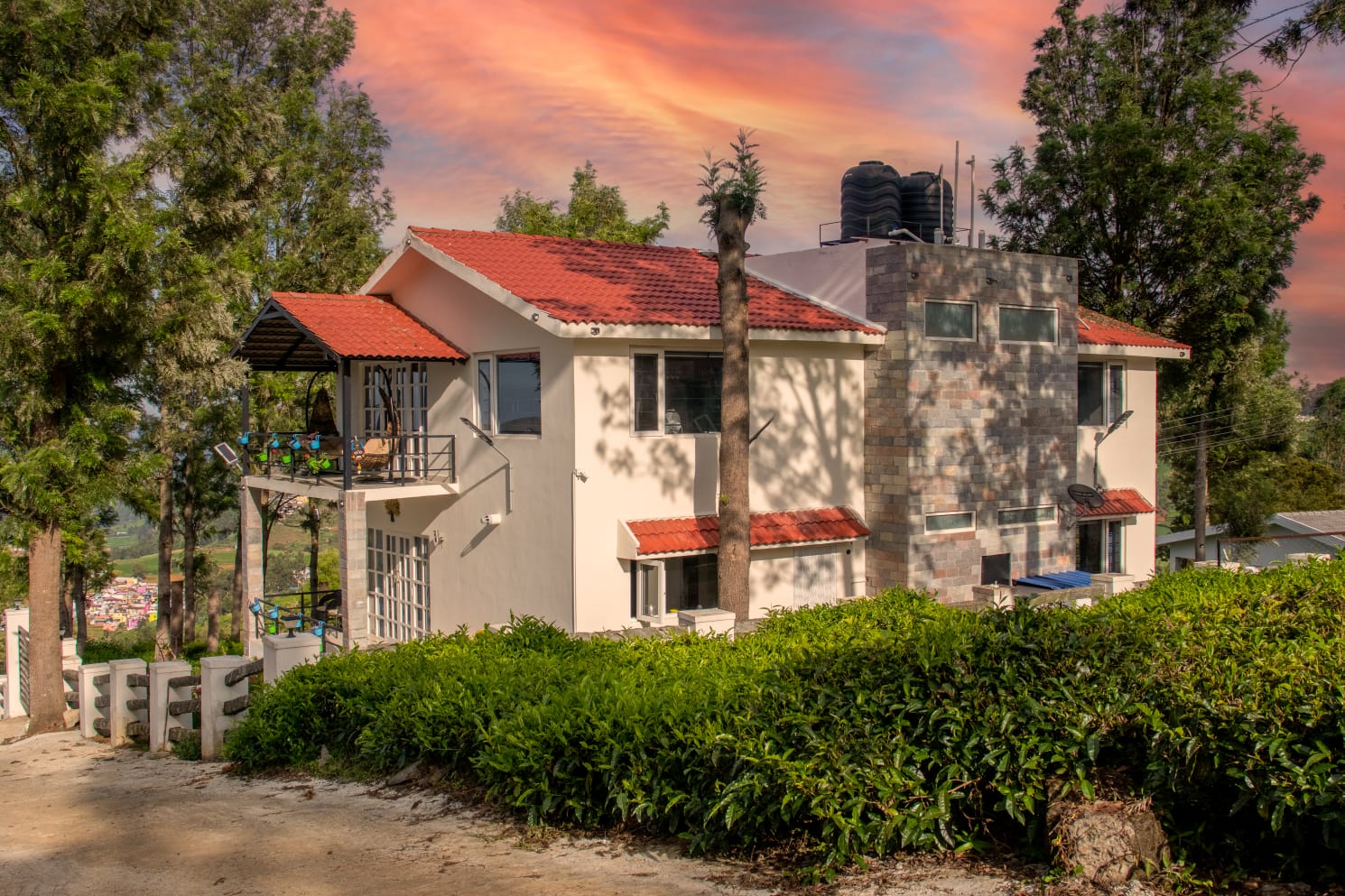
- Type: Silver-oak forest villa with Bandipur views
- Best for: Families, small groups, forest-view seekers
- Rainy-day activities: Deck reading, board games, Nilgiri-style meals, forest walks in dry spells
- Pro tip: The Bandipur boundary is close enough that on very quiet mornings you can hear the forest without seeing it. Ask for a room on the forest-facing side.
- Where: Ooty · ~3 hours from Coimbatore
14. Greenwood Bungalow, Ooty
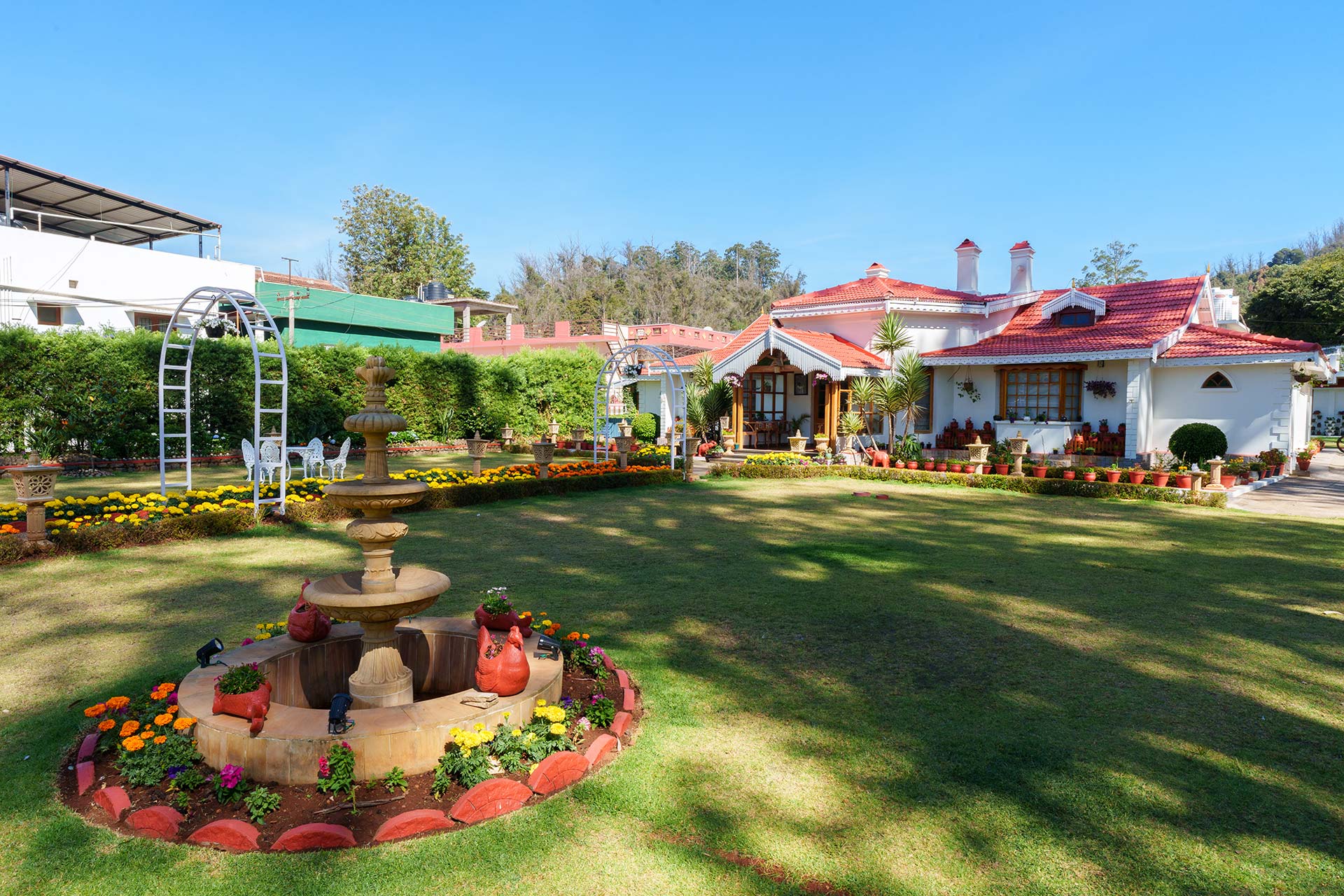
- Type: 6-bedroom colonial-style bungalow ringed by tea plantations
- Best for: Larger families, groups of 10–12, colonial-hill-station aesthetes
- Rainy-day activities: Wood-panelled fireplace rooms, in-house Nilgiri meals, board games, plantation walks in dry spells
- Pro tip: Damp Nilgiri evenings are best spent indoors here — the fireplaces are the reason to pick this over a modern build. Ask the host to lay one for you.
- Where: Ooty · ~3 hours from Coimbatore
15. Midsummer Mist, Kodaikanal
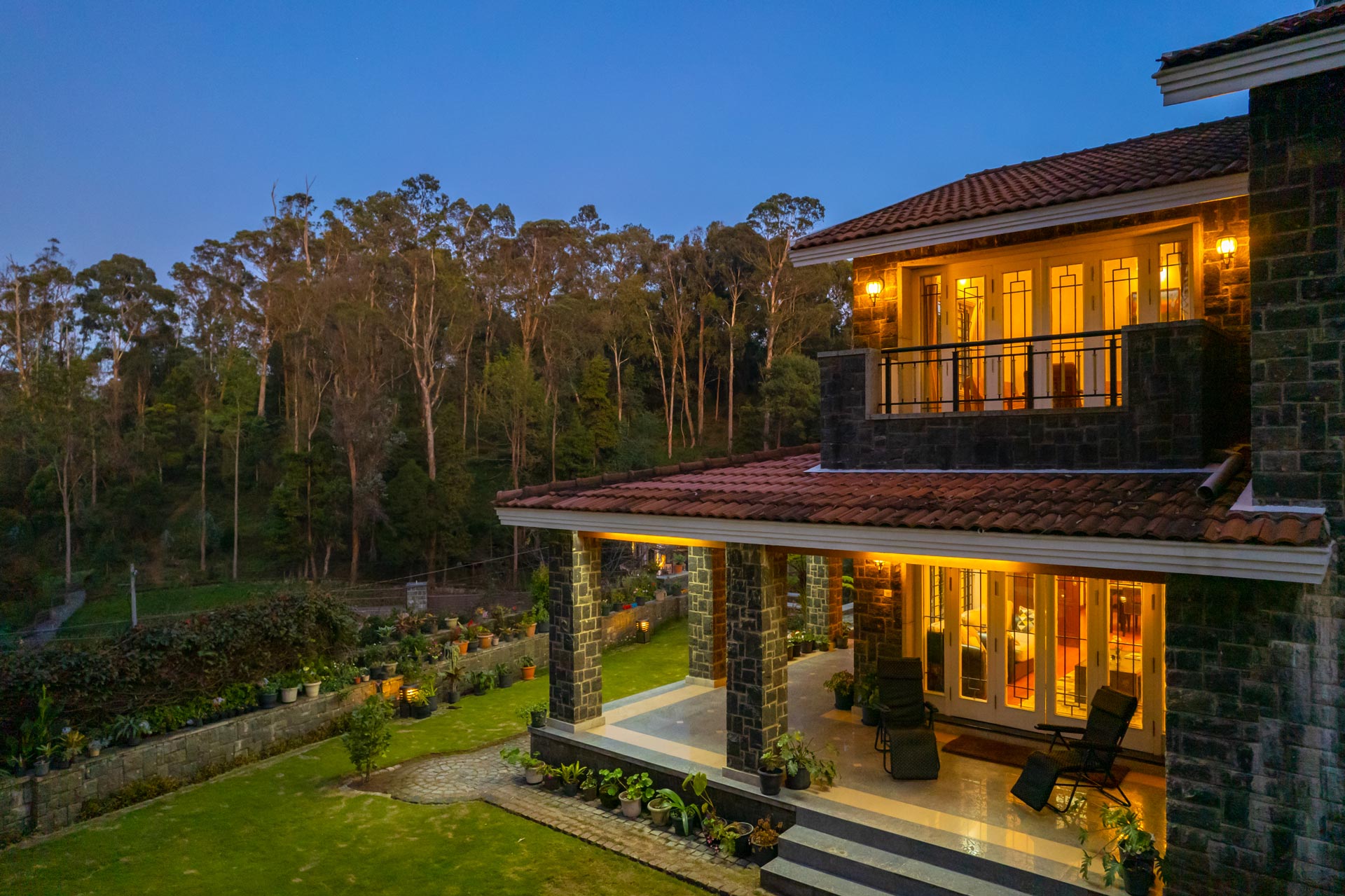
- Type: Hill-facing Kodai retreat
- Best for: Small groups, older families, calm-weekend travellers
- Rainy-day activities: Mist-view reading rooms, in-house Kodai meals, short walks to Coaker’s Walk in dry spells
- Pro tip: Kodaikanal’s July rainfall is the softest on this list. If someone in the group is monsoon-shy, this is the pick that changes their mind.
- Where: Kodaikanal, Palani hills · ~3.5 hours from Madurai
Is Monsoon Actually a Good Time to Visit South India? (Safety, Roads, Packing)
Yes — if you plan around altitude and road-resilience, not just rainfall. Monsoon is South India’s structural third travel season now: hotel bookings in July 2025 ran roughly 10% ahead of the previous year (Business Standard), and India’s homestay market is on an 11% CAGR through 2031, with 2.6 lakh active homestays and only 12% formally registered (NITI Aayog). The catch: after the July 2024 Wayanad landslides, road-resilience and elevation matter more than they used to.
Our four-axis monsoon-safety read
We grade each of the 15 picks above on four axes when we recommend them for July–September stays:
- Landslide-zone exposure — distance from known landslide-prone corridors (Meppadi–Chooralmala in Wayanad; higher Munnar interior; parts of the Nilgiris)
- Road resilience — how well the access road holds up in red-alert rainfall; single-lane vs two-lane; state-highway maintenance record
- Power & water backup — UPS or generator on the property; borewell backup during outages
- Altitude comfort — whether the elevation creates cold-wet discomfort for young children or elderly guests
Coffee estates in Coorg and Chikmagalur, plus Vagamon, Coonoor and Kodaikanal, score well on all four. Wayanad’s lower-belt picks and Bison Valley (Munnar) sit in the amber band — safe on green-alert days, but check advisories 48 hours out.
What to actually pack
- Two pairs of shoes — one waterproof for walks, one dry pair for the homestay
- A warm layer, even for lower altitudes: 22°C at Chikmagalur feels different when it’s wet
- Anti-leech salt sachets or dettol wipes for Wayanad, Coorg and Sakleshpur-adjacent trails
- Physical copies of ID and cash — card readers and UPI drop on heavy-rain days when networks flicker
- A power bank; power cuts on hill-station roads are common in July–August
- Rain covers for camera gear if you’re going for the mist shots
Are Homestays Cheaper in Monsoon Than in Peak Season?
Usually, yes. Homestay tariffs in South India’s monsoon window run about 15–30% below the October–February peak — and 69% of Indian travellers now say they actively prefer offbeat destinations, with 72% wanting to support local communities (Booking.com, via Skift). MakeMyTrip’s homestay portfolio crossed one lakh rooms last year, with homestays contributing about 10% of room-nights sold (MakeMyTrip Q2 FY25). Demand is climbing fast, and monsoon is still where the value sits.
Our own read after two operating monsoons across South India: the sharpest deals are mid-week (Sunday to Wednesday), the softest are Friday and Saturday nights, and last-minute discounts are rare because a lot of monsoon guests book two to three weeks in advance to lock in the mid-week rate.
Coorg vs Munnar vs Chikmagalur — Which Is Better for Monsoon?
Chikmagalur is the driest of the three at ~205 mm average July rainfall, Coorg the middle at ~280 mm, and Munnar the wettest at ~433 mm (Climate-Data.org, IMD-derived). Coorg is our pick for coffee-and-accessibility, Munnar for tea-and-cardamom drama, Chikmagalur for value and the softest rainfall. All three sit above 1,000 m altitude, so cold-and-wet is a real thing — the packing rules above apply to all.
| Factor | Coorg | Munnar | Chikmagalur |
| July rainfall | ~280 mm | ~433 mm | ~205 mm |
| Landscape | Coffee, pepper, cardamom | Tea, cardamom | Coffee, Malnad forest |
| Drive from metro | 5.5 h (Bangalore) | 4 h (Kochi) | 4.5 h (Bangalore) |
| Best for | First-timers, families | Photographers, honeymooners | Value seekers, weekenders |
| Road resilience | High | Medium (interior stretches close on red alerts) | High |
Our short answer: if you’re monsoon-cautious, pick Chikmagalur or Coorg. If you actively want the loudest, most dramatic monsoon backdrop, pick Munnar’s Bison Valley. If you can’t choose, book Coorg — it’s the most forgiving pick for most groups.
How Do You Book a Monsoon Homestay Without a Nasty Surprise?
India runs 2.6 lakh active homestays, but only 12% are formally registered (NITI Aayog) — which is exactly why under-briefed bookings, not the weather, are the biggest reason monsoon stays disappoint. Run through this eight-point checklist before you confirm:
- Verify road access — ask specifically about the last 5 km and whether it’s motorable in red-alert rain
- Confirm power backup — UPS or generator; how many hours of load capacity
- Check elevation — below 1,500 m for young children and elderly guests is our default recommendation
- Ask about leech policy — especially for Wayanad and Sakleshpur trails; the good homestays hand out salt on arrival
- Ask for the indoor activity slate — if the answer is “TV and Wi-Fi,” look elsewhere
- Confirm pet policy — if you’re travelling with a dog
- Check cancellation flex — monsoon travel needs a 24–48 hour cancellation window
- Ping the host 48 hours before arrival for the real forecast — local hosts read the weather better than the apps
If you’d rather have someone else do this checklist for you, browse our monsoon 2026 travel guide for the full monsoon-verified inventory across India.
Frequently Asked Questions
Coorg (Kodagu) leads for monsoon safety and coffee-estate stays, with 2,500–3,500 mm annual rainfall spread gently over June–September (IMD Karnataka). Chikmagalur is the drier alternative next door. For dramatic tea-and-cardamom scenery, pick Munnar’s Bison Valley belt over the higher-elevation interior.
Yes. Coorg’s gentle slopes, mature estate drainage, and coffee-belt roads hold up well through the South-West monsoon. Homestay rates run 15–30% below October–February peak, and the plantations are at their greenest between mid-June and late August. Just carry a warm layer — 22°C feels colder when it’s wet.
Agumbe in Karnataka’s Shivamogga district is India’s second-wettest place after Mawsynram, averaging over 7,000 mm annually (IMD). Among the popular hill destinations, Munnar tops the chart with ~2,791 mm annual rainfall, followed by Wayanad at ~2,800 mm (Climate-Data.org).
Kerala’s cardamom belt around Bison Valley (Munnar/Idukki), Vagamon, and Wayanad’s lower belt below 800 m are the safest monsoon-viable options. Kerala welcomed 2.22 crore tourists in 2024, up 21% over pre-pandemic (Kerala Tourism), so book ahead. Skip Munnar’s higher interior stretches during red-alert weeks.
Lower-elevation Wayanad below 800 m is safe outside the Meppadi–Chooralmala corridor. The 2024 event was concentrated in a specific slide-prone zone; wider Wayanad remains a viable monsoon destination if you pick homestays outside that corridor and check the Kerala State Disaster Management Authority alert map 24–48 hours before travel.
For dramatic monsoon: Munnar and Wayanad, hands down — the cardamom and pepper plantations are peak-lush and the mist is thickest. For calm, safer monsoon: Coorg, Chikmagalur, Vagamon and Coonoor. Kodaikanal is the softest, with July rainfall around 180 mm — the pick that converts monsoon-shy travellers.
Yes — South India’s monsoon window (June–September) is the shoulder season, and homestay tariffs run 15–30% below the October–February peak. India’s homestay market is growing at 11% CAGR through 2031 (NITI Aayog), and mid-week bookings during monsoon usually get the sharpest rates.
Coorg for road-resilience and coffee-estate stays; Munnar for the loudest, most dramatic monsoon scenery. Coorg averages ~280 mm rainfall in July with better all-weather roads. Munnar averages ~433 mm and its interior stretches close during red-alert weather. Pick Coorg if you’re travelling with children or elderly guests; Munnar if you actively want the drama.
Where to Book Your Monsoon 2026 Homestay
We hand-pick monsoon-verified homestays across South India each year based on how they hold up through peak-monsoon weather — road access, power backup, indoor activity slate, and honest safety flags. Every property on this list is a StayVista home, so the practical details in each pick have been vetted for the July–September window.
Three things to do next: (1) shortlist two or three homestays from the list above; (2) run our 8-point booking checklist above; (3) if you’re comparing hill stations across the country, our monsoon 2026 travel guide maps the full inventory beyond South India. And if it’s your first monsoon getaway, our full Coorg monsoon guide covers the practical bits — what to eat, when to walk, how to time the plantation visits — in more depth than a listicle can hold.