

Munnar vs Wayanad vs Vagamon: Which Kerala Hill Station Wins the Monsoon in 2026?
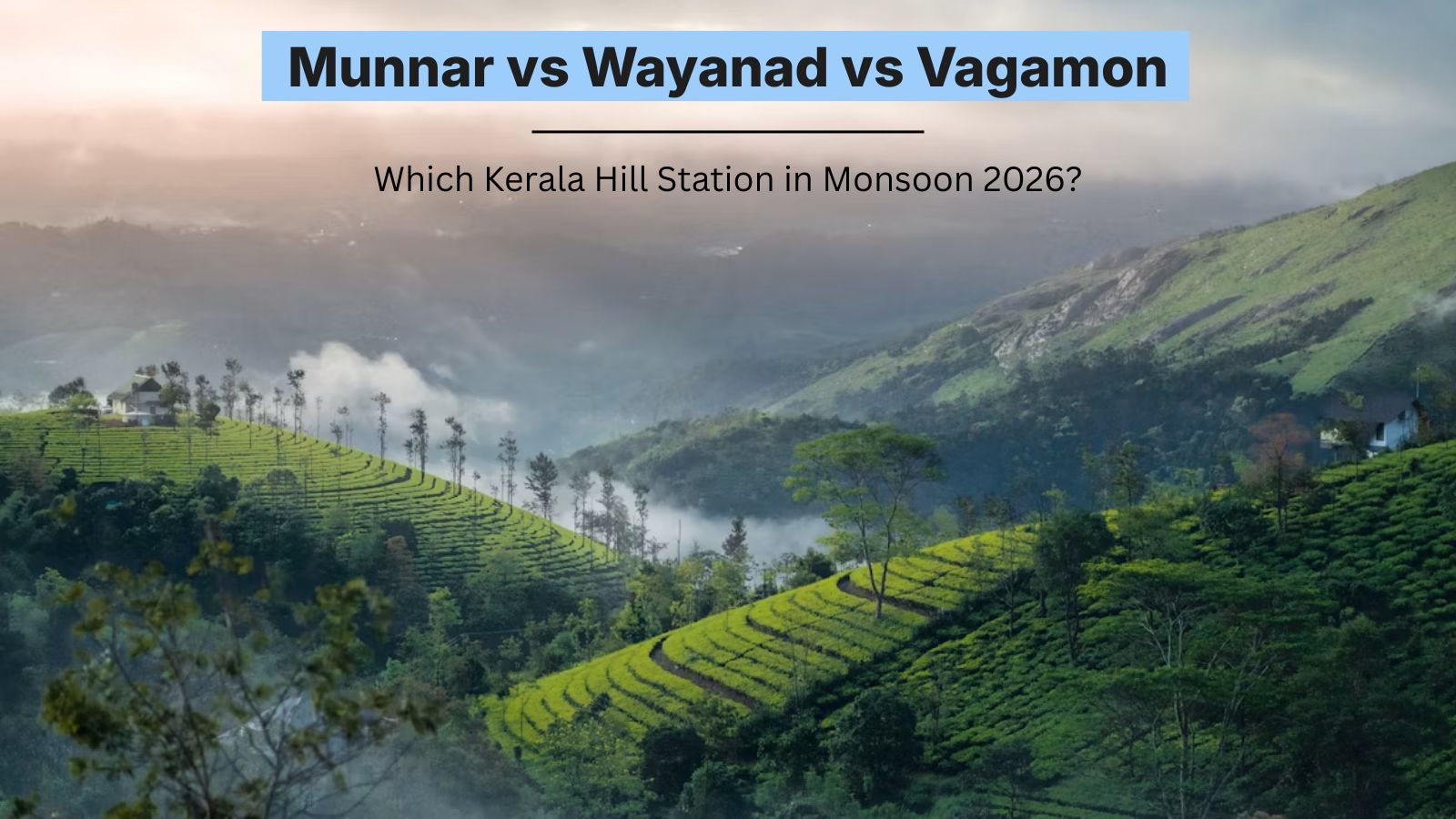
Last updated: October 2026
The 2026 Kerala monsoon has ended. Tourism restrictions in Idukki and Wayanad districts were lifted on 10 August 2026, and all three hill stations covered in this guide Munnar, Wayanad and Vagamon are open to visitors. October to November is the post-monsoon shoulder season across all three: lower prices than peak December–January, lush landscapes still carrying monsoon green, and far more stable road conditions than June–August. The comparisons below hold year-round; monsoon-specific sections remain useful for anyone planning a June–September 2027 trip. One caveat remains for Wayanad: the Mundakkai–Chooralmala area (site of the August 2024 landslides) is still off-limits to tourists and under active rehabilitation; the rest of the district operates normally.
In this Blog
Quick Comparison: Munnar vs Wayanad vs Vagamon
| Factor | Munnar | Wayanad | Vagamon |
|---|---|---|---|
| District | Idukki, Kerala | Wayanad, Kerala | Idukki–Kottayam border, Kerala |
| Altitude | ~1,500–1,600 m | 700–2,100 m (district) | ~1,100 m |
| Known for | Tea estates, viewpoints, Nilgiri tahr | Waterfalls, caves, wildlife, coffee | Meadows, pine forest, quiet |
| Nearest airport | Kochi (COK), ~110 km | Kozhikode (CCJ) ~90–100 km; Kannur (CNN) ~80 km to Mananthavady | Kochi (COK), ~100 km |
| Monsoon character | Mist over tea gardens, strong waterfalls | Roaring falls, full reservoirs | Clouds drifting through meadows |
| Crowd level | Highest | Moderate–high | Lowest |
| Best for | First-timers, honeymooners | Families, variety seekers | Couples, slow travellers, budgets |
Kerala’s hill stations change character entirely between June and September — waterfalls double in force, reservoirs fill, and the ghat roads climb through cloud. That’s exactly why more travellers now plan for the rains instead of around them. But Munnar, Wayanad and Vagamon deliver three genuinely different monsoon holidays, and picking wrong costs you the trip you actually wanted. This guide compares scenery, closures, costs and crowds — with notes on where StayVista’s villas and homestays in Kerala sit in each destination — so you can decide in one read.
How Different Are Munnar, Wayanad and Vagamon, Really?
Very — and that’s the biggest planning mistake travellers make. All three sit in the Western Ghats, yet Munnar is a high-altitude tea-plantation town in Idukki district, Wayanad is an entire forested district (700–2,100 m, per the district administration), and Vagamon is a small grassland-and-pine hill station on the Idukki–Kottayam border.
Munnar revolves around tea gardens, winding estate roads and panoramic viewpoints. Wayanad spreads its attractions across lakes, dams, prehistoric caves and wildlife sanctuaries. Vagamon compresses meadows, a pine forest and a handful of viewpoints into a much smaller, quieter package.
So don’t ask which is objectively better. Ask which matches your monsoon: photographs, variety, or peace?
The Monsoon Reality Check: What’s Open in June–September?
Here’s what most comparison posts skip: the southwest monsoon (June–September) closes or restricts some headline attractions, and the three destinations aren’t affected equally.
| Attraction | Destination | Monsoon status |
|---|---|---|
| Kuruva Island | Wayanad | Closed during the active monsoon (June through mid-September) due to high water levels on the Kabini river tributaries that form the island. In 2026 the island reopened in the third week of September, in line with its usual pattern. Expect it to be open through the October–May window; check with Wayanad DTPC before travel in June, July or August. |
| Chembra Peak trek | Wayanad | Weather-dependent; forest office suspends entry in heavy rain |
| Eravikulam National Park | Munnar | Open in monsoon; its annual closure is Feb–Mar for tahr calving |
| Paragliding at Kolahalamedu | Vagamon | Largely off-season in peak monsoon; flying season resumes post-rains |
| Vagamon Glass Bridge | Vagamon | Open, weather permitting |
| Boating (Mattupetty, Pookode, Banasura) | Munnar/Wayanad | Operates, but suspends during heavy rain and high winds |
| Edakkal Caves | Wayanad | Open (closed Mondays year-round) |
Plan monsoon days with a wet-weather backup, and check the Kerala Tourism advisories and local forecasts before ghat drives — hill roads across Kerala see occasional monsoon disruptions, and a flexible itinerary handles them easily.
The honest verdict on rain-proofing: Munnar’s core experience (tea gardens, viewpoints, museum) survives rain best. Wayanad loses Kuruva and high treks but gains thundering waterfalls. Vagamon is the rain — mist and drizzle are the whole point.
Munnar in Monsoon: Tea Country at Its Greenest
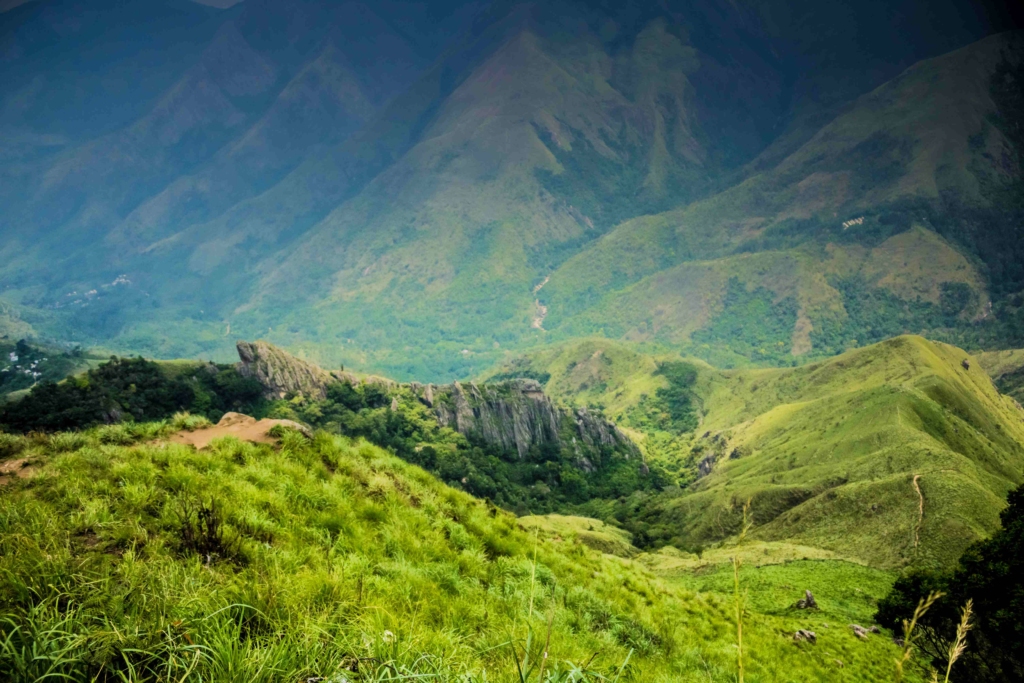
Munnar, at roughly 1,500–1,600 m in Idukki district, is Kerala’s most-visited hill station, and the monsoon washes its tea estates into the deepest green of the year. Clouds move through the valleys so fast that the view changes between photo stops. It’s also home to Anamudi (2,695 m), South India’s highest peak.
Eravikulam National Park
The star attraction — home of the endangered Nilgiri tahr, with the Rajamala slopes rising over the tea country.
| Detail | Info |
|---|---|
| Entry fee | Verify current fee at eravikulam.org |
| Timings | Morning–late afternoon entry by shuttle; closed annually Feb–Mar for calving; 8 AM to 4 PM, with last entry at 3:30 PM |
| Best time | Early morning slot, before mist thickens |
| How to reach | Rajamala gate, ~13 km from Munnar town |
| Time required | 2–3 hours |
| Ideal for | Families, wildlife lovers |
| Pro tip | Book the entry slot online in season — walk-in queues run long on weekends, and mornings have the clearest tahr sightings. |
Mattupetty Dam & Kundala Lake
The classic Munnar circuit: a concrete dam and reservoir 13 km from town, with Kundala’s tree-lined lake a further 7 km up the same road.
| Detail | Info |
|---|---|
| Entry fee | Nominal entry; boating charged separately |
| Timings | ~9 am–5 pm; boating pauses in heavy rain |
| Best time | Post-rain clear spells for mirror-still water |
| How to reach | 13 km from Munnar town towards Top Station |
| Time required | 2–3 hours for both |
| Ideal for | Families, first-timers |
| Pro tip | Do this stretch as one half-day drive ending at Top Station (~32 km) — the Theni valley views open up when monsoon clouds break. |
Tea Museum (KDHP), Nallathanni
Kerala’s tea story under one roof — vintage processing machinery, a working demonstration line and tastings.
| Detail | Info |
|---|---|
| Entry fee | ₹75 to ₹150 for adults and ₹35 to ₹50 for children |
| Timings | ~9 am–5 pm; closed Mondays |
| Best time | Rainy mornings — it’s Munnar’s best wet-weather plan |
| How to reach | ~2 km from Munnar town |
| Time required | 1.5–2 hours |
| Ideal for | All ages; rainy-day itineraries |
| Pro tip | Pair it with Attukad Waterfalls nearby, which is at full force only in the rains. |
Monsoon bonus: Lakkam Waterfalls on the Marayoor road and Attukad near town both peak between June and September.
Wayanad in Monsoon: Waterfalls, Caves and Full Reservoirs
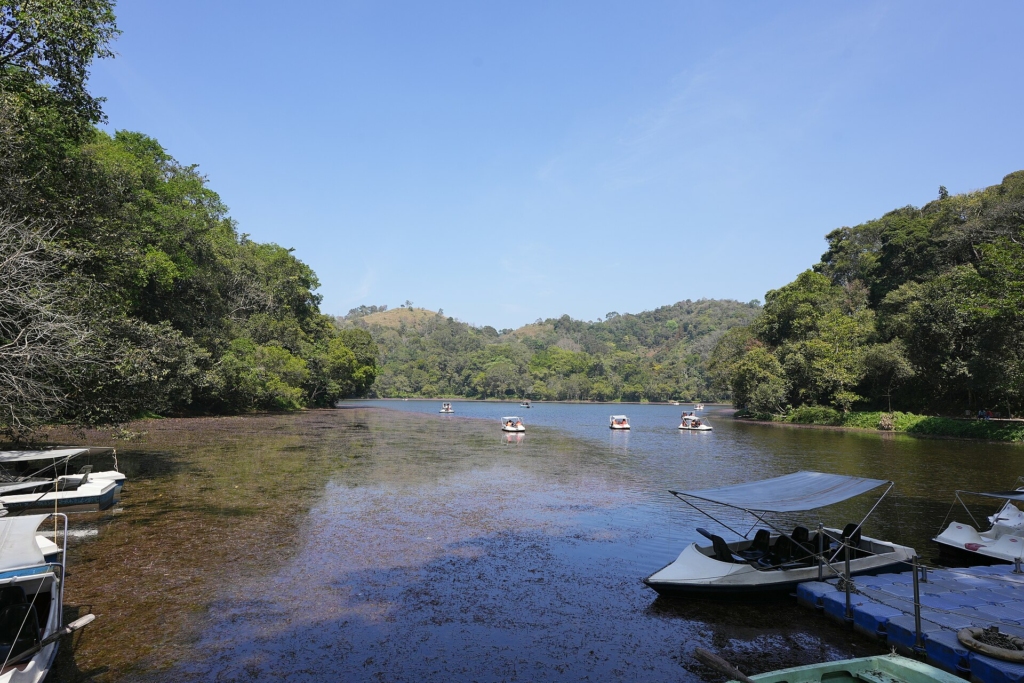
Wayanad district welcomed more than 13 lakh (1.3 million) tourists in 2025 (Kerala Tourism), and the monsoon is when its waterfalls and dams justify the numbers. The trade-off: Kuruva Island closes for the season, and forest treks depend on the weather.
Soochipara (Sentinel Rock) Falls
A three-tiered waterfall near Meppadi that turns thunderous in the rains.
| Detail | Info |
|---|---|
| Entry fee | ₹150 per adult, ₹50 for students, and ₹300 for foreign nationals |
| Timings | ~9 am–5 pm; access may be restricted during peak flow |
| Best time | June–September for volume; October for safer swimming pools |
| How to reach | ~22 km from Kalpetta via Meppadi |
| Time required | 2–3 hours including the 15–20 minute walk down |
| Ideal for | Nature lovers, photographers |
| Pro tip | Wear grippy footwear — the final path is stone steps that get slick. Nearby, the 900 Kandi glass bridge adds a monsoon-mist thrill. |
Banasura Sagar Dam
India’s largest earthen dam (38.5 m high, 776 m long, across the Karamanthodu — Kerala Tourism), at its photogenic best when monsoon inflows raise the reservoir around its islands.
| Detail | Info |
|---|---|
| Entry fee | ~₹40 widely quoted; boating separate |
| Timings | ~9 am–5 pm |
| Best time | August–December, when the reservoir is full |
| How to reach | ~20 km from Kalpetta via Padinjarathara |
| Time required | 2–3 hours |
| Ideal for | All ages |
| Pro tip | Climb the dam bund viewpoint — most visitors stop at the boating jetty and miss the full panorama. |
Edakkal Caves & Pookode Lake
Edakkal’s Neolithic petroglyphs (6,000+ years old) stay open through the monsoon — ₹50 adults, ₹30 children, 8:30 am–4 pm, closed Mondays, capped at 1,920 visitors a day (DTPC Wayanad). Pookode Lake near Lakkidi (₹40 entry, 9 am–6 pm, boats ₹300–₹700) is the district’s easiest rainy-day outing, ringed by evergreen forest at 770 m.
Arriving via north Kerala? Our guide to the [Kannur to Wayanad distance and airport transfers](INTERNAL-LINK: kannur to wayanad distance guide → /blog/kannur-to-wayanad-distance) breaks down both ghat routes from Kannur International Airport.
Vagamon in Monsoon: Kerala’s Quiet Meadow Country
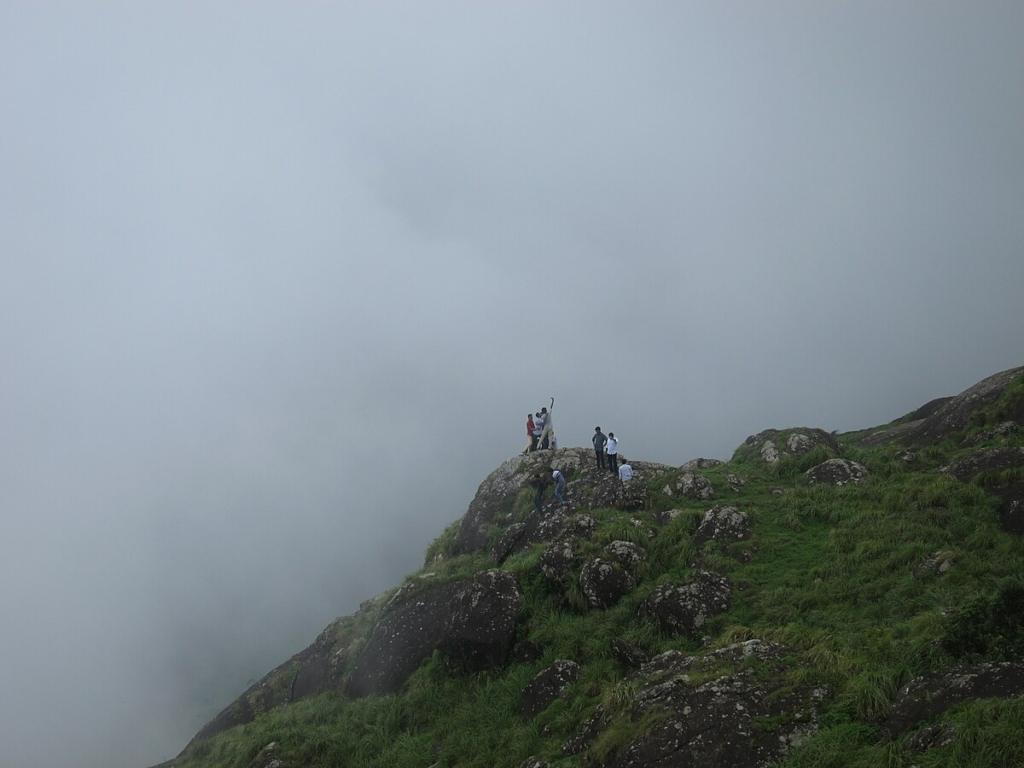
Vagamon, around 1,100 m up on the Idukki–Kottayam border, is the anti-Munnar: rolling grass meadows, a colonial-era pine plantation and single-lane roads that carry a fraction of Munnar’s traffic. In the rains, clouds sit in the meadows — travellers come here precisely for the drizzle-and-mist routine.
Vagamon Meadows & Pine Forest
The signature landscape — bare green hillocks folding into each other, with the pine plantation a short drive below.
| Detail | Info |
|---|---|
| Entry fee | Meadows free; pine forest charges a small entry |
| Timings | Daylight hours |
| Best time | June–September for mist; mornings for photos |
| How to reach | Along the Vagamon–Elappara road, 2–4 km from town |
| Time required | 2–3 hours combined |
| Ideal for | Couples, photographers, slow travellers |
| Pro tip | The light turns golden in the hour after a rain burst — wait it out with chai at a meadow-edge stall instead of driving off. |
Vagamon Glass Bridge & Adventure Park
Kerala’s longest cantilever glass bridge opened here in 2023, jutting over a valley drop — the monsoon mist makes it feel like walking into cloud.
| Detail | Info |
|---|---|
| Entry fee | ₹250 per person |
| Timings | ~9 am–5 pm, weather permitting |
| Best time | Clear spells between showers |
| How to reach | Adventure park zone near Vagamon town |
| Time required | 1–2 hours |
| Ideal for | Groups, thrill-seekers |
| Pro tip | Entry counts are slot-limited on weekends — go on a weekday morning in monsoon and you may have the bridge nearly to yourself. |
Kurisumala, Thangalpara & Vagamon Lake
Kurisumala’s pilgrimage hill rewards a short, steep walk with valley views; Thangalpara balances a massive boulder over the Sufi shrine ridge; the small lake offers pedal boating when weather allows. Note: paragliding at Kolahalamedu — Vagamon’s famous adventure draw — largely pauses for the monsoon and resumes with the dry-season winds. Paragliding at Kolahalamedu is officially suspended during the peak monsoon (June through mid-October) due to unstable winds and reduced visibility. The 2026 flying season resumes from mid-October, with November to February being the peak window — clear skies, stable thermals, cool breezes. Expect ₹3,500–₹4,500 for a 15–20 minute tandem flight; operators cluster near the Vagamon Adventure Park.
Munnar or Wayanad: Which Works Better for Families?
Wayanad edges it for most families in monsoon, because its attractions are varied enough to please mixed ages — caves for the curious, lakes for boating, waterfalls for drama — and villa-style stays keep rainy evenings comfortable. Munnar wins for families who want simple, compact sightseeing: more attractions within a short drive, easier roads, and the Tea Museum as a built-in wet-weather plan.
One monsoon-specific caveat for Wayanad families: Kuruva Island — the district’s most kid-friendly attraction — stays shut June to mid-September, so plan around Pookode, Banasura and Edakkal instead.
Vagamon vs Munnar: Which Should Couples Pick?
Prices below reflect typical ranges across the 2026 season. The post-monsoon shoulder (mid-September to mid-November) runs about 20–30% below peak December–January rates for the same category of villa, while July–August monsoon rates are often another 15–20% below shoulder. Peak-season surcharges apply at Christmas–New Year, Pongal–Onam and school summer holidays.
First Kerala trip together? Munnar. Second trip, or allergic to crowds? Vagamon — and you’ll spend noticeably less.
What Do Munnar, Wayanad and Vagamon Cost in Monsoon 2026?
Monsoon is shoulder season everywhere except peak weekends, which makes it the best-value window of the year. Indicative StayVista nightly rates as of July 2026:
| Cost head | Munnar | Wayanad | Vagamon |
|---|---|---|---|
| Private villas/homestays (per night) | ₹10,398–₹23,928 | ₹9,862–₹43,734 | Smaller inventory; browse current listings |
| Attraction entries | Mostly ticketed (park, museum, boating) | Mix of ticketed (₹40–₹220) and free | Mostly free or nominal |
| Local travel | Compact circuit, lower taxi spend | Spread-out district, budget a full-day cab | Very compact |
| Overall band | Moderate–high | Moderate; best group value | Lowest |
Wayanad’s homestay-and-villa depth makes it the value pick for larger families splitting a big home. Vagamon’s near-free attractions make it the cheapest overall. Munnar carries a popularity premium on holiday weekends — book stays early even in monsoon.
How to Reach Each Hill Station in the Rains
| Munnar | Wayanad (Kalpetta) | Vagamon | |
|---|---|---|---|
| Nearest airport | Kochi (COK), ~110 km, ~4 hrs | Kozhikode (CCJ) ~90–100 km; Kannur (CNN) ~80 km to Mananthavady | Kochi (COK), ~100 km |
| Nearest railhead | Aluva/Ernakulam | Kozhikode or Kannur (no rail in Wayanad) | Kottayam, ~64 km |
| Ghat notes | NH 85 climb via Neriamangalam — expect fog patches | The Thamarassery churam (9 hairpin ghat section from Kozhikode district into Wayanad) remains the main approach from the Kozhikode side. Widening and realignment work in parts of the ghat has caused intermittent single-lane sections through 2026; allow an extra 30–45 minutes over published drive times, and avoid driving the ghat at night during monsoon weather alerts. The alternative approach from Kannur side via Palchuram ghat is less congested but longer by about 25 km. | Gentle climb via Erattupetta; easiest ghat of the three |
| Monsoon driving | Start early; mist thickens by late afternoon | Add 30–45 min buffer on ghat sections | Light traffic, but narrow lanes — drive slow |
All three are self-drive friendly in monsoon if you keep daylight margins; hired cabs with hill-experienced drivers remain the low-stress default.
So Which Is the Best Kerala Hill Station in the Monsoon?
There’s no single answer — there’s a right answer per traveller:
Choose Munnar if you want: the classic tea-garden postcard, the most sightseeing per day, a strong rainy-day backup (Tea Museum), and don’t mind sharing it with crowds.
Choose Wayanad if you want: waterfalls at full force, prehistoric caves, wildlife country and the widest villa choice for groups — accepting that Kuruva Island sits out the season.
Choose Vagamon if you want: mist, meadows, near-empty roads and Kerala’s gentlest hotel bill — accepting that the “attractions list” is short by design.
Still torn between seasons and districts? Our companion guide to places to visit in Kerala in monsoon compares Wayanad, Munnar and Thekkady for the same window.
Where to Stay: Munnar VS Wayanad ?
A private villa earns its keep in monsoon — rain on the roof, staff-cooked Kerala meals, and no lobby crowds when the weather closes in. Rates below are listed nightly prices as of July 2026:
For Munnar

For Wayanad
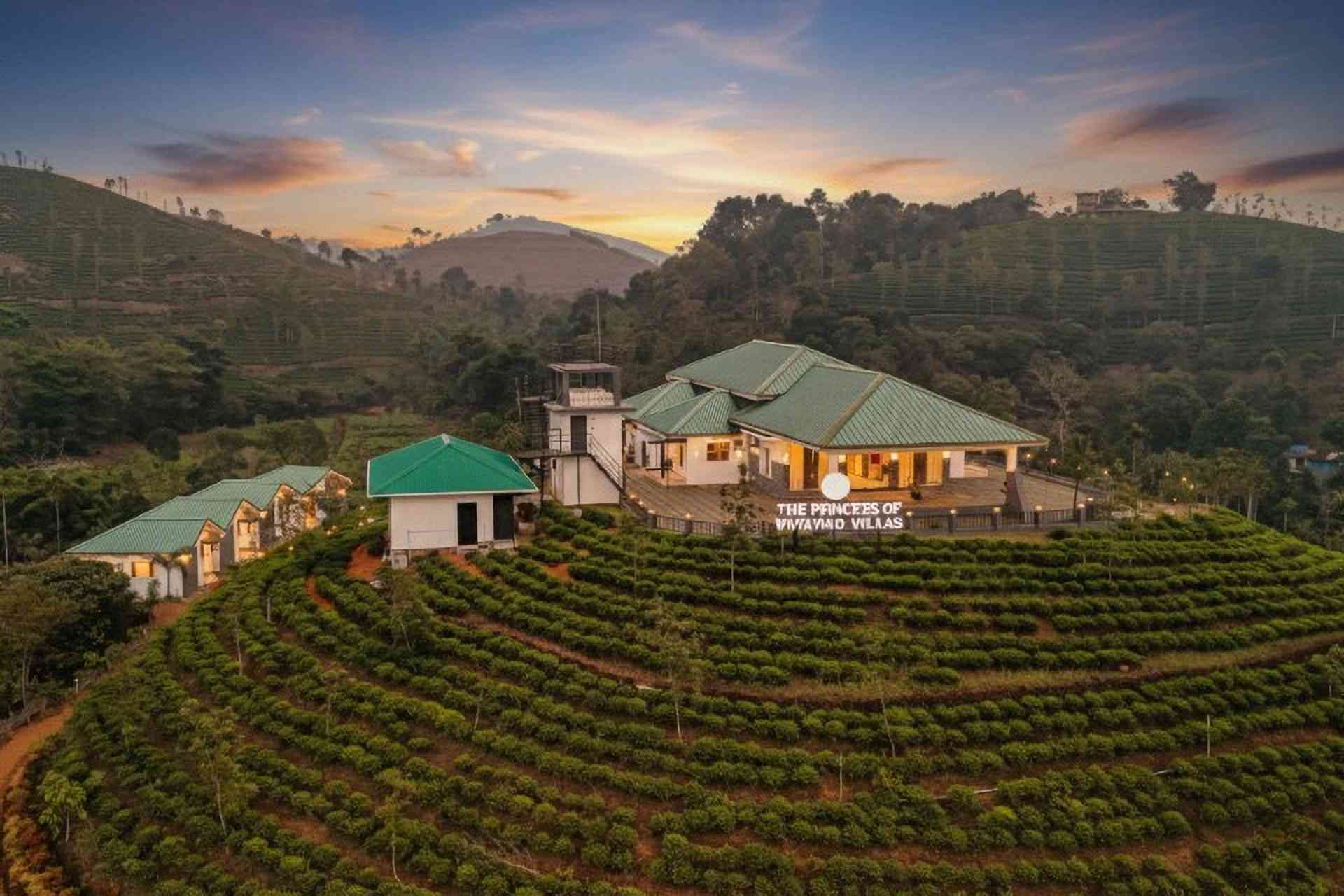
Princess of Wayanad
FAQs: Munnar vs Wayanad vs Vagamon in Monsoon
Munnar is best for tea-estate scenery and maximum sightseeing, Wayanad for waterfalls, caves and wildlife variety, and Vagamon for quiet, misty, budget-friendly holidays. All three receive the southwest monsoon from June to September, so the choice is about experience, not weather.
Wayanad generally suits families wanting varied activities — boating at Pookode Lake, Edakkal Caves, Banasura Sagar Dam — plus spacious villas for groups. Munnar is easier with young children because attractions sit closer together and the Tea Museum covers rainy hours.
Yes, considerably. Munnar is Kerala’s most-visited hill station and sees weekend traffic queues in season, while Vagamon’s meadows, pine forest and viewpoints stay quiet even in peak months — one big reason repeat Kerala travellers pick it.
Vagamon is usually the most budget-friendly: attractions are mostly free and stays cost less. Wayanad sits in the middle with strong group value (StayVista villas from ₹9,862 a night as of July 2026), while Munnar runs moderate to high with weekend premiums.
Wayanad. Soochipara, Meenmutty and Kanthanpara are at full force between June and September, and Banasura Sagar’s reservoir fills through the season. Munnar answers with Attukad and Lakkam falls, but Wayanad’s overall water-attraction depth is greater.
Kuruva Island in Wayanad closes for the monsoon (it reopened mid-September in 2025), high-altitude treks like Chembra Peak suspend during heavy rain, and Vagamon’s paragliding pauses until around October. Eravikulam National Park stays open — its annual closure is February–March, not the monsoon — and tea estates, museums, dams, caves and lakes all operate.
Munnar for the iconic first-honeymoon experience — famous viewpoints, premium stays, classic photographs. Vagamon for privacy and slow mornings with far fewer tourists. Many couples do Munnar first and return to Vagamon for anniversaries.
Two to three days each works well: Munnar fills three days of sightseeing comfortably, Wayanad rewards three days across its spread-out district, and Vagamon fits into two relaxed days. A combined Kerala hills circuit needs five to seven days.
Yes. October is one of the best windows for all three. In Munnar, NH-85 fully stabilises by mid-October and daytime temperatures sit around 19–24°C. In Wayanad, tourism restrictions were lifted on 10 August 2026 and the full standard circuit is open (except the Mundakkai–Chooralmala exclusion zone). Vagamon’s paragliding season resumes in mid-October, and the meadows carry their monsoon-green cover deep into November. Expect occasional weather-day advisories through October — nothing like the monsoon-month blanket restrictions, but worth checking the morning you set out.
Yes, for the standard tourist circuit. Kalpetta, Vythiri, Mananthavady, Edakkal Caves, Banasura Sagar, Pookode Lake, Soochipara (via the Meppadi approach) and Thirunelli are all open and operating normally. The Mundakkai–Chooralmala area where the July 2024 landslides occurred remains off-limits and is under active rehabilitation. On days of heavy-rain warning, the Wayanad administration temporarily halts trekking and adventure tourism as a precaution; check with your villa or DTPC before any trek-heavy day.
Conclusion
The Munnar vs Wayanad vs Vagamon question has no universal winner because the three sell different monsoons: Munnar sells the view, Wayanad sells the variety, Vagamon sells the quiet. First-time Kerala visitors rarely regret Munnar; families and groups get the most from Wayanad’s villa-friendly spread; couples and slow travellers fall for Vagamon’s empty meadows. Whichever you pick, book a stay that makes the rain part of the experience — StayVista’s Kerala villas and homestays across Munnar, Wayanad and beyond are built for exactly that.