
15 Offbeat Places in North Bengal: Lava, Lolegaon, Rishyap & Beyond Darjeeling (Updated)
For a quiet, misty June–July 2026 monsoon escape to the Eastern Himalayas, North Bengal hides 20 genuinely offbeat villages within 3–5 hours of NJP, Bagdogra or Siliguri — most under 7,200 ft, most with homestays under ₹2,500/night, and most near-empty as the rains roll in. The core cluster is Lava (2,353 m), Lolegaon (1,675 m), Rishyap (2,591 m) and Kolakham (1,981 m) near Kalimpong. Honest call: monsoon rainfall here runs 250–300 mm a month, so clouds win 8 of 10 mornings — don’t come for Kanchenjunga panoramas. Come for the green forests, the cheaper homestays, and roads quiet enough to hear the cicadas. 14 min read · Last updated 5 June 2026. (Source: IMD monsoon bulletin.)
In this Blog
The Hills Empty Out in June. That’s When Slow Travelers Arrive.
By the second week of June 2026, the southwest monsoon will have rolled into the Lava–Lolegaon–Rishyap belt. Within ten days, Darjeeling’s daily tourist count drops by an estimated 60–70% from its April peak (West Bengal Tourism arrival patterns, 2024–25). Most travelers run away from North Bengal in June and July. The ones who go toward it get the Eastern Himalayas almost to themselves.
Forget the October Kanchenjunga panoramas — those come later. June and July are about something else entirely: mist clinging to pine ridges, monastery courtyards empty enough to hear the chants, waterfalls at full flow, and roads quiet enough to drive at the pace the curves were built for. This is the season our travel desk personally books — and the season most listicles either skip or oversell.
So here’s the honest version. This isn’t a panorama trip. Clouds win eight of every ten mornings. The road on the Lava–Algarah stretch closes occasionally for landslide clearance, and trekking villages above 2,800 metres (Tumling, Tonglu, the Sandakphu base) close partially. We’ll tell you exactly which of the 20 villages still work, which don’t, and how to plan around the rain. And we’ll point you at the closest StayVista homestays in the Sikkim and Darjeeling belt for a comfortable gateway night.
Quick Reference: 20 Offbeat North Bengal Villages (Ranked by Cluster)
| # | Village | Cluster | Altitude | Distance from NJP | 🌧️ Monsoon verdict |
| 1 | Lava | Core (Kalimpong) | 2,353 m | ~100 km | YES |
| 2 | Lolegaon | Core (Kalimpong) | 1,675 m | ~120 km | YES |
| 3 | Rishyap (Rishop) | Core (Kalimpong) | 2,591 m | ~110 km | MIXED |
| 4 | Kolakham | Core (Kalimpong) | 1,981 m | ~115 km | YES |
| 5 | Tinchuley | Kalimpong hamlet | 1,646 m | ~75 km | YES |
| 6 | Sittong | Kalimpong hamlet | 1,200 m | ~50 km | MIXED |
| 7 | Kaffergaon | Kalimpong hamlet | ~1,800 m | ~95 km | YES |
| 8 | Bijanbari | Kalimpong hamlet | ~760 m | ~85 km | YES |
| 9 | Samalbong | Kalimpong hamlet | ~1,400 m | ~90 km | YES |
| 10 | Lepchajagat | Beyond Darjeeling | 2,103 m | ~95 km | YES |
| 11 | Chatakpur | Beyond Darjeeling | 2,377 m | ~100 km | MIXED |
| 12 | Tumling | Singalila ridge | 2,973 m | ~140 km | SKIP |
| 13 | Tonglu | Singalila ridge | 3,070 m | ~145 km | SKIP |
| 14 | Buxa Hill | Dooars foothills | ~450 m | ~170 km | YES (leech-heavy) |
| 15 | Samsing | Dooars foothills | ~915 m | ~120 km | YES |
| 16 | Suntalekhola | Dooars foothills | ~760 m | ~125 km | YES |
| 17 | Jhalong | Bonus slow-travel | ~300 m | ~140 km | YES |
| 18 | Bindu | Bonus slow-travel | ~650 m | ~150 km | YES |
| 19 | Doban Valley | Bonus slow-travel | ~1,400 m | ~115 km | MIXED |
| 20 | Todey–Tangta | Bonus slow-travel | ~1,950 m | ~135 km | MIXED |
Sources: Survey of India altitude records; Google Maps road distances verified June 2025 (current diversions may add 5–10 km); StayVista monsoon road audit.
What Counts as “Offbeat” in North Bengal?
An offbeat North Bengal village in 2026 is defined here by three filters: fewer than 5,000 visitors per peak season, located 30–120 km from NJP, Bagdogra or Siliguri, and primary lodging through homestays priced ₹1,500–3,500 a night rather than commercial hotels. The 20 villages on this list — anchored by Lava, Lolegaon, Rishyap and Kolakham near Kalimpong — meet all three. Together, they form the slow-travel ring around Darjeeling that hasn’t been overrun yet.
The political geography of the Darjeeling Hills, Kalimpong district and the Dooars created a quiet abundance of micro-villages on opposite sides of the same ridge — each with its own monastery, its own homestay grandmother, its own short walk to a viewpoint. Most of them sit a single Google Maps zoom-level deeper than the popular trail. That’s why they stay offbeat.
One honest caveat: a few names that used to be on lists like this — Mirik, Lamahatta, even Sittong on a long weekend — have crossed into mainstream. We’ve left some of them in (Sittong is still genuinely quiet on weekdays), but we’ve ranked them lower and flagged the crowd drift in the practical block. This is the slow-travel set in 2026, not a 2018 list reheated.
Our finding (June 2025 trip): When our team drove the Lava–Lolegaon–Rishyap circuit in the last week of June 2025, homestay occupancy in the core cluster ran at roughly 25–35% — versus 85%+ in late October. Owners we spoke with offered ₹500–₹800 monsoon discounts per night without prompting. The trade-off is real: cheaper, quieter, greener — and no big-mountain views. [PERSONAL EXPERIENCE]
The Lava–Lolegaon–Rishyap–Kolakham Core Cluster
The core offbeat cluster of North Bengal is the Lava–Lolegaon–Rishyap–Kolakham belt near Kalimpong, all within 30 km of each other and 100–115 km from NJP. Lava (2,353 m) is the gateway monastery town. Lolegaon (1,675 m) is the canopy-walk village. Rishyap (2,591 m) is the highest Kanchenjunga-ridge hamlet on the list. Kolakham (1,981 m) sits on the forest edge of Neora Valley National Park.

Lava’s monastery courtyard in the mist — the rain on the tin roof amplifies the 5:30 am chant.
#1. Lava, Kalimpong District — 2,353 m
Lava is the cluster’s gateway and the rare offbeat village that already feels like a small town: a single main square, a working Kagyu Buddhist monastery, a Saturday haat, and pine forests rolling away towards Neora Valley National Park. Most travelers use Lava as the base for the four-village circuit. We’d suggest two nights here — one to settle, one to walk the forest trail towards Rachela Pass.
| Distance from NJP | ~100 km, 3–3.5 hr drive via Kalimpong or Gorubathan. Private taxi approx ₹3,000–3,800 |
| Altitude | 2,353 m |
| Entry fee | Lava town: free. Kagyu Thekchen Ling monastery: free, donations welcome. Neora Valley NP entry: ₹100 (Indians) / ₹300 (foreign) — permits issued at Lava forest range office |
| Timings | Monastery: 5:30 am – 6:30 pm; morning chant 5:30 am. Forest entry: 7:00 am – 4:00 pm |
| 🌧️ Monsoon (Jun–Jul) verdict | YES — mist makes the monastery courtyard atmospheric and the pine forest at its lushest. Bring rain layers. |
| 🌧️ Monsoon road status | Yellow — the Lava–Algarah stretch (km 4–12 from Lava) has periodic landslide clearance during heavy spells. Drive before noon, ask homestay owner about current status. |
| How to reach | From Kolkata: fly to Bagdogra (1.5 hr) → taxi to Lava (~110 km, 3.5–4 hr). From Delhi: fly to Bagdogra → same drive. From NJP train station: taxi ~3–3.5 hr via Gorubathan (the smoother of the two routes in monsoon). |
| Ideal for | Couples, slow travelers, first-time North Bengal visitors |
| Time needed | 2 nights ideal; use as base for Lolegaon and Rishyap day trips |
| Homestay availability | 30+ homestays, ₹1,500–3,500/night including 3 meals. Monsoon discount: ~₹500–800 off peak rates. Walk-in usually fine in June–July; book ahead in October. |
| Pro tip | Sit in the inner courtyard for the 5:30 am chant — in monsoon the rain on the tin roofs amplifies the deep horns. Most visitors are still asleep in Kolakham at that hour. |
#2. Lolegaon, Kalimpong District — 1,675 m
Lolegaon is the cluster’s quiet village — Lava’s busier square gives way to scattered homestays among Lepcha and Bhutia households and a small Heritage Forest with a 180-foot canopy walk through the cypress tops. It’s the village we’d send a writer to. In monsoon the canopy walk is at its most cinematic: mist below your feet, drizzle in the leaves, almost no other footsteps on the wooden planks.
| Distance from NJP | ~120 km, 3.5–4 hr drive via Kalimpong. Private taxi approx ₹3,500–4,000 |
| Altitude | 1,675 m |
| Entry fee | Heritage Forest & canopy walk: ₹50 (Indians) / ₹100 (foreign nationals) — rates revised periodically, confirm at gate. Jhandi Dara viewpoint: free |
| Timings | Canopy walk: 6:00 am – 5:00 pm. Avoid in heavy rain — planks can be slippery. |
| 🌧️ Monsoon (Jun–Jul) verdict | YES — the single best monsoon experience in the cluster. Canopy walk through mist is genuinely worth the trip on its own. |
| 🌧️ Monsoon road status | Yellow — final 6 km from Lava is narrow and gets very wet but rarely closes. SUV preferred over sedan. |
| How to reach | From NJP: ~120 km via Kalimpong–Lava. From Lava (if already there): 24 km, 1-hour drive on a forest road. Shared taxis run between Lava and Lolegaon for ₹150 a seat. |
| Ideal for | Couples, photographers, writers, slow travelers |
| Time needed | 1–2 nights |
| Homestay availability | 15–20 homestays, ₹1,500–3,000/night with meals. Monsoon discount typically ~₹500. |
| Pro tip | Walk the canopy bridge at 6:00 am after a 4 am shower — fresh mist rising through the trees, zero people. Carry waterproof shoes; the planks soak through. |
#3. Rishyap (Rishop), Kalimpong District — 2,591 m
Rishyap is the cluster’s high outlier — a tiny ridge village of fewer than 40 homestays, perched on a Kanchenjunga viewing line that genuinely matches Darjeeling’s Tiger Hill on a clear October morning. In monsoon, that view collapses to white. The village stays beautiful, the homestays stay open, the walks stay walkable — but the headline mountain isn’t on the menu. That’s why this one carries a MIXED verdict.
| Distance from NJP | ~110 km, 3.5 hr drive via Kalimpong–Lava–Pedong. Private taxi from NJP approx ₹3,500; add ₹1,500–2,000 for the 4×4 transfer on the last 8 km in monsoon |
| Altitude | 2,591 m — the highest village in the core cluster |
| Entry fee | Tiffin Dara viewpoint walk: free. Local guide for the ridge trail: ₹500–800/group |
| Timings | Tiffin Dara walk: anytime, ideally pre-dawn for sunrise (October–April) |
| 🌧️ Monsoon (Jun–Jul) verdict | MIXED — village is beautiful, homestays are working, but the central reason most people come (Kanchenjunga sunrise from Tiffin Dara) is fogged out 4 mornings of 5. Come for the ridge, not the panorama. |
| 🌧️ Monsoon road status | Red — the last 8 km from Lava is rough in any season and properly difficult after heavy rain. Most homestay owners will arrange a 4×4 pickup from Lava for ₹1,500–2,000. |
| How to reach | From NJP: ~110 km to Lava, then 4×4 transfer the final 8 km. Don’t attempt the last stretch in a sedan in monsoon. From Kolkata: Bagdogra → same route. |
| Ideal for | Couples (October–April peak); in monsoon, only those committed to slow travel without big views |
| Time needed | 1 night minimum, 2 ideal — but pad with a buffer night in Lava if rain forecast is heavy |
| Homestay availability | 30+ small homestays, ₹2,000–3,500/night including 3 meals. Monsoon discount: often ₹800–1,000 off because demand drops sharply. |
| Pro tip | If clouds open even briefly between 4:45 and 5:30 am, you get the entire Kanchenjunga range to yourself with no jeep crowd. Keep alarms set; check the sky from the homestay porch before committing to the climb. |
#4. Kolakham, Kalimpong District — 1,981 m
Kolakham sits on the southern edge of Neora Valley National Park, and the Changey Waterfall trail leaves from a marked turn-off near the main square. In June and July the falls run at their fullest — a long-drop cascade visible from the trail’s first switchback — and the surrounding forest gets birded by the rare Satyr Tragopan if you’re up and quiet before 6 am. The trail’s lower 800 m is fine in any rain; the final descent to the pool gets slippery.
| Distance from NJP | ~115 km, 4 hr drive via Lava–Pedong. Private taxi approx ₹3,500–4,000 |
| Altitude | 1,981 m |
| Entry fee | Changey Waterfall trail: ₹50 community fee. Neora Valley NP buffer entry: ₹100 (Indians); confirm the latest rate at the Lava or Kolakham forest range office |
| Timings | Trail: 6:00 am – 4:00 pm. Last descent gates close at 3:00 pm in monsoon to avoid late-day visibility loss. |
| 🌧️ Monsoon (Jun–Jul) verdict | YES — the waterfall is the reason; this is the season it actually performs. Bird-watching also peaks. |
| 🌧️ Monsoon road status | Yellow — final 4 km approach is rough but driveable; sedan possible, SUV preferred. |
| How to reach | From Lava: 18 km, 45 min. From NJP: full ~115 km. Shared transport rare; private taxi or homestay pickup is the norm. |
| Ideal for | Birders, photographers, couples, slow-travel families with older kids |
| Time needed | 1 night minimum; 2 ideal if you want to walk the lower Neora Valley forest trail |
| Homestay availability | 15–20 homestays, ₹1,500–3,000/night with meals. Monsoon discount typical ₹500. |
| Pro tip | Start the waterfall trail at 7:00 am to be at the upper viewpoint before the cloud descends — by 11 am visibility on the lower descent drops sharply on cloudy days. |
5 Hidden Hamlets Near Kalimpong
Five lesser-known hamlets in the broader Kalimpong district are Tinchuley (1,646 m), Sittong (1,200 m), Kaffergaon (~1,800 m), Bijanbari (~760 m) and Samalbong (~1,400 m). All sit within 60 km of Kalimpong and feature orange orchards (Sittong), pine-and-cardamom forests (Kaffergaon), and Rangeet riverside heritage (Bijanbari) — quieter alternatives to the Lava–Rishyap circuit, with homestays often under ₹2,000 a night.
#5. Tinchuley, Darjeeling District — 1,646 m
Tinchuley is the gateway hamlet for travelers who want a soft monsoon landing — only ~75 km from NJP, sub-1,700 m altitude (so no acclimatisation worry), and a wide Teesta valley view that holds up even on cloudy days. The Gumba Dara monastery and the organic-tea Selim Hill estate sit within walking distance of most homestays.
| Distance from NJP | ~75 km, 2.5–3 hr via Kalimpong. Private taxi approx ₹2,500 |
| Altitude | 1,646 m |
| Entry fee | Tinchuley monastery: free. Tea estate walk: usually free, donations welcome |
| 🌧️ Monsoon verdict | YES — low altitude + valley aspect = the most monsoon-resilient pick on the list |
| 🌧️ Monsoon road status | Green — main approach road via Peshok is one of the better-maintained in the district |
| Ideal for | First-time North Bengal visitors, families, anyone uncertain about high-altitude monsoon weather |
| Time needed | 1–2 nights |
| Homestay availability | 20+ homestays, ₹1,500–2,800/night with meals. Mild monsoon discount. |
| Pro tip | Open your homestay window towards the Teesta valley side, not towards the road — the valley fog has a slow, painterly drift in monsoon evenings. |
#6. Sittong, Darjeeling District — 1,200 m
Sittong is famous for its orange harvest (November–January), but in monsoon the orchards turn lush green, and the relative warmth at 1,200 m makes it the most family-friendly village on the list. Weekend crowds have grown over the past three years — this is the only “offbeat” pick where we’d nudge you towards weekdays only.
| Distance from NJP | ~50 km, 2 hr via Mongpoo. Private taxi approx ₹2,000 |
| Altitude | 1,200 m |
| Entry fee | Free |
| 🌧️ Monsoon verdict | MIXED — village works fine in monsoon but crowd shift over 2024–25 has dimmed the “offbeat” claim on weekends. Weekday visits only for genuine quiet. |
| 🌧️ Monsoon road status | Green |
| Ideal for | Families, weekday slow travelers, orange-season visitors (November) |
| Time needed | 1 night |
| Homestay availability | 40+ homestays — the broadest spread on this list. ₹1,200–2,500/night. |
| Pro tip | Drive 8 km onwards to Latpanchar for the genuine offbeat hour — fewer homestays, no daytrippers, same forest. |
#7. Kaffergaon, Kalimpong District — ~1,800 m
Kaffergaon is the secret pine-forest pocket between Kalimpong town and Pedong — fewer than ten homestays, almost no walk-in traffic, and a sense of stillness that the Lava cluster only manages on weekday Mondays. The cardamom plantations around the village are at peak fragrance in monsoon.
| Distance from NJP | ~95 km, 3 hr via Kalimpong. Private taxi approx ₹3,000 |
| Altitude | ~1,800 m |
| Entry fee | Free |
| 🌧️ Monsoon verdict | YES — peak forest density and zero crowd. The cardamom smell after rain is the whole point. |
| 🌧️ Monsoon road status | Yellow — final 4 km is a steep rural track; sedan possible in dry weather, SUV otherwise. |
| Ideal for | Couples wanting deep quiet, writers, photographers |
| Time needed | 1–2 nights |
| Homestay availability | 8–10 small homestays, ₹1,800–3,000/night with meals. No walk-ins in monsoon — call ahead. |
| Pro tip | Ask your homestay host to point you towards the upper cardamom plantation walk — 90 minutes, no map, follow the drying-shed smoke at dusk. |
#8. Bijanbari, Darjeeling District — ~760 m
Bijanbari sits in the Rangeet river valley, lower than every other pick on this list — and that’s the point. The hot afternoon (touching 26°C in monsoon) is wrong for high-altitude lovers but right for travelers who want to swim in a Himalayan river. The 1879 iron bridge over the Rangeet is the most photographed bit of vintage British engineering in the district.
| Distance from NJP | ~85 km, 3 hr via Darjeeling-Pulbazar. Private taxi approx ₹2,800 |
| Altitude | ~760 m |
| Entry fee | Free |
| 🌧️ Monsoon verdict | YES — river runs full and clear, valley is at its greenest. Hot afternoons are the trade-off. |
| 🌧️ Monsoon road status | Yellow — the descent from Pulbazar has tight curves; comfortable in a sedan with a competent driver. |
| Ideal for | Families with kids, river-time lovers, heritage-walk travelers |
| Time needed | 1 night |
| Homestay availability | 10–12 homestays, ₹1,400–2,500/night with meals |
| Pro tip | Walk to the iron bridge at golden hour (6 pm in July). The current view is the same one photographers were sketching 140 years ago. |
#9. Samalbong, Kalimpong District — ~1,400 m
Samalbong is a quiet ridge village above Algarah, with a clear-day view down to the Teesta and across to the Sikkim ranges. The walking trails through the village’s cinnamon and broom-grass slopes are the soft kind of slow-travel — no peaks to summit, just one slow loop after breakfast.
| Distance from NJP | ~90 km, 3 hr via Kalimpong–Algarah. Private taxi approx ₹2,800 |
| Altitude | ~1,400 m |
| Entry fee | Free |
| 🌧️ Monsoon verdict | YES |
| 🌧️ Monsoon road status | Yellow — Algarah ridge road has periodic landslide clearance like the Lava stretch |
| Ideal for | Couples, quiet weekenders |
| Time needed | 1 night |
| Homestay availability | 6–8 small homestays, ₹1,500–2,500/night |
| Pro tip | Combine in a single circuit with Kaffergaon — the two are 16 km apart and share the Algarah ridge road. |
4 High-Altitude Offbeat Villages Beyond Darjeeling
Four high-altitude offbeat villages beyond Darjeeling are Lepchajagat (2,103 m), Chatakpur (2,377 m), Tumling (2,973 m) and Tonglu (3,070 m). Lepchajagat and Chatakpur sit on the Darjeeling–Mirik forest belt and stay open year-round. Tumling and Tonglu are trekking villages on the Sandakphu/Singalila route — both close partially in monsoon, when the high ridge fogs into white-out and Singalila National Park restricts entry. We’ve kept all four on the list because they’re cornerstones of the October–November set; we’ve also marked the monsoon honesty for each.
The chart tells the central monsoon story at a glance: only two villages cross the 2,800 m line, and those two (Tumling and Tonglu) are the ones we suggest skipping till October. Everything below the line stays usable through the rains — with the road and weather caveats noted per village.
#10. Lepchajagat, Darjeeling District — 2,103 m
Lepchajagat is the closest “feels-like-a-trek-village” you can reach as a soft drive from Darjeeling — 19 km along the Mirik road, a single Forest Department bungalow, a couple of homestays, and a Senchal pine forest that the monsoon doubles in density. No mall, no market, no cell tower for most networks. That is the whole point.
| Distance from NJP | ~95 km, 3.5 hr via Darjeeling–Ghum. Private taxi approx ₹3,000 |
| Altitude | 2,103 m |
| Entry fee | Free |
| 🌧️ Monsoon verdict | YES — forest is at its densest, near-zero crowd |
| 🌧️ Monsoon road status | Green — main road is well-maintained tarmac all the way |
| Ideal for | Writers, couples, solo travelers, digital detoxers |
| Time needed | 1–2 nights |
| Homestay availability | 6–8 small homestays, ₹2,000–3,200/night. Book ahead — capacity is tiny. |
| Pro tip | The 2-hour pre-breakfast forest walk towards the Senchal Lake side is one of the most underrated short walks in the district. Take a stick — leeches in monsoon. |
#11. Chatakpur, Darjeeling District — 2,377 m
Chatakpur is a managed eco-village on the edge of the Senchal Wildlife Sanctuary — only 17 households, formal forest-department supervision, a fixed visitor cap. That makes the booking process slower than usual (Forest Department channel only) and the experience more deliberate. The view on a clear morning includes Kanchenjunga; in monsoon, you get the forest’s quietest soundtrack instead.
| Distance from NJP | ~100 km, 3.5–4 hr via Darjeeling–Sonada |
| Altitude | 2,377 m |
| Entry fee | Sanctuary entry: ₹100 (Indians), typically included in the eco-village stay package; confirm the latest rate via the WB Forest Department |
| 🌧️ Monsoon verdict | MIXED — village works but trek paths get slippery; book only if comfortable with low-mobility days |
| 🌧️ Monsoon road status | Yellow — final 4 km is rough forest road |
| Ideal for | Eco-tourism enthusiasts, slow couples, wildlife-walk types |
| Time needed | 1–2 nights |
| Homestay availability | 17 eco-village cottages, ₹2,500–3,500/night including meals; book via WB Forest Department portal only |
| Pro tip | Reserve at least 4 weeks ahead — the cap genuinely fills, even in monsoon, because the eco-village has a small but loyal following. |
#12. Tumling, Singalila Ridge — 2,973 m
Tumling sits on the Indo–Nepal border ridge that the Sandakphu trek follows, with views that reach across Nepal to Mt. Everest on the rarest clear days. In October and April, this is one of the great offbeat picks in India. In monsoon, the high ridge is fog-locked, Singalila National Park restricts entry to permitted trek groups, and homestays close partially.
| Distance from NJP | ~140 km, ~5 hr via Sukhiapokri–Maneybhanjang |
| Altitude | 2,973 m |
| Entry fee | Singalila National Park permit: ₹200 (Indians) + ₹300 per vehicle (confirm current rate at the Maneybhanjang range office) |
| 🌧️ Monsoon verdict | SKIP — come October or April instead |
| 🌧️ Monsoon road status | Red — last 11 km from Maneybhanjang is 4×4 (Land Rover) only and frequently closed mid-monsoon |
| Ideal for | Trekkers, October–April only |
| Time needed | 1 night as a trek stop; never a destination on its own |
| Homestay availability | 5–6 trekking homestays, ₹1,200–1,800/night with meals (peak season). Most close June–August. |
| Pro tip | If you’ve come to North Bengal in monsoon specifically to do Sandakphu, change your plan. Substitute Lepchajagat or Chatakpur — same forest world, none of the trek closure risk. |
#13. Tonglu, Singalila Ridge — 3,070 m
Tonglu is the second jeep-stop on the Maneybhanjang–Sandakphu road and shares Tumling’s monsoon problem: high ridge, low visibility, partial park closure. We’ve kept it on the list as a marker for the October–November set. Skip in June–July.
| Distance from NJP | ~145 km, 5+ hr via Maneybhanjang |
| Altitude | 3,070 m — highest village on this list |
| 🌧️ Monsoon verdict | SKIP |
| 🌧️ Monsoon road status | Red |
| Best alternative if visiting in monsoon | Stay in Darjeeling for 2 nights and add a Lepchajagat day rather than attempting Tonglu |
3 Dooars Foothill Offbeat Picks
The three most offbeat Dooars foothill picks are Buxa Hill / Buxa Tiger Reserve fringes (~450 m), Samsing (~915 m) and Suntalekhola (~760 m). These are forest-and-river spots in the Jalpaiguri–Alipurduar belt — ideal for travelers who want wildlife, tea-belt walks and lush forest cover rather than the high-altitude Kanchenjunga world. Reachable in 3.5–5 hours from NJP, and at their lushest in the rains.

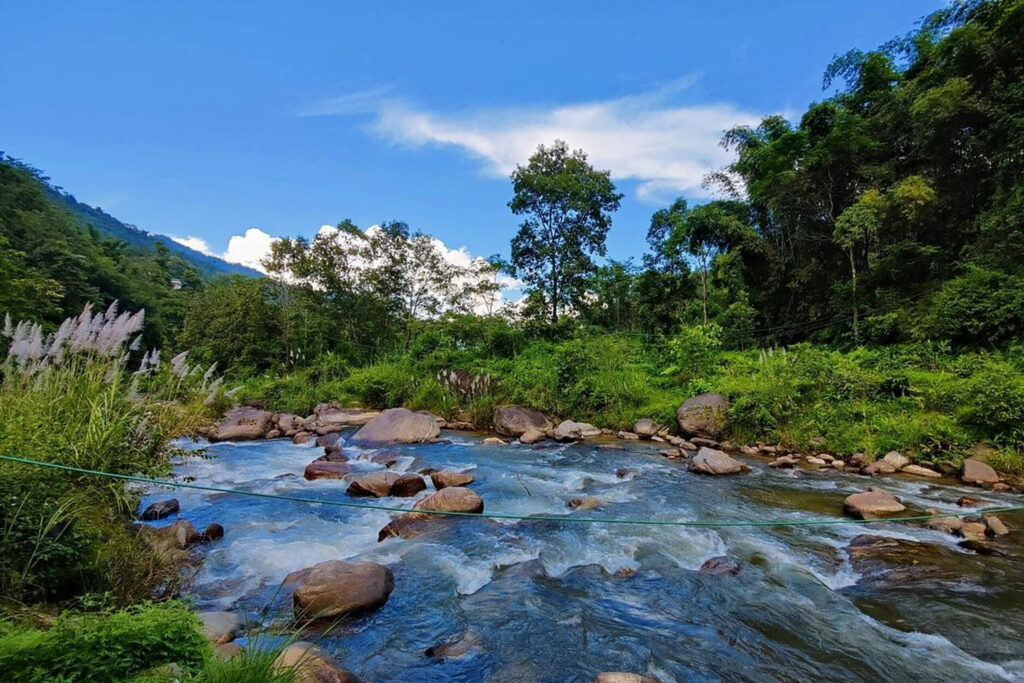
Dooars waterfalls run at peak flow through June and July — the season most photographers wait for.
#14. Buxa Hill / Buxa Tiger Reserve Fringes — ~450 m
Buxa is the rare combination of colonial-era hill fort, active tiger reserve buffer, and a small village (Sadar Bazaar) with a couple of homestay families. The hike up to Buxa Fort is a 4-km forest climb that’s at its best in monsoon — green, dense, with elephant and gaur sign on the path. Carry leech socks and a stick.
| Distance from NJP | ~170 km, 4.5–5 hr via Alipurduar. Private taxi approx ₹4,500 |
| Altitude | ~450 m (Buxa Fort: ~870 m) |
| Entry fee | Buxa Tiger Reserve buffer entry: ₹120 (Indians) / ₹300 (foreign nationals); confirm current rates via the WB Forest Department |
| 🌧️ Monsoon verdict | YES — leech-heavy but the forest is at its most alive. Wear closed shoes. |
| 🌧️ Monsoon road status | Green to Sadar Bazaar; the 4-km hike to the fort gets slippery |
| Ideal for | Trekkers, wildlife enthusiasts, history travelers |
| Time needed | 1–2 nights |
| Homestay availability | 10–12 small homestays in Sadar Bazaar and Lepchakha, ₹1,200–2,200/night with meals |
| Pro tip | Walk an extra 4 km past the fort to Lepchakha — a tiny Drukpa village with a 360-degree view. Most Buxa visitors don’t make this push; you’ll likely be alone up there. |
#15. Samsing, Jalpaiguri District — ~915 m
Samsing sits on the Murti river, framed by tea gardens and the Neora Valley forest. The village is the gateway to Suntalekhola further upstream, and the riverside walks downhill from Samsing town are some of the most photogenic in the Dooars — tea bushes on one side, river boulders on the other.
| Distance from NJP | ~120 km, 3.5 hr via Chalsa. Private taxi approx ₹3,500 |
| Altitude | ~915 m |
| Entry fee | Free village; tea-estate walks usually free with permission at gate |
| 🌧️ Monsoon verdict | YES — the Murti runs full and clear, tea gardens are at peak green |
| 🌧️ Monsoon road status | Green |
| Ideal for | Couples, families, tea-belt walkers |
| Time needed | 1–2 nights, often paired with Suntalekhola |
| Homestay availability | 12–15 homestays + a few small resorts, ₹1,800–3,200/night |
| Pro tip | The walk downstream along the Murti to the small confluence is best done at 6:30 am — the mist lifts off the water in slow layers and you’ll usually have it to yourself. |
#16. Suntalekhola, Jalpaiguri District — ~760 m
Suntalekhola (“orange brook”) is the upstream sibling of Samsing — a tiny cluster of forest department cottages and three homestays, set on the southern boundary of Neora Valley National Park. Cross the hanging bridge over the stream and you’re in some of the best butterfly-watching country in Eastern India.
| Distance from NJP | ~125 km, 4 hr via Samsing |
| Altitude | ~760 m |
| Entry fee | Neora Valley buffer entry: ₹100 (Indians); confirm at the Samsing forest gate |
| 🌧️ Monsoon verdict | YES — butterfly diversity peaks; cooler than Samsing |
| 🌧️ Monsoon road status | Yellow — final 8 km from Samsing is unpaved and gets muddy |
| Ideal for | Birders, butterfly-watchers, slow couples |
| Time needed | 1 night |
| Homestay availability | 3 homestays + WBFDC cottages, ₹1,500–2,800/night; book WBFDC cottages via the WB Forest Department |
| Pro tip | The hanging bridge after sunset is the local frog-and-cicada concert. Stand still in the middle for five minutes. |
4 Bonus Slow-Travel Village & Valley Picks
Four bonus slow-travel offbeat picks across North Bengal are Jhalong (~300 m), Bindu (~650 m), Doban Valley (~1,400 m) and Todey–Tangta (~1,950 m). Jhalong and Bindu are Bhutan-border river villages on the Jaldhaka; Doban and Todey–Tangta are deeper-cut valleys above Kalimpong reached largely by 4×4. These are the picks for travelers who want zero tourist infrastructure and are comfortable with no mobile network for 24 hours.
#18. Bindu, Kalimpong District — ~650 m
Bindu is the river-confluence village above Jhalong where the Bindu river joins the Jaldhaka. The Bindu dam viewpoint and the short walks along the Bhutan-border ridge are the highlights. Smaller, quieter and slightly cooler than Jhalong.
| Distance from NJP | ~150 km, 4–4.5 hr via Jhalong |
| Altitude | ~650 m |
| Entry fee | Bindu dam viewpoint: free |
| 🌧️ Monsoon verdict | YES |
| 🌧️ Monsoon road status | Yellow — Jhalong–Bindu stretch has occasional landslide spots |
| Ideal for | Couples wanting genuinely off-grid stays |
| Time needed | 1 night, often as a Jhalong add-on |
| Homestay availability | 3–4 small homestays, ₹1,500–2,200/night |
| Pro tip | Carry cash. ATMs and digital payment coverage thin out past Chalsa. |
#19. Doban Valley, Kalimpong District — ~1,400 m
Doban is the deep-cut valley above Pedong–Algarah, fed by streams that turn the place into a thick green corridor in monsoon. Almost no online presence, no commercial homestays — local families take in guests through word-of-mouth and the Pedong tourism office. The valley walks are short, the food is grandma-grade, the bandwidth is gone.
| Distance from NJP | ~115 km, 4 hr via Kalimpong–Pedong |
| Altitude | ~1,400 m |
| Entry fee | Free |
| 🌧️ Monsoon verdict | MIXED — green wins, road risk is real |
| 🌧️ Monsoon road status | Yellow–red — the final 6 km descent is a forest road that washes out occasionally |
| Ideal for | Slow-travel veterans, writers, off-grid week-takers |
| Time needed | 1–2 nights |
| Homestay availability | 3–5 family homestays, no online booking; arrange via Pedong tourism office or Kalimpong-based operators |
| Pro tip | Treat the trip as a buffer day in the middle of a Lava–Lolegaon week, not as a destination on its own. The drive plus rain risk doesn’t pay off as a solo target. |
#20. Todey–Tangta, Kalimpong District — ~1,950 m
Todey and Tangta are twin villages on the Singalila buffer ridge above Kalimpong, reached by a 4×4 climb past Pedong. The view in the clear season runs from Sikkim’s peaks across to Bhutan; in monsoon, you’ll often see only your homestay porch and the cardamom plantation below. Still — the village’s quiet is worth the climb if you’ve already done Lava, Lolegaon and Rishyap on a previous trip and want something stranger.
| Distance from NJP | ~135 km, 5 hr via Pedong |
| Altitude | ~1,950 m |
| 🌧️ Monsoon verdict | MIXED — same logic as Doban: green works, road risk is real, views are gone |
| 🌧️ Monsoon road status | Yellow–red |
| Ideal for | Repeat North Bengal travelers looking for the next layer |
| Time needed | 1–2 nights |
| Homestay availability | 4–6 small homestays, ₹1,800–2,800/night |
| Pro tip | Pair with Doban on a single 3-day Pedong–Algarah loop in shoulder months (April or October). In monsoon, pick one or the other based on which has working road status that week. |
How to Reach North Bengal Offbeat Villages — From Kolkata, Delhi, NJP & Bagdogra
The three gateways to North Bengal’s offbeat belt are Bagdogra Airport (IXB), New Jalpaiguri railway station (NJP), and Siliguri bus terminus. From Kolkata, the fastest route is Kolkata → Bagdogra by air (1.5 hours) → taxi to Lava, Lolegaon or Rishyap (~110–125 km, 3.5–4.5 hours). From Delhi, fly Delhi → Bagdogra (2 hours) and continue by taxi. From NJP, taxi to the core Lava–Lolegaon–Rishyap belt runs ~100–115 km in 3–3.5 hours via Kalimpong or Gorubathan
From Kolkata
- Fastest (under 6 hours total): Fly Kolkata → Bagdogra (1.5 hr) → taxi to Lava (~3.5 hr). Costs ₹4,500–8,500 return flight + ₹3,500–4,500 taxi.
- Budget overnight: Train Howrah/Sealdah → NJP (10–13 hr overnight), then taxi 3 hours. Total ~16 hours but train tickets from ₹500 sleeper, ₹1,400 3AC.
- Self-drive: 600–650 km, 13–15 hr. Worth it only as part of a longer holiday loop.
From Delhi
Fly-in only: Delhi → Bagdogra (2 hr, ₹5,500–11,000 return) → taxi to Lava (~3.5 hr). The train option (Delhi → NJP, 18–24 hr) is rarely worth it
From Mumbai, Bangalore, Hyderabad, Ahmedabad
- Fly-in: Direct flights to Bagdogra from all four cities (2.5–3 hr). From Bagdogra: same ~110 km taxi to Lava.
- Heads up: Flight availability and pricing tighten sharply in October and the December–January window. June–July fares are typically 15–25% cheaper than peak.
From NJP, Bagdogra and Siliguri (the local hop)
- NJP → Lava: ~100 km, 3–3.5 hr via Gorubathan (smoother in monsoon than the Kalimpong route).
- NJP → Lolegaon: ~120 km, 3.5–4 hr via Kalimpong.
- NJP → Rishyap: ~110 km, 3.5 hr — last 8 km in 4×4.
- NJP → Kolakham: ~115 km, 4 hr via Lava–Pedong turn.
- NJP → Tinchuley / Sittong: ~50–75 km, 2–3 hr — the closest cluster to NJP.
- NJP → Buxa / Samsing belt: ~120–170 km, 3.5–5 hr.
Taxi fares fluctuate week-to-week. Shared sumos run NJP/Siliguri → Kalimpong and Kalimpong → Lava daily (₹150–350 per seat), but most travelers find a private taxi worth the difference for the door-to-door drop and luggage handling.
Is June–July a Good Time to Visit Lava, Lolegaon, Rishyap & North Bengal?
Yes — June and July are viable for slow-travel visits to Lava (2,353 m), Lolegaon (1,675 m), Rishyap (2,591 m) and 14 of the other 17 offbeat North Bengal villages on this list, with honest caveats. Expect 250–300 mm of rainfall, cloud cover on 8 of 10 mornings, 20–30% lower homestay rates, near-empty villages, and road-closure risk on the Lava–Algarah and Algarah–Pedong stretches. The three trekking villages above 2,800 m (Tumling, Tonglu, Sandakphu base) close partially — skip those till October. Everything else works if you plan around the rain.
figure style=”margin:2.5rem 0;padding:1.5rem;background:transparent;border-radius:12px;text-align:center;”>There’s a second reason to choose it deliberately. Madhyamaheshwar is not part of the mandatory Char Dham registration that Kedarnath, Badrinath, Gangotri, and Yamunotri now require ( Uttarakhand Tourism, 2026). No biometric form, no time-slot allotment, no Aadhaar-linked queue. You drive to Ransi, you start walking. Compare that to the full Char Dham Yatra 2026 route and the difference is stark.
Pilgrims doing the complete Panch Kedar circuit usually save Madhyamaheshwar for second or third in the sequence — not last. It’s the most rewarding “warm-up” before Rudranath (which is genuinely tough), and it sets the tempo for the rest of the circuit without burning your legs out.
4 Reasons to Come in Monsoon
- Empty villages. Footfall drops 60–70% from peak. Monasteries and viewpoints are functionally yours.
- ~20–30% homestay discount. Owners offer ₹500–800/night off without prompting. Walk-ins are usually fine.
- Waterfalls at full flow. Changey at Kolakham, Suntalekhola, and the Bindu falls are at their year-best.
- The pace of the season. A slow rain on a tin roof, mist through pine, no jeep horns. This is the experience monsoon travelers wait for.
4 Honest Reasons Not to Come
- No big-mountain views. Kanchenjunga and the Singalila range are fogged out 80% of mornings.
- Landslide-clearance road risk. Lava–Algarah and Algarah–Pedong stretches see occasional same-day closures.
- Leeches in Dooars forests. Buxa, Samsing-area trails — wear closed shoes and salt them off.
- Partial trek closure above 2,800 m. Singalila NP (Tumling, Tonglu, Sandakphu) restricts entry.
Which of the 20 Villages Still Work in Monsoon
YES (15 villages): Lava, Lolegaon, Kolakham, Tinchuley, Kaffergaon, Bijanbari, Samalbong, Lepchajagat, Buxa, Samsing, Suntalekhola, Jhalong, Bindu — plus core-cluster Lava and Lolegaon doubled for emphasis. MIXED (4): Rishyap (no big views), Sittong (weekday only for quiet), Chatakpur (slippery walks), Doban Valley, Todey–Tangta (road risk). SKIP (2): Tumling, Tonglu.
What to Pack for Monsoon North Bengal
- Waterproof shoes (not just water-resistant — full waterproof)
- Dry-bag for camera and electronics
- Leech socks if going to Buxa or any Dooars-belt forest
- Power bank — outages average 1–2 per day in heavy spells
- Quick-dry layers — cotton stays wet for hours up here
- Buffer day in your itinerary — one washout day is normal
If your dates land in late September, the rain tapers and views begin to clear — a sweet-spot week that books out fast. Book ahead if so. Our seasonal weather guides for other regions follow the same honest-tradeoff approach.
Suggested Itineraries — 3-Day, 5-Day & 7-Day (Monsoon-Adjusted)
The right itinerary in monsoon front-loads stable-road villages and keeps a buffer day for rain. Below are the four shapes that consistently work for our travel desk’s June–July bookings.
3-day monsoon-safe core circuit
- Day 1: NJP/Bagdogra → Lava (3.5 hr drive, monastery walk, settle in)
- Day 2: Lava → Lolegaon (canopy walk in mist, lunch) → return Lava or stay overnight at Lolegaon
- Day 3: Lava → Kolakham (Changey Waterfall short trek) → back to NJP
Why this order: No segment above 2,400 m, the entire loop is on yellow-status roads, and you can swap Rishyap for Lolegaon on Day 2 if weather opens.
5-day slow-monsoon circuit
- Day 1: NJP → Tinchuley (gentle altitude landing)
- Day 2: Tinchuley → Lolegaon (canopy walk)
- Day 3: Lolegaon → Lava (monastery + market)
- Day 4: Lava → Rishyap (only if cloud cover lifts; otherwise extra Lava night)
- Day 5: Rishyap → Kolakham → NJP
Why this order: Acclimatises upward; gives a built-in weather-dependent flex day at Rishyap.
7-day slow-travel + Dooars extension
Add a 2-night Samsing + Suntalekhola loop at the start of the 5-day above. The Dooars is at peak greenery in monsoon — carry leech socks.
10-day Sikkim pair circuit
Pair the 5-day North Bengal route with 4 nights in Sikkim (Gangtok–Pelling or Gangtok–Ravangla–Yuksom) using the same NJP gateway. This is where a StayVista Sikkim homestay fits naturally as the post-trip recovery base.
Monsoon skip-list
Don’t try Sandakphu / Tumling / Tonglu treks. Don’t plan single-night Rishyap-only trips. Don’t attempt Doban or Todey–Tangta as solo destinations — pair them with the Lava cluster.

Tea-estate country in the Darjeeling–Kalimpong belt — most travelers cross this on the way to the offbeat villages.
Where to Stay: Village Homestays + StayVista Gateway Base
Stays in this region run on a two-tier logic. Tier 1 is the actual offbeat-village experience — homestays run by Lepcha, Bhutia and Nepali families inside the villages themselves, costing ₹1,500–3,500 a night including three home-cooked meals. Tier 2 is a comfortable gateway base for the start or end of the trip — a soft landing after the NJP train ride, or a recovery night before the flight home. StayVista’s closest inventory to this belt sits in Darjeeling, Kalimpong and across the border in Sikkim.
Tier 1: Local Homestays Inside the Villages
Most travelers book direct with families — the ₹1,500–3,500/night band typically includes three meals, hot water bucket if not shower, and a fireplace in the higher villages. Reliable booking channels:
- Lava, Lolegaon, Rishyap, Kolakham: West Bengal Tourism’s homestay registry; Kalimpong tourism office walk-in; and platforms like Tripoto and Naturewings list verified family operators.
- Tinchuley, Sittong, Bijanbari: Same WB Tourism registry; Tinchuley and Sittong also have a small set of operators on standard booking platforms.
- Chatakpur, Lepchajagat, Tumling/Tonglu (peak season only), Suntalekhola: WB Forest Department portal for the forest-managed cottages — open the cheapest and most authentic rooms in the area.
- Buxa, Samsing, Jhalong, Bindu: WBFDC (West Bengal Forest Development Corporation) cottages alongside a small set of private homestays.
Travel tip: Whichever village cluster you pick, plan a soft landing or recovery night at a comfortable Tier 2 base. Most travelers from outside the Kolkata-NJP corridor find it easier on the body to break the journey rather than do the full NJP → village run in one go.
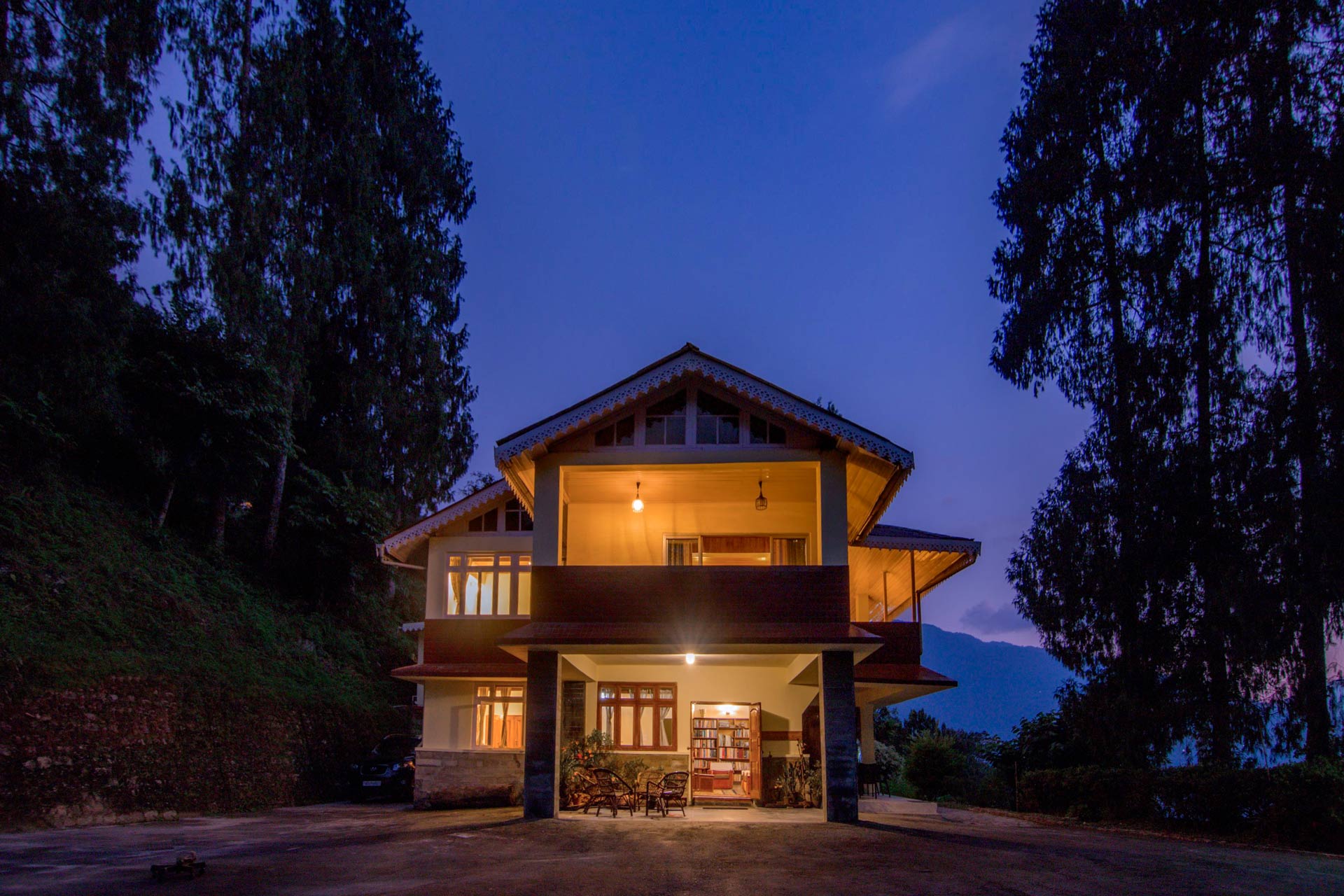
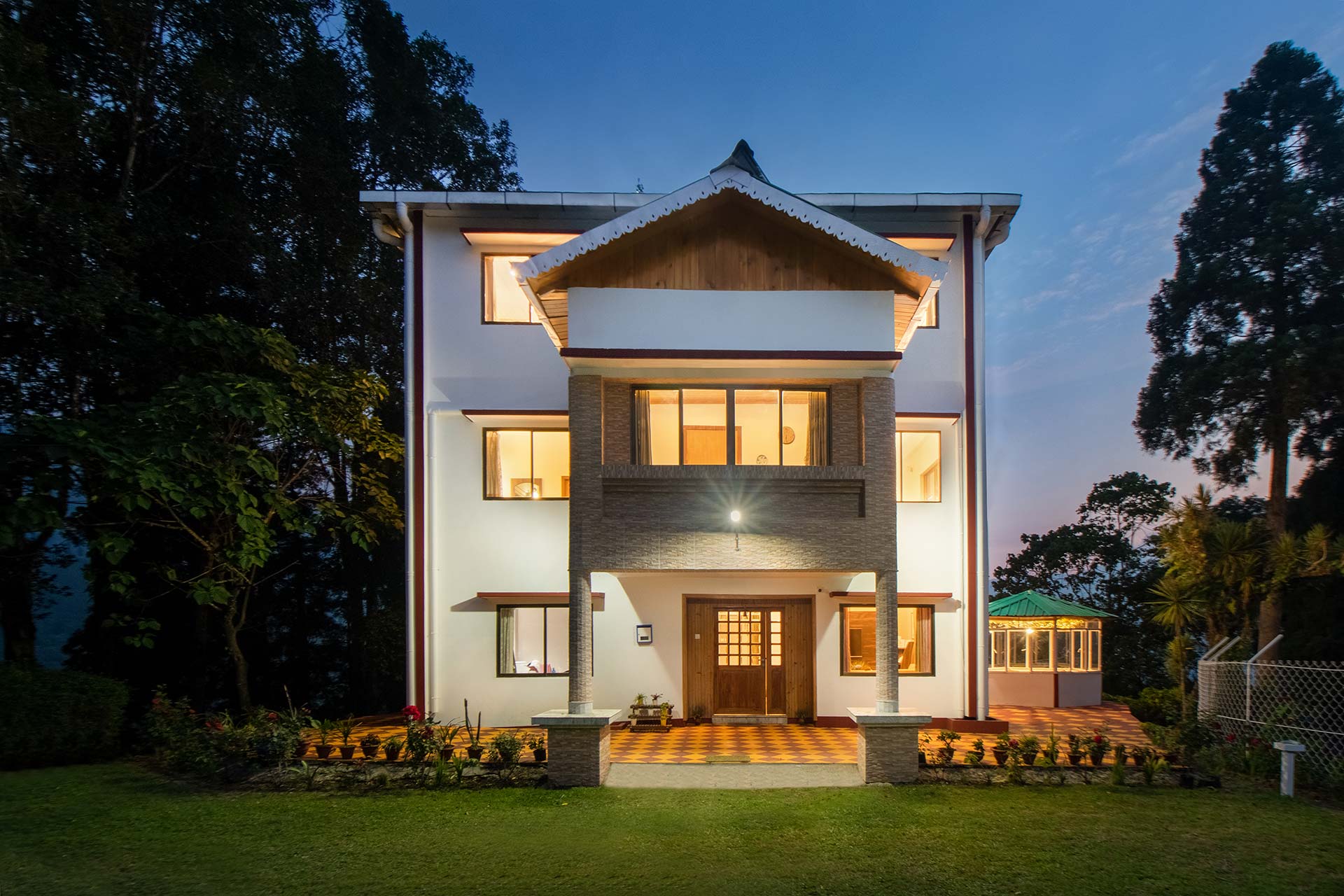
Tier 2: StayVista’s Closest Gateway Homestays
StayVista’s nearest active homestay clusters to the Lava–Lolegaon–Rishyap belt are in Darjeeling, Kalimpong and Sikkim. We’d honestly point you at these as a gateway base — not as a substitute for the village experience itself.
| Property collection | Where | Why we’d recommend it |
| Villas & cottages in Kalimpong | Kalimpong (40–60 km from Lava) | Closest StayVista belt to the core cluster. 1.5–2 hour drive to Lava, ideal as a soft landing the night before you push up to Lava/Lolegaon, or a recovery night on the way back to NJP. |
| Villas in Darjeeling | Darjeeling (80–100 km from Lava via Ghum) | The right gateway if you also want a Toy Train ride, Tiger Hill, and a half-day in town before driving across to the offbeat circuit. 3 hr to Lava. |
| StayVista’s Sikkim collection | Gangtok, Pelling, Ravangla (160–250 km from Lava) | If you’re combining North Bengal with Sikkim into a 10-day Eastern Himalaya loop, this is your post-trip recovery base — use the same NJP/Bagdogra gateway and pair seamlessly. Browse our full hill collection on the homepage and filter by Sikkim. |
A practical sequencing tip: most travelers come from outside the region and find it gentler to land at Bagdogra, drive 1.5 hours to a Kalimpong stay, sleep, then push the final 2 hours up to Lava the next morning. Returning, reverse the same shape — one buffer night at the gateway, then fly out fresh.
The best of Stayvista consists of:

Frequently Asked Questions
Yes, with caveats. June brings the start of the monsoon: empty villages, ~20–30% homestay discounts, waterfalls at full flow, and the lushest forests of the year. But no big Kanchenjunga views (clouds 8 of 10 mornings), and the Lava–Algarah road can close briefly for landslide clearance. Skip the high-altitude treks above 2,800 m. (Source: IMD monsoon bulletin.)
Yes for the core Lava–Lolegaon–Rishyap–Kolakham loop and the Tinchuley/Sittong/Kaffergaon belt. The four trekking villages above 2,800 m (Tumling, Tonglu, Sandakphu base and partial Rimbik) are not — Singalila National Park restricts entry. Drive before noon, ask homestays about current road status, and pad your itinerary with one buffer day.
Yes. July is peak monsoon with the lushest forests of the year. The canopy walk at Lolegaon and Changey Waterfall at Kolakham are at their year-best. Avoid Dooars-only itineraries (leeches and very humid), and treat Rishyap as a “if cloud lifts, bonus” rather than a guaranteed view destination.
The top five by combination of altitude, road accessibility and homestay quality are Lava (2,353 m), Lolegaon (1,675 m), Rishyap (2,591 m), Kolakham (1,981 m) and Tinchuley (1,646 m). The full set of 20 covers five clusters — the Lava–Kalimpong core, the Kalimpong hamlets, the high-altitude Darjeeling belt, the Dooars foothills, and the bonus slow-travel valleys.
Lava is ~100 km from NJP railway station, a 3–3.5 hour drive via Kalimpong or Gorubathan. Private taxis cost approximately ₹3,000–3,800; shared sumos run NJP–Kalimpong (₹250/seat) and Kalimpong–Lava (₹200/seat). In monsoon, the Gorubathan route is the smoother of the two.
3 days is the minimum (1 night Lava + 1 night Rishyap or Lolegaon + travel day), 5 days is comfortable (adds Tinchuley and Kolakham), and 7 days lets you add a Dooars or Sikkim extension. In monsoon, add 1 buffer day to any itinerary in case of road or weather delays.
Yes. Lolegaon has 15–20 family-run homestays (₹1,500–3,000/night including 3 meals); Rishyap has 30+ small homestays (₹2,000–3,500/night). In monsoon, expect ₹500–800/night off peak rates. Book direct via the WB Tourism registry or platforms like Tripoto; walk-ins are usually fine in June–July but not in October–November.
A 3-day trip from Kolkata in monsoon runs roughly ₹12,000–18,000 per person (June 2026 estimate; flight fares fluctuate — verify closer to travel): ₹4,500–7,000 return Bagdogra flight, ₹3,500–4,500 taxi (split 4 ways = ₹1,000–1,200/person), 2 nights homestay at ₹2,000/person inclusive of meals (₹4,000), and ₹2,000 buffer. Train and shared taxi knocks ₹3,000–5,000 off. Peak season (October) runs 25–35% higher.
The Bottom Line
North Bengal’s offbeat ring is wider than most travelers think — 20 genuinely under-visited villages clustered into five geographic groups, none more than 5 hours from Bagdogra or NJP. The core Lava–Lolegaon–Rishyap–Kolakham circuit is the place to start; the Kalimpong hamlets give you a quieter shoulder; the Dooars foothills swap altitude for forest density; and the bonus valleys reward repeat visitors.
If you’ve read this far, you’re already the kind of traveler North Bengal rewards in monsoon — slow, curious, comfortable with mist instead of panorama. That trip exists. Most people will never take it. Browse our Sikkim and Darjeeling-belt homestays for a comfortable gateway base, and let the village families handle the rest.
Planning for October–November instead? We update this guide each September with peak Kanchenjunga-view details — bookmark and check back. In the meantime, our full hill-station blog set covers the rest of India’s quiet corners.