
Rajasthan Weather in July & August 2026 + 11 Places to Visit
Last updated: June 2026
TL;DR: Rajasthan in July and August 2026 is warm, humid and surprisingly green, with daytime temperatures around 25–35°C and intermittent monsoon showers rather than all-day rain. The rain is unevenly spread: the Aravalli belt and southeast — Udaipur, Mount Abu, Bundi and Kota — turn lush and are the best monsoon picks, while the western desert (Jaisalmer, Bikaner) stays largely dry. It’s a fine, low-cost, low-crowd time to travel, with brimming lakes, seasonal waterfalls and the colourful Teej festival (Hariyali Teej falls on 15 August 2026). Just note that the core tiger safaris at Ranthambore and Sariska are closed for the monsoon.
In this Blog
Rajasthan in July–August at a glance
| What to know | Details |
|---|---|
| Weather | 25–35°C, humid, intermittent showers; east/south wetter, west desert drier |
| Best monsoon regions | Udaipur, Mount Abu, Bundi, Kota (green & rain-fed) |
| Festival | Hariyali Teej — 15 August 2026 (Jaipur); Bundi’s Kajli Teej late August |
| Closed in monsoon | Ranthambore & Sariska core safaris (1 Jul–30 Sep); buffer zones open |
| Ideal duration | 4–6 days |
Rajasthan weather in July and August 2026

The southwest monsoon usually reaches Rajasthan in the first week of July, breaking the desert heat and bringing the state’s brief, welcome rainy season. Through July and August, expect warm, humid days of 25–35°C with bursts of rain and sunny spells in between — it rarely rains all day.
What surprises most first-time monsoon visitors is how unevenly the rain falls across Rajasthan:
- The Aravalli belt and southeast get the most rain and look their greenest — Udaipur’s lakes fill, Mount Abu (the state’s wettest spot) stays cool and misty, and the waterfalls around Bundi and Kota come alive.
- The western desert stays dry. Jaisalmer and Bikaner see only light, late showers, so the dunes remain very much accessible — and the heat eases a little.
This split is the single most useful thing to know when planning: head southeast for green-and-rainy scenery, or west if you want the desert with slightly gentler temperatures. For the national picture, see our safe places to visit in monsoon guide.
Is the monsoon a good time to visit Rajasthan?

Yes — and it’s underrated. The rains transform a famously dry state: forts rise from green hillsides, lakes brim, the light turns soft and dramatic, and both crowds and room rates drop from their winter peak. Add the festive colour of Teej and you have one of the most atmospheric (and affordable) windows to visit.
Two honest caveats: it’s humid, so pace your sightseeing and carry water; and the core tiger-safari zones at Ranthambore and Sariska close from 1 July to 30 September (they reopen on 1 October). If wildlife is your priority, the buffer-zone safaris still run, but plan a core-zone safari for the cooler months instead.
Monsoon travel tips for Rajasthan
– Carry a compact umbrella and quick-dry clothing; afternoons can see sharp showers.
– Roads are generally good, but low-lying underpasses in Jaipur/Jodhpur can flood briefly — don’t drive through standing water.
– It’s peak humidity — stay hydrated and plan indoor palace/museum visits for the wettest hours.
– Book Teej-week stays in Jaipur early; mid-August fills up.
11 best places to visit in Rajasthan in July–August
1. Udaipur

The City of Lakes is Rajasthan’s monsoon star — Lake Pichola and Fateh Sagar fill to the brim, the Aravallis green over, and the palaces look their romantic best under grey skies.
– City Palace: ₹300 adult / ₹100 child (₹600 foreign); museum 9:30 AM–5:30 PM (the complex stays open later for the evening light show).
– How to reach: Maharana Pratap Airport (22 km); Udaipur City railway station. Time: 2–3 days.
– Ideal for: Couples, families. Pro tip: A post-shower boat ride on Lake Pichola is the city at its finest. See Udaipur in monsoon.
2. Mount Abu

Rajasthan’s only hill station and its wettest place, Mount Abu is cool, green and misty through the monsoon, with Nakki Lake and the marble Dilwara Temples close at hand.
– Dilwara Temples: free entry (no photography inside); tourist hours 12:00 PM–5:00 PM.
– How to reach: Nearest railway Abu Road (28 km); Udaipur airport (~185 km). Time: 2 days.
– Ideal for: Families, couples, budget travellers. Pro tip: Sunset at Honeymoon Point on a clear evening. See Mount Abu in monsoon.
3. Bundi

A storybook town of blue houses, stepwells and a cliff-top palace, Bundi is gloriously green in the rains, when the Chuliya and Padajhar waterfalls flow.
– Taragarh Fort & Bundi Palace: nominal entry; daylight hours. How to reach: Bundi railway station; ~210 km from Jaipur.
– Time: 1–2 days. Ideal for: Offbeat travellers, history lovers. Pro tip: Bundi’s Kajli Teej (late August) is a wonderful, less touristy festival to catch.
4. Kota & Garadia Mahadev

On the Chambal river, Kota’s gorge country is at its most dramatic in the monsoon — the Garadia Mahadev viewpoint over the deep green Chambal canyon is unforgettable, and seasonal falls like Gaipernath roar.
– Garadia Mahadev: free; daylight hours. How to reach: Kota Junction (well-connected); ~245 km from Jaipur.
– Time: 1–2 days. Ideal for: Photographers, nature lovers. Safety note: Keep back from the gorge edge in wet weather.
5. Jaipur

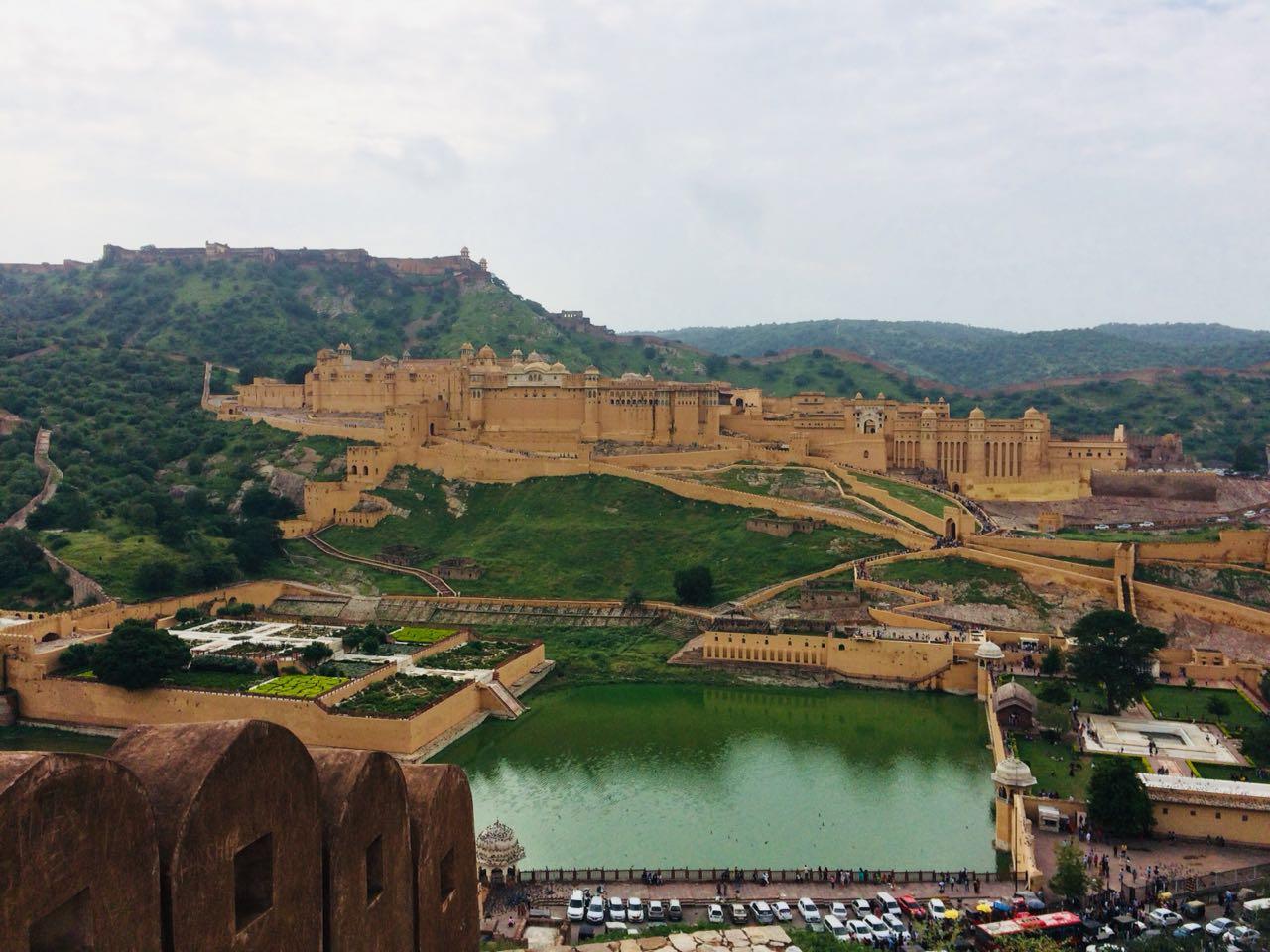
The Pink City wears the monsoon well — Amer Fort and Nahargarh look magnificent against green hills, and the city hosts Rajasthan’s grandest Teej procession.
– Amer Fort: ₹100 (Indian) / ₹500 (foreign) approx; 8:00 AM–5:30 PM. [VERIFY current fee]
– How to reach: Jaipur International Airport; major railhead. Time: 2–3 days.
– Ideal for: First-timers, families. Pro tip: Time your visit to the Hariyali Teej procession on 15 August 2026.
6. Jodhpur

The Blue City and the mighty Mehrangarh Fort are striking under monsoon skies, and the surrounding scrub greens up after the first rains.
– Mehrangarh Fort: ~₹100 (Indian) / ₹600 (foreign) approx; 9:00 AM–5:00 PM. [VERIFY current fee]
– How to reach: Jodhpur Airport; major railhead. Time: 2 days.
– Ideal for: History lovers, couples. Pro tip: The fort’s ramparts give the best view of the blue old city, especially after rain clears the air.
7. Chittorgarh

India’s largest fort sprawls across a hilltop that turns lush and atmospheric in the rains — a monsoon visit means cooler walks among its palaces, towers and temples.
– Chittorgarh Fort: nominal entry; ~9:30 AM–5:00 PM. How to reach: Chittorgarh railway station; ~115 km from Udaipur.
– Time: 1 day. Ideal for: History lovers. Pro tip: Combine with Udaipur on a southern Rajasthan loop.
8. Kumbhalgarh

The “Great Wall of India” — a 36-km fortress wall snaking over the green Aravallis — is spectacular in the monsoon mist.
– Kumbhalgarh Fort: ₹40 (Indian) / ₹600 (foreign); 9:00 AM–6:00 PM. How to reach: ~85 km from Udaipur.
– Time: 1 day (with the nearby wildlife sanctuary). Ideal for: History lovers, trekkers. Pro tip: Stay for the evening light-and-sound show if skies are clear.
9. Banswara

Known as the “City of a Hundred Islands” for the islets dotting the Mahi river, Banswara is southern Rajasthan’s green, tribal-belt secret — wonderful after the rains.
– How to reach: ~160 km from Udaipur. Time: 1–2 days. Ideal for: Offbeat travellers, nature lovers.
– Pro tip: The river and dam areas are at their most scenic in August; combine with Chittorgarh or Udaipur.
10. Ranthambore (buffer safari)

Even with the core zones closed, Ranthambore is lush and birdsong-filled in the monsoon, and buffer-zone safaris (Zones 6–10) still run.
– How to reach: Sawai Madhopur railway station; ~180 km from Jaipur. Time: 1–2 days.
– Ideal for: Wildlife lovers (with realistic expectations), birders. Safety note: Core zones reopen 1 October. Pro tip: Mornings give the best sightings and light.
11. Jaisalmer (the dry-side option)

If you want the desert without the peak heat, Jaisalmer stays largely rain-free in the monsoon, and the golden Sonar Quila and dunes are far less crowded.
– How to reach: Jaisalmer railway station; nearest major airport Jodhpur (~285 km). Time: 2 days.
– Ideal for: Desert lovers, couples. Pro tip: Evenings cool down nicely for a dune sunset and camp stay.
Teej & monsoon festivals in Rajasthan 2026
Teej is Rajasthan’s great monsoon celebration, welcoming the rains with swings, song, henna and processions:
- Hariyali Teej — Saturday, 15 August 2026: Jaipur’s grand Teej procession winds out from the City Palace with caparisoned elephants, folk performers and the idol of Goddess Teej — the state’s headline monsoon event (and it coincides with Independence Day in 2026).
- Kajli (Kajari) Teej — late August: Bundi’s famous, more intimate Teej fair is the southeast’s highlight, with two days of processions and festivities. [VERIFY: exact Bundi Kajli Teej event dates 2026 with Rajasthan Tourism.]
These are wonderful, photogenic reasons to time a July–August trip — and a vivid contrast to Rajasthan’s dry-season image.
What to pack — and what to shop for
Pack light cottons, a compact umbrella or light poncho, comfortable waterproof sandals, and a power bank. Rajasthan’s monsoon humidity is real, so breathable fabrics beat heavy layers.
The rains are also a relaxed, low-crowd time to shop the state’s famous crafts: block-printed textiles (Sanganer, Bagru), blue pottery and gemstones in Jaipur; miniature paintings in Udaipur and Bundi; bandhani tie-dye in Jodhpur; and leather juttis and mojaris statewide. Bargain gently, and you’ll find better attention from artisans than in the December rush.
A suggested July–August itinerary
- Green southern loop (4–5 days): Udaipur → Kumbhalgarh → Chittorgarh, with a day-trip feel of full lakes and misty forts.
- Festival & forts (4 days): Jaipur (for Teej) → Bundi → Kota’s Chambal gorge.
- Desert-on-the-dry-side (3 days): Jodhpur → Jaisalmer, for forts and dunes with the heat dialled down.
July vs August vs September: choosing your window
The monsoon months each have a slightly different character in Rajasthan:
- July is when the rains arrive and the desert exhales — the first showers turn the Aravallis green, temperatures drop from the summer peak, and crowds are at their thinnest. Expect the odd heavy burst as the monsoon establishes itself.
- August is peak monsoon and arguably the best of the three: the landscape is at its lushest, lakes and waterfalls are full, and the Teej festivities (15 August) give the month a real sense of occasion. It’s also the most humid, so plan accordingly.
- September sees the monsoon retreat — the greenery lingers but the rain eases, the air feels fresher, and the lakes stay full. For many travellers this is the sweet spot, just before the festive and wedding season pushes up demand and prices.
If you want festivals and the greenest scenery, come in August; if you’d prefer comfortable, clearing weather with the monsoon glow still intact, aim for September.
Travelling in monsoon Rajasthan with family
The rains make Rajasthan unexpectedly family-friendly. Temperatures are far gentler than the summer furnace, the scenery is green and photogenic, attractions are uncrowded, and family-sized stays cost less than in the winter high season. A few pointers make it smoother with children:
- Pace the day around the humidity — do forts and outdoor sights in the cooler morning, and keep palaces, museums and craft workshops as backups for the muggiest afternoon hours.
- Lean into the water — a Lake Pichola boat ride in Udaipur, the gardens and lake at Mount Abu, and the stepwells of Bundi are all easy wins with kids.
- Pack smart — mosquito repellent (the monsoon brings them out), light rain gear, a change of clothes for sudden showers, and any regular medication.
- Mind the edges — keep children well back from stepwell rims, gorge viewpoints (Kota’s Garadia Mahadev) and slippery fort ramparts in wet weather.
Udaipur, Mount Abu and Jaipur make the easiest, best-connected family bases.
Beyond the forts: monsoon experiences and food
Rajasthan’s rainy season is as much about atmosphere as sightseeing. Watch the showers roll over a lake with a cup of masala chai, take afternoon high tea in a heritage palace-hotel, or catch the Sawan swings and folk songs that come with Teej. The monsoon is also peak season for two of the state’s most loved sweets — ghewar and malpua — sold fresh in every Teej-time bazaar, alongside hearty classics like dal-baati-churma, pyaaz kachori and laal maas.
It’s a rewarding time for photographers, too: forts emerging from mist, the green Aravallis, and — if you’re lucky — peacocks in full courtship display, which the rains famously bring on. Add the relaxed, low-crowd shopping for block prints, blue pottery and miniatures, and the monsoon delivers a slower, richer kind of Rajasthan trip than the winter rush allows.
Where to stay in Rajasthan (StayVista)
- Udaipur: The Wild Orchid — a lake-region home for the City of Lakes at its monsoon best.
- Jaipur: The Owl House or Krishnalaya Mansion — characterful bases for Teej, Amer and the Pink City.
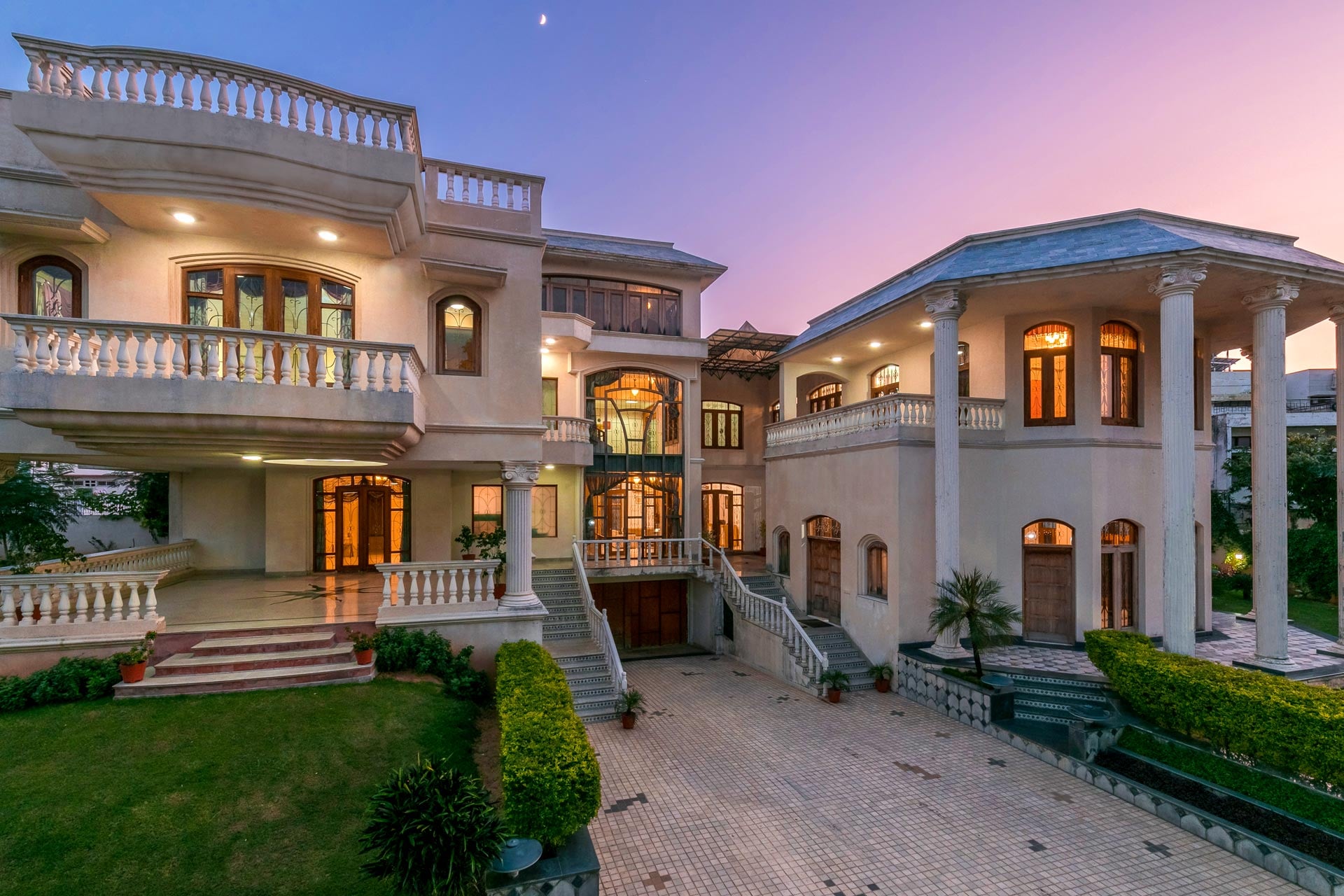
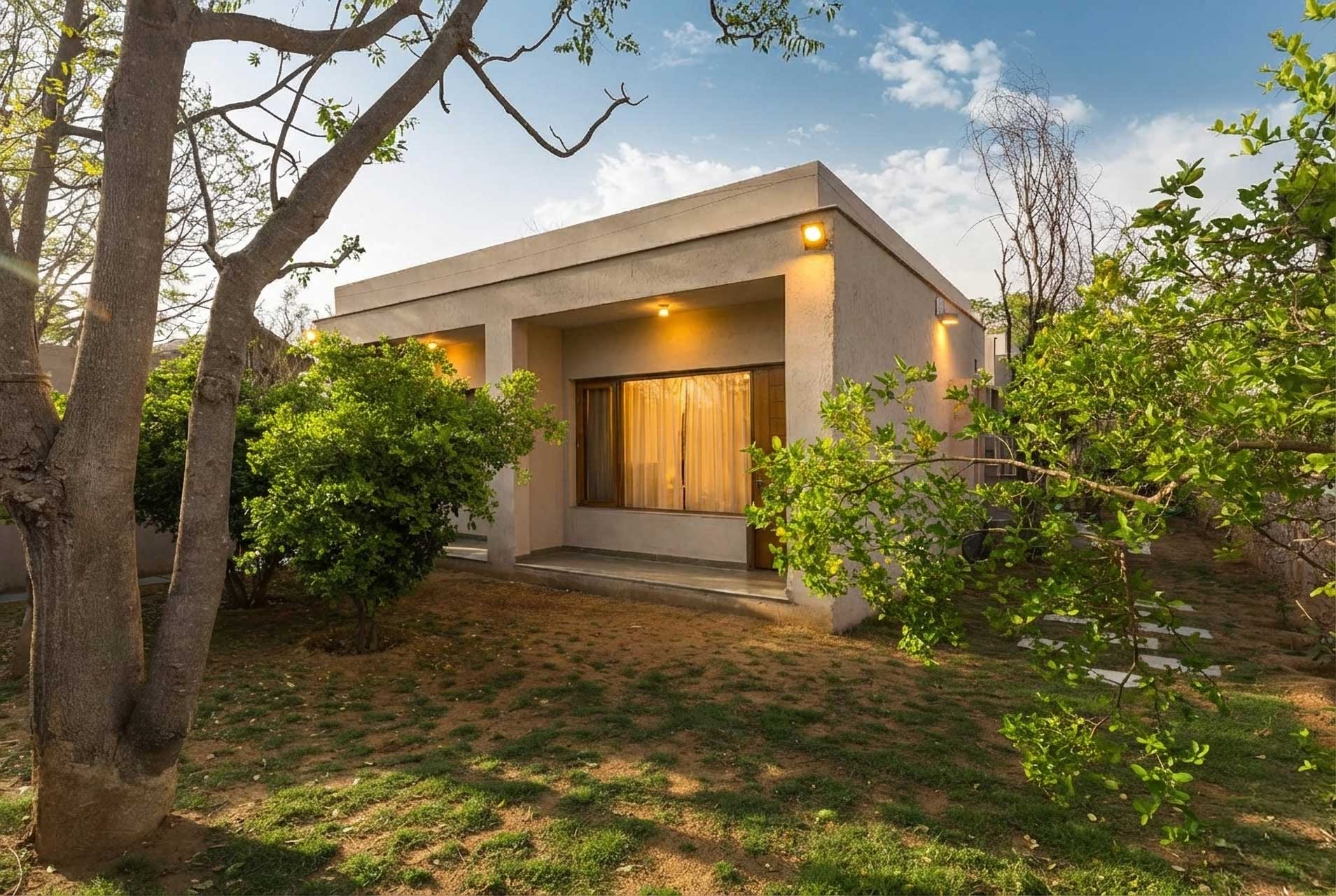
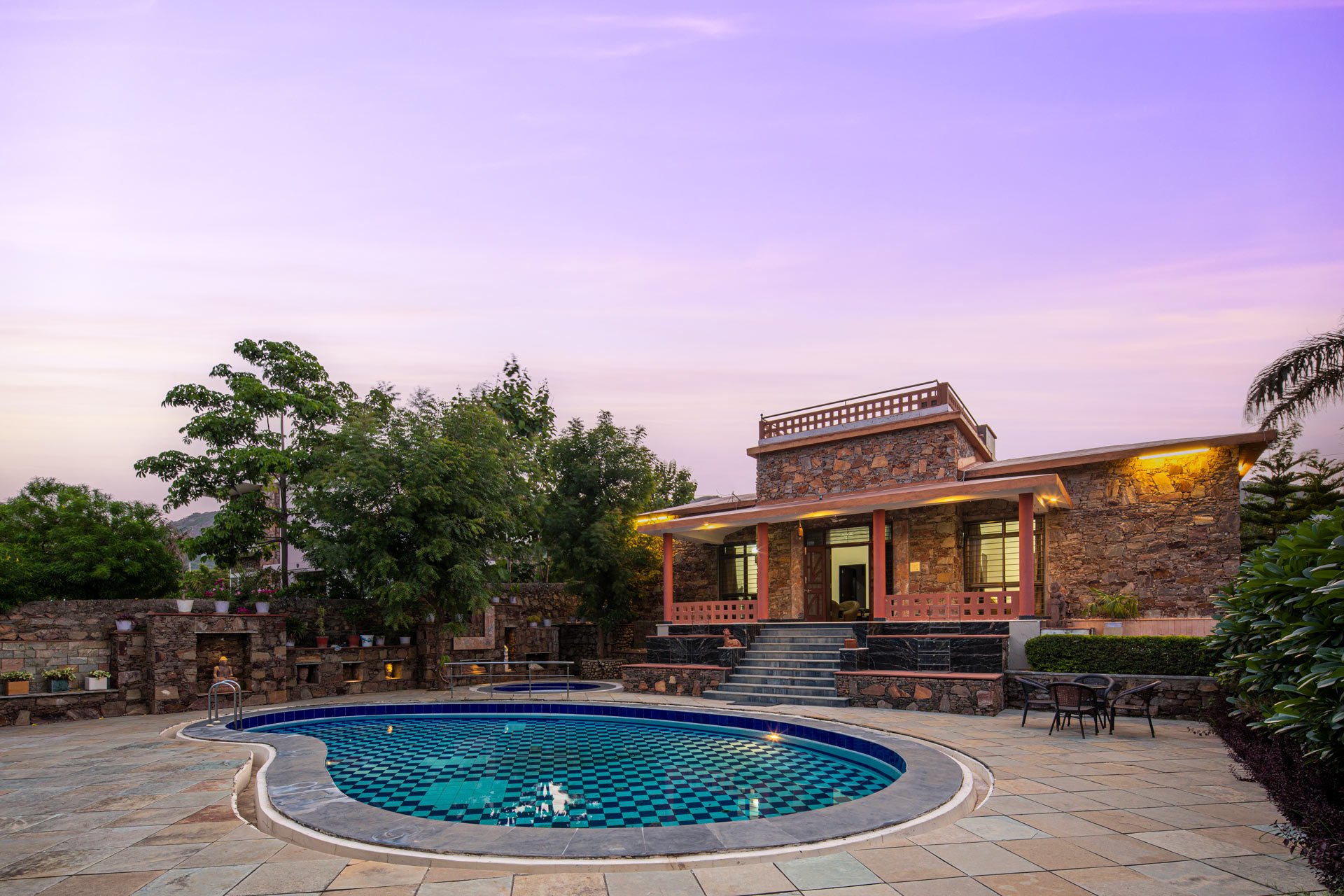
Planning a monsoon Rajasthan trip? Browse StayVista’s homes in Udaipur and Jaipur — comfortable, well-located bases for the green-season forts and festivals. (CTA 1 of 3.)
FAQ: Rajasthan in July and August
What is the weather like in Rajasthan in July and August?
Warm and humid, around 25–35°C, with intermittent monsoon showers rather than continuous rain. The Aravalli belt and southeast (Udaipur, Mount Abu, Bundi, Kota) get the most rain and turn green, while the western desert (Jaisalmer, Bikaner) stays largely dry.
Is monsoon a good time to visit Rajasthan?
Yes — the rains bring lush greenery, full lakes, seasonal waterfalls, fewer crowds and lower prices, plus the colourful Teej festival. Just expect humidity, and note that core tiger safaris at Ranthambore and Sariska are closed in these months.
Which are the best places to visit in Rajasthan in the monsoon?
Udaipur, Mount Abu, Bundi and Kota are the greenest and most rewarding, along with Jaipur (for Teej), Jodhpur, Chittorgarh and Kumbhalgarh. Jaisalmer is the best dry-side desert option.
When is Teej in 2026?
Hariyali Teej falls on Saturday, 15 August 2026, marked by Jaipur’s grand procession; Bundi’s Kajli Teej follows in late August.
Is Ranthambore open in the monsoon?
The core safari zones at Ranthambore and Sariska are closed from 1 July to 30 September and reopen on 1 October, but buffer-zone safaris (Ranthambore Zones 6–10) remain open.
Does it rain heavily in Rajasthan in July and August?
No — rain comes in intermittent bursts with sunny spells, and is concentrated in the east and south. The western desert sees only light showers, so most travel plans are easily workable.
How to make the most of monsoon Rajasthan
To get the best of the season, split your trip by geography and intent. Spend the bulk of your time in the green southeast — Udaipur, Mount Abu, Bundi and Kota — where the rains do the most beautiful work, and add the western desert (Jaisalmer or Jodhpur) only if you want the contrast of dunes at a gentler temperature. Time your dates around Teej if festivals appeal: Jaipur in mid-August is at its most colourful, while Bundi’s quieter Kajli Teej rewards travellers who prefer atmosphere over crowds. Book stays and Teej-week transport early, keep daytime hours for forts and outdoor sights, and save palaces, museums and craft-shopping for the muggiest afternoons. With a little planning, monsoon Rajasthan delivers regal scenery, festive colour and genuine value that the winter high season simply can’t match.
Conclusion
July and August show Rajasthan at its most unexpected — green forts, brimming lakes, festive Teej processions and a fraction of the winter crowds. Head to Udaipur, Mount Abu, Bundi and Kota for the lush, rain-fed scenery, or out west to Jaisalmer for the desert at a gentler temperature, and you’ll discover a side of the state most visitors never see. A comfortable StayVista home in Udaipur or Jaipur makes the monsoon all the more memorable.