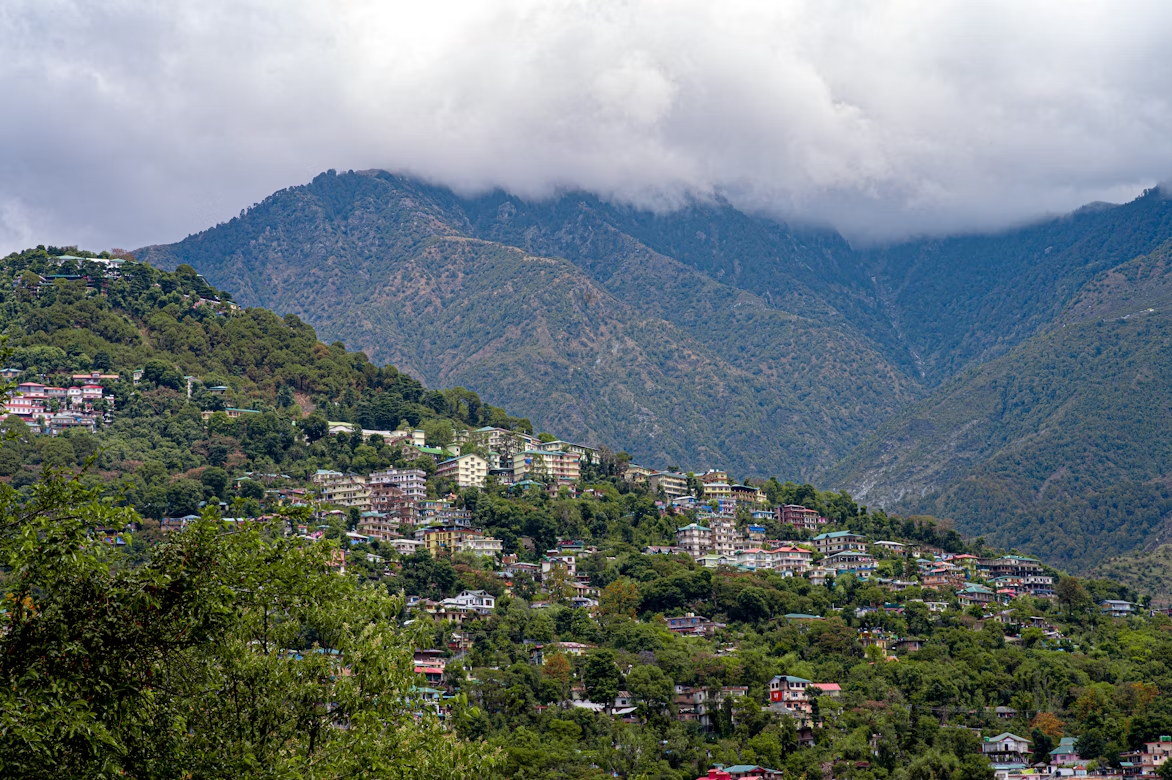

Rudranath Trek 2026: Toughest of the Panch Kedar Route, Permits & Itinerary

On the morning of 18 May 2026, the doors of Rudranath Temple opened after six months of winter silence and will stay open until 17 October 2026. A handful of priests, a small ITBP detachment, and the first wave of pilgrims who had walked twenty kilometres of oak forest and high ridge stood there as the sun rose over the Garhwal Himalayas.
If you are reading this, you are probably planning that same walk — to the small stone shrine at 3,600 m that Hindus believe is where Bhagwan Shiva revealed his face. Rudranath is one of the five Panch Kedar temples, and the most physically demanding of them.

This 2026 season is the busiest in five years. New forest-department rules, a 2 PM trail-entry cutoff, and the confusion between the Char Dham e-pass and the Rudranath permit are tripping up first-time planners — including pilgrim families who arrive at Sagar village with the wrong document and have to turn back. This guide gives you the dates, the exact route, the permit walkthrough most blogs skip, a tested 4-day itinerary, a fitness verdict, and a quiet but practical recommendation on where to rest before and after the climb. We host pilgrim families across Rishikesh, Dehradun and Mussoorie every season, and the planning notes below reflect what works on the ground.
Rudranath Temple — the “face” of Bhagwan Shiva and the toughest of the five Panch Kedar shrines — reopened on 18 May 2026 and stays open until 17 October 2026. The trek runs ~20 km one-way from Sagar village (Chamoli) to the temple at 3,600 m / 11,808 ft, with a steep ridge crossing at Pitradhar (~4,000 m). Standard duration is 4 days / 3 nights; best windows are mid-May to end-June or September to mid-October. Forest Department registration via kedarnathwildlife.uk.gov.in is mandatory (₹200 per Indian adult), and the trail closes to new entries after 2:00 PM.
In this Blog
Quick Info: Rudranath Trek 2026 at a Glance
| Detail | Info |
| Temple Opening Date 2026 | 18 May 2026 |
| Temple Closing Date 2026 | 17 October 2026 |
| Trailhead | Sagar village, Chamoli district, Uttarakhand |
| One-way Trek Distance | ~20–21 km |
| Maximum Altitude | ~4,000 m at Pitradhar; temple at 3,600 m |
| Standard Duration | 4 days / 3 nights |
| Difficulty | Moderate to difficult |
| Best Months 2026 | Mid-May to end-June; mid-September to mid-October |
| Permit | Mandatory — Kedarnath Wildlife Division |
| Nearest Airport | Jolly Grant, Dehradun (~265 km from Sagar) |
| Nearest Major Railway Station | Rishikesh (~265 km from Sagar) |
| Trail Entry Cutoff | 2:00 PM at Sagar Forest Chowki |
When Does Rudranath Temple Open in 2026?

Rudranath Temple’s kapat opened on 18 May 2026, as confirmed by the Badrinath-Kedarnath Temple Committee on Basant Panchami. The temple will close on 17 October 2026, after which the deity is carried in a ceremonial doli to Gopinath Temple in Gopeshwar, where winter worship continues for six months.
The opening sequence in 2026 followed the traditional schedule. On 14 May, the utsav-murti was brought out of Gopinath Temple after ritual pujas. On 16 May, the deity began the final stretch to Rudranath. Two days of placement rituals and abhishek pujas later, the doors opened to the public at sunrise on 18 May.
If you have only ever seen Kedarnath in the news, Rudranath will feel like a different country. There is no kilometre-long queue, no helicopter shadow overhead, and no concrete plaza. Just a small stone temple in a forest clearing at 3,600 m, with prayer flags, a few priests, and the wind.
The temple stays open for roughly 152 days — and the practical trekking window inside that is narrower still, because the monsoon eats into July and August. We will come to that in the best-time section below.
Pro tip: Book your Rishikesh base and Sagar trek slot at least 3 weeks before your planned trek date. The 5-day window after temple opening (18–23 May) and the Akshaya Tritiya weekend in late April were already booked solid for 2026 by mid-March.
Why Is Rudranath Called the Toughest Panch Kedar Trek?
Rudranath is the toughest of the Panch Kedar because of three compounding factors — a one-way trail of ~20 km (versus 4 km for Tungnath and 0.3 km for Kalpeshwar), a steep climb to roughly 4,000 m at Pitradhar before descending to the temple at 3,600 m, and two long trekking days back-to-back with no road bail-out option. Unlike Kedarnath, there is no helicopter service, no pony stage all the way to the top, and no graded paved approach.
The hardness of the trek does not come from any single section. It is the sum:
- Sagar to Lyuti Bugyal (Day 2): ~10 km of mixed forest and meadow, with a sustained gradient after Pung. Manageable on its own.
- Lyuti to Panar Bugyal (Day 3 morning): the sharpest climb of the trek. Most trekkers run out of steam here.
- Panar to Pitradhar (Day 3 mid-morning): a sharp ridge walk to the highest point of the trek, around 4,000 m. The altitude starts to bite.
- Pitradhar to Panchganga to Rudranath (Day 3 afternoon): descent of nearly 400 m on tired legs, into forest, then to the temple.
- Rudranath back to Sagar (Day 4): a continuous 20-km descent — kind on lungs, brutal on knees.
By comparison, Kedarnath is 16 km one-way but on a graded path with mules, ponies and a helicopter alternative. Tungnath is only 4 km from Chopta. Madhyamaheshwar is 16 km but split across friendlier days. Kalpeshwar is a 300-metre walk from Urgam village. Rudranath sits alone at the top of the difficulty ladder.
Among the five Panch Kedar shrines, Rudranath demands the longest single trek (~20 km one-way), crosses the highest pass on the route (~4,000 m at Pitradhar), and offers no helicopter or motorable alternative — making it the most physically demanding of the circuit.
| Shrine | Distance (one-way) | Max altitude | Difficulty |
| Kedarnath | 16 km | 3,583 m | Easy-moderate (heli/pony available) |
| Tungnath | 4 km | 3,680 m | Easy |
| Rudranath | ~20 km | 3,600 m (max 4,000 m at Pitradhar) | Moderate-difficult |
| Madhyamaheshwar | 16 km | 3,497 m | Moderate |
| Kalpeshwar | 0.3 km | 2,200 m | Easy (only Panch Kedar open year-round) |
Rudranath Trek Route — Sagar to the Temple, Step by Step

The standard Rudranath route runs from Sagar village (1,800 m) through Pung Bugyal, Lyuti Bugyal (2,800 m), Panar Bugyal (3,500 m), Pitradhar (~4,000 m) and Panchganga, ending at Rudranath Temple (3,600 m). The one-way distance is roughly 20–21 km, which most operators split over two trekking days plus travel days at either end.
Here is the trail, segment by segment.
1. Sagar village → Pung Bugyal
- Distance & time: ~3 km, 1.5 hours
- Terrain: gradual climb through farmland and oak forest
- Best for: warm-up; carry water for the next dry stretch
- Pro tip: clear the Forest Chowki before 8 AM to avoid the rush
2. Pung Bugyal → Lyuti Bugyal
- Distance & time: ~4–5 km, 2–3 hours
- Terrain: steeper forest path, oak and rhododendron, opening into meadow near Lyuti
- Water: seasonal stream near Pung; refill here in May–June
- Pro tip: Lyuti has the last tent campsite with reliable food before the harder day
3. Lyuti Bugyal → Panar Bugyal
- Distance & time: ~4 km, 2.5 hours
- Terrain: sustained climb to an open alpine meadow
- Notable: first big mountain views; rhododendrons in late May
- Pro tip: carry 2 litres of water from Lyuti — no reliable source until Panar
4. Panar Bugyal → Pitradhar
- Distance & time: ~2 km, 1 hour
- Terrain: sharp ridge climb to the highest point of the trek
- Notable: ancestor-worship stone thrones (prithvi thrones) — a unique cultural marker on the Panch Kedar circuit; pilgrims often stop here to remember departed family members
- Pro tip: start early so you reach Pitradhar before the wind picks up after 11 AM
5. Pitradhar → Panchganga
- Distance & time: ~3 km, 1.5 hours
- Terrain: descent into forest, then to the five-stream confluence
- Notable: Panchganga is where five small streams meet; treated as a symbolic point of convergence in pilgrim tradition
6. Panchganga → Rudranath Temple
- Distance & time: ~1–2 km, 30–45 minutes
- Terrain: last short forest section, then the clearing where the temple sits
- Notable: the temple itself is a small stone shrine; basic dharamshala and tents available nearby for the overnight halt
Mobile network drops past Lyuti Bugyal in most places. BSNL works intermittently near the temple, Jio and Airtel rarely do. Download offline maps before you leave Gopeshwar.
For the broader regional context and the Garhwal pilgrimage map, the Uttarakhand Tourism portal at uttarakhandtourism.gov.in lists Rudranath as a recognised Panch Kedar shrine.
Do I Need a Permit for the Rudranath Trek? Forest Department Registration Walkthrough

Yes. Rudranath trek falls inside the Kedarnath Wildlife Sanctuary, so every trekker must register with the Uttarakhand Forest Department at kedarnathwildlife.uk.gov.in before starting the trek. Biometric verification happens at the Sagar Forest Chowki at the trailhead, and the trail closes to new entries after 2:00 PM for search-and-rescue safety reasons.
This is the single most under-covered topic in 2026 Rudranath blogs, and it is also the one that causes pilgrims to be turned back at the gate. Here is the exact walkthrough.
How to register online for Rudranath Trek 2026
- Visit the portal at kedarnathwildlife.uk.gov.in/collections/shri-rudranath-yatra-trek
- Select your trek date — register at least 7 days in advance; same-day registration is possible at Sagar Chowki but slots fill fast in May–June
- Enter trekker details — name, phone, ID number (Aadhaar / Voter ID / Passport), emergency contact
- Pay the fee online — ₹200 per Indian adult; foreign and child rates displayed on the portal
- Download and print the receipt — print a hard copy. Network at Sagar is unreliable and digital QR codes often fail at the checkpost
Char Dham e-pass vs Rudranath permit — the confusion to avoid
Important clarification: Rudranath does NOT require the Char Dham Yatra e-pass from registrationandtouristcare.uk.gov.in. That portal handles Kedarnath, Badrinath, Gangotri and Yamunotri only. Rudranath uses the separate Forest Department permit from the Kedarnath Wildlife portal. Carrying only the Char Dham e-pass will get you turned back at Sagar Forest Chowki.
This single point saves more pilgrim trips than any other piece of advice in this guide. Several travellers we hosted in Rishikesh during the 2025 season arrived with the wrong document and lost a full day correcting it.
Offline backup
If you arrive without online registration, the Forest checkpost at Chandrakoti Sagar can register you on the spot. They issue a printed receipt. Carry ID and cash as backup.
The 2 PM rule
The Sagar Forest Chowki stops issuing new entries after 2:00 PM. This is a safety rule — if a trekker is still on the trail at sunset, search-and-rescue logistics become difficult. Even if you have a valid permit, you cannot start your trek after 2 PM. Plan your Day 2 start to clear the gate before 8 AM with buffer.
Day-Wise Itinerary — Rudranath Trek 2026 (4 Days / 3 Nights)
The standard Rudranath Trek itinerary runs 4 days / 3 nights — Day 1 is the road journey from Rishikesh to Sagar village (~265 km, 9–10 hours), Day 2 is Sagar to Lyuti Bugyal (~10 km, 5–6 hours), Day 3 is the toughest leg from Lyuti to Pitradhar to Rudranath Temple (~12 km, 8–9 hours), and Day 4 is the long descent back to Sagar.

Here is the day-by-day plan, with practical details.
Day 1 — Rishikesh to Sagar Village (Road Day)
- Drive: ~265 km, 9–10 hours via Devprayag → Rudraprayag → Karnaprayag → Gopeshwar → Sagar
- Best time to start: leave Rishikesh by 5:30 AM
- Entry fee: none for the road; ₹200 Forest Dept permit if you complete registration in Rishikesh
- Stay: simple guesthouse or trek-operator tent in Sagar (~₹500–₹1,000 per person)
- Ideal for: acclimatising the body to mid-altitude after a Rishikesh base
- Pro tip: The Devprayag–Srinagar stretch becomes effectively one-lane after the post-winter landslide repairs in May. Carry packed lunch from Rishikesh — the cleanest dhabas are at Devprayag and Karnaprayag.
The drive itself is most of the day. Use it to test gear, hydrate, and review the next morning’s plan. Most operators run a short evening briefing on the trail, permits, and weather forecast.
Day 2 — Sagar to Lyuti Bugyal (Into the Forest)
- Trek: ~10 km, 5–6 hours
- Ascent: ~1,000 m (1,800 m → 2,800 m)
- Entry fee: Forest permit checked at Sagar Chowki — biometric scan happens here
- Best time to start: 7:00 AM after a light breakfast; aim to clear the gate before 8 AM
- Stay: Lyuti Bugyal tents or basic lodge (operator-run)
- Ideal for: the trek’s gentlest day — a good test of fitness before Day 3
- Pro tip: Carry a 1-litre bottle for the Pung–Lyuti stretch; the seasonal stream below Pung dries by mid-June. Keep ₹500 cash for tea-stop refills.
The first hour out of Sagar is dirt path through farmland and oak. By Pung Bugyal you are in proper forest, and after Pung the gradient picks up. Lyuti opens into a wide grassy meadow with a view down the valley. The campsite has shared toilets, a basic dining tent, and almost no mobile network.
Day 3 — Lyuti to Pitradhar to Rudranath Temple (The Toughest Day)
- Trek: ~12 km, 8–9 hours
- Ascent / descent: climb to ~4,000 m at Pitradhar, then descent to 3,600 m at the temple
- Best time to start: 6:00 AM with a heavy breakfast and packed snacks
- Entry fee: no additional charge; permit checked again past Panar if reissued
- Stay: small dharamshala or operator tent near Rudranath Temple
- Ideal for: the entire reason you came — Pitradhar ridge views, Panchganga, and the temple
- Pro tip: carry 3 litres of water for this leg. The climb from Lyuti to Panar is the hardest single hour of the trek, but Panar Bugyal flattens out into a meadow where you can rest before the ridge. Use trekking poles from Pitradhar onwards — the descent to Panchganga is steep on tired legs.
Watch for early signs of acute mountain sickness (AMS) — headache, nausea, unusual breathlessness — between 3,500 m and 4,000 m. If anyone in the group shows symptoms, slow down at Panar and reassess. Diamox should be discussed with a doctor before the trek.
Reach the temple by mid-afternoon if pace allows. The small stone shrine sits in a forest clearing. Evening puja is short and unhurried. The dharamshala accommodation is basic — shared toilets, limited bedding, no charging points. The peace of the place compensates.
Day 4 — Rudranath to Sagar (The Long Descent)
- Trek: ~20 km, 6–8 hours (same route reversed)
- Best time to start: 6:30 AM after a brief morning darshan
- Entry fee: none
- Stay: drive onward the same evening to Gopeshwar, Rishikesh, Dehradun, or Mussoorie
- Ideal for: reflection day; the climb is done, and the descent feels like a reward
- Pro tip: book a homestay in Dehradun or Mussoorie for Day 4 evening rather than pushing through to Delhi. Knee fatigue after 20 km of continuous descent is real, and the Devprayag stretch at night is risky.
Take it slow on the way down. Knees take more strain on descent than on ascent. Use poles, take a 5-minute break every hour, and snack on dry fruits to keep energy up.
What Is the Best Time for the Rudranath Trek in 2026?

The two best windows for the Rudranath Trek 2026 are mid-May to end-June (just after the temple opens on 18 May, when trails are dry and rhododendrons are in bloom) and mid-September to mid-October (post-monsoon clarity, fewer crowds, cooler air before the 17 October closing date). The monsoon months of July and August should be avoided by all but the most experienced trekkers.
Here is the month-by-month picture for 2026.
May 2026 (from 18 May onwards)
- Temperature range: 5°C–18°C at trek altitude; 20°C–30°C in Rishikesh
- Trail condition: dry, occasional residual snow patches above Panar
- Rhododendrons in late bloom near Lyuti
- Best for: first-timers, families, photographers
- Verdict: the most popular window for 2026
June 2026
- Temperature range: 8°C–20°C at trek altitude
- Trail condition: mostly dry; pre-monsoon afternoon clouds from mid-June
- Slightly warmer days, slightly busier weekends
- Best for: longer daylight, comfortable camping
- Verdict: excellent until ~20 June, then monsoon risk rises
July–August 2026 (avoid)
- Rainfall: 280–340 mm per month in Chamoli district (per India Meteorological Department historical averages)
- Trail condition: muddy, leech-heavy, landslide-prone, low visibility
- Network outages common; operators discourage bookings
- Verdict: not recommended for any group
September 2026
- Temperature range: 6°C–17°C at trek altitude
- Trail condition: post-monsoon clarity, lush meadows, crisp air
- Crowds thinner than May–June
- Best for: trekkers who prefer fewer people and clearer mountain views
- Verdict: the connoisseur’s window
October 2026 (until 17 October closing)
- Temperature range: 0°C–12°C; nights can drop below freezing above 3,500 m
- Trail condition: dry, cold, some early snow possible
- Best for: experienced trekkers; pack heavier layers
- Verdict: beautiful but short — temple closes 17 October
Pro tip: If you can flex your dates, the second week of June 2026 (8–14 June) and the third week of September 2026 (16–22 September) are the sweet spots — temple is fully accessible, crowds are moderate, and weather is most predictable.
How to Reach Rudranath from Major Indian Cities

The Rudranath trailhead is at Sagar village in Chamoli district, ~265 km from Rishikesh via Devprayag, Rudraprayag and Gopeshwar. From Delhi, it is a 12–14 hour drive (or train to Rishikesh followed by a 9-hour cab). From Mumbai, Bangalore, Kolkata or Chennai, fly to Jolly Grant Airport (Dehradun) and drive 8–9 hours via Rishikesh.
From Delhi to Rudranath
- By road: Delhi → Haridwar → Rishikesh → Devprayag → Rudraprayag → Gopeshwar → Sagar. Roughly 340 km, 12–14 hours.
- By train + road: Train to Rishikesh Railway Station (overnight Nanda Devi Express or morning Yoga Express); then taxi to Sagar (9 hours).
- By air + road: Delhi → Dehradun (Jolly Grant) by air (45 minutes); then 8–9 hours by road.
- Pro tip: the new Delhi–Dehradun Expressway has reduced the Delhi–Dehradun leg to about 2 hours 30 minutes. If you are driving, this is the fastest route.
From Mumbai to Rudranath
- By air: Mumbai → Dehradun (Jolly Grant) direct on IndiGo / Air India, ~2 hours 15 minutes; then 8–9 hours by road via Rishikesh.
- By train (budget): Mumbai → Delhi by Rajdhani (~17 hours), then Delhi → Rishikesh as above.
- Pro tip: book the Mumbai–Dehradun flight at least 4 weeks ahead during May–June. The route runs only 2–3 daily flights and books out fast in trekking season.
From Bangalore, Chennai, Kolkata, Hyderabad
- By air: fly to Delhi or directly to Dehradun (limited direct routes; most need a Delhi or Mumbai connection); then 8–9 hours by road to Sagar.
- Time-saver: look for early-morning flights so you can reach Rishikesh by evening and start the Sagar drive at first light on Day 2.
Reaching the trailhead from Gopeshwar
Sagar village is only 5 km from Gopeshwar. Once you reach Gopeshwar, hire a shared jeep or private taxi for the last 15–30 minutes to Sagar. Most trek operators include this transfer in their package; if you are travelling independently, jeeps wait at the Gopeshwar taxi stand from 7 AM onwards.
For Char Dham–Panch Kedar pilgrims combining temples, our Badrinath Yatra 2026 guide covers the companion route to Badrinath, including 2026 darshan timings, the Char Dham e-pass walkthrough, and the same Rishikesh-to-Joshimath road that pilgrims share with Rudranath trekkers.
Is the Rudranath Trek Suitable for Families and Senior Citizens?

Rudranath is rated moderate-to-difficult and is not recommended for unfit senior citizens or children under 12. Reasonably fit family members aged 14–60 who can walk 6–8 hours a day with 800–1,000 m of daily ascent can complete the trek in 4 days with a guide. Devout pilgrims who cannot trek can perform a substitute darshan at Gopinath Temple in Gopeshwar during the winter months, when Rudranath’s deity is enshrined there.
Here is the honest fitness verdict.
For families
- Age 14 and above, reasonably active: the trek is doable with proper preparation.
- Age 8–13: only if the child has prior hill-walking experience and a parent is monitoring closely.
- Under 8: not recommended. The Day 3 leg is too long and the altitude too high.
For senior pilgrims
- Age 60–70, walking 5 km daily for 4+ weeks before the trek: possible, with a guide and a slow itinerary (consider stretching to 5 days).
- Age 70+, or with any cardiac, knee, or breathing condition: not recommended. The trek does not have evacuation infrastructure beyond Panar Bugyal.
The Gopinath winter substitute
For older devotees who cannot trek, Gopinath Temple in Gopeshwar (motorable, no walking required) hosts Rudranath’s deity from late October to early May. Visiting Gopinath during winter is considered a valid darshan in the pilgrim tradition. Many families split the trip: younger members trek to Rudranath in summer, while elders visit Gopinath during a winter follow-up trip.
Fitness preparation timeline (4–6 weeks)
- Weeks 1–2: 30–40 minutes brisk walking daily; light stair climbs
- Weeks 3–4: 60-minute walks; stair climbs with a 5-kg backpack
- Weeks 5–6: weekend hikes of 4–6 hours; pulse and breath training
Pro tip: Plan a split-stay if your group mixes trekkers and non-trekkers. Younger members can do the trek while elders rest at a Rishikesh homestay at 375 m — the temple’s deity travels down to Gopinath in winter anyway, so a winter follow-up trip lets elders complete their darshan without the climb. We have seen several pilgrim families do this across 2024 and 2025.
Where to Stay Before and After the Rudranath Trek
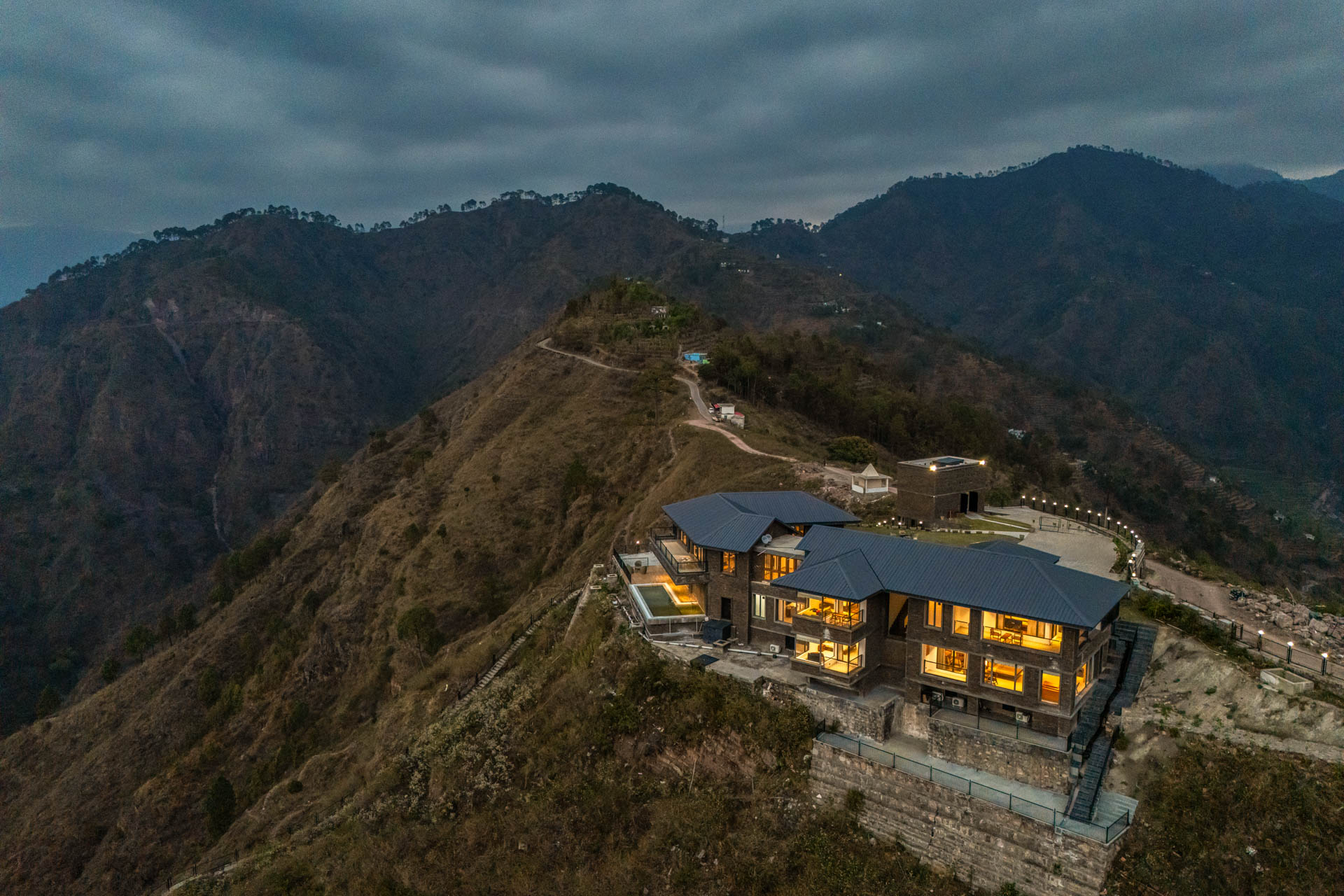
Most trekkers split the pre-trek stay between Rishikesh (375 m, 9 hours’ drive from Sagar) for acclimatisation and Sagar village for the trailhead night. Post-trek, Dehradun or Mussoorie offer a comfortable overnight before the long return drive home. Sagar itself has only basic guesthouses and operator-run tents.
This is the section where StayVista properties come into the picture, and we will be straightforward about where we do — and do not — have a presence.
Pre-trek base: Rishikesh
Rishikesh is the natural staging post. It is on the highway, has good food and connectivity, sits at 375 m so it does not disrupt your sleep cycle, and gives you a slow day on the Ganga to mentally prepare for the trek.
We recommend two nights in Rishikesh before the Sagar drive. The first night is recovery from your Delhi or Mumbai journey. The second night is a soft acclimatisation buffer — short walks, light meals, an early dinner, and a 5 AM start to Sagar.
Mana
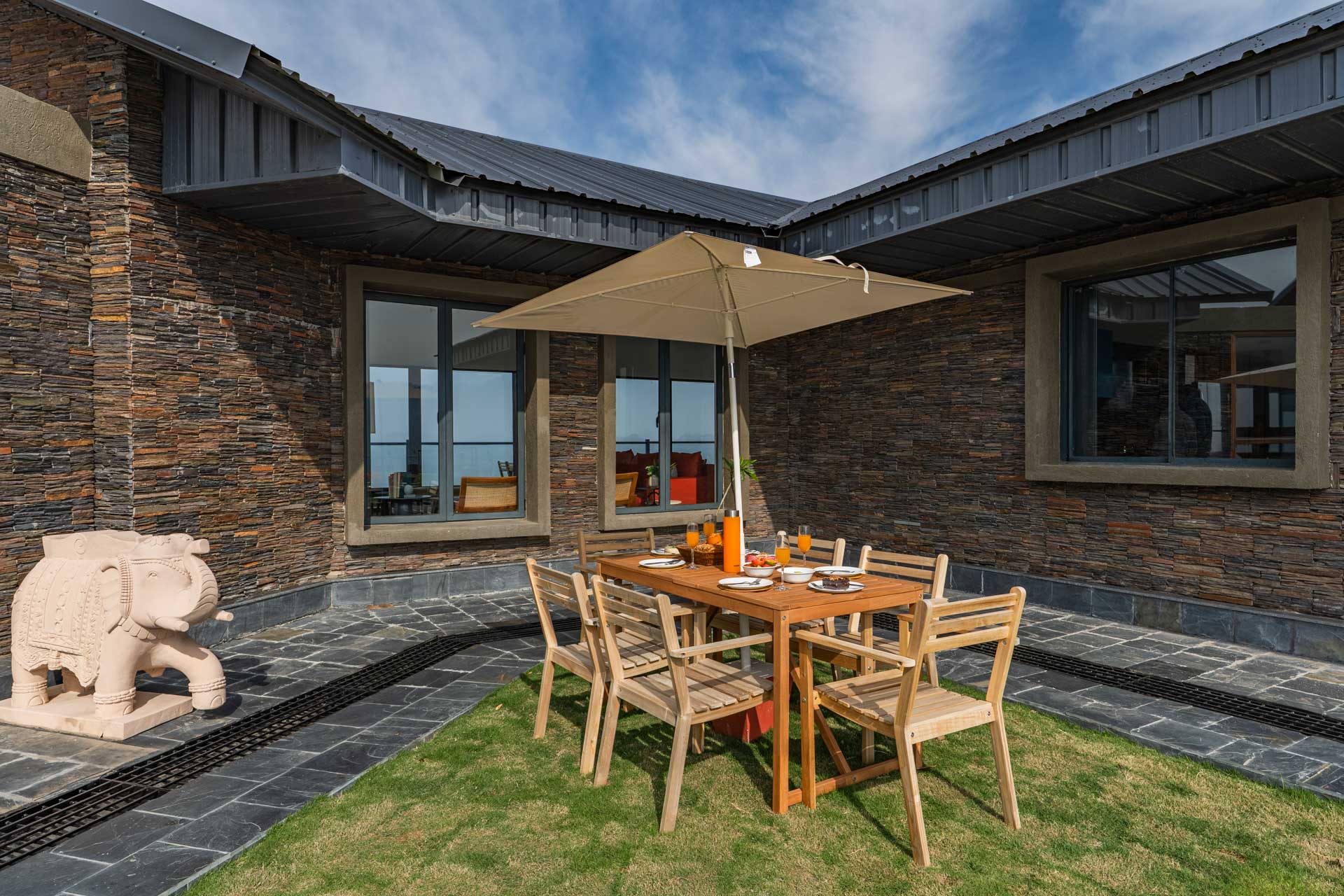
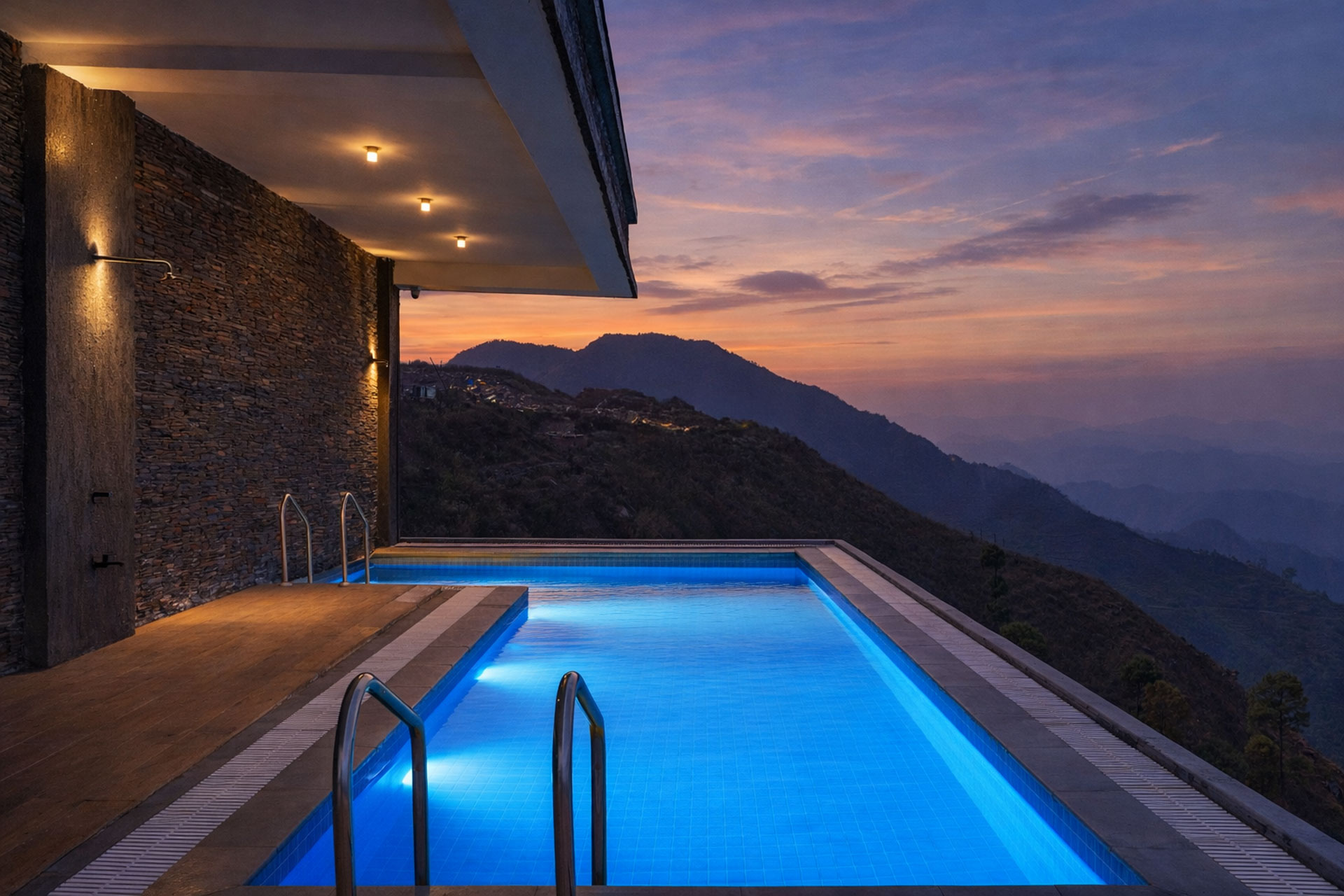
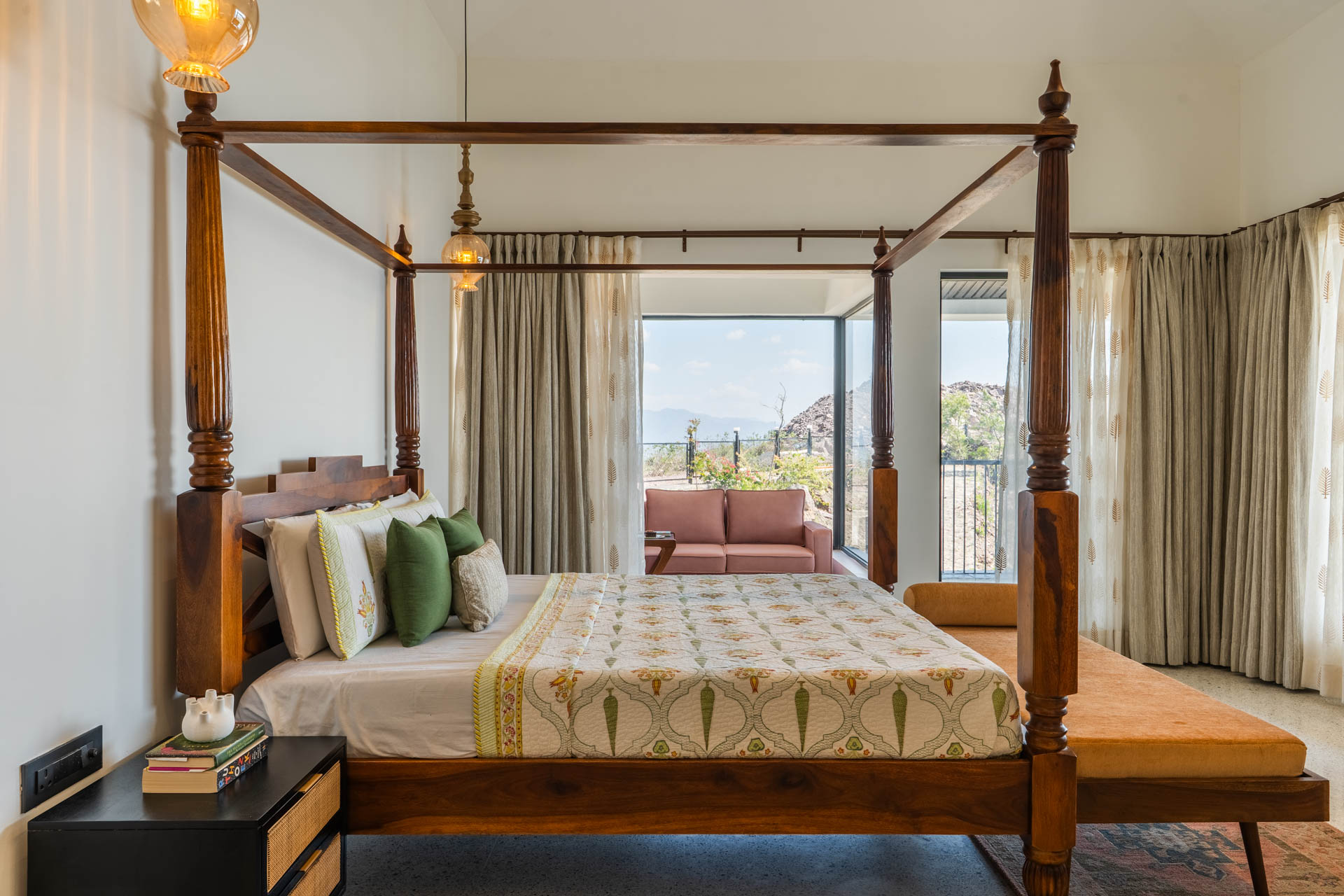
Our Mana villa in central Rishikesh — a 3-bedroom homestay 700 m from the nearest Ganga ghat and 6 km from Rishikesh Railway Station — is one option pilgrim families have used as a pre-trek base. If you want broader choice, browse the StayVista Rishikesh homestays collection or the Rishikesh villas page. For evening plans, the Ganga Aarti at Triveni Ghat is walking distance from most central Rishikesh stays, and our local guide on things to do in Rishikesh while you acclimatise is a practical companion.
Trailhead night: Sagar village
StayVista does not have a property at Sagar village. We are mentioning this directly because pilgrim families have asked us — and the honest answer is that Sagar is too small and too remote for serviced homestays. For the trailhead night, use your trek operator’s tent or a small guesthouse in Sagar . If you prefer slightly better facilities, Gopeshwar (5 km from Sagar) has basic hotels.
Post-trek recovery: Dehradun or Mussoorie
Day 4 ends with you back in Sagar around late afternoon. Driving 9 hours to Delhi the same night is risky. We strongly recommend an overnight halt before the long return.
- Dehradun (~190 km from Sagar, 5–6 hours): closer to Jolly Grant Airport for flyout the next morning. Our Dehradun villas range from family homestays to private villas with kitchens.
- Mussoorie (~220 km from Sagar, 6–7 hours): a cooler hill-station wind-down. Our Mussoorie homestays are popular with families who want a 1–2 night break before heading home.
If you are deciding between hill stations for the post-trek halt, our Mussoorie vs Nainital comparison for summer 2026 helps you choose based on distance, weather, and crowd levels.
Planning your 2026 Panch Kedar pilgrimage? StayVista hosts pilgrim families across Uttarakhand — from Rishikesh and Haridwar for pre-trek acclimatisation to Mussoorie and Dehradun for post-trek recovery. Browse our full Uttarakhand collection for homestays and villas with sattvik kitchens, drivers familiar with the Char Dham–Panch Kedar circuit, and heated water through the night.
Rudranath Packing Checklist

Footwear and movement:
- High-ankle waterproof trekking shoes (broken in)
- Trekking poles (mandatory for descent)
- 2–3 pairs of merino or synthetic socks
Clothing — 3-layer system:
- Base layer (thermal top + bottom)
- Mid layer (fleece + light down)
- Outer layer (waterproof jacket and pants)
- Trekking pants (1 quick-dry pair, 1 backup)
- Warm hat, sun hat, gloves
Carry on the trail:
- Headlamp with spare batteries
- 3-litre hydration system or 2 × 1-litre bottles
- Sunglasses with UV protection
- Sunscreen SPF 50+
- Personal medical kit (Diamox after doctor’s advice, paracetamol, band-aids, anti-diarrhoeal)
- Power bank (no charging past Sagar)
- ID and printed permit receipt
- Trash bag (Leave-No-Trace rule; the Forest Dept enforces this)
Pro tip: Rent trekking poles in Rishikesh for around ₹100 per day if you do not own a pair. Cheaper than carrying from home, and you can return them on Day 4.
Rudranath vs the Other Four Panch Kedar Shrines — Quick Comparison

If you are deciding which Panch Kedar shrines to combine in 2026, here is a quick comparison.
| Shrine | Distance (one-way) | Max altitude | Days needed | Difficulty | Heli option |
| Kedarnath | 16 km | 3,583 m | 2–3 | Easy-moderate | Yes (IRCTC) |
| Tungnath (Chopta) | 4 km | 3,680 m | 1 day | Easy | No |
| Rudranath | ~20 km | ~4,000 m (Pitradhar) | 4 | Moderate-difficult | No |
| Madhyamaheshwar | 16 km | 3,497 m | 3 | Moderate | No |
| Kalpeshwar | 0.3 km | 2,200 m | Half-day | Easy | No (year-round) |
For a typical 10-day Panch Kedar circuit in 2026, the doable order is Kedarnath → Madhyamaheshwar → Tungnath → Rudranath → Kalpeshwar. Rudranath is best saved for after you have already done 1–2 of the easier shrines so your body is conditioned.
Frequently Asked Questions
Rudranath Temple opened on 18 May 2026 and will close on 17 October 2026, after which the deity moves to Gopinath Temple in Gopeshwar for winter worship.
Rudranath is considered the toughest because it requires the longest single trek (~20 km one-way), crosses the highest point on the Panch Kedar circuit (~4,000 m at Pitradhar), and offers no helicopter or motorable alternative — all in two back-to-back trekking days.
The Rudranath trek is approximately 20–21 kilometres one-way from Sagar village to the temple. Standard duration is 4 days / 3 nights, including the road journey from Rishikesh on Day 1 and the descent back on Day 4.
Rudranath Temple sits at 3,600 metres / 11,808 feet. The trail crosses approximately 4,000 m at Pitradhar before descending to the temple, making the highest point of the trek almost 400 m above the temple itself.
Yes. Forest Department registration via kedarnathwildlife.uk.gov.in is mandatory for every trekker. The 2026 fee is ₹200 per Indian adult, biometric verification is done at the Sagar Forest Chowki, and the trail entry gate closes after 2:00 PM each day.
No. The Char Dham e-pass from registrationandtouristcare.uk.gov.in is for Kedarnath, Badrinath, Gangotri and Yamunotri only. Rudranath uses a separate Forest Department permit from the Kedarnath Wildlife portal. Bringing only the Char Dham e-pass will result in being turned back at Sagar.
It is possible but not recommended. Rainfall in Chamoli district reaches 280–340 mm per month in July–August, making trails muddy, leech-heavy and landslide-prone. Operators discourage monsoon treks and the trail can be officially closed during heavy rain spells.
The two best windows are mid-May to end-June 2026 (just after the 18 May opening, dry trails, rhododendrons in bloom) and mid-September to mid-October 2026 (post-monsoon clarity, thinner crowds, cooler air before the 17 October closing).
Rudranath is rated moderate-to-difficult and is not recommended for senior citizens above 70, or for anyone with cardiac, knee or breathing conditions. Devout senior pilgrims who cannot trek can visit Gopinath Temple in Gopeshwar during winter, when the deity is enshrined there.
Pre-trek, stay 2 nights in Rishikesh (375 m) for soft acclimatisation. Post-trek, halt overnight in Dehradun or Mussoorie before the long drive back. Sagar village itself has only basic guesthouses and operator tents.
Final Thoughts
Rudranath earns its reputation. The Lyuti–Panar climb is the kind of slow, lung-burning effort that leaves you grateful for every flat stretch. Pitradhar at sunrise, with its weathered stone thrones and the wind that comes off the high meadows, is the moment most pilgrims describe as the emotional centre of the trek. And the temple itself — small, quiet, made of stone, with no commercial buildup around it — feels earned in a way that more accessible shrines do not.
If you have the dates, the fitness, and the right permit, May–June 2026 and September–October 2026 are the right windows. Get the Forest Department registration done at least a week ahead. Clear the Sagar Chowki before 2 PM. Carry your own water past Lyuti. And give yourself two nights in Rishikesh on the way up, so the body is rested rather than depleted when you start the climb.
If you are planning your 2026 Panch Kedar yatra, our Rishikesh, Dehradun and Mussoorie homestays are open for May–October bookings — start with two nights of acclimatisation before the long drive to Sagar.
Walk gently. Carry your trash out. And take the time to sit at the temple for a while before you turn around.
Sources and References
- Kedarnath Wildlife Division — Rudranath Yatra Trek Registration (Forest Department permit portal)
- Uttarakhand Tourism Official Portal (Panch Kedar listings and route)
- Char Dham Registration Portal (for Kedarnath / Badrinath only — not Rudranath)
- Badrinath-Kedarnath Temple Committee announcement (May 2026)