

20 Best Destinations for Slow Travel in India in 2026

Jorhat, a small Assamese tea town most Indians couldn’t place on a map two years ago, saw a 493% year-on-year surge in flight searches for 2026. The headline isn’t Jorhat. It’s what Jorhat represents: a quiet, week-long, tea-estate kind of trip. Slow Travel in India isn’t a slower itinerary. It’s deciding what to skip.
Slow travel is now India’s fastest-growing travel format — Jorhat alone saw a 493% year-on-year surge in flight searches for 2026, per Skyscanner Horizons 2026. The 20 best destinations to slow-travel in India this year span Kerala’s backwaters, Himalayan villages (Spiti, Tirthan, Shoja), Majuli island, Pondicherry’s French Quarter, and underrated tea regions like Coonoor and Jorhat. Plan for 5-14 days per region — anything shorter defeats the point.
In this Blog
What is Slow Travel?
Slow travel prioritises depth and length-of-stay over distance and number of stops — fewer places, longer stays, deeper immersion. Booking.com’s 2026 Travel Predictions, surveying 29,000 travellers across 33 markets including over 1,000 Indians, found 25% of global travellers believe quieter hobbies — birdwatching, forest bathing, fishing — alone justify a vacation.
The reframe most travel writing misses: slow travel isn’t about adding time, it’s about subtracting places. The hardest decision isn’t where to go — it’s what to skip. See also India’s most peaceful destinations.
Why is Slow Travel Trending in India for 2026?
Skyscanner Horizons 2026 reported a 493% year-on-year jump in Jorhat flight searches and a 120% rise for Varanasi— these are week-long towns, not weekend stops. Booking.com’s 2026 Sustainability Report (India) found 91% of Indians considering wilderness stays and 96% rating sustainable travel as important (Booking.com India, May 2026). The Union Budget FY26 allocated Rs 2,541.06 crore to tourism and made homestays eligible for PMMY MUDRA loans (IBEF, 2025) — supply is rising.
Slow Travel in South India: Where to Start
The most mature homestay supply in India and monsoon-friendly travel windows make South India the gentlest place to start. See also offbeat Kerala for slow travellers.
1. Alleppey (Kerala Backwaters)
Skip the shikara loop. Book a stationary backwater home for four nights, plus one Kettuvallam overnight.
- Best time is October-March (dry) and July-September monsoon for Ayurveda
- Ideal stay: 4-6 nights
- How to reach: Cochin Airport (53 km); Alappuzha railway in town
- Entry fee: N/A — open destination
- Timings: N/A
- Ideal for: Couples, slow honeymooners, writers, wellness seekers
- Pro tip: Book one Ayurveda treatment per day, not back-to-back. Take the public ferry to Kottayam.
- Where to stay slow: The Backwater Heritage, Waves By Tarangi or The Rain. More in hidden corners of Alleppey backwaters and long-stay homestays in Alleppey.
2. Fort Kochi
Walkable heritage quarter — small enough for two days, rich enough for five. Chinese fishing nets at sunrise, spice godowns mid-morning, Kashi Art Café by 4pm.
- Best time: October-March
- Ideal stay: 3-5 nights
- How to reach: Cochin Airport (35 km); Ernakulam Junction on mainland
- Entry fee: Mattancherry Palace Rs 5 (under-15 free); Paradesi Synagogue Rs 10 Indian / Rs 100 foreigner
- Timings: Mattancherry Palace 9:45am-1pm and 2-4:45pm, closed Fridays; Synagogue 10am-1pm and 3-5pm, closed Fri-Sat
- Ideal for: Solo travellers, writers, couples
- Pro tip: Walk Princess Street before 8am — best light, no cruise crowds.
- Where to stay slow: Mandalay Hall, The Periyar Palace or Skyville B. More in Fort Kochi’s heritage walks.
3. Munnar
Spend a full day on one tea estate — plucker paths, leaf weighing, lunch on the estate — and skip Top Station.
Our host at Vale Echoes tells us most guests now block four to six nights, up from two to three in 2022. [VERIFY: exact 2024 vs 2025 length-of-stay growth % with listings team.]
- Best time is September-March and July-August monsoon for mist and wellness
- Ideal stay: 4-6 nights
- How to reach: Cochin Airport (110 km, ~4 hr); Aluva railway nearest
- Entry fee: Eravikulam NP Rs 200 Indian / Rs 500 foreigner + Rs 50 reservation; KDHP Tea Museum Rs 75 / Rs 35 child / Rs 20 camera
- Timings: Eravikulam 8am-2pm, closed Feb 1-Mar 31 (calving), reopens April 1; Tea Museum 9am-4pm, closed Mondays
- Ideal for: Couples, wellness seekers, plantation walkers
- Pro tip: Drive 6-8am for mist photos; by 10am the cloud burns off.
- Where to stay slow: Vale Echoes, Cardamom Casa or Bloom @ Misty Village.
4. Wayanad
Kerala’s quiet jungle. Forest stays, spice trails, evenings where the loudest sound is the next monkey troop.
- Best time: October-May (dry); July-September monsoon for green
- Ideal stay: 4-6 nights
- How to reach: Calicut Airport (95 km); Kozhikode railway closest
- Entry fee: Edakkal Caves Rs 50 / Rs 30 child / Rs 70 foreigner; Muthanga Safari Rs 20 Indian / Rs 110 foreigner + Rs 600/jeep (offline booking at forest office)
- Timings: Edakkal 8:30am-4pm, closed Mondays (1,920 daily cap); Muthanga safaris 7-10am and 3-4:30pm
- Ideal for: Forest lovers, families, wellness seekers
- Pro tip: Book one bamboo rafting morning at Kuruvadweep — and one full empty day.
- Where to stay slow: Wellbeing Villa, Veda @ Griha Sankalpa or Palm Tree Homes.
5. Coorg
Coffee-plantation slow. Mist before 9am, plantation walks mid-morning, the rest of the day spent doing very little. The monsoon version is its own genre — see monsoon plantation walks in Coorg and the full Coorg slow rhythm guide.
- Best time: October-March (clear); July-September (monsoon, lush)
- Ideal stay: 4-7 nights
- How to reach: Mangaluru Airport (135 km) or Bengaluru (265 km); Mysuru railway ~3 hr drive
- Entry fee: Dubare Camp Rs 50 entry + Rs 670 Indian / Rs 1,447 foreigner elephant interaction; Abbey Falls Rs 15 (Rs 10 child) + parking Rs 10-50
- Timings: Dubare interaction 9-11am and 4:30-5:30pm; Abbey Falls 9am-5pm
- Ideal for: Couples, families, monsoon romantics
- Pro tip: Skip Raja’s Seat. Go on a plantation walk with your host instead.
- Where to stay slow: Firefly by the River, Crystal Homestay or Three Rivers.
6. Pondicherry (Puducherry)
Most travellers do two nights. The slow version is five — cycle Auroville at 6am, read by 11, café evenings. See stay slow in Pondicherry villas and what to do in the French Quarter.
- Best time: October-March (dry, pleasant)
- Ideal stay: 3-5 nights
- How to reach: Chennai Airport (160 km); Villupuram railway nearest (~40 min)
- Entry fee: Auroville Visitor Centre free; Matrimandir Viewing Point free; Inner Chamber needs booking 5 working days ahead at mmaccess.auroville.org.in
- Timings: Matrimandir 9am-5:30pm; Inner Chamber closed Sundays and Tuesdays
- Ideal for: Couples, solo writers, cyclists
- Pro tip: Book an Auroville morning concentration session at the Matrimandir three weeks ahead.
- Where to stay slow: Starry Deck or Chitrita Bhavan; full Pondicherry villas collection.
Slow Travel in the Indian Himalayas: Pick One Valley
Most travellers rush a seven-day Himachal circuit and come back tired. Slow Himalaya is the opposite — pick one valley, stay 7-12 nights. Thrillophilia’s India Multi-Day Travel Index 2025 noted Kashmir’s family-led recovery and Ladakh’s shift towards longer luxury formats (via The Tribune, 2025).
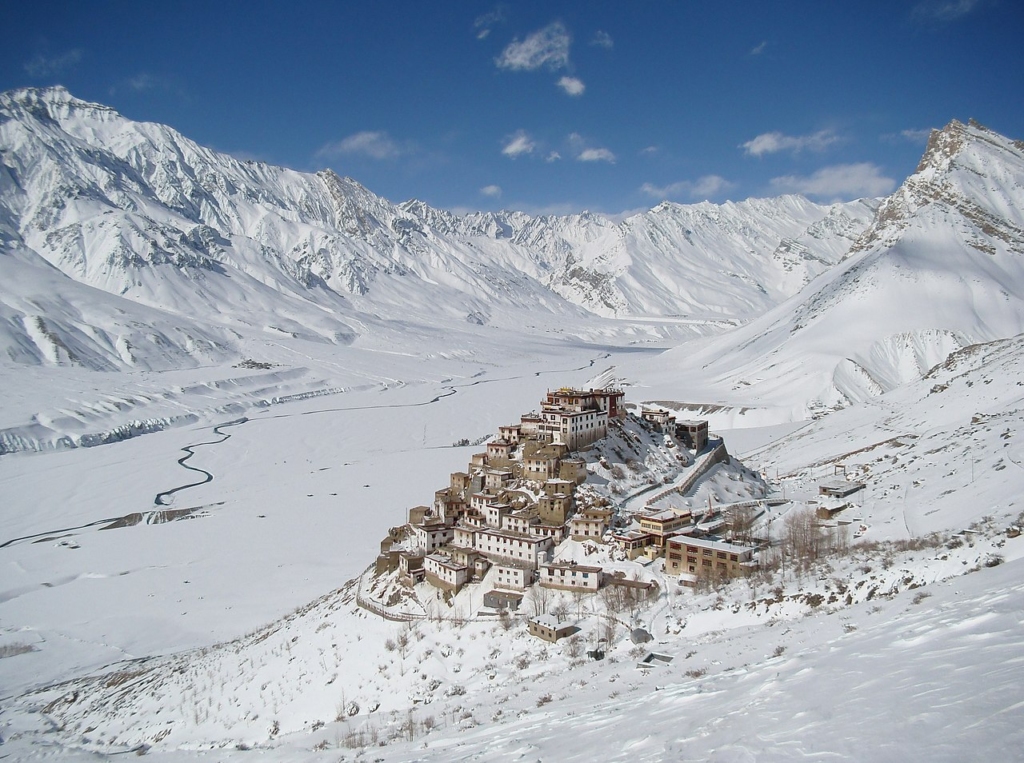
7. Spiti Valley
The slowest road trip in India. Stone-built villages at 4,000 metres, monastery mornings, silence that takes three days to hear. No StayVista inventory — for similar quiet closer to Delhi, see Tirthan below. Also the slow side of Spiti.
- Best time: May-October (roads open); Dec-Feb for snow leopard treks
- Ideal stay: 8-12 nights
- How to reach: Bhuntar Airport (250 km to Kaza) or Chandigarh (~500 km, 2-day drive); Manali-Kaza buses in summer
- Entry fee: Monasteries free or donation-based; Pin Valley NP no entry fee (Indians: Govt ID only; foreigners: PAP + ILP from SDM Kaza)
- Timings: Monasteries dawn-dusk
- Ideal for: Slow road-trippers, photographers, solo travellers
- Pro tip: Spend two nights in Kalpa or Nako to acclimatise. Carry cash — ATMs unreliable past Reckong Peo.
- Where to stay slow: No StayVista inventory. Book a registered homestay in Kibber, Komik or Langza via Spiti Ecosphere.
8. Tirthan Valley & Shoja
Himachal’s no-signal forest pocket — GHNP behind, Tirthan River in front. Phone coverage drops out by Banjar. Feature, not bug. See Shoja’s no-signal forest quiet.
- Best time: April-July and September-November; Dec-Feb for snow
- Ideal stay: 4-7 nights
- How to reach: Bhuntar Airport (50 km, ~2 hr); ~12 hr by road from Delhi via Aut tunnel
- Entry fee: GHNP ecozone free; core zone Rs 100 Indian / Rs 400 foreigner per day; permit from Shairopa
- Timings: GHNP trekking permits 6am-4pm at Sairopa centre
- Ideal for: Forest walkers, couples, writers, families with older kids
- Pro tip: Block one full day for the Jalori Pass-Serolsar Lake walk. Carry water.
- Where to stay slow: Breezy Banks or Mellow @ Breezy Banks.
9. Naggar / Slow Manali / Kullu Valley
Slow Manali isn’t Mall Road — it’s Naggar. Beas River, Naggar Castle, Roerich Estate. Base in Naggar; visit Manali once.
- Best time: March-July and September-November; Dec-Feb for snow
- Ideal stay: 4-6 nights
- How to reach: Bhuntar Airport (20 km); Joginder Nagar railway; ~8 hr from Chandigarh
- Entry fee: Naggar Castle Rs 50; Roerich Art Gallery Rs 50 / Rs 30 child / Rs 30 camera
- Timings: Naggar Castle 9am-6pm; Roerich Gallery 10am-5pm (Nov-Mar) or 10am-6pm (Apr-Oct), closed Mondays
- Ideal for: Couples, river-side readers, slow-art folk
- Pro tip: Eat at a Naggar dhaba, not the Manali tourist strip.
- Where to stay slow: Tulip Terraces, Retreat Cottages or Moets Waterfront Estate.
10. Mussoorie & Landour
Mussoorie is overrun. Landour, 6 km up, is not. Cantonment walks, deodar forests, Ruskin Bond country.
- Best time: March-July and September-November; Dec-Feb for snow
- Ideal stay: 3-5 nights
- How to reach: Jolly Grant Airport, Dehradun (60 km); Dehradun railway (~1.5 hr drive)
- Entry fee: Lal Tibba and Sister’s Bazaar walks free
- Timings: Char Dukan 7am-7pm; most Landour spots open-access
- Ideal for: Writers, slow-walking couples, retirees
- Pro tip: Walk the Landour Loop before 7am for the cleanest light. Be respectful around Ivy Cottage.
- Where to stay slow: Ivy @ Albert Estate, Mellow Cottage or Kaudia Estate.
11. Kasauli
Small, walkable, built for short slow weeks. Pine forests, Christ Church, Monkey Point — under two hours from Chandigarh.
- Best time: March-July and September-November; Dec-Feb for crisp light
- Ideal stay: 3-5 nights
- How to reach: Chandigarh Airport (65 km); Kalka railway (~1 hr) and the Kalka-Shimla toy train
- Entry fee: Monkey Point free but valid photo ID mandatory; phones/cameras/bags in locker (small fee); photography prohibited inside the Air Force station. Christ Church free.
- Timings: Monkey Point 9am-5pm; Christ Church daylight hours
- Ideal for: Couples, retirees, weekend-extending Delhi/Chandigarh folk
- Pro tip: Book a forest view, not a hill view. The fog rolls in slower.
- Where to stay slow: Cecil Cottages, Misty Mountains Cottage or Destine Villa; also Sirmour Baag.
12. Kashmir (Srinagar + Pahalgam villages)
Slow Kashmir is Dal Lake houseboat life plus a Pahalgam village week — not the seven-day Sonmarg-Gulmarg circuit. No StayVista inventory; editorial mention.
- Best time: April-October (warm); December-February for snow
- Ideal stay: 7-10 nights
- How to reach: Srinagar International Airport (direct from Delhi, Mumbai, Bengaluru)
- Entry fee: Mughal Gardens — Nishat Bagh Rs 20 Indian / Rs 300 foreigner; Shalimar and Chashme Shahi similar (verify at gate)
- Timings: Gardens 9am-7pm summer; shorter winter hours
- Ideal for: Couples, families, multi-gen, slow honeymooners
- Pro tip: Skip the circuit. Four nights on a Dal houseboat and four in a Pahalgam village. That’s the trip.
- Where to stay slow: Stunning Villas in Kashmir
Slow Travel in India’s Offbeat East: The 2026 Surprise Region
The Northeast and East are 2026’s biggest under-served slow-travel surface — Jorhat 493% YoY, Varanasi 120% YoY (Skyscanner Horizons 2026 via Business Today, Oct 2025).
13. Majuli Island (Assam)
The world’s largest river island. Satra monasteries, Mishing tribe stilt-house homestays, Brahmaputra ferries. No StayVista inventory; see the complete Majuli slow-travel guide.
- Best time: November-March (post-monsoon, accessible); avoid mid-July to early September (floods)
- Ideal stay: 4-6 nights
- How to reach: Jorhat Airport (Rowriah, ~25 km to Nimati Ghat); Nimati-Kamalabari ferry ~1.5 hr
- Entry fee: Most satras free / donation-based; Auniati Satra museum Rs 10
- Timings: Satras dawn to evening prayer; ferry 6am-4pm depending on water
- Ideal for: Cultural travellers, solo wanderers, slow photographers
- Pro tip: Time one evening for a Sattriya dance performance — your homestay can arrange.
- Where to stay slow: No StayVista inventory. Book a Mishing tribe stilt-house homestay near Garamur or Kamalabari via Assam Tourism.
14. Jorhat & Assam Tea Country
Skyscanner Horizons 2026’s surprise headliner — 493% YoY flight searches. Tea estate walks, planter bungalows, gateway to Majuli. See Jorhat — the gateway to Majuli.
- Best time: November-March
- Ideal stay: 3-5 nights
- How to reach: Jorhat Rowriah Airport (direct from Kolkata, Guwahati, Delhi); Jorhat Town railway
- Entry fee: Tocklai Tea Research Centre free (prior intimation); Hoollongapar Gibbon Sanctuary Rs 250 per head + Rs 500 DSLR + Rs 500 mandatory guide
- Timings: Tocklai 8:30am-5pm, closed Sat-Sun; Gibbon entry from 8am — go early
- Ideal for: Tea curious, history readers, slow couples
- Pro tip: Pair Jorhat (2-3 nights) with Majuli (3 nights) for a complete week.
- Where to stay slow: No StayVista inventory. Try a heritage planter bungalow (Burra Sahib’s Bungalow at Banyan Grove via Assam Tourism).
15. Sundarbans (West Bengal)
Slow boat life — tidal-creek silence, mangrove shadow, tiger country observation. Most operators sell a 2-night blitz; four nights minimum if you actually want to hear the place.
- Best time: November-February (cool, clearest)
- Ideal stay: 3-5 nights
- How to reach: Kolkata Airport (~110 km to Godkhali jetty, ~3 hr); boat into the delta
- Entry fee: Tiger Reserve Rs 120-180 Indian / Rs 1,500 foreigner per day + boat ~Rs 1,000/day + guide Rs 700; foreigners need permit via Forest Dept, Writers’ Building. Apply at eticketsundarbantigerreserve.com
- Timings: Boat permits 6:30am-4pm at Sajnekhali; no movement after sunset
- Ideal for: Wildlife slow-watchers, photographers, naturalists
- Pro tip: Book MoT-approved licensed operators only — unlicensed trips are illegal and unsafe.
- Where to stay slow: No StayVista inventory. Book a West Bengal Tourism-listed jungle camp at Pakhiralay or Dayapur.
16. Varanasi
The slow version is a week, not two days. Ghat-side mornings, music walks, slow river evenings. Skyscanner Horizons 2026 logged a 120% YoY rise in Varanasi flight searches (same source, Oct 2025).
- Best time: October-March (cool, dry, comfortable for ghat walks)
- Ideal stay: 5-7 nights
- How to reach: Lal Bahadur Shastri Airport (25 km); Varanasi Junction and Banaras railway
- Entry fee: Kashi Vishwanath corridor free; Sarnath Archaeological Museum Rs 5 Indian (verify at counter)
- Timings: Sarnath Museum 9am-5pm, closed Fridays; Ganga aarti at Dashashwamedh ~6:45pm winter, ~7:15pm summer
- Ideal for: Slow walkers, music students, writers, repeat pilgrims
- Pro tip: Hire a small boat at 4:30am with a single boatman — not a tourist group boat. See also Things to Do in Varanasi and stretching a Varanasi 2-Day Itinerary into a slow week.
- Where to stay slow: Vintage Varanasi
Underrated Slow Travel Picks for 2026
Four destinations that don’t show up in most “slow travel India” listicles — they should. See also less crowded places to visit in India.
17. Coonoor (Nilgiris)
Ooty’s quieter sibling — tea estates, the Nilgiri toy train, British-era walks Ooty has lost to traffic.
- Best time: October-March (clear); April-July (warm but pleasant)
- Ideal stay: 4-6 nights
- How to reach: Coimbatore Airport (70 km); Mettupalayam railway for the Nilgiri Mountain Railway (~3 hr scenic toy train)
- Entry fee: Sim’s Park Rs 30 adult / Rs 15 child / Rs 30 camera; Dolphin’s Nose viewpoint free
- Timings: Sim’s Park 8:30am-6pm; toy train via IRCTC, book ~30 days ahead
- Ideal for: Couples, retirees, slow-train romantics, plantation walkers
- Pro tip: Book the toy train Coonoor-Ooty-Mettupalayam direction (downhill) — gentler views.
- Where to stay slow: Long Walk Villa, Aashirwaad Villa or Yellow Tulip Villa.
18. Slow Goa: Assagao, Aldona, Siolim
Portuguese village Goa — not the beach shacks. Café walks, riverside Sundays, no scooter rallies. Rule: skip the beach belt for the first three days.
- Best time: November-February (peak); September-October and March (shoulder)
- Ideal stay: 5-7 nights
- How to reach: Goa International Airport (Mopa, ~30 km from Assagao); Dabolim (~45 km)
- Entry fee: Open villages, free. Upper Fort Aguada Rs 25/person via asi.payumoney.com/quick/ufa; lower fort and lighthouse area free
- Timings: Upper Fort Aguada 8:30am-5:30pm
- Ideal for: Couples, slow-art folk, café cultures, work-from-anywhere travellers
- Pro tip: Eat at Mapusa’s Saturday market — wins for slow days over Arpora’s night market.
- Where to stay slow: A Portuguese Tale, Aldona by Tellado or Casa Armeh, Siolim.
19. Udaipur (Slow Heritage)
Lake-facing havelis, old city walks, Aravalli sunsets — and the patience to skip Eklingji on this trip. India’s heritage tourism market is projected to nearly double to USD 57.14 billion by 2033 (Grand View Research, 2024-25).
- Best time: October-March (cool, dry)
- Ideal stay: 4-6 nights
- How to reach: Maharana Pratap Airport (22 km); Udaipur City railway
- Entry fee: City Palace Museum Rs 400 adult / Rs 150 child; Crystal Gallery Rs 500 / Rs 300; camera Rs 200, video Rs 500. Saheliyon ki Bari Rs 10 / Rs 50 foreigner. Vintage Car Museum Rs 250 / Rs 150 child
- Timings: City Palace 9am-9pm; Saheliyon ki Bari 9am-7pm; Vintage Car Museum 9am-9pm
- Ideal for: Couples, multi-gen families, slow-heritage travellers
- Pro tip: Pick a side of the lake (city or Ambrai) and walk only that side at sunset.
- Where to stay slow: Udaikot, Mewar Mansion or Prakriti Farms.
20. Ladakh (Nubra, Hanle, Turtuk)
Slow Ladakh isn’t the eight-day Pangong sprint. It’s a village base in Turtuk or Hanle, monastery mornings, dark-sky reserve nights. No StayVista inventory; editorial.
- Best time: May-September (roads open); Dec-Feb for snow-season slow stays
- Ideal stay: 8-12 nights
- How to reach: Leh Airport (direct from Delhi, Mumbai, Srinagar); acclimatise in Leh for 2 days before driving up
- Entry fee: Hemis Monastery Rs 100 (with museum) + Rs 100 camera; most monasteries Rs 30-100. Indians no longer need an ILP (since 2021) — pay the Ladakh Environment & Development Fee at lahdclehpermit.in (~Rs 400 EDF + Rs 20/day wildlife, ~Rs 590 for 7 days). Foreigners need ILP from DC Office Leh
- Timings: ILP processing 10am-3pm at DC office (Mon-Sat); Hemis 8am-6pm; monasteries dawn-dusk
- Ideal for: Slow road-trippers, astrophotographers, multi-gen (with acclimatisation)
- Pro tip: Pick TWO bases — Turtuk for 4 nights, Hanle for 4 nights. Skip Pangong if you’ve been.
- Where to stay slow: No StayVista inventory. Book a registered village homestay in Turtuk (Balti network) or Hanle (Ladakh Astronomy Tourism community-run).
How to Plan a Slow Travel Trip in India
Before you book, answer three honest questions. Booking.com’s 2026 India data shows 91% of travellers consider wilderness stays but most still default to multi-city itineraries that erase the very thing they’re after (Booking.com India, May 2026).
How many places? Half what you think. If your draft has four destinations in 10 days, cut it to two.
How many nights per place? Minimum four. Better five to seven. Himalayan circuits like Spiti or Ladakh need 10-14.
What will you skip? Pick three “obvious” sights you’ll skip — and write them down. The slow trip is what you didn’t do.
Where to Stay for Slow Travel in India
MakeMyTrip data showed homestay and villa searches surged 42% YoY (Travel Trends Today coverage, 2025) — a number we see mirrored in domestic StayVista bookings. See also South India’s digital-detox homestays.
Six StayVista properties we’d book for a slow week in 2026:
- Plantation slow: Vale Echoes, Munnar
- Backwater slow: The Backwater Heritage, Alleppey
- Mountain quiet: Breezy Banks, Tirthan
- Coffee-country slow: Firefly by the River, Coorg
- Heritage slow: Mandalay Hall, Fort Kochi
- Hill-station slow: Cecil Cottages, Kasauli
Planning a slow week? Browse StayVista’s homestays and villas — our team can flag properties hosting 5-7 night stays this season.
FAQs: Slow Travel in India
What is slow travel and why is it trending in India for 2026?
Choosing fewer destinations and longer stays — depth over distance. Skyscanner Horizons 2026 reported a 493% YoY surge in Jorhat flight searches alone (Skyscanner via Business Today, Oct 2025), and Booking.com’s 2026 Predictions found 25% of global travellers say quieter hobbies alone justify a vacation.
Which is the best slow travel destination in India for first-timers?
A Kerala 7-day combo — three nights in Alleppey on a backwater home, four nights in Fort Kochi for walkable heritage. Coorg (4-6 nights) is the easier alternative. Both have India’s most mature homestay supply (Booking.com India 2026).
How many days do you need for a slow travel trip in India?
Five to seven nights minimum per region; 10-14 for Himalayan circuits like Spiti or Ladakh. Thrillophilia’s 2025 Multi-Day Travel Index flagged Kashmir and Ladakh shifting towards longer family and luxury formats (via The Tribune, 2025).
Is slow travel in India expensive?
Counter-intuitively, no — longer stays usually reduce per-night costs. Homestays in Coorg, Munnar, Tirthan and Pondicherry routinely offer weekly rates 15-25% cheaper than nightly. Booking.com’s 2026 India data shows 91% of travellers considering wilderness stays, which trend cheaper than urban hotels (Booking.com India, May 2026).
What’s the difference between slow travel and a regular holiday?
A regular holiday optimises for stops; slow travel optimises for depth. Slow travellers pick homestays over hotels, cook one meal with a local host, and leave a day unplanned. The global wellness tourism market reached USD 990.4 billion in 2025 partly because of this shift (Grand View Research, 2025).
Which is the best month for slow travel in India?
It depends on the region. October-March for South India and heritage destinations like Udaipur and Varanasi. May-September for the Himalayas — Spiti, Ladakh, Tirthan, Mussoorie. The southwest monsoon (June-September) is paradoxically perfect for Kerala and Coorg wellness slow stays. For Majuli and Jorhat, stick to November-March to avoid Brahmaputra floods.
Where can I stay long-term for slow travel in India?
For 7-plus night stays, Vale Echoes Munnar, Breezy Banks Tirthan, Firefly by the River Coorg, The Backwater Heritage Alleppey, and the Pondicherry villas collection. MakeMyTrip showed homestay and villa searches up 42% YoY.
Conclusion
Slow travel in India isn’t a slower itinerary. It’s deciding what to skip. The 20 destinations above span four regions, four budgets, and four kinds of quiet — but one rule works across all of them.
- Pick a region, not a circuit. One valley, one backwater belt, one tea country.
- Block 5+ nights per place. Less than that and you’re commuting.
- Choose a homestay over a hotel. Hosts unlock the trip.
- Leave one full day with nothing planned. That’s the day you’ll remember.
We’ve watched 3-night Coorg bookings turn into 10-night ones often enough to know what changes — around day five, the guest stops asking what to see and starts asking what’s for breakfast. If 2026 is your year to slow down, browse StayVista’s homestays and villas curated for long stays.