

First Monsoon Rain India 2026: First Rain Arrives + 6 Onset Spots
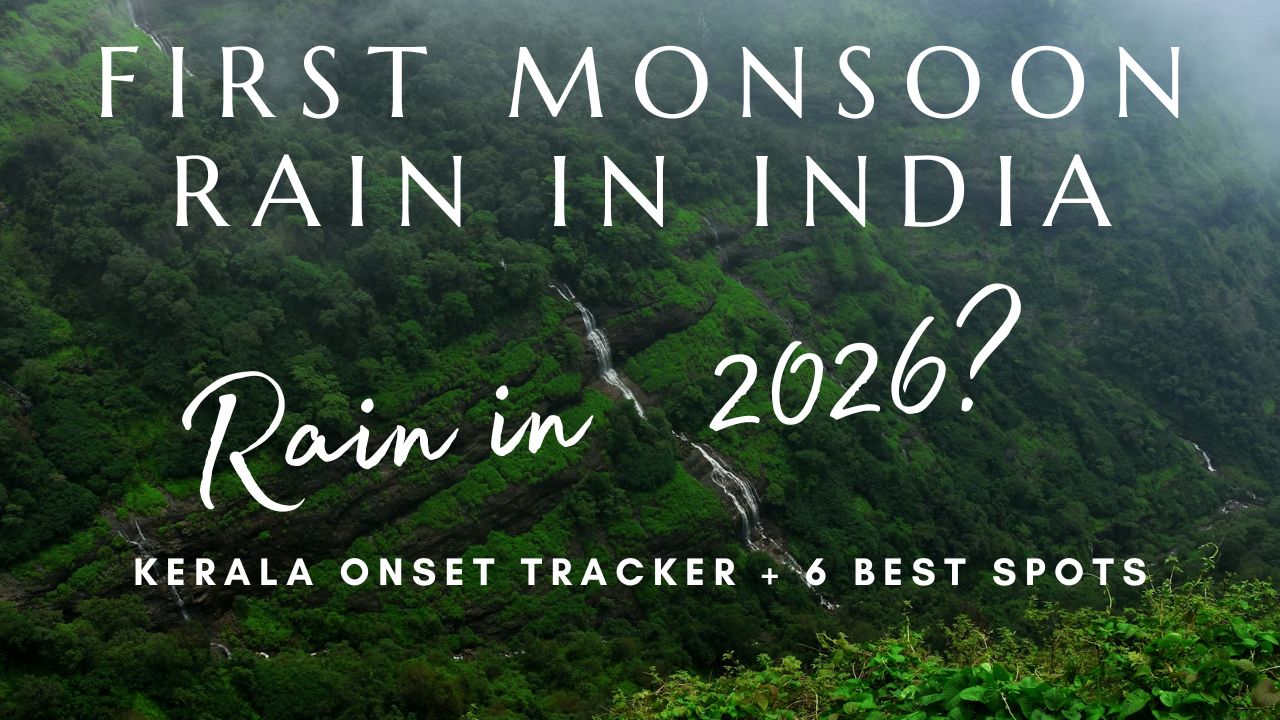
The first monsoon shower in India never arrives quietly. By the third week of May, the wind shifts over the Andaman Sea, the air thickens over Kerala, and somewhere between Trivandrum and Trichy, the sky cracks open for the first time in eight months. This year, the India Meteorological Department has forecast the southwest monsoon to reach the Andaman Islands by May 20 and Kerala by May 27 — a near-normal onset window. This guide tracks the 2026 onset state by state, decodes what IMD’s 92% rainfall forecast actually means for your trip, and rounds up the six best places to experience the first showers — with the StayVista villas we’d book at each.


The 2026 southwest monsoon arrived over Andaman & Nicobar on May 16 — six days earlier than IMD’s forecast — and is expected to make Kerala landfall around May 26 (±4 days), five days ahead of the June 1 normal. Seasonal rainfall is forecast at 92 % of LPA (below normal, not deficient). The six best spots to experience the first showers, in arrival order: Andaman, Munnar, Wayanad, Coorg, Mahabaleshwar, and Alleppey.
In this Blog
Quick Info
| Andaman onset (IMD forecast) | May 16, 2026 |
| Kerala onset (IMD forecast) | May 26, 2026 (±4 days) |
| Mumbai onset (normal) | June 11, 2026 |
| Delhi onset (normal) | June 27, 2026 |
| Seasonal rainfall forecast | 92% of LPA (IMD) / 94% of LPA (Skymet) |
| Ideal trip duration | 3–5 days (extend to 7 for a South India tour) |
| Best base cities | Kochi (Kerala), Bengaluru (Coorg), Pune (Mahabaleshwar), Port Blair (Andaman) |
When Will the First Monsoon Rain Hit India in 2026?

The 2026 southwest monsoon is expected to reach the Andaman & Nicobar Islands by May 20 and Kerala by May 27 (±4 days), per the India Meteorological Department’s April 2026 long-range forecast. From there, the monsoon advances steadily northward — reaching Mumbai around June 11 and Delhi by the last week of June.
IMD doesn’t declare the monsoon arbitrarily. The Kerala onset is officially called only after specific criteria are met: at least 60% of designated rainfall stations across the southern peninsula must record 2.5 mm or more of rain on two consecutive days, wind patterns at 925 hPa must shift to a westerly direction up to 600 hPa, and outgoing longwave radiation (OLR) values must drop below 200 W/m² over the Indian Ocean. Only when all three conditions converge does IMD make the declaration that travellers, farmers, and weather watchers have been waiting for.
Here’s the state-wise schedule for 2026, comparing the long-period normal with IMD’s current forecast:
| Region | Normal Onset | 2026 IMD Forecast |
| Andaman & Nicobar | May 22 | ~May 20 |
| Kerala | June 1 | May 27 (±4 days) |
| Karnataka coast | June 5 | First week of June |
| Bengaluru | June 5 | June 5–8 |
| Goa | June 7 | June 7–10 |
| Hyderabad | June 8 | June 10–14 |
| Mumbai (coast) | June 11 | June 10–13 |
| Kolkata | June 11 | June 12–15 |
| Delhi | June 27 | Late June |
IMD’s forecast Andaman onset of May 20 is two days earlier than the long-period normal of May 22. The Kerala date of May 27 is five days earlier than the normal of June 1. Both are within what meteorologists classify as the “early-to-normal” range — neither qualifies as significantly early, despite some news headlines suggesting otherwise. For state-specific monsoon weather detail, see our Kerala monsoon weather guide and Maharashtra monsoon weather guide.
What’s Happening on the Ground This Week (25 May 2026)
As of 25 May 2026, the monsoon has already arrived over the Andaman & Nicobar Islands, Kerala onset is days away, and northwest India is still trapped under a heatwave with relief expected from 28 May. The pattern is unusual for this stage of the season: the south is already wet, the north is still touching 48°C, and the gap closes by the weekend.
The Pre-Monsoon Push That Brought Onset Forward
A low-pressure system over the southwest Bay of Bengal on 12–13 May 2026 drove heavy pre-monsoon showers across Kerala and Tamil Nadu, accelerating the southwest monsoon’s arrival over the Andamans by six days. Skymet flagged the system as a favourable trigger for early onset — and the monsoon duly crossed into the Nicobars on 16 May 2026, well ahead of the long-period normal of 22 May. The same moisture wedge is now poised to carry the Arabian Sea branch across Kerala’s coast around 26 May. Source: Skymet Weather.
Northwest India: Heatwave Through 28 May, Then Relief
While the south transitions to monsoon, the north is still in peak-summer mode. An Orange-alert heatwave covers Punjab, Haryana, Chandigarh, Delhi-NCR, and western Uttar Pradesh through 28 May 2026, with maximum temperatures touching 47–48°C across parts of Rajasthan and southern Punjab. A Western Disturbance arriving on 28 May is expected to drop daytime temperatures by 3–5°C across northwest India and trigger scattered pre-monsoon thundershowers in Delhi, Chandigarh, and the Himalayan foothills. Source: The Tribune.
What This Means for Your Trip This Week
- Booking Munnar, Wayanad, or Alleppey? First heavy showers are at the door. The IMD cascade means Munnar and Wayanad register their first heavy rain within 48 hours of the Kerala onset — so a trip booked for the last week of May or first week of June lands you in the cleanest part of the onset window before the heavier mid-June rain sets in.
- Travelling from Delhi, Chandigarh, or Jaipur this week? Plan around 28 May. That’s when the Western Disturbance arrives and the first heat break of the season is expected. If your trip is flexible, push outdoor sightseeing to 29 May onward.
- Already in the Andamans? You’re inside the only Indian destination where the monsoon has officially arrived. Ferry services between Port Blair and Havelock are still operating, but afternoon services are being cancelled more frequently — lock your inter-island travel for morning departures.
- Watching for the Kerala onset announcement? IMD declares it only after 60% of designated rain stations record 2.5 mm or more on two consecutive days, with the right wind and OLR signatures. The announcement typically lands 24–48 hours after the rain itself arrives, so expect the official onset notification between 26 and 28 May.
Updated: 25 May 2026, 11:00 IST. We’ll refresh this section once IMD makes the official Kerala onset declaration.
Which State Gets the First Monsoon Rain in India?

The Andaman & Nicobar Islands receive India’s first monsoon rain every year — typically around May 22 — about 8 to 10 days before Kerala. Among mainland states, Kerala is always the first, followed by coastal Karnataka and Goa.
This sequence isn’t accidental. The southwest monsoon splits into two branches as it moves up from the Indian Ocean. The Bay of Bengal arm sweeps over the Andamans first, then curves westward over the Bay before re-entering the mainland through the northeastern states. The Arabian Sea arm, meanwhile, runs straight north along the Western Ghats — and Kerala, sitting at the southern tip of those ghats, takes the first hit from this branch.
A common source of confusion: many travellers assume Kerala is India’s “first” monsoon destination. It is — but only on the mainland. The Andamans get rain first, full stop. The phrase that’s technically accurate is “Kerala is the first mainland state to receive the southwest monsoon.” Per IMD’s standardised onset records, Kerala has held that title every single year since 1961. There hasn’t been a single exception in over six decades. That’s the kind of reliability you can plan a trip around.
Is the 2026 Monsoon Below Normal? What It Actually Means for Travellers

IMD has forecast 2026 monsoon rainfall at 92% of the long-period average — the first below-normal forecast since 2023, per the Press Information Bureau. For travellers, this is mostly good news: fewer landslide closures in the Western Ghats, drier road conditions, and clearer mornings in hill stations like Munnar and Mahabaleshwar.
Let’s unpack the numbers. IMD classifies seasonal rainfall in four bands: above normal (104–110% of long-period average), normal (96–104%), below normal (90–96%), and deficient (below 90%). At 92%, the 2026 forecast sits firmly in the below-normal band — not in deficient territory. Skymet’s parallel forecast is slightly more optimistic at 94% of LPA. The driver is a developing El Niño combined with a positive Indian Ocean Dipole pattern later in the season — both of which suppress monsoon rainfall over central India.
But here’s the angle nobody’s writing about. A below-normal monsoon is genuinely better for travel in three measurable ways. First, the Western Ghats see fewer landslide closures. In 2024 — a wet year at 108% of LPA — Wayanad alone saw dozens of landslide-related road blocks. Below-normal years historically run a fraction of that. Second, road trips that depend on dry stretches between showers become more reliable. The Mumbai–Lonavala, Bangalore–Coorg, and Pune–Mahabaleshwar drives all see fewer flooding-related advisories. Third, hill-station viewpoints and houseboat operators run closer to schedule — Alleppey houseboats cancel fewer cruises, and Munnar’s Top Station clears between showers faster.
The honest caveat: below normal is bad news for farmers, water tables, and reservoir levels. Don’t read this as us cheering for a drought. We’re not. But if you’re choosing between a 2026 monsoon trip and skipping it because of “the deficit forecast,” the deficit is not a reason to skip. It’s a reason to go now, before the news cycle catches up with the traveller-side reality.
Monsoon Live Onset Tracker
As of May 25, 2026, India’s southwest monsoon has already arrived over the Andaman & Nicobar Islands (six days early) and Kerala onset is expected on May 26 (±4 days), five days ahead of the June 1 normal. Mumbai, Karnataka coast, and Delhi onsets remain on the long-period normal schedule.”
Which 6 Spots Are Best for the 2026 First Monsoon Rains?
The six best places to catch India’s 2026 first monsoon rains, in arrival order, are the Andaman & Nicobar Islands (May 14–20), Munnar in Kerala (May 25 – June 2), Wayanad in Kerala (May 27 – June 5), Coorg in Karnataka (June 1–7), Mahabaleshwar in Maharashtra (June 10–15), and the Alleppey backwaters in Kerala (May 27 – June 5). Each suits a different traveller and base city — pick the one that matches your timing window.
1. Andaman & Nicobar Islands — First Landfall (~May 20)

The Andamans are the only Indian destination that gets rain before Kerala. The Bay of Bengal arm of the southwest monsoon hits Port Blair and Havelock first, around May 14–20. What you get is a strange, sensory experience: humpback dolphins are more active than at any other time of year, underwater visibility is dropping, but pelagic fish are surfacing, and beaches are essentially empty.
- Expected first-rain window 2026: May 14–20
- Entry fee: Most beaches are free; marine parks ₹50–100 (Indian) / ₹500 (foreign)
- Timings: Most ferries operate 6 AM – 4 PM (afternoon services often cancelled in monsoon)
- Best time to visit: May 20 – June 5 (heavier rain from mid-June onward)
- How to reach: Fly to Veer Savarkar International Airport, Port Blair (3 hr from Chennai, 2.5 hr from Kolkata)
- Time required: 4–5 days minimum
- Ideal for: Couples, slow travellers, photographers, and divers willing to trade visibility for empty beaches
- Pro tip: The first-rain sweet spot is May 20 – June 5 only. After mid-June, the heavy southwest monsoon disrupts ferries between Port Blair and Havelock, and many beaches become unsafe. Treat Andaman as a “catch the onset and leave” trip — not a deep-monsoon destination. Sources: Andaman & Nicobar Tourism and Incredible India’s monsoon Andamans guide.
2. Munnar, Kerala — Onset Week (~May 27)

Munnar is the first Indian hill station to receive the monsoon every year. Tea estates turn neon green within 48 hours of the first showers; mist over Anamudi peak becomes a daily ritual; and the silence of the cardamom plantations during a downpour is something you can’t replicate at any other time of year.
- Expected first-rain window 2026: May 26 – June 1
- Entry fee: Eravikulam National Park ₹125 (Indian), ₹420 (foreign); Tea Museum ₹110
- Timings: Eravikulam 8 AM – 4 PM (closed Feb–March); Tea Museum 9 AM – 5 PM
- Best time to visit: Last week of May to first week of June (peak first-rain experience)
- How to reach: Fly to Kochi (130 km / 4 hr drive), or train to Aluva (110 km)
- Time required: 3 days
- Ideal for: Couples, families, slow travellers
- Pro tip: Book a homestay above 1,500m elevation — you’ll watch the rain roll across the valley below while staying dry on a verandah. Pack waterproof shoes; carry leech socks if you plan any plantation walks. Source: Incredible India Munnar guide.
- Where to stay: Misty Village — a luxury homestay set in the high-mist Munnar belt — or Cardamom Casa, a hill-valley villa surrounded by cardamom plantations.
For more on what to see beyond the tea trail, our complete Munnar tourist places guide covers viewpoints, treks, and lesser-known stops.
3. Wayanad, Kerala — Onset Week (~May 27)

Wayanad is less crowded than Munnar and arguably more dramatic. The Western Ghats here are dense, primary rainforest, and Kerala Tourism runs an official “Splash” monsoon tourism festival here every June. The forest noise after the first rain is something you don’t forget.
- Expected first-rain window 2026: May 27 – June 3
- Entry fee: Edakkal Caves ₹50 (Indian) / ₹100 (foreign); Banasura Sagar Dam ₹40
- Timings: Most attractions 9 AM – 5 PM; some closed Mondays
- Best time to visit: First two weeks of June (peak greenery, manageable rain)
- How to reach: Fly to Calicut (90 km / 2.5 hr) or Kannur (60 km / 2 hr); the nearest railhead is Kozhikode
- Time required: 2–3 days
- Ideal for: Couples, nature photographers, slow travellers; less ideal for families with very young kids (trekking-heavy attractions)
- Pro tip: Skip the Chembra Peak trek in heavy rain (slippery, leeches). Drive the Lakkidi viewpoint road instead — the mist effect from the car is spectacular and a lot safer. Source: Kerala Tourism’s Wayanad monsoon page.
- Where to stay: Mountain Rain — a 3-bedroom villa in the Vythiri–Pookode belt crafted for slow living, or La Grove, tucked into 19 acres of farmland in the Sahya range.
Planning a longer trip? See our full Wayanad monsoon trip plan for a 4-day itinerary.
4. Coorg, Karnataka — Early June

The monsoon reaches Coorg about a week after Kerala. Coffee estates are at peak fragrance just before harvest; Abbey Falls and Iruppu Falls swell to three times their dry-season volume within days of the first heavy rain.
- Expected first-rain window 2026: June 1–7
- Entry fee: Abbey Falls ₹15; Iruppu Falls ₹50; Raja’s Seat ₹10
- Timings: Most viewpoints sunrise to sunset; Tibetan Monastery 9 AM – 6 PM
- Best time to visit: First two weeks of June (freshest greenery before heavier mid-June rain)
- How to reach: Fly to Bengaluru or Mangalore (both ~260 km / 5–6 hr); nearest railhead is Mysuru (120 km / 3 hr)
- Time required: 2–3 days (or 4 days if combining with Chikmagalur)
- Ideal for: Couples, friend groups, weekend travellers from Bengaluru
- Pro tip: Time Abbey Falls for 8–9 AM — by 11 AM, weekend bus tours crowd the railing. The Madikeri–Bhagamandala road in June is one of the most underrated drives in India. Source: Karnataka Tourism’s Coorg page.
- Where to stay: The Estate Villa on an active coffee plantation, or Three Rivers, a set where three rivers meet in central Coorg.
For specific things to do, see our best things to do in Coorg during monsoon and the Coorg in June and July guide.
5. Mahabaleshwar, Maharashtra — Mid-June

Mahabaleshwar is the first Western Ghats hill station to get the monsoon north of Goa. Strawberry season ends just as the rains start; valleys fill with mist within hours of the first shower; and Lingmala Falls — dry through most of the year — comes alive in a few days.
- Expected first-rain window 2026: June 10–15
- Entry fee: Most viewpoints free; Pratapgad Fort ₹25; Venna Lake boating ₹100–300
- Timings: Viewpoints sunrise to sunset; Venna Lake 8 AM – 7 PM
- Best time to visit: Mid-June to early July (the greenest stretch before heavy August rain)
- How to reach: Drive from Pune (120 km / 3.5 hr) or Mumbai (260 km / 6 hr); no direct rail link
- Time required: 2 days (a solid weekend trip)
- Ideal for: Mumbai/Pune weekend travellers, families, friend groups
- Pro tip: Skip Wilson Point on rainy days — visibility is zero. Head to Lingmala Falls instead. The spray off the cliff is the best Mahabaleshwar monsoon photograph you’ll take. Source: Maharashtra Tourism Mahabaleshwar page.
- Where to stay: The Deck at Dawn Ecstasy — a British country-house-inspired villa perched in the misty hills — or Beyond the Blue Door, close to Strawberry Farms and Lingmala Waterfall.
Planning the drive? Our Mahabaleshwar monsoon guide and Maharashtra monsoon road trips round-up have you covered.
6. Alleppey Backwaters, Kerala — Early–Mid June

Kerala’s houseboat season pauses in May for maintenance. Most operators relaunch around June 1, which makes early June the lowest-crowd, freshest-greenery window of the entire year. The backwaters during onset are a sensory experience few foreign tourists understand — paddy fields flood, fish surface, palm fronds dance in the wind ahead of every band of rain.
- Expected first-rain window 2026: May 27 – June 5
- Entry fee: Houseboat overnight ₹8,000–25,000 (varies by category); Snake Boat (Sting) Festival regatta tickets ₹500–2,000
- Timings: Houseboat check-in usually 12 PM, check-out 9 AM; day cruises operate 9 AM – 5 PM
- Best time to visit: First two weeks of June (gentle rain, houseboats just reopened, lowest crowds)
- How to reach: Train to Alleppey/Alappuzha station (90 km from Kochi airport); some operators offer Kochi pickup
- Time required: 2 days (one overnight on a houseboat is plenty)
- Ideal for: Couples (a honeymoon staple), older travellers, photographers
- Pro tip: Book a houseboat operator that uses traditional country-craft (kettuvallam) construction — they handle rain better than the modern fibreglass ones. Ask explicitly for a covered upper deck.
Where to stay: The Backwater Heritage — a heritage villa with scenic backwater views — or La Riva Heritage Villa, a century-old riverside heritage home with modern comforts.
How the Monsoon Spreads Across the Western Ghats After Kerala Onset

IMD declares the official Kerala onset, but the actual first heavy rain at each Western Ghats destination varies by 8 to 18 days depending on latitude and elevation. Here’s the rough sequence travellers should plan around — once the Kerala onset is declared, the rest of the south-Indian monsoon belt follows a predictable cascade.
- Within 48 hours of Kerala onset: Munnar and Wayanad register their first heavy showers. Both are within the first impact zone of the Arabian Sea branch of the monsoon.
- 2–5 days after Kerala onset: Coorg and the Karnataka coast (Mangalore, Udupi) follow. Coffee plantations from Chikmagalur to Sakleshpur see the rain by early June.
- 10–14 days after Kerala onset: Mahabaleshwar and the northern Western Ghats begin their season. Lonavala, Khandala, and Matheran follow within the same week.
- 14–18 days after Kerala onset: Igatpuri, Nashik, and the Sahyadri range north of Mumbai see their first heavy rain. By this point, the southern hill stations are deep into the monsoon.
If you’re planning around actual rain — not just the IMD onset announcement — work backward from this cascade. A trip to Mahabaleshwar booked for early June risks arriving before the rain. Mid-June is the safe bet. For Munnar or Wayanad, the last week of May to the first week of June lines up almost exactly with the first showers.
How Many Days Do You Need for a Monsoon Trip in 2026?
How long should you go for? It depends on which monsoon you want — the first showers, the deep monsoon, or a quick weekend escape. A 2-day weekend works from Mumbai or Pune; a 3-day Kerala trip is the sweet spot for the first rains; a 5-day South India tour links Munnar, Wayanad, and Coorg in one loop. Here are three itineraries that match how StayVista guests actually book.
The 2-Day Weekend (Mumbai or Pune Base)
- Day 1: Drive to Mahabaleshwar (3.5 hr from Pune, 6 hr from Mumbai). Lunch at a local café; afternoon at Venna Lake; sundowner at a viewpoint that’s not Wilson Point.
- Day 2: Lingmala Falls in the morning (best light, fewer crowds), drive back via Panchgani for strawberry shopping if it’s still in season.
The 3-Day Kerala First-Rain Trip (Kochi Base)
- Day 1: Fly into Kochi, drive to Munnar (4 hr). Evening at a tea estate with hot pakoras and chai.
- Day 2: Eravikulam National Park in the morning, Top Station viewpoint in the afternoon. Watch the rain roll in over the valley from your verandah.
- Day 3: Drive back to Kochi via the tea estates and Periyar (if time permits). Fly out the same evening.
The 5-Day South India Tour: Munnar → Wayanad → Coorg
- Days 1–2: Munnar (as above).
- Day 3: Drive Munnar to Wayanad (8 hr; long but scenic). Settle in for a forest evening.
- Day 4: Wayanad — Lakkidi viewpoint road, Edakkal Caves, Banasura Sagar Dam.
- Day 5: Drive Wayanad to Coorg (5 hr) for an extended weekend, or fly out from Calicut.
For ideas on quick monsoon escapes from metros, our best monsoon weekend getaways from Mumbai and Bangalore round-up has more.Planning your monsoon stay?Browse all StayVista villas across the monsoon belt →
Where Should You Stay During Monsoon 2026?
If you’re planning to be in the Western Ghats or Kerala for the first showers, here’s where we’d stay — picked for the monsoon, by destination.
Munnar — for cloud-level views above 1,500m


Wayanad — for primary rainforest immersion


Coorg — for coffee-estate monsoons

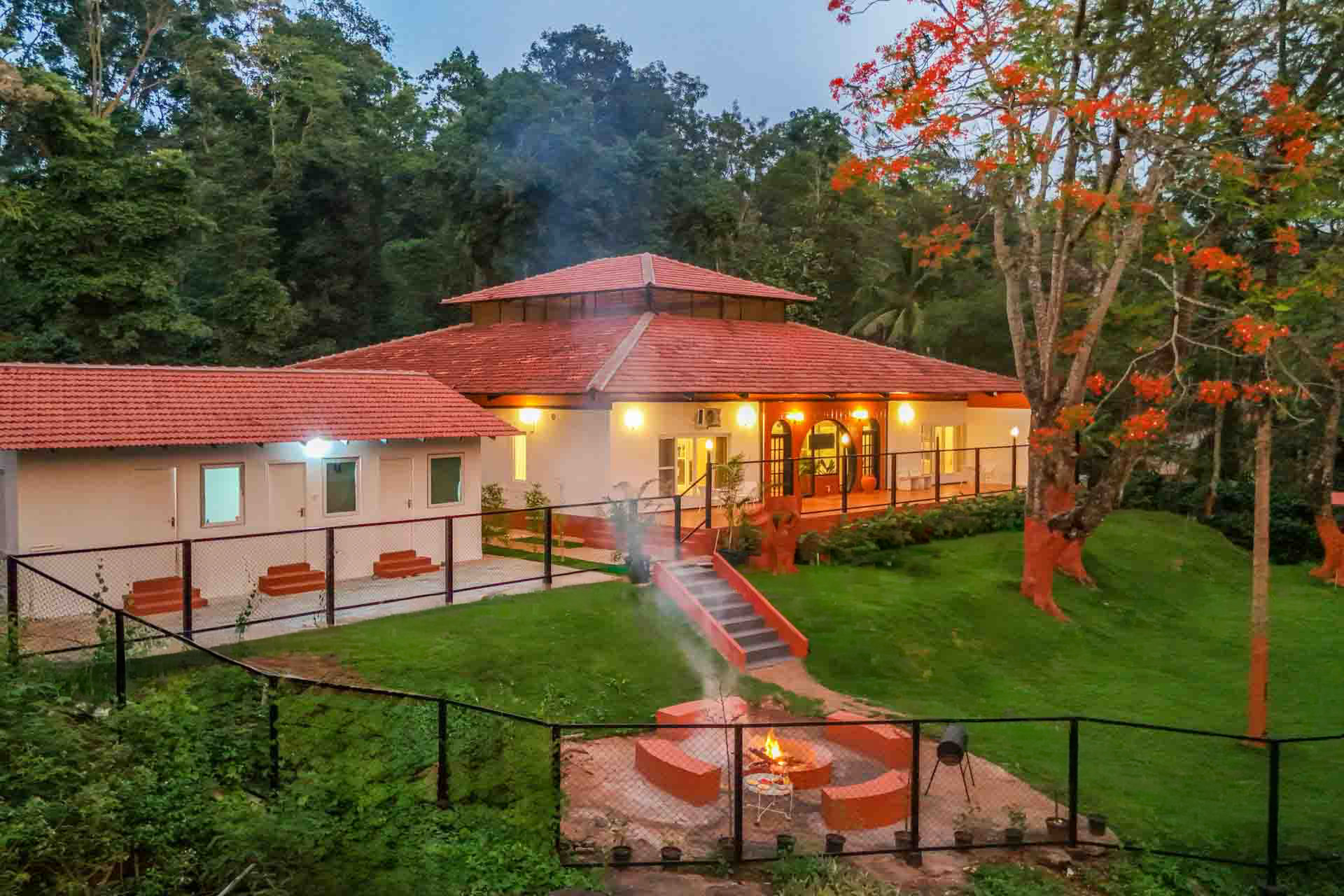
Mahabaleshwar — for the closest first-rain experience from Mumbai or Pune


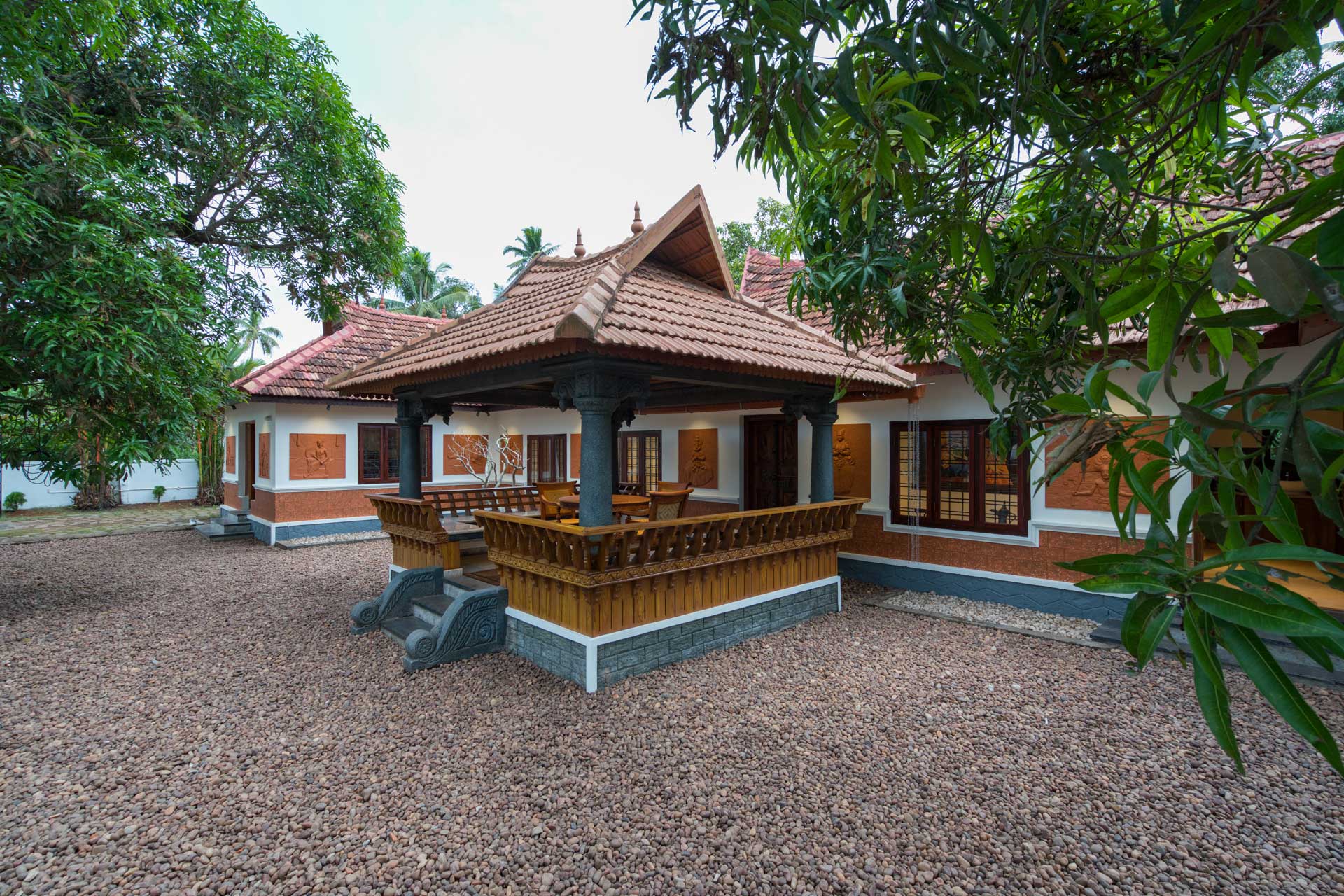
Alleppey — for backwater monsoon stays

Choosing between a homestay and a villa? Our Munnar vs Wayanad homestays comparison breaks down which is right for which type of traveller. For more on Kerala specifically, our Kerala monsoon weather guide goes deeper on timing.
Frequently Asked Questions
The southwest monsoon is expected to reach the Andaman & Nicobar Islands by May 20, 2026, and Kerala by May 27 (±4 days), per IMD’s April 2026 long-range forecast. It then advances northward, reaching Mumbai around June 11 and Delhi by late June.
Among mainland states, Kerala receives the first monsoon rain. However, the Andaman & Nicobar Islands actually get the monsoon before Kerala — typically around May 22 versus Kerala’s June 1 normal. The Western Ghats then channel the moisture up the west coast through Karnataka, Goa, and Maharashtra.
In India, the first showers of the southwest monsoon are colloquially called Mansoon Ki Pehli Baarish. There’s no formal IMD term — IMD uses the technical phrase “onset of southwest monsoon over Kerala,” which is declared only after specific rainfall, wind, and outgoing-longwave-radiation criteria are met across at least 60% of designated stations.
IMD’s forecast Kerala onset of May 27 is approximately 5 days earlier than the long-period normal of June 1. The Andaman onset of May 20 is 2 days earlier than its normal of May 22. Both are within the early-to-normal range — neither qualifies as significantly early, despite some news framing suggesting otherwise.
Yes — Kerala has been the first mainland state to receive the southwest monsoon every year since 1961, when IMD began standardised onset records. The 2026 forecast continues this pattern: Kerala onset May 27, followed by Karnataka coast (early June), Goa (June 7), and the Maharashtra coast (June 11).
IMD has forecast seasonal rainfall at 92% of long-period average — classified as below normal (90–96% LPA). It is the first below-normal forecast since 2023, driven by an expected El Niño development and a positive Indian Ocean Dipole later in the season. Source: PIB, April 13, 2026.
Yes — but “below normal” doesn’t mean drought. IMD classifies 90–96% of LPA as below normal, and only below 90% as deficient. Skymet’s parallel forecast pegs 2026 at 94% LPA. For travellers, this generally means fewer landslide closures and more drive-friendly road conditions in the Western Ghats.
Per IMD’s standard advance schedule, the monsoon reaches Mumbai around June 11 and Delhi around June 27. The 2026 forecast suggests Mumbai onset between June 10 and 13, with Delhi expected in the last week of June. Final dates are confirmed only as the monsoon actually advances each year.
The Bottom Line
The 2026 monsoon arrived in the Andamans on May 16 and is days away from Kerala. That’s roughly two weeks from now. The “below normal” headline is more useful for farmers than for travellers; for anyone planning a June trip, a 92% LPA monsoon means cleaner viewpoints, safer drives, and fewer cancelled cruises. The next 14 days are when most monsoon stays book out. Browse all StayVista villas across the monsoon belt →, and check back here — we’ll update the onset table as IMD declares actuals through May and June.
Written by Team StayVista
Last updated: May 25, 2026