
India’s 80th Independence Day Falls on a Saturday: How 1 Day of Leave Turns 15 August Into a 3-Day Escape
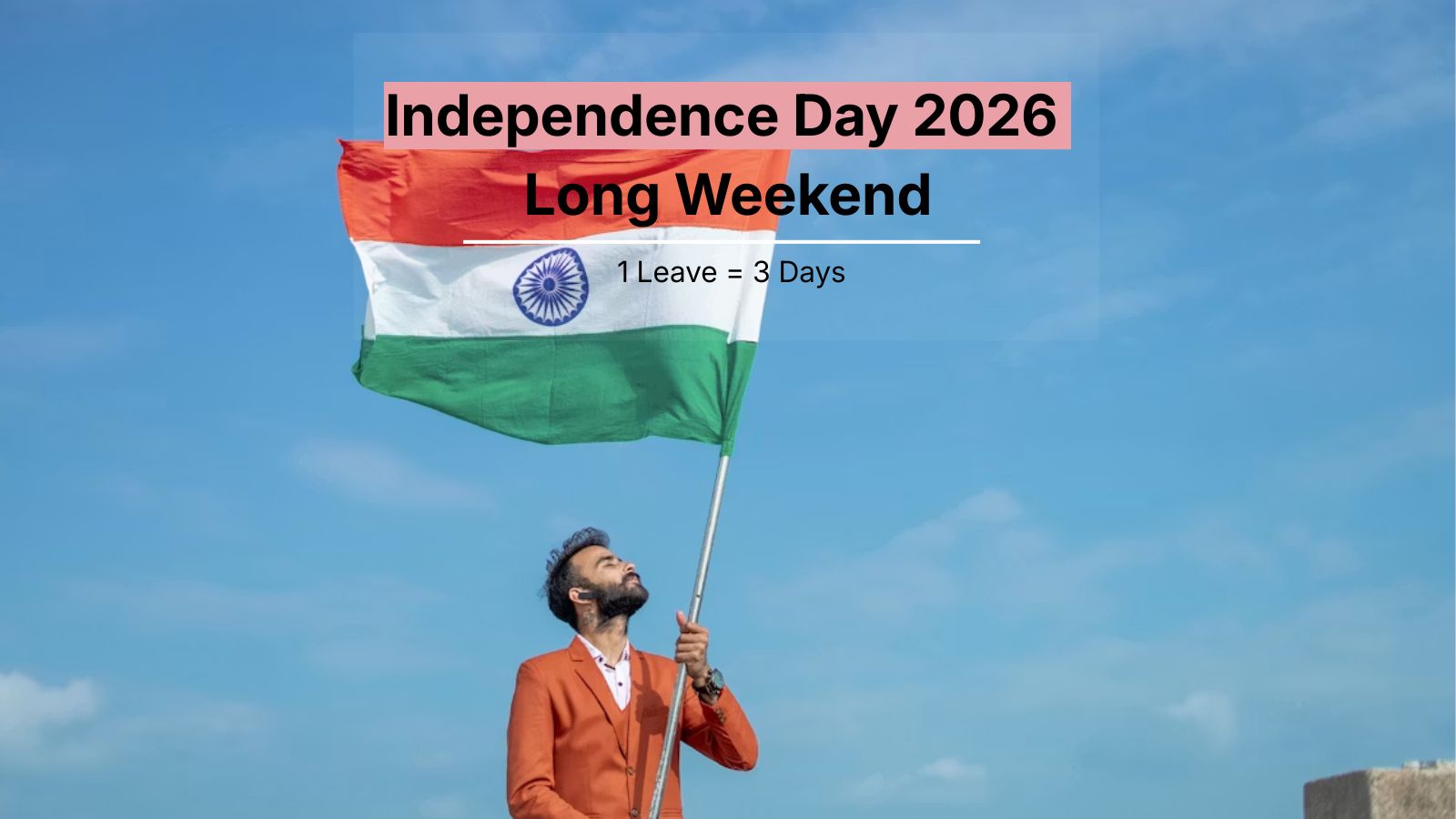
TL;DR: India’s 80th Independence Day falls on Saturday, 15 August 2026, so the holiday collapses into the weekend for anyone on a five-day week. Taking a single day of leave — Friday 14 August or Monday 17 August — rebuilds it into a three-day break. It’s one of only three gazetted holidays lost to weekends in 2026.
Here’s the annoying bit about 2026. Independence Day lands on a Saturday.
For most salaried people in India, that means the holiday simply disappears. You don’t gain a day. You get the weekend you were going to get anyway, with a flag hoisting in it.
But the fix is unusually cheap. One leave day — Friday the 14th or Monday the 17th — turns a nothing weekend into a genuine three-day escape. And because mid-August sits deep inside the monsoon, the where matters more than it would in November. Some of India’s most-recommended August destinations are, frankly, a bad idea that week.
This guide covers the leave math, the 22 destinations that actually work in a three-day window, and the ones we’d tell you to skip. Where you’d want a villa or homestay at the end of the drive, StayVista has properties across most of these routes.
In this Blog
Quick info: the Independence Day 2026 long weekend
| Holiday date | Saturday, 15 August 2026 (80th Independence Day) |
| Natural weekend | Sat 15 – Sun 16 August (2 days, no leave) |
| With 1 leave day | Fri 14 – Sun 16, or Sat 15 – Mon 17 (3 days) |
| With 2 leave days | Fri 14 – Mon 17 (4 days) |
| Weather | Peak southwest monsoon across most of India |
| Best travel radius | Under 5 hours one-way door-to-door |
| Book by | Late July 2026 — see the booking section below |
| Next long weekend | Fri 28 August (Raksha Bandhan, restricted holiday) |
When exactly is the Independence Day 2026 long weekend?
The Independence Day 2026 long weekend runs Friday 14 August to Sunday 16 August, or Saturday 15 August to Monday 17 August — three days either way, built on one leave day. Independence Day itself is Saturday, 15 August 2026, and it marks India’s 80th Independence Day, counting 1947 as the first (Government of India).
There’s no second gazetted holiday adjacent to it. That’s the thing most leave planners get wrong this year. Raksha Bandhan 2026 falls on Friday, 28 August — a fortnight later, and a restricted holiday rather than a gazetted one, so most private offices stay open. Janmashtami is Friday, 4 September, also restricted.
So the week of 15 August gives you exactly one public holiday, and it’s already inside your weekend.
Your options, plainly:
- Two days, zero leave. Sat 15 + Sun 16. Fine for anything within a two-hour drive.
- Three days, one leave. Add Friday 14 or Monday 17. This is the sweet spot, and it’s what this guide is built around.
- Four days, two leaves. Fri 14 through Mon 17. Opens up flights and the far south.
Why 15 August 2026 is a holiday you’ll quietly lose
Three of 2026’s 17 central gazetted holidays fall on a Saturday or Sunday — Id-ul-Fitr on Saturday 21 March, Independence Day on Saturday 15 August, and Diwali on Sunday 8 November. That’s roughly 18% of the year’s public holidays absorbed into weekends for anyone working Monday to Friday. The gazetted list is published annually by the Department of Personnel & Training.
Our finding: We checked all 17 central gazetted holidays for 2026 against the calendar. Twelve fall on a weekday. Two — Gandhi Jayanti (Friday 2 October) and Christmas (Friday 25 December) — land on a Friday and build a free three-day weekend with no leave at all. Three vanish into weekends. Independence Day is the only one of those three that most Indian offices treat as non-negotiable, which makes it the most conspicuous loss of the year.
India doesn’t operate a substitute-holiday system the way the UK does with bank holidays. When a gazetted holiday falls on a Saturday, no Monday is granted in exchange. The day is simply observed on the day it falls.
Which is why the one-leave-day trade is worth doing deliberately rather than by accident. You’re spending a single day of annual leave to recover a public holiday you already earned. In pure leave-efficiency terms that’s a 3:1 return — three days off for one day drawn.
If you’d like to plan the rest of the year on the same logic, our 2026 long weekend calendar maps every holiday cluster month by month.
Friday the 14th or Monday the 17th — which leave day is smarter?
Take Friday 14 August. For most travellers it’s the better of the two, mainly because of how Indian weekend traffic behaves: you leave on Thursday night or early Friday and drive against the Friday-evening exodus rather than into it.
Here’s the trade-off in full.
| Fri 14 – Sun 16 | Sat 15 – Mon 17 | |
|---|---|---|
| Departure traffic | Light (Thu night / Fri morning) | Heavy (Sat morning peak) |
| Return traffic | Heavy (Sun evening peak) | Light (Mon morning) |
| Property rates | Higher — Fri and Sat both weekend-rated | Slightly lower — Sun night often cheaper |
| Flag hoisting | You’re away for it | You’re away for it |
| Best for | Drives over 3 hours | Shorter drives, late risers |
If your destination is more than three hours out, take Friday. The extra daylight matters enormously on ghat roads in monsoon, and arriving in the wet after dark on a hill route is the single most avoidable risk of the whole trip.
If you’re staying within two or three hours, take Monday instead. Sunday-night rates are usually softer, and driving home on a Monday morning is one of the genuine small luxuries of Indian travel.
One practical note from guests who travel this weekend every year: whichever leave day you pick, book it before your team does. Long-weekend leave requests in Indian offices cluster hard, and the 14th tends to fill before the 17th because it’s the more obvious choice.
The 3-day test: how we filtered these destinations
A destination qualifies for this list on two conditions: one-way door-to-door travel under five hours, and genuinely worth visiting in mid-August monsoon. Both, not either.
The first rule is arithmetic. On a three-day break, a five-hour drive each way costs you ten hours — most of one full day. Anything beyond that and you’re spending the holiday in transit, arriving tired and leaving early.
The second rule is where most August listicles fall apart. Mid-August is peak southwest monsoon. A destination that’s spectacular in October can be closed, flooded, or actively dangerous on 15 August. Waterfalls run at full volume, which is the draw — but the same rainfall shuts national park core zones and destabilises hill highways.
The filter that changes the list: Applying both rules together removes several destinations that appear on nearly every “August long weekend” roundup. Araku Valley is 675 km from Hyderabad — about eleven hours by road, and a fine trip from Visakhapatnam but not from Hyderabad in three days. Mandarmani’s own season runs September to February; the monsoon months are the ones to avoid. Both fail, and both are widely recommended anyway.
Where a destination is close enough but carries monsoon risk, we’ve marked it amber rather than dropping it — you can go, with conditions.
22 destinations that pass the 3-day test
Each entry below is under five hours one-way from the metro listed, and works in mid-August specifically.
From Mumbai
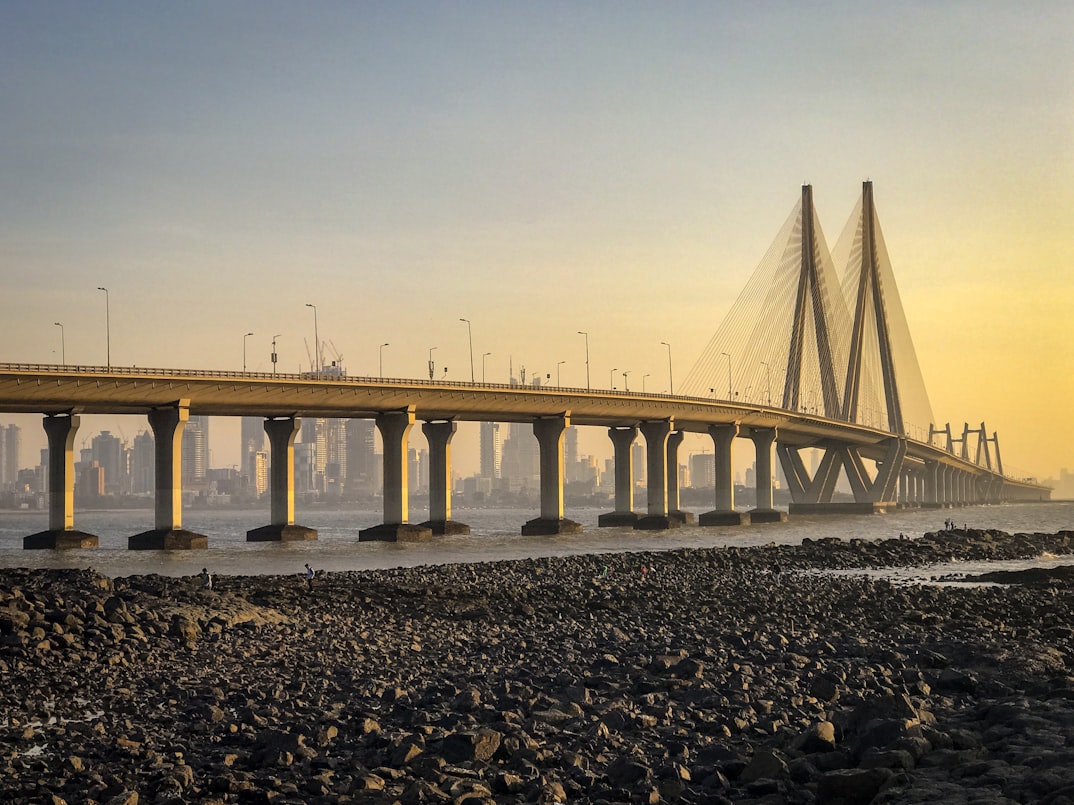
1. Lonavala & Khandala, Maharashtra — 83 km, about 2 hours via the Mumbai–Pune Expressway. Peak monsoon is Lonavala’s actual season: Bhushi Dam overflows, Tiger’s Leap disappears into cloud, and the ghats run green. Entry to Rajmachi and Lohagad forts is free; Karla Caves charges a nominal ASI fee.
Time required: 2 days.
Ideal for: couples, first-time monsoon travellers, groups.
Pro tip: Bhushi Dam gets genuinely dangerous when the spillway is in full flow and access is often restricted — go early, and treat any barricade as final.
2. Karjat, Maharashtra — 65 km, roughly 2 hours. The gentlest option on this list: riverside farm properties, low elevation, no ghat driving to speak of. Kondana Caves and the Ulhas valley trek run alongside.
Time required: 2 days.
Ideal for: families with young children, first-time drivers in monsoon.
Pro tip: Karjat’s appeal in August is the river, and river levels rise fast after upstream rain — don’t camp on a bank overnight.
3. Igatpuri, Maharashtra — 120 km, 2.5 to 3 hours via NH-160. Kalsubai, Maharashtra’s highest peak, starts here, and July to mid-September is when the waterfalls run hardest. Camel Valley and Bhatsa River Valley are the standard viewpoints.
Time required: 2 days.
Ideal for: trekkers, photographers.
Pro tip: the Kasara ghat backs up badly on Friday evenings — this is a route where taking Friday off genuinely pays. See our Igatpuri monsoon guide for trail conditions.
4. Alibaug, Maharashtra — 95 km by road, or about an hour on the RoRo ferry from Bhaucha Dhakka. Amber: ferry services are weather-dependent in monsoon and suspend on rough-sea days, so keep the road route as a fallback. Kashid and Nagaon beaches are for walking, not swimming, in August.
Time required: 2 days.
Ideal for: groups, villa weekends.
Pro tip: check ferry status the morning of travel, not the night before.
5. Bhandardara, Maharashtra — 185 km, about 4.5 hours. Randha Falls and the Wilson Dam overflow are among the most dramatic monsoon sights within reach of Mumbai, and Arthur Lake sits below Mount Kalsubai.
Time required: 2 days.
Ideal for: couples, photographers, stargazers on clear nights.
Pro tip: the last stretch is narrow and unlit — arrive before dusk.
More options in our roundup of places near Mumbai in monsoon.
From Pune
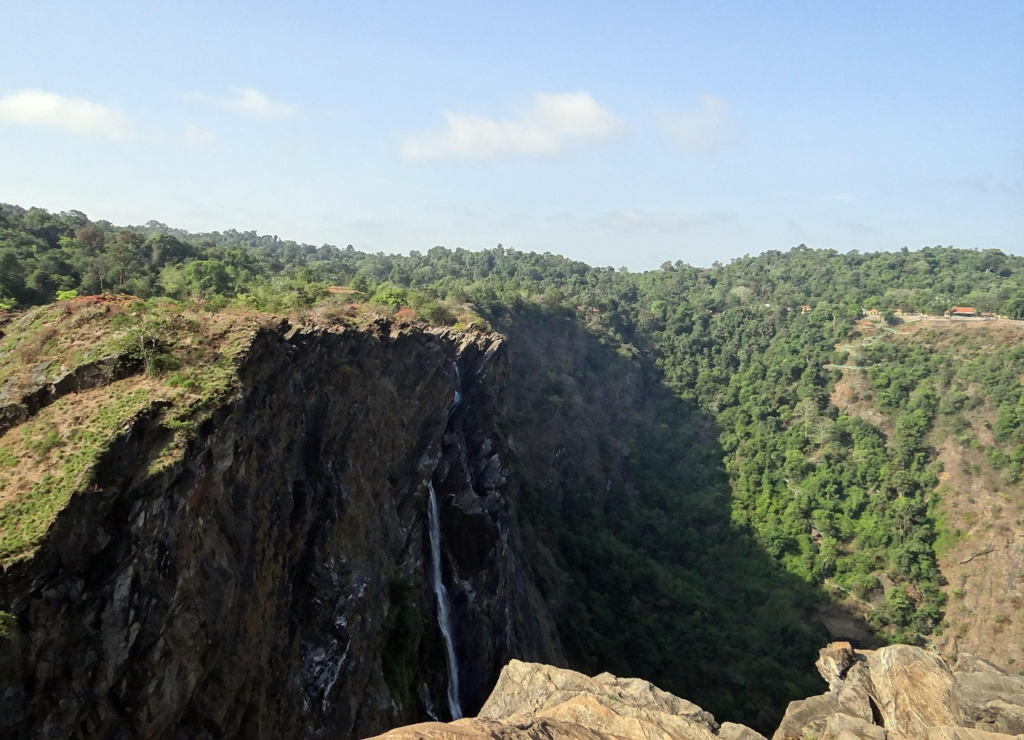
6. Mahabaleshwar & Panchgani, Maharashtra — 120 km, about 3.5 hours. Among India’s wettest hill stations in August, which is precisely the point: Lingmala Falls at full flow, Arthur’s Seat in cloud, strawberry farms between showers.
Time required: 2–3 days.
Ideal for: families, couples.
Pro tip: visibility at the viewpoints is genuinely unreliable in August — build the trip around the drive and the greenery, not the panoramas, and you won’t be disappointed.
7. Tamhini Ghat & Mulshi, Maharashtra — 60 km, roughly 2 hours. Arguably the best short monsoon drive in the country: a continuous run of seasonal waterfalls along the ghat, with Mulshi Lake at the end. Free to visit throughout.
Time required: 1–2 days.
Ideal for: couples, road-trippers, day-trippers.
Pro tip: stopping on the ghat road itself causes most of the congestion and most of the accidents — use the marked pull-offs.
8. Malshej Ghat, Maharashtra — 130 km, about 3.5 hours. Reverse waterfalls, mist that closes in within minutes, and flamingos earlier in the season. Harishchandragad trek starts nearby.
Time required: 2 days.
Ideal for: trekkers, photographers.
Pro tip: accommodation here is limited and books out for 15 August — this is the one on the Pune list to lock in first.
From Delhi NCR
9. Jaipur, Rajasthan — 280 km, about 5 hours on NH-48. Monsoon is Jaipur’s most underrated season: Amer Fort against green Aravalli slopes, Jal Mahal actually full, and the Teej processions through the old city. Amer Fort entry is around ₹100 for Indian nationals; open roughly 8:00 AM to 5:30 PM.
Time required: 2–3 days.
Ideal for: families, culture travellers, couples.
Pro tip: Nahargarh at sunset after rain is the best view in the city and the least crowded.
10. Neemrana, Rajasthan — 122 km, about 2.5 hours. The shortest meaningful escape from Delhi — a 15th-century stepped fort-palace on the Delhi–Jaipur highway, with a zip-line circuit over the ravine. Day visits are charged separately from stays: around ₹2,000 per person on weekends (12:00–2:30 PM) and ₹1,700 on weekdays (9:00 AM–2:30 PM), both including the lunch buffet.
Time required: 1–2 days.
Ideal for: couples, short breaks, first-timers.
Pro tip: 15 August is a Saturday, so the weekend rate and the shorter 12:00 PM window apply — and the day-visit charge is adjustable against the room tariff if you decide to stay the night.
11. Rishikesh, Uttarakhand — 240 km, about 5.5 hours. Amber. Rishikesh sits in the foothills rather than the high Himalaya, so it’s far lower risk than the Char Dham routes above it — but the Ganga runs high and fast in August and rafting is suspended through the monsoon, typically resuming late September. Come for the ghats, Beatles Ashram and riverside cafés, not the rapids.
Time required: 2 days.
Ideal for: solo travellers, couples.
Pro tip: check the Uttarakhand road status before leaving; NH-134 and the Gangotri highway see repeated landslide blockages in August.
12. Jim Corbett (buffer zones), Uttarakhand — 250 km, about 5.5 hours. Amber. Core tiger-reserve zones close for the monsoon under National Tiger Conservation Authority guidelines, but buffer zones including Jhirna and Dhela stay open year-round. Expect a green, birding-heavy safari rather than a big-cat one.
Time required: 2–3 days.
Ideal for: families, birders.
Pro tip: book the safari permit before the stay — buffer-zone slots are limited. Our guide to national parks open during monsoon covers which reserves are genuinely operating.
From Bangalore
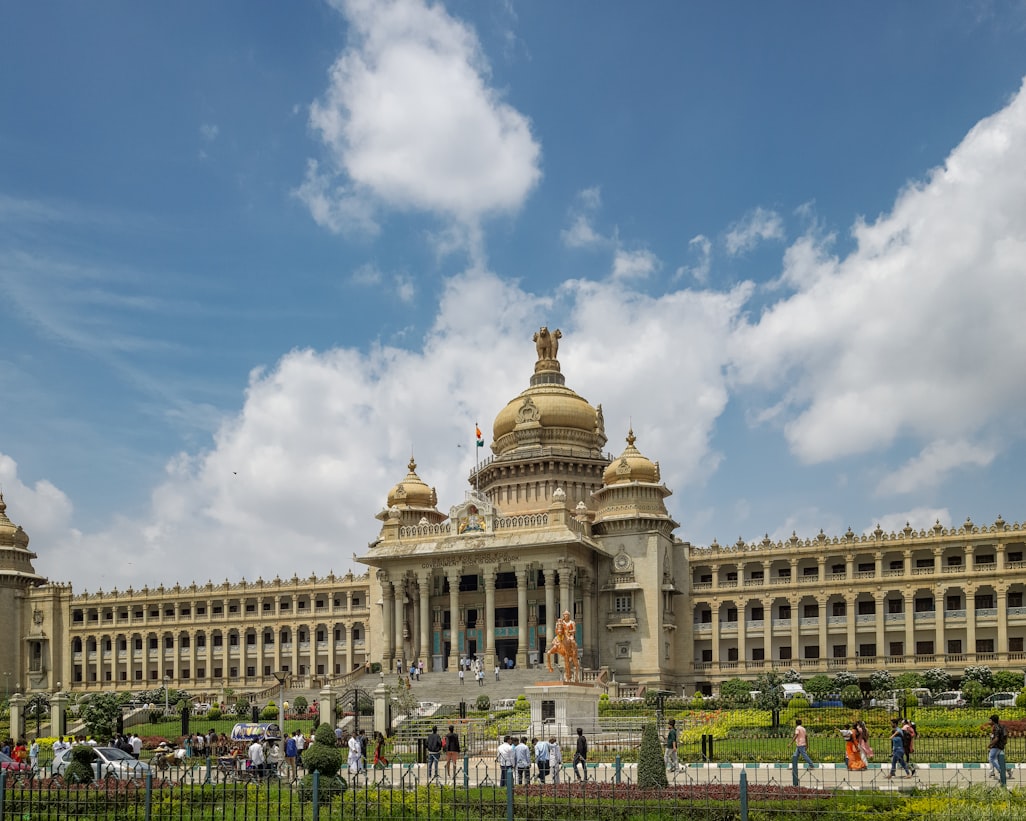
13. Coorg (Kodagu), Karnataka — 265 km, about 5.5 hours via Mysuru. Coffee estates at their greenest, Abbey and Iruppu Falls in full spate, and mist through the plantations from dawn.
Time required: 2–3 days.
Ideal for: couples, families, groups.
Pro tip: leave Bangalore before 6:00 AM — this route is a genuine five-plus hours and the Mysuru stretch clogs by mid-morning. Our Bangalore to Coorg monsoon road trip breaks the route down stop by stop.
14. Chikmagalur, Karnataka — 250 km, about 5 hours. Mullayanagiri is Karnataka’s highest peak, and the Baba Budangiri range holds cloud through August. Hebbe and Jhari falls run hard.
Time required: 2–3 days.
Ideal for: trekkers, couples.
Pro tip: the Hebbe Falls approach requires a 4×4 jeep from Kemmangundi and gets slippery — wear grip, not fashion.
15. Sakleshpur, Karnataka — 220 km, about 4.5 hours. The quietest of the three Karnataka picks and the easiest drive. Manjarabad Fort, the Bisle Ghat viewpoint, and coffee-and-pepper estates.
Time required: 2 days.
Ideal for: couples, slow travellers, groups.
Pro tip: the old railway-track walk is popular and unsafe — it’s an active line. Skip it.
16. Yelagiri, Tamil Nadu — 160 km, about 3.5 hours. A small, low-key hill station with fourteen hairpin bends, a boating lake and Punganur Lake park. Free entry to most viewpoints.
Time required: 1–2 days.
Ideal for: families, budget trips, first-timers.
Pro tip: it’s genuinely small — one full day covers it, so pair it with a slow morning rather than a packed itinerary.
From Chennai
17. Puducherry — 160 km, about 3.5 hours on ECR. The French Quarter is at its best in the wet: emptier streets, cooler air, and the Promenade after rain. Auroville’s Matrimandir viewing point requires a free pass booked in advance.
Time required: 2 days.
Ideal for: couples, solo travellers, food trips.
Pro tip: ECR floods in patches during heavy rain — the inland NH-32 route via Tindivanam is the reliable alternative.
18. Mahabalipuram, Tamil Nadu — 55 km, about 1.5 hours. The Shore Temple and Pancha Rathas are UNESCO-listed and considerably more pleasant in cloud than in June sun. Combined monument entry is around ₹40 for Indian nationals; open sunrise to sunset.
Time required: 1 day.
Ideal for: families, history travellers, day-trippers.
Pro tip: arrive at opening for the Shore Temple — it’s the single most crowded monument on this list by 10:00 AM.
From Hyderabad
19. Ananthagiri Hills, Vikarabad, Telangana — 90 km, about 2 hours. Dense deciduous forest that transforms in monsoon, with the Musi river’s origin point and the Anantha Padmanabha Swamy temple. Free entry.
Time required: 1–2 days.
Ideal for: families, cyclists, short breaks.
Pro tip: the forest trails are best right after rain — early morning mist here is the whole reason to come.
20. Nagarjuna Sagar, Telangana — 165 km, about 3.5 hours. August is when the dam gates open, which is the sight worth driving for. Nagarjunakonda island museum is reached by ferry: boats run from around 9:30 AM with the last return at 4:00 PM, roughly 45 minutes each way, at about ₹120 per adult. Museum entry is ₹20 for Indian nationals, open 9:00 AM to 4:00 PM and closed on Fridays. Amber: ferry operations depend on reservoir levels and can be suspended.
Time required: 2 days.
Ideal for: families, history travellers.
Pro tip: if you take Friday 14 August as your leave day, do the island on Saturday — the museum is shut on Fridays.
From Kolkata
21. Shantiniketan, West Bengal — 160 km, about 3.5 hours. Visva-Bharati’s campus, Sonajhuri forest and the Khoai haat market on Saturdays — which 15 August 2026 happens to be. Kopai river runs full in August.
Time required: 2 days.
Ideal for: culture travellers, families, couples.
Pro tip: the Khoai haat operates Saturday afternoons and winds down by sunset — plan Saturday around it.
From Ahmedabad
22. Polo Forest, Vijaynagar, Gujarat — 160 km, about 3 hours. Gujarat’s most convincing monsoon destination: 15th-century ruins inside a reclaimed teak forest, with the Harnav river running through. Free entry.
Time required: 1–2 days.
Ideal for: trekkers, photographers, groups.
Pro tip: the ruins are spread over several kilometres of forest track — go with a local guide or you’ll see two of the six temple sites.
Looking for a wider spread of options across the country? Our monsoon travel guide by region covers 24 destinations, and the full August long weekend roundup goes deeper on each metro.
What not to book for 15 August 2026
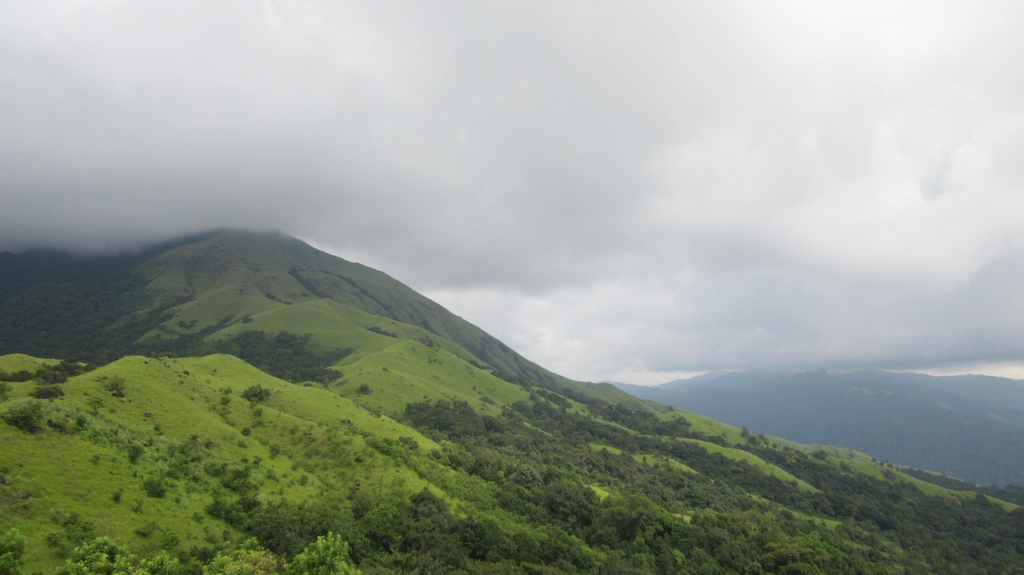
Some destinations are a poor idea on this specific weekend, and it’s worth saying so plainly.
High-Himalaya hill routes. Kinnaur, Chamba, the Kullu–Manali corridor and the Kalka–Shimla stretch in Himachal Pradesh carry peak landslide risk in July and August, and the India Meteorological Department issues orange and red rainfall alerts across these districts through the month. In Uttarakhand, Chamoli, Rudraprayag and the Char Dham routes are the equivalent. These are single-lifeline roads — one slide can strand you for a day or more. Our guide to landslide-prone hill stations to avoid in monsoon has the full list.
Tiger reserve core zones. Core areas of most tiger reserves close from roughly 1 July to 30 September under National Tiger Conservation Authority guidelines. Bandhavgarh, Kanha, Pench and Tadoba typically reopen around mid-October. Gir in Gujarat closes 16 June and reopens in October. If you want wildlife on 15 August, it has to be a buffer zone.
Valley of Flowers. The bloom genuinely peaks mid-July to mid-August, so the temptation is real. But it’s a day-trek from Ghangaria with a multi-day approach, and it fails the three-day test comfortably. Save it for a five-day window.
Long-haul in a three-day box. Ladakh, Spiti, Meghalaya and Kerala’s backwaters are all excellent in August — Leh and Kaza sit in the rain shadow and stay dry while the rest of the country is soaked. None of them fit three days from a metro. If you’re set on one, take both the 14th and the 17th.
Beaches on the west coast and Bengal. Goa, Gokarna and Mandarmani are all in their off-season for good reason: rough seas, red flags, and swimming bans. Mandarmani’s own recommended window runs September to February.
Three-day itineraries
Friday-start (Fri 14 – Sun 16), for drives over 3 hours
- Thursday night or Friday 5:00 AM: leave. You’ll be ahead of the Friday-evening rush entirely.
- Friday: arrive by noon, settle in, do the nearest waterfall or viewpoint in the afternoon light.
- Saturday (15 August): the full day. Flag hoisting is at 9:00 AM at most properties and local schools if you want to mark it. Then the main trek, fort or estate walk.
- Sunday: slow morning, leave by 11:00 AM to beat the Sunday-evening return crush.
Monday-end (Sat 15 – Mon 17), for drives under 3 hours
- Saturday: leave at 6:00 AM, arrive mid-morning. Independence Day itself on the road.
- Sunday: the full day, and the quietest of the three — most weekend traffic goes home.
- Monday: leave after breakfast. Empty roads, and you’re home by afternoon.
Where to stay
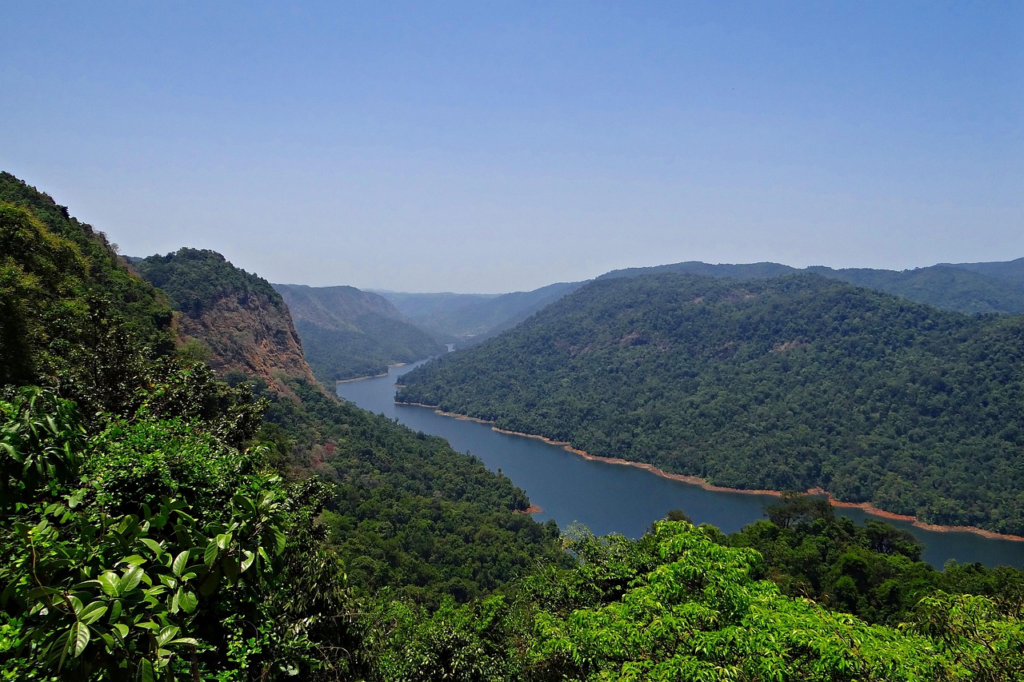
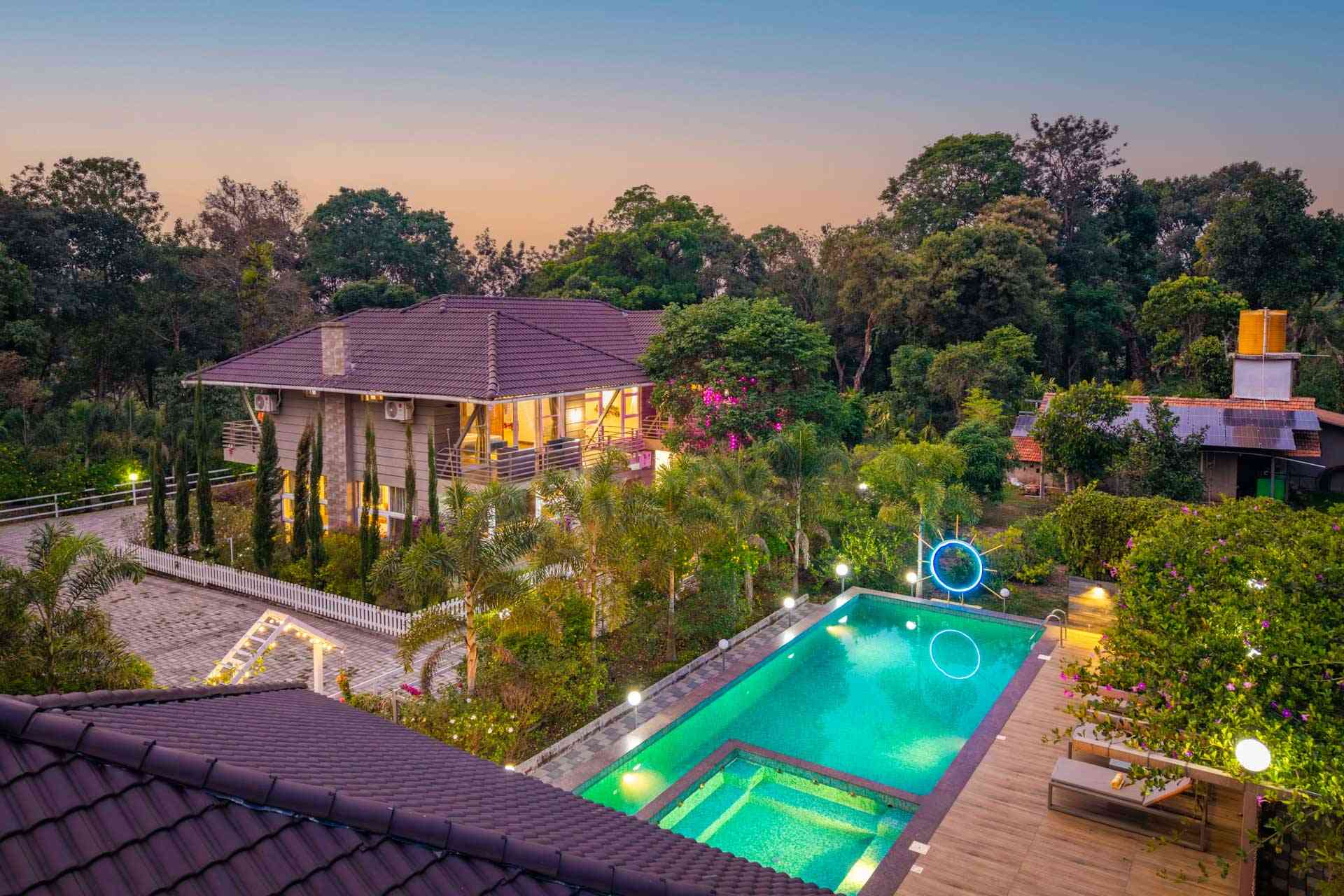
Villas and homestays work particularly well on this weekend for a specific reason: when it rains for six hours straight, a hotel room is a room, and a villa with a covered verandah and a kitchen is still a holiday.
A few on the routes above: Villa 41 in Lonavala and Santoni Farms in Karjat for the Mumbai runs, Dawn Ecstasy and Amoda Villa in Mahabaleshwar from Pune, and Coffee & Mist in Coorg for the Bangalore drive. Browse the full range at StayVista.


Book by late July. Long-weekend inventory in Lonavala, Mahabaleshwar and Coorg clears early, and domestic travel demand has been running well above last year — one bus operator reported bookings up around 35% year-on-year across leisure and weekend-getaway routes in 2026, with domestic travellers accounting for 85–90% of India’s tourism volumes.
StayVista’s Armed Forces Intiative
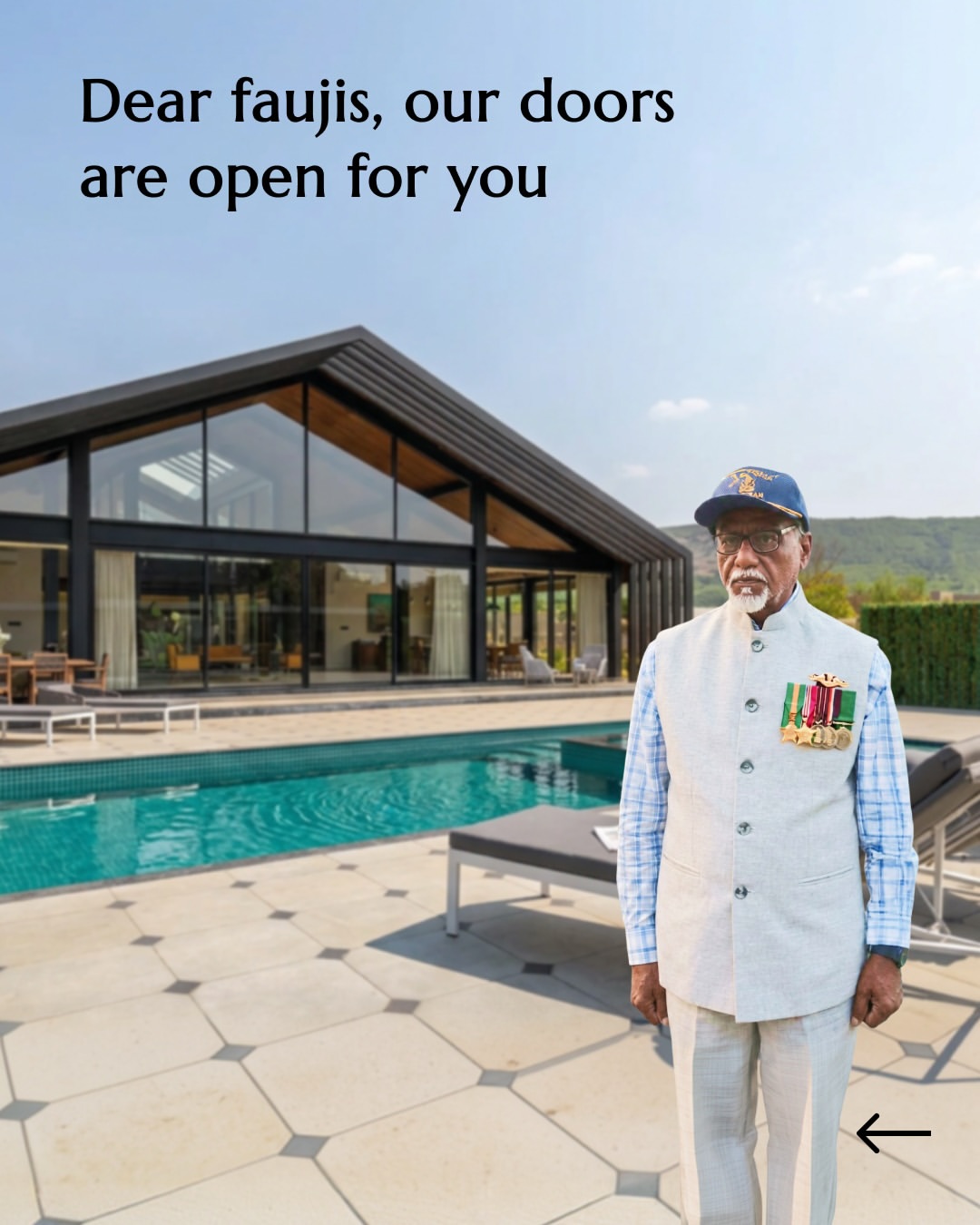
This Independence Day, StayVista is honouring the service of India’s Armed Forces with a special initiative: a complimentary villa stay for serving and veteran personnel of the Army, Navy, and Air Force. Available from 16th August to 16th September, with no minimum night stay required, it’s our way of saying thank you to the men and women who have served the nation.
Eligible personnel can book their complimentary stay by calling 91679 28471. Terms and conditions apply, and stays are subject to property availability.
Frequently asked questions
Yes. Independence Day is one of India’s three national holidays and is observed on 15 August regardless of the day it falls on. But India has no substitute-holiday system, so no compensatory Monday is granted. For five-day-week employees, the holiday is effectively absorbed into the weekend.
One. Taking either Friday 14 August or Monday 17 August turns the Sat–Sun weekend into a three-day break. Taking both gives you four days, from Friday 14 to Monday 17 August.
The 80th. India became independent on 15 August 1947, which counts as the first Independence Day, making 2026 the 80th. The main ceremony takes place at the Red Fort in Delhi, where the Prime Minister hoists the flag and addresses the nation.
Yes. Raksha Bandhan falls on Friday, 28 August 2026, creating a Friday-to-Sunday window. It’s a restricted rather than gazetted holiday, so central government employees can claim it from their optional allowance but most private offices remain open. Confirm with your HR before planning around it.
Lonavala (83 km, 2 hours), Karjat (65 km, 2 hours), Igatpuri (120 km, 2.5–3 hours), Alibaug (95 km by road) and Bhandardara (185 km, 4.5 hours) all sit inside the three-day radius and are at their best in monsoon. Igatpuri and Bhandardara have the strongest waterfalls in August.
It depends heavily on which hills. The Western Ghats — Maharashtra, Coorg, Chikmagalur — are safe with normal monsoon caution. The high Himalaya is not: Kinnaur, Chamba, the Kullu–Manali corridor and Uttarakhand’s Char Dham routes see repeated landslide closures through July and August. Check IMD alerts and state road-status portals before travelling.
By late July 2026. Popular monsoon destinations within three hours of a metro — Lonavala, Mahabaleshwar, Coorg — fill first, and long-weekend rates rise as inventory tightens. Domestic travel bookings in India have been tracking well above last year through 2026.
Quick-dry clothing over cotton, footwear with real grip rather than flip-flops, a dry bag or zip pouches for phones and documents, a power bank, and basic medication. Add a physical map or offline navigation — mobile signal drops out across most ghat sections.
The short version
Independence Day 2026 falls on a Saturday, and left alone it costs you a public holiday. One leave day is all it takes to get it back.
- Take Friday 14 August if you’re driving more than three hours — you’ll travel against the traffic and arrive in daylight.
- Take Monday 17 August for shorter trips — softer Sunday rates and an empty road home.
- Stay inside five hours one-way. Beyond that, a three-day break becomes a commute.
- Match the destination to the monsoon, not to a generic best-of list. The Western Ghats are at their peak. The high Himalaya is not.
- Book by late July. The good properties on the short-drive routes go first.
Plan the rest of your year with the 2026 long weekend calendar, or find a villa on your route at StayVista.
Also read: