

15 Offbeat Places Near Pune in June: Hidden Monsoon Gems & Scenic Drives

Pune’s first monsoon shower in 2026 is expected around June 8–12, going by the IMD Pune onset window of the last five years (India Meteorological Department, 2025). And that’s the cue most travelers wait for — except they all drive to the same four places.
Lonavala on the second Saturday of June is bumper-to-bumper from Talegaon onwards. Matheran is closed to vehicles. The Khandala viewpoints fill up six-deep with selfie sticks before 9 AM. If you’ve done that drive once, you’re not doing it twice.
Here are 15 offbeat alternatives within three hours of Pune — five hidden waterfalls and ghats, four lesser-known forts, three lakeside escapes, and three quiet villages and nature reserves. Every pick comes with the same information: distance from Pune, entry fee, timings, how to reach, who it’s best for, a real pro tip, and the StayVista villa closest to it.
June marks the monsoon onset around Pune (typically June 7–12), when the first waterfalls return and Sahyadri ridges turn green within ten days. Skip the Lonavala–Khandala crowd: within three hours of Pune you can reach 15 genuinely offbeat picks — five hidden waterfalls and ghats (Tamhini, Andharban, Naneghat reverse falls, Madhe Ghat, Thoseghar), four lesser-known forts (Visapur, Tikona, Rajmachi, Korigad), three lakeside escapes (Pawna, Mulshi, Panshet), and three hidden villages and nature reserves (Bhor, Aadrai, Bhimashankar Wildlife Sanctuary). Each pick includes distance, entry fee, timings, June-specific tips, and the StayVista villa closest to it.
In this Blog
Best Offbeat Places Near Pune in June at a Glance
| Place | Distance from Pune | Best For | Ideal Time in June |
| Tamhini Ghat | 60 km | Scenic drives | Mid to Late June |
| Madhe Ghat | 75 km | Waterfalls | Mid to Late June |
| Naneghat | 90 km | Reverse waterfalls | Late June |
| Pawna Lake | 55 km | Couples and camping | Throughout June |
| Mulshi | 45 km | Relaxing getaway | Throughout June |
| Bhimashankar | 110 km | Wildlife and trekking | Mid to Late June |
| Aadrai Jungle Trek | 120 km | Adventure seekers | Late June |
What makes June special for offbeat trips near Pune?

June is the monsoon onset window for the Pune region, with the southwest monsoon typically arriving between June 7 and June 12 (IMD Pune, 2025 onset records). The first ten days transform the Sahyadri ridges, refill the Mulshi and Pawna basins, and reactivate the seasonal waterfalls on Tamhini and Andharban — but the crowds don’t arrive until late July. That asymmetry is the entire reason June works for offbeat travel.
Here’s what changes week by week.
The June Waterfall Onset Calendar: Pune region
The pattern’s clear: Week 1 is for ghat drives, not waterfalls. Week 2 is the inflection point — the first cascades return. By Week 3, every waterfall on this list is flowing properly, and by Week 4 you’re in peak monsoon visuals with thinner crowds than July onwards.
Average June rainfall for Pune district is roughly 160–200 mm, mostly back-loaded to the last fortnight (IMD historical data, 2024). And one underrated bonus — average temperatures along the Sahyadri ghats drop from 32°C to 24°C within the first ten days of onset. That’s why Mulshi feels different from city Pune even on the same afternoon.
Which waterfalls and ghat drives near Pune flow first in June?
The five most offbeat monsoon waterfalls and ghat drives within three hours of Pune are Tamhini Ghat (60 km), Andharban Forest Trek (75 km), Naneghat Reverse Waterfall (90 km via Junnar), Madhe Ghat (75 km via Bhor), and Thoseghar Waterfalls (180 km near Satara). All five are reachable as day trips or single-overnight escapes, and each one peaks at a different week in June.
A note on Devkund: Maharashtra Forest Department closes the Devkund Waterfall trail from June through September every year for safety reasons (high water flow, slippery descents). It’s a genuinely beautiful waterfall — just not a June pick. If Devkund’s on your list, plan it for October–May. For June, Naneghat below replaces it.
1. Tamhini Ghat Scenic Drive
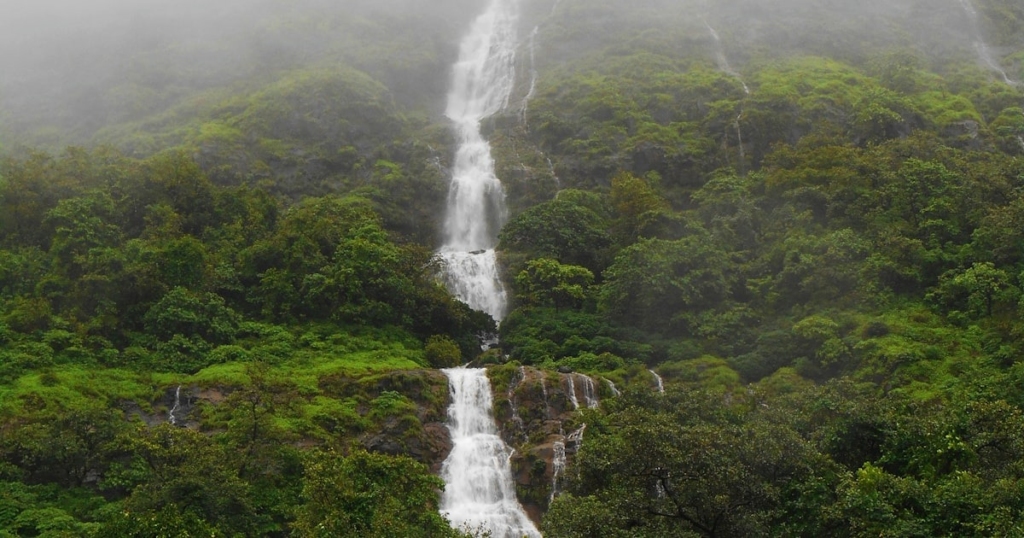
A 15-kilometre stretch of curving road that drops from the Mulshi plateau into the Konkan valley, Tamhini Ghat is the closest “proper monsoon” experience you can get from Pune. The drive runs through misty forests with at least five seasonal waterfalls visible from pullouts. Most travelers do it as a half-day round trip.
- Distance from Pune: 60 km · approx. 2 hours one way via Paud Road
- Entry fee: Free (it’s a public ghat road)
- Timings: Drive only in daylight — sunrise to ~5:30 PM. The road has no lighting and visibility drops fast.
- When to go: Week 2 onward; Week 3–4 for peak flow
- How to reach: Pune → Paud → Pirangut → Mulshi → Tamhini Ghat. The route’s well-signposted on Google Maps.
- Ideal for: Couples, photographers, first-time monsoon visitors to the region
- Pro tip: Leave Pune by 6 AM. By 10 AM the road fills with Mumbai weekenders. The northbound pull-outs (toward Mulshi side) have the best falls; the southbound stretch has the cliffside views.
Stay nearby: Asanjo Villa — Mulshi infinity-pool villa with valley views, the scenic drive starts at your driveway.

2. Andharban Forest Trek
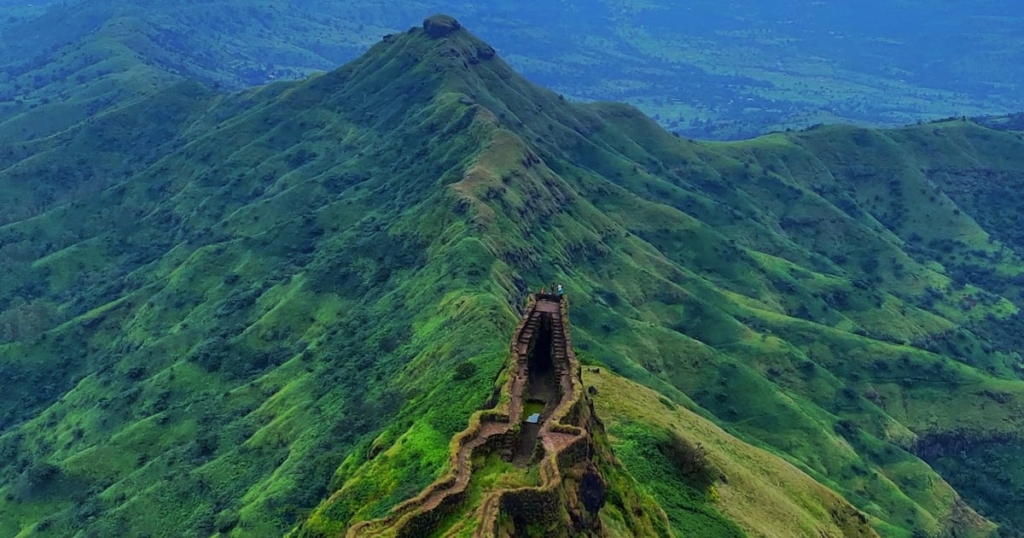
“Andharban” means “dense forest” in Marathi, and the name earns its keep. This is a 13-kilometre descending trek through canopy so thick that midday looks like dusk. The trail starts at Pimpri village (near Bhira) and ends at the Bhira powerhouse. It’s a one-way trek — most groups arrange a return cab from the exit.
- Distance from Pune (trailhead): 75 km · 2.5 hours one way
- Entry fee: No formal fee · forest department guide recommended (₹500–₹800 per group, verify on day)
- Timings: Start by 7 AM; trek takes 5–6 hours. Last entry around 9 AM.
- When to go: Week 3 onward (the canopy gets dangerously slippery before that)
- How to reach: Pune → Paud → Mulshi → Tail Baila → Pimpri trailhead
- Ideal for: Fit hikers, monsoon photographers, groups of 4–8
- Pro tip: Trekking shoes with proper grip are non-negotiable. The leech population peaks Week 3–4; carry salt or Odomos. And don’t try this in Week 1 — there’s nothing to see except mud.
Stay nearby:The Chirping Villa — a pool villa deep in Mulshi’s forest belt, closest comfortable base to the trailhead.

3. Naneghat Reverse Waterfall
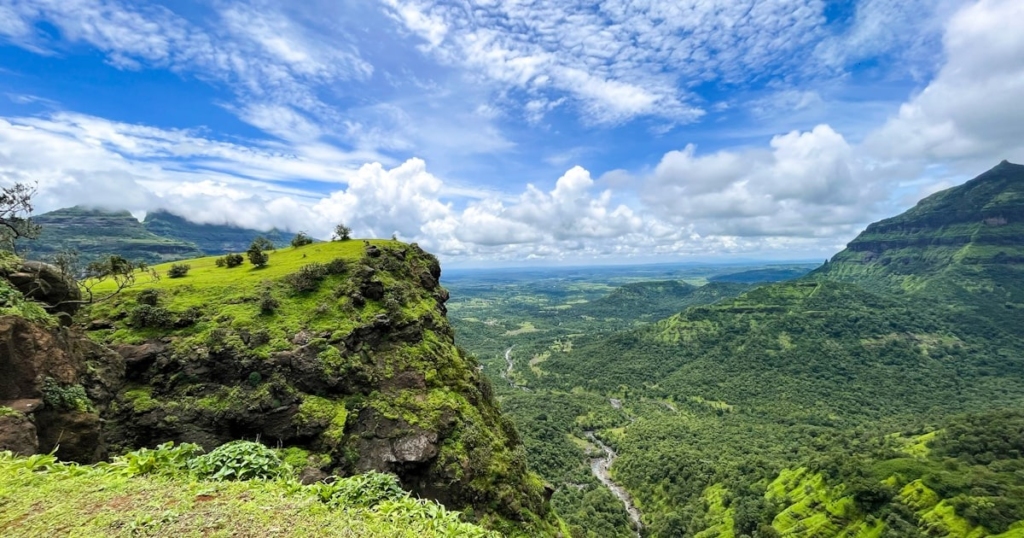
Naneghat is a 2,000-year-old mountain pass in the Junnar belt, and during peak monsoon something extraordinary happens here — a small stream flowing off the cliff edge gets pushed back upwards by the wind funnel between the ridges. It’s called a reverse waterfall, and it’s one of the most photographed natural phenomena in Maharashtra. The pass itself is also a heritage site with Brahmi-script inscriptions from the Satavahana era.
- Distance from Pune: 90 km via Junnar · approx. 2.5 hours
- Entry fee: Free (ASI-protected heritage site, no ticket counter)
- Timings: Sunrise to sunset; the reverse-waterfall phenomenon is strongest 11 AM – 3 PM on windy days
- When to go: Week 3–4 (needs sustained rain + strong wind for the reverse phenomenon)
- How to reach: Pune → Narayangaon → Junnar → Ghatghar village → 1.5 km easy walk to the pass
- Ideal for: Day-trippers, history buffs, photographers, families with kids 8+
- Pro tip: Skip the climbed-out main viewpoint and head 200 metres left to the smaller cliff edge — that’s where the strongest upward gust hits the water. Check the wind forecast before driving; a still day gives you a normal waterfall.
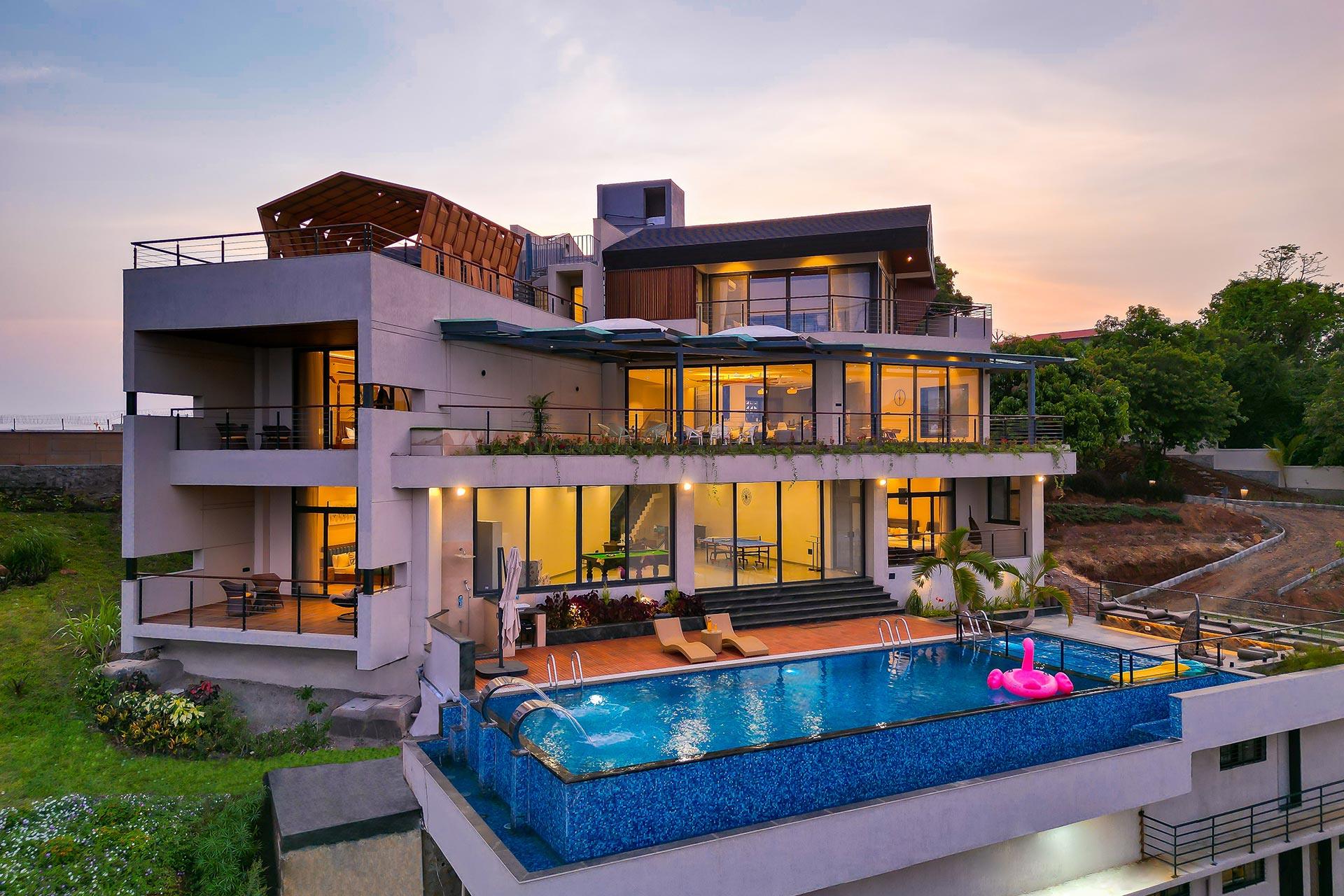
Stay nearby:Pearl Lakeview Mansion, Igatpuri — lake-facing infinity-pool villa, closest base for the Junnar–Naneghat–Aadrai cluster.
4. Madhe Ghat
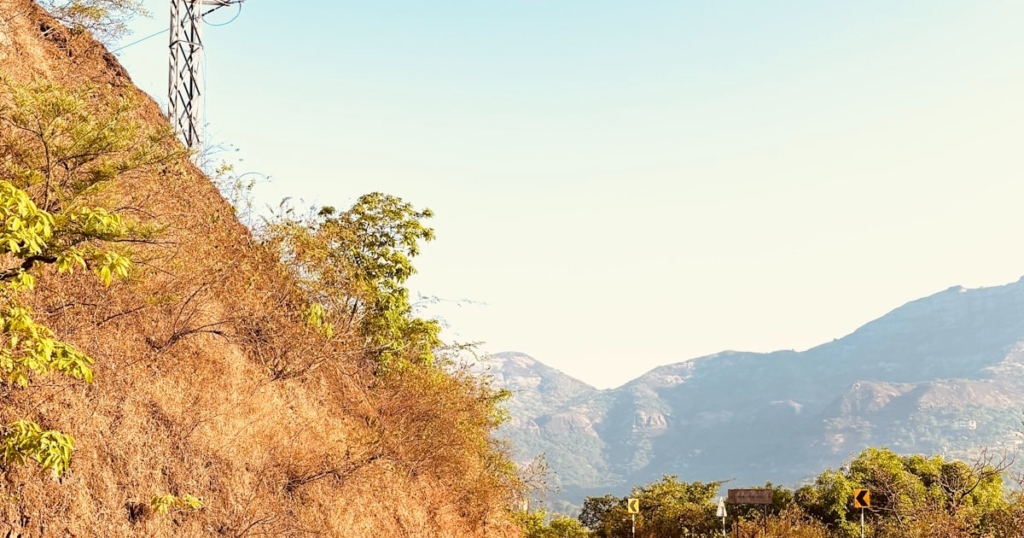
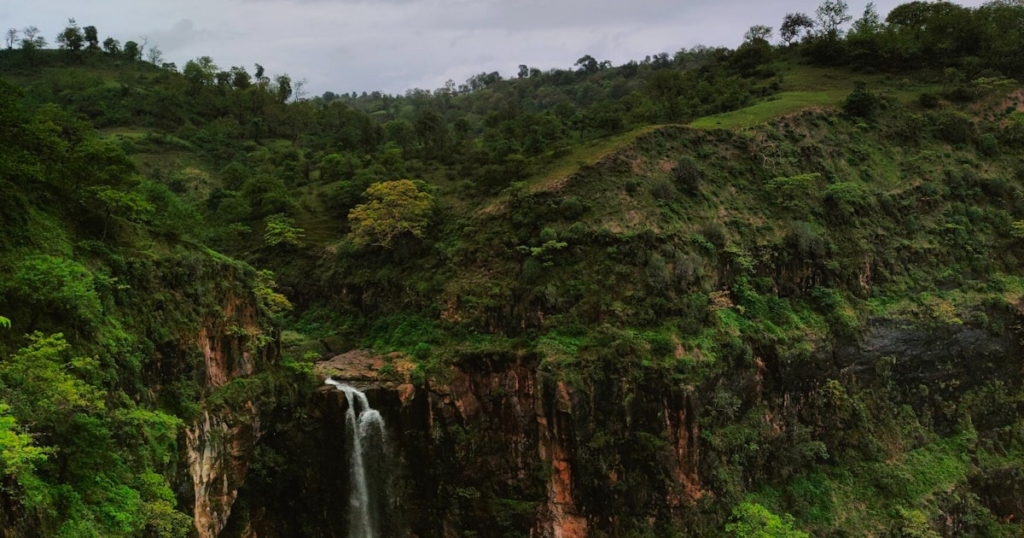
Madhe Ghat is the dramatic edge where the Bhor plateau drops 600 metres into the Konkan. There’s a roadside viewpoint with a seasonal waterfall, then a short trail down to a second cascade most visitors miss. It’s barely on the tourist map — and that’s the point.
- Distance from Pune: 75 km via Bhor · approx. 2.5 hours
- Entry fee: Free
- Timings: Open all day · best visited between 8 AM and 4 PM
- Best time in June: Week 3 onward (the main fall needs sustained rain)
- How to reach: Pune → Khed Shivapur → Bhor → Velhe → Madhe Ghat (final stretch is a narrow village road)
- Ideal for: Couples, solo travelers, anyone tired of Lonavala
- Pro tip: The second cascade — locals call it “the lower fall” — is reached by a 10-minute trail to the right of the main viewpoint. Most weekenders don’t know it exists.
Stay nearby:The Cloudscape — Bhor villa with lake-and-hill views, Madhe Ghat is the next ridge over.
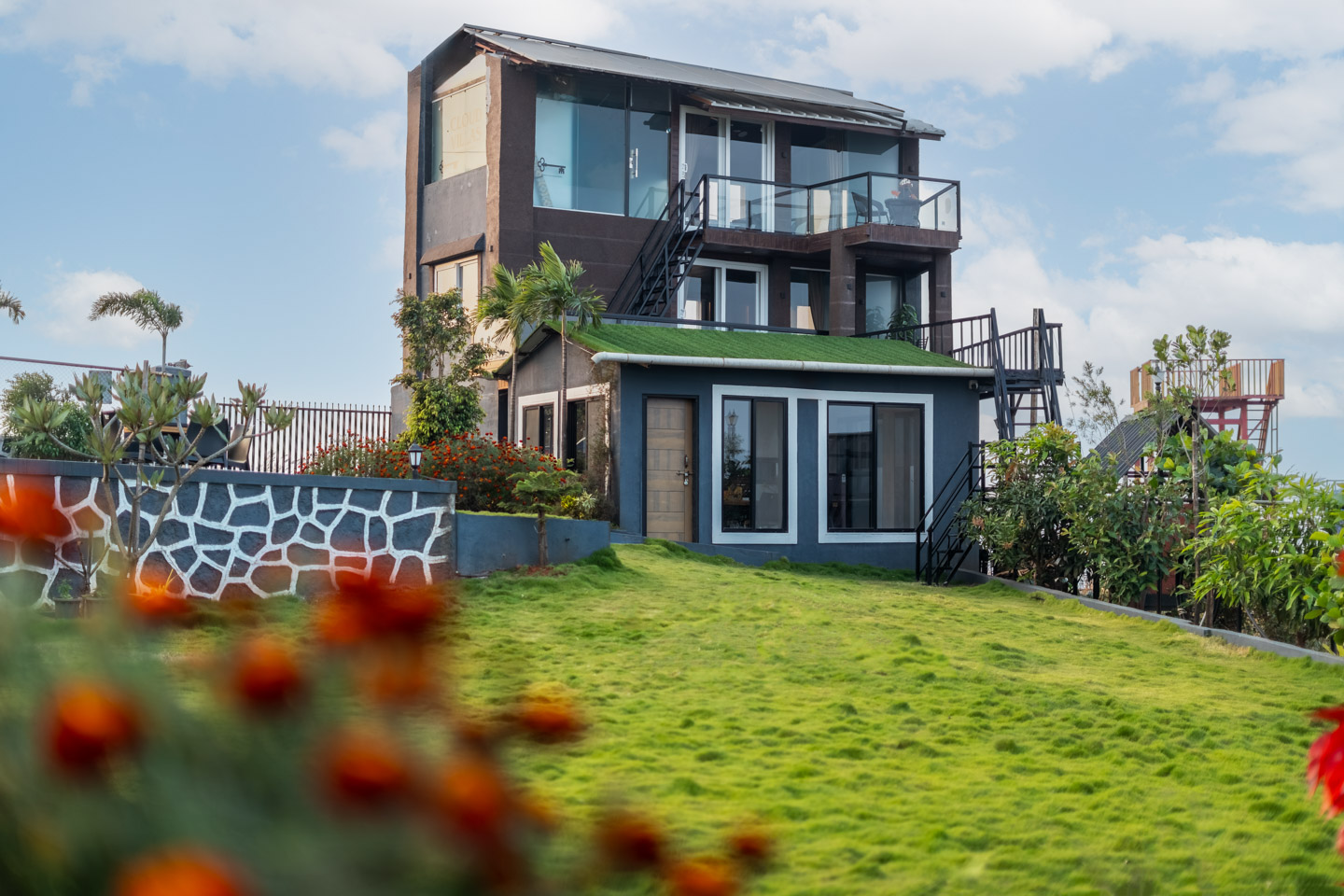
5. Thoseghar Waterfalls (near Satara)
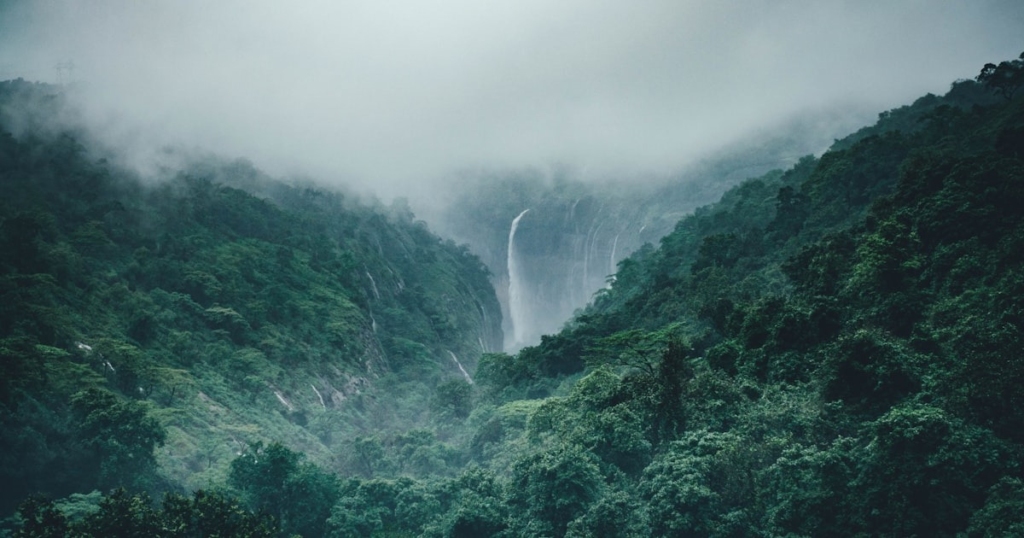
Thoseghar is technically a Satara waterfall, but it’s worth the longer drive for one reason — at 200 metres, it’s one of the tallest in Maharashtra and it flows hard from mid-June. A wooden walkway gets you within 30 metres of the main cascade. Pair it with the Kaas Plateau (best in late August) or Sajjangad Fort.
- Distance from Pune: 180 km · 3.5–4 hours
- Entry fee: ₹10–₹50 per adult (managed by Sanyukt Vanvyavasthapan Samiti, Thoseghar; carry cash, no digital payments accepted)
- Timings: 8 AM – 5 PM (some seasons extend to 6 PM)
- Best time in June: Week 3–4
- How to reach: Pune → Satara (via NH48) → Thoseghar (26 km from Satara town)
- Ideal for: Photographers, weekend trips, anyone combining Satara/Mahabaleshwar
- Pro tip: The walkway can flood after heavy showers — check Satara Forest Department’s social handles before you drive down. Best photos are from the third viewing platform. No mobile network at the falls, so carry cash and a downloaded route.
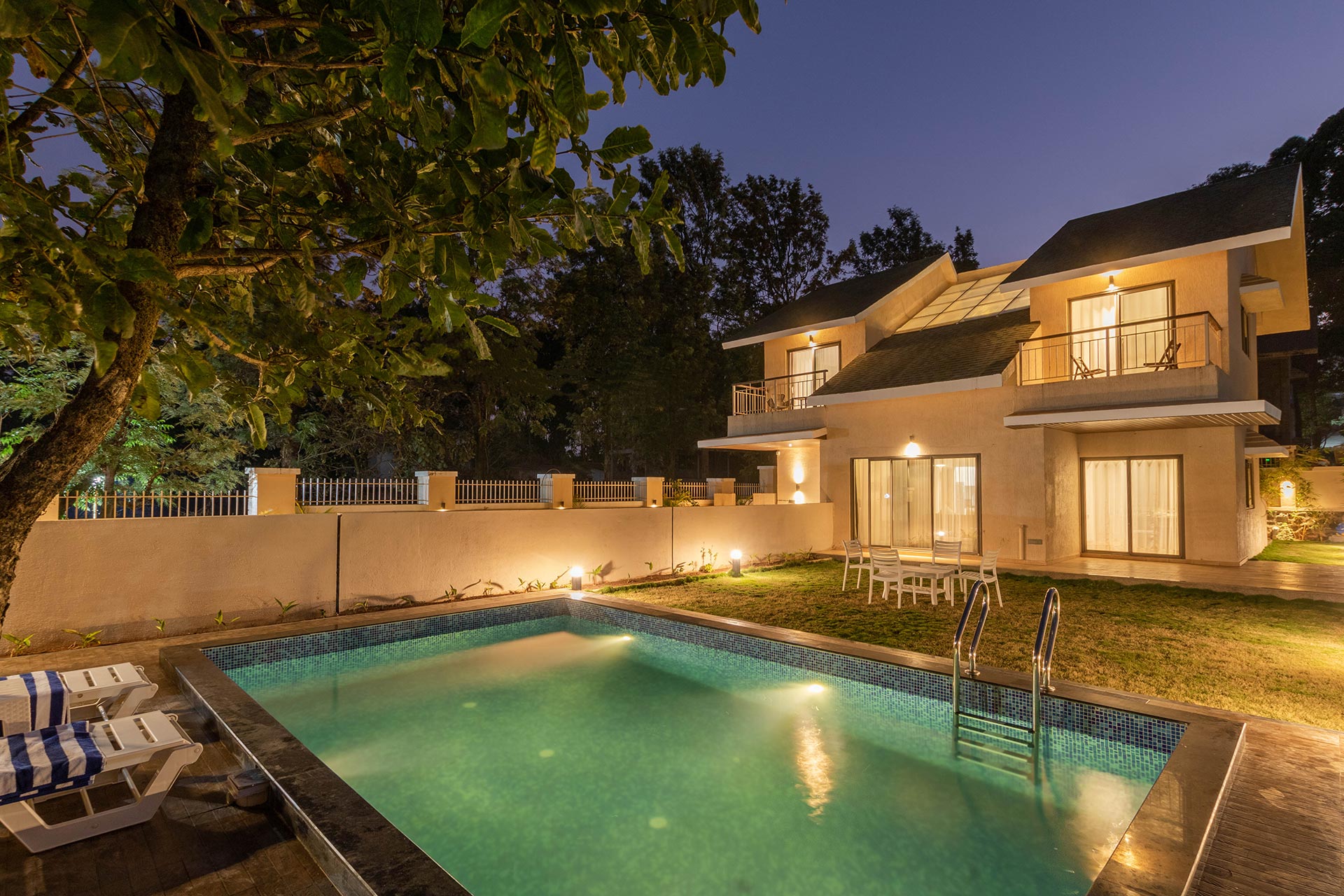
Stay nearby: Enchanting Haven — private-pool villa on the Panchgani–Mahabaleshwar belt, perfect base for the Thoseghar/Kaas weekend.
Which forts near Pune are best for monsoon trekking in June?
Four offbeat monsoon-friendly forts within 80 km of Pune are Visapur Fort (60 km), Tikona Fort (55 km), Rajmachi (80 km via Udhewadi), and Korigad (60 km). All four offer two-to-four-hour trekking experiences ideal for first-time monsoon trekkers in June, before the routes get genuinely dangerous in the peak July–August downpours.
6. Visapur Fort
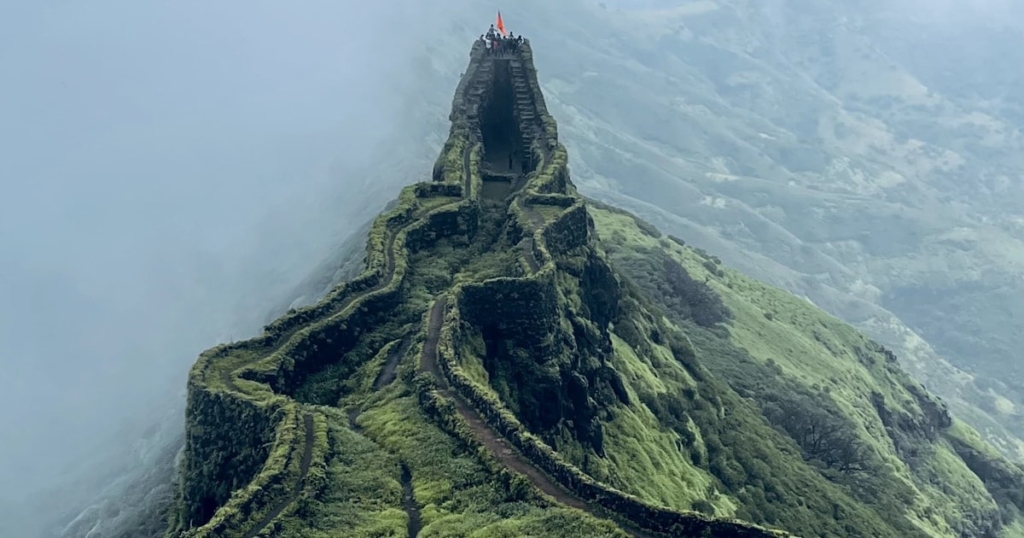
Visapur Fort sits right opposite the famous Lohagad fort, and most weekenders bypass it for Lohagad’s easier trail. That’s the gift — Visapur is taller, more dramatic, and far quieter. The trek runs about 4 km one way and ends at a plateau with old water cisterns, a Hanuman temple, and a massive Sahyadri panorama.
- Distance from Pune: 60 km · 1.5 hours to Bhaja village base
- Entry fee: Free (ASI-listed but unticketed at the fort itself)
- Timings: 6 AM – 6 PM · last ascent by 3 PM
- Best time in June: Week 2 onward; the trail’s rocks need rain to clear pollen and dust
- How to reach: Pune → Malavli → Bhaja village → trail starts behind Bhaja Caves
- Ideal for: Families with teens, fit beginner trekkers, history fans
- Pro tip: Combine with Bhaja Caves on the descent — they’re 2,000 years old and free to enter. The Visapur summit gets phone signal; Lohagad usually doesn’t.
Stay nearby:V Square Villa — 4-BHK Lonavala pool villa, 20 minutes from Bhaja.

7. Tikona Fort
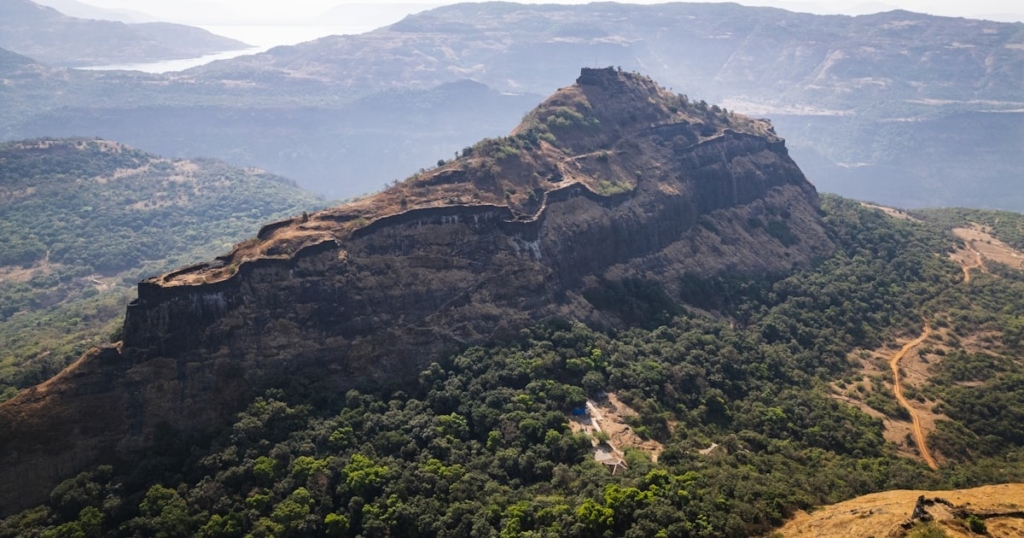
Tikona Fort‘s distinctive pyramid silhouette has made it one of Maharashtra’s most photographed forts — but somehow not one of its most visited. The trek is short (about 1.5 km), gentle, and ends at a Trimbakeshwar temple with views over Pawna Lake. It’s the easiest “real” fort trek in this list.
- Distance from Pune: 55 km · 1.5 hours to Tikona Peth (base village)
- Entry fee: Free
- Timings: 6 AM – 6 PM (no lighting on the trail; descend by 5 PM)
- Best time in June: Week 2 onward
- How to reach: Pune → Kamshet → Tikona Peth · last stretch is a narrow village road
- Ideal for: First-time trekkers, families with kids 8+, dawn photographers
- Pro tip: The seven Trimbakeshwar caves halfway up are easy to miss — they’re to the left of the main staircase. From the summit, Pawna Lake fills the horizon.
Stay nearby: Esperanza — pet-friendly 5-BHK on Pawna shore facing Tikona’s pyramid silhouette.
8. Rajmachi (via Udhewadi)
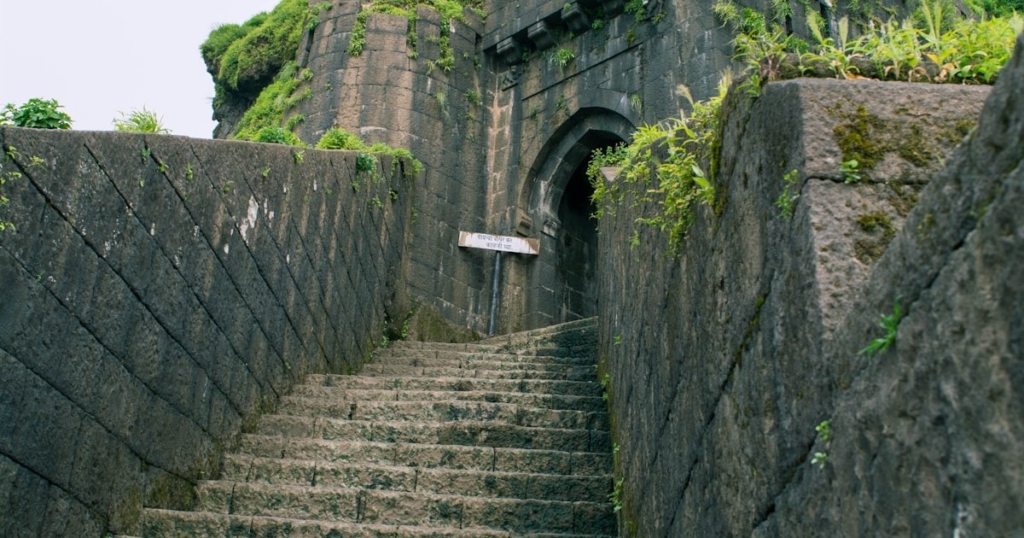
Rajmachi is technically two forts — Shrivardhan and Manaranjan — sharing a single hilltop plateau, with the tiny Udhewadi village in the saddle between them. Most trekkers do the Lonavala-side approach, which is shorter; the Karjat-side approach is the offbeat one. Either way, you need an overnight in the village or a campsite to do this properly.
- Distance from Pune: 80 km to Lonavala approach · 110 km to Karjat approach
- Entry fee: Free (camping with local operators costs ₹1,200–₹2,500 per person)
- Timings: 24-hour access, but trek only in daylight
- Best time in June: Week 3–4 (the lakes near the village fill up)
- How to reach: Pune → Lonavala → INS Shivaji Road → trek 15 km to Udhewadi
- Ideal for: Overnight campers, intermediate trekkers, groups of 6–12
- Pro tip: The Kal Bhairav temple in Udhewadi village is the meeting point for most local guides. Book a homestay tea-and-bhakri lunch — it’s part of the experience and the family running it has been doing this since the 1970s.
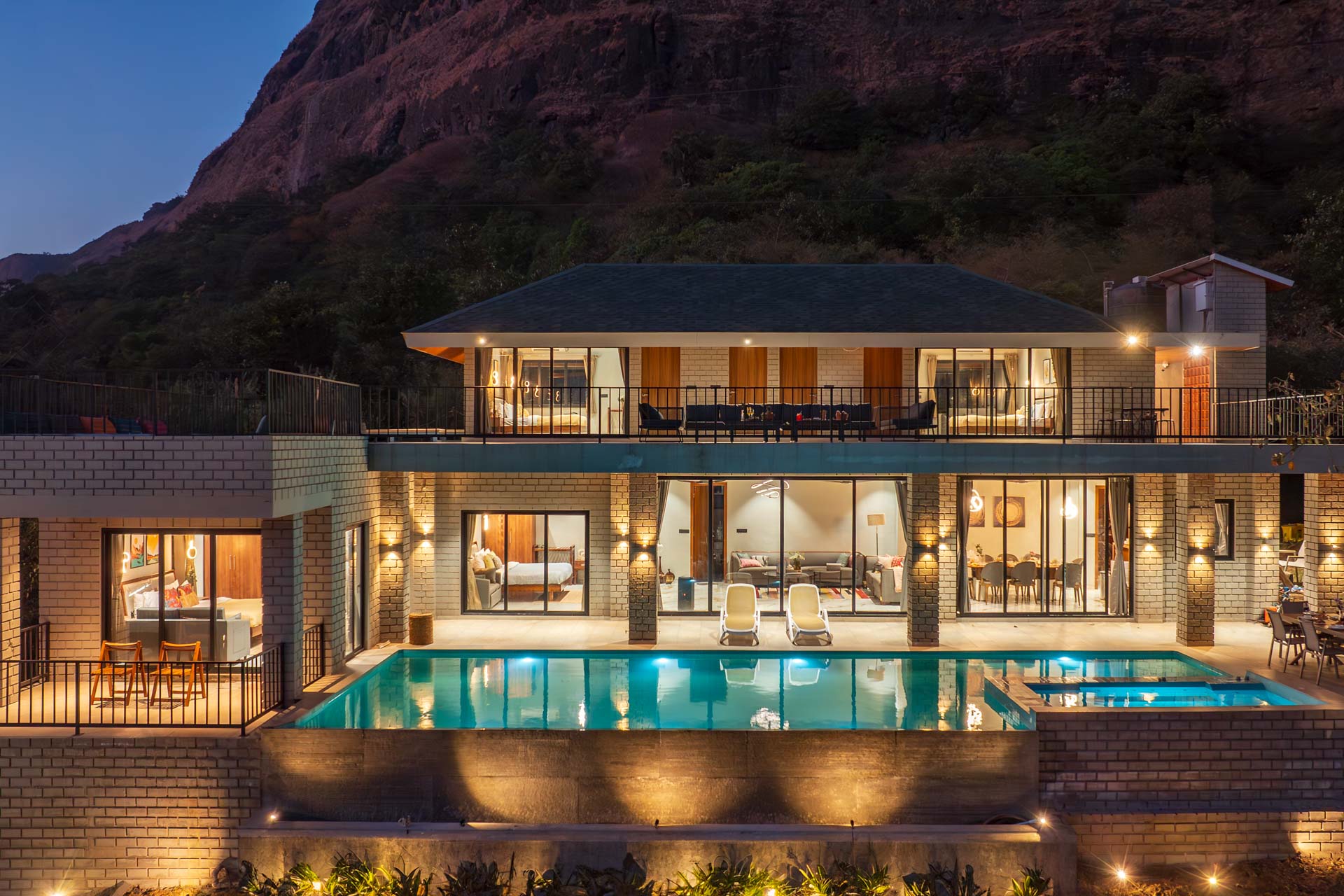
Stay nearby:Villa 41 — 6-BHK in Lonavala with private movie theatre, perfect for the post-Rajmachi crash.

9. Korigad
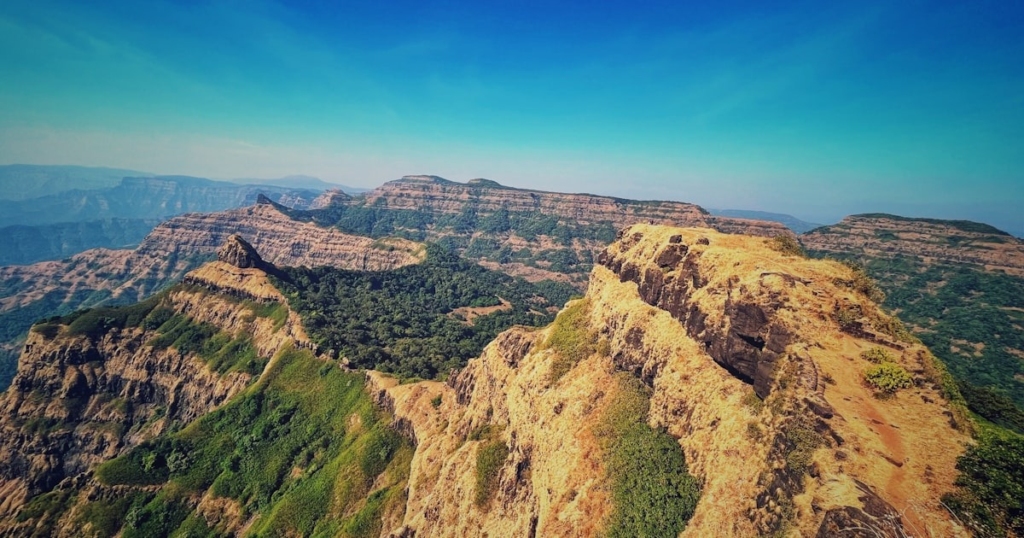
If you’ve never trekked a Sahyadri fort and the others on this list sound intimidating, Korigad’s the place to start. It’s the gentlest of the four — a 1.5 km stone staircase that ends at a fully-walled plateau with two lakes inside the fort. Yes, lakes on top of a fort. That alone is reason to go.
- Distance from Pune: 60 km · 1.5 hours to Peth Shahapur (base)
- Entry fee: Free
- Timings: 6 AM – 6 PM
- Best time in June: Week 2 onward (the plateau lakes refill within 7–10 days of onset)
- How to reach: Pune → Lonavala → Aamby Valley Road → Peth Shahapur
- Ideal for: First-time trekkers, families with kids 6+, gentle morning hikers
- Pro tip: The full circuit walk around the rampart takes about 45 minutes and gives you four very different views — Aamby Valley, the Western Ghats, the Mulshi backwaters, and a sliver of Tikona on a clear morning.
Stay nearby:La Palm by StayVista — 3-acre 8-BHK villa with 22×70 ft pool, the easiest luxury landing after the easiest fort trek.

Which lakes near Pune are most scenic in June monsoon?
The three most scenic offbeat lakes near Pune for June monsoon are Pawna Lake (55 km), Mulshi Dam (45 km), and Panshet Lake (50 km). All three sit within 90 minutes’ drive of the city, support lakeside camping or villa stays, and the surrounding hills turn fully green within the first ten days of monsoon onset.
When our team drove the Pune → Mulshi → Tamhini stretch on June 14, 2025, the first cascades had just started on the ghat but the Andharban trail was still partially dry. We pivoted to a Mulshi Dam day — and that turned out to be the right call. Week 2 of June is lake weather, not waterfall weather.
10. Pawna Lake
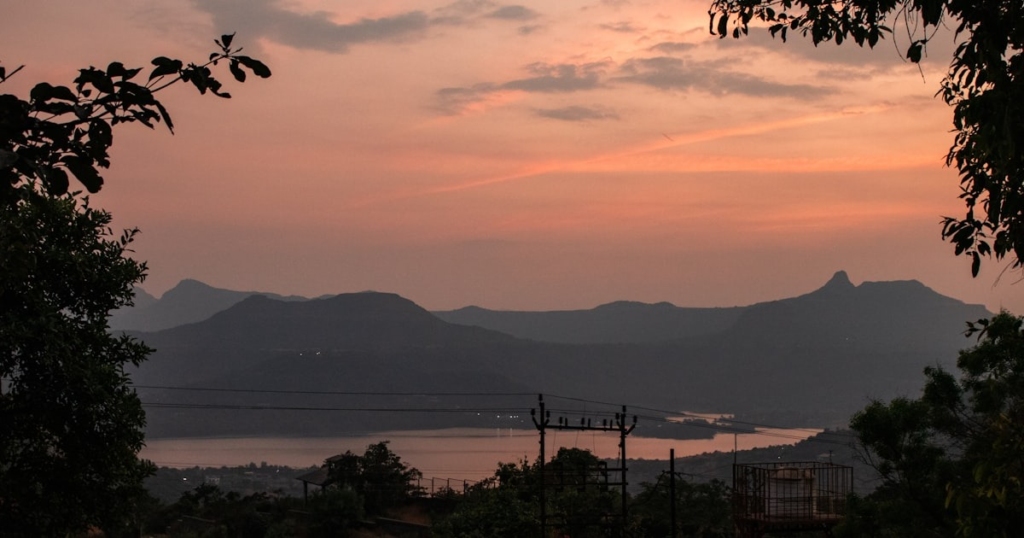
Pawna is the most “Instagrammed” of the three, but the offbeat play is going midweek and skipping the southern shore. The northern shore around Thakursai village has fewer tents, deeper greenery, and direct views of Tikona Fort across the water. It’s a 90-minute boat-ride or a 25-minute drive around the lake to switch sides.
- Distance from Pune: 55 km · approx. 1.5 hours
- Entry fee: Free for the lake; camping operators charge ₹1,500–₹3,000 per person
- Timings: 24-hour access · most camps check in at 4 PM
- Best time in June: Week 2 onward; Week 4 for full reservoir
- How to reach: Pune → Kamshet → Pawna Dam → northern shore (Thakursai)
- Ideal for: Couples, small groups, first-time lakeside campers
- Pro tip: The midweek pricing on Pawna camps drops 30–40% from weekend rates. Book Monday–Thursday and you’ll also get the lake almost to yourself.
Stay nearby: Meluha — 8-BHK villa with an 18×40 ft infinity pool that runs into the Pawna view.
11. Mulshi Dam
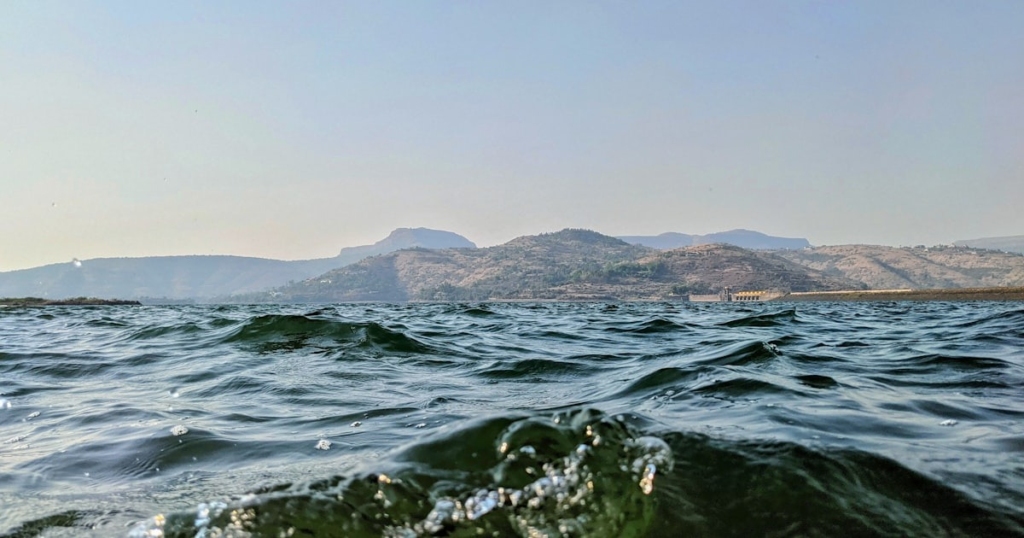
If you only have one day, this is the pick. Mulshi Dam is 45 km from Pune, and the drive itself (via Paud) cuts through fog, paddy fields, and a forest stretch that turns emerald within ten days of onset. The dam wall is closed to visitors but the backwater road runs alongside for 12 km of pull-out-and-photograph stretches.
- Distance from Pune: 45 km · approx. 90 minutes
- Entry fee: Free
- Timings: Drive only in daylight (no lighting on the lakeside road)
- Best time in June: Week 1 onward (it’s an all-month destination)
- How to reach: Pune → Paud → Pirangut → Mulshi backwaters road
- Ideal for: Couples on a day trip, photographers, slow drivers
- Pro tip: The lesser-known viewpoint is at the old Vanjai temple, about 6 km past the dam on the Tamhini-bound road. Locals stop there; tourists usually drive past.
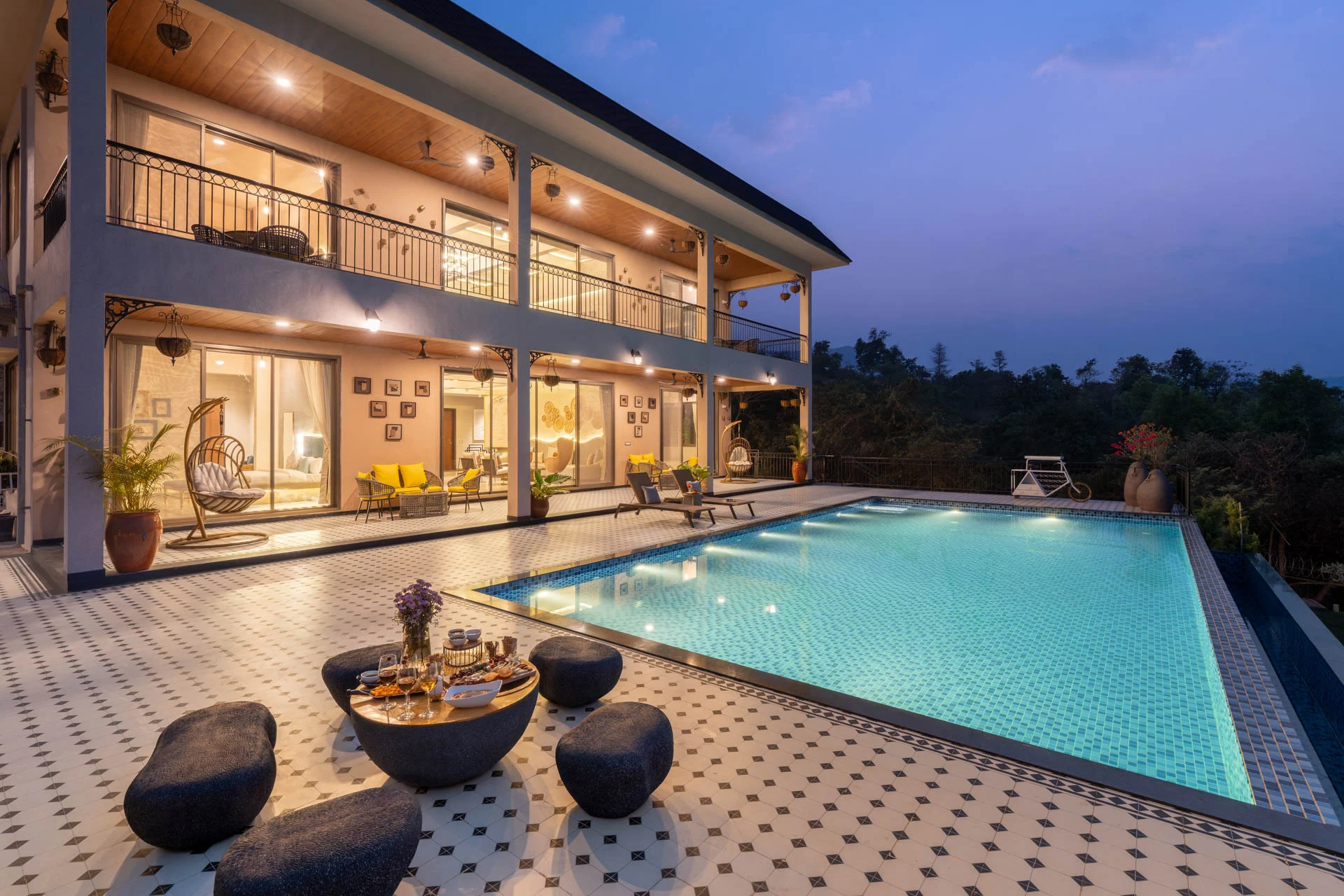
Stay nearby: Open House — 4-BHK lake house directly on Mulshi reservoir.

12. Panshet Lake

Panshet is the quietest of the three lakes — fewer camps, fewer tourists, and a more pastoral feel. The lake formed after the 1961 dam was built and the surrounding villages have an old, agricultural rhythm that the Pawna shore doesn’t. June here is for slow weekends, not Instagram weekends.
- Distance from Pune: 50 km · approx. 1.5 hours
- Entry fee: Free for lake access; water-sports operators charge ₹400–₹1,500
- Timings: Best 7 AM – 5 PM
- Best time in June: Week 2 onward
- How to reach: Pune → Khadakwasla → Sinhagad Road → Panshet
- Ideal for: Couples, solo travelers, anyone who finds Pawna too touristy
- Pro tip: Skip the water sports cluster near the dam wall — head 5 km west to Velhe-side beaches where a stretch of red-soil banks meets the lake. Almost no one knows about it.
Stay nearby: Waterfront Villa — 2-BHK lake-view villa, perfect for couples doing the quieter Panshet–Bhor loop.
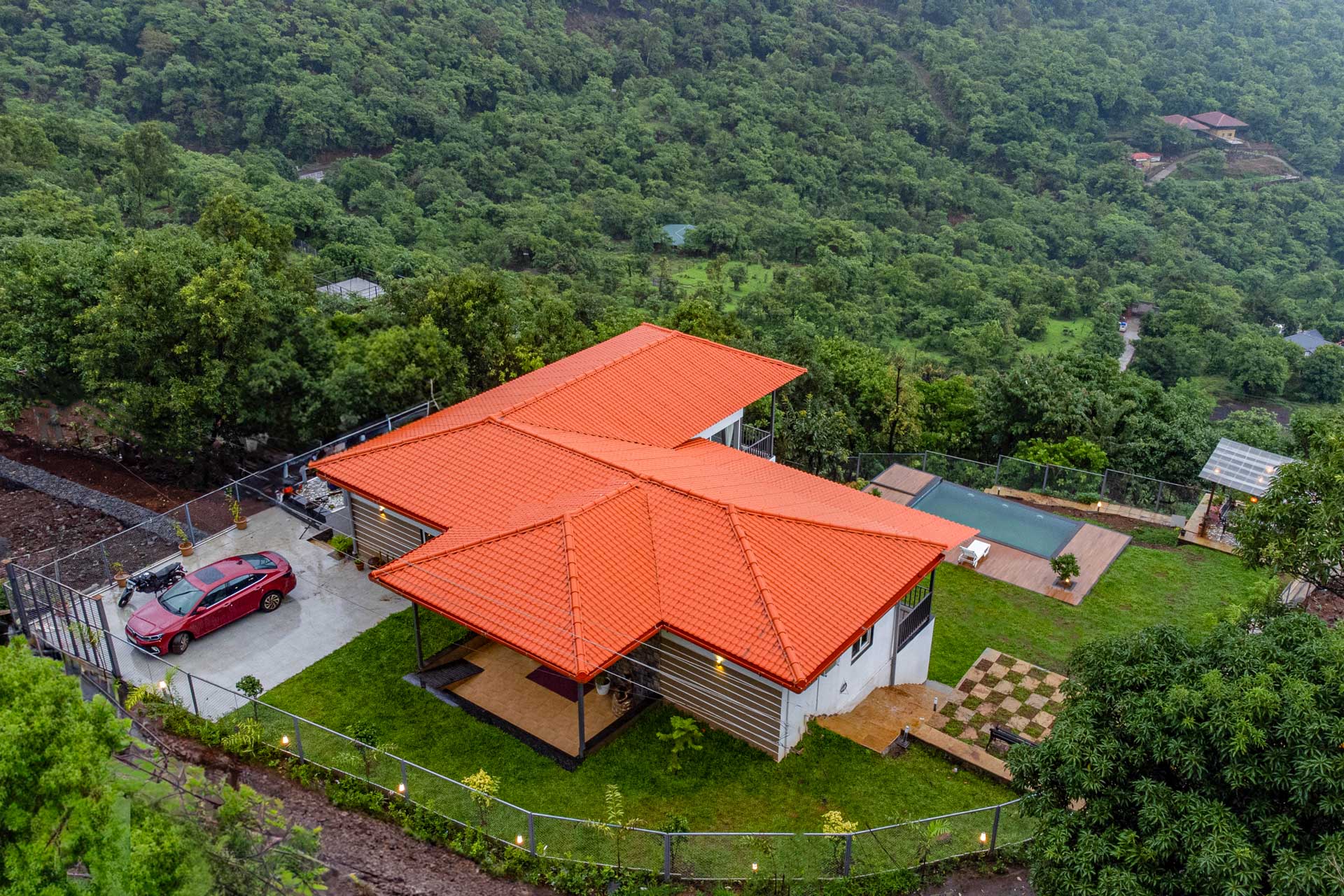
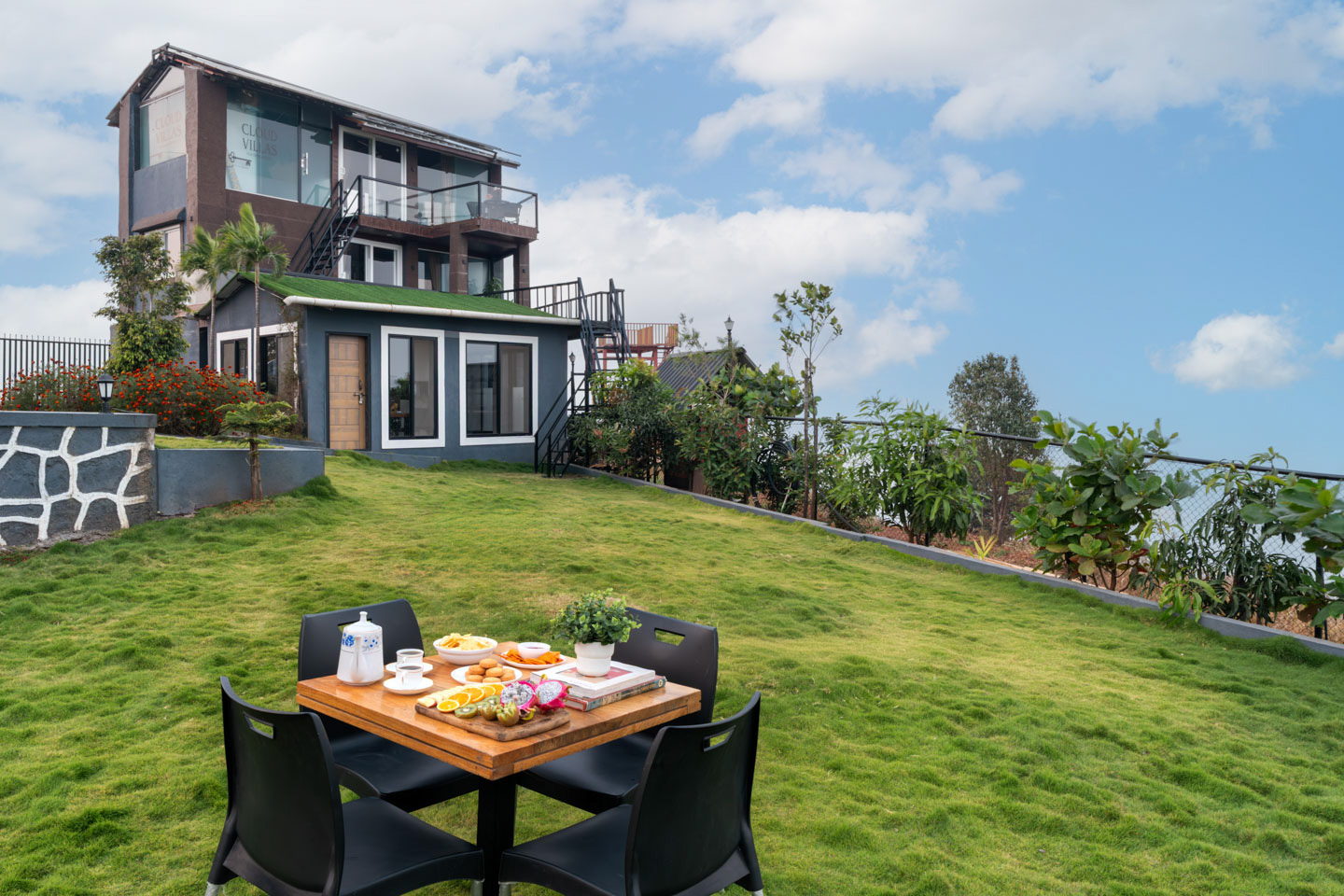
Travel tip: The Mulshi, Pawna, and Bhor villas mentioned above are all within an hour of at least three picks on this list. Book any of them and you’ve got a base for the cluster, not just one destination. Check current StayVista monsoon offers before you book.
Which hidden villages and nature reserves near Pune are worth visiting in June?
Three truly offbeat nature picks near Pune for June are Bhor heritage town (60 km), Aadrai Jungle Trek (130 km in the Malshej belt), and Bhimashankar Wildlife Sanctuary (110 km). These three pick up where the standard Pune listicles end — they reward travelers who want forest, silence, and zero tourist infrastructure.
13. Bhor Heritage Town
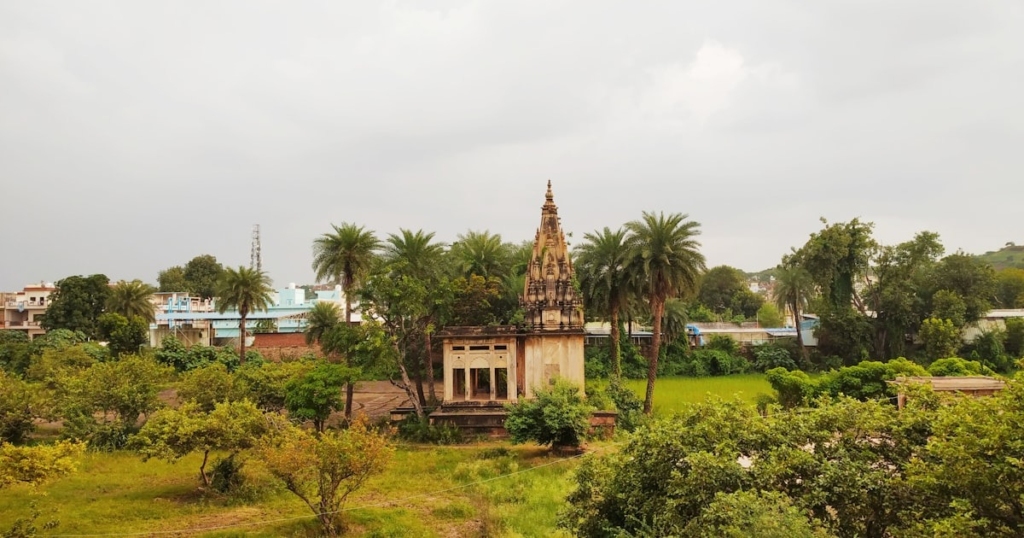
Bhor is a former princely state, now a quiet riverside town at the edge of the Bhor plateau. Its old palace, the Raja Bhor Wada, is still a private residence but its perimeter walk is open to visitors. A 17th-century Vishnu temple and a riverside market round out the day. This is heritage travel, not adventure travel.
- Distance from Pune: 60 km · approx. 1.5 hours
- Entry fee: Free (temple may take a small donation)
- Timings: Town accessible all day; temple opens 5:30 AM – 7:30 PM
- Best time in June: Week 1 onward (the heritage walk doesn’t depend on rain)
- How to reach: Pune → Khed Shivapur → Bhor via NH48
- Ideal for: Heritage travelers, couples, slow-travel writers
- Pro tip: Combine with Madhe Ghat on the same trip — they’re 30 minutes apart and feel like two different centuries. The Bhor riverside chai stalls open by 7 AM.
Stay nearby:Prune @ The Cloudscape — companion property to The Cloudscape, designed for slow-travel writers and couples.
14. Aadrai Jungle Trek
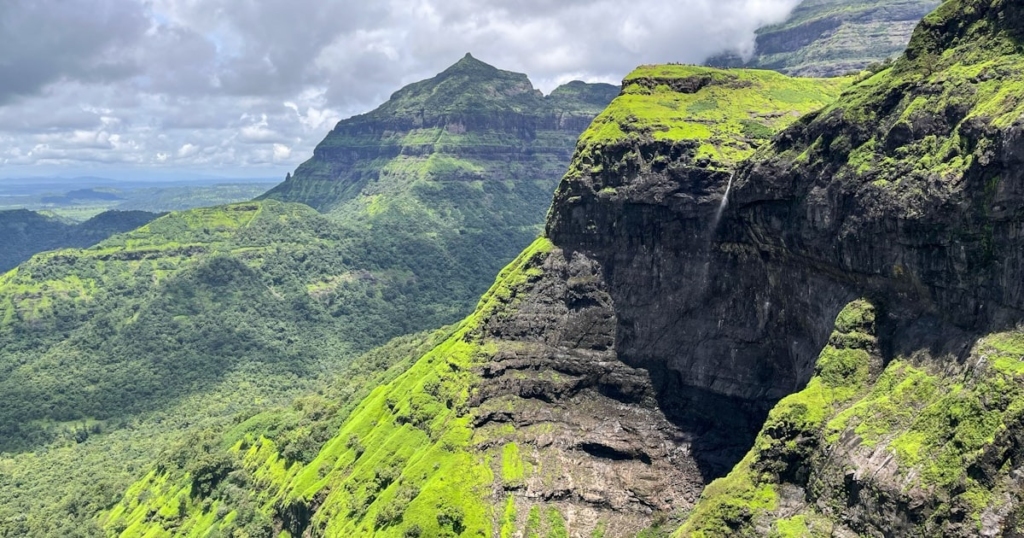
Aadrai is a dense forest trail in the Malshej Ghat belt. The trek runs 8 km through misty woods, stream crossings, and three hidden waterfalls — but the route is open only in monsoon and only with a guide. It’s the closest “rainforest” experience near Pune.
- Distance from Pune: 130 km · approx. 3.5 hours to trailhead
- Entry fee: No formal entry fee · local guide from Khireshwar village strongly recommended (₹300–₹500 per group)
- Timings: Trek only between 8 AM and 12 PM start; full circuit 5–6 hours
- Best time in June: Week 3–4 (the trail’s dry until then)
- How to reach: Pune → Junnar → Malshej Ghat → Khireshwar village (trailhead)
- Ideal for: Fit hikers, monsoon photographers, groups of 4–8
- Pro tip: The Aadrai stream crossings get knee-deep after heavy rain; carry quick-dry clothes. The local guide cooperative at Khireshwar runs better-organized treks than the Mumbai operators who drive in.
Stay nearby:Sunset on the Lake, Igatpuri — 5-BHK lakefront in Igatpuri, closest StayVista to the Malshej-Aadrai belt.

15. Bhimashankar Wildlife Sanctuary
Bhimashankar is one of India’s 12 Jyotirlinga temples, but it’s also a 130-square-kilometre wildlife sanctuary that protects the Indian giant squirrel (Maharashtra’s state animal). The temple draws crowds; the sanctuary trails don’t. A 4 AM start means you can do the temple darshan, breakfast at the village, and then enter the forest with a guide before the regular tourist buses arrive.
- Distance from Pune: 110 km · approx. 3 hours
- Entry fee: Sanctuary ₹50 (male) / ₹30 (female) / ₹20 (children under 12) · vehicle ₹10–₹100 by class · temple free of charge (Maharashtra Forest Department, Bhimashankar Wildlife Sanctuary)
- Timings: Sanctuary 7 AM – 6 PM; temple 4:30 AM – 9:30 PM
- Best time in June: Week 2 onward; Week 4 for full forest density
- How to reach: Pune → Manchar → Ghodegaon → Bhimashankar (last stretch has potholes through July)
- Ideal for: Wildlife photographers, devotees, families with naturalist kids
- Pro tip: Hire a sanctuary-approved naturalist guide (₹600–₹900) — the giant squirrel sightings are almost impossible without one. The Hanuman Lake trail is the best for biodiversity.
Stay nearby:The Den — 7-BHK in Karjat with a private pool, set up for the long Bhimashankar drive and indulgent return.
One-day vs weekend vs three-day — which offbeat Pune trip suits you?
Not every trip on this list needs to be a weekend. Half of these places are doable as a single early-out, late-back day trip from Pune. Here’s the honest split.
Half-day picks (under 60 km, return same day, leave by 7 AM): Mulshi Dam, Tamhini Ghat (short drive only), Tikona Fort, Korigad. Each is doable in 6–8 hours including the drive both ways. Best for couples or anyone with a Monday morning meeting.
Full-day picks (60–110 km, return same day if you start by 6 AM): Visapur Fort, Pawna Lake, Panshet Lake, Madhe Ghat, Andharban (only if you’ve pre-booked a return cab), Bhor heritage walk. These need 10–12 hours total.
Overnight picks (one or two nights — drive distance or destination depth demands it): Rajmachi (the village experience needs an evening), Bhimashankar (the sanctuary needs dawn), Naneghat (if you want to pair it with Aadrai or catch sunrise from the pass).
Two-night picks (weekend trips): Thoseghar paired with Mahabaleshwar, Aadrai paired with Malshej overnight, the Bhor–Madhe Ghat–Panshet triangle done as a slow weekend.
Want a starter shortlist? If this is your first June monsoon trip from Pune, do Mulshi Dam + Tamhini Ghat as a day trip in Week 2, then come back in Week 3 for a Pawna or Visapur overnight. That’s six destinations covered in two weekends — and you’ll know what works for your travel style before you commit to the longer drives.
Are roads near Pune safe to drive in June monsoon?
Roads near Pune are generally driveable through the entire month of June, but with three specific risks travelers should plan around: Tamhini Ghat has narrow sections with loose-stone fall risk, Malshej Ghat closes intermittently for landslide clearance after heavy spells, and the Bhimashankar approach road has potholes through July. The safest June driving window is the first 12 days (before heavy showers begin), and all drives are best done outbound before 9 AM and returning before 6 PM.
Here’s the June Monsoon Safety Index for the 15 routes covered:
- Tamhini Ghat road — Generally safe Week 1–2; slow speed advisory after heavy rain (loose stones from cliff face)
- Mulshi Dam approach — Safe all of June; potholes on the backwater road from Week 3
- Pawna Lake circuit — Safe all of June; northern shore village road is single-lane
- Lonavala–Aamby Valley Road (Korigad) — Safe; one steep curve near the Aamby gate
- Junnar–Naneghat–Ghatghar road — Safe all of June; the final 4 km to the pass is single-lane village road
- Bhor–Velhe road (Madhe Ghat) — Narrow village road, no shoulders; avoid after 5 PM
- Junnar–Malshej Ghat–Khireshwar (Aadrai) — Landslide-prone; check Maharashtra PWD advisories
- Manchar–Bhimashankar road — Significantly potholed; SUV recommended
- Pune–Satara NH48 (Thoseghar) — Excellent highway throughout
If you’re hiring a self-drive car, take one with high ground clearance for the Bhor, Malshej, and Bhimashankar routes. For the others, a standard sedan handles fine. And the single most important rule for June driving in this belt — never start a return drive after 5 PM. Visibility on ghat roads after dark, especially in fog, is genuinely dangerous.
Where should you stay near these offbeat Pune spots?
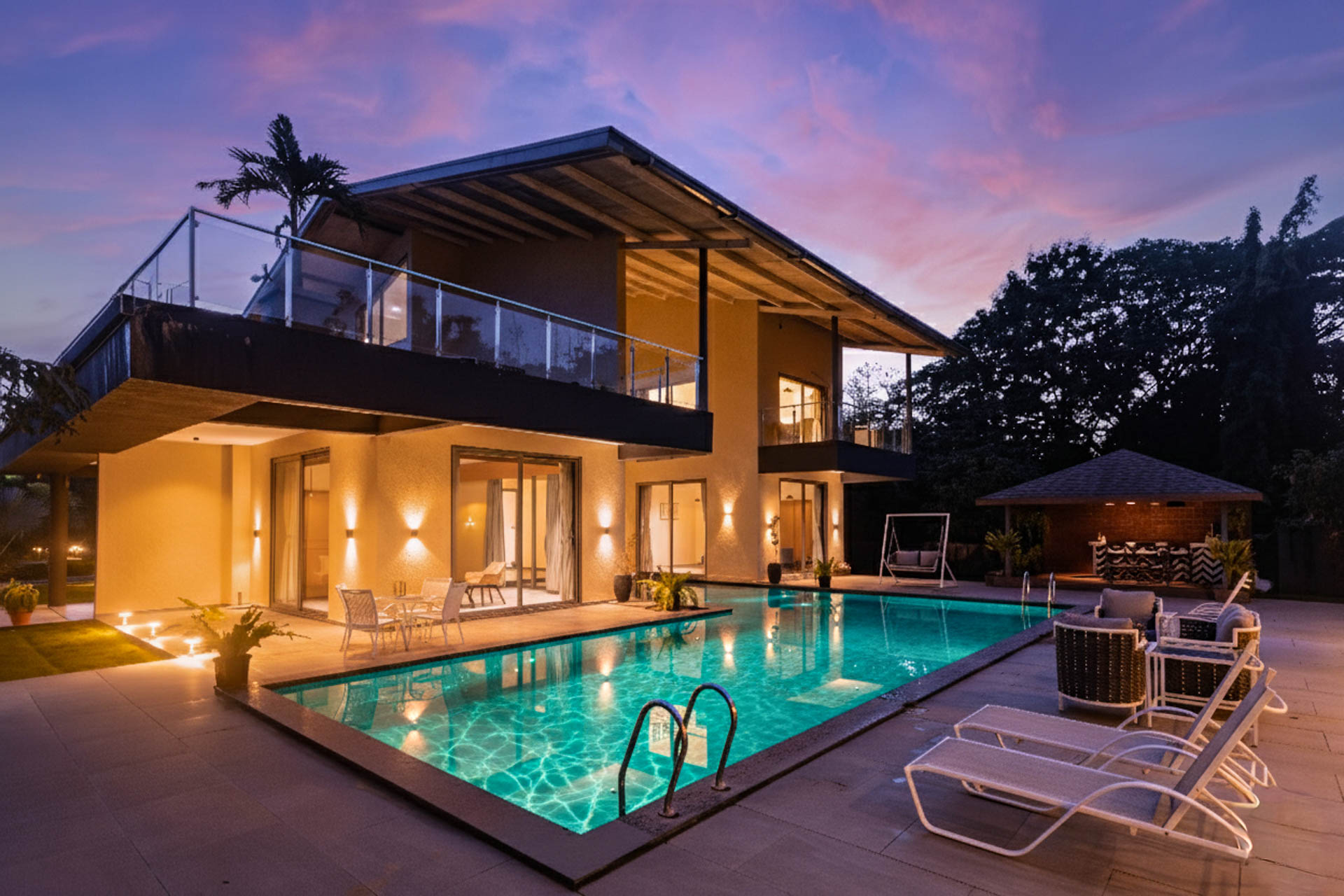
Picking a villa by cluster, not by destination, is the smart move for this list. The 15 picks group naturally into three travel-belts, and one well-chosen StayVista property covers four-to-eight destinations within a 90-minute drive.
Mulshi / Tamhini / Andharban belt — Asanjo Villa, Mulshi. Set in Mulshi’s green cradle with an infinity pool overlooking the valley, Asanjo pairs with eight of the 15 picks on this list — Tamhini, Andharban, Mulshi Dam, Ekam, Madhe Ghat (if you push slightly), and Korigad. The scenic drive starts at the driveway. Ideal for couples, families, or groups of 8–12.
Pawna / Lonavala fort belt — Meluha, Pawna. This 8-BHK has an 18×40 ft infinity pool that frames the Pawna view — and it sits within 25 minutes of Tikona, Visapur, Korigad, Rajmachi, and Pawna camping. Designed for groups of 20+, with a sports turf and a bonfire setup. The Rajmachi trekkers especially love it for the post-trek pool.
Bhor / Panshet / Madhe Ghat belt — The Cloudscape, Bhor. A secluded ridge property with lake-and-hill views, Cloudscape pairs with Madhe Ghat, Panshet, and the Bhor heritage walk. Quieter than the Mulshi or Pawna belts. Best for slow-travel weekends, couples, and writers’ retreats.
Whichever cluster you pick, every offbeat spot on this list is within a 90-minute drive of one of these three properties. For the full June lineup, see all our June-ready villas near Pune.
Frequently Asked Questions
The 15 best offbeat picks near Pune in June 2026 are Tamhini Ghat, Andharban Forest Trek, Naneghat Reverse Waterfall, Madhe Ghat, Thoseghar Waterfalls, Visapur Fort, Tikona Fort, Rajmachi, Korigad, Pawna Lake, Mulshi Dam, Panshet Lake, Bhor heritage town, Aadrai Jungle Trek, and Bhimashankar Wildlife Sanctuary. All are within three hours of Pune.
For a weekend trip near Pune in monsoon, the strongest two-night picks are the Bhor–Madhe Ghat–Panshet triangle (slow heritage and lakeside drive), the Pawna–Visapur–Tikona cluster (forts and lakeside), or Thoseghar paired with Mahabaleshwar in the Satara belt. Each gives you three-to-four destinations from this list in a single weekend.
Naneghat Reverse Waterfall is about 90 km from Pune via Junnar, a drive of roughly 2.5 hours one way, followed by a 1.5 km easy walk from Ghatghar village to the pass. The reverse-waterfall phenomenon — where strong updrafts push falling water back upwards over the cliff — is strongest between 11 AM and 3 PM on windy days in Weeks 3 and 4 of June.
Tamhini Ghat is exceptional in monsoon — especially from the second week of June onward, when the seasonal waterfalls activate and the forest canopy turns dense green. It’s a 60 km drive from Pune, takes about two hours, and the 15 km ghat stretch has at least five waterfalls visible from pullouts. Drive only in daylight.
Andharban trek is safe in June from Week 3 onward, when the canopy has settled and the trail has cleared. Avoid Week 1 (the path is mostly dry mud) and any day after extreme rainfall warnings. A forest department-approved guide is strongly recommended, leech protection is essential, and the trek is one-way over 13 km so arrange a return cab in advance.
The four best offbeat monsoon forts near Pune are Visapur Fort (60 km, gentle 4 km trek), Tikona Fort (55 km, easy 1.5 km pyramid trek), Rajmachi (80 km, overnight in Udhewadi village), and Korigad (60 km, easiest trek with two lakes on top). All four open by Week 2 of June and are best trekked between 6 AM and 11 AM.
Week 3 of June is the strongest week overall — the monsoon onset has stabilized, all waterfalls are flowing, fort trails have cleared, and the crowds haven’t built up yet. Week 1 favors lakes and heritage drives; Week 2 is the inflection point for waterfalls; Week 4 has peak visuals but slightly higher rainfall risk on ghat roads.
Most roads near Pune are safe through June, with three specific risk routes: Tamhini Ghat (loose stones in Week 3–4), Malshej Ghat (intermittent landslide closures), and the Bhimashankar approach (potholes throughout). The safest practice is leaving Pune by 7 AM and returning by 6 PM. SUVs are recommended for Bhor, Malshej, and Bhimashankar; sedans handle the rest.
Tamhini Ghat, Mulshi, Pawna Lake, Naneghat, Madhe Ghat, and Bhimashankar are among the best places to visit near Pune in June
Yes. Madhe Ghat, Bhivpuri Waterfalls, and several waterfalls around Tamhini Ghat are considered lesser-known monsoon destinations.
Popular monsoon road trips include Pune to Tamhini Ghat, Mulshi, Pawna Lake, and Malshej Ghat.
Mulshi, Madhe Ghat, Ghangad Fort, Aadrai Jungle Trek, and Naneghat generally see fewer visitors than Lonavala.
Yes. The arrival of the monsoon transforms the Western Ghats into a lush green landscape, making June one of the most scenic times to explore nearby hill stations and valleys.
Best Places Near Pune for Different Travel Styles
For Couples
- Pawna Lake
- Mulshi
- Tamhini Ghat
For Adventure Lovers
- Andharban Forest Trek
- Aadrai Jungle Trek
- Naneghat
For Waterfall Chasers
- Madhe Ghat
- Tamhini Ghat
- Bhivpuri Waterfalls
For Weekend Road Trips
- Mulshi
- Pawna Lake
- Tamhini Ghat
The takeaway
June near Pune is the best monsoon travel window of the year — and most people miss it by waiting until July. The first ten days transform the Sahyadris, the crowds haven’t arrived, and the offbeat picks are at their atmospheric best.
If we had to recommend a three-trip arc for June 2026, it would look like this:
- Week 1: Day trip to Mulshi Dam + Tamhini Ghat (lakes and ghat drive — no waterfalls needed yet)
- Week 2: Weekend at Pawna with Tikona and Korigad treks (forts open, lakes filling)
- Week 3 or 4: Weekend at Naneghat–Aadrai (Junnar belt) or Bhor–Madhe Ghat (peak waterfall season)
When you’ve picked your spot, our team’s curated June villas near Pune are here to make the rest of the weekend easy. And for the wider Maharashtra monsoon list — our Aug–Sept Pune monsoon guide covers what happens after this list peaks.
Go in June. Skip Lonavala. Pick one of these instead.