
15 Most Spectacular Waterfalls in India to See in Monsoon 2026 (Best Time + How to Reach)

The monsoon has only just reached most of India. It touched Kerala on 4 June 2026 and was declared over Mumbai around 23–24 June — roughly 12 days later than the usual second week of June (IMD, 2026). So if you’re booking a waterfall trip for this week, here’s the honest truth: you’re early. Most of India’s great waterfalls won’t hit full roar until August and September.
That gap between “it’s raining” and “the waterfall is at its best” is exactly what this guide fixes. At StayVista, our hosts across the Western Ghats watch this turn every year, and the question travellers ask us most isn’t which waterfall – it’s when. Below are 15 of India’s best monsoon waterfalls, the month each one peaks, how to reach it, which ones are restricted or risky in 2026, and where to stay nearby.
India’s 2026 monsoon reached Kerala on 4 June and Mumbai only on 23 June – a 12-day delay. That means most Ghats waterfalls will not hit peak flow until August–September, while Kerala and Meghalaya are already thunderous. Below are 15 waterfalls, exact entry fees, safety closures and villas within a weekend’s drive of each cluster.
In this Blog
Quick facts: Monsoon waterfalls in India (2026)
| Question | Quick answer |
| Best months overall | August–September for peak flow; September–November for the safest access and clearest views |
| Is June too early? | Mostly yes — falls are filling, not full. Kerala and Meghalaya are furthest along |
| 2026 monsoon onset | Andaman ~16 May, Kerala 4 June, Mumbai ~24 June (delayed ~12 days) |
| Waterfalls covered | 15, across Maharashtra, Goa, Karnataka, Kerala, Chhattisgarh, Meghalaya and Uttarakhand |
| Biggest safety note | Several of the most-searched falls near Mumbai–Pune are legally closed (17 June–30 Sept 2026) |
When do India’s waterfalls actually peak in the monsoon?
Most Indian waterfalls peak in August and September, roughly six to ten weeks after the monsoon arrives in a region. June is the “filling up” phase. October, in many places, is the sweet spot — strong flow, but safer footing and clearer skies. So the calendar matters far more than most “best waterfalls” lists admit.
Here’s the part competitors skip: peak flow is not the same as the best time to visit. At the highest water levels, some falls are genuinely dangerous, and a few close entirely. The table below maps when each region builds, peaks, and balances volume with safe access.
| Region (examples) | Onset builds | Peak flow | Best balance (flow + safe access) |
| Maharashtra Ghats (Lonavala, Satara, Mahabaleshwar, Igatpuri) | Mid–late June | Aug–Sept | Late Aug–early Oct |
| Goa & Karnataka coastal Ghats (Dudhsagar, Jog) | July | Aug–Sept | Sept–early Oct |
| Kerala (Athirappilly, Wayanad) | June | Jul–Sept | Sept–Jan (safer, lush) |
| Coorg (Abbey, Iruppu) | July | Jul–Oct | Sept–Dec |
| Central India (Chitrakote) | July | Jul–Oct | Oct–Nov |
| Meghalaya / Northeast (Nohkalikai, Krang Suri) | June | Jun–Sept (volume) | Oct–Dec (clear views) |
| Tamil Nadu (Hogenakkal) | — | High but closed Aug–Sept | Sept–Nov post-monsoon |
Notice how the “peak flow” column clusters around August, while the “best balance” column spreads into September, October, even November. The chart below makes that gap visible for six marquee falls.
Peak flow clusters in August; the recommended visit month runs September–November. Source: StayVista analysis of IMD onset data and regional tourism advisories, 2026.
According to IMD onset data and state tourism advisories, the volume peak across the Western Ghats lands in August–September, yet several falls are safest to visit weeks later, in September–November. Plan around the green dot, not the blue one. If you want the trek-first version of this season, see our guide to monsoon waterfall treks across India.
Is June too early? Where the 2026 monsoon has reached
In late June 2026, mostly yes. Kerala’s onset was 4 June — already later than the normal 1 June — and the monsoon advanced over Mumbai only around 24 June, about 12 days behind schedule. The rivers are rising, but they aren’t full.
What does this mean for your trip? Kerala and Meghalaya are furthest along and worth it now for sheer volume, where access is safe. The Maharashtra, Goa and Karnataka falls need until August to truly perform. If July is your only window, see our pick of the best waterfalls to visit in July — though most still peak a little later. For the wider picture of where the rain works in your favour, read our roundup of the best places to travel in India during the monsoon. We update this guide as the season progresses and closures change, so check the date stamp before you pack.
15 best waterfalls to visit in India this monsoon
Each waterfall below comes with the practical details that decide a trip: how to reach it, the best month within the monsoon, fees, whether it’s a viewpoint or a trek, a safety note, and who it suits. Fees are approximate and change at the gate — carry cash. We’ve grouped the falls by region so you can plan around one base.
Maharashtra – the Western Ghats near Mumbai & Pune
1. Lingmala Falls, Mahabaleshwar
A two-step cascade that drops about 500 feet (roughly 150 m), among Mahabaleshwar’s tallest. Nearest city: Mahabaleshwar town, ~6 km. Airport/rail: Pune airport ~120 km; Wathar is the nearest small railhead. How to reach: drive to the entry, then a short walk of around 200 steps to the main viewpoint. Best month: peaks July–October. Entry: ~₹15–25; open roughly 8 AM–4:30 PM. Type: viewpoint plus a smaller pool below. Safety: no swimming at the main fall in monsoon; Satara sometimes shuts the viewing area in heavy spells, so check locally. Time needed: about 1–1.5 hours. Ideal for: families and couples. Pro tip: pair it with Mahabaleshwar’s strawberry farms and the Kaas Plateau bloom from late August.
2. Thoseghar & Vajrai Falls, Satara
A cluster of cascades near Chalkewadi, with engineered viewing galleries that make them genuinely family-safe. Nearest city: Satara, ~26 km; Pune ~141 km. Airport/rail: Pune airport; Satara railway station ~26 km. How to reach: drive to Chalkewadi, then short walkways to the platforms. Best month: peaks August–October. Entry: ~₹50; camera extra. Type: viewing galleries. Safety: fierce flow and mist at peak — stay behind the railings. Time needed: about 1.5–2 hours. Ideal for: families and photographers. Pro tip: nearby Vajrai, often called India’s tallest plunge, pairs with the Kaas Plateau wildflowers (late August–October).
3. Kune Falls, Khandala.
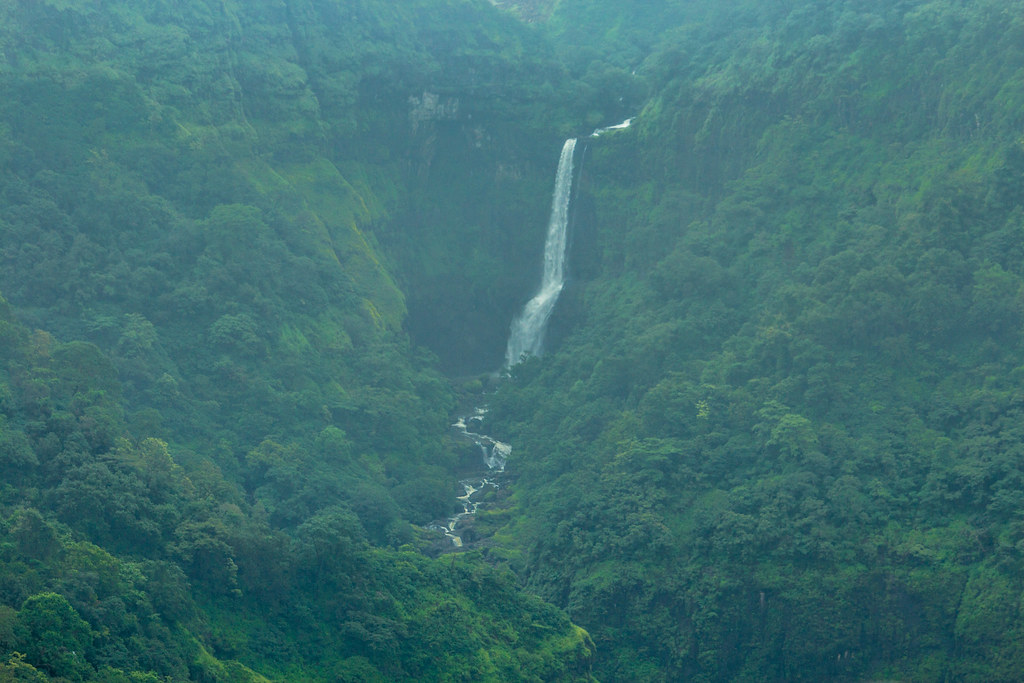
A three-tiered ribbon beside the old Mumbai–Pune route — and a useful myth-buster. It’s India’s 14th-highest waterfall at about 200 m, not the third. Nearest city: Khandala ~1.5 km; Lonavala ~3.5 km. Airport/rail: Pune/Mumbai airports; Khandala station ~2 km. How to reach: view it from the Rajmachi/Monkey Point area; the base sits on private land. Best month: peaks June–September. Entry: free roadside viewpoint. Type: viewpoint. Safety — high caution: this is the Lonavala–Bhushi Dam belt where five people died in July 2024 (see the safety section). Don’t enter streambeds. Time needed: about 30–45 minutes. Ideal for: couples and photographers.
4. Vihigaon “Ashoka” Falls, Igatpuri
The monsoon rappelling hotspot near Mumbai, made famous by film shoots. Nearest city: Igatpuri ~15 km; Kasara station ~13 km; Mumbai ~116 km (~3 hours). How to reach: drive to the trailhead, then a moderate 1.5–2 hour walk. Best month: peaks June–September. Entry: no fixed fee; rappelling is ~₹1,000–1,200 through operators. Type: trek plus adventure activity. Safety: rappel only with established, insured operators; the rocks turn lethal in flash flow. Time needed: a half-day (a full day with rappelling). Ideal for: trekkers and adventure groups. Pro tip: go on a weekday morning — weekend queues for the rappel can run an hour.
[IMAGE: A rain-fed multi-tier waterfall in the green Maharashtra Western Ghats with low cloud — alt: “A full-flowing tiered waterfall surrounded by monsoon-green hills in the Maharashtra Western Ghats”]
Goa & Karnataka – Coastal Ghats and the south
5. Dudhsagar Falls, Goa–Karnataka border
The “Sea of Milk” plunges around 310 m and is India’s most photographed monsoon waterfall. But access changes in the rains. Nearest city: Panjim ~60 km; base village Collem/Kulem. Airport/rail: Goa airports; Kulem and Castle Rock stations are the access points. How to reach: here’s the catch — the forest jeep safari is suspended for the monsoon, typically from the second week of June until late October, and the railway-track trek is officially banned by the RPF. In peak monsoon you view it from the train or on a permitted guided trek. Best month: the falls peak July–September; easy jeep access returns from late October. Type: view-from-train or guided trek in monsoon. Safety: never walk the live railway tracks — it’s prosecutable and deadly. Time needed: a full day. Ideal for: photographers and rail travellers. Pro tip: a Vasco–Kulem passenger train passes right beside the falls.
6. Jog Falls, Karnataka
India’s tallest single-drop waterfall when in spate, with four streams — Raja, Rani, Roarer and Rocket — merging into one. Nearest city: Sagara ~30 km; Shivamogga ~100 km. Airport/rail: Hubli or Mangaluru airports; Sagara Jog Falls station nearby. How to reach: drive in; well-built viewpoints, plus a steep path to the base. Best month: peaks August–September. Entry: no entry fee; parking and camera charges apply. Type: viewing platforms. Safety: a long-planned ropeway is still under construction and not open as of 2026 — don’t count on it. Mist can hide the falls on heavy-rain days. Time needed: about 1.5–2 hours, plus 1–2 hours to reach the base. Ideal for: families and photographers.
7. Abbey Falls, Coorg
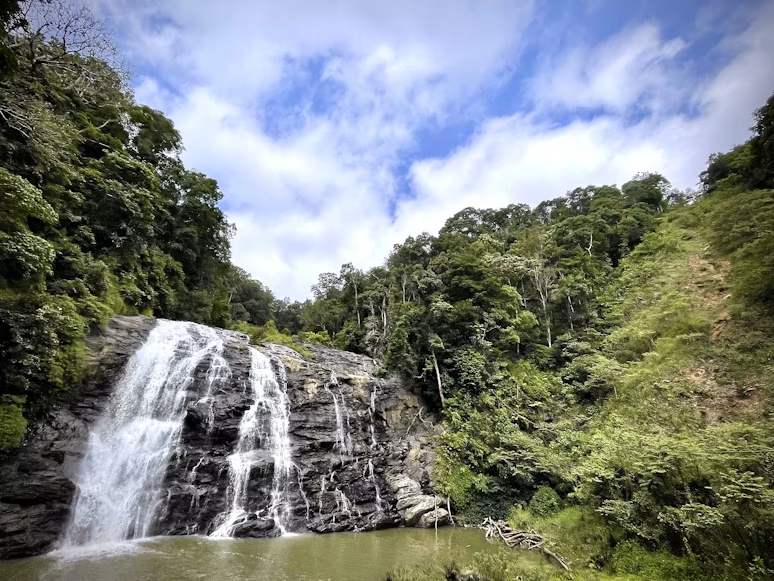
A coffee-country favourite, viewed from a hanging bridge — one of the easiest falls here for families. Nearest city: Madikeri ~8 km. Airport/rail: Mangaluru airport ~135 km; Mysuru railway station ~120 km. How to reach: drive plus a short walk to the bridge. Best month: peaks July–October. Entry: ~₹10–20; open ~9 AM–5 PM. Type: viewpoint and suspension bridge. Safety: the falls sit amid private estates — stay on the bridge. Time needed: about 45 minutes–1 hour. Ideal for: families and couples. Pro tip: read our deep dive on Abbey Falls vs. Iruppu Falls before you choose.
8. Iruppu Falls, South Coorg
A sacred cascade on the Brahmagiri range, a touch wilder than Abbey. Nearest city: Madikeri ~75 km, near Srimangala. Airport/rail: Mysuru railway station ~125 km. How to reach: drive plus a short climb; it’s also the gateway to the Brahmagiri trek (separate forest permit). Best month: best August–December. Entry: ~₹50; open ~8 AM–5 PM. Type: short walk to the falls. Safety: leeches and slippery steps in monsoon — carry salt and wear grippy shoes. Time needed: about 1–2 hours (a full day with the Brahmagiri trek). Ideal for: families at the falls, trekkers for Brahmagiri.
9. Hogenakkal Falls, Tamil Nadu
The “Niagara of South India,” famous for coracle rides on the Kaveri — and the clearest case of peak flow being the wrong time. Nearest city: Dharmapuri ~47 km; Bengaluru ~130 km. Airport/rail: Bengaluru/Salem airports; Dharmapuri station ~47 km. How to reach: drive in; the draw is the coracle ride (~₹750–1,000 per boat). Best month: after the monsoon — September–November. Boating is banned and the falls close to visitors at peak flow, generally August–September. Type: riverbank viewpoints plus coracles. Safety: the Kaveri rises fast; never push for a boat on a high-flow day. Time needed: about 2–3 hours. Ideal for: families and couples — in the post-monsoon window.
Planning a Western Ghats waterfall weekend? A private villa makes a far better base than a packed hill-station hotel in peak season — your own kitchen for chai after a wet trek, and space to dry out. We’ve listed specific StayVista homes near each waterfall cluster in the Where to stay section below.
Kerala — Green, full, and to be treated with respect
10. Athirappilly Falls, Thrissur
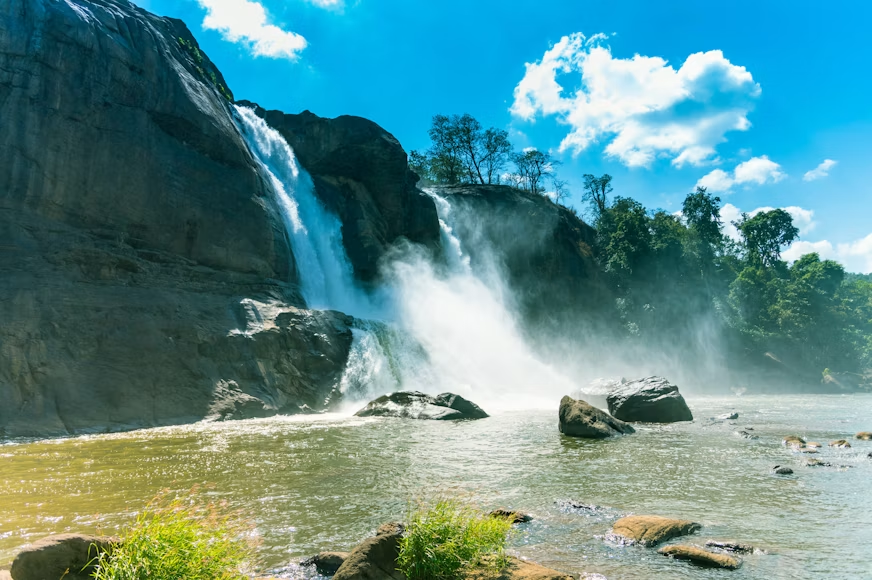
Kerala’s widest waterfall and a film-shoot icon, thundering across the Chalakudy River. Nearest city: Chalakudy ~30 km; Kochi ~55 km. Airport/rail: Cochin airport ~33–40 km; Chalakudy station ~30 km. How to reach: drive in; a short walk to the top viewpoint and a steeper path to the base. Best month: strongest July–September; September–January is the safer, lush balance. Entry: ~₹50 adult, ~₹10–15 child, foreigner ~₹250, camera ~₹25; open 8 AM–6 PM. Type: easy top viewpoint plus a slippery base trail. Safety: the base rocks are dangerous at high flow — people have died ignoring the barriers. Time needed: about 1.5–2 hours. Ideal for: families and photographers. Pro tip: our complete Athirappilly Falls guide has the hour-by-hour plan.
11. Soochipara (Sentinel Rock) Falls, Wayanad
A three-tiered fall with a forest trek down — beautiful, but in a region that demands caution. Nearest city: Meppadi ~13 km; Kalpetta ~23 km. Airport/rail: Kozhikode airport ~80–100 km. How to reach: drive to the ticket point, then a roughly 2 km trek (~30 minutes). Best month: full in monsoon, but often best post-monsoon for safe footing. Entry: ~₹80–150; open ~8 AM–5 PM. Status note: Soochipara reopened after the July 2024 Wayanad landslides with a daily visitor cap, but trekking falls in this belt are frequently closed in heavy rain. Confirm the current status with DTPC Wayanad before you go. Time needed: about 2–3 hours. Ideal for: photographers and trekkers, conditions permitting.
Central India — the wide one
12. Chitrakote Falls, Chhattisgarh. India’s widest waterfall, a horseshoe on the Indravati River that spreads to around 300 m in spate — the “Niagara of India.” Nearest city: Jagdalpur ~38 km. Airport/rail: Jagdalpur airport (limited) and station; Raipur ~300 km for major links. How to reach: drive in; boat rides run when the flow is calm. Best month: July–October for width; many locals rate October–November best for the rainbow-in-the-mist effect. Entry: no fixed entry fee; boating and parking charged locally. Type: viewing areas plus seasonal boating. Safety: boating is suspended at dangerous flow — don’t negotiate. Time needed: about 1–2 hours. Ideal for: families and photographers chasing that horseshoe shot.
Northeast — Meghalaya (volume now, clear views later)
13. Nohkalikai Falls, Cherrapunji
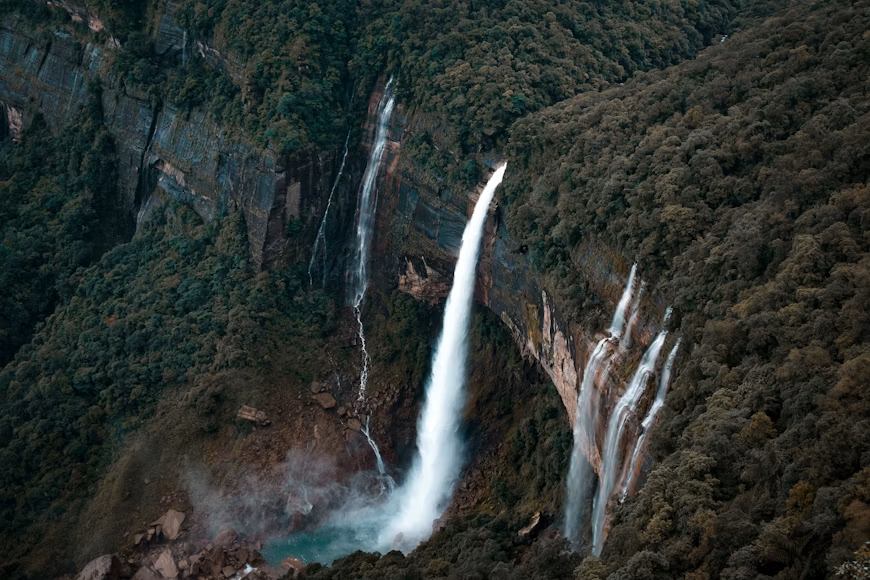
India’s tallest plunge waterfall, dropping around 340 m near one of the wettest places on Earth. Nearest city: Cherrapunji ~7 km; Shillong ~53 km. Airport/rail: Guwahati airport ~150 km and nearest major railhead. How to reach: drive to the car park, then a short paved path to the platform. Best month: huge June–September, but here’s the honest warning — at peak monsoon the plunge is often wrapped in cloud, and you can travel far to see nothing. Clearest views come October–December. Entry: ~₹20 plus ~₹20 camera. Type: viewing platform. Safety: the real risk is monsoon road conditions and zero visibility, not the water. Time needed: about 30–45 minutes. Ideal for: families and photographers. Pro tip: go early morning before the cloud builds, and pair it with the Seven Sisters Falls in Meghalaya.
14. Krang Suri Falls, Jaintia Hills
The turquoise-water star of Meghalaya’s south — but the colour is the catch. Nearest city: Jowai ~30–35 km; Shillong ~85–110 km. Airport/rail: Guwahati. How to reach: drive to the entry, then a stepped walk down to the pool. Best month: that famous blue water shows best in clearer flow, so aim for September–December; peak June–August rain muddies the colour and slicks the steps. Entry: ~₹40; life jacket ~₹100. Type: stepped descent, with safe-season swimming. Safety: swim only when the flow is calm and with a life jacket. Time needed: about 2–3 hours. Ideal for: couples and photographers.
North India – Uttarakhand
15. Kempty Falls, Mussoorie
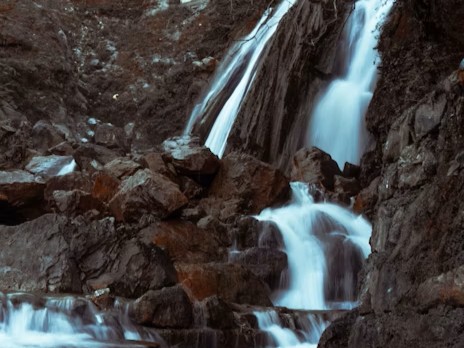
The hill station’s headline waterfall — powerful in the rains, but be realistic about it. Nearest city: Mussoorie ~15 km; Dehradun ~45 km. Airport/rail: Jolly Grant airport ~60 km; Dehradun station ~45 km. How to reach: drive from Mussoorie, then steps or a ropeway (~₹120–250) to the lower pool. Best month: full July–August, but the falls get very crowded and the Mussoorie roads turn landslide-prone — shoulder months are calmer. Entry: no entry fee; ropeway and parking extra; open through daylight hours (roughly 8 AM–6 PM). Type: stepped and ropeway access to pools. Safety: Uttarakhand issues frequent monsoon road advisories here — travel by daylight and check conditions. Time needed: about 1–2 hours. Ideal for: families and casual visitors; pair with our list of tourist places in Mussoorie.
Which monsoon waterfalls are restricted or risky in 2026?
This is the part most lists leave out, and it’s the part that matters most. In 2026, several of India’s most-searched waterfalls are either legally closed or genuinely dangerous at peak flow. A swollen waterfall killed a woman and four children near Bhushi Dam, Lonavala, on 1 July 2024. Beauty and danger arrive together in the monsoon.
Legally restricted this monsoon. Under Section 163 of the BNSS, the Raigad administration has banned tourist entry from 17 June to 30 September 2026 at Devkund Waterfall, Tamhini Ghat, Bhira Dam, Bekare Waterfall and Secret Point after repeated drownings. Several of the most-searched “waterfalls near Mumbai/Pune” are simply off-limits right now – don’t book a trek that promises them.
Closes at peak flow. Hogenakkal bans coracles and shuts to visitors in August–September; Meenmutty in Wayanad is typically closed during the monsoon; and Dudhsagar’s railway-track trek is closed year-round by the RPF.
Landslide zones. Treat Wayanad’s trekking falls as post-monsoon destinations unless authorities confirm otherwise.
Your monsoon waterfall safety checklist:
- Stay behind barriers and never enter streambeds or pools at high flow.
- Check the IMD forecast and district advisories the morning you travel; skip red-alert days.
- Avoid live railway tracks and closed trek routes — closures exist for a reason.
- Rappel or canyon only with insured, established operators.
- Leave forest waterfalls well before dusk; many areas bar entry after 6 PM.
For a broader view of where the season is genuinely safe, see our guide to where it’s safe to travel in the monsoon.
What are India’s tallest, widest and biggest waterfalls?
If you’re here to settle a debate, here’s the quick answer. India’s tallest plunge waterfall is Nohkalikai in Meghalaya at around 340 m. Its widest is Chitrakote in Chhattisgarh, spreading to about 300 m in monsoon. By total height, Kunchikal Falls in Karnataka (around 455 m) is often cited as India’s tallest overall, though it runs lean outside the rains.
The monsoon is the only season all three perform together. That’s the real reason “biggest waterfall in India” and “monsoon” are searched in the same breath — the records only come alive when the rivers are full.
Where should you stay near India’s monsoon waterfalls?
A private villa beats a crowded hotel in peak monsoon season — you get space to dry wet gear, a kitchen for hot food after a soggy trek, and a quiet base when the rain sets in for a day. Here are specific StayVista homes near each waterfall cluster (verified live in June 2026; do reconfirm dates, as monsoon weekends book out fast).
- For the Maharashtra falls (Lingmala, Thoseghar, Kune, Vihigaon): Nova Nest, a 6-bedroom Lonavala villa with a private pool and a large terrace; The Deck, a valley-view country house near Mahabaleshwar with an outdoor pool; and Lake Arches, a 4-bedroom Igatpuri home with a lakeside infinity pool – ideal as a Vihigaon base.
- For Dudhsagar (Goa): Oceanic Sunsets, a 5-bedroom Reis Magos villa with a sea-facing infinity pool, or Casa Do Amor, a 6-bedroom Sangolda home with a private pool and a quiet village setting.
- For Abbey & Iruppu (Coorg): Coffee & Mist, a 5-bedroom home set on a working coffee estate with a private pool – the kind of misty-morning Coorg stay the monsoon is made for.
- For Kempty (Mussoorie): Everdale, a forested Dehradun estate with a heated pool – welcome after a wet hill day.
How do you plan a monsoon waterfall trip?
The best monsoon waterfall trips are short, local, and timed to the region’s peak. You rarely need to fly across the country — most of these falls sit within a weekend of a major city. Match the fall to your base, and you’ll spend more time at the water and less on wet ghat roads.
- From Mumbai: Igatpuri (Vihigaon) or Lonavala (Kune) for a day, then add Bhandardara and its Umbrella Falls for a second night.
- From Pune: Satara (Thoseghar, Vajrai) and Mahabaleshwar (Lingmala) make a relaxed two-day loop.
- From Bengaluru: Coorg (Abbey, Iruppu) for a weekend, or Hogenakkal in the post-monsoon window.
What to pack: quick-dry clothes, a waterproof bag, grippy trekking shoes, a power bank, offline maps, and leech socks for Coorg and Wayanad. Mornings give you the best light and the smallest crowds — and you’ll be back at the villa before the afternoon downpour.
Frequently asked questions
Volume peaks in August–September across the Western Ghats, but September–November usually offers the best balance of strong flow, safe footing, and clear skies. In Meghalaya, October–December gives the clearest views, since peak-monsoon cloud often hides the falls.
Mostly, yes. The monsoon reached Kerala on 4 June 2026 and Mumbai only around 24 June — about 12 days late. Falls are filling but not full. Kerala and Meghalaya are furthest along; the Maharashtra and Goa falls need until August.
Many stay open, but several close at peak flow — Hogenakkal suspends coracles in August–September, and Meenmutty in Wayanad usually shuts. Some are legally restricted: Devkund, Tamhini and Bekare are banned to tourists from 17 June to 30 September 2026.
The forest jeep safari is suspended for the monsoon, typically from mid-June to late October, and the railway-track trek is banned by the RPF. In the rains you view Dudhsagar from a passing train or on a permitted guided trek; easy jeep access returns from late October.
Devkund, Tamhini, Bekare, Bhira and Secret Point are banned from 17 June to 30 September 2026. The Lonavala–Bhushi Dam belt turns deadly at high flow — five people died there in July 2024 — and Wayanad’s trekking falls remain sensitive after the 2024 landslides.
Only with caution. Stay behind barriers, never enter streambeds, and follow Pune district rules — designated spots only, and no forest entry after 6 PM. After the 2024 Bhushi Dam deaths, authorities deployed lifeguards and barriers, but the water still rises without warning.
India’s tallest plunge waterfall is Nohkalikai (~340 m, Meghalaya); the widest is Chitrakote (~300 m in monsoon, Chhattisgarh); and by total height, Kunchikal Falls in Karnataka (~455 m) is often cited as the tallest overall. All three are at their best in the monsoon.
Generally no at the main falls. Swimming is dangerous or prohibited at peak flow at Lingmala, Athirappilly and most others. Only calm, designated pools — such as Krang Suri in the safe season with a life jacket — allow it. When in doubt, stay out of the water.
Plan around the calendar, not the first rain
The season has only just opened. The smartest monsoon waterfall trip isn’t the one you take the week it starts raining — it’s the one you time to your chosen fall’s real peak, and to the window when it’s safe to get close.
- Most falls peak in August–September; September–November is often the safest, clearest time.
- Check closures before you book — some of the most famous falls are off-limits in 2026.
- Base yourself near one cluster and travel light and local.
Pick your waterfall, pick your month, and book a villa nearby so you have somewhere warm and dry to come back to. We’ll keep this guide updated as the 2026 monsoon builds and access changes — so check back before you travel.