

Mumbai to Kerala in Monsoon 2026: Flights, Ayurveda Season & 10 Places to Visit
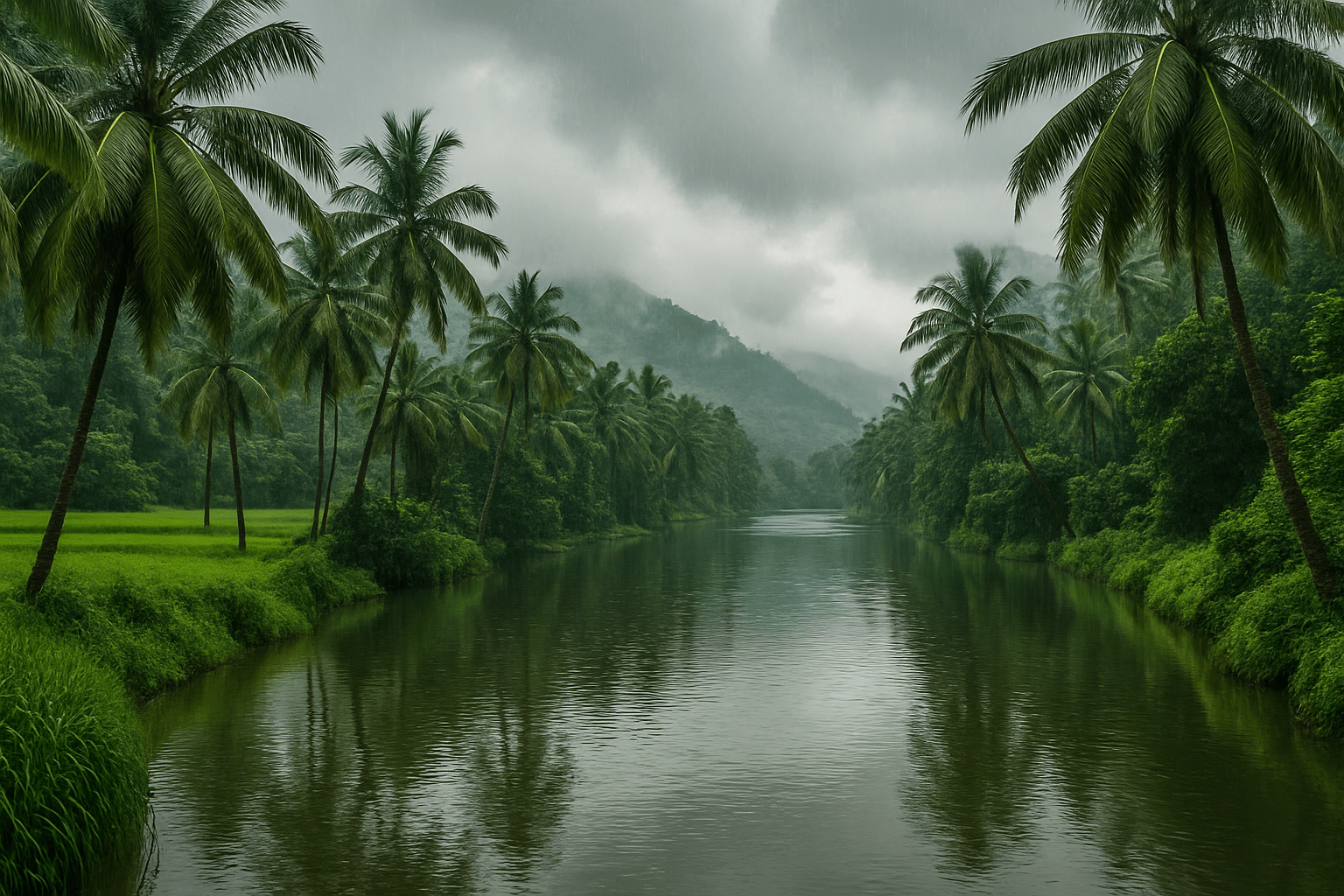
Last updated: June 2026
TL;DR: A Mumbai to Kerala flight takes about 2 hours nonstop — roughly 1 hr 50 min to Kozhikode (CCJ), about 2 hrs to Kochi (COK) and a little over 2 hrs to Thiruvananthapuram (TRV) — on IndiGo, Air India, Akasa and SpiceJet. The monsoon (June–September) is the cheapest and most atmospheric time to go, and it coincides with Karkidakam (17 July–16 August 2026), Kerala’s traditional Ayurveda rejuvenation season, when cool, humid air is considered ideal for treatments. Fly into Kochi for Munnar, Alleppey and Athirappilly, Calicut for Wayanad, and Trivandrum for Varkala and Kovalam. Expect a below-normal 2026 monsoon, so pack for rain but plan flexibly.
In this Blog
Mumbai → Kerala in monsoon at a glance
| Flight time | ~2 hours nonstop (≈1 hr 50 min–2 hr 20 min) |
| Main airports | Kochi (COK), Kozhikode/Calicut (CCJ), Trivandrum (TRV) |
| Airlines | IndiGo, Air India, Akasa Air, SpiceJet |
| Cheapest months | June–September (July often the lowest) |
| Why monsoon | Karkidakam Ayurveda season, full backwaters & waterfalls, low crowds & rates |
| Ideal duration | 5–7 days |
| 2026 monsoon note | below-normal (~90% of normal); SW monsoon reached Kerala on 4 June 2026 |
How long is a Mumbai to Kerala flight, and which airport should you choose?
A nonstop Mumbai to Kerala flight takes about two hours, and the airport you book decides how much road you’ll do at the other end. Kerala has three main gateways from Mumbai (BOM), and matching the airport to your destination saves you hours of ghat driving in the rain.
- Mumbai to Kochi / Cochin (COK) — about 2 hours nonstop (roughly 1 hr 55 min to 2 hr 20 min depending on the airline). This is the busiest and most convenient option, with the widest choice of flights through the day on IndiGo, Air India and Akasa Air. Kochi is the natural base for the classic monsoon circuit — Munnar, Alleppey, Kumarakom, Thekkady and Athirappilly are all within a half-day’s drive.
- Mumbai to Kozhikode / Calicut (CCJ) — about 1 hour 50 minutes, the quickest of the three, flown by IndiGo and SpiceJet. Calicut is your airport for Wayanad (roughly 90 km up the ghats) and the food-and-culture Malabar coast, and it’s usually a touch quieter and cheaper.
- Mumbai to Thiruvananthapuram / Trivandrum (TRV) — a little over 2 hours (about 2 hr 10 min) on IndiGo and Air India. Trivandrum is the gateway to southern Kerala — Kovalam, Varkala, Ponmudi and the capital’s temples and museums — and a popular landing point for Ayurveda retreats along the south coast.
A useful trick, and one travellers tell us works well on a longer Kerala trip, is to fly into one airport and out of another — say, in to Kochi and home from Trivandrum — so you travel north-to-south in one line instead of doubling back. Most airlines price these “multi-city” or two one-way tickets sensibly.
Monsoon flying & travel safety (Mumbai–Kerala)
– Build in buffer time. Monsoon thunderstorms over both Mumbai and the Western Ghats can delay or divert flights; avoid tight same-day onward connections, and keep your first night flexible.
– Prefer late-morning departures (roughly 8–11 AM), which tend to be less affected than the afternoon storm window, and book refundable/changeable fares if you can.
– On the ground: drive ghat roads to Munnar and Wayanad by daylight — they can see slips and fog in heavy rain — and keep a buffer day in the hills.
– Water caution: backwater canoeing and sea swimming (Varkala, Kovalam) are riskier in spate and rough surf — wear the life jacket, swim only where flagged, and view waterfalls like Athirappilly from official points, not the slippery edge.
Mumbai to Kerala flight prices: when to book for the cheapest fares
Here’s the happy coincidence of a Kerala monsoon trip: the rainy months are also the cheapest months to fly. June to September is Kerala’s tourism off-season, so airfares from Mumbai sit well below the December–January peak, with July often the single lowest month on the Kochi and Trivandrum routes and September close behind.
As a rough guide, one-way Mumbai–Kerala monsoon fares typically fall in the ₹3,500–₹7,000 band when booked a few weeks ahead, though prices move constantly with date, demand and how early you book — so treat any figure as indicative and check live before you commit. A few habits genuinely help:
- Fly midweek. Tuesday and Wednesday departures are usually cheaper than Friday–Sunday, and quieter at the airport.
- Book ahead, but not blindly. Two to six weeks out tends to be the sweet spot for monsoon dates; last-minute fares climb, and prices can spike around the Onam rush in mid-to-late August.
- Choose refundable fares in the rains. A slightly higher changeable ticket is worth it when weather delays are on the cards.
- Set a fare alert on your preferred dates and pounce when it dips — monsoon fares are volatile.
- Compare all three airports. If your plans are flexible, the cheapest fare into Calicut or Trivandrum can beat Kochi, especially if it suits your itinerary anyway.
For where these flights fit into the bigger monsoon picture — and whether to go at all this year — see our honest take in should you visit Kerala in monsoon?.
Why fly to Kerala in the monsoon at all? The Karkidakam Ayurveda season
If there’s one reason that makes flying into the rain worthwhile, it’s this: the monsoon is Kerala’s traditional Ayurveda rejuvenation season, and in 2026 it peaks during Karkidakam, the Malayalam month that runs from 17 July to 16 August.
Karkidakam is the last and rainiest month of the Malayalam calendar, and Ayurveda has long held it to be the most favourable window for healing therapies. The logic is rooted in the climate: in the cool, humid monsoon air, the body’s pores open and its tissues are considered far more receptive, so herbal oils and medicines are believed to absorb better and work deeper. This is the season of Karkidaka Chikitsa — a programme of oil therapies, Panchakarma cleansing and treatments like Abhyanga (synchronised oil massage), Shirodhara (a steady stream of warm oil over the forehead) and Takradhara, often paired with a light vegetarian diet and the medicinal rice gruel known as Karkidaka Kanji. Kerala’s tourism board itself calls Karkidakam “the season of rejuvenation”.
For a traveller, this turns a wet-weather trip into a genuine wellness holiday. While the rain falls outside, you spend mornings in treatment and afternoons resting — exactly the slow, restorative rhythm the monsoon suits. The same month is also Ramayana Masam, when the epic is read in homes and temples, and it includes Karkidaka Vavu (12 August 2026), a day of ancestral rituals on the southern beaches. A few practical pointers:
- Book a multi-day package, not a one-off massage. Karkidaka Chikitsa works as a course (often 7–14 days), so plan your trip length around it.
- Choose a recognised centre. Look for a GMP- or Kerala-government-classified (“Green Leaf”/”Olive Leaf”) Ayurveda facility rather than a generic spa.
- The south coast and the backwaters — around Kovalam, Varkala and Kumarakom — have the densest cluster of serious Ayurveda retreats, which is one reason Trivandrum is a popular landing point for wellness trips.
- Consult first. Genuine treatment starts with a physician’s assessment of your prakriti (constitution); skip anywhere that prescribes a package without one.
10 Kerala monsoon destinations to pair with your flight
Once you’ve landed, the rain-washed state opens up. Here’s a concise shortlist of ten places worth building a monsoon trip around, with the basics for each — and links to our deeper guides where you’ll want more detail, so you can plan without us repeating ourselves.
1. Kochi (Fort Kochi) — your arrival city
Rain suits Kochi. The Chinese fishing nets look cinematic against grey skies, and the colonial lanes, cafés, galleries and spice markets of Fort Kochi and Mattancherry make it the most rain-friendly base in the state.
– Best time: Year-round; atmospheric all monsoon. How to reach: Cochin International Airport (COK) is the arrival point; Ernakulam is the railhead.
– Time required: 1–2 days. Ideal for: Couples, families, culture lovers. Pro tip: Save a Kathakali performance for a wet evening, and explore Jew Town between showers.
2. Munnar — tea hills in the mist
Kerala’s tea capital is at its most dramatic in the rains: emerald slopes vanishing into cloud, waterfalls in full flow and cool 15–20°C air. The drive up from Kochi is half the experience.
– Best time: All monsoon (carry warm layers). How to reach: ~130 km / ~4–4.5 hrs from Kochi by the NH-85 ghat road — see our Kochi to Munnar distance guide.
– Time required: 2 nights. Ideal for: Couples, families. Pro tip: Skip Munnar’s Top Station after heavy showers (near-zero visibility) and stick to the tea estates and Mattupetty Dam.
3. Alleppey (Alappuzha) — the backwaters
The “Venice of the East” is the heart of a monsoon trip, its palm-fringed canals and Vembanad Lake brimming with fresh rain. A houseboat cruise as gentle rain ripples the water is the quintessential Kerala experience.
– Best time: All monsoon; electric around the August boat races. How to reach: ~75 km from Kochi airport; Alleppey has a central railway station.
– Time required: 1 night on a houseboat. Ideal for: Couples, families, first-timers. Pro tip: Book houseboats early for the Onam/Nehru Trophy window in mid-to-late August.
4. Wayanad (Vythiri–Kalpetta side) — spice estates & waterfalls
Wayanad’s coffee and spice country, caves and tiered waterfalls are stunning in the rains — but enjoy it responsibly after the 2024 landslides.
– Best time: Monsoon lulls between heavy spells. How to reach: ~90 km from Calicut (CCJ) airport; from Bengaluru via NH-766 (mind the Bandipur 9 PM–6 AM night-traffic ban).
– Time required: 2 days. Ideal for: Couples, nature lovers. Safety note: The Mundakkai–Chooralmala landslide belt is a restricted no-go zone — base in Vythiri/Kalpetta and follow district advisories. Edakkal Caves and Pookode Lake are safer wet-weather picks.
5. Alleppey’s quieter twin: Kumarakom
A serene backwater retreat on Vembanad Lake, all birdsong, paddy fields and slow canoes in the rains, with a famous bird sanctuary.
– Entry (Kumarakom Bird Sanctuary): a nominal fee, payable at the gate; open mornings to evening. How to reach: ~16 km from Kottayam (railhead); ~85 km from Kochi.
– Time required: 1 day. Ideal for: Couples, birdwatchers, slow travel. Pro tip: Take a small-canoe “village backwater” tour rather than only the big houseboat — it reaches the quiet, narrow channels.
6. Thekkady (Periyar) — spice hills & a lake safari
Periyar Tiger Reserve is lush and active in the rains, and the lake boat cruise is the signature experience. The surrounding spice plantations — cardamom, pepper, clove — smell incredible in monsoon humidity.
– Entry: a modest reserve entry fee plus a separate boat-cruise charge, payable at the counter; cruises run in slots through the day. How to reach: ~140 km from Kochi; ~115 km from Madurai.
– Time required: 1–2 days. Ideal for: Families, wildlife and nature lovers. Pro tip: Take the earliest morning cruise for the best wildlife odds, and carry rain gear.
7. Athirappilly — the “Niagara of India”
Kerala’s most spectacular waterfall is at its thunderous, full-volume best in the monsoon — an easy and unforgettable day trip from Kochi or Thrissur.
– Entry: a small ticket (around ₹50 for Indian adults, less for children), valid the same day and covering nearby Vazhachal Falls; open roughly 8 AM to 5:30–6 PM (Athirapally tourism). How to reach: ~70 km from Kochi airport; ~60 km from Thrissur.
– Time required: Half a day. Ideal for: Families, photographers. Safety note: The base trek closes in heavy rain (flash-flood risk) — view from the official upper points. More in our Athirappilly waterfalls guide.
8. Varkala — the monsoon cliff
A dramatic cliff-and-beach town that turns moody and cinematic in the rains, with clifftop cafés over a churning Arabian Sea and a strong cluster of Ayurveda centres — prime Karkidakam territory.
– Best time: Monsoon, for the off-season calm and lower rates. How to reach: Varkala Sivagiri railway station; ~50 km from Trivandrum (TRV) airport.
– Time required: 1–2 days. Ideal for: Couples, backpackers, wellness seekers. Safety note: Seas are rough — swim only where flagged. Pro tip: This is the season for a multi-day Ayurveda programme.
9. Kovalam — beaches & wellness
Kerala’s classic beach town is quiet and affordable in the monsoon, its lighthouse beach dramatic under brooding skies, and it’s one of the south coast’s main Ayurveda hubs.
– Best time: Monsoon for low rates and treatments. How to reach: ~15 km from Trivandrum (TRV) airport.
– Time required: 1–2 days. Ideal for: Couples, wellness travellers. Safety note: Strong currents in the monsoon — heed the lifeguard flags; the water is for watching, not swimming.
10. Thiruvananthapuram (Trivandrum) — the southern gateway
Kerala’s capital pairs the gilded Padmanabhaswamy Temple, museums, a zoo and gardens with easy rainy-day sightseeing, and is the landing point for the south.
– Padmanabhaswamy Temple: free entry, strict dress code (dhoti/saree), specific darshan hours — check before visiting. How to reach: Trivandrum International Airport (TRV).
– Time required: 1 day. Ideal for: Families, culture lovers. Pro tip: The Napier Museum and Kuthiramalika Palace are excellent wet-afternoon stops.
For a fuller, festival-aware rundown of where to go, see 20 best places to visit in Kerala in August and the state-wide best monsoon destinations in Kerala 2026.
How to plan your Kerala monsoon trip from Mumbai
The neat thing about Kerala is that the airports line up north-to-south, so you can plan a single sweep rather than a loop. A few routes that work well from Mumbai:
- Long weekend (3 days): Fly Mumbai → Kochi. Day 1 Fort Kochi, Day 2 Athirappilly day trip, Day 3 a backwater day in Alleppey before flying home. Compact, rain-friendly and low on driving.
- Classic Kerala (6 days): Fly into Kochi, then Kochi → Munnar → Thekkady → Alleppey → Kochi — tea hills, a lake safari and the backwaters in one green sweep. (See our Kochi to Munnar guide for the drive.)
- Wellness week (7 days): Fly into Trivandrum for a 5–7-day Karkidaka Chikitsa programme around Kovalam or Varkala, with a couple of days in the capital or up to the backwaters at the end.
- North-to-south one-way (7+ days): Fly into Kochi, out of Trivandrum (or in to Calicut for Wayanad first), working steadily southward so you never backtrack.
One thing to factor in for this year: the India Meteorological Department has forecast a below-normal 2026 southwest monsoon (around 90% of the long-period average), and the rains reached Kerala on 4 June, slightly later than usual. In practice that means the season is still firmly wet — just a little less relentless in patches — so the monsoon experience holds, while you should still plan around rain and check the latest outlook before you fly.
Whatever the shape, lean into the monsoon rhythm: fewer places, longer stays, slow mornings, and a buffer day for the weather. For the live picture before you book, our Kerala weather guide is the place to start, and the pan-India view is in where to travel in India in monsoon.
Planning the trip? Book your Mumbai–Kerala flight midweek and a few weeks ahead for the best monsoon fares, then lock in a comfortable base at the other end — covered verandahs and reliable power turn the rain into part of the holiday. (CTA 1 of 3.)
What to pack for a Kerala monsoon trip
Pack for warm, wet and humid days with a cool hill add-on. Bring a light rain jacket and compact umbrella, quick-dry clothes, and waterproof shoes or sandals with grip for slippery paths and jetties. Add a dry bag for your phone and camera (the spray at Athirappilly and constant drizzle are hard on electronics), a power bank for occasional power cuts, and mosquito repellent. For Munnar and Wayanad, throw in a light fleece or sweater for evenings that dip to around 15°C, and salt or repellent for leeches on Western Ghats walks. Stick to bottled or filtered water, carry any regular medication, and keep a motion-sickness remedy handy for the ghat hairpins. Most of all, pack the right attitude: the monsoon rewards travellers who’ll wait out a heavy shower with a hot chai rather than rush through it.
Where to stay in Kerala (StayVista)
Pick a stay with covered verandahs and dependable power so the rain becomes the view, not the problem. A few StayVista homes that make good monsoon bases:
- In Kochi (your gateway): Skyville A — a comfortable, well-connected city base for Fort Kochi, the airport and Athirappilly day trips.
- In Munnar (the tea hills): Paradise Valley — a four-bedroom villa in Pallivasal with valley and tea-estate views, an easy base for the high range.
- In Alleppey (the backwaters): The Rain — a backwater-side home built, as the name suggests, for the monsoon.
For Wayanad, base yourself safely on the Vythiri–Kalpetta side (well away from the restricted landslide zone) — Princess of Wayanad is one such estate-side stay.
Booking a monsoon Kerala trip? Browse StayVista’s homes around Kochi, Munnar, Alleppey and the Wayanad estates — book early for the Onam window in mid-to-late August, when stays and flights fill up. (CTA 2 of 3.)
FAQ: Mumbai to Kerala in monsoon
How long is a flight from Mumbai to Kerala?
A nonstop flight from Mumbai to Kerala takes about two hours — roughly 1 hour 50 minutes to Kozhikode (Calicut), about 2 hours to Kochi, and a little over 2 hours to Thiruvananthapuram (Trivandrum), on airlines like IndiGo, Air India, Akasa Air and SpiceJet.
Which airport should I fly into for Kerala?
Fly into Kochi (COK) for Munnar, Alleppey, Kumarakom, Thekkady and Athirappilly; into Kozhikode/Calicut (CCJ) for Wayanad and the Malabar coast; and into Thiruvananthapuram/Trivandrum (TRV) for Kovalam, Varkala and southern Kerala.
When is the cheapest time to fly from Mumbai to Kerala?
The monsoon months of June to September are the cheapest, with July often the lowest. Book a few weeks ahead, fly midweek (Tuesday or Wednesday), and avoid the Onam rush in mid-to-late August for the best fares.
Is it worth visiting Kerala in the monsoon?
Yes, for many travellers. The monsoon brings lush hills, full waterfalls and backwaters, low crowds and off-season rates, and it is Kerala’s traditional Ayurveda season (Karkidakam), considered the most effective time for rejuvenation treatments. Expect frequent rain and plan flexibly.
What is Karkidakam and why is it the Ayurveda season?
Karkidakam is the last month of the Malayalam calendar — 17 July to 16 August in 2026 — and Kerala’s traditional Ayurveda rejuvenation season. In the cool, humid monsoon air the body is considered more receptive to therapies, so oil treatments and Panchakarma cleansing (Karkidaka Chikitsa) are believed to work best then.
Is it safe to travel to Kerala in the monsoon?
Generally yes, with monsoon caution. Travel ghat roads to Munnar and Wayanad by daylight, avoid waterfall base-treks during heavy rain, swim only where flagged, in Wayanad stay on the Vythiri–Kalpetta side away from the 2024 landslide zone, and keep a buffer day for weather delays.
Should I book one airport or fly in and out of different ones?
On a longer trip, flying into one airport and out of another — for example in to Kochi and home from Trivandrum — lets you travel north-to-south without backtracking. Airlines usually price these multi-city or two one-way tickets reasonably.
Conclusion
A Mumbai to Kerala flight is barely two hours, and the monsoon is the moment it pays off most — the cheapest fares of the year, the greenest the state ever looks, and the traditional Karkidakam season for genuine Ayurveda rejuvenation. Match your airport to your plan (Kochi for the classic circuit, Calicut for Wayanad, Trivandrum for the south and wellness), travel the ghats by daylight, build in a buffer day, and base yourself in a comfortable StayVista home where the rain becomes part of the holiday. Book midweek, a few weeks ahead, and let Kerala’s rains do the rest.