
One Villa, Four Day Trips: The 2026 Guide to Single-Base Travel in India

Something has changed in how Indian families and groups plan their time away. The old model was simple: book three cities in five days, move between them each morning, check off as many places as possible, and return home feeling like the trip was efficient. In 2026, that model is being replaced by something simpler and more deliberate. People are booking one place, staying for three to five nights, and using that place as the starting point for day trips in every direction.
This approach has a name now: single-base travel. It’s growing fast enough that the industry has started tracking it, and Skyscanner’s 2026 data puts 59% of Indians on track to travel more this year, mostly domestically and mostly for longer. Here’s why it works so well in the Indian context, which four regions are being used most often as a villa as a base for day trips, and — the part most guides skip — how to pick the right base within each region.
Quick answer: Single-base travel in India means staying at one villa and taking many day trips out from it, rather than moving accommodation each day. It’s growing because of workplace burnout, the rise of slow travel, and the practical appeal of unpacking once. The four most popular regions for this style in 2026 are Coorg in Karnataka, Lonavala in Maharashtra, Wayanad in Kerala, and Alibaug on the Konkan coast.
TL;DR: Single-base travel means booking one villa for three to five nights and day-tripping out from it, instead of changing hotels every morning. Booking.com’s 2026 data shows 91% of Indian travellers want nature-led trips and 87% are travelling to mentally rest (Booking.com, 2026). Coorg, Lonavala, Wayanad and Alibaug work best because each puts five or more distinct day trips inside a two-hour drive.
In this Blog
Why Are Indians Choosing One Base and Multiple Day Trips in 2026?
The shift is backed by clear data. Booking.com’s 2026 Travel Predictions report found that 91% of Indian travellers want trips built around natural scenery, and 87% said their primary goal is to mentally unwind (Booking.com, 2026). Skyscanner puts 59% of Indians on track to travel more in 2026 than in 2025, with a marked preference for domestic destinations (Skyscanner, 2026). And the exhaustion behind it is measurable: half of Gen Z workers (50%) and 49% of millennials now name stress and burnout as the thing holding them back at work (Deloitte Global, 2026).
Put these numbers together and a picture forms. People are tired, they want rest over activity, and they want to feel settled rather than in transit. The one base multiple day trips format solves all three at once. You arrive, unpack, and use the villa as a home for the next few days. Each morning you drive somewhere new, and each evening you return to the same bed and the same kitchen. No check-ins, no repacking, no wasted hours in checkout queues. The villa becomes part of the experience rather than just a place to sleep.
This is what the industry now calls base and explore India travel, and it suits our geography particularly well. Unlike countries where distances between notable places are too large for a comfortable day return, India has several regions where one well-chosen base puts you within two hours of five or more distinct destinations. What separates the four below from the rest isn’t scenery — it’s road geometry.
Is Coorg a Good Base for Day Trips? Inside India’s Best-Placed Hub Town
Coorg works as a single base because Madikeri sits within 60 km of four unrelated day trips — a national park, a river source, a Tibetan monastery town and an elephant camp — and none of them require doubling back.
Coorg, officially Kodagu, sits in Karnataka’s Western Ghats within a five to six hour drive of Bengaluru, which makes it the most popular long-weekend destination in South India for this approach. Madikeri, the district headquarters, is the most commonly used hub town for day trips here.
Nagarhole National Park is about 60 km east, reachable for a morning safari. Talakaveri, the origin point of the Cauvery, sits 35 km south and is best visited early, before the temple fills with pilgrims. Bylakuppe, one of the largest Tibetan settlements in India outside Dharamshala, is around 35 km from Kushalnagar and home to the Namdroling Monastery, or Golden Temple. Founded in 1963 with just ₹300 by Pema Norbu Rinpoche, it’s now the greatest teaching centre of the Nyingma lineage in the world, housing over 5,000 monks. Most visitors don’t expect how striking the gold-roofed prayer halls look against the surrounding coffee country.
One day trips from Coorg also include the Dubare Elephant Camp on the Kaveri, where elephants are bathed and fed in the mornings, and Iruppu Falls in the Brahmagiri range. River rafting on the Cauvery runs October to May in the Kushalnagar stretch.
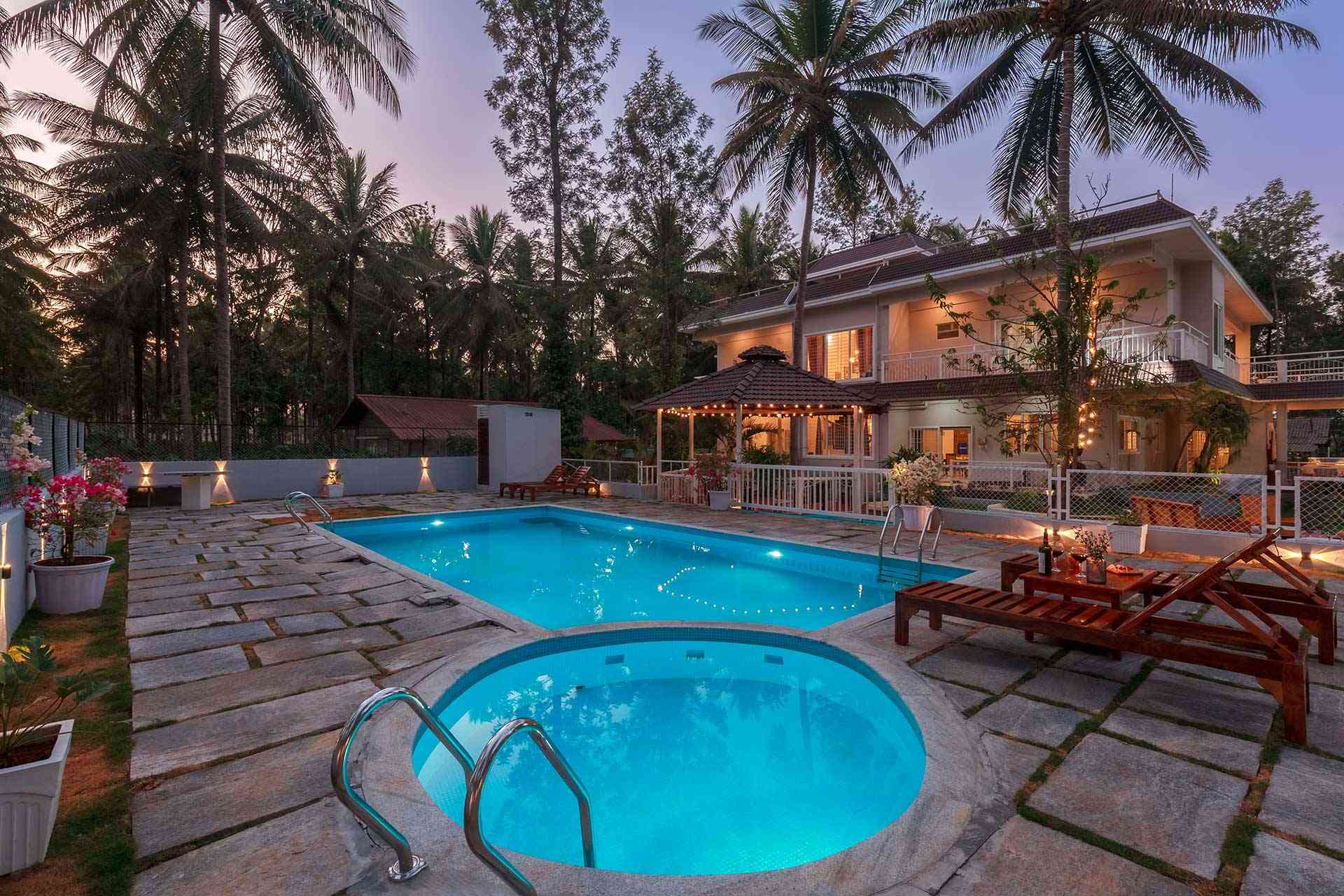
Where to stay to explore Coorg: the region splits into two practical bases, and which you pick decides your week. Madikeri puts you closest to Raja’s Seat, Abbey Falls and the Talakaveri road. Kushalnagar–Bylakuppe, 35 km north-east, puts you next to the Golden Temple, Dubare and the rafting stretch. For the second, Bask In The Greens is the obvious base — a four-bedroom villa for twelve with a private pool, rated 4.8/5 across 116 guest reviews, sitting 2.6 km from Namdroling Monastery. That’s close enough to walk in for the morning chanting and be back for breakfast. The wider villas in Coorg range runs from roughly ₹4,600 a night for a simple estate cottage to ₹90,000-plus for a six-bedroom plantation house, with most usable single-base stays between ₹12,000 and ₹35,000.
Bask In the Greens
Best time: October to March. The post-monsoon months of October and November give the estates a freshly washed green that makes the plantation views particularly good.
How to reach Coorg: Bengaluru by road is the usual approach, five to six hours. The closest airport is Kannur International (CNN), about 110 km from Madikeri; Mysuru is roughly 120 km and Mangaluru about 135 km, or four hours by road.
Why Is a Villa in Lonavala the Best Base for Western Maharashtra?
Lonavala is the densest day-trip cluster in India: five Sahyadri forts, two 2,000-year-old cave complexes and a Jyotirlinga all sit inside a two-hour drive, and the town is 65 km from Pune and 95 km from Mumbai.
The fort circuit is what makes it work. Lonavala puts you at the door of Lohagad Fort, a Shivaji-era hill fort at 1,033 metres with a scorpion-shaped ridge called Vinchu Kata; Rajmachi Fort, twin fortresses at about 800 metres captured by Shivaji in 1657; and Tikona Fort, a triangular hilltop climb that stays far quieter than either. The 2nd-century BCE rock-cut Buddhist caves at Karla and Bhaja are among the best-preserved in India and a short drive from most Lonavala properties.
A villa in Lonavala for day trips also positions you well for Bhimashankar, one of the twelve Jyotirlingas, inside the Bhimashankar Wildlife Sanctuary. The forest trail to the temple passes through dense Sahyadri vegetation and is home to the giant Indian squirrel — the shekru, Maharashtra’s state animal. Pawna Lake, 20 km out, has become a destination in its own right, with tent stays, lakefront villas and early-morning kayaking. Push the radius a little further and Pune adds Sinhagad Fort and the Aga Khan Palace, or Imagica for families who want a non-trekking day.
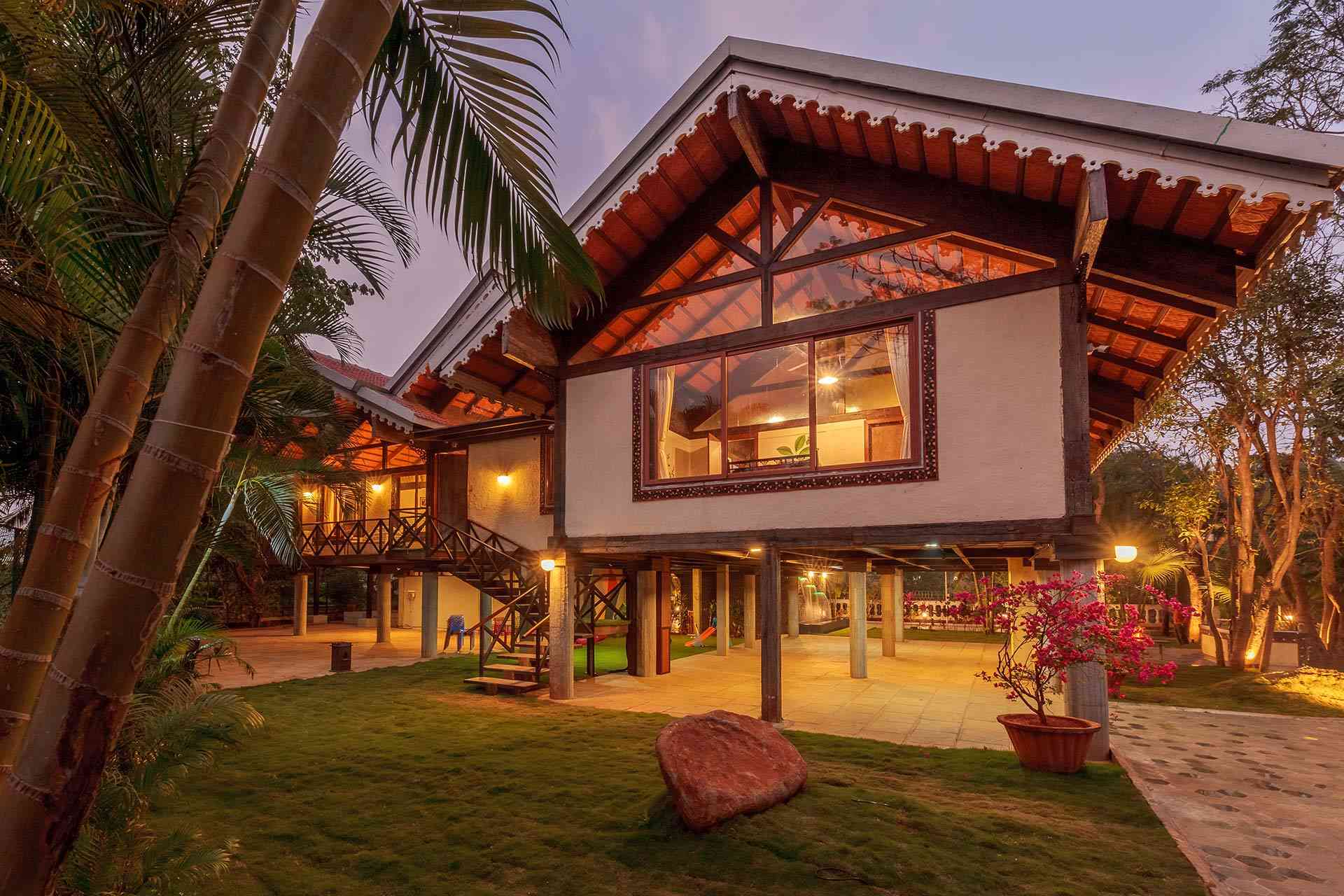
Where to stay: the inventory splits three ways — the Bhaja–Karla side for the caves and the Lohagad–Visapur climb, the Pawna–Kamshet side for the lake and sunrise kayaking, and the Kune Falls side for the shortest run into town. For the fort circuit, Aranyam Villa is the best-placed base in StayVista’s Lonavala inventory — three bedrooms for nine with a plunge pool, rated 4.5/5 across 224 reviews, and 3.0 km from the Bhaja Caves. That’s three day trips from one gate.
Aranyam Villa
Best time: October to May. The monsoon brings dramatic waterfalls at Bhushi Dam and Tiger’s Leap but makes some forts slippery — our guide to things to do in Lonavala in the monsoon covers what stays open.
How to reach Lonavala: both Mumbai and Pune have regular trains, and the expressway from either makes a cab straightforward. Flying in, Navi Mumbai International is now the nearest airport, ahead of Pune.
Where Should You Stay in Wayanad to Explore the Whole District?
Kalpetta, in the centre, is the answer for most trips. It’s the only one of Wayanad’s three zones from which Chembra, Banasura, Edakkal and Kuruva are all reachable and back in a day.
Wayanad divides into three: Mananthavady in the north, Kalpetta in the centre, Sulthan Bathery in the east. Because of that spread, where to stay in Wayanad to explore the district is a question that shapes the whole trip. Sulthan Bathery works best for those focused on the eastern side, where the Edakkal Caves and Muthanga Wildlife Sanctuary sit.
The Edakkal Caves are the most unusual day trip from a Wayanad base. They’re not conventional caves but a natural cleft between two massive boulders on the Ambukuthi Hills, 1,200 metres up. Inside are over 400 petroglyphs — human figures, animals, tools and symbolic scripts — believed to date back 3,000 to 6,000 years. Some patterns resemble Indus Valley symbols, which has led archaeologists to suggest early cultural links between this region and the Harappan world. They’re widely described as the only site in India with Stone Age carvings of this kind.
Three other day trips have rules worth knowing before you drive. Banasura Sagar Dam is 21 km away — India’s largest earthen dam and the second largest in Asia. Open 6 AM to 6 PM, entry ₹10, speed boats ₹1,000 for up to five people until 4 PM. Chembra Peak tops out at 2,100 metres, but the summit is currently closed to trekkers because of wildlife activity; the trek ends at the heart-shaped lake, Hridayathadakam, roughly 1,700 metres up and 1.5 km short of the peak — which is, honestly, the part people come for. Tickets are ₹4,000 for a group of five, booked at the Meppadi Forest Office, and the entry window is 7 AM to 3 PM. Kuruva Island, a 950-acre cluster of uninhabited river-delta islands on the Kabini reached by bamboo raft, closes every monsoon — the gates shut in June and typically reopen in September (11 September in 2025). In season: 9 AM to 3:30 PM, ₹220 for Indians, ₹440 for foreigners, with a daily visitor cap.
The Tholpetty and Muthanga sanctuaries are the reliable ones for morning elephant sightings.
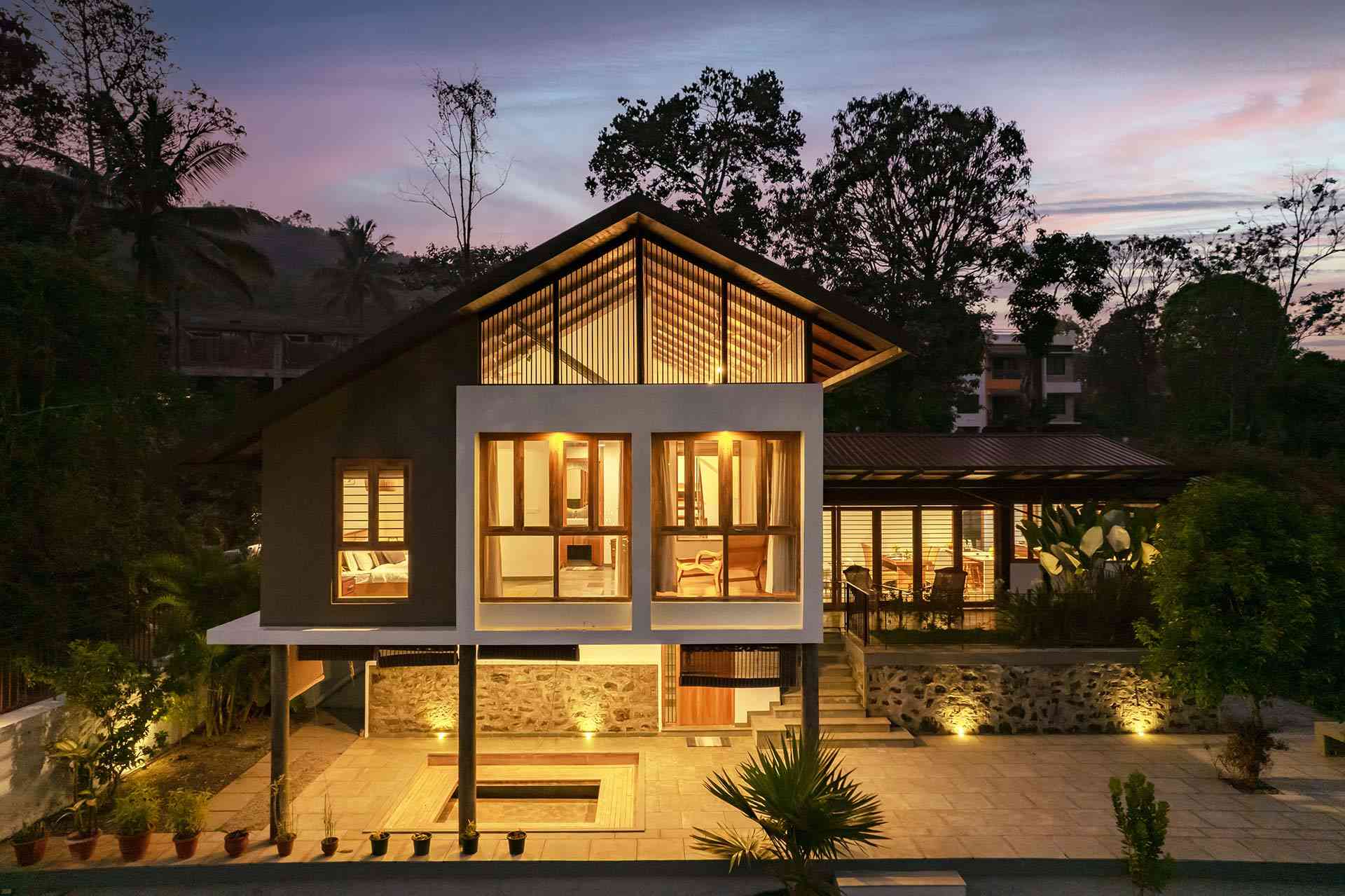
Where to stay: this is the one region where the wrong base costs you real hours — Chembra and Kuruva are 50 km apart on hill roads, so pick by which one you actually care about. For Chembra and the Vythiri belt, Mountain Rain is the closest base in the Wayanad inventory — three rooms for nine with breakfast included, rated 4.9/5 across 87 reviews, and 4.3 km from Chembra Peak. That’s close enough for the 7 AM entry window without a 5 AM alarm. Villas in the spice plantation belt around Vythiri and Kalpetta have pepper- and cardamom-covered views from every room, which adds a distinct sensory quality to the stay itself.
Mountain Rain
Best time: October to May, with November to February the most comfortable stretch for trekking.
How to reach Wayanad: Calicut airport is about 100 km from Kalpetta. If you’re basing yourself in Mananthavady, Kannur International is closer.
What Makes Alibaug the Konkan Coast’s Most Practical Single Base?
Alibaug is the only base on this list you can reach without driving. The Mandwa ferry from the Gateway of India takes 45 minutes to an hour, which means a Friday-evening arrival with no traffic at all.
It’s called the mini Goa of Maharashtra, though that understates how historically rich the area is. Kolaba Fort, a 17th-century Maratha sea fort, sits just offshore from Alibaug beach and is accessible on foot at low tide. It served as a key naval station under Chhatrapati Shivaji Maharaj and still has working cannons, ancient wells and several small temples inside its walls.
An Alibaug base for day trips reaches Murud-Janjira Fort, one of the few sea forts in India never conquered by the Marathas or the Mughals, about 60 km south. Built and held by the Siddis of Janjira, its walls are 40 feet high, rising directly from the sea with no land approach. Kashid Beach, 45 km out, is a long white-sand stretch backed by casuarina trees that contrasts sharply with Alibaug’s own black sand. Kihim, just 12 km from town, is a quieter beach famous for rare butterflies and migratory birds — a legitimate birdwatching stop rather than a second beach to tick off, and one of several covered in our guide to the beaches around Alibaug. For fort trekking, Sagargad is a hill fort at 1,357 feet with panoramic views of the whole coastline, and Revdanda, 17 km south, has a Portuguese-era fort near a quiet estuary that most visitors never reach.
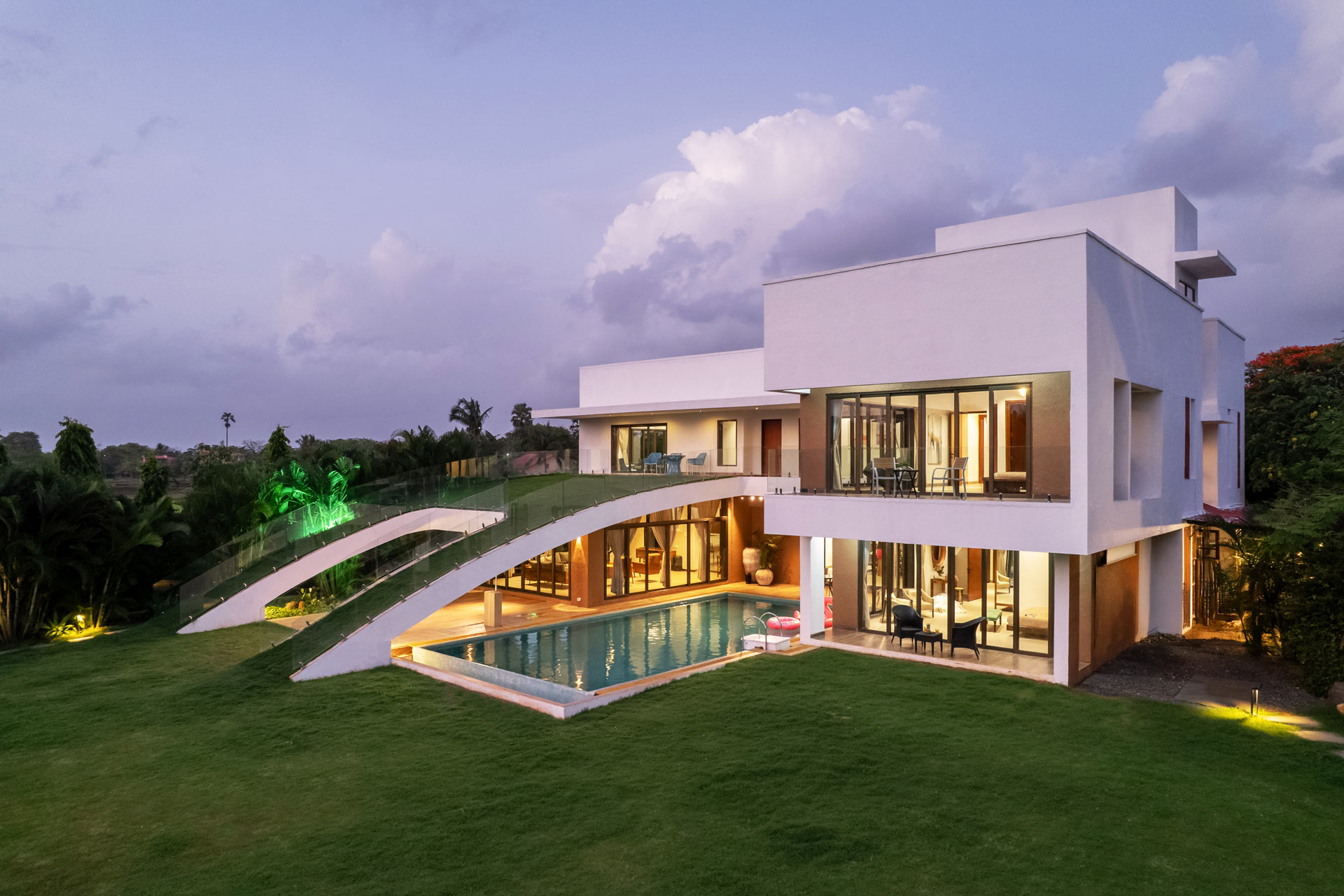
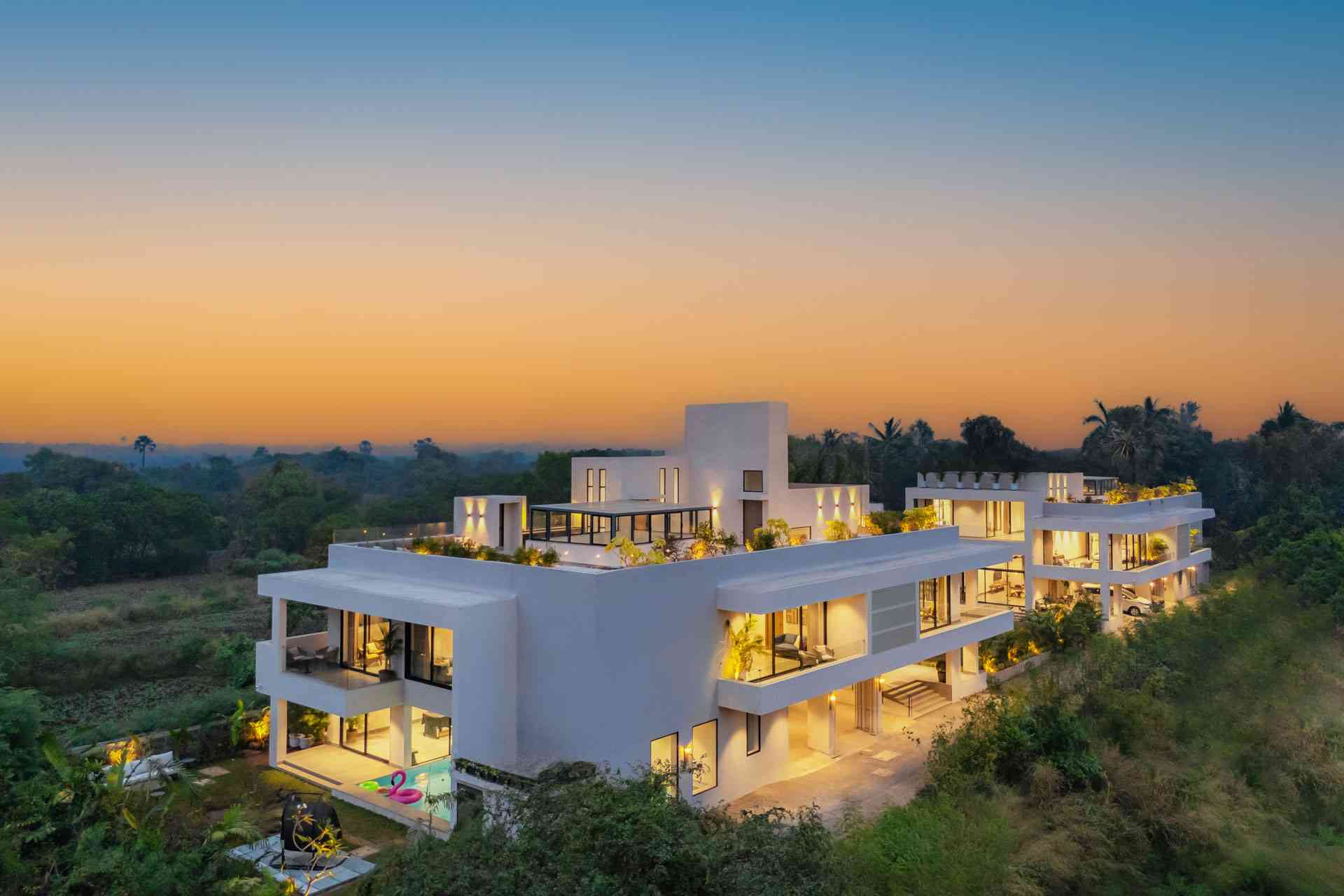
Where to stay: Alibaug’s day trips pull in opposite directions, and this is what most guides get wrong. Kolaba Fort, Kihim and the ferry are north; Revdanda, Kashid and Murud-Janjira are south, with Murud 60 km down the coast. Basing yourself at the wrong end adds close to an hour to every southern run. If you’re coming in by ferry, Sun n Sky sits 2.0 km from the jetty — four bedrooms for twelve with a private pool, rated 4.8/5 across 101 reviews — which makes the arrival painless. For a southern base, look at the Revdanda end of the Alibaug inventory instead.
More stays you ca try out:
Best time: October to February, when the sea is calm and the ferry crossing is predictable.
How to reach Alibaug: two crossings. The passenger catamaran runs Gateway of India to Mandwa in 45 minutes to an hour; the M2M RO-RO runs from Bhaucha Dhakka and carries your car across — book that one if you want your own vehicle for the day trips. Driving from Mumbai, the route since the Atal Setu opened is Sewri → Mumbai Trans Harbour Link → Chirle → NH-66 → Pen → Alibaug, roughly two to two and a half hours. Toll is about ₹250 each way, FASTag mandatory, no two-wheelers on the bridge. From Pune, it’s the expressway then the coastal road.
How Do You Pick the Right Base Within a Region?
Choosing the region is the easy half. Within each one, the base you pick decides whether your day trips take forty minutes or two hours. Four rules:
1. Find the region’s split. Every one of these regions has two ends that pull apart. Coorg splits Madikeri from Kushalnagar–Bylakuppe. Lonavala splits the Bhaja–Karla caves from the Pawna lakefront. Wayanad splits Chembra in the centre from Kuruva in the north. Alibaug splits the northern jetty from the southern Revdanda–Kashid–Murud run. Pick the end your must-do sits on.
2. Book against the strictest gate, not the prettiest view. Chembra opens at 7 AM and Kuruva has a daily visitor cap. If either is on your list, the base near it wins, regardless of what the other one’s pool looks like.
3. Stay near a main road, not down a track. A 3 km mud-road approach costs you twenty minutes twice a day and rules out an unlit 5 AM departure for a safari. Remote reads well in photographs and badly in a five-day itinerary.
4. Count nights, not days. Three nights is the floor: two full day trips, one arrival, one departure. Four to five is where the format pays off, because it buys you one unplanned day — which, in our experience, is the one people describe when they get home.
Single-Base Travel vs Slow Travel: What’s the Difference?
Single-base travel isn’t a compromise or a lesser version of travelling. It’s a different intention. Slow travel is the philosophy — if that’s what you’re after, we’ve covered 20 destinations built for it. Single-base travel is the mechanism: one villa, three to five nights, day trips out and back.
When someone stays in one place for three or more nights, they stop making decisions about where to sleep and start making decisions about what they actually want to do. Mornings become less rushed. Evening meals are eaten somewhere familiar. The places visited during the day become more interesting because there’s time to sit in them rather than photograph them and move on.
These four regions are the most practical expressions of the idea in India right now, but the principle works equally well in Goa’s hinterland, the Kumaon hills, or the backwater towns of Kerala.
FAQs
Booking.com’s 2026 Travel Predictions report found that 91% of Indian travellers want trips built around natural scenery, and 87% are primarily seeking mental rest. Skyscanner confirmed that 59% of Indians plan to travel more in 2026, with a clear preference for domestic, longer and less hectic trips.
Deloitte’s 2026 global survey found that half of Gen Z workers (50%) and 49% of millennials name stress and burnout as the main barrier holding them back at work. That has pushed a large section of travellers toward trips that prioritise rest and open space over sightseeing checklists. The one base multiple day trips format supports this because it removes logistical stress while still allowing people to see new places each day.
Coorg in Karnataka, Wayanad in Kerala, Lonavala in Maharashtra and Alibaug on the Konkan coast are the four most used hub towns for day-trip bases in 2026. For longer stays, Tirthan Valley in Himachal Pradesh, Kanatal in Uttarakhand and the Goa hinterland also work well as bases for the base and explore India format.
A good hub town sits within 1.5 to 2 hours of at least four to five distinct destinations, has reliable road connectivity, and has villa or homestay options that allow multi-night stays. The base itself should be calm enough to feel like a genuine rest point between outings.
Three nights is the minimum that allows two full day trips with one arrival and one departure day. Four to five nights is the most comfortable, because it allows one unplanned rest day in between — which is often the day people remember most.
Slow travel is the broader philosophy of spending longer in fewer places and connecting more deeply with the local context. Single-base travel is the practical method of applying it, using one villa and many day trips as the structure. All single-base travel is slow travel, but slow travel can also include longer stays in cities, or moving between two or three places rather than one.
Yes, and group bookings are a large part of what’s driving this. StayVista’s own per-person analysis puts a private villa at 25 to 45% cheaper per head than equivalent hotel rooms for groups of six or more, while giving the group the kitchen, pool and outdoor space entirely to themselves.
A central location within the region, reliable mobile connectivity if any remote work is planned, a fully equipped kitchen for at least some self-catering, and enough outdoor space to spend comfortable evenings at home. Proximity to a main road rather than a very remote track makes early morning departures for wildlife safaris or sunrise treks considerably easier to manage.
North, near the Mandwa jetty, if you’re arriving by ferry and your list is Kolaba Fort and Kihim. South, near Revdanda, if Kashid Beach and Murud-Janjira matter — Murud is 60 km down the coast, and starting from the northern end adds close to an hour each way.